Narrator: Welcome to the Rainmaker Podcast with your host, Gui Costin. The goal of this podcast is to give listeners a unique look into sales strategies from top industry executives. We introduce you to the heads of sales and heads of distribution who will help you understand the inner workings of the successful sales organizations from philosophy to execution. This podcast is essential for sales professionals seeking wisdom from the best in the field. If you're not familiar with Dakota and their Dakota Rainmaker content, please check out dakota.com to learn more about their services.
This episode is brought to you by Dakota Marketplace. Are you tired of constantly jumping between multiple databases and channels to find the right investment opportunities? Introducing Dakota Marketplace, the comprehensive institutional and intermediary database built by fundraisers for fundraisers. With Dakota Marketplace, you'll have access to all channels and asset classes in one place, saving you time and streamlining your fundraising process. Say goodbye to the frustration of searching through multiple databases, websites, Form ADVs, and say hello to a seamless and efficient fundraising experience. Sign up now and see the difference Dakota Marketplace can make for you. Visit dakota.com/dakota-marketplace today.
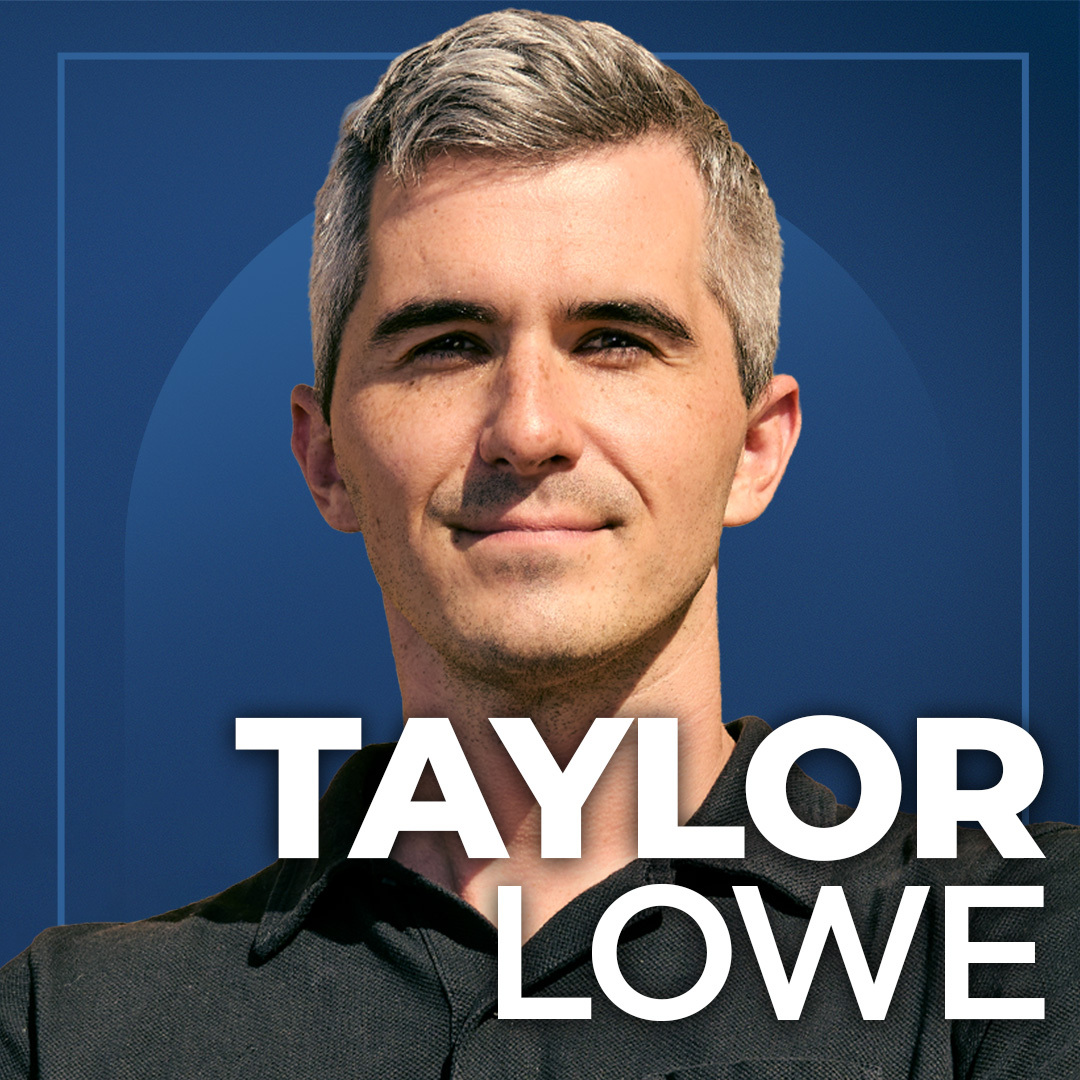
Gui Costin: What is up everybody? It's Gui Costin, founder and CEO of Dakota. Welcome to the latest Rainmaker podcast. I am so fortunate to be joined by Taylor Lowe, CEO of Metal. Taylor, welcome.
Taylor Lowe: Thank you. Thank you so much for having me.
Gui Costin: Taylor Lowe is the CEO and co-founder of Metal, a New York-based AI company building the context layer for private capital. Metal puts a firm's deal history, relationships, and judgment into every AI tool it uses. This is a very unique conversation. We normally have on distribution leaders, and the whole goal is how do we appeal to the one-person firm, right? One-person fundraiser at a boutique investment firm, what can we be helping them learn? Best practices, right? However, today this is very, very related but different because now one of—like, every head of distribution is trying to figure out what am I doing with AI, LLMs, my data, external data sources, cleaning it up, all of this. And we see it because these are vexing, vexing problems. Taylor, you've created a tremendous business in Metal and you're solving a lot of these problems. We're gonna talk about that today. And the reason we wanted to have you come on board is because it's so vital to all the decisions that these distribution leaders are trying to figure out, trying to make. We watch it in real time and these are not easy decisions. These are very thorny. You've got so many people weighing in, compliance, all the different stuff, data, data integrity. How do you scrub it? How do you bring in external data sources? All of that. But before we get to that, right, give us the origin story, right? Where'd you grow up? Give us kind of the career path, college, little thing, family, and then we'll get into Metal.
Taylor Lowe: Yeah, yeah, no, absolutely. And thanks for that. And yeah, a lot to talk about there, of course. For me, yeah, just a bit of background. So I actually, you know, I grew up in Washington, DC, so East Coaster, spent some time in San Francisco where I sort of learned the ropes in the technology industry. I've spent my whole career really in software, enterprise SaaS, mostly on the data products, infrastructure, and API side of things. A lot of that time actually spent in CRM as well.
Gui Costin: Great. For whom?
Taylor Lowe: Yeah, a few actually. So, I started my very first job in San Francisco. I was an SDR at a company called Copper, then it was called ProsperWorks. It was a great experience there. Moved up into an account executive role. Mid-market enterprise and all of that. And then actually went laterally and joined the product team as a product manager. From there, I then moved to New York where I joined a company called Kustomer. It was a CRM based in New York. I was an early employee there where I also met my co-founders. I was there for about 4 or 5 years. We ended up selling that business to Meta. Yeah, really good outcome. But I think we learned a ton along the way as well. Very, very technically advanced product for the category. And then, yeah, from there we actually launched Metal shortly after the acquisition in the start of '23. We launched Metal out of Y Combinator initially as a just horizontal infrastructure platform for large language models before very quickly becoming much more focused on obviously the market that we're talking about today.
Gui Costin: So just for, I mean, a lot of people listening to this, especially the tech-oriented heads of distribution will know Y Combinator? What was it like being part of that?
Taylor Lowe: Phenomenal. Yeah, I think for me, look, a lot of folks in the industry, you know, you sort of get into it from the outside in, reading, you know, Paul Graham essays, reading, YC content. They're just such a luminary within the space, and obviously the track record speaks for itself. It was just an amazing experience, I think, going through, with the wealth of knowledge and leadership within that, group and being able to access and talk to folks who talk with, quite literally, hundreds of founders, you know, at any given point. They're—they have just seen so many things, right? And they help you ask—I think one of the biggest things is they help you ask the right questions, right? A big part of what you're doing, especially in the early days, there's, there's so much doubt. You're trying to figure out like, hey, does anyone even care about this, right? And it's so easy to kind of knock yourself down. But if you have the right framework and the right set of questions to be honest with yourself and what you're seeing, I think that's one of the hugest, pieces of help that they can offer, and they can very much help steer you. Now, You still do the work, of course, as it should be. But yeah, I think for us, a lot of the frameworks that we learned there, we still use today for sure within Metal. Just a great experience for us.
Gui Costin: Any one framework that stands out more than another?
Taylor Lowe: Yeah, I think one thing we talk about a lot, and we sort of paraphrase it within our own group, which is just, look, there's going to be so much noise. There's always hype. There's some new flashy toy, et cetera, that comes out. Our job as founders is to ultimately find and be laser-focused on what the truth is in the market, right? Like, what, absent of hype, what, absent of whatever's in the news cycle today, is really true that we want to help build this business around? And having that sort of very maniacal focus on, you know, what that truth is and how we can build value around it helps filter out a lot of the noise. If you don't have a framework like that, it can be very, very easy today to get distracted by the next shiny thing. But I think that translates into focus, which is one of the superpowers of a good startup.
Gui Costin: Right. So let's fast forward to the customer use case. Let's talk about investment firms. Investment firms now, heads of distribution, and really CEOs, are faced with a massive, massive dilemma. They have whatever it might be. Let's just make it simple. Their databases, CRM, they have all this information, not just customer information, not just fundraising information, but client information. You might have financial information, right? All this information, right? All this data, if you will. And it's their own internal data. Walk me through—and I know the question's somewhat obvious, but just so we can get it out in the air. What is the problem with all of that data today?
Taylor Lowe: Yeah, it's a great question. So I think, look, you sort of look at the evolution of the landscape and the data landscape itself, it's always been the hardest thing, but also the most valuable to structure, store, and operationalize, and that is internal data. Effectively, what is unique to each firm which helps accomplish its track record? Well, it's the unique judgment, experience, expertise within a space or a subsector, hard-fought lessons, wins, losses, everything in between. All of that is stored, a lot of it is in unstructured data in various document types, in various systems. The investment world is not one of these cases where you have this ubiquitous source of record or system of record that everyone mines from. You have fragmentation and it's very extreme. So you mentioned a few, CRM, file repositories, email, a conversation you have with a banker, something that was said over Teams, right? Each and every one of these silos houses something that can be very relevant, but you have to connect it to the other pieces. And you have to, in software parlance, you have to normalize that, right? It has to all be sort of speaking the same language from a data perspective. That is a very, very hard problem to solve. It was impossible, frankly, before LLLMs and before AI, because none of these systems really talked to each other. They were doing distinct jobs. But LLMs, right, if used correctly, and AI, is that you can actually do that and then build that really, really solid data foundation to then build the next set of workflows and use cases on top of.
Gui Costin: And so what is it that the LLMs do, kind of, to normalize that data to then make it usable?
Taylor Lowe: So I think you got to look at each system a bit of its own case, right? And here's some of the interesting learnings for us. Again, we come from 10+ years in CRM, a lot of our engineering team CRM backgrounds as well. CRMs provide a ton of structure in terms of how the firm thinks about the world. Forget about how fields are populated, but what do they classify as subsectors, themes, focus areas? How do they break down their funds? How do they break down their target lists? Those are all really important points of context that if you start to feed in unstructured data from sources like the file repository or from email, et cetera, you can actually start to create this unique picture that tells the firm its own history effectively. So you got to kind of treat those a little bit differently, but from a data architecture standpoint, you've got to make sure that everything's got its right place and that the CRM can provide structure, for example, The file repository can provide a lot of those unstructured insights that can be extracted from those documents. But I think the piece on top of that is you can't just do this with a generic LLM or AI, right? You have to take very strong opinions and that substantiates in a lot of different ways throughout the platform. Happy to talk about that, but I can pause there too. I just wanna make sure you got—
Gui Costin: Right, but keep going on this topic because essentially what you're doing is you're taking all this data an organization has and you're effectively normalizing it. So then it actually can be—you can put another LLM on top of it.
Taylor Lowe: Correct.
Gui Costin: So you're actually using an LLM to normalize the data so it's actually digestible. It's LLM-able, right? I'm having fun with that. And so, but that's a huge service because right now no one kind of knows where to go with all this. It's all so crazy. And you have a lot of hardworking people. These companies just don't have the tactical know-how or understanding of how to actually normalize that data, nor how many leaders want to put the responsibility on an employee versus turning it over to a consultant who could potentially do that for you. And so, but so the value is how can you take all this data that we have and then put it in a place where it actually can be acted on?
Taylor Lowe: Yeah, exactly. No, and I think, you know, you mentioned a few pieces there, like the LLM, of course, has a big role, but there is a ton of software that we build around that to make it work. So a few of the things that we would do is classify the types of documents. We're going to want to handle, for example, financial metrics from a CIM versus a QoE differently. Those things have different ranking and provenance within our systems. So classification, how we then extract the right data out of those types of documents as well, all has to take a bit of an opinion. LLMs don't come out of the box with that degree of nuance and specificity, let alone how a single firm would want to do it given their focus area or their strategy or the types of teams they have set up. That has to be written explicitly around the software in concert with the LLM.
Gui Costin: Gotcha. And okay, then let's just now go to—and you guys have decided to take a very different approach around being agnostic to what LLM a company would use. And then, you know, like for instance, there has been situations you're looking at Dakota Data and you or you could have other data sources you want to bring into that. So once you normalize it and sort of cleanse it, organize it now makes it much easier to bring in external data sources, but you're not forcing anyone into your own personal LLM.
Taylor Lowe: Correct. Yeah, no, that's a really good point. So look, at the end of the day, we view LLMs as a component of the system. They're absolutely critical, of course, but it is a component. It's not the entirety of the system. So I think, you know, one of the pieces there too is that as we're looking at this in the very early days with Metal, we said, look, you know, these foundation labs are gonna be competing. There could be a 3rd or a 4th entrant that we don't know of that comes outta the blue at some point, right? We don't wanna be married to any one of these providers because who knows which way they're gonna go. But at the same time, I think the bigger decision there is we don't wanna compete with these model providers. We wanna use and benefit from the advancements of the labs, but what do we then supply to that stack? And again, it's that fundamental issue of the data itself. So that's why our customers can access all of this contextualized data, the workflows you run on top of it, et cetera, in our platform. But predominantly they're accessing it more and more within our Claude experience, our GPT experience, Gemini, all through MCP. It's all hitting the same data, but then it's portable, right? So folks can access it wherever they like, email, Slack, Teams, whatever. Yeah, you can deploy it in any which way you'd like.
Gui Costin: So you started this in 2023. Okay. So obviously very close to ChatGPT. Right. Walk us through the initial and how it's grown conversations with prospects that became customers. What were concerns early days as people were trying to figure this out? How has their thinking evolved over time? And what, what basically could the audience learn from sort of the step up in sort of knowledge and recognition of what people really need to solve for to be able to take advantage of these tools for the advantage of their business as well as their customers?
Taylor Lowe: Yeah, it's a great question. So a couple parts to that, thinking back to some of the early days, right? So I think one of the very first use cases when we started to work with private markets, we started to work with a leading mid-market firm. And one of the very first use cases is that they wanted to process and analyze expert calls faster. So we then built a file uploader. We thought we were hot stuff at the time because GPT didn't have one. So we're like, oh, we've cracked the code, obviously. At this point, that's beyond table stakes. But, so we started to funnel these expert calls within Metal at the time. They would interact with them, chat with them, very, very basic stuff today, right? But we were kind of exploring and going down the rabbit hole a bit with them, and they're saying, look, you know, it's going to save us X, Y, and Z time, but the bigger thing that we're after is not time, it's insights. It's how we can actually use this information to have better judgment, better investment decisions throughout the process. And that's one of the through lines, right? I think—
Gui Costin: So you started with expert networks, expert—
Taylor Lowe: Just as a document type.
Gui Costin: Yeah, no, I got you. But that was to help the actual investment side of the house make better investment decisions with greater intelligence and insight.
Taylor Lowe: Yeah, correct. And then we did start a little bit more on like the top of funnel and diligence side, to be clear. But at this point, we've expanded the platform and are wall-to-wall with firms, you know, from BD to IR, of course, and then everything in between.
Gui Costin: Yeah. Just, I wanna stay on this point for one sec. 'Cause you're doing extraction of the expert network commentary, helping just extract insights. It seems to me, right, what was valuable, having fun with the term, added value 6 months ago, a year ago, becomes so extinct so quickly and becomes so table stakes so fast. I mean, maybe advancement of the iPhone with, what did it bring together? 20 different things from GPS and—maps and weather and all into one place. How, like, where, like, that's moved at a breakneck pace. And what was an advancement 6, 8, 12 months ago is now it's just par for the course. How do you see everything kind of, like, how do you interpret the path of this innovation?
Taylor Lowe: Yeah, no, it's great. So I think it calls out a really important distinction, right? And I think, and it's also part of your other question on like, where is the market today and how are we actually attacking the AI strategy, as it were. So I think one of the things that folks can get really preoccupied with is at the workflow layer, right? And let's just say a firm came to us today and wanted to do that same thing with an expert call and they wanted to mine data from it, et cetera. Yeah, you can definitely start and kind of anchor the initial implementation around that workflow. But what you first want to do is actually look at the data foundation, right? Like, where does this information come from? Where is it stored? How does the firm access it today? Right? Because ultimately you want to pipe that into this data layer next to the other data types, next to the other functions, right? Between the investment staff portfolio and IR. That's really the goal is you want to create this shared context. And that is a data and an infrastructure problem, not a workflow problem. So when folks start with workflows, right, and they don't examine the data layer first, this is a classic case where, you know, you'll get really excited. You'll get like the 50% demo version out there. You say, hey, look, this is great. This is going pretty easily. As soon as you want to start building on that workflow, as soon as you want to start adding in another source that hasn't been included, like, you know, CRM, file repo, all these things we've talked about, That's where the complexity really ratchets up and where that data problem becomes very, very front and center because these 2 systems don't speak the same data language. You need pipes effectively to normalize that to make them accessible. So that's one of the tricks, right?
Gui Costin: All right. So I want to just—let's just back up for one sec because back in the day when I would do PowerPoint presentations, right, a lot of people would take the PowerPoint and they would start with the PowerPoint and they would start building from the PowerPoint. Whereas the way that I did it is I would start with a yellow pad, slide 1, what point do I wanna make? Slide 2, what point do I wanna make? Get all the way down to slide 10 or something, 15. And then I would go to the printer, bring out 15 pages, staple them, and then start writing down on each one. And then once that's all done, then you'd actually move to the technological implementation, if you will. Right, right. So I love what you're saying about, 'cause I'd meet people that do CRMs, right? They would be freaking out about the fields and the UI and the whole thing. And they didn't care, never even thought about the actual data. At the end of the day, the design of the UI and the fields are all based upon the data that you have. So you're saying, even today, people will jump the gun on the data and go effectively to the design.
Taylor Lowe: Yeah, of the workflow itself. And I say, look—
Gui Costin: I mean, I'm saying design is workflow.
Taylor Lowe: Yes, yeah, absolutely. No, I totally agree. I think, look, I take a step back and it's totally logical. It makes sense to me if I'm in that position, right? I'd probably do something similar if that was my background, right? But again, this is more of an unfair comparison because it is a software problem, right? You do need to think about these things from a data perspective, but these are unsexy, non-glamorous concepts, right? Thinking about the plumbing and how we want to classify and find provenance and resolve certain data conflicts, all of this stuff, it can get pretty hairy pretty quickly, right? But it is the thing that actually feeds into the rest of it. You do need to solve that piece first. But I understand why people—because you want the workflow to work.
Gui Costin: Yeah. Do you solve that problem for your customers?
Taylor Lowe: We do.
Gui Costin: So, so you're—but also you have a distinct advantage over your customers as you're coming in clean. And there's no agita of this. You just see it cleanly. We should do this. And then everyone on the other side, as you know, right?
Taylor Lowe: Yeah. Well, I think we've got a lot of experience with it too. I mean, you know, every firm is unique, but a lot of the problems are the same. You know, I've mentioned a few, right? But like, The CRM provides a lot of structure and context to how the firm thinks, but it usually is lacking some data or data fidelity issues because the constant problem with CRMs has always been data entry, right? File repositories on the meanwhile, right? Not a lot of structure, just files and folders, but within those files, tremendous context, right? So unifying those 2 things, you do see a lot of patterns. Getting that stood up as quickly as we can for customers is a big deal for us because that's kind of the first tier of unlocking value on the platform.
Gui Costin: Gotcha. And so you end up, obviously, being able to look at it a little more cleanly because you're not in the muck as much as your customers are. And then how do you get to the eventual reality of where the data really matters to get the data? And if somebody is listening right now, and they're trying to think through all these issues, the promise that you guys have, I don't want to overextend you, but the promise that you guys have to your customers, is what in terms of the data?
Taylor Lowe: Well, I think for one, at the foundational level, we get it all in one place and then it's cleaned and trustworthy right out of the gate. So I can't tell you how many times when we start with a customer, we'll start pulling in this data and they'll say, hey, look, where'd you get this? I think this was a hallucination. And we'll say, it actually came from your source system. And then we'll look at that back and forth and realize that, okay, this is actually an input capture problem. And that's something that our platform can help with. But it also helps open their eyes up to this is the data that we've been working with for years, right? And it actually exposes, I think, in a more granular detail how many trust issues there are within that, which again, LLMs and what our platform can do is quite helpful in rectifying that.
Gui Costin: So again, from the listener's perspective and my personal perspective, once they start working with your platform, do you see a constant progression upwards? Meaning it's not a situation where you're going backwards, you're going up and you're taking a step back, you're going up. It's just a constant progression because it's learning, it's growing, it's learning, it's growing.
Taylor Lowe: Yeah, it's one of those effects where the more data, the more context that we provide it, the more it has access to and the more it can effectively learn from that. Well, and I say learning carefully because there's no training of any sort happening within our platform, but the context can connect the dots between itself and then it'll make the next deal that you passed on, the next LP that you passed on or passed on you rather, you're smarter for that. So there is that compounding flywheel effect as folks are actually leveraging it, whether it's chat, search, running workflows, building dashboards around their pipeline or fundraising process, whatever it might be, that then feeds more data into the platform, right? Where it actually becomes then sort of that central node within the firm's intelligence.
Gui Costin: So I'm a golfer. Are you?
Taylor Lowe: Some would call it that, but it's quite poor. Yeah.
Gui Costin: For the past 25 years, yeah, right? And some people might not like for me to say this, but this is just facts and reality. And it's gone a lot of it is around growing grass. But this, this goes exactly to how I'm listening to you—is that these clubs have had to take down the trees, right? From airflow, dying grass, sunlight—there's all these things, right? Now, a lot of people aren't happy when trees are torn down, right? But the reality is just for the health of the turf, the maintenance, the water, the irrigation, all of that. They so over time they end up taking trees down. But it's not generally all at once. It's not all in one year. But it's a progression. Right. And they have a plan in place and it's a progression and they try to do it thoughtfully and the whole thing. And then what ends up happening is, over time, you see an increase in the quality of the grass, the turf, the irrigation. There's so many benefits to the environment, right? When you get airflow coming in. My point is, I know it's a simple, simple example, but as I'm listening to you about sort of the progression of someone's data, essentially working with your platform, it's almost like every single day progress is being made towards an ultimate goal of being trustworthy. So then it can get way better answers out of whatever LLM they choose.
Taylor Lowe: Yeah, 100%. I think establishing that trust through all the infrastructure pieces we just talked about, very critical. But then keeping in mind, what is the ultimate goal? And it's one of the things I mentioned earlier, which is these firms run on judgment, right? At the end of the day, we're trying to get to judgment faster based on our own conviction, based on our own experience. And you have to actually make that programmable within the firm. So as you're bringing that up and talking about removing trees, we've had cases where customers will look at some of the source systems that are feeding Metal and saying, look, we're just basically using this thing as like bucket 1 goes to Metal, and then we're writing data back to bucket 1, but it's all just being accessed and worked with in Metal. Why do we still have bucket 1? So you actually can shrink and reduce the surface area of the services you're using, the products you're using, dependent on the use case. I think that kind of fits with your analogy. And then, as that canonical data layer, that's some of the value we can provide just to simplify that for customers.
Gui Costin: Yeah, because I mean, I think of it in our upstairs office, we always tease, we do spring cleaning right now. In some ways I say, you know, we shouldn't have to do spring cleaning because let's just not create the problem in the first place. But most CRMs always need a cleansing, right? And it seems to me, and what I'm trying to make the case for, for what you're doing is that this is a progression up and to the right, which is a very different experience than anyone has had as it relates to CRM in the past. Because the CRM has—we're going to do a blitz, we're going to do this, and then boom, we're back off to our jobs. Right. What ends up happening? Decay. Decay, decay, decay.
Taylor Lowe: Constant maintenance.
Gui Costin: Right. It's constant maintenance. And I think, I think that's what people underestimate about data because from where I sit, people ask me all the time, how do you, how do you get the data? And I say, look, I've been doing this 7 years. I have to be a little bit rude in my answer. 'Cause I'm like, you're asking the wrong question. Right? Data acquisition is not the hard part, right? 'Cause data's abundant, data's publicly available. There's all sources of how you can actually get data. There's 2 other components, and the 3rd component's the most important. The 2nd component is you need to be able to bring the data in, you need to be able to enrich it and organize it. Right? So it can actually make sense. Now in the world of an LLM, it's even more important. But really at the end of the day, Every time you bring in a piece of data into your database, you poison your database, right? And why is that? Because it starts to decay day one. It's poison. Now, you can have an antidote, which is a very robust updating system, right? And that can be the antidote to the poison, right? But make no mistake about it, don't brag about how much data you have, 'cause all you're really saying is you're raising your hand and saying, I have an updating problem.
Taylor Lowe: Yeah, yeah, exactly, exactly. I mean, look, I liken it often, if you're doing the manual version of this, it's like salt in cooking. Easy to add, hard to pull out. So you got to be really diligent about that unless, to your point, you have a system which actually triages it, maintains it, and removes that input issue. So I mean, maybe one thing I can talk about even is, again, 10+ years in CRM for me, I started my career as an SDR. It's the same pitch within CRM, which is like, hey, we're going to have unparalleled visibility into your business. Here's going to be all the reports we can run, the pipeline visibility, how we can and act on that, et cetera. The problem is that if everyone puts in the right data, which is the big if, which never really quite takes place. I can tell you right now, our own use of our own CRM at Metal, we've removed those problems. And I use the CRM, it's completely headless. I access it within many different services. I cannot tell you the last time I logged directly into the CRM. I'm accessing it through our email agents, through our Slack agents, through our MCP, wherever it might be or wherever I am. But I know I can trust that data because we have so many agents as well running through our business, which capture the right inputs from transcribing calls to pulling out the key points to mapping to the right fields in our CRM. So that data is very trustworthy. And then I can operate with it in the same way that I can start to pull in data outside of the CRM to have a really, really broad view, 360 view of the business. I think that's kind of a microcosm of what we are doing with our customers. It just so happens that they are dealing to the tune of millions and millions and millions of files, right? Where we as a startup, right, don't particularly have that type of volume. So, yeah.
Gui Costin: But getting back to the point of starting with Metal day one and every day, what we're getting at is getting better and we're not in the decay business because it keeps moving up and to the right. And that's what I was just making the case is that everyone loves a good CRM project and it's dead on arrival because it decays. The more the salespeople enter data, the more it goes out of date, the more inaccurate it might be. And that's why everyone hates Salesforce, which is basically—which I laugh about because it's like the greatest platform in the world if you look at it for, right, its sophistication, utility. But from a usability standpoint, the way that people use it, they poison it every day and everyone blames Salesforce. And you really got to be blaming the salespeople or the people entering the information. And then the infrastructure of how it's designed, right? Right. Because we've had a magical relationship with Salesforce, both from a user perspective as well as a product perspective, if you will. But we use it properly, right? And we force ourselves to use it properly. And not everyone does that. But that being said, talk to us about external data sources. So you get the core, it's trustworthy, you get it to where you want, right? Forget us for one second. What are now the capabilities that you didn't—that your client didn't have before? Right, before the data was trustworthy and organized? Now it is and you're maintaining it. Talk about kind of the—now it's fun. Now we're in the world of fun because now if you're connecting external data sources, you're assuming the people delivering those external data sources will bring you clean, up-to-date data on a consistent basis that now can massively enrich the dataset that you've created for your customers.
Taylor Lowe: Yeah, absolutely. And look, and there's obviously tremendous value to the external data market, right? I mean, it's more than ubiquitous, right? Folks are relying on this stuff every day. I think that the missing half of the coin, right, has been how do we contextualize what we're seeing in the broader market or through benchmarks, right, of third-party sources and what we have seen as a firm, right? And I think one of the challenges, right, when you have this data fragmentation problem and you haven't solved it, you're trying to create a benchmark, right, where you then have to chase down 6, 7 sources. You gotta go talk to the deal team that worked on that. You gotta go talk CFO, whatever it might be, that might take you a week, right? Then you got 2 more days for reconciliation. Who knows? You know, that's all time that you're spending, right? Whereas if you're actually like starting to normalize this data into one place, that's the single place that you're going to work on top of, right? So I think it's just kind of like a different framing of how you can actually look at getting data into your business and focusing on that input layer itself will pay itself back and then some.
Gui Costin: Yeah. And I think kind of the big takeaway outside of just you guys being very sophisticated is that there's actually a relatively simple path forward to take your existing whole conglomeration of data information in whatever databases that it's in. And you've created a clear path forward to get that normalized. It might take some time because—that, I think, is like the hope thing. Like, is there really hope here? And how many consultants—and I love consultants, but hey, you take people down a bad road. They don't really have an outcome to actually get you to where you want to be. Because if you think about it, if you can get someone's data to a place where you can add these external data sources and then use the LLM on that, I mean, how about just use the LLM on the clean data first? And then to bring in 1 or 2 or 3 external data sources that are meaningful to you. Now you can start to change the game.
Taylor Lowe: So that's a really good point. I think, you know, one of the capabilities, for example, in our platform that helps substantiate that is we have this concept of a deal profile that is constantly refreshing in the background. The more deals run through, and this applies to IR as well, we apply this effectively like pattern recognition that starts to change the more data we put into this. It helps them understand, here are the types of deals or LPs, et cetera, that you've worked well with or not. And then you can supplement that as well with third-party data. So you can take the external benchmarks and how folks are actually stacking up. You can take your internal performance and what the patterns they're in look like. And then that's sort of that shared context that you can start to build off of. So I think that the third-party data piece is hugely additive, especially when you combine it with the unique insight that each firm has.
Gui Costin: But it's clean?
Taylor Lowe: Yeah, exactly. And everything is traceable. You can audit it, of course. That trust aspect is very important.
Gui Costin: Okay. Last question that I always ask everyone. And it's a simple one, but biggest challenge you're facing today and how you're overcoming it within the business?
Taylor Lowe: Yeah, it's a great question. Look, I think for us, I mean, we are extremely confident we have the best product in the market. I think for us, making sure that folks can understand, there's a bit of an education piece, right? And the data problem, the infrastructure problem, right? Like I said, it can get very boring very quickly. You don't want to put people to sleep on calls, but you've got to also thread the line and say, look, this is why it's important. This is why when we think about spinning up AI initiatives as projects, not products, we can run into walls because we have to take this data foundation view first before we really want to dive into workflows. I think that's a big piece of it, right, in working with folks. And we get asked all the time in terms of, hey, what's our greatest competition? Par for the course, 9 out of 10 calls, even more than that, is still just building with the foundational labs, trying to enact workflow A, B, and C, and they're actually running into walls. That's the status quo today. So helping them understand what they can build on top of it with this shared infrastructure. That's one of the main things we're focused on.
Gui Costin: Well, the key takeaway for me in listening is that you really have—you guys have created a capability to solve a really, really big problem for organizations in a very trustworthy way, meaning a way that it's not just, hey, can these guys get it done? You've proven time and time again, for your customers, you can see them to the end. So congratulations on what you've built. Thanks for the insights and loved having you on the podcast.
Taylor Lowe: Appreciate it. Thank you so much. Amazing.
Gui Costin: All right, everyone. That's a wrap of the latest episode of the Rainmaker Podcast. Thanks so much for joining. We'll see you on the next episode of the Rainmaker Podcast.
Narrator: You can find this episode and others on Spotify, Apple, or your favorite podcast platform. We are also available on YouTube if you prefer to watch while you listen. If you would like to check up on past episodes, check out our website, dakota.com. Finally, if you like what you're hearing and Seeing, please be sure to like, follow, and share these episodes. We welcome all your feedback as well. Thank you for investing your time with Dakota.