
Get the answers you need. Quickly
Dakota Marketplace allows you to filter and sort through the investment holdings information with ease. Here are just some of the ways you can slice the data:

Integrations
Data Partners
Allocator Intelligence
International
Alternative Channels
Market Intelligence
Investment Firms
Professional Services
Technology
Every ETF. Every institutional holder. Every position. Every quarter. Categorized by asset class and sub-asset class.
Dakota 13F Data
The Filing Text You What They Own. Dakota Tells You Who To Call.
WHAT IS A 13F
Any institution managing $100M or more in U.S. securities must disclose every long position, 45 days after each quarter ends. Hedge funds, RIAs, pensions, endowments, family offices, banks, and insurance companies are all in there.
The problem: a raw filing tells you what someone owned. It doesn't tell you who to call, how to reach them, or what those holdings mean in the context of a firm's investment mandate. There's a 45-day lag. No taxonomy. No contacts. No context.
Dakota changes that.
How it Works
Dakota doesn't simply store filings. Every position goes through a seven-step enrichment and connection process before it reaches your team.

Dakota turns raw 13F filings into sales-ready intelligence - telling you not just what an institution owns, but who to call, how to reach them, and why now.
SEC filings are received, parsed, and processed daily — not on a 45-day delay.
Every position is tagged across multiple fields: asset class, sub-asset class, strategy, geography, and vehicle type.
The filing is matched to a known allocator — hedge fund, RIA, pension, endowment, family office, and more.
Dakota places the firm in the full allocator graph: platform, broker-dealer, or advisor network.
Confirmed, active contacts are linked — names, roles, and outreach information. No guessing who to call.
Accounts connect to Form ADV, Form D, public pension data, plan minutes, and performance data.
Everything flows into Salesforce, HubSpot, Backstop, or DealCloud. Ready to act on immediately.
ASSET CLASS COVERAGE
Dakota maps every holding across 19 asset classes and 236 sub-asset classes — spanning public and private markets. Your team can filter, search, and target by what institutions actually own, not just who they are.
The sub-asset class depth is what makes prospecting precise. Within private credit, Dakota distinguishes direct lending from structured credit from fund of funds. Within U.S. equities, large cap core is separated from large cap blend and large cap growth.
FIRMS ALREADY INVESTED IN ASSET CLASSES LIKE YOURS ARE YOUR WARMEST PROSPECTS.
Asset Classes
Sub-Asset Classes
Coverage spans U.S. and international equities, fixed income, hedge funds, private equity, private credit, private real estate, real assets, venture capital, crypto, and more.
PRODUCT STRUCTURES
13F filings contain several distinct product structures. Dakota tracks all of them with specific enrichment for each.
The largest segment by record count and AUM. Covers U.S. equities, fixed income, and crypto including spot Bitcoin and ETH ETFs.
Many filers voluntarily report these beyond mandatory scope. Fixed income dominant, with strong multi-asset and target-date coverage.
Fixed share count funds trading on exchanges. U.S. fixed income dominant, with significant infrastructure concentration.
A key vehicle for democratized alternatives with limited redemption windows. Private real estate and private credit lead this structure.
Business Development Companies lending to private mid-market businesses. Financial services and direct lending sub-classes dominate.
Real estate investment trusts owning income-producing properties, classified within Dakota's sector equity taxonomy.
ALLOCATOR UNIVERSE
13F filers span the full institutional landscape. Dakota connects each filing to a complete allocator profile — not just the positions they reported.

Matched to fund-level profiles, strategy data, and confirmed contacts.

Linked to Form ADV data: AUM, client types, employee count, and location.

Connected to public pension plan minutes, trustee meetings, and mandate data.

Linked to Form 990 data: assets, revenue, investment policy, and contacts.

Identified from filing patterns and matched to known family office profiles.

Mapped to platform and channel structure for distribution-focused targeting.

Connected to institutional profiles and investment mandate data.
Dakota turns raw 13F filings into sales-ready intelligence
FILTERING CAPABILITIES
Dakota Marketplace allows you to filter and sort through the investment holdings information with ease. Here are just some of the ways you can slice the data:
INVESTMENT FIRM
PRODUCT STRUCTRE
AUM
ASSET CLASS
ACTIVE OR PASSIVELY MANAGED
AND MORE MORE!
SUB-ASSET CLASS
FILING PERIOD
Holdings data is one of the most powerful competitive signals available. When you can see what vehicles and asset classes institutions are rotating into and out of, quarter over quarter, the picture becomes clear.
Which strategies are gaining allocator conviction. Which vehicles are growing. Where capital is concentrating — and where it's quietly pulling back.
Dakota 13F Data
A sales and Competitive Intelligence Function Most Organizations Leave Entirely on the Table.
Workflow Integration
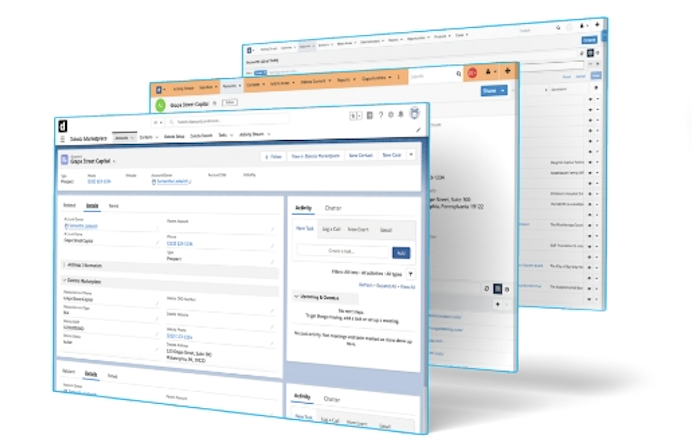
Everything flows directly into your CRM. No assembly required.



-1.png?width=172&height=70&name=Intapp%20DealCloud-Full%20Color%20(1)-1.png)
Investment Holdings Data
Dakota gives you a complete view of the institutional investment landscape - who is allocating, to what strategies, through what vehicles, with what results. All connected. All actionable.
925 West Lancaster Ave
Suite 220
Bryn Mawr, PA 19010
Tel: (610) 642-1481
© Dakota 2026 | Terms of Use | Privacy Policy