Narrator: Welcome to the Rainmaker Podcast with your host, Gui Costin. The goal of this podcast is to give listeners a unique look into sales strategies from top industry executives. We introduce you to the heads of sales and heads of distribution who will help you understand the inner workings of successful sales organizations, from philosophy to execution. This podcast is essential for sales professionals seeking wisdom from the best in the field. If you're not familiar with Dakota and their Dakota Rainmaker content, please check out dakota.com to learn more about their services.
Narrator: This episode is brought to you by Dakota Marketplace. Are you tired of constantly jumping between multiple databases and channels to find the right investment opportunities? Introducing Dakota Marketplace, the comprehensive institutional and intermediary database built by fundraisers for fundraisers. With Dakota Marketplace, you'll have access to all channels and asset classes in one place, saving you time and streamlining your fundraising process. Say goodbye to the frustration of searching through multiple databases, websites, and Form ADVs, and say hello to a seamless and efficient fundraising experience. Sign up now and see the difference Dakota Marketplace can make for you. Visit dakota.com/dakota-marketplace today.
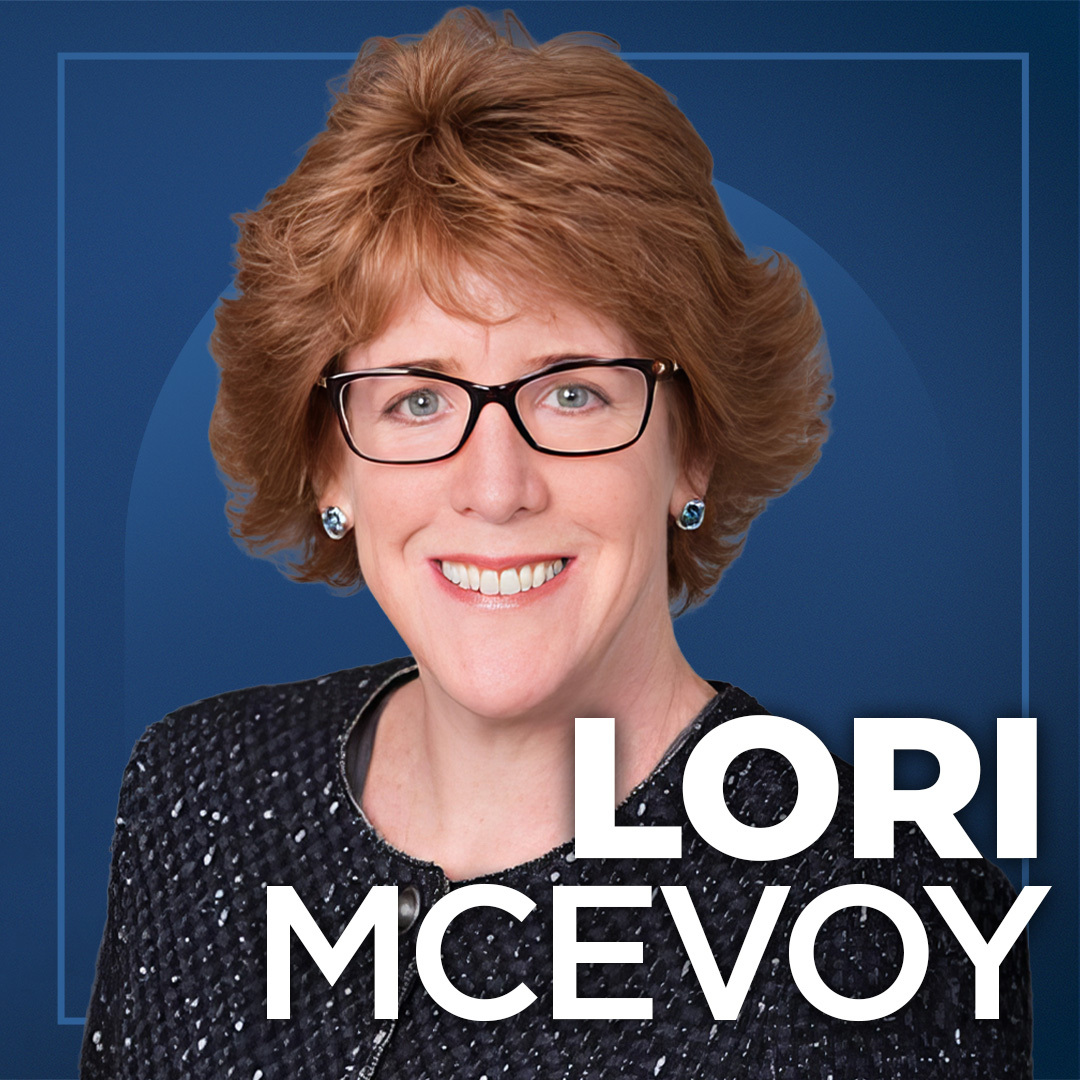
Gui Costin: What is up, everybody? It's Gui Costin, founder and CEO of Dakota. Welcome to the latest episode of the Rainmaker Podcast. I'm so excited to be joined by my longtime friend Lori McEvoy. Lori, welcome.
Lori McEvoy: Thank you, Gui. Thanks for having me.
Gui Costin: Lori McEvoy is a recently retired financial services executive and global business leader. Nearly a decade at Jennison Associates culminated in Ms. McEvoy's retirement as managing director and global head of distribution. In that capacity, she oversaw the firm's worldwide sales and client service organization, providing strategic leadership for its global institutional sales and relationship management, marketing, and consultant relations teams. In addition, Lori served on Jennison's management team and was the executive sponsor of Jennison's Diversity and Inclusion Council. Before joining Jennison in 2017, Ms. McEvoy led institutional sales at ClearBridge Investments, directing institutional sales and consultant relations. Earlier executive leadership positions at Fred Alger Management and WisdomTree Investments further expanded her experience across investment management, client relationships, and business development. In addition to her current board and civic responsibilities, Lori is now relaunching IMS Investment Management Solutions. A lifelong student of the industry, she will remain actively engaged, applying her experience and insights to a select group of managers to expand their marketing, sales, and distribution capabilities globally. As an honors graduate of Rosemont College, Lori earned a bachelor's degree in management before completing graduate-level coursework in finance at St. Joseph's University and executive programs in analytics, marketing, and investment management at the University of Pennsylvania's Wharton School. She holds FINRA Series 7, 26, and 63 licenses. So thrilled to have you. Truly a legend in the business and, you know, 30-plus years in distribution. I've known you since at least the late '90s, early 2000s. But take us back to the beginning, because you've had, like I said, a storied career in distribution. Before we get there, walk us through where you grew up, the origin story of Lori McEvoy, and where you are today.
Lori McEvoy: Well, thank you. Thanks for having me. It is an origin story. It's definitely a path that I would not have predicted growing up in Malvern, Pennsylvania, a suburb of Philadelphia. Fourth of five children, big Irish Catholic family, lucky to be in the Malvern area. Went to St. Patrick's School, St. Patrick's Church, very active, but I was really grateful for the fact that my parents were so engaged with the community and the fact that I had a big family. I rode the coattails of my older brothers, who are five and six years older than me. This is Title IX time. Had the chance, and I'm going to say this for the people who are listening, I was allowed, quote unquote, air quotes, to participate with them in sports. And then finally found my way in sports and played sports my whole life. But the fact is, my dad was a tile setter. He was a laborer. My mom was a stay-at-home mom. So, fourth of five kids, you think about what you can do with your life, and no one in my family ever went to college.
Gui Costin: Wow.
Lori McEvoy: And I paused there because that's not the norm today. And so I took a year off after high school. I didn't travel to Europe like they're doing today. I worked my tail off to save money to go to college. I enrolled at West Chester University and worked simultaneously while playing Division I softball. The reason I'm bringing all this to light is you think to yourself, okay, I'm going to keep working, keep working, keep working. But I'm like, I've got to get back to college. I've got to continue along in college. And so I applied for a job with a small-cap growth firm named Pilgrim Baxter. I could type really fast, and I could put books together and follow direction, but it was a really small entrepreneurial firm. I was their 13th employee hired after that summer. And so the question was, do I go back to school as a public health major, or do I join asset management? I had no idea what asset management was.
Gui Costin: Yeah. And just for the listeners, Pilgrim Baxter was the darling of the '90s in small-cap growth. Gary Pilgrim was the investor, and they were very public. They were very out there. They sold themselves probably 20 different times. I'm kidding, but a lot. Harold sold it quite a bit. But they were the poster child. They were the shining star of the '80s and '90s investing in small-cap growth.
Lori McEvoy: Yeah. When I joined, it was, again, a very small firm, $2 billion under management at the time. We were in a corporate center in Glenhardie. There were a number of Philadelphia asset management firms in that corridor, and Vanguard was just starting. I mean, can you imagine Vanguard's next door to you in a little building? But they showed me the ropes. They treated me like a daughter. It was very family-oriented, great culture. And so I learned the business from the bottom up, growing from administrative assistant into calculating performance into sitting next to Fortune 100 CIOs and Tier 1 consultant firms. We had great exposure back then. And so I stayed 16 years. They made me an equity partner, which then helped me to become who I am today and to start my own business and to join many boutiques. And then finally, at the end of my career, landed at behemoth Jennison, and moved to New York City. So—
Gui Costin: Iconic firm.
Lori McEvoy: Iconic firm.
Gui Costin: Amazing leadership.
Lori McEvoy: Grateful to be part of amazing organizations throughout my career. But now it's the next chapter. And so I'm relaunching Investment Management Solutions, a strategic planning service for leaders of asset management firms, along with some of the other philanthropic and board work that I'm doing. But I want to still stay in the game.
Gui Costin: Yeah, I love it. I love it. All right. So take me back to lessons learned as a distribution leader, because as you went throughout your career, I mean, leading distribution at Jennison, right? But we do want to dig into some tactical things that we believe investment sales professionals should be doing. Let me just tee it up for you and then you can comment on it. Number one is getting incredible alignment with the boss.
Lori McEvoy: Yeah.
Gui Costin: Maybe you could just talk about how you went about that around business plan and communication, and ongoing communication, and just how critical it is to keep everyone in the loop all the time. Because as I said, if you're a salesperson raising money and no one knows what you're doing, they assume you're out playing golf.
Lori McEvoy: Thank you. That's a large question, but I'll take it step by step. Thinking about communication across the organization and the alignment with what the strategy was. The first time I met with my boss, one of the questions I asked, like you would ask, is, what's your asset goal for the year? And he said, Lori, no hard feelings, but I don't like that question. He said, because I believe, and I think you're very similar, if you do the right things day in and day out, and you focus on the tactics of your plan and execute against those every single day, AUM will follow. So—
Gui Costin: Couldn't agree more. That was my whole philosophy.
Lori McEvoy: With that backdrop, I'm like, all right, cool. I can set up the plan. He gave me the wherewithal to hire the right people. And so for me, leadership is all around the definition of the leader that I am today, and it's because of the people I worked for, was mainly servant leadership. It was providing the support and the guidance that was necessary for our group, more recently at Jennison or other firms I've been a part of. It's to have their back, to recognize what they offer, and to make sure that we hired the right people and they're doing the right job.
Gui Costin: Right. What were the characteristics that you looked for when you were hiring a salesperson to invest in sales?
Lori McEvoy: Yeah, there were a couple of characteristics. I wanted people better than me. Playing sports, teams, like, okay, one great talent will elevate the whole group. So I looked for people who complemented the team we had, who are extremely good. But I think the characteristics come down to four things. Do they have passion for their craft? Are they team-oriented? I'm all about the team. Low ego, high EQ. Do they want to win? Again, back to passion. Are they looking to continuously improve? And I think of athletes like Tiger Woods or Michael Jordan, people who continue to practice their shots or practice their putting or practice every single day to become better. And so I think you want to surround yourself with people who are like that, who are team first, passionate, and want to continually improve. That's what I look for when I hire people. I hired a number of senior leaders at the organizations I've been a part of, and many of them were heads of something, but they wanted to be part of a winning franchise. And so they would change career paths and join our team because they're like, I'll check my title at the door. I just want to be on a good team.
Gui Costin: So I heard a quote recently. It said, our mission is to solve complex problems as a team. Right. And you start to think about what a business is all about. Every day there's your problem solving, serving. Right? But you're problem solving, and the more you can do it as a team, and it's collaborative, and you make decisions quickly... We talked about my prior interviews with some spectacular firms, a spectacular woman leader, and how it's so much in shades of gray how an organization makes decisions. Right? I know at Ares, Michael Arougheti has a whole decision-making philosophy and how he set up that culture. And it shows in the numbers. Right? It just flows right now. That's not everybody, because you have to be incredibly humble and vulnerable, right, to be able to do that. I've seen them more in fun, but now I'm seeing some of the evidence at their company and how much they've grown so quickly.
Lori McEvoy: Yeah.
Gui Costin: But it all comes down to the top and the culture. And then you find the people that will support that and spread it throughout the whole company.
Lori McEvoy: When I was hired in 2018, the firm, now it's 400 people and $200 billion in assets, but when I was hired, it was maybe 200 employees. And so there wasn't really a distribution organization. The firm was well regarded for its investment franchise. And so my goal was to hire the people that I thought could emulate and potentially capture that same reputation. And we did. You know, hiring a consultant relations team, hiring folks to work on RFPs and databases, enhancing our CRM, enhancing all the things that we needed to do to support both our parent company as well as the institutional area. I mean, 200 institutions are our client base. 33% of them were with the firm for more than 20 years.
Gui Costin: Wow.
Lori McEvoy: So the retention of those assets was critical. You wanted to have really good client-facing people who could retain assets, cross-sell, get more wallet share. And third, we wanted to grow outside the US. At the time, 2018, 98% of our assets sat inside the US. And so the huge opportunity that I saw, and we all projected, was the growth outside the US.
Gui Costin: Yeah.
Lori McEvoy: And so hiring people, as you mentioned, the types of skills and the characteristics, that was important for us because we had to leverage. We're still small relative to so many of the competitors in our space. And we didn't want to become too large of an employee base, because you really wanted to make sure it still stayed like the 55-year-old culture it was when it was created by those founding partners.
Gui Costin: That's great. So I want to ask you a few more tactical questions just in how you see the world, because this really matters to, you know, our avatar, if you will. And then I do want to get into, you know, that you have more to give, to kind of close out. But before we do, because I want to stay with the tactical, talk to me. One thing that's very debated all the time is a CRM. Okay. And not only just— we just had our data summit on Monday. So I don't like Salesforce. You know, I hate our CRM, and all this stuff. Right. But every single distribution leader I've had up here sees the world a lot differently. So could you talk to me just about your opinion? Because people listening right now, well, I don't want to use a CRM. I can use Outlook. I can use Excel. Right. But they're missing the 10x leverage. So your opinion on the use of a CRM?
Lori McEvoy: My opinion on CRM, it's the backbone of your company. My philosophy is if it's not inside the CRM, and a number of your speakers have said this, it never happened. I utilized Salesforce throughout my whole career, 25 years, different versions, out-of-the-box models, enhanced models, 2.0 models. And what we've done at our organization, previously, since I just retired, was to enhance the Salesforce system. It was a firm-wide initiative to make sure that, whether it's finance, accounting, performance measurement, all the things that were necessary were stored within Salesforce. I think it's critical. And I'll give you a few examples. Salesforce fed me, literally fed me via email every Friday, activity reports and information on how we were doing with our prospects, consultants, and platforms, just activities. It just made me more efficient. It made all of our people more efficient. Yeah, do we need to bring people along? Absolutely. There are people that, just like you said, say, I don't believe in it. I don't care. I've got it all up here. Well, that's key-man risk, or key-woman risk, as far as I'm concerned. And you have to show them a few examples of how it's going to make their life better, and easier. And so on Friday afternoons, when those emails got fed to me, I'm still old school, I printed them out and read them on the weekends. It helped prepare me for the next week. And so back to communication, I think one of the most important elements we had in communicating with our employee base was that I pulled information out of the CRM system and shot a monthly email. People get end-of-day emails, but this one I called Business Highlights. People love that one-page flash report that all came out of Salesforce: flows, new business activities, highlights for the month. They could just look at that. I got more calls on Friday afternoons. You know, who's going to call me on a Friday afternoon? I get emails from employees, portfolio managers: Hey, why isn't my information in the Business Highlights? Like, didn't happen. Like, yeah, it did. Like, wasn't in Salesforce. If I can't trust what's inside the system, because we're all held accountable to that, that's part of how you measure yourself and how you run your life. And I just thought Salesforce, the tools, the enhancements, dashboards, the channels, the campaigns, the tasks, all of it inside the technology, it's great. Can you imagine? I mean, 20 years ago, we walked around with a big money market directory. It was like eight inches high.
Gui Costin: The green book.
Lori McEvoy: The green book. I had pencil marks throughout each one of the plans. That was all outdated. But because of Dakota Marketplace, with all the information that we can feed into the system, you can engage with your clients that much better. It's current.
Gui Costin: And you're getting to the point of the data and analytics-first mentality. If you think about a single salesperson at a company, I would say you should think of yourself as Gui Costin Inc., Lori McEvoy Inc., and you should act like a big organization. What I mean by that is you should take your Salesforce and keep it simple, but have it organized, have all the information in there, be entering all the meetings that you scheduled, enter the notes. Now you can dictate the notes into Claude and it gets right in if you're using Slack. Make sure you're building your pipelines. It's the ultimate leverage point for a salesperson, is my point. Well, thank you for saying that, because what's also been crazy about Salesforce is Salesforce is an innovator. Salesforce has the cash to innovate like crazy around AI and everything they're doing around all their agents. And I think it's called now AI Force, used to be called Agent Force. Now it's AI Force. We're built on Salesforce, and how fast they're iterating, and just being their partner, you even go that much faster. And it's just hard. I mean, it's hard. You don't have these other databases that can invest at the pace that they can. And so, well, that is awesome. Data, analytics. That's it.
Lori McEvoy: But I agree wholeheartedly. I used to say garbage in, garbage out. I mean, it's just tough to see how you can operate in today's world without it. It's too difficult a job. Make your life easy.
Gui Costin: And then if you use Slack, right, which we've been using for ten years, the level of information we have now, it's almost like you can just go into Slack and get everything you need, the analytics out of Salesforce. Okay, so let's move on to your— how would you characterize your leadership style?
Lori McEvoy: Sure. Well, I brought a prop.
Gui Costin: Yeah, I want to see it.
Lori McEvoy: Unfortunately, people who are just listening, like I do when I drive, listen to your pod.
Gui Costin: That's one heck of an acknowledgment.
Lori McEvoy: Part of my retirement event, I was handed this Tiffany frame, and it's a word cloud. And so I can show the people who are listening. And the reason I mentioned it also to Gui at the top of the program, it's supportive. It's a word cloud of all the characteristics that I guess apply to me. And so I keep it in my home office. I look at it when I'm having a bad day and think about what I mean and what I stand for. And so supportive was one, kind and caring, energetic, mentoring. And so I brought that here today to show you.
Gui Costin: I'm so happy.
Lori McEvoy: I also received a beautiful watch, too. But this was great. And so I just want to say, that's my leadership style. That's what I do. That's what I stand for when it comes to the personality of the organization. Jim Ware from Focus Consulting called them red Xs. You don't want red Xs in your organization. You don't want people going cowboy in your organization. You want people that are all in it for the right reasons.
Gui Costin: I absolutely love that. And when you think about young salespeople getting into the business today, what would be one piece of advice you would give to them?
Lori McEvoy: Well, I don't know if it's just one, but I'd say the first question you want to ask yourself is, do you love your job? You're in this business. If the answer is yes, I love it, I think a few people have said it and you've written in your book, it's like, do you believe in what the company stands for? And if the answer is yes, okay, well, become a student of the business. Educate yourself.
Gui Costin: Know the knowables, right? I always say in the investment business, even if you have no experience, you can know what the ticker symbol is.
Lori McEvoy: I was a public health major. I mean, that's what I said. I had no idea when I first got in this business what asset management was. What does it stand for? Who are these people? What is asset allocation? What are rates of return? All these things. But the basics: get a digital version of the Journal, read the FT, read The Economist. I'm a student of business. I read about our competitors. I go to their website. I look at how they run their business. What do they do? But I say, you love it. So start networking through LinkedIn, through organizations. I joined AIMSE, which is the Association of Investment Management Sales Executives. And I said that really fast. A-I-M-S-E, about 25 years ago. Amazing network of people, education, access to plan sponsors, consultants, but also just to your peers. So I'd say, again, you love it. You know what the company stands for. Enrich yourself, make yourself a better professional, and also emulate the leaders of your organization and uncover what makes your organization so unique, what's your edge, what's your secret sauce. So I'd say emulate, love what you do, invest in yourself, invest in your abilities, continue to practice your craft, but network and find those people. That's one of the things that IMS will offer. It's mentorship, helping this next generation become that much better and succeed, because I think we all have a lot to give back. And so we want to pay it forward. I'm happy that, from what I can see, this next generation, we're in great hands. You're surrounded by them. I was surrounded by them.
Gui Costin: They are.
Lori McEvoy: They're great. They're raring to go.
Gui Costin: No, I'm very bullish on the 20- and 30-somethings. They're amazing. Okay, so let's talk about now what you're up to and about just the whole concept of I have more to give. Tell us about your philosophy and how you're thinking about that.
Lori McEvoy: Yeah. Well, I think of it in three buckets, Gui. It's really around what I'm passionate about. I'm passionate about giving back through investment management mentorship. Secondly, it's around philanthropy. I joined the board of AmeriCares. I've been part of their leadership council for years. I believe in what they do from a global disaster recovery standpoint. AmeriCares is a major organization, so I just joined their board. So again, giving back in that domain, but also in education. Helping individuals learn more about asset management and realize that there's more to our life than just asset management, that there's more that we can give. And it shouldn't be the last thing that you do when you hit 62 and say to yourself, okay, what else is there out there? I want to continue to invest in my family, my friends, and dedicate myself more to community work for sure. But when it comes back to IMS, I think that you and I are in a unique position to help organizations, especially those that are starting out. We've been through a lot over the last three decades of the investment management business. Can we help these firms with distribution? Can we provide the guidance that they may want when it comes to growing their firms? Again, distribution is complex. Right. It's definitely a team sport. And if we can help, I think of myself sometimes as the GM, like a Howie Roseman of the Eagles. I want to help organizations put the right players on the field. And if I can do that from a talent assessment, succession planning program, guidance, that's where I stand.
Gui Costin: Well, we were five years into our business. I started Dakota in '06, and in 2011, I just woke up one day and felt intensely empty, you know what I mean? Because we were having success, things were working, starting to make some money, and it was just very, very empty. And I thought about this and I came up with this line, my personal mission for Dakota, which I put on the website, is to help other people get what they want out of life.
Lori McEvoy: Wow.
Gui Costin: And that was 2011. And the way I look at the world and the way I look at these organizations is, right now I'm so focused on the data business. Okay. But it's almost like, as I say to my kids, you have to work somewhere, right? You've got to sell something to somebody. Okay. So might as well be here and then just, you know, decorate your prison cell, right? Because you have to do some hard things, and just be very clear that the grass is not always greener, right? So I think of Dakota as like a chassis, right, to help people build skills, build their career, serve. And I'm there to be the steward of the chassis, right? They could be doing something else, but it's almost like I feel these great organizations exist to have people become the best versions of themselves. And I think that's what you're getting at.
Lori McEvoy: Yeah.
Gui Costin: Right. And how do you spread that message? Because if you spread it to other leaders and they learn something, because, like we said, childhood trauma, I say it in the book, Be Kind, is very real. Okay. And it comes out in your leadership style. And so you have to be very careful with the words that you use. Howie Roseman spoke at one of my friend's little events, and the way that he thinks about culture and how you treat one another, it's very, very high on his list. And I just think that's what an organization is all about, right? Being kind to one another, but not giving up the highest professional standards, and playing at the highest level, right? That's the obligation of a leader right now. I don't think you push unnecessarily, like motivate or beat people down or constantly say you can do better. It's like, no, we're going to— what does the next iteration look like?
Lori McEvoy: You can't move the goal line.
Gui Costin: Right, yeah, exactly. And so I love— and so, your plan right now, you're involved in your not-for-profits, which is great, and you started the new business, you're getting your EIN. Tell us what would be meaningful for you over the next three to five years to accomplish with the business.
Lori McEvoy: Yeah, I'd say if I could work with a handful of asset management organizations or schools, whether it's financial literacy or financial knowledge at the high school level or college level. I'm heading to Drexel tonight to be part of a curriculum and serve those students. If I could be part of that success. I did it in 2001. I had this business 2001 to 2004. And then a little firm called WisdomTree came knocking and asked me to move to New York City and help them launch their company. No one knew what an ETF was back then. So at the time, I thought that IMS would be my business forever. To say in the next three to five years, what will this look like? I hope if I can help young people, help some asset management firms, and continue in philanthropic ways, that's a huge success.
Gui Costin: Well, I love that you said, just to close out, the servant leadership, because I really believe every day, for me at least, getting up in the morning, if I have the ability to serve, help people get what they want out of life, solve problems, be creative, work with wonderful people. Right. And as I say in my book, and even my mom said when she read the first transcript, she calls me, Geezy, do you think you're being a little bit too honest?
Lori McEvoy: Because I know I have pages flagged here, Gee, where you and I were on the same page on a lot of it.
Gui Costin: Right. I shared everything. But that's how you learn. And hopefully you grow from that. And I'm so happy for you. So proud of you.
Lori McEvoy: Thank you.
Gui Costin: Amazing career. And it's not over.
Lori McEvoy: It's not over.
Gui Costin: Which I love. That was your original line. It's not over. You have a lot more to give.
Gui Costin: Well, Lori, thank you. Thanks for being on. Such a thrill to have you.
Lori McEvoy: You got it.
Gui Costin: That's a wrap of another episode of the Rainmaker Podcast. Can't wait to see you in the next Rainmaker Podcast.
Narrator: You can find this episode and others on Spotify, Apple, or your favorite podcast platform. We are also available on YouTube if you prefer to watch while you listen. If you would like to check up on past episodes, check out our website, dakota.com. Finally, if you like what you're hearing and seeing, please be sure to like, follow, and share these episodes. We welcome all your feedback as well. Thank you for investing your time with Dakota.