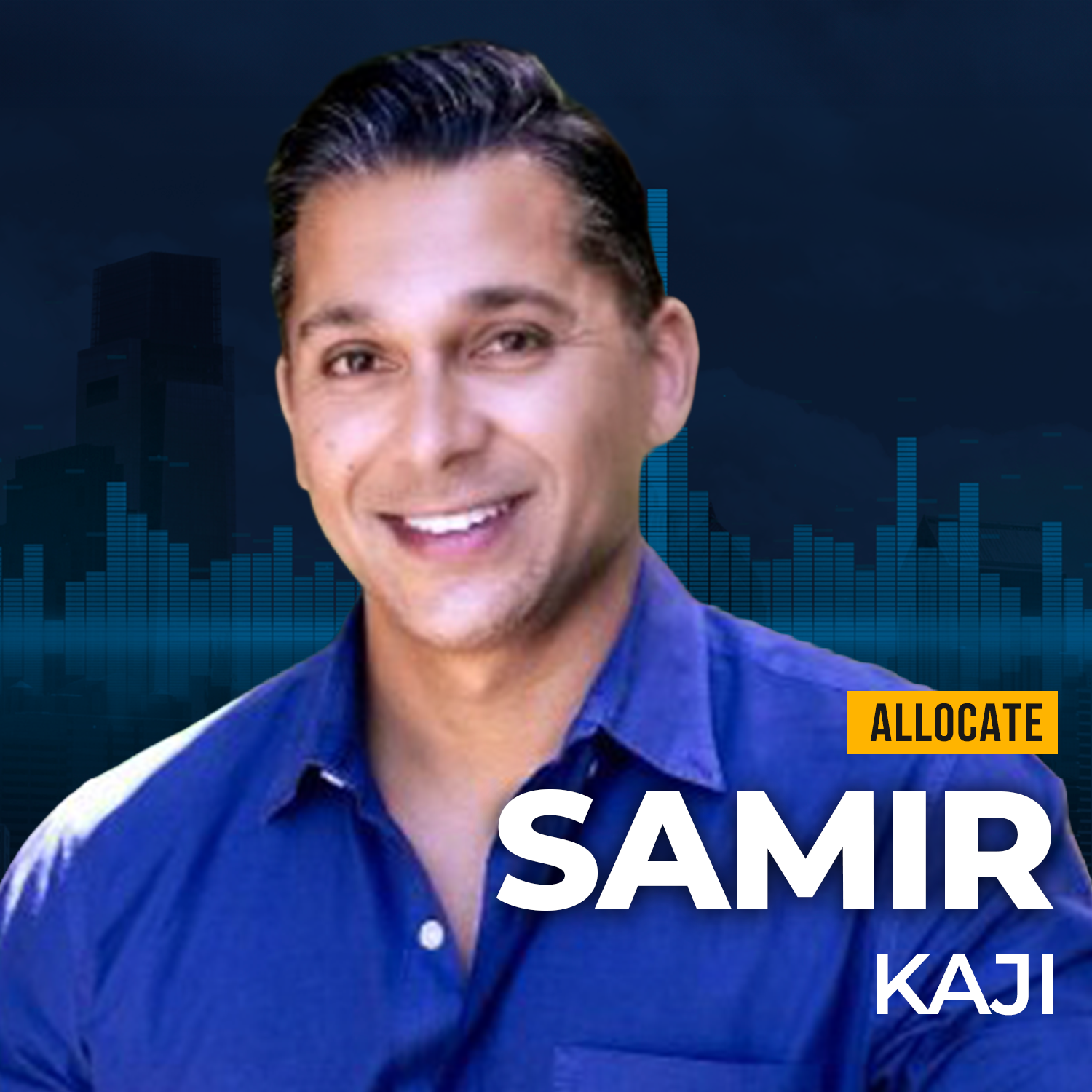
Robert Morier: Welcome to the DakotaLive podcast. I'm your host, Robert Morier. The goal of this podcast is to help you better know the people behind investment decisions. We introduce you to chief investment officers, manager research professionals, and other industry leaders to help you sell in between the lines and better understand the investment sales ecosystem. If you're not familiar with Dakota and our DakotaLive content, please visit our website Before we get started, I need to read a brief disclosure. This content is provided for informational purposes and should not be relied upon as recommendations or advice about investing in securities. All investments involve risk and may lose money. Dakota does not guarantee the accuracy of any of the information provided by the speaker, who is not affiliated with Dakota. Not a solicitation, testimonial, or endorsement by Dakota or its affiliates. Nothing herein is intended to indicate approval, support, Or recommendation of the investment advisor or its supervised persons by Dakota. Today's episode is brought to you by Dakota Marketplace. Are you tired of constantly jumping between multiple databases and channels to find the right investment opportunities? Introducing Dakota Marketplace, the comprehensive institutional and intermediary database built by fundraisers for fundraisers. With Dakota Marketplace, you'll have access to all channels and asset classes in one place, saving you time and streamlining your fundraising process. Say goodbye to the frustration of searching through multiple databases and say hello to a seamless and efficient fundraising Sign up now and see the difference Dakota Marketplace can make for you. Visit dakotamarketplace.com today. Our guest today is Samir Kaji. Samir is the co-founder and chief executive officer of Allocate. Allocate is a private markets operating system for wealth advisory firms and fund managers, a technology platform that lets advisors and general partners source, build, and manage private markets portfolios at scale. Founded in 2021, the The platform now serves roughly 400 wealth firms with over $4.8 billion in assets. Its mission is to responsibly open access to alternative investments that have historically been the province of large institutions. Samir's career spans more than 25 years in and around private markets. Before founding Allocate, he spent nearly 22 years in venture banking across Silicon Valley Bank and First Republic Bank, where he built and led a group focused on private funds and venture-backed startups, advised more than 700 venture capital and private equity firms, and completed over $12 billion in structured debt transactions. Along the way, he became an active limited partner and angel investor in his own right, backing dozens of funds and companies, including early-stage investments in Carta, FanDuel, and Policygenius. He's also one of the most prolific voices in the asset class, host of the Venture Unlocked podcast, and the writer behind a widely read blog on venture capital and emerging managers. Samir earned his bachelor's degree in finance from San Jose State University and an MBA from Santa Clara University. He is also a graduate of the Kauffman Fellows Program. Samir, welcome to the show.
Samir Kaji: Yeah, thanks for having me, Robert.
Robert Morier: Well, thank you for being here. I was looking at your background. If you thought about your time at San Jose State University, did you ever think you would be in this seat today? You studied finance, but what was the direction you were thinking originally?
Samir Kaji: My father was in engineering, and so my first undergrad, you know, sort of major was actually civil engineering, which is what my dad did. Halfway through, I realized I really liked numbers and had this great opportunity to, you know, kind of change tracks and go into finance. I actually didn't know what I was going to do after, you know, going to, you know, San Jose State. So I graduated in '98 and I took about 6 months to figure things out. So I, it wasn't one of those elaborate plans that I knew what I was going to do. And when I did finally find an opportunity, I was actually selling vacuum cleaners at the time, you know, post-grad. And I had this opportunity to either join my dad's business, which is commercial real estate, or go into this world of technology, which being in Silicon Valley, everyone was talking about this thing, new thing called the internet. And as the good fortune would have, I saw a job posting on our San Jose State board that was for a bank called Silicon Valley Bank. For those that remember, SVB was a bank that really catered to working with private funds and companies from when it started in 1983 to unfortunately at the 40-year mark, what we saw in the regional bank collapse. But I had no clue, so I had no understanding of what I was going to do. I actually thought I was going to be in banking for maybe a year or two, really just enjoyed working with entrepreneurs, private markets. And here we are 27 years later where I was in banking for those 22 years, left in 2021, to really solve what I saw as a huge convergence, which is wealth advisors and wealth advisory channels into private markets, and also the convergence of private and public markets. But certainly did not expect to be here even maybe 10 years ago. I didn't expect to be where I am right now.
Robert Morier: We have lots of questions to ask you, but maybe before we do, would you mind setting the stage to let our audience know more about Allocate? What is Allocate? Yeah. What does it do? And, um, you know, why did you, why did you start it?
Samir Kaji: Yeah, I mean, actually it was about 15 years of observation sitting between 2 sides of the market. If you think about any economic market, there's buyers and sellers. In private markets, the people that are selling are the fund managers, and on the other side are the limited partners. And I kind of sat in the middle of those 2 parties for about 15 years, and what I saw was things were getting more complex. You know, today there's about 30,000 fund managers, you know, globally. If you go back to 2009, there was about 3,000. On the other side of the fence, the people that want to now invest in these private markets, given the size and the influence, you've all seen companies like SpaceX and Anthropic now being private for so much longer, so much the value accrual happening in the private markets. We started to see family offices, individual investors wanting to tap into this parallel ecosystem. And sitting in my seat at First Republic, where I was from 2012 to 2021, I saw what wealth advisors were challenged with in terms of bringing really great opportunities to their clients. There wasn't just one constraint. In fact, this in many ways paralleled what I saw in the '70s, and I was really young back then, but I do a lot of reading around. Back then, if you wanted to buy a public stock, you had to call your broker who then called down to a trader settlement. Reporting was really tough. Well, private markets are still like that. They're very difficult, whether it's subscription documents, still in many cases paper compliance reporting for the advisor. Which clients should I take an opportunity to? And I always felt that investors deserve something better. Investors deserve to participate in the private markets in a way that's not just about democratization, but about responsible participation. And what that basically means for an end client is Am I getting into the right funds because the dispersion's high? Is it easy for me to transact? And then are those opportunities personalized? So I didn't see a solution out there that would actually serve the end client. And so working within those 2 sides, I said there's a real great opportunity to create a platform that acts as the operating system that sits between wealth advisors and private funds. The benefit for the wealth advisors is an easy, simple button to allow them to build and grow private exposure to their clients in a responsible way without all this constraints, using technology as operating leverage and having the wealth— I'm sorry, the fund managers be able to use our technology to raise capital more efficiently. And so we're 5 years in, the company has grown from 4 people when we started to nearly 90 people today. About $5 billion of assets on platform. And, you know, we now work with about 400 wealth advisors who are now leveraging the platform to be able to offer more bespoke and unique exposure to clients.
Robert Morier: Thank you for sharing that. It's very helpful for the audience. Uh, one thing I found so interesting is rather than solving this one narrow pain point for your clients, you chose to build this full-stack platform, which you've admitted is the harder path. And I, I can imagine it's probably given you a couple extra gray hairs over the last 5 years, right, going in that direction. Why go Full stack.
Samir Kaji: This is actually, you know, very similar to the observation. So I actually talked to a lot of advisors. I looked at what we did at First Republic, and like a lot of firms, we were just stitching together a lot of solutions. And the problem when you stitch together a lot of solutions, they don't often speak to each other. So you get, you know, loss of fidelity when it comes to workflow, loss of fidelity when it comes to data. There's plenty of point solutions out there. They do one thing, they do reporting, they do subscription documents, they do compliance. But that doesn't really solve anything for the advisor if you have to piece together 4 or 5 of those and then still not get the full benefit of a unified workflow. So we made the decision very early on that that wasn't really the solution that was going to scale private markets for these advisors. You needed to solve all of those things, but in a way that you didn't have that loss of fidelity of data or workflows. And yes, you're right, it has given me a few extra gray hairs. It's much more surface area to, you know, do. But the net benefit is now it's cheaper for the advisor because I don't have to pay 4 or 5 vendors. I have one place where everything is interconnected, and I now can use data as the layer, especially in a world of artificial intelligence where that data then can drive what do I do every day, you know? Robert, if you bring me a fund, like my CIO approves a fund, which clients should I take it? Well, that's going to be based on we're integrating with CRM systems, we're integrating with their reporting systems. And now you're providing the advisor with not just, hey, here's one, a place where you can go to execute on things, but it's a place that gives you the intelligence to help you understand how you should spend your day, who you should spend it with, and how do you provide this truly customizable experience for the end client.
Robert Morier: When you think about What you had mentioned before, and we hear all the time on this show and other shows around the democratization of private markets, particularly among wealth managers, RIAs. You've said that the wealth channel is going to become the primary source of capital as it's growing within these platforms. How big do you think that shift is going to be and how fast, in your experience, is it happening?
Samir Kaji: So it's happening very quickly. It's still constrained by advisor adoption, candidly. I don't think client demand is the thing that is actually If you look at the average advisor, their total book of assets under management, maybe 3 to 5% of that is in private markets, despite the size and scale of the private markets, which today are roughly $17 trillion, growing to $32 trillion based on most estimates by 2030. Of that growth, you know, the vast majority actually will still come from the traditional institutions. But of that $15 trillion growth, most estimates say $4 to $5 trillion will come from the wealth channel. Why? Well, demand is higher. You have generational succession to which the next group of investors, which are in their 30s and 40s, are more used to and more interested in investing in privates. And also the private markets are just getting so large where to drive true alpha, you really need to be able to dip into things that are pre-IPO. I think it's happening. I don't believe in just democratization. So 2 things I would say, and this may sound a little bit strange coming from me, I don't think everybody should invest in alternatives. I just don't. I think there is a group of people that should, and that's based on net worth, their risk profile, the liquidity profile, all those things. The second thing I would say is democratization only works if in low dispersion asset classes where you can just Kind of pick, and it doesn't really matter who you go in because the difference might be just a couple hundred basis points. In the world of privates, particularly things like private equity, venture capital, and any equity type of exposure, the dispersion can be 2,000 basis points. So it's not just about getting access to the asset classes, it's about getting access to the right opportunities that can produce that alpha.
Robert Morier: You have to curate those right opportunities. So rather than that very deliberate curation relative to a marketplace, why did you decide to draw that line? You know, why take the risk of potentially getting it wrong by concentrating the platform and the number of providers that are there?
Samir Kaji: I think, number one, we have a lot of belief in the way we've operated. You know, our team collectively has gone back and invested in funds or, you know, evaluated funds for about 27 years. And, you know, the, the real art to this is you're not going to be right about every single opportunity, but what you are doing is applying institutional frameworks to find the best opportunities. The reason we want curation is because our belief is advisors are not starved for supply. There are plenty of people going to the CIOs of these firms and pitching them. The issue is, how do I filter through that noise? Improve that signal to noise because everybody is capacity constrained when it comes to time. So instead of going marketplace, which I think also creates interesting conflicts of what side are you catering to, we decided that we wanted to be conflict-free, really focus on providing the very best opportunities to clients that are differentiated, and those clients being our wealth advisors now. Have the ability to really differentiate their private offering, and that's something that we've, we feel very strongly about.
Robert Morier: What do those clients look like in terms of the characteristics of the wealth advisory clients that are currently utilizing Allocate?
Samir Kaji: So they, I would say they fall into one of 3 buckets. You know, the first is you may have a new breakaway advisor. So if, if you look at the last 10 or 20 years, people have left some of the big wirehouses, some of the big private banks to start their own shops. For what they use Allocate for is really kind of the entire stack, everything from curations to reporting to the execution layer. So it acts as their true operating system. They're not displacing a number of different, you know, point solutions. The second is the advisor that is starting to really scale, typically $5 billion to $25 billion, have a high concentration of qualified purchaser clients. These are, you know, these are clients that have over $5 million of investable assets. And are really looking to programmatically and institutionally build their private markets program. They may use all of our stack or they may use one of the stacks. And I'd say the next one, the next level up is really the aggregators. And so you may have seen we announced a partnership with Dynasty, which is about $125 billion, has nearly 60 advisors underneath them. To which we are really powering them from a technology lens only, meaning that they are using us to create their own feeders, run their bespoke strategies for their clients, and use our subscription KYC and reporting technology.
Robert Morier: There's a technology solution, there's an operations solution. Do you think that the education solution resides with you or with the advisor?
Samir Kaji: So we want to provide advisors with tools to be educated and the CIOs. So there's 2 ways you do it. One is offline. So we do events, and we do field trips. For example, we took, you know, 25 advisors to about 7 different firms, and that way they can hear from the GP. There's also cross-pollination of ideas across the CIOs. We also, you know, do a lot of content to help people. The other thing is, you know, helping them, you know, if an advisor, for example, is launching an opportunity, how do you provide them with, you know, the tools in the form of collateral, talking points, Q&A, You know, we have a chatbot that exists on our platform where an advisor can even ask questions. Tell me more about private equity buyout. You know, how big is this industry? What are they focusing on? And all of that is, again, this customized way, because each of us learn differently. If you look at the past, you know, everybody reads the same book. And when I open up the book, everybody's reading the exact same words. They're, you know, you know, having the same outputs. But in today's age, you and I can learn very differently. You can— you and I can go on Claude or ChatGPT, and for the same topic, we may ask different questions based on where our blind spots are. So we've created that similar type of experience using artificial intelligence to customize the experience for the advisor, because the advisor may be very sophisticated in privates and they have certain questions around the deal, or very lightly sophisticated and they need to ask questions that are more general in nature. To have the confidence to bring it to the end client.
Robert Morier: I love the answer because I think it's interesting that on one side you've got AI and you've got really, you know, the future of technology being utilized in order to educate clients. And on the other end, it's a field trip, you know, get on the bus and let's go and understand what's going on on the ground. How do you see the development of that education platform going? Do you think it's going to lean more towards the field trip? People are going to want to understand more tangibly how things are operating within private markets, or do you think that the AI solution is going to be able to not replace but kind of overtly supplement?
Samir Kaji: This is not going to replace the advisor. I don't think it replaces the advisor. I think what it does is it superpowers the advisor. So I think about the offline events we do, the one-on-one conversations. Those are critical. At the end of the day, even though we're a technology company, we are in the people and trust business. And to earn the trust and build these relationships, They're often done by conversations, whether it's Zoom, in person, where we're going deep into an asset category, we're going deep into portfolio modeling. And so a lot of what we do is very much strategic advisory of helping an advisor think, how do I actually build my client base using privates as a lever? And then the technology creates ultimate operating leverage and scale. And that's how we look at those things. Taken apart, I think they solve part of it. Put together, you have scaled customization along with the real experience that you get of being with each other. And so we have a couple of events that you, you know, I think the team has maybe talked to you about. We do one summit that's really focused on the future of innovation. It's about 250 people this year we did in Deer Valley. And then we do an RIA day focused on wealth advisors where we bring 100 advisors together, firms, advisor firms together to talk about how they're solving problems for their clients with a bent toward the private markets. And those are really, really critical to, you know, how we help advisors really kind of grow what they want to do in terms of offering privates to their clients.
Robert Morier: You've made the case that in private markets, outcomes are driven more by manager selection and trust. Than by the pure data analysis. Why is the human element so dominant in this asset class?
Samir Kaji: Data is a way, again, to accelerate things. I mean, we use technology internally to help take a data room and expose all the elements that we care. It provides now our investment team the ability to ask the right questions, to go through an analysis much quicker than they historically had. But a lot of the discussion still is, the references that we do on those GPs. It's the offsheet references. It's leveraging the network, which is all color commentary that you don't get by just looking at data. And data on its own can be misleading because it's data. Typically things like track record are based on the past, and a lot of things have changed over the last 5 years. I'll give you an example. In venture capital, venture is very different than where it was you know, 10 years ago. The number of players, the fragmentation, the size of companies, the way people invest, the terms people leave organizations. So simply relying on the data without going through sort of the qualitative analysis of what remains true and is what they did in the past truly representing a proxy for what may happen in the future, which of course rarely happens, but you have to look at those markers And then you have to qualify those markers by having conversations with people in the industry to create the mosaic of, is this the right opportunity for the person using data and using, you know, knowledge and judgment? Dakota Recommends is your source for the highest quality coffee shops, restaurants, hotels, and event spaces in every major city where business happens. Dakota Recommends is thoughtfully curated by our team who has been traveling and hosting events in the investment industry for over 25 years. Log into Dakota Marketplace today to see how Dakota Recommends can help you make your next trip better.
Robert Morier: You've talked about the track record trap. Is that what you're inferring there?
Samir Kaji: I am. Yeah. I make a joke always, like in certain industries, private equity and venture, everybody's top quartile, and it usually means they're top quartile because they've picked one data point, one benchmark to which they represent top quartile. That's very dangerous. You know, if you're just looking at, to me, that's like a headline. The track record itself is like me going onto the Wall Street Journal, seeing what the headline is, but not actually reading what went into that. When they did those deals that led to that track record? Is it repeatable? Are the right people still there? Have they changed fund size? If they grew their fund size by 5x since they returned to 4x maybe 10 years ago, what's a fundamentally different business model? So all of those things beyond the track record, track records are important to actually understand. And of course, if someone has a poor track record, you're not going to invest. I mean, there's, but There's a lot of people that have seemingly great track records, but when you start unwinding things, you start to realize what was done in the past. Is it repeatable, non-repeatable? And what are the risk factors on the go-forward basis? Unlike public equity, if I invest in a private fund, I'm going to be locked up. So that decision itself is so critical at the time of purchase because I can't get out of it in, in 2 days or 2 weeks. And so The track record itself, while important, is simply a headline.
Robert Morier: I'm interested when you, when you think about underwriting a manager for the platform, you've got the emerging manager on one side, so a shorter track record, a smaller asset base, maybe experience, maybe the pedigree is there, maybe not. You know, maybe it's an analyst that's coming out versus the multi-product platform. Are they fundamentally different products? And if so, how should an allocator evaluate each?
Samir Kaji: 100% Different products. And, and, you know, it's the size and quantum of those funds, the business model. So if you look at a large-cap buyout firm versus a small-cap that is focused on a certain niche, these are different risk-return profiles. Obviously, the bigger you get, you should anticipate the returns to go down from an absolute top-end standpoint. Like, what is the top end I can get from this? Same in venture capital and growth. The bigger the fund, the more I would say the dispersion starts to narrow a little bit in terms of what the What's your worst case versus your best case? And so you have to fundamentally look at it as this is like me buying into like the Googles or some of the large caps. It's not a perfect analogy, but at the end of the day, there's a lot more track record. There's more you can see, there's more visibility. It does reduce the risk profile, but it also caps upside. Whereas you mentioned some of the emerging managers, and this could be somebody spinning out of a large private equity fund or venture fund, to which a lot of the analysis is much more qualitative. And so if somebody is spinning out of a firm, and, you know, we call those spin-out managers, you're really looking at the manager in terms of what are they now doing that they're uniquely positioned to win at? Also, at the old shop, did they win because of the firm they were at? So the name on the door, did they win in alignment with that firm, Or did they win in spite of the firm? And there's a lot of people that left firms that didn't have great sort of reputations, but they themselves were able to get into great deals. We love those type of people to back as spinouts because now under their own, you know, shingle, they are now able to execute on investment, an investment thesis they're strong at. They've shown the ability to win despite that past firm. These are all the things that you look at just because you were at a great firm. Doesn't mean that you are going to succeed at running your own firm. And so all of these things you have to look at, it tends to lean much more qualitative. On an average spinout manager, we may call, you know, the old firm, we may call their teammates, we may call founders they worked with and understood what is actually transferable to this new thing that they're doing.
Robert Morier: How do you get over the hurdle of brand name recognition? I just think back to the days when, you know, the more traditional institutional public markets manager, you know, who had done, you know, well with, with the consultants and the institutional marketplace started moving into wealth management and the RIAs, but the smaller they were, the less well-known they were, the more difficult it was to crack into this particular market. Is that hurdle there right now with private markets as well? Do you have to get over the brand name recognition in order to get the emerging managers on your platform access and ultimately assets?
Samir Kaji: Short answer is yes. If you look at the traditional wealth advisor, you look at it and say, you know, I product, the 3 to 5% of somebody's book on average. You may have some clients that are 10, 15%, but even if it's only 10% of a client's book, it tends to be 90% of what they talk about. And so what that then leads to and incentivizes is the advisor not taking much risk. And the way you can mitigate that risk is by buying into name brands and name brands in private equity. Everyone knows the Blackstones, the Ares, and the Apollos and venture capital. That's the Sequoias and Excels to, and the Andreessens to the extent that you can get access to those opportunities. That's much easier to sell and you're willing to then, you know, and many advisors willing to make the trade-off. I'm going to mitigate risk here because I'm in the stay rich game for my clients and I'm not going to take a lot of, you know, tail-end risk of long illiquid that could go to a zero. There's a lot of education. How do you mitigate the risk for the advisor to understand that there are these unique emerging managers, even smaller funds that don't have brand name recognition, that have actually performed incredibly well. But that's where the art comes in, in terms of understanding of the thousands of firms that exist, what are— what's that top 10 to 15% based on the entire profile of the management team? It's not easy though, because think about the supply chain. You know, if we bring an opportunity, we're bringing it to the CIO of the advisor firm. The CIO then needs to get comfortable with it. And then needs to, you know, have a clean way to ensure advisor adoption. Well, advisor adoption's going to be based on, do I know this? Is it easy for me to talk to clients? And if they're— and if most advisors are not comfortable with it, they just won't bring it to clients, even if it's a great opportunity potentially. So this is where a lot of education comes in, getting them into the relationships directly with these GPs.
Robert Morier: You called liquidity the next trillion-dollar unlock in private markets. Why is liquidity the problem to solve now, and, and what does it actually look like in terms of the solution?
Samir Kaji: SpaceX was private for what, 24 years roughly before it went public? There was a time and place where companies were going public or going through a liquidity event within 5 years. You know, when I started my career, that was the case. Now it's 12 years, 15 years. Some, some companies just keep on going. That works if you're a big institution, and it's even them, they do want liquidity back. But an individual, when I invest, for example, in a private fund, I can't hold it for 25 years without getting a good amount of liquidity back. So I might need to buy a house, I may have another life event, whatever the case may be. I want my value on liquidity is going to be higher than an endowment that's $12 billion. It just is. So when you look at that and say, okay, the influence of the wall channel is getting bigger, more people are investing. Well, but the liquidity quotient really hasn't changed. It's still very tough. Now, secondary markets have gotten bigger. So if you look at the secondary market last year, it hit another record year north of $200 billion, of which 50% was GP-led, roughly 50%. It used to be only LP-to-LP transactions. And then you had things like continuation vehicles, you had secondary trades, you had tenders, We're seeing that across multiple asset classes right now. So I expect the secondary liquidity to grow, but I also think it's technology platforms that now, for example, we partnered with a group called Pluto, and what Pluto Finance does is they provide net asset value loans to individuals against their private assets. Well, historically you were never able to do that, or it would take a year to get, and you had to have a huge amount of NAV in your privates. Now you can do loans that are as low as a couple hundred thousand to get liquidity in these illiquid assets. The other thing is you've seen companies like Forge and NASDAQ Private Markets actually create liquidity solutions that allow people to buy and sell. I think that is going to happen. Price clearing, bid-ask, all these things need to get a little bit better before we see real efficiency. But this is exactly where the world is going. I think in 10 years, you will start to see even greater convergence between how the public markets operate and how the private markets. Right now, these are 2 different worlds with fundamentally different operating, uh, you know, manuals.
Robert Morier: Take us through how you're underwriting these managers, if you don't mind. You know, if you could start from the top down and, and give us a sense of, you know, if you're an asset manager, a GP listening to this episode, and it sounds like the growth at Allocate is is happening and it's happening quickly. You've gone from 4 employees to 90 employees. You've got over 400 wealth advisors that are now on your platform and you want to be part of this. What does that process look like? How does a GP get your attention?
Samir Kaji: Our job obviously is to meet as many, you know, fund managers as possible in the categories that we cover. So we cover private equity, typically middle market, small cap, and then, you know, we haven't done many large cap yet. On the venture and growth side, this is one of the backbones to which we created the company around, which is we didn't see a lot of parties that were offering quality access to this channel. And then the third is income-producing. So things that are producing some— now, for a lot of wealth clients, those may not always be the right opportunity because most people are taxable and they're not tax-exempt, right? So if you earn 12% on a credit fund, you're taxable. Piece really atrophies a lot of those returns. So when we underwrite things, number one, we say, okay, do we believe this manager has a distinct advantage? If it's a growth equity or venture manager, do they have the right team that has an advantage around sourcing, winning, picking? Do they have a unique sort of moat around how they drive value to the portfolio companies that they're looking at? How do they work with them? What are the portfolio companies saying? And then from there, what we're really doing is an assessment of does it meet our underwriting bar? So you mentioned earlier the big funds versus small funds. What you also have to have a bar of, like, what you need that to operate. Given that we started off, you know, in 2021 with venture capital, it's an area that I think about because it's the hardest to underwrite because it takes so long and the feedback cycles are so long. So for an emerging manager, I'm probably taking a slightly longer liquidity. So then I have to look at, you know, what is, what are the key elements of a fund like that, you know, performing? Typically it's sourcing. Am I in the right room seeing the right deals? Number 2 is once I see the deals, can I win those deals? Because, you know, as many of the deals become hypercompetitive, which then, you know, hearkens back to why would they, why would a founder pick me? What, you know, what, what is it? My brand? Is it my network? Is it, you know, some unique value proposition? And it can't be just because I'm willing to pay a higher price, because that obviously creates a drag on returns. And the last one is, am I a good picker? Do I believe this person has good taste and judgment to be able to find the right deals, be able to win those deals, but also know which ones to pick? And you're assessing each one of those elements at a very deep level, which is both using if they have a track record, quantifying, did they— why did they see this deal? Who did they see this deal from? Is there a network effect that they've created? And that's how you look at it. For the bigger funds, you have plenty of track record. And so what you're really looking at is the team. Is the team still intact that's really driving those, has driven those returns in the past? Do they have a brand advantage in terms of being able to win and get into the very best entrepreneurs or companies? And third, do they have the capital scale to be able to win more deals? But I think that I don't underwrite those to a 5x or a 3 to 5x. And can we stay with a risk-balanced kind of view? You asked the question earlier, like, how should we be thinking about a portfolio? I think a good portfolio probably has some of those as anchors and foundation with satellites being some of these smaller managers, which can then really drive returns if they get it right. Right? So that's the big if, and that's why you have to build diversification across vintages, across managers, And ultimately you build a portfolio that is akin to what an institutional will do, but more modified for the individual investor.
Robert Morier: How do you think about fees when underwriting these managers? I guess again, it goes back to education. So we're having to educate the wealth advisor as to what the fees are going to be charged on these types of strategies. How does that take effect in terms of your underwriting process?
Samir Kaji: Yeah, I mean, terms always matter, but we are not going to pass on a great manager because the fees are slightly higher than, you know, maybe the benchmarks. I think The thing that I learned really early on when I was looking at funds is you cannot reduce a fee low enough to make a bad manager good. And the very best managers, if they have done it and it's very clear that they have the ingredients to continue that, whether it's half a percent more in management fees or a quarter percent and it's 5% additional carry, I always look at the net return. What is the net return expectation for the advisor and their client? Is when you look at the advisor fee or the manager fee or our fee or whatever it is, what is the total drag and what is the expected net return? Because that's what it, at the end of the day, comes down to. There are firms out there that I'd be willing to pay even higher fees because I know that they've been— not only have they been able to produce, but I believe on a go-forward basis, the net return is going to outpace some of the other managers who have lower fees.
Robert Morier: Is there a place for fund of funds on the platform?
Samir Kaji: There is. Now we create our own fund of fund products, you know, vintage here. Fund of funds, you have to be a little careful of because you have the dual layer of, you know, fees, and it really depends on the fund of fund manager. Why do people invest in fund of funds? Okay. Number one is time, right? So do I want to really prosecute on 20 different decisions, you know, over an 18-month period? Probably not. I'd rather have one One sort of product that gives me full access across multiple managers and assets. The second is, you know, it's administratively easy to get one K-1, one, you know, set of subscription documents and one set of financials. And the third is if the manager is really good, the fund-of-fund managers are truly getting you into what we consider the white truffle type of opportunities, the best funds and best companies. So I think in certain asset classes where dispersion's high, it makes sense. Low dispersion asset classes, it's hard to justify paying an additional fee and carry on top of what you're paying the underlying manager.
Robert Morier: How about GP staking and seeding? Have you thought about it in terms of including it as part of the platform solution? What does the team think about arguably the pretty quick growth in the area? So GP staking and seeding, It has its own news channel now.
Samir Kaji: We've done some GP stake funds and we think it's interesting because you're buying an equity stake into sort of the economic exposure of the GP vis-à-vis the carry, the management fees, more on the private equity side. So typically we've kind of focused on the private equity. Obviously there's the big players, there's the Dials, there's the Peters Hill, there's people below that. We've also even thought about, are there interesting ways we can have some managers that we feel highly And strongly about where we create bespoke structures where we're taking maybe a piece of the GP or the economics where it makes sense. Now, we don't want to be in a situation where we infuse so much structure that it works against the GP's ability to execute in the long term because you've created this precedent that they've given away economics, maybe incentives start to get a little misbalanced. So we have to really think about those things. But I am a big fan of finding unique ways to get clients in. So it's not just, hey, am I bringing the right opportunities, but can I structure it in a way that actually creates a net benefit for the client? So an example of that, and this is not to your direct question about GP staking, is we've looked at co-investments as a way to add. So maybe we have a fund, for example, which I can't name, but it's a fund where we negotiated Some goes into the fund and some goes into effectively an SMA, and that SMA is no fee, no carry. So if you look on a blended basis, we've been able to now create a product that actually, even if you look at the end, you know, client and the fees they're paying, they're actually paying less than if they went in directly to the fund because of the structure. And these are interesting ways, again, with one outcome in mind, which is bringing the very best products That can then generate the best returns. Because you generate the best returns, you also create loyalty between the advisor and the client. If you've ever been frustrated trying to build custom reports in either Dakota Marketplace or Salesforce, we have introduced Dakota Joe for you. Dakota Joe is a natural language report builder native to Salesforce, built inside of Dakota Marketplace. For all of our For our Dakota Marketplace users, you can find Dakota Joe today and start running reports on accounts, investments, contacts, and a whole list of other objects. For Salesforce users, we have Dakota Joe coming soon to your internal Salesforce logins. You can learn more about both today at dakotajo.ai.
Robert Morier: You've described Allocate as an intelligent operating system. I guess the way I can ask this is, what is Allocate's edge relative to other platforms that provide relatively similar services?
Samir Kaji: Part is cultural and part is like the technology. So we were founded in 2021. All of us came from, you know, kind of Silicon Valley roots, really thinking through technology. So as technology has changed over the last 15 years, we are a new entrant, relatively new entrant. It's been 5 years, so I wouldn't say we're— we're certainly not a startup anymore. We're, you know, you know, 5 years in. But at the end of the day, we weren't saddled with a lot of technology debt. So we were able to take a very clean sheet of paper and say, what is happening? And a year and a half into the company, something called ChatGPT came out. And instead of us looking at it and saying, okay, well, how are we going to implement it? We have all this technical debt, we were able to implement, you know, this new technology to build better products. Also, 90— I think every single person on our engineering team was gonna say 99%, but I think it's 100% uses AI at the core for, you know, accelerating coding. So when I think about our product from a technology standpoint, it's very modernized. Again, as I mentioned, full stack, right? So it's full stack, not a point solution. And we've taken the approach of How do you make it really, really easy for everybody within an advisor, whether it's a CIO, the advisor themselves, or the operations person, to leverage modern technology in a way that heavily uses artificial intelligence to do their jobs more efficiently? The second is curations. We talked about it. I don't think we— a marketplace actually makes sense. To me, that is akin to walking into Walmart with a shopping cart, and seeing a bunch of things on the shelf. If you see 400 opportunities on the shelf, how do you know which one's right, let alone which ones are right for your clients? And the third thing that we've kind of really focused on is while yes, technology's the operating lever, a lot of what we do is really act as strategic partners to our advisors. So we often spend time thinking about portfolio construction. Hey, you want to create a white label fund, Well, what are you trying to achieve? What are some best practices? What are things you want to avoid? How do you think about the taxable impact? Should this be a 3 for QPs only? Should it be a 3? At what point do you want to expand into doing co-investments? So a lot of it is based on the fact that we've launched over 200 funds and we have 20 years of history working with fund sponsors to help these advisors from a consultative basis versus, hey, I'm looking to simply sell you a piece of software and infrastructure.
Robert Morier: One of the things you mentioned about the underwriting process I just wanted to jump back to quickly was around the people. So when you're underwriting an investment, you're ultimately underwriting, you know, the human capital, the people who are, who are responsible for making the decisions within that, that fund, that portfolio. What does that process look like like from your seat? Because it's arguably the most artistic of all of the allocation and manager research work that you have to do. You've got to really understand the behaviors, the characteristics, the character of those people. So what does that process look like?
Samir Kaji: So number one is like you meet with the manager, you're on a Zoom, you're in person with them. If it's a team, you also want to see how people, the partners are interacting with each other. I think that's actually There's small tells that every sort of manager has. And so what we're really looking for is how do they think, less around the marketing fluff that you typically get. So how do they think? How do they actually operate? What are their decision-making frameworks? And then we have discussion around those things. So we often have multiple people on the team meeting these managers, and the reason we do that is we want opposing views. Because at the end of the day, you are always betting on human capital when it comes to investment decisions. There's a few exceptions, of course, in the quant hedge fund side, that's very different. But when it comes to these drawdown funds, you're at the end of the day looking at, do they in some way establish a pattern of thinking that we have seen work in the past? So we use pattern recognition because we've met with I think I've met with maybe 5,000 GPs over the last 15 years. And then from there, we have to test our biases because all of us start to build our own pattern recognition, which leads to blind spots. And that's why, you know, having an investment team that is okay with civil discourse and surfacing things, and then when you take that and then you pressure test it by doing the references, you get a pretty good read of like, the team and the people and the quality of their ability to execute on their given thesis.
Robert Morier: You're thinking about the people and you're thinking about their stories. And you've said that financial services needs more authentic human storytelling. But when I hear that, I see two sides of it, is that you are arguably building an army of GPs who are great storytellers, but maybe not great investors, where the, the not so great storytellers who might be thriving from an investment perspective, struggle, you know, to get the, uh, the spotlight from someone like Allocate.
Samir Kaji: Why?
Robert Morier: So 2 ways to ask it is, is how do you think effective storytelling impacts the way that you select GPs, and how do you discern fact from fiction?
Samir Kaji: Storytelling is actually a critical skill, uh, for any GP. It just is. Because what we're really looking at is if you can't actually tell the story of your business, how are you possibly going to be able to sell to an investor that you want to join your firm or a team member or a founder or a company? Why are they going to pick you? And human emotion plays a big role in how we do business with people. Like, do I like the person? Does the person have EQ? Are they able to tell me a story that's very compelling? Now, what you still have to do then is take that and say, okay, this person's a great storyteller. Is there substance here that is really, you know, in line with producing great returns? And that's when you look at the track record, you look at what they've invested, you say, okay, are there things in this story that they've told us that don't align with the facts that we see on paper? And that's where you really go deep of great storyteller. We want great storytellers, by the way, But the facts have to support their story that they're telling. Rarely do you find somebody that's a terrible narrator of their business be a great investor. There are exceptions for sure. And, you know, we will, we have backed people that won't blow you out of your seat when it comes to, you know, telling this, you know, compelling, you know, narrative that gets you really excited. But there, you can tell that they have these unique ingredients for the group that they're going after. So we had, a firm recently that was really focused on working with developer tools. Well, the, the people that are running those companies tend to be ones that are very technical. So this person was very technical, was pretty good at telling their story, wasn't like, you know, top tier, but it really made sense for the type of groups. And when we talked to some of those technical people and the companies that they were working with, all those people said the same thing. This person understood our business better than anybody else, and that's what we care about. And so I'd say the vast majority are good storytellers, and I think that's just important in, in any, any walk of business.
Robert Morier: Do you think that the GPs need to become more accessible? I, I think about your portfolio. I mean, you, you personally, you, you're a prolific writer. Uh, you have a podcast, Venture Unlocked, which I highly recommend listening to, to our audience. And, you know, you're telling not just other people's stories, but you're telling your own story as well. How important is that access, that transparency, do you think? Going forward? And the reason I ask is, is because it always, it felt like it was very opaque before, right? You, you had the rockstar, you know, portfolio manager or partner. You knew a little bit about them, but if somebody asked them what time they woke up in the morning, it was like a revelation. Wow, I had no idea. So there's more out there. How do you think about transparency in terms of being able to convey more than the investment? So more of who they are.
Samir Kaji: For us, I mean, when we talk to managers for the first time, I just want to know who they are. Oftentimes they'll jump right into the pitch. And for me, I don't listen to that many pitches. Our investment team does. But when I did listen to pitches, I usually just stopped and said, why did you do this? What incents you? What motivates you? If you weren't doing this, what else would you be doing? And you start to get sort of this train of thought that almost disarms them to a certain degree and surprises them that somebody's asking them this. But it gives you a unique glimpse of who they are and what drives them. And I, you know, we do the same. Like, I want that transparency. I want to know why they do things. Just be authentic. And I think some of that authentic ability starts to go away when people are so focused on fundraising and it becomes like this canned pitch. And I don't think that's the greatest way to build relationships because we're still building relationships with people. And if we invest in a fund or I'm sorry, we put a, like, if I personally invest in a fund, I'm an investor. In 70+ funds, I'm going to have a relationship with this person in some form or fashion for probably 15 years, 12 years, 10 years, maybe even much longer. And so if I don't feel like we're aligned from a value standpoint, it's hard for me to then say this is the one that we want to pick to invest in or put on the platform.
Robert Morier: You may not be meeting with as many managers, but I suspect you are still interviewing a lot of candidates for Allocate. So the people who are coming to work, work with you, work with your team, what are some of the questions that you're asking them that you believe yield the most results in terms of that person being the right candidate to work at Allocate?
Samir Kaji: Well, I mean, we have a very structured approach, you know, and you're right, I spend about 20 to 30% of my time talking to prospective candidates to join. You know, we typically focus on high agency, low ego people. So a lot of my questions around the high agency part, like what did you own in the past? Like how do you overcome problems? And I also want to hear about the personal story. So I do go deep into, you know, did they have a hardship in the past? I always find that people with certain chips on their shoulder tend to operate well within these type of environments, which are very fast-paced. And so I usually spend a lot of time just kind of understanding how they think about things, what they've done. Resumes can look great in terms of they've been at these great companies, but they don't actually yield enough. And so some of the questions could be, if you, again, like I asked the question about the GP, if you weren't doing this, what would you be doing? What are you running toward and what are you running away from? So really understanding that if there was one thing that you would hope to get in your next employer that you're not getting right now, what would that be? And then from there, you start to paint this picture of like, what's inside them. Because at the end of the day, great companies are the net effect of having the right people at the firm. It doesn't matter if you're technology or product. Your product is, at the end of the day, your people and your people's ability. And you need people to— there are going to be people that are great for Allocate that are not great for other companies and vice versa. People that are great employees at certain types of firms but may not be a great fit. So we're trying to assess Is does their mental makeup and what they want to do really align with what we do? And we know it's— we're not going to be a fit for everybody. We know everyone's not going to be fit for us. That's okay. But it's our job during those interview processes to ask those incisive questions to get down to how do they think. I don't really care what they've done. I care about how they thought about what was the process that they employed in the past that could be transferable to what we do.
Robert Morier: Yeah, so interesting. I was just having a conversation with a friend. We were talking about something similar. And it's so interesting that you mentioned the chip on the shoulder. So what's driving that candidate? The conversation we had, we talked about it as constructive grievances. And when I said that to my friend, he said, you mean revenge? And I was like, kind of. It's revenge without bitterness. It's wanting to—.
Samir Kaji: Yeah.
Robert Morier: Take what was being done at an old firm and build on it or build it better or build it faster, whatever it looks like. So I think that's an interesting approach, not just understanding where the, you know, the difficulties were in someone's life, but also the motivations. You know, is it competition? Is it a constructive grievance? Is it just the ability to be or the wanting for the ability to be the best? So I appreciate you sharing that.
Samir Kaji: Yeah. And you're right. I mean, those are the things that really matter. I mean, I like what you said about, you know, constructive grievance. And it, it, it removes the bitterness factor. It's not about bitterness. It's about using those past hardships as an inspiring force for you to want to do better every single day. And so we really look at how have you improved? What are the things that you always test yourself against? And when you find people that are really high, you know, what I consider high agency, meaning that they can take something, they own it, and you couple with low ego, which low ego people tend, and we have very accomplished people that work here, but the people still have low ego, which puts 'em on a constant learning agenda. I often spend time with our team of what are we getting wrong? Like, what are, what could we be doing better? How do we improve even 1% every single day? And then you start to think, and I spend a lot of time just walking to actually pressure test everything I'm thinking, how I think, what's changed. And it allows you to be better as an organization when you have those type of people. And so to your point, yes, you want people to have those things and have that little chip. And, you know, Josh Wolfe, who's a GP at Lux Capital, which is now a scaled firm, he has this saying that chips on shoulders make chips in pockets. And I really like that because I've seen that, you know, occur time and time again when you have the right people that have a positive, constructive, grievance, but not bitter, and it doesn't create baggage, but if it inspires them to really be ambitious and do what's necessary to create a, you know, a great meaningful outcome for everybody around them.
Robert Morier: Did you have a chip on your shoulder?
Samir Kaji: Yes. Um, I, I did. And, you know, my dad did, you know, you know, honestly, I didn't go to any of the, I didn't go to Harvard, I didn't go to Yale, I didn't go to Stanford. I went to San Jose State. I went, did my, uh, postgrad at Santa Clara, which is a great university. But at the same time, you know, I didn't come from the classic cut of like banking or anything like that. And so there was times in the past where, you know, you feel like you're overlooked, but you use that as motivation. And so, you know, today I, I, you know, I played sports, so I'm very competitive as well. And so, you know, the pace of play has to be a certain way. And, you know, I think the chip on the shoulder, if used in, in the right way, can be an incredible competitive advantage for people.
Robert Morier: Yeah, I agree. Samir, thank you for sharing that. One last question for you. It's been 5 years. What do you hope the next 5 years look like for Allocate?
Samir Kaji: I, I want to simplify it because, you know, there's the business answer, which is, you know, we want to grow and capture the next trillion dollars of, you know, capital flows, and we want to build a, you know, the market-leading business for sure. That is the end business goal. But the byproduct of how you get there, uh, and to me that, I'm sorry, that is the byproduct. How we get there though is producing meaningful outcomes for the advisors to their clients. At the end of the day, if we can make the private markets feel as easy to navigate as the public markets. That's what we want to accomplish. And if we can do that, we will build a very, very large and enduring business.
Robert Morier: Well, we wish you nothing but success and future growth with Allocate, with yourself as well. We are grateful for your time and we wish you nothing but the best.
Samir Kaji: Thanks for having me on. It was a great time.
Robert Morier: If you'd like to learn more about Samir and Allocate, please visit www.allocate.co. You can find this episode and past episodes on Spotify, Apple, or your favorite podcast platform. We're also available on YouTube if you prefer to watch while you listen. And of course, for more content, please visit us at dakota.com. Samir, thank you again for being here.
Samir Kaji: Thank you for having me.
Robert Morier: And to our audience, thank you for investing your time with Dakota.