Robert Morier: Welcome to the Dakota Live! podcast. I'm your host, Robert Morier. The goal of this podcast is to help you better know the people behind investment decisions. We introduce you to chief investment officers, manager research professionals, and other industry leaders to help you sell in between the lines and better understand the investment sales ecosystem. If you're not familiar with Dakota and our Dakota Live! content, please visit our website, Before we get started, I need to read a brief disclosure. This content is provided for informational purposes and should not be relied upon as recommendations or advice about investing in securities. All investments involve risk and may lose money. Dakota does not guarantee the accuracy of any of the information provided by the speaker who is not affiliated with Dakota. Not a solicitation, testimonial, or endorsement by Dakota or its affiliates. Nothing herein is intended to indicate approval, support, or or recommendation of the investment advisor or its supervised persons by Dakota.
Narrator: Today's episode is brought to you by Dakota Marketplace. Are you tired of constantly jumping between multiple databases and channels to find the right investment opportunities? Introducing Dakota Marketplace, the comprehensive institutional and intermediary database built by fundraisers for fundraisers. With Dakota Marketplace, you'll have access to all channels and asset classes in one place, saving you time and streamlining your fundraising process. Say goodbye to the frustration of searching through multiple databases and say hello to a seamless and efficient fundraising experience. Sign up now and see the difference Dakota Marketplace can make for you. Visit dakotamarketplace.com today.
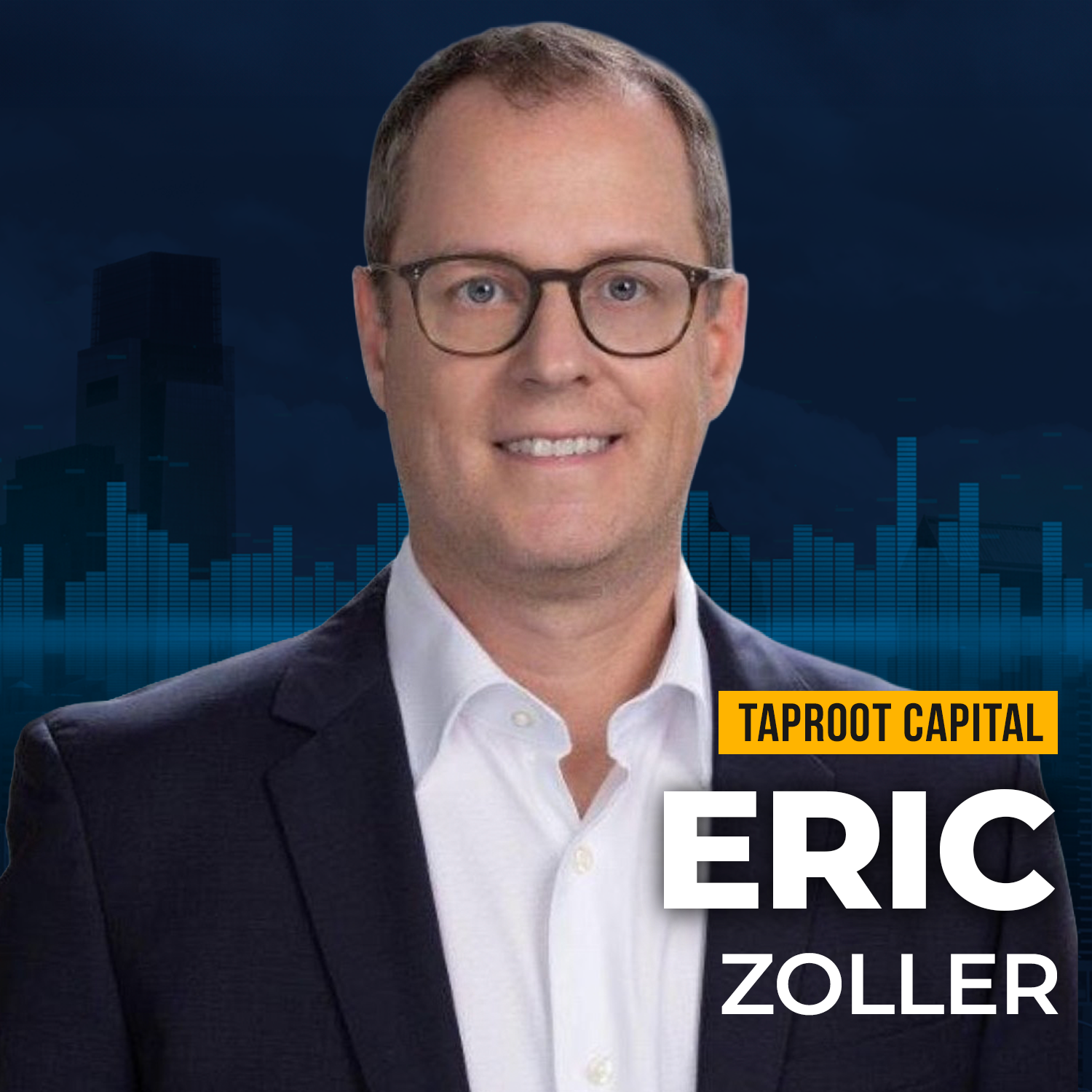
Robert Morier: Welcome back to the Dakota Live! podcast. I am very excited to welcome our guest today, Eric Zoller. Eric is co-founder and chief executive officer of Taproot Capital. Taproot is an alternative asset manager that Eric and his partners launched in 2025 to seed first-time funds and partner with emerging and growing private equity firms. When a talented team looks to have an established firm start their own, Taproot partners with them at its inception, providing cornerstone fund commitments, operational and back-office support, ongoing investor relations, and in-house fundraising services. The firm is led by co-founders Eric Zoller, Matthew Thornton, Bobby Farina, and Kristy Hogan, who together bring more than 75 years of private equity experience and nearly 2 decades of working alongside one another, with offices in Summit, New York, Chicago, and Park City. Eric has spent his career at the intersection of new managers and the capital they need. Before Taproot, he was a managing director at Harris Williams, where he served as head of private capital advisory and sat on the firm's leadership team. He got there through his own company. In 2007, he founded Sixpoint Partners, which became one of the largest independent fund placement advisors serving the middle market private equity industry. He sold Sixpoint to PNC Bank in 2019, and it later merged with Harris Williams in 2023. Along the way, he launched a principal platform to seed spin-out managers, which in many ways functioned as their first institutional vehicle. Earlier in his career, Eric was an investment banker at Merrill Lynch, and before that he was an attorney at White & Case focusing on sponsor-backed M&A. He earned his bachelor's degree in history and his law degree both from the University of Pennsylvania here in Philadelphia. Eric, thank you for joining us on the Dakota Live! podcast. It's wonderful to have you here.
Eric Zoller: Thanks for having me. It's great to be back in Philadelphia.
Robert Morier: And how does it feel to be back?
Eric Zoller: I spent a lot of time in Philadelphia for, undergrad and then law school. So lived here, worked here, studied here. It's terrific.
Robert Morier: What's familiar and what looks different other than LeBron James?
Eric Zoller: Yeah, well, it was great to be back on the Square. Kind of walked through the park this morning on my way over here, which is nice. And, you know, it's a nice shiny day. No sun, no rain today.
Robert Morier: Yeah, no, that's good. So you think about going back to Philadelphia, you're at Penn, University City. At that point, what were you thinking in terms of career? Did you know that law was the direction you wanted to go into initially, or did you have kind of a different thought in mind?
Eric Zoller: I thought I was going to be a professor of Holocaust studies. So I was, again, a history major, had a minor in political science, and loved being in the classroom, loved being with students, but realized that for a bunch of reasons, you know, law would be a good profession. So started to, in the later years of my Schooling to start to take some pre-law classes and then eventually made the leap.
Robert Morier: That's great. I was a history major and a political science minor as well. I also thought I was going to teach and then went the direction of finance. So we have that in common. So we might bridge that gap a few times over the course of the conversation. How did a lawyer end up building a career around private equity placement and seeding? What did that legal training give you to prepare you for that direction in your career?
Eric Zoller: When I graduated college, I was a history major, and at the time, Wall Street was not banging down my door. They weren't looking for history majors. This is in the early aughts, or really the late '90s. And following that, I did end up going to law school. I practiced law at White & Case, as you noted earlier in my bio. The dot-com bubble had just happened. The markets all of a sudden started to slow down. And shortly as the market started to recover, there was actually a shift on Wall Street where Wall Street was looking for lawyers. And the reason they were looking for lawyers is reasoning abilities, writing abilities, writing and being able to tell a narrative, which is very important in banking and frankly still very important in all aspects of the market today, was something that firms valued and felt lawyers had. And so they started to recruit lawyers and that sort of brought me over to Wall Street. As it relates to seeding, seeding is a very highly structured business. You are an investor, you're signing an LPA like any investor might, but the complexity of seeding structuring, because these are 20-year-lived relationships, is unique. And being a lawyer and having that structuring capability has really benefited us as a firm, myself personally in my engagement with the prospective founders.
Robert Morier: And you moved from law to Merrill Lynch as a vice president before striking out on your own. What did you learn on the banking side of your experience about how capital actually gets raised in this market, any market, whether it's the early aughts or today?
Eric Zoller: Relationships. matter. Everything is about relationships, you know, especially when you are in a highly competitive environment like we are today. Being able to raise capital means you have to have the trust of the investor, and to have the trust of the investor, it takes time. And so that means that you've gotta be transparent and open with them about the pros and the cons of anything that you might be showing them, where you think it's a fit or not. You could spend many years with an investor, but sometimes the worst offense is not the commission, but the offense of omission and leaving something out and leaving it for the investor to find it. And if something like that ever happens, an investor will probably, you know, close the door to you forever. So relationships matter, trust matters, and from an execution perspective, responsiveness matters. LPs have so many different people coming at them at the same time, whether it's sponsors like us that are out to tell our story or whether it's all the different placement agents in the market that are out trying to tell the story on behalf of their clients. And so LPs have to decide where they want to spend their time. And so when they have a particular question, you really need to think about yourself as an extension of their own practice and how you could help, again, be responsive and get them what they need in the timeline in which they need it so that you can both advance their work but advance your own Is that a skill set that came naturally for you?
Robert Morier: Because it's interesting, I speak to a lot of distribution folks as an extension of this podcast, and it sounds easier than it is to be an extension of someone's office, like staying in front of one— someone, staying proactive. For you personally, is that something that came naturally, or is it a skill that you had to develop?
Eric Zoller: I think it was very innate to who I am. Some of it is just the entrepreneurial drive of who I am, what we do, but it's also the culture that we built. It was the culture we built at Sixpoint. It was the culture that we extended into Harris Williams. It's certainly the culture at Taproot. We have a very hard-charging, very focused approach to what we do. And we tell our team, you are there to serve as an extension of the investor. You know, when we look at the market, there's really 2 players to it, right? There's the GP, that's the customer. And a big focus for us is being able to be blunt in our advice, And really being able to serve the customer in all the different ways that they need across their lifecycle. And the limited partner is the partner. You know, people forget the partner part of limited partner. And so you really have to be acting in that way with them. Yes, from the very beginning of our business, we've always been kind of myopically focused on making sure that we are serving our 2 constituents.
Robert Morier: Yeah. Where did that entrepreneurial spirit come from? I'm thinking you're at Merrill Lynch, you're as a VP, you know, you're on the, on the right track, and you decide to do your own thing. Is— are you a glutton for punishment, or did you, did you know you wanted to do something different on your own?
Eric Zoller: Yeah, I definitely knew I wanted to do something different on my own, and, and I saw it growing up. I'm, I'm a first-generation American. both my parents are immigrants who came to this country, in, in the '70s. And I watched my father build a real estate and shipping business, which ended up being a global business, and it always rubbed off on me. And It was very clear to me from a very young age that I would be an entrepreneur, owner, founder. And so that, that was the early inspiration for what I wanted to do.
Robert Morier: And is that what Sixpoint was for you at that time? So when you think about, you've, you've got a whiteboard with Sixpoint and you built it into one of the largest independent fund placement advisors in the middle market. What did you see in the market that wanted you to start your own firm rather than staying in a larger institution other than your father's inspiration?
Eric Zoller: Well, first of all, being an entrepreneur means you are driving impact every day. And so I loved the unstructured environment of what a startup was, but also when I looked across the private equity market, especially back then, the private equity market going back to, to the early founding was a relatively still immature market. It wasn't fully professionalized. The nomenclature when people talked about the market was very focused on, I'm raising a fund, fund 1, fund 2, fund 3, but there really wasn't a focus on we're building a firm. And the firm is the investments you make at the private equity firm level in terms of how you are driving value. For example, bringing in operating partners that work inside the business, bringing in functional areas of expertise inside the business as a force multiplier to how you drive value within the portfolio. So a lot of that did not exist at the beginning. And so we saw, I saw a real opportunity for professionalization within the market. And secondly, it's a cottage industry. And one of the things that I loved is that no matter, no matter the firm you were dealing with, you got to deal directly with the founder and sit side by side with that founder and understand their vision and help advise them on how they can best accomplish what their vision is. You know, I think back to a sponsor that might have 100 employees, it'd be a pretty big private equity firm, and they might have multiple funds and 50, 60+ portfolio companies and tens of thousands of employees. But they're still just a small-medium enterprise in their own right. And so it's very, it was exciting for me to be able to help step into that kind of role and again, really sit side by side with other like professionals who are on their own founder journey.
Robert Morier: Yeah. There's a rumor that timing is everything. Your timing was quite interesting with Sixpoint, 2007. So there's a, a hurricane, a Category 5 hurricane that was offshore that was starting to build up a lot of momentum, particularly in alternatives. Not specifically private equity, but certainly alts. What did surviving those first few years teach you about the business that you didn't recognize before?
Eric Zoller: Having a stable pool of capital was critical. You know, when we started the business, we, as you noted, started a fundraising business at a time where there was simply no ability to fundraise. So we actually went, I think in all of 2009, we didn't raise a single penny. There was no money to be raised. And so kind of drawing that connection to how the seeding market works, I think having capital at the ready and early provides a lot of optionality, flexibility, security for a new manager. So we, we were fortunate that we were able to raise seed capital for our business and allowed us to see ourselves through the market turmoil and then come out the other side very, very successfully. And again, I think in seeding, that's the same thing. There's, there's a little bit of a survivor bias. LPs want to be with the GPs that can figure it out. So having the capital allows a sponsor to be able to do deals early. Having capital allows a sponsor to be able to attract and build a team in advance of really raising any money. And so what the seed capital does is really gives validation to this team and puts 'em in a position to then accelerate their fundraising in the market.
Robert Morier: Why do some GPs, why do some teams find it easier than others? Why are some more successful in fundraising? Only because it's obviously an incredibly important aspect of what GPs do, what we all do, but it's never discussed as a competitive edge, you know, that we fundraise better. It's we source managers better, we source ideas better, we execute better, we hire better. But raising money is a very difficult exercise, and it continues to be a difficult exercise, whether it's 2009 when there's no liquidity, so there's nothing to raise, or even today's market. So what do you think it is that separates a good team from, I guess I was to say, an average team as it relates to fundraising?
Eric Zoller: We're in a Goldilocks market now, so you can raise capital in a way that you couldn't in 2023, 2024. But it's, so it's a little bit hot, but it's also a little bit cold because it is still difficult. LPs have more investable options than they have investable dollars today. And so they can afford to be discriminating in that way. And therefore, I think that coming back to my comment about relationships, when you walk into a meeting, You have to remember this is a not 1 to 3 year duration. This is not a transactional relationship. An investor is really looking to commit to a manager that they could stay with over 2 to 3 funds and typically 3 funds. Each fund life has 10, 12 years. So you're talking about a 20 to 30 year relationship. So first thing is GPs that understand that this is a long-term relationship are better approved. They're in a better situation. The second thing is you have to realize that's why private equity is slow. There's a reason that LPs take time because you can't make a decision once after meeting a manager. They want to see the manager in multiple environments. So they want to see you in the meeting. They want to see how you interact with your partner who might be sitting next to you. They want to see you in your office, which is why they do onsite. Sometimes they want to go and visit your AGM, even if on a prospective basis, because they're not existing. They want to see the kind of transparency and communication that you engage with, with your investors, because they want to see how you're going to treat them if they were an investor. So I think those GPs that do the best job are those that understand about that this is a relationship, it's a long-term relationship, and they've got to think about where do I fit inside of that LP's portfolio. One of the things I'm hearing the most about today is that LPs are moving from just being allocators to trying to be a holistic partner to the GP themselves. So if you look at a lot of firms that are either fund of funds or consultants, their clients no longer want to buy access. They want to buy a holistic relationship. So an LP wants to know, will I get secondary opportunities? Will I get debt looks? Will I get co-invest? So GPs who really take the time to understand what the LP wants and how they can serve that LP by far are going to succeed more, more, more quickly.
Robert Morier: When you're working with GPs, how do you manage those expectations? Because the expectation can be that You come in, you sit down with an LP for the first time, it's a good meeting. But I think about that first raise, you know, that debut raise when you're out there for the first time, you're excited to be out there, you've got that great meeting, you meet with a university endowment in their offices, they give you 2 hours, you walk out and you say, okay, this is gonna happen. But then things slow down for a lot of the reasons that you just described. But how do you manage those expectations for the GPs that you're working with?
Eric Zoller: It's a great question. It kind of brings me back to our placement agent days. And we, we told the GP, you will never walk out of a first meeting and say, I had a bad first meeting. In many ways, investors want to make sure that they, preserve optionality. There may be a meeting that is, less optimal, but from an investor's perspective, going back to what I said a moment ago, they don't make a decision on one meeting alone. So they want to be able to engage with you, with your team over the course of 2, 3, 4 funds. And over the course of many months. So again, as it relates to advising the GP, number one, you're never going to walk out of a bad meeting. Number two, don't try to read the room in some ways. Now I'm speaking out of both sides of my mouth, but there could be an investor that isn't going to ask a single question. There's going to be investors that are going to interrupt you the whole way. You just got to be able to walk in, tell your story in any environment, whatever the LP's throwing at you. Because in many ways that's part of the LP's process. That's number one. Number two, it's really important to be able to, if you're a first-time fund, which of course is the part of the market that we spend our time in, LPs want to see, they want some visibility on the portfolio. So being able to have a deal, have a deal early, one of the things we try to encourage our GPs to do is don't focus just on fundraising. You gotta do all, you gotta do everything all at once. which is kind of the exciting thing about being an entrepreneur, owner, founder, but is also one of the most difficult things. You're starting your own firm, you have to recruit a team. Starting your own firm, go do a deal. You're starting your own firm, you gotta fundraise and be on the road all the time. So you have to do all these things at once and make sure that you're properly balancing those competitive tensions. And we're big believers in distributed leadership, meaning don't try to do it all yourself.
Robert Morier: I'm interested, in 2018 while you were at Sixpoint, you launched a platform to seed spinout managers. That was a very interesting interesting shift in the business. You went from advising firms on raising capital to putting your own capital behind them. What prompted that move?
Eric Zoller: So when we started Sixpoint, probably 75% of what we did was work with the spinout managers. Part of it was just we came into the market at the time we did, and it was the easiest way to break into relationships. At the time that we left Harris Williams, it was still a healthy third of our business. And so as you noted, in 2018, we saw an opportunity to do a lot of what we were already doing for the spinout managers, helping them stand up the firm, advise them on the right structure, advise them on how to handle management company and carry allocations, tell their story, going back to the narrative, but do so on a principal basis. And so we raised a sort of a pre-fund vehicle, pre-fund to what we do today at Taproot, to back a couple of managers. And it was enormously successful. And it was really on the back of that that we decided to launch Taproot. Now, the why is we felt at the time, and we continue to feel today, that there's a large gap in the market for first-time funds and spinouts that need certainly capital, but the professionalization that we discussed. And we're the only allocator in the market that really comes from an agent advisor background. And we think that sets us apart and is critical to how we deliver value for our GPs. And how we bring, how we mitigate the risk of seeding, because there are risks for our LPs. You know, we are 12 professionals today. 7 of the 12 are all with an advisory background. So if I'm a prospective new manager, having the seed capital is critical, but then how do I bridge the other half a billion dollars that I want to raise?
Narrator: Dakota Recommends is your source for the highest quality coffee shops, restaurants, hotels, and event spaces in every major city where business happens. Dakota Recommends is thoughtfully curated by our team who has been traveling and hosting events in the investment industry for over 25 years. Log into Dakota Marketplace today to see how Dakota Recommends can help you make your next trip better.
Robert Morier: We've had an increasing number of GP staking businesses, GP seeding businesses who have been on the show, have talked about their services, what distinguishes them. But before we talk about Taproot, can you help our audience in explaining the difference between seeding, anchoring, and taking a GP stake when it comes to partnering with early-stage PE firms?
Eric Zoller: Some LPs will confuse the two. But we believe GP stakes and GP seeding are two sides of the same coin. So when we think about GP stakes, you're buying into a more mature firm where you're getting the present value of the future cash flows over a period of time. There are primary and secondary components to that capital, meaning a good portion of that capital could end up in the pocket of the GP, or it could go on the balance sheet and is used for future investments for that manager, but it's still benefiting a smaller subset of the larger team. The problem with it, and there's a lot of benefits too, 'cause it provides growth capital and so on. But the problem with it is it can create misalignment because what if you're not part of the GP stake liquidity event? What if you just came into a lot of money really quickly? What does that do in terms of sapping or not your motivation? When we think about seeding, seeding, all the capital's going in as LP capital. No one's getting anything in their pocket. And I think the assessment that LPs are making is, okay, I can get comfortable if the reason that a manager is taking this capital is because it's going to accelerate their ability to raise their fund. It's going to de-risk the opportunity for me, the LP, because they can now also build a team that can execute on the strategy. But seeding is much more about acceleration capital and de-risking an opportunity, and stakes is more about an exit. Anchoring sort of sits in its own category. Anchoring is kind of usually for a group that's already spun out and they are looking to provide economics that might be a fee break and maybe last over the course of one fund or two as compared to seeding, where in exchange for the capital that I noted, you're getting a 20-year participation in the fund. So seeding really is a long-term partnership and shares some of the attributes of a GP stake in that regard. But at the same time, it's more than just Is it an asset class? We believe the emerging manager market is an asset class. If I look at the emerging manager market itself, you have a broad definition of how people think about emerging managers. There's— the common definition tends to be funds 1, 2, 3, sub-a-billion in size. And so think about that for a sec. You could be a fund 3, you've been in business for at least a decade, maybe more, You're probably managing, if fund 3 is a billion, you're managing multiple billions of dollars, and yet some LPs will consider you an emerging manager. So we do believe emerging managers are an asset class and that it's beginning to stratify where, okay, maybe some of those managers that are young but not so young are still deemed emerging, but we believe that there's now a subclass within the broader emerging manager landscape, which are spinouts and seeding. And that is a group of professionals that are truly raising their first fund. in some cases giving economics, in other cases not giving economics, the empirical data out in the market suggests that emerging managers broadly, and especially first-time funds, really outperform the broader market.
Robert Morier: When you think about that dynamic with LPs, we talked about in the beginning how one of the things that gets overlooked is that LPs today are looking for this holistic relationship. Is GP seeding and staking an evolution of that holistic relationship if you think about it coming from maybe a fund-of-funds perspective? where you could plug into an emerging manager fund of funds and you could capture the alpha, the upside performance, as you stated that the data says that over time, those younger, earlier stage managers, they're a little hungrier. They tend to do a little bit better than their larger peers. But now you're doing something a little different. You're taking some type of equity share or revenue share component in these businesses. Is that an evolution or is it Is it something that's just been there the whole time and it's starting to get more attention?
Eric Zoller: I think it is an evolution. I think fund of funds were the dominant purveyors of access to emerging managers. So they were, their role was, and it's a very important role that they continue to play in the market. Their role was build an index, source, screen, and select emerging managers within their vehicles, and then monitor those investments. So they were providing and selling access, sourcing and access. When you think about seeding, seeding is really attractive to 2 kinds of LPs. It's either LPs that already have access to the emerging manager asset class, whether it's through a fund of fund or direct, but it provides a tactical tilt within that part of their book because seeding provides incremental alpha relative to the emerging manager asset class itself. You are seeing seeding delivers a higher return than the typical emerging manager, which as we noted earlier, is already generating an incremental return over the traditional buyout, mature buyout manager. So on the one hand, seeding fits a manager, an LP that's, you know, already investing there and there's a tactical tilt. The other kind of LP is an LP that doesn't allocate at all to emerging managers. They don't have that expertise. They haven't decided to provide that or to gain that access through a fund of fund. And they choose to express their view around emerging managers exclusively through a seed partner. And when I look at our LP base, just as an example, half of our LPs turn to us to provide them with all of their exposure to the emerging manager asset class, and the other half more by number than by dollars. But the other half of our LPs turn to us because again, they're already doing it and we could provide incremental alpha in how we do so for them.
Robert Morier: Tell us about Taproot. It's a very interesting business. It offers a fully integrated package of some very unique attributes. How would you describe the firm to someone introducing it, being introduced to it for the first time?
Eric Zoller: Taproot focuses exclusively on backing spin-out and first-time funds. You know, we talked earlier about the broader definition of emerging managers, but our exclusive focus is in that lifecycle that, that our attachment point is when the GP is either hasn't left or is just about to leave. When you think about a GP that's leaving and they're starting a brand new firm, they've got a series of needs. And so we've organized our firm to map to what the needs of that GP is. So if you go through that, first and foremost, it's capital, right? When a manager's starting off their business, even before fund capital, they need working capital. They've gotta hire a team. There's an enormous amount of expense in setting up a firm. We work with a manager to build out a budget for what the business looks like over a number of years. We help them put together an org chart, not on how fund 1 looks like, but what does fund 3 look like? And then we work our way backwards to see what are the functional roles that we want to pull forward and help them fund so that they can better deliver on their value creation plan. So the working capital is key. Then of course, first close capital, all kind of within that same rubric, is important because it allows them to start to do deals. We'll talk maybe about this a little bit later, but when you go through a fundraise, the early capital is foundational. It's pre-first close, and that ability to do deals de-risks the rates for future investors, and hopefully also allows you to develop some co-invest, which will also attract new investors in subsequent closes. The second very key vertical, which is needed by the GP and we are set up to provide them with, is helping to establish the front, middle, back office. Now, some of these GPs can figure out for themselves, some can't, and regardless, it's not their highest and best use. And so our focus is not only on providing services to help them build out their cyber, HR, payroll, CRM, but also handling office space insurance, all of the constituent parts of what it is that they do. We break down every element of the market into a series of modules with hundreds of points of activity within our broader Gantt chart, and then we help them execute on it. And, and that's a very important point in distinction. Imagine that other seeders have a process whereby they are introducing their own best-in-class relationships to GPs they might back. But what we tell the managers that we partner with is you're not going to get the introduction, you're going to get the execution. You are the executive. Our job is to do the execution for you, and you need to make a couple of key decisions a week in the build-out of that office, which can allow you to have your fund up and running within 60 days. The last 2 pieces are fundraising and then post-close IR. Fundraising is really, I'd say, side by side with the capital itself, the kind of the fulcrum security of any seeding relationship. Because if you provide a seed to a great investor or group of investors, but they can't raise their fund, the entire underwriting of a seeding investment collapses. Seeding is about compounding returns. The compounding returns come from the growing scale of a GP. And most of our peers in the market, arguably all of our peers in the market, are allocators allocating to the GP, but they can't control the difference between writing a $100 million check and getting them to a $750 million fund. So we could deliver that and deliver it in a very attractive way. And then finally, it's important to remember these are 20-year relationships. We've talked about this now a couple times, So we find it that it's incumbent upon us to be able to continue to offer value for all those 20 years, because it is the case that the lion's share of kind of the lift and the muscle for a seed is typically done at the front end, building the back office, launching them, all that advisory work, the spinout itself. But again, post-close, there's still an enormous number of things to do, whether that's helping them manage their AGM, quarterly letters, paid and earned media, their public profile. And just intra-fund marketing. And so we've got full-time professionals that work across all of those functions.
Robert Morier: Why do you find that managers need all 4? I can just hear, you know, the devil's advocate, the GP saying, you know what, we really are just— we need 2 of 4 of those things. You know, we actually have somebody I've ID'd, a COO, who's going to come in and help me with a middle and back office build-out. Or, you know what, one of our analysts is going to do the IR function on the side. But I suspect that may not be the best recipe. But what is it about all 4 of those pillars that make Taproot so successful?
Eric Zoller: It's really about doing what we talked about before. It's professionalizing the firm. A seeder, unlike that comparison where we talked about what a fund of fund does, a seeder is really putting in place people, process, and systems at a more elevated way, amplifying whatever internal capabilities they might have if they have a CFO, We're typically working with the CFO and saying, well, let's look at what an SEC audit is gonna look like, 'cause you're gonna get one in the first year.
Robert Morier: Mm-hmm.
Eric Zoller: And so you're already building the firm today to be able to pass that audit. Let's look at what an ODD process is gonna look like. You need to be able to be a steward of capital when increasingly many LPs have a totally separate consultant from investment due diligence. They have consultants that all they do is operational due diligence. They can approve you for investment 'cause they believe in the strategy and they can deny you Because your front, middle, back office are not properly set up for reporting and risk and controls. And so we actually encourage all of our funds to hire a CFO. We're typically part of the process of helping them recruit it, recruit that individual. Sometimes we help them recruit a, or at least assign a junior professional to handle some of the internal reporting and aggregation of data. But what we can help these GPs do is kind of enrich in what it is they're already doing and amplify it.
Robert Morier: Talk to me a little bit about the spinout manager, right? Because that's a challenging sourcing exercise, particularly when you're looking at their track record, you know, trying to figure out where and who the track record is attributed to. You know, a lot of times these folks are coming out of a team. Maybe they had their own book, you know, that's a little bit more common on the hedge fund side. They may have had, you know, their own lead deals, but you are trying to separate the deal team from the platform that they came from. What does that exercise look like in reality?
Eric Zoller: I think it's one of the most fun parts of the job. It's definitely the most labor-intensive, but it really is the most fun because you are on that investigative journey from the very beginning. So I would say when the— our approach is such that we are trying to walk into a relationship where we already know at least half of what we want before we've ever even met the manager. We are tracking series of professionals across the market all the time in a variety of different ways from public sources, private sources, proprietary sources of data so that when we are sitting in front of a potential candidate, we can say, we know you've done 10, 12 transactions. We know you've been involved in 5 or 6 exits. What we don't typically know as well, all of the specific track record data and the role that they've played. So again, that investigative journey begins where, number one, we're trying to solve and understand who sourced the transaction, who led the value creation process, and who drove the exit. And when we do that, we really want somebody who's done all 3, 90% of the time. There will be a couple of cases where they may have done 2 out of the 3, and if they've only done one, we don't give them credit for attribution. I would say that it's interesting because you may talk to a manager sometimes who lists 10 deals, $1 billion of capital, 5 exits. And when you actually ask them, well, what was the title that you held at the time that you were working on these transactions? Well, I was an associate or VP. You know, we only give credit where the individual is at a minimum a director and typically an MD and above. We also ask, were you a board member of these companies? Oftentimes they'll say yes if it's in their track record, but they weren't the board chair. They weren't the only individual on the board. So who was? Or when we talk about exit and say, well, I drove that exit. Okay, well, we'd like to talk to the investment bank that ran the process, and we'd like to talk to the buyer. Who did they negotiate this transaction with? So there's a lot in what I just described, and that's only the beginning of the headline.
Robert Morier: Mm-hmm.
Eric Zoller: The last piece I would kind of, to tie it into a bow, is then going out and talking to everybody in the C-suite at the company itself, current and former employees, to really validate that all the work that we've done, both through our own inquiry and in sitting with the manager, It sounds like an intensive due diligence, to say the least.
Robert Morier: Not only are you looking at the holistic relationship of a specific deal and who did what and how it was done, but you also have to look at the people behind this process. So when you talk about sourcing GPs, you've described combining top-down thematic research with bottom-up origination, and I would assume that builds a relatively diverse portfolio, but also a relatively diverse portfolio of people. How does that due diligence process work In, in, again, in real time. So when you, once you've ID'd someone through that process, you're sitting down with them. How long does that due diligence process take? What does your general underwriting feel like? Yeah. Other than nervousness.
Eric Zoller: There are managers that because of the challenges around DPI today, that we may love what they do, we like their track record, we like the overall marks, with like the sector and their attribution, they just don't have enough DPI. So the how long it takes will really depend on how many of those boxes they could check over time. There's the source, led and exited, but then there's also the marks and there's also, again, DPI. So we can sometimes track a manager. We have a team right now under LOI that we've been talking to the GP for 2 years because there were a series of companies that we felt they needed to exit, And so we continued to track them until they did.
Robert Morier: We've talked about this top-down and bottom-up combination. That sounds a lot like portfolio construction. So could you tell us a little bit about the construction process?
Eric Zoller: We're thematic in nature and sector-focused at the same time, but we are not a sector-focused fund, but we'd like to back managers that have a sector focus. Insofar as we sit at the intersection of thematic investing and sector investing, we do so because it helps guide our work. It's hundreds of man-hours to go through the process of identifying, backing, launching a new seeded manager. So we really want to know where we want to spend our time. It's also the case, you know, Bain has this very now famous report that's been often cited across the market that 12 is the new 5, meaning that a company has got to have a higher growth rate to deliver the same kind of return that it used to do and deliver. And so our view is that those that have the strongest domain expertise are going to be those that are most sector-focused and can most drive that 12% growth rate that you now need to generate that 3x return. And at the same time, I mean, there's a lot of scary things going on in the market around AI, and we are probably closer to the next recession than we are further away from the last one. And so there too, if the market does turn, we believe that having individuals with either operating expertise, sector capabilities, all those things together will be better able to operate their companies through any potential downturn. We've identified the themes and the sectors we want. We do run a more concentrated book. We are not looking to build an index of 10 to 15 managers. We want to have 6 to 8 managers in our portfolio. We don't have any particular sectors that we say we will or won't do. There are views we have at any given time, but they will change. We're looking for durable markets with strong tailwinds, And would we do 2 industrial funds? We would. Would we do 2 financial services funds? We won't. So it also depends on just how specialized a particular sector might be at that time.
Robert Morier: Taproot both seeds managers and places their funds through an affiliated broker-dealer. It's a very interesting combination, but it means that you're on both sides of the table. So how do you think about alignment and conflicts as you run this business, as you have those 2 abilities at your disposal in your quiver. And how do your LPs react to it?
Eric Zoller: We are biased. We're not conflicted, but we are biased. And what I mean by that is we are absolutely raising the capital. We're offering the opportunity to raise the capital for any fund that we seed because we are, we make highly high conviction investments in these managers. And when you think about seeding, seeding at the end of the day, the area that is There's sort of 2 main risks to seeding. One is just the adverse selection of, you know, somebody wants to give me seed economics, why am I so lucky? So you have this inherent skepticism that you have to work through. But the other big critique of seeding is that you are investing in a manager and then you have no control over the ability for them to go from your foundational investment to what their ultimate target is. As we discussed now a few times, the success of seeding comes from the compounding of the rev share that is derived over multiple funds, which means these managers have to have success not just in the fund you're investing in, but over funds 2, 3, 4, and beyond. We're the only manager in the market that owns the entirety of the lifecycle of a manager. We can provide the capital we discussed earlier, but owning the fundraise means we can completely de-risk it. So if I'm an LP and I'm backing a seed manager, I'd want to be with, in a biased way, but I'd want to be with a manager that can actually provide some downside protection on the investments that they're making by ensuring that the GP they back, Dakota Marketplace provides the industry with the highest quality and most up-to-date GP, LP, private company, public company data, as well as performance benchmarking and a number of other different datasets that the investment industry is fueled by.
Narrator: We're excited to announce that all of that data is available now via our customizable and bespoke APIs. You can create an API that will plug into any CRM or use some of our prebuilt APIs with Salesforce, Snowflake, and a number of other CRMs that you can find on our website. To learn more about Dakota's API offerings and create a custom package that best suits your business, go to dakota.com/api.
Robert Morier: We've talked a lot about adding value beyond just the capital. I know you're not a one-man band. You've got, partners who are in this with you. So when you think about your team and team continuity, what do the roles and responsibilities look like for your team doing all of this work? Because it's a lot of work.
Eric Zoller: Yeah. So, you know, first of all, I'm very fortunate to have a group of colleagues I've been working with for a long time. The 4 founding partners go all the way back to the early days of Sixpoint. I think our youngest partner, Kristy Hogan, has been with us 12 years amongst the partners. And My partners, Matt and Bobby, we've all been working together for, you know, a decade and a half plus. So I think one, culturally, there's a strong alignment. You know, you ask about roles. I think it's a really interesting way to think about it. Our business is about sourcing managers. It's about screening, diligencing those managers. It's about kind of the execution. It's the people, process, and systems we put in place to build those managers and prepare them for launch. And then it is the distribution. So Each of us sits across those verticals. You know, Matt and Bobby principally are helping to drive marketing strategy for the businesses. Christie and I are principally driving the origination capabilities and the diligence and execution. And we've built a great team that I think really understands what their roles are. We are the kind of culture where, first of all, I think it's a lot of fun at the office. We share a lot of the same interests. But I also think it's a very hard-charging environment that has always been core to our DNA. We want people who understand what it means to be a self-starter, take responsibility, and again, are working, working longer hours and harder hours.
Robert Morier: That is important.
Eric Zoller: But having fun while they're doing it, that they, that they feel like owners and are driving, driving value at the firm every day. It's something that's really nice where each individual knows what their role is and there's not a nanny state. Or office hours or any of those things. You know what you're supposed to do, you go out and do it. We are truly all rowing in the same direction.
Robert Morier: How would your partners describe you as a colleague?
Eric Zoller: You know, they'll say Eric's probably, you know, he's, he's gonna win you with data more than he's gonna win you on the golf course. And both are, both are great, right? You wanna build that relationship and rapport. I'm a data guy and I'm a process guy and I'm a strategy guy. And so that's really how I'm going to win, you know, the right to win that we would have with a GP. At the same time, I do have some hobbies, but, but I am a workaholic. I do. I am all in on this business. I think when you own your own company, you are— the highs are higher and the lows are lower. But I love having partners. I've always had partners in how I've built the business. And I think of all my teammates as, as partners in what we're doing.
Robert Morier: Yeah, having a good team is very important. So what is the data telling you today in terms of sectors and industries that you are more constructive on? I was going to say excited, but more constructive on, meaning you're willing to start to do the work.
Eric Zoller: Industrial tech is something that really excites us. I think if you look at what's going on in the global macro, there is, of course, with tariffs and nearshoring or onshoring, there is a lot to do in the context of industrials and manufacturing, and in particular, advanced industrials and manufacturing, robotics, digitization of the factory floor, automation. There's different ways to play that theme. You could do it from an application perspective where perhaps you've got an assembly line and there's little sensors across the assembly line and you are buying the kind of application business that is helping you make sense of that big data. We're a little less interested in that part of industrial tech. That's kind of more of the software or tech-enabled element of the market. We kind of like the old scratch-and-dent manufacturing facility that again can be converted into or enhanced, providing more efficiency around robotics, automation, and the digitization. That is, I believe, where the market is going. We love aerospace and defense. I think we have already backed a group that's in that space, and I think it's actually emblematic of the work that we do sitting between theme and thesis and sector. We had identified that area of interest for ourselves almost 2 years ago as well, and then began our search for that type of opportunity. And then eventually we're fortunate to be able to meet a manager in that space.
Robert Morier: Based on that, just to follow on. So now you're interested, excited about aerospace and defense. You've filled a sleeve, a need within your own portfolio with one manager. When you're thinking about portfolio construction, is there room for a second manager? So when you target that first manager, I know they're sector specialists, but are they generalists in terms of where they're deploying their capital in terms of the types of deals that they're targeting? Or do you think about it almost like a core satellite? There might be a core manager in there and then a satellite allocation, still staying with the discipline of being concentrated, if you know where I'm going.
Eric Zoller: Depends on the sector. So, you know, I noted financial services versus A&D. The way we think about financial services, there's capital-intensive financial services, so like insurance, reinsurance, not an area of interest for us. There's fintech, not an area of interest for us. Enormous market, we just don't have a competitive edge in understanding that business. So that leaves kind of the more capital-light services-oriented business services and financial services-oriented companies. And we don't think there's a core satellite opportunity in that theme. A&D is different. You could play aerospace and defense at the intersection of industrial. You could play defense tech, which is earlier stage. You could play defense tech that are with a manufacturing overlay that is at the intersection of government services and national security. So we do think there's room to do more in A&D. We've got a variety of conversations, And, but we don't take the view that we have to have anything because as you noted in, in your question earlier, we're both bottoms up and top down. So those 2 things really have to match.
Robert Morier: Yeah. And, but it sounds like you're giving yourself flexibility, which I, I think is important. I, I always like asking this question because you spend a lot of your day asking managers, GPs, what their competitive edge is, why they deserve a seat at the table. Why does Taproot deserve a seat at the table?
Eric Zoller: I think it goes back to what we talked about earlier. We are the only firm on the street that really maps our business to every need of the GP, from capital and working capital to the buildout we discussed, to fundraising and investor relations. Those components are unique to us. There are, all of our peers provide a version of one or two of those verticals, but I could say with great confidence, none of our peers provide all of them. And again, I think it's this long-term mentality of needing to make sure that we are continuing to add value at the end of the process just as much as we're adding at the beginning. And that advisory overlay is important. So when you're assessing a manager, you've gotta assess the investment acumen. That's first, second, and third. But again, we have a unique lens that other allocators don't have. We have the lens of, can this fund get raised? Not will they invest our dollars together, but can they get the fund raised? Because if not, If you are building your team on the assumption that fund 1's gonna be $500 or $600 million and you end up at $200 to $300, the team you built isn't gonna be there because they're not gonna stick around for a fund that can't support them. Your ability to execute your strategy falls apart because you are buying a company of a particular size that's based on a half a billion dollar fund. Your portfolio company changes if you're doing 8 to 10 deals at a particular defined check size of where you've spent your time. And you're now subscale, again, the entire underwriting falls apart. So it's all the different services we provide, but it's also the advisory overlay and our unique ability to make a market product market fit assessment that I think we're uniquely qualified for.
Robert Morier: Are you mapping out those stages of fundraising? So when you're first sitting with a GP and, you know, the relationship's gonna get going, you know, are you sliding the paper across the table like, this is the map, these are the stages, this is what we want you to follow? What does that process look like and how would you describe it?
Eric Zoller: It's one process, but it does have multiple stages. And if anything, we tell our GPs, think of it as 3 or 4 different fundraisers. You're not getting involved in one fundraise. First of all, it starts with a foundational close. That's pre-first close, and that's our dollars. The benefit of having those early dollars at scale means that you could do a deal. And if you do a deal, hopefully you're doing it with some co-invest, and that's gonna catalyze a first close. And so the goal is typically to get to, Minimum 50% of your target at the first close in as short a time cycle as possible. So that's your first fundraise, foundation to first close. And there's a whole strategy of how you do it and a measurement of how much time it should take. But it should be 50% of your target, which means as we're advising them on how much capital they should raise, you really wanna make sure you're sizing that properly. You put $1 billion on the cap that's a lot of wood to chop. You put $550 on the cap getting to 50%, That's a different amount of wood to chop. The second closing is getting from first to follow-on. And these are typically LPs that have spent time with you, but just weren't able to get there on either the co-invest or the timeline of that first close. And now they are creating scarcity because now you've not just hit your foundational on your first, but you've had a follow-on. And that leaves ideally a smaller gap that's left to now get from follow-on to final. Now you're in your third fundraise. And when you get to the third fundraise, you're really selling scarcity. So a lot of LPs who may have liked the strategy but have held back because they wanted to see how the fundraise is going to go, are they really going to get there? They have a little bit of more insight into maybe one deal, maybe now 2 deals. They're going to accelerate and say, okay, I got to pick up my pencil now because there's not a lot of room left till I get to the final. And then lastly, there's target to cap. You know, some managers have a very small gap between target and cap. Some have a larger one. I think you have to be careful about having too large a gap between the two. But again, you are yet again selling the final remaining scarcity or capacity that's available, and you're able to drive outcomes because of that. So again, GPs really have to think about each lock in its own step, 'cause who you approach is different at each stage. How you engage with them is different at each stage.
Robert Morier: What do you think is driving the level of spin-out activity in today's market? It seems like there's no shortage of managers still spinning out for the reasons that I think we would suspect— retirement, changes at an organization, maybe there was a merger that one team's not too thrilled about. So you can see where the activity comes from. But when you think about it today, is it on the Up, or, you know, has it, has it flattened out? Do you think it will slow down? I just think about it in terms of how your, your sourcing, you know, reacts to that market.
Eric Zoller: What's going on in the markets today, the headlines with Ares and Leonard Green is a great example. And there's a couple, meaning if you're, somebody at— let's move away from Leonard Green now, but at a firm that's getting acquired, and as you just described, it may not be the place you thought you were working at. And you know, that might cause you to say, you know what, maybe this is my time to go and venture out on my own. I think the continuation vehicle market, while it plays an important role in driving liquidity, is also creating delayed gratification. And so you may be a high-performing GP who thought they were getting a big carry check for all the work that you did, and the managing partners who arguably have earned more over time and can afford to delay the carry, are pushing to do these continuation vehicles. And so the golden handcuff that may exist in and around that, especially if you're already vested in it, might suggest, okay, maybe this is my time to go. There's also dynamics in the market now where it is harder to raise capital. GPs are, in some cases, their portfolios are struggling, I think more than the headlines are showing. And if you're a multi-industry specialist, I'll make it up, you're in healthcare, consumer, and business services, and one of those strategies is all of a sudden struggling dramatically, that may hold back your firm's ability to raise more capital. So as that growth is being stunted, you're still performing great, your sector is still performing great. Maybe that's a reason to now go out. So there's a lot of secular tailwinds, not all for good reasons, unfortunately, to the market, but good for seeding that are driving managers to go out on their own.
Robert Morier: So Eric, now you're, you're building a firm in real time. Taproot itself is a first-time fund. In a sense, you're a new firm. You're asking limited partners to back you as you back others. How has being on the same side of the table as the GPs that you represent changed the way you think about that relationship with both the GPs that you work with? Is there a little bit more empathy in your character book now, or how has it changed the way that you speak to LPs about what these GPs are trying to do?
Eric Zoller: I'm out there talking to LPs all the time, and one of the things that I've highlighted to them is, Being an entrepreneur means being comfortable in a very unstructured environment. When I started Sixpoint Partners, I was 30 years old. My wife was pregnant. I just bought a house. Didn't really have much money in my pocket. And when I left Merrill Lynch, I had a desk and a couple pencils on it. Everything that I had to create was from whole cloth. There were no, there was no technology stack, there was no HR, There was no employees, there was no full strategy developed. And an entrepreneur's gotta be comfortable working in a complete white canvas and number one, set a vision for his business or her business. Number two, they've gotta be able to sell that vision to professionals and attract them to come work at a startup that is really just based on that vision. And then have the kind of leadership quality that can really empower the team to help execute on that vision of yours, but really make it their vision too. And I think that is also part of our own due diligence assessment. Can the GPs that we partner with do those 3 things? I'm amazed sometimes we can find an incredible star performer, but they don't really know how to map where they want to take their business. They want to go do something completely different than what they did, or they want to do the same thing, but they really are unable to recruit a team. So, Those leadership qualities are important. In terms of the empathy, look, I've been on that journey. So on the GP side, I can look into the eyes of the GPs and say, I understand the risk. I understand how scary it could feel. But unlike what I did, which is make the jump before there was a seed and everything else, that's the role that we could play. We can't de-risk everything for the GP. They're going to have to leave some capital on the table. They're gonna have to take some risk. But unlike jumping without the parachute, we, we can be that parachute. We can soften the potential landing if there is risk, but we can also at the same time accelerate their time in the market and give them more certainty around their fundraising. And so, yeah, I think as, as an owner-operator, I think we're kind of unique in our ability to talk to GPs in that way.
Robert Morier: Empathy is a funny thing, right? It's very different than compassion, right? Empathy is, you're feeling it because you've been through it. So you've been through this before. So when you think about those experiences that you've been through, how do you tie it to that conversation with the GP today?
Eric Zoller: Going through that journey as a founder, I think, is one of the— it's a unique experience. It's different than joining a large conglomerate that's out there doing seeding and really offering capital on a transactional level. Goes back to the cottage industry I talked about that attracted me in the market. Being able to take a company, set the vision, put the people, process, and systems in place, and really grow that business over time, and then eventually go through, you know, go through that exit like we did at PNC, allows us to be able to advise the GP on all the different stages of their journey. Look, GP stakes are a part of the market today. I can't say that that's the first thing that's on the mind of some of these prospective GPs, but one of the things we do do is encourage them to think about not just what your business looks like today, but what's it gonna look like in 20 years? Set yourself up as if you wanna do a GP stake. It's the same way a lot of venture firms tell their companies, set yourself up today as if you wanna go public one day. And, and we've been through that cycle from beginning to end. And so we're able to bring a lot of those learnings to them.
Robert Morier: If I looked at the transcript of this conversation and tried to find frequently used words, Vision was one of them. So when you think about the vision for Taproot, when you look ahead at the next 5 to 10 years, closing your eyes— you don't have to close your eyes on the podcast, maybe our listeners can close their eyes as they're on the beach listening to this conversation— but what does the vision for you look like as you think about the, you know, the near to mid-future?
Eric Zoller: I think the CD market today is very young. I'm a very competitive person, and I think that there is an opportunity for 1, 2, maybe 3 firms to kind of jump ahead of the pack and be the true leaders in this market. It doesn't need to be a winner-take-all approach. And so we absolutely want to be one of the leaders, if not the leader in the market in and around seeding. Now, to do that, you need to be the destination for GPs when they want to leave. So we want, if a GP is thinking about leaving, or spinning out, we want to be that first call. And to do that, you've really got to continue to serve the client.
Robert Morier: Mm-hmm.
Eric Zoller: I talked about some of the different ways we do that today, and we have on the whiteboard already, and some is off the whiteboard and moving into execution, levels of services that we want to continue to add to the GP. I, I think of it as like the Amazon Prime subscription. You know, they're going to be paying that rev share, and how do we make it more and more economic to them and add more and more value? so that they could raise more capital, de-risk their business, generate and grow the pie for themselves and their LPs more quickly. And again, really add all that value. And on the LP side, we want to continue to be able to function as extension of our limited partners. They are our partners. The GPs are our customer, but the LPs are our partners, and we want to continue to be an extension of their business for those LPs that want to express their view within the emerging manager landscape to come to Taproot to be able to do that. And for those that want to build a holistic relationship on a look-through basis with a pool of GPs to be able to do that through us as well. I always remind an LP, you're making a commitment to Taproot, and that might be a portfolio of 6 or 7 GPs, but given the fact that our interest in those GPs is over multiple funds, you're actually getting exposure to 25 to 30 funds through one intermediation point.
Robert Morier: Well, we've got 3 students in the audience who have been watching this conversation today. And I always like to ask our guests, particularly when they're here with us, advice, you know, things that, you've experienced that you would want to share with someone who's coming into the industry for the first time. as I listen to your, you know, this conversation and your story, you've taken a lot of risks, you know, big risks, starting your own business, pivoting away from law into banking, pivoting away from a big shop to a small shop, and then actually hanging your own shingle. So when you think about those experiences, what would you want to share with a student coming into the market for the first time?
Eric Zoller: It's interesting to hear you go through that list because I don't even view them as risks. It was sort of just the natural call. But I would say this, number one, be a massive networker. And I've tried to communicate that to lots of up-and-coming professionals that have asked me a version of that question as well. Get to know people, make connections. The world becomes very small and a lot easier to navigate The more you know everybody in the market. And the beauty about the private equity market that I love, you can reach out to anybody and almost anybody will get on the phone with you and talk to you for a couple minutes. That's how it worked for me when I first got into the business. So really network. Don't just keep your head down in the book. Number 2, have a mentor. I happen to have dinner with my old mentor last night. He's in his 80s now, but he was instrumental in helping me launch much, Sixpoint, and he is a great human being. And having a mentor, somebody that you could turn to for advice, because 90% of life is experience, you know. Yes, you got to have the smarts, but typically there's a lot of people that are as smart as you, if not smarter. The experience is only something that you can create. So have— the more experience you have, the smarter you get. and the third thing I would say is remain a student of your industry. So I turned 50 this year and I have a voracious appetite to learn and read about this market. And I think private equity today, in the 25 years I've been in this business, is evolving more quickly with new innovations on products and services and end markets faster than I've ever seen it.
Robert Morier: I know you're working hard and you spend a lot of time at the desk, but when you're not at the desk, it sounds like you're not golfing and you may be looking at data, but what else are you doing? What do you try to do to just disconnect for a little while?
Eric Zoller: So I do golf a bit, but I, it's not something I would be honest, I'm not something I really enjoy doing. I, it's, it's something that I feel is like, it's healthy, it's good, it's competitive, so I'll do it. It's like, you know, take your medicine. most of the time, maybe that's also 'cause I'm not a good golfer. look, I, I love spending time with my family and, you know, I, I'm gonna be an empty nester this year. My kids are both off to college. And I was talking to Megan on my team and, you know, I didn't want to mention what I'm about to mention because it's a nerd alert kind of thing, but I'm actually enormously into astronomy. And I love going to dark sites where, you know, you can go and gaze into the stars. And so, actually a member of an astronomy club, if you really want to go into the nerd alert.
Robert Morier: Yeah, let's go there.
Eric Zoller: I'll leave it there, but it's just this scale and vastness of the universe. And you think about folks like Carl Sagan and what he says about just, you know, who we are as human beings on this floating rock in this infinite universe we are. It just kind of blows my mind sometimes.
Robert Morier: What's the next dark spot you'd like to visit?
Eric Zoller: Everyone says Utah. I mean, there's Utah, New Mexico, Arizona. There's some incredible spots. So I'm actually going in 2 Fridays here. Well, not here, but in New Jersey. So not quite the same, but we've got a trip planned out to Utah pretty soon.
Robert Morier: Wonderful. Eric, thank you so much for sharing all of your insights, giving us the background on Taproot. We wish you nothing but continued success. Congratulations on what you've done to date, and we hope that our audience has found this conversation as interesting as I have. So thank you so much.
Eric Zoller: Thank you. It's great to spend time with you.
Robert Morier: If you'd like to learn more about Eric and Taproot Capital, please visit their website at www.taprootcap.com. You can find this episode and past episodes on Spotify, Apple, or your favorite podcast platform. We're also on YouTube if you prefer to watch while you listen. And for more content, please visit us at our website at dakota.com. Eric, thank you again for joining us on the podcast. And to our audience, thank you for investing your time with Dakota.