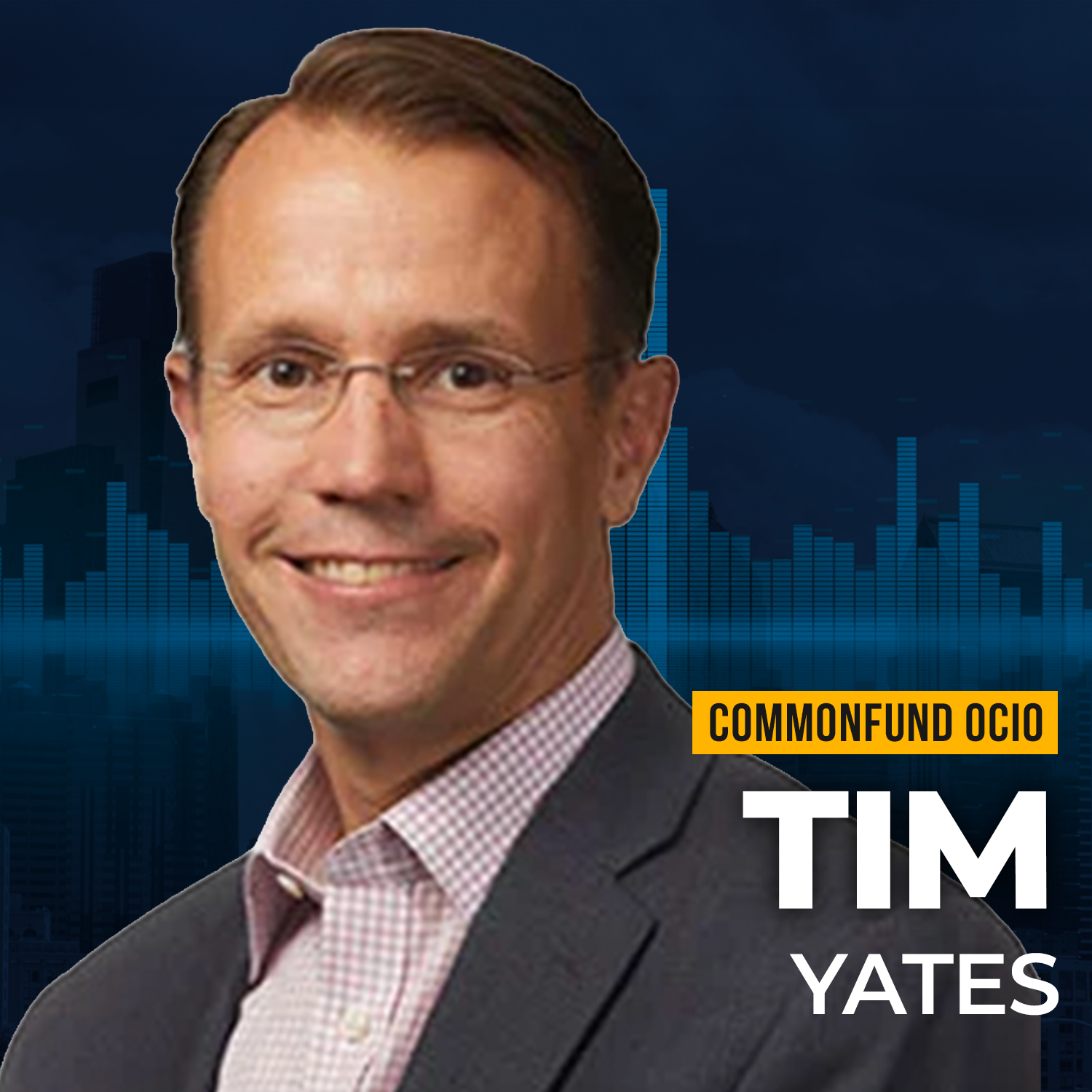
Robert Morier: Welcome to the Dakota Live! podcast. I'm your host, Robert Morier. The goal of this podcast is to help you better know the people behind investment decisions. We introduce you to chief investment officers, manager research professionals, and other industry leaders to help you sell in between the lines and better understand the investment sales ecosystem. If you're not familiar with Dakota and our Dakota Live! content, please visit our website at dakota.com. Before we get started, I need to read a brief disclosure. This content is provided for informational purposes and should not be relied upon as recommendations or advice about investing in securities. All investments involve risk and may lose money. Dakota does not guarantee the accuracy of any of the information provided by the speaker who is not affiliated with Dakota. Not a solicitation, testimonial, or endorsement by Dakota or its affiliates. Nothing herein is intended to indicate approval, support, or recommendation of the investment advisor or its supervised persons by Dakota. Today's episode is brought to you by Dakota Marketplace. Are you tired of constantly jumping between multiple databases and channels to find the right investment opportunities? Introducing Dakota Marketplace, the comprehensive institutional and intermediary database built by fundraisers for fundraisers. With Dakota Marketplace, you'll have access to all channels and asset classes in one place, saving you time and streamlining your fundraising process. Say goodbye to the frustration of searching through multiple databases and say hello to a seamless and efficient fundraising experience. Sign up now and see the difference Dakota Marketplace can make for you. Visit dakotamarketplace.com today. Our guest today is Tim Yates, President and Chief Executive Officer of Common Fund OCIO. In that role, Tim leads all aspects of Common Fund OCIO's business, overseeing a team of investment professionals who advise, implement, and monitor custom total portfolio solutions for nonprofit institutions. Common Fund OCIO focuses exclusively on the nonprofit world and oversees more than $15 billion in assets on behalf of foundations, endowments, and other mission-driven organizations. Tim's path to investment management was an unusual one. Before entering finance, he taught Spanish and Italian at Fordham Prep in the Bronx. He joined Common Fund as an associate in the CF Private Equity Associate Program and went on to hold several roles across the private equity business, including responsibility for custom accounts and serving as a senior member of the firm's emerging markets private equity team with a focus on Latin America. In 2003, Tim became one of the founding members of Common Fund's OCIO platform, where he was responsible for the design, tailoring, and implementation of total portfolio solutions for clients. More than 20 years later, he now leads that business as president and chief executive officer. Tim is a member of the Common Fund OCIO executive group and investment committee and serves on the firm's asset allocation and operating committees. Through the Common Fund Institute and the widely followed NACUBO-Common Fund Study of Endowments, he also has a data vantage point on how nonprofit institutions are actually investing that few of his peers can match. Tim earned his BA in modern languages from Trinity College and an MBA in finance with a designation in international business from Fordham University. Common Fund itself was founded in 1971 with a grant from the Ford Foundation as a mission-driven nonprofit organization built to serve nonprofits. As a private nonprofit firm beholden to its clients rather than outside shareholders, Common Fund occupies a distinctive position in the OCIO landscape. Tim, thank you again for joining us. Welcome to Philadelphia.
Tim Yates: My pleasure. Great to be here.
Robert Morier: It's good to have you here. So you were here this morning?
Tim Yates: I came last night. I had a session to do for Girls Who Invest Summer Intern— Summer Intensive Program, they call it, at Wharton. But came last night, didn't realize, one, weather, two, World Cup happening both in New York and in Philly. So the travel was adventuresome, to say the least.
Robert Morier: I can imagine. If anybody was in the Philadelphia area last night, that was a storm of biblical proportions. It was a howling wind, rain, lightning. And it was, I think, the first weather-related event that the World Cup had experienced.
Tim Yates: I think that's right, yeah. But they got it in. France came back out after halftime and ended up with the win.
Robert Morier: So tell us about this morning. You're sitting in front of a group of students who are interested in investments. You, as I understood it, were taking it from the endowment lens, which makes a lot of sense based on the description of Common Fund's mission. What were you looking to convey to those students in that period of time that you had with them today?
Tim Yates: So Girls Who Invest is a nonprofit that's trying to expand the representation of women in CIO and other investment decision-making positions. I'm on the advisory board. Common Fund is a partner. Many of these asset managers are also partner firms. And the way they operate is to really conduct a 4 to 5 week intensive training program here on the campus of Wharton. They do very in-depth classes, everything from how to run discounted cash flow modeling and the like. And then the scholars, and I think there's about 200 of them, are placed in internships across the industry for the second 4 to 5 weeks of the summer. So I've been very fortunate to do a class. It's a 3 hour session on Endowments 101. And so we really focus on what an endowment is, how they're allocated, how they think about return objectives, how they think about risk budgeting, how they think about illiquidity. We then go through really all the asset classes and then we end with a case study and we say, okay, you third of the students are a university with an operating budget of X and you all are a private foundation and this third group's a museum and we give them the keys and let them sort of drive and come up with an asset allocation. We then run it through the models and see if they actually are able to achieve the they state at the beginning of the exercise.
Robert Morier: Do you find the students are taking on more or less risk than you would expect?
Tim Yates: They take on— it's funny. Every time I— the last couple of times I've been really worried that AI was going to take over all of our jobs in the industry. But every time I meet with this group of young scholars, the creativity and the thought process, I'm much more optimistic that AI is not going to ultimately run everything. And I would bet you, Rob, that the next great CIO will be more likely one of these scholars than it will be Claude, as an example. But so it's a fun session.
Robert Morier: I can imagine. What's interesting about your background and that example in particular is that you're back in the classroom and you're teaching. We were joking about this during our preparation for this call that I did the typical route. I worked for 25-plus years. I burn out. I go teach and host a podcast. You started as a teacher, 5 years, Fordham Prep. How did that path work out for you? Coming out of Trinity, going into a classroom, and then making a move?
Tim Yates: It is funny. My kids, I have one out of college, one in college, one in high school. They do tease me. They say, Dad, you're supposed to do it the other way. Go into the investment world and make the fortune and then go to teaching. So I'm a little bit behind on that trajectory. But I really sort of, I've always sort of grown up speaking Spanish and really appreciating the power of language. Wanted to be an ESL teacher. That was my original goal in sort of coming out of college. And I figured I had to get some teaching experience first to be able to do that. Ended up at Fordham Prep, taught there for 6 years. I taught Spanish, Italian. I coached several of the teams and loved it. It was an amazing experience. Some of my best friends are still teachers there. One of my former students is the headmaster, if you can believe it. Makes you feel, you know—.
Robert Morier: Makes us feel old.
Tim Yates: Advanced in age. And so I'm still very close to the school and have very, very fond memories and feelings toward it. One of the great benefits of teaching at a place like Fordham, and I think some of the other Jesuit schools, is the ability to go to grad school for free.
Robert Morier: Yeah.
Tim Yates: And so I was able to do an MBA at night and pick that up and really became fascinated with the world of finance and investing. And I was out to dinner with my mom's cousin sort of towards the end of the MBA, still at Fordham. And she asked me, Tim, what are you going to do with your MBA? And I honestly answered the question honestly. I have no idea. And she goes, well, I mean, you're a high school teacher. I don't see you going to Wall Street. And I said, well, yeah, that's probably true. She said, what about Common Fund? And I looked at her perplexed and said, I've never even heard of the organization. Well, it turns out she had been employee number 8, 9, or 10 back in the '80s or '90s and was a senior person there, still in the industry, believe it or not. And so she said, maybe they'd take a chance on you. It's an investment firm that manages money for schools, and you're a teacher with an MBA. And so it was actually the only place I interviewed. And I, you know, I got a position as a rotational analyst in the private equity group. They took a chance on me. And 26 years later, I'm still there. So that's, you know, it's not, it's not the most exciting sort of transitional story, but I've been very happy to be there.
Robert Morier: And why do you think they took a chance on you?
Tim Yates: What skills do you develop as a teacher that are applicable to the investment world? And, and there aren't a whole lot except 2, I think, really important ones, and one of which is the ability to understand or the ability to recognize who around the table understands what you're saying and who doesn't. And so when you sit in front of 25 high school boys 5 times a day for 5 years, you quickly develop the ability to say, okay, he understands, he doesn't understand, he understands, he doesn't understand. And it just becomes a sort of an innate ability. I'm sure as a professor you can do that as well. And that becomes really, really valuable in working with clients. Because, you know, we're in an environment where we're trying to communicate ideas and help them make decisions. And so I can very quickly sort of ascertain who's following what we're talking about and who's not. The second, I think, is the ability to break down, you know, sort of complex ideas into things that are more accessible or understandable. As you can imagine, working with nonprofits, we have probably the widest range of clients of anybody. At one end of the spectrum, we work with a foundation that supports nuns around the world. Seven of the ten investment committee members are nuns. At the other end of the spectrum, you know, a really successful independent school or college university might have the head of a hedge fund or private equity firm on that investment committee. And so, and everything in between. So we've got to be able to adjust our message from the nuns to the private equity professionals and everything in between. And I think teaching gives you at least that experience to be able to do that.
Robert Morier: You know, as a teacher, you're serving students. And even in a restaurant, you're serving customers. And you're learning how to talk, the way my father used to say it, up and down the balance sheet.
Tim Yates: Yeah.
Robert Morier: Good analogy. So you can talk to the CEO, and you could also talk to the person who's putting the presentations together. And you want to have the same fulfilling conversation. And you want to make sure that they walk away understanding what you were trying to convey. So that, that makes a lot of sense. It's also interesting to hear, you know, and I ask purposefully, you know, why? Because I was in a similar position. I was a history major. I never thought I'd work in finance.
Tim Yates: Yeah.
Robert Morier: So I'm all of a sudden I'm interviewing at this very sophisticated financial firm in Greenwich, Connecticut, of all places, coming from Wildwood. And I remember the person interviewing me was looking at my CV, my resume, and at the end I had interests because my probably the most interesting thing on there was that I was CPR certified. So, okay, that was about the only thing. Somebody goes down, somebody goes down, I can, I could, I could resuscitate them or at least keep them going until the, uh, EMT arrives. But, um, as an interest, I had surfing.
Tim Yates: Okay.
Robert Morier: And he looked at me and he said, so you surf? If I, if we hired you, would you surf with me? And I was like, oh, absolutely, absolutely, I'd be happy to, I'd be happy to surf with everybody. Is that part of the job description? It's part of the job.
Tim Yates: Sign me up.
Robert Morier: It was, it was the last interview out of 20 interviews. So I don't know if that's the reason I got the job, but I always tell people, lean into your interests.
Tim Yates: So let me ask you that. Is that the reason you kept the job? Did you end up surfing with him?
Robert Morier: Funny enough, he was not a surfer. So even though he said he was a surfer, what he really wanted was surfing lessons.
Tim Yates: Okay.
Robert Morier: So I did keep the job. I ended up staying there for 3 years. Greenwich Associates, which is well known now under a different banner. But yeah, he did surf, not as much as he said he did, which was fine with me. I still went out to Montauk with him a couple of times.
Tim Yates: I would imagine teaching surfing is a bit different than teaching finance.
Robert Morier: Very different. But it was more of my skill set than it was finance at the time. But, you know, I think to your points, which are so important when you get into a new industry or a new organization, being open-minded, you know, kind of going with whatever you think is going to be needed and necessary. And you came into such an interesting place in private equity at a time when it wasn't as ubiquitous as it is today.
Tim Yates: Yeah. Although, you know, I started in July of 2000. And, you know, my first job was to track all of the distributions that were coming from our venture capital managers from a company called Juniper Networks, which was a huge home run back then. And so literally the distributions would just be flowing in. I was like, this is, this is great. Like, what? And of course, it went straight down for 2 and a half years. And then venture remained, you know, in the, in the, you know, nuclear desert for another 7 years. So if you're looking to time something, Rob, you know. My entry into a particular industry is probably a counter indicator to that.
Robert Morier: It's probably good, though, that you understand the downside. I think that's what happens a lot, too. You know, a lot of people who have come into the industry after 2010, you know, they haven't quite seen—.
Tim Yates: That's true.
Robert Morier: That yet.
Tim Yates: What is it? Anybody under 35-ish hasn't, you know, that's serving on an investment committee hasn't been through, you know, 2022 was a bit of a drawdown, but nothing like '08 or '01 or '02, right?
Robert Morier: Yeah. We're going to talk a little bit about private credit. We can talk about how that relates to the way people think about private credit and some of the challenges that the asset class is facing today. But before I do, another really interesting aspect of your background is, as you said, you're fluent in Spanish and you were moved into this Latin American desk at Common Fund. What did you take away from looking at portfolio building in places like Brazil, Mexico, and the broader region?
Tim Yates: One of the key things I sort of learned was more on the risk side. And so you have different risks when you're thinking about investing in Latin America. And the example I thought of in preparation was currency. And obviously, as a dollar-based investor, you've got to think about that risk. And the ultimate question, which then informs how we think about building portfolios today, is, are you going to be compensated for the risk that you're taking? The next layer of that is, how is the manager that you're hiring thinking about that risk and managing to that risk? So if you're expecting a 2x net return from a US middle market private equity firm, that's a great return. Would you also expect a 2x return from a Latin American middle market private equity? Let's say they're both consumer-oriented, they're doing similar sized companies. From a portfolio standpoint, those risks might be similar. However, in Latin America, you've got the potential for pretty big and volatile swings in currencies. And in fact, there's been cycles, late '90s is a good one. That wiped out really all of the returns that were generated from otherwise great managers. And so how do you underwrite that? And do you build in that expectation of compensation to be paid for taking that risk? I think that was one of the big lessons I learned from doing that. The second is really related to local knowledge, having the— being boots on the ground, understanding local economy. And that's whether you're in an industry or sector or whatever, the closer I think a manager is to the assets or the investments, the assets that they're buying or the investments they're making, is probably an indicator of how successful ultimately they will be. There are a lot of models in Latin America that were fly-in firms based in New York or Washington that would have the team there and they'd fly down and invest in companies, make deals. We always tended to back the managers that were local in a particular country that lived, worked, raised their families in those economies for that reason.
Robert Morier: When you think about that second factor, so being boots on the ground, close to the manager, close to effectively the relationship. How has that paralleled the work and the development of the OCIO business? Because it sounds like you're describing an OCIO in a very distant way, knowing the client, understanding what their goals are, understanding what their spending needs are. So when you developed that platform, take us back to that moment and those parallels that you were bringing in from your responsibilities in Latin America. So thinking about risk, thinking about local knowledge, and now applying that to this client base that's going to be focused very specifically on mission. Yeah.
Tim Yates: Yeah.
Robert Morier: So what did that look like?
Tim Yates: That would have been fine. The reality was in '02, the capital markets were in freefall. And there was no such thing as OCIO. I don't think the term even existed. We had a number of nonprofits, 1,000 or so over all of the Common Fund products. And we had a number of those who had invested all of their entire endowment portfolio in a series of our funds. But there was nobody from the common fund side sitting on top of that looking at the total portfolio. And the pressures of '02— so if you think about the average college has to spend 4% or 5% to fund financial aid, scholarship, fund operations, most of them use a rolling 3-year average to calculate that spending. We can debate whether that's the right one or not. I don't think it always is. But that fiscal year '01, '02, by fiscal year '03, you had negative market values rolling onto that formula, which put a lot of pressure on the spending from endowments and thus the support to colleges and universities. And so we had several of our nonprofit and independent school, a couple of colleges, foundations that came to us and said, hey, this is a really tough market. It's really volatile. We're an investment committee that's meeting 3 times a year. We meet for an hour. We listen to your view. We listen to your recommendations and then we table it till the next meeting and we don't make a decision till the third meeting. By then we've missed whatever the opportunity is. Can you, Common Fund, take a more proactive role in our portfolio? That's, you know, it was sort of driven by need or perceived need from, from those types of institutions to say, we don't have a CIO, we've got a CFO, but he or she's busy, you know, managing the finances of the school. We've got an investment committee. We don't have a consultant. We need somebody to sort of look at this on a day-to-day basis. And make rebalancing trades, buy things when they're cheap, sell things when they're expensive, keep us in our portfolio line, and help us with asset allocation and help us make decisions in timely fashion. That was really the genesis of what today is the OCIO business.
Robert Morier: The pressures of '01, '02, '03 kickstart the business. What did the pressures of '08, '09 do for the business? When you think about that continuation, you've got the genesis in the beginning of the 2000s and then you have this major event in 2008 through 2009, because a lot of what you were saying sounds so familiar.
Tim Yates: Mm-hmm.
Robert Morier: People are looking at their portfolios, they're looking at their decision-making process, the speed of which the decisions were being made or not made in terms of when it was time to get back into the markets. So there was a lot of momentum to move into OCIO or discretionary consulting at that time. When you look at those two time periods, thinking a little bit more about '08, '09, as we move in closer to today, what did that time period do for Common Fund's business?
Tim Yates: I think any crisis offers the opportunity for investment committees to say, are we getting what we need from whatever provider we're working with? And that certainly happened in '08. So while assets were down because of the market impact, the number of client portfolios continued to grow because when you're in a period of stress, it's common for people to ask like, are we doing the best we can in this period of stress? I would say, and COVID's a third example, each of those crises were very, very different as it relates to our client base. So the '01, '02, '03 was a longer, you know, whatever L-shaped or bathtub-shaped type of a recession that really impacted spending rates, impacted families' ability to pay tuition and things like that. And it was a prolonged downturn that then again flowed— the average college spending probably dropped 25%. So if you were drawing, call it whatever, $5 million off your $100 million portfolio and all of a sudden the 5 was 4, that's a pretty big gap. '08 was equally steep, but it recovered much more quickly and it was financial market related. Less economy related. And so because of the, you know, think about the typical higher ed institution, because of the strength in enrollment, the echo boom, the kids of the baby boomers, we're on the opposite side of that now, by the way. You had very strong enrollment. So the '08 crisis was really much more acutely felt by the larger endowments who were much more endowment dependent, meaning bigger portions of the operating budget supported by the spend from endowment. And those that are less— those that were less endowment dependent, or in other words, highly net tuition dependent, didn't feel that crisis as acutely. So it was an endowment crisis. The average endowment dropped something between 20% and 25%. But by 2009 into '10, it recovered. And so again, if you're using a 3-year average, it's more of a blip versus sort of a V up and down and up versus the '01, '02, '03. And so I think a lot of investment committees don't really remember the experience of '01, '02. So if you get 2 or 3 negative years of market value, that's going to impact your ability to support your mission from endowment. COVID was the opposite, because the COVID drop was very quick. Recovered very quickly. But the revenue source for any nonprofit that was dependent on people gathering, i.e., students coming, people coming to a museum or a botanical garden or an aquarium, that revenue was obliterated. And so it was the flip. The highly endowed institutions never felt really any blip from COVID because they could live through on the endowment. But the highly tuition-dependent or in other words, enrollment-dependent institutions felt that one much more acutely.
Robert Morier: If you've ever been frustrated trying to build custom reports in either Dakota Marketplace or Salesforce, we have introduced Dakota Joe for you. Dakota Joe is a natural language report builder native to Salesforce built inside of Dakota Marketplace. For all of our Dakota Marketplace users, you can find Dakota Joe today and start running reports on accounts, investments, contacts, and a whole list of other objects. For Salesforce users, we have Dakota Joe coming soon to your internal Salesforce logins. You can learn more about both today at dakotajoe.ai. So 3 years after COVID, Common Fund formally becomes Common Fund OCIO. What precipitated the change? Now you're telling people very explicitly what you do. Why be so explicit?
Tim Yates: Tell people what you do in the name of what you do. And so Common Fund is the parent. It's the nonprofit entity that sort of owns the subsidiaries. There's 2 operating businesses. One is the OCIO business. One is the private equity business. And their names were at the time Common Fund Asset Management Company and Common Fund Capital. And so just those names don't really sort of define. And so we said, let's define them in a way that the marketplace will recognize what those businesses do. And so we changed to Common Fund OCIO and on the other side to CF Private Equity to be more explicit in the nomenclature.
Robert Morier: Why has staying exclusively in the nonprofit lane been the right call for the organization? And why will it continue to be if that is the case?
Tim Yates: Any good board, ours is a great board, often challenges those assumptions and asks, are there areas we should expand in? So Common Fund started, as you said, with a grant from the Ford Foundation exclusively focused on educational institutions. We then expanded in the, I guess, early '90s to include other types of nonprofits. The Common Fund private equity business invests capital on behalf of all sorts of institutional investors. But the OCIO business has remained exclusively focused on nonprofits broadly defined. So I think first of all, it's a market that's big enough for us. We don't have the same sort of growth targets that a public company might have or an owner. There's no owner that sits at the Common Fund level and says you've got to grow by X percent. So we have the luxury of focus. And I would say nonprofits are— it's a small little niche area of the investment world, but they're really very different. And each nonprofit is very different from the other. And the notion of perpetuity and the notion of donor intent and the notion of generating spending plus inflation, the notion of intergenerational equity, all of these things are unique to nonprofits. And I think having that orientation from an investment perspective, but then the depths of understanding nonprofit institutions, which I think informs how you structure a portfolio or an endowment to achieve those objectives, is really valuable to the institutions we serve. And so there's no cookie-cutter approach that we take, and there's no like, are you high, moderate, or low risk, and that's the portfolio you get. It's really the opposite, built from the bottom up, understanding what are you trying to achieve as a nonprofit? What is your mission? How do you think about risk and drawdown? How do you think about long-term purchasing power and building portfolios that way? Yeah, when we invest in managers, we want to invest in managers that are laser-focused in what they do. We don't typically invest in large firms that have all sorts of hedge funds and private credit and private equity and venture. Because we believe the, you know, the focus and the dedication to a particular area more often than not leads to success. So we've chosen to do that ourselves.
Robert Morier: It sounds like what you've described is a very high-touch client service and investment approach. So highly bespoke, working very closely with your underlying clients, making sure that you are capturing their mission. And as we know, in endowments foundation, those missions go on forever. Right? They're in perpetuity. When you think about the structure of the organization, so maybe starting with leadership and then how you service these clients, what does that model look like for Common Fund? So maybe starting with your seat and then kind of working into how these clients are served.
Tim Yates: We are structured in, you know, really 3 big groups. We have an investment team, which is comprised of both what we call sort of investment research folks that are out looking for managers and sourcing and diligencing. And then what we call investment officers, who are the sort of investment professionals that are serving as a CIO for a particular institution. So that's one group. We have a CIO and another senior person that run those 2 groups. We have a client engagement team that's focused on everything from how we service our clients to obviously new business development. And then we've got a deep operational team of more than 20 people. That's an area that, well, they're all very important. I would say the operations has become more important over time because most of our nonprofit institutions that we work with are not investing more in sort of the operational support. And so we find ourselves taking on more of that role. So not being just the investment office, but sort of the total office and managing everything on their behalf. So that's the way it's structured. A typical client engagement would have a senior investment officer, a secondary, an analyst, and a service sort of support person there. So a dedicated 3, 4-person team, and then access to any of the resources of Common Fund. So for example, if we're doing a deep dive on public equities, we'll bring Julia Moore, our CIO, we'll bring the head of equities, and we'll dedicate an hour or whatever in a committee meeting to do a deep dive on that. We do that across really all of the asset classes. It's not a model where the outcome is dependent on one individual. You're a common fund client, not a Tim Yates client. That's how we're structured.
Robert Morier: I'm just curious personally, when you think about research, the officers, the engagement team, the operations. If you had to start over, which team would you pick to work on?
Tim Yates: I actually worked in the second one. So that was the role I had. And I think for me personally, I find the most satisfaction in engaging directly with nonprofits and sitting at the table and helping them make decisions and think through challenging things. And so I think that's probably— and probably most of my colleagues would say that's where I would belong anyway. I'm less effective on the research side. Fortunately, we've got really good people who are on the operational side. And we actually have a joke. The woman who leads our operations team, Amy Harlacher, is fantastic. And it's like, if you have any question and you could only call one person, who would you call? And it's like, phone a friend. And she's— yeah, so I'm constantly calling the operations team. So I'm not sure I'm smart enough to work in that group.
Robert Morier: What characteristics about yourself or about someone in this role makes them successful. So what makes for a successful CIO?
Tim Yates: One is the ability to listen. I think there's a lot of people in the investment industry that, that, that don't listen. They want to talk to you. If you're going to, if you're going to engage, you know, with an investment committee and, you know, have a chance of helping them structure an endowment that's going to meet their objectives, you have to listen to what their return objectives are, what their risk factors are, how they're thinking about achieving their mission. So I think listening is a really important one. That's one. Two, the flip side of that is I think you've got to be a good communicator. So you got to be able to listen, but you've also got to be able to present ideas and have a view and be able to guide an institution in a direction that, you know, that you believe is the right way to go. As you can imagine, you've got investment committees that range from sort of super engaged to not engaged, to hands-on to not hands-on, to sophisticated, not sophisticated. And so you've got to be able to— there's also a flexibility I think that's required to be able to sort of navigate all of that. I would say you've got to have a really good sense of all of the asset classes. And that's one of the trickiest parts of that particular role is a Jack or Jill of all trades, but also master of at least something. So in any given committee meeting, you could have somebody who works for one of the biggest private equity firms ask you about, what do you think about entry valuations for middle market businesses? And the next meeting, somebody's asking about, why are the private credit funds getting locked up or whatever? So there's a breadth of knowledge that's required as well.
Robert Morier: I think that's an important point. We're not too far apart in age, so we've seen the outsourced CIO industry proliferate. I think in 2008, 2009, there were less than 60 providers. Today, there's close to 200.
Tim Yates: Is that the number?
Robert Morier: That's the number. I think the last one was about 180, give or take. Now, consolidation, acquisition, it's shrinking that number a bit, as we've seen in the news and we talked about a little bit before we started recording. But in the context of that landscape development, how does Common Fund think about managing through this proliferation in an area that they've specialized in for quite a long time while still understanding that there are other providers now out there who you're competing against or with?
Tim Yates: There's obviously consolidation going on, and I think consolidation can be good to the extent you're bringing in capabilities that you don't have, or you're bringing in the ability to serve clients or meet needs that you can't do. I think that probably makes sense. There's obviously a scale play. That's not a game that we play. And again, there's probably good reasons to scale. There's probably economies that you can benefit from that. There's probably operational technology investments that benefit from a larger, more AUM type of an arrangement. But there's also investment implications. We always say that size is not by itself an investment strategy. And in fact, there's many asset classes, venture capital is a good example, where size maybe hurts you. And there's asset classes that don't scale. At the same time. And so, you know, we have a real luxury in being a nonprofit without an owner—independent, that we don't answer to any shareholders or owners, or, you know, anybody looking at a private equity firm that's, you know, trying to generate some type of a return from their stake in the business. You know we don't have that pressure, so we have the luxury of growing to grow, and we've got to be viable, and we've got to be vibrant and high growth, and our employees want it, our clients want it, so we do. We do. But, and we are, you know, if we have a capability that we can't deliver ourselves, you know, we'd be interested in partnering with somebody else and doing that. But I think, you know, our mission, which the Ford Foundation established with the grant in 1971, is to, you know, is to enhance the financial resources of nonprofits and to help them meet their missions. And so, you know, we're laser-focused on generating great returns and picking great managers and building great asset allocations and, and not scaling, you know, our AUM to a level that, you know, again, there's no real objective on our side.
Robert Morier: When you're sitting down with a client for the first time, what are the common misunderstandings that they have about the OCIO business? And, you know, what are the questions that you get the most from them?
Tim Yates: I thought you were going to ask what are the common misconceptions of being a nonprofit ourselves, because we have that. I can answer that if you want.
Robert Morier: That was my follow-up, but I appreciate it. You got me to it. But answer that if you can answer them both. It's a little bit of both. What are the misconceptions of the client from the client's perspective? So let's say there was not an OCIO provider there before. They've grown to the point where the endowment now requires some, you know, fiduciary management. So you've got that side of it. And then you've got your business, which is in itself a nonprofit. So there might be some misconceptions there as well from that conversation, which I think is what you're alluding to.
Tim Yates: And we know that there are because we've done studies. So anyway, I'll come back to that.
Robert Morier: The third question is the data. So what's the data telling you?
Tim Yates: Starting with the OCIO. So what are the common misconceptions? I think, you know, if I sort of think about the last, whatever, 10 or so finals presentations I did, or those types of engagements, I think there's still confusion about, you know, what's getting outsourced, who's it getting outsourced to, and me as an investment committee member, what am I supposed to do? If we're outsourcing everything to you? And it's funny, because in the session this morning, we're talking about OCIO and the concept of outsourcing. And outsourcing is not black or white. It's at what level. So Yale outsources the management of their private equity and their venture, all of the assets. Most endowments outsource at some level. So it's a question of what level. Are you outsourcing the security selection? Most endowments do. Are you outsourcing the manager selection? Some do. Are you outsourcing the asset allocation decisions? We don't happen to do that. We think that should reside with an investment committee. And so I think the misconception is, well, I'm on this investment committee, and I should be picking managers. And if you're picking the managers, what are we doing? Where I think we would argue that the selection of managers is important, but that's not the big driver or the biggest decision you're going to make. The biggest decision you're going to make is the strategic asset allocation and how much in equities and private versus public and how much in fixed income and how much in US versus non-US and making sure that relates to the realities of your institution. If you're highly restricted endowment, and net tuition revenue is under pressure, and you can't issue any more debt, and you're now spending 6% because you need it, that's going to— figuring out what that means for your strategic asset allocation is much more important than picking between private equity manager A, B, C, or D. Let the professionals or the people that are engaged in that every day do that. So I think that's one sort of big misconception is that notion of what's getting outsourced and who's doing, you know, who's ultimately making those decisions. You asked about, well, I asked if you asked, but, you know, the misconceptions about being a nonprofit. And, you know, we've done the market research on this and the reality is it's mixed. You know, we happen to think that it's a great benefit. Creates an amazing alignment with our clients because at the end of the day, we're a mission-based, not a profit-based organization. And how do you generate profits as an investment manager? You can raise fees, you can raise more assets, you can do both. Those likely aren't great for net returns for your underlying clients. And so we think there's a great alignment. The flip side though is there is a notion that, well, nonprofits are sleepy and they're not competitive and they're slow to react. And there's this sort of this, I don't know, malaise around the sort of the view of nonprofits. So we fight that perception as well. And the reality is, and there's also sort of, well, as a nonprofit, can you compensate people and keep people and how do you compete with the most? And we work and we're a nonprofit, but we work in the most for-profit sector in the world, right? Financial services, all about generating profits. And so the way we do that is by having the two operating businesses structured as for-profit but fully owned subsidiaries of the nonprofit. So we're able to compensate people at market rates and be competitive. And we've got amazing retention of our team. And so we compete really well on all of that. And then, you know, we have a real focus on communicating. And if you take any sales training, they say, well, you got to tell the so what. And so what does the nonprofit status of Common Fund— what's the so what to you as an investment committee member of a particular institution? And one of them is the ability for us to access strategies and managers that otherwise would not be available. So there are venture capital firms that put us in the E&F bucket, not the fund-to-funds bucket. There are public equity managers that are closed to new investment. There are hedge fund managers and the like that say, look at our client base, look at our structure and say, that's an LP or an investor I want in my fund. One, because they're long-term oriented. Two, because of the client base we serve.
Robert Morier: How do you think about the market research that you're collecting through your partnerships, and how are you acting on that information? How are you sharing it, and then how are you acting on it as an organization?
Tim Yates: So we've got a couple of big sources of data. The first is through the benchmark studies, and we run 3 of them. We run one for colleges and universities in partnership with NACUBO, and that's probably the most well-known of the 3. And we survey something like 300— sorry, 650 to 700 colleges and universities. Comes out every year. We can talk about that. So that's the NACUBO Common Fund Study of Endowments. We run the same type of a study for independent schools and for foundations, both community and private foundations. So we've got this amazing set of data. What's fascinating about AI is we're now really beginning to with AI and with a tech partner, really harness all of that data and try to tease out the trends. That said, we've done a lot of that work. A good example is we've used the data to basically look at what drives the differential in returns among the top endowments. The answer, funny enough, is if you take all the things and regress everything against everything, and you would— what is it, the Brinson-Beebower study? Brinson-Beebower cites that asset allocation explains. That's true, but among the endowments, that's not the biggest driver because they're all roughly the same equity fit. Everybody's got— nobody's got 20% equities versus 80%. There's roughly similar equity risk. The biggest driver in the data over the last 20 years has been the degree of illiquidity, and the performance of that illiquidity explains a lot of the differential return up and down. And so that's an example, Rob, where we can use the data historically speaking to say, what are the top endowments doing? What's been the driver of the differential in returns? And is that supportive of where— now, obviously, the question is, is that going to be the case space for the next 20 years, right? Are venture and private equity. And we can have that debate. Maybe invite me back and we'll have that on another podcast. But so that's an example where the data is really helpful in understanding what drives endowment returns over time. Second good example of that is this concept of intergenerational equity, which is really the overarching principle of many of our, most of our nonprofit clients. And that effectively means that all future generations have to benefit at the same level as the current generation. So future generations are protected against the claims of the present. And so we're able to go back and look at all the returns and say, how many endowments have actually generated that type of return? How did they do it? And understand at least history. And what's the old adage? History doesn't repeat itself, but it rhymes. So having all that data is a real advantage. The second set of data that we have that we've actually built manually is what we call an operation, basically a financial metrics database. And we've, for the last 15 years now, manually loaded— now AI and technology is making this a lot easier— financial statements and other financial metrics for nonprofits. So we have today, in the case of colleges and universities, 400 or so with 10 years of data. And we look at probably 150 different data metrics. So everything from obvious things like assets and debt levels and tuition revenue and discount rates and enrollment trends, but also things like net PP&E, which most investment committees say, well, net PP&E, I don't even know what that stands for—property, plant, and equipment. It's the size of the campus. Well, if that— if you can see in the data, net PP&E, if you can see that the physical plant is getting older, and you can see it in the data, that means that, you know, there's going to have to be investment made from a deferred maintenance perspective, likely on campus. Where does that come from? It comes from 3 sources. You can fundraise for it, although it's not easy. Ask any development person, like, hey, we're going to go out and tackle our biggest donors and ask them for money to repair the roof or the windows or an old steam pipe. It's not a great fundraising opportunity. You can raise debt for it, although most colleges are at or near their levels of debt capacity. Although we work with one in New England that just issued debt this summer to address some of these deferred maintenance issues. Or it can come out of operations. That's a part that's pretty challenged for a lot, or you can take it out of endowment. The point being is that one metric, which is a little obscure to most investment community members, could have a pretty big impact on the risk profile of your endowment, the liquidity profile. So if you're going to need $5 million and you're going to take it out of unrestricted endowment to fund upgrades on campus, that's an important thing to know. When structuring an endowment, an asset allocation and a portfolio. So that's how, those are the 2 big, so the peer group data, which is everything from asset allocation, spending, performance, all of that to the actual financial and operating metrics. And pair that together, we think gives us a pretty unique insight into how nonprofits work.
Robert Morier: Dakota's Google Chrome extension lets you access all of the high-quality LP, GP, account and contact information, as well as private company, public company, and more. All of that data that you've grown to know and love within Dakota Marketplace right from your Google Chrome browser. This way, as you're browsing, researching, prospecting, or looking for the newest deal target, you have all of the high-quality and curated data that you need to do your job right there in the same window. You can learn more today on our website at dakota.com. When you think about all of that data, it's an incredibly rich data source. How does it inform the manager research and due diligence process? So now you've got all of this information, you know what the trends are, you know what the needs are of that endowment, whether it's operational, whether it's maintenance, whether it's enrollment, which is down. So you know that the dollars aren't going to be flowing in as much. All of that information is kind of assessed by your CIO, right? And then it's given to the investment team. How is it informing the manager research and due diligence process?
Tim Yates: I would say it has a tremendous amount of influence and informs the strategic asset allocation. And the biggest piece of that for us among our clients is the degree of illiquidity. So that's the biggest lever. How much do you have allocated to private strategies like private equity venture, private credit, private real estate, private natural, the like? Once that's set, I'm not sure that the data informs, are you going to pick venture manager A or venture manager B? That's a very different— and each asset class is different. But once we get to that level. We're trying to find the very best managers that can generate the very highest level of returns for the risk that we're willing to take, that can bring something unique to a portfolio and put those all together in a way that generates the types of returns that our clients need. I don't think we say, okay, well, we know that this institution has a high level of debt and has a high level of restricted endowment. And has a discount rate that's increasing. I don't think that informs as much the manager selection process as it does the strategic asset allocation process.
Robert Morier: What does inform the manager research process in that case? Now that we have a sense of what that top-down, what that asset allocation, for lack of a better word, model looks like, now we have to execute on it. What is going into that decision process, the execution?
Tim Yates: It's very different across asset classes. I think people want to have this, well, what's the process? The reality is it's different when you're looking at a public equity manager from a hedge fund from a private equity manager. When you're doing diligence on a public equity manager, there's, you know, you can, or a hedge fund manager, you can evaluate, analyze, assess their portfolio because you know what it is. You can do quantitative analysis on it. You can look at sort of all sorts of rigorous types of things to model that portfolio. When you're back in a— when you're looking at committing to a private equity fund, you don't know what they're going to invest in. You've got the history, but you don't know ultimately. So they're very different, very different processes. I would say the things we look for are, number one, how do you generate your returns regardless of asset class? You know, what's funny is the shortest meetings are the managers that really can't explain that, like, you know, that don't have a coherent explanation of how they generate the returns. How repeatable is that ability to generate returns? How consistent has the manager been with the strategy they claimed to pursue?
Robert Morier: Mm-hmm.
Tim Yates: And is it truly skill or luck? Is there really alpha there? We're willing to pay for that, not willing to pay for beta. So if a manager is generating returns simply because the market's going up, that's not something worth pursuing or paying for. But if there truly is skill, and that's the secret sauce, is how do you tease out if a manager has that skill or not. And that's what I— my colleagues will— we have probably 70 people of our 180 or 190 that in every asset class that do nothing but look for those managers and diligence those managers and bring those managers into client portfolios. They do that all day long. So that's the secret sauce—finding the alpha associated with investing.
Robert Morier: Knowing all of those colleagues of yours who are responsible for finding those managers, what's some advice you would give to the managers who are trying to tap into that team?
Tim Yates: Transparency, honesty are all really important. We are long-term investors. We're likely not going to make a decision in a first meeting. There's been managers that we've tracked for a decade, before making an investment or commitment. I think being honest about the mistakes, what you learn from the mistakes, because as you know, I mean, no manager is going to be perfect all of the time, not going to outperform all the time, but understanding the sources of the underperformance, the reasons for the underperformance, and being very upfront, candid, and thoughtful about the reasons for that are all really important criteria. Everything I said before, being able to articulate how you generate returns, being able to clearly define your process, all of those things are really important. We don't come in and out of managers. We're looking to find long-term partners that will help us compound capital and generate returns for our clients. And I think that's having that partnership is really important from our perspective.
Robert Morier: Is it important from your perspective in your seat, in your role to understand who those managers are and what that partnership looks like? Like how much of your time are you spending getting to know the asset managers that make up your client portfolios?
Tim Yates: I don't spend nearly as much time anymore as I either used to or would like to because of just the natures of how it goes. So I don't spend as much time as I'd like to. What I do, though, is I'm on the investment committee. So I am seeing all of the recommendations, reading all the recommendations. With bigger managers, I'll stop in for client meetings when I'm in different cities. So for instance, I was just in Boston last week for a conference and met one of our private equity managers. So I will see them, but I'm not meeting managers every day like I used to when I was working in the private equity team. I do miss that. You get sort of out of the flow of the day-to-day stuff, but I've got a great team and you've got to sort of let the team do their thing as well.
Robert Morier: So when you think about kind of the last piece of this puzzle, we've talked about understanding what client objectives are. We understand how Common Fund works with these clients. We understand how managers are selected, operations, the CIO role. But when it's all said and done, you have client expectations. And some of the data that you recently put out said that nearly half of the institutional investors that you had polled expect lower US equity returns for the rest of this year, in 2026, than the roughly 13% 10-year average. And geopolitical risk was the runaway top concern. So does Common Fund's house views line up with that caution? So what you guys are thinking internally versus what the client expectations are? And where do you think— where do you meet in the middle? I was going to ask you where the consensus could be wrong, but it's where do you meet in the middle?
Tim Yates: I think that survey you're referencing was the Forum survey?
Robert Morier: That's correct.
Tim Yates: It's the Forum survey. Thank you. So that was taken in February. We were all wrong. I mean, it's, you know, I think we spend once a week, we sort of have a session of like, although, as I understand it, I haven't looked, I understand today is a pretty negative day. But, you know, I think we had a joke said if you ran a risk model pick your favorite provider, and you gave it the inputs, we're going to bomb Iran, the Strait of Hormuz is going to close, oil's going to go above $100, what's the S&P going to do? I don't think any of the models have record high levels as the outcome of that. It shows the challenge of trying to time markets or trying to predict how things are going to go. It's probably not a very satisfying answer, but we spend a lot more time thinking about how to construct, number one, how to construct strategic policy allocations. Number two, how to select the best managers to execute that and the least amount of time thinking about what's the S&P going to do next week? What's going to happen in geopolitics? Can't control it. And there's a lot of data that would suggest the more you try to move around those things, the more alpha you erode over time. The more you trade, the more value destruction occurs. So it's not a big piece. We'll rebalance portfolios plus or minus 3%, maybe 5%. In '08, that was the biggest overweight we had to equities, but we really want to focus on a strategic long-term policy that's going to give the best opportunity to meet the long-term objectives. Stick to that and not try to undo it by calling some direction in the market, which again, I think is really, really hard to do. You could just go back and look at any example of that. Brexit was a good example of that. When US Treasuries were downgraded was a good example of that. Had you predicted the event, which nobody did, you would then have to predict the market reaction, which you would have predicted the wrong way.
Robert Morier: Yeah.
Tim Yates: It's a really challenging thing to do. Our house view, though, is equities, we're neutral as it relates to risk to equities. It's been recognizing what we're in the 3rd year of 20% plus returns and valuations are stretched, albeit a lot of it generated by the top 7 to 10 companies, but not yet concerned to the extent that would be dramatically underweight equities.
Robert Morier: You talked about illiquidity as a determinant.
Tim Yates: Yep.
Robert Morier: So just touching on— I promised you I'd ask you a little bit about private credit and private markets. So when you think about getting back to client expectations, which we were just talking about, have expectations around private markets adapted as a result of some of the news flow that's been going on, particularly around private credit?
Tim Yates: Got to separate private equity and private credit from this question, because private equity is in a different situation than private credit at the moment, for a couple of reasons. One, you've had very strong public equity markets. And anytime there's an environment in which the S&P or global equities perform to the tune of 20%, private equity does not in any given year. You've got the natural question of, well, why are we locking up our capital to earn 7% or 8% when we can earn 20% in public markets? And then you've had a very slow environment although there's been some green shoots from a liquidity standpoint. So there's been fewer distributions, lower returns relative to public equities. And whenever we're in this environment, there's the Wall Street Journal articles claiming the end of the endowment model and why should we ever have any private equity again? And that's the environment we're in with private equity. Much more important to the general endowment and foundation world than is the private credit situation because private credit is a much smaller allocation in the average endowment. You know, private equity or venture could be 10 or 20%. Private credit is low single digits for the average, and so, you know, it's just... more. And then secondly, most endowments and foundations are investing in private credit through locked-up private equity structure vehicles, which don't have the problem or the problems that we're all reading about in the news. And so what's going on in private credit in our mind is a structural flaw that we've seen countless times in the history of financial markets. When you package up something that's illiquid in a format that pretends to be liquid, it's great—until it's not. And listen, I think the democratization of private investments for individuals is a really important thing because more and more value is being created while companies are private and more and more returns are accruing to private investors. And the idea of it's great, but the structure really matters because institutions don't behave like retail or individual investors. They don't go to redeem when there's 2 weeks of bad news or something like that. And so that's what I think is going on in private credit is you've got a structural mismatch, a liquidity mismatch where for whatever reason, retail investors, whether it's the software exposure, AI or whatever, are concerned and trying to get out and you've got a structural mismatch.
Robert Morier: I'm curious about some longer-term goals for Common Fund OCIO. So when you think about where you are in your seat today, I have 2 questions. One, you probably are not told that you're a young guy often, but you are.
Tim Yates: Especially from my kids.
Robert Morier: Especially from your kids. I understand that. But you are in your seat, and you've got a lot of years ahead of you. So when you think about those years ahead, and maybe if you wouldn't mind answering it in 2 ways. The first is personal. Like, what are your goals? You know, what do you want to accomplish as you think about your seat and where you see yourself in 5 years? And then if we were to have this conversation, you know, 1, 2, 5 years from now, what are you hoping to accomplish with Common Fund?
Tim Yates: It's easy because it's been the same goal that it's been the whole time, which is to be the preeminent, the most influential OCIO investor for nonprofits. That doesn't mean the biggest, it doesn't mean the largest, but it does mean the most influential, the most consequential. And in order to do that, we've got to build portfolios that generate the types of results that meet client expectations. And that's the focus. That's the focus we have every day. We have a fantastic team that works on that, again, from the client to the manager to the operations of it all. And we're all sort of rowing in the same direction on that. So it's a pretty easy question, is to be that and continue. Common Fund celebrated our 50th anniversary a couple of years ago. And it's funny, I guess young, old, my cadre or generation of leaders at Common Fund say we inherited a great firm from giants before us that built the reputation, built the firm, built the track record. And, you know, we are laser-focused on making sure that we deliver that same excellent firm reputation, track record to the next generation of leaders. And we've got some great ones that are coming up. So we take that pretty seriously.
Robert Morier: I've asked you to look ahead. If you wouldn't mind looking back for me.
Tim Yates: Yeah.
Robert Morier: Go back to 1995. You're in that classroom at Fordham.
Tim Yates: Yeah.
Robert Morier: Fordham Prep. And you could talk to that teacher who's in that room. What advice would you give yourself? In those first days as a teacher, knowing what you would be doing? What are some of the things, the principles that you think are most important to the way that you do your job today?
Tim Yates: You asked one of those questions in the prep, and I thought about an anecdote which might be worth sharing. You sort of framed around leadership, and maybe I'll answer it from that perspective. So you call me a young guy now. I was a really young guy when I was a teacher. And I think I probably looked even younger than I actually was. Fordham Prep is on the Fordham University campus, and there's campus safety, and they would constantly chase me down to the parking lot to inform me that only faculty members could park in the faculty parking lot. And so I was constantly fighting that. And older teachers, and I think older mentors and stuff want to take young folks under their wing. And there's a faculty room, and one of the older teachers at the time was a bit of a tough guy. So he said, Tim, and this is in front of a bunch of other teachers, he says, did you see when I walked into your classroom and all of your students were quiet the second I walked in? And I said, yeah, I did see that. He goes, that's respect. And you need to work on that. You need to work on commanding respect in your classroom. And you should take that example. This is in front of, again, a bunch of my colleagues. And I'm a competitive guy, Rob, and I didn't want to let that go. And I said, well, with all due respect, my impression of that interaction was that it wasn't respect, it was intimidation. When you walked in, they were quiet because they're scared. When I leave the classroom and they stay quiet, that's respect. And so I'm not interested in intimidating you into doing the right thing. I'm interested in teaching the students how to do the right thing, when to do the right thing, and to do it for themselves, not because they're scared of me or not because they respect me. And so that was a moment of clarity in sort of thinking about leadership that would help years later in thinking about, you know, how do you, how do you build a great team? You trust them, you lead them in a way that helps them get the best out of them and ultimately become better than you.
Robert Morier: You said you coached. What did you coach?
Tim Yates: I coached soccer, and we started a men's volleyball team at Fordham at the time. My brother played volleyball in college. And so we had a very good soccer program. I was the assistant coach on the varsity, and I believe the head coach, who I'm very close with, just retired. Anyway, they had a great program. And then we built the volleyball program, which was fun because we had a bunch of kids that didn't make the basketball team. And so we took them and we created a volleyball team and ended up having several of those kids play in college.
Robert Morier: Yeah, it's funny, volleyball and rowing, I think, are always 2 beneficiaries of failed basketball players.
Tim Yates: Yeah, I didn't know the rowing connection.
Robert Morier: Oh, very much so. Oh yeah, yeah. I was a failed high school basketball player.
Tim Yates: Turned rower?
Robert Morier: That tried to— I tried out for the University of Vermont. I tried to walk on.
Tim Yates: The Catamounts.
Robert Morier: Yeah, the Catamounts. And when I left the gym, there was somebody from the rowing team there who was looking to do exactly that, recruiting the failed, like, the failed college athletes. And I was one of those failed cuts, so I ended up rowing for Vermont. But for that reason—.
Tim Yates: Well, they have a good basketball program and even better soccer program.
Robert Morier: Yeah, well, champions, national champions. Yeah, one of the best. So, well, thank you for sharing all that too. And before we like let you go, we're gonna ask you a couple fun questions just because we can and you're here and we love hearing— sometimes you get the most out of the shorter questions, right? The efficiencies that you mentioned before. So if you've got a couple minutes, if you don't mind. Okay, great. Uh, to start the day, coffee or tea?
Tim Yates: Tea.
Robert Morier: Tea. You taught high school Spanish and Italian before finance. Which language do you still reach for?
Tim Yates: Reach for or speak?
Robert Morier: A little bit of both.
Tim Yates: Like, what's the best— I don't speak Italian as well as I used to, so I speak Spanish constantly. It's just— but there's just much more opportunity to speak Spanish. Italian is a beautiful language, though.
Robert Morier: When was the last time you were in Italy?
Tim Yates: I haven't been to Italy since I studied abroad there in '94.
Robert Morier: When was the last time you were in a Spanish-speaking country?
Tim Yates: Christmas time.
Robert Morier: Okay, good. So you're still getting down.
Tim Yates: Yeah.
Robert Morier: That's good to hear. Early riser or night owl?
Tim Yates: I wasn't a night owl until I met my wife 35 years ago, and now I am decidedly an early riser.
Robert Morier: Okay, good for you. It sounds like you're a smart partner.
Tim Yates: Yeah, she is.
Robert Morier: A book you recommend more than any other?
Tim Yates: We were just talking about that this morning as well. I think in our world, the book, and there's so many good ones, but I would say probably David Swensen's Pioneering Portfolio Management. You've probably gotten that answer before. That's probably The Bible of endowment management.
Robert Morier: A spreadsheet or a whiteboard?
Tim Yates: Whiteboard for sure.
Robert Morier: An asset class that's more interesting than people give it credit for?
Tim Yates: Venture.
Robert Morier: Something you believed earlier in, early in your career and you've since changed your mind on?
Tim Yates: That leadership is easy. A lot of people want to be leaders, and I was, I thought I was a leader, but it's a lot tougher once you're in the seat and specifically around, you know, making the tough decisions between two bad options—you know, there's no more good. Usually things come to me and there's, you know, nobody's like, hey, I just want to give this really great news. And so you have to make tough decisions. That's a lot harder than I think I would've thought it was in a prior life.
Robert Morier: Is it the reps? Is it the practice that made you a better leader or do you think it can be taught?
Tim Yates: I think experience, definitely. Definitely helps. I think having good mentors is really important. And by that, I mean mentors that don't give you the answer, but mentors that help you figure out your own value system, your own decision-making process, and how you're going to work through the difficult times, because there will be them. And so a good mentor won't— anytime I've got several really, really great ones and you call with a problem, they don't give you the answer, but you always feel better afterwards because they've helped you think through the answer.
Robert Morier: What's your favorite movie to watch with your kids?
Tim Yates: We always have fun watching some of the Will Ferrell movies. We were just watching Talladega Nights the other weekend, and that's a fun family, you know, things like that.
Robert Morier: If you weren't running an OCIO, what would you be doing?
Tim Yates: I would probably be teaching.
Robert Morier: Okay, that's good to hear. Well, you're welcome into my classroom anytime.
Tim Yates: I'd love to be. I'd love to come.
Robert Morier: I hope so. Yeah. Best meal you can get near the offices in Connecticut?
Tim Yates: There's something called Valencia Beach Cafe, which has Venezuelan arepa. Which, if you have never had one of those, are amazing. So if you come up to Connecticut, I'll take you there. They've got great— it's really relatively famous chef in the area and brought that cuisine to that restaurant. It's really good.
Robert Morier: A well-built portfolio is a lot like—.
Tim Yates: Oh, that's easy. It's a lot— and I learned this from one of my mentors years ago— is a lot like a really well-planned and well-planted perennial garden. And I'm an amateur. I mean, my next-door neighbor is a master gardener. He's constantly coming over and helping me think about— anyway, you don't want to plant a garden where everything is blooming at the same time, right? It's got to bloom—some things in June and some in July. But by the way, you've also got to tend to it and you've got to cull it and weed it and do all of that. So I think a well-constructed portfolio has those characteristics. And somebody once said, which I think is a great line: if you don't have something in your portfolio that you hate right now, you're not actually diversified.
Robert Morier: I had a great conversation one time with a guest who was on and we talked about acronyms.
Tim Yates: Yes.
Robert Morier: And, you know, the importance of acronyms, but also the annoyance of acronyms, you know, that there's new acronyms every day and having to learn them and understand what they are. And I think once an acronym makes it into the drinking water, it gets old fast.
Tim Yates: It's funny you say that. I'm doing a presentation tomorrow, the basis of which is an acronym.
Robert Morier: Oh, what is it?
Tim Yates: And that acronym is VUCA.
Robert Morier: VUCA. Okay, tell me.
Tim Yates: So VUCA world. It's a military term used sort of in the Cold War and is now extended. It describes the world as volatile, uncertain, complex, and ambiguous. And the whole point is how do you think about managing portfolios in a world where volatility and uncertainty and complexity and ambiguity reign.
Robert Morier: Thank you so much for your time.
Tim Yates: Thank you, Rob.
Robert Morier: Appreciate it. We wish you nothing but continued success. We wish nothing but Common Fund's continued success. Thank you for coming to Philadelphia. Thank you for sitting with me at the desk.
Tim Yates: Thank you. My pleasure.
Robert Morier: If you'd like to hear more about Tim and Common Fund OCIO, please visit their website at www.commonfund.org. You can find this episode and past episodes on Spotify, Apple, or your favorite podcast platform. We're also on YouTube if you prefer to watch while you listen. And for more content, please visit us at dakota.com. I'm going to thank Tim one more time for being here.
Tim Yates: Thank you, Rob.
Robert Morier: Thank you. And to our audience, thank you for investing your time with Dakota.