Robert Morier: Welcome to the Dakota Live! podcast. I'm your host, Robert Morier. The goal of this podcast is to help you better know the people behind investment decisions. We introduce you to chief investment officers, manager research professionals, and other industry leaders to help you sell in between the lines and better understand the investment sales ecosystem. If you're not familiar with Dakota and our Dakota Live! content, please visit our website at dakota.com. Before we get started, I need to read a brief disclosure.
Narrator: This content is provided for informational purposes and should not be relied upon as recommendations or advice about investing in securities. All investments involve risk and may lose money. Dakota does not guarantee the accuracy of any of the information provided by the speaker who is not affiliated with Dakota. Not a solicitation, testimonial, or endorsement by Dakota or its affiliates. Nothing herein is intended to indicate approval, support, or recommendation of the investment advisor or its supervised persons by Dakota. Today's episode is brought to you by Dakota Marketplace. Are you tired of constantly jumping between multiple databases and channels to find the right investment opportunities? Introducing Dakota Marketplace, the comprehensive institutional and intermediary database built by fundraisers for fundraisers. With Dakota Marketplace, you'll have access to all channels and asset classes in one place, saving you time and streamlining your fundraising process. Say goodbye to the frustration of searching through multiple databases and say hello to a seamless and efficient fundraising experience. Sign up now and see the difference Dakota Marketplace can make for you. Visit dakotamarketplace.com today.
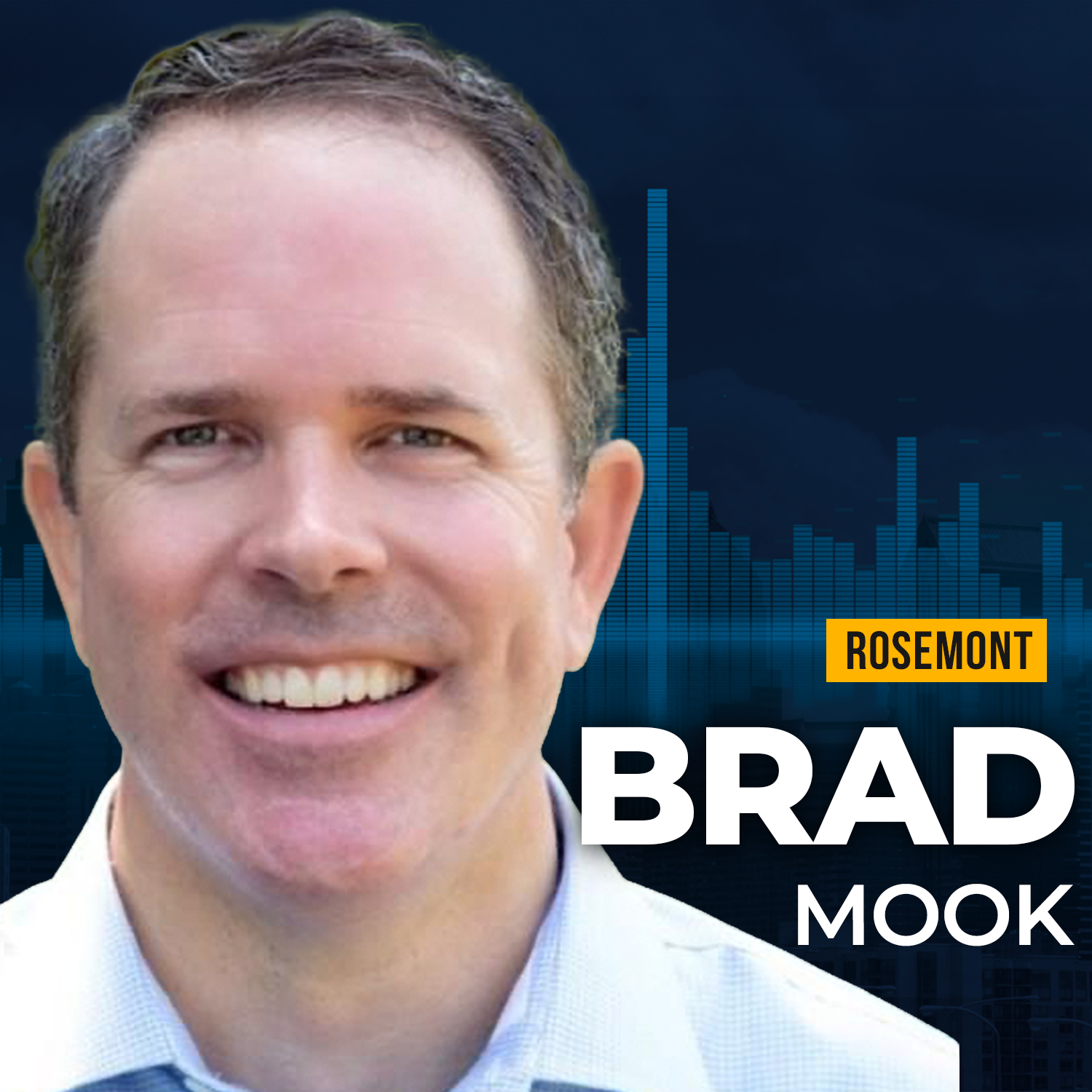
Robert Morier: Our guest today is Brad Mook. Brad is the Managing Director of Investments and Finance at the Rosemont Investment Group, a Conshohocken, Pennsylvania-based specialist investor that makes minority permanent capital investments in employee-owned asset and wealth management firms. Brad's career spans three distinct vantage points on the investment industry. He spent 15 years as a sell-side analyst and director of research, analyzing businesses and valuations across a wide range of industries. In 2009, he joined SEI Investments, where he served as director of manager research, leading manager due diligence and selection across asset classes for the multi-manager advisory business. In 2019, Brad joined Rosemont as managing director alongside founder and CEO Chas Burkhardt. Today, he is responsible for sourcing and evaluating investment opportunities, overseeing the investment process, and working closely with Rosemont's partner firms on strategic issues. He also manages the firm's financial operations. Founded in 2000, the firm made more than 30 investments across three private equity funds before deciding to step off what Brad has called the private equity treadmill. In 2018, Rosemont partnered with Markel Corporation to invest permanent capital from its balance sheet, taking minority stakes it never intends to sell. Its current partners include 1607 Capital Partners, Landmark Management, Northside Capital Management, and Veris Wealth Partners. Brad is a CFA charterholder and holds a BA in political economy from Williams College. He is a New York native, a Philadelphia transplant, and a father of four. Brad, welcome to the Dakota Live! podcast. Thank you for being in our Philadelphia studio.
Brad Mook: Well, thank you for having me, Robert. It's a pleasure to be here.
Robert Morier: So how long's the drive from Conshohocken?
Brad Mook: Longer than it should be. I always underestimate the trip into the city. I don't work in the city. And it always seems like it takes longer than it should, so.
Robert Morier: Okay, be honest with us. How long did it take you to learn how to spell Conshohocken?
Brad Mook: That wasn't a bad one.
Robert Morier: Oh, good for you.
Brad Mook: Although my daughter, when my daughter was born, she called it Chopin-Hawken. And that really confused us a bit.
Robert Morier: I said it out loud by design for our audience who are not as familiar with trying to find your offices. Conshohocken's not an easy one. So thank you for that. I'm glad you were able to nail it from the beginning.
Brad Mook: Interestingly enough, Conshohocken's been an investment hub for decades. And I'm always amazed when people actually know where it is.
Robert Morier: Yeah, I can imagine. Yeah, no, just that whole area has grown so much. How has it been for you being a transplant from New York? Were you in Manhattan most of the time?
Brad Mook: I was. I grew up in Westchester County, went to school in New England, and then went back to Manhattan to work and never imagined that I would work in Philadelphia. But as it goes, I met a girl and in 1999, actually, we moved down. It's been really hard to adjust to the sports teams. I find Philadelphia is a happier place when the teams are winning. So I do kind of root for the teams, but it's been hard to let go of some of the New York roots.
Robert Morier: Yeah, I understand. I understand. A fun question for you. Where was your first apartment in Manhattan when you first moved in? What was the neighborhood?
Brad Mook: Oh, it was the Upper East Side, 95th and 3rd, a building called the Highgate. Which we called Hotel Highgate because so many of our friends would come to visit us and go out in New York. Those were really fun times.
Robert Morier: Oh, that's fun. Yeah. And when you moved to Philadelphia full-time, what did you find were, were some of the more challenging adjustments to, besides the sports culture?
Brad Mook: It was the first time I'd lived outside a city as a young adult. We moved to the suburbs right away. So that was a bigger adjustment actually than being in Philadelphia. But the language, the way people pronounce things. We were laughing about this yesterday at a track meet, just the— towel, you know, tail, and words like that.
Robert Morier: Yeah, I know, there, it takes a minute to get used to. I found that I had lost a lot of the words, like, you know, the way I would say it, but now it's all back.
Brad Mook: Are you a Philadelphia native?
Robert Morier: I am. I'm from South Jersey originally. I grew up in Wildwood Crest, New Jersey, so down on the beach. Most of my family had relocated to Philadelphia, you know, in adulthood. I was in Manhattan as well, and then I came back to the area about seven years ago. And I've been here ever since. So yeah, I live in this city though. I had a hard time. I couldn't leave the city. I just said this yesterday that in my adult life, I've never had a driving commute. So I've always either been a walk away or a bike ride away. I never even really had to take the train. So I feel very lucky in that regard, but it was hard for me to give that up.
Brad Mook: That would've come in handy today for me.
Robert Morier: For you, yes. For our audience's purposes beforehand, it took Brad a while to get here because of parking in Philadelphia, which is also a notorious aspect of this city. So—
Brad Mook: I should know better by now.
Robert Morier: Yeah, but you're here, so thank you for being here. We're grateful for it.
Brad Mook: Absolutely.
Robert Morier: We try not to go all the way back, but I am interested. You're at Williams College, you're studying politics, political economy, and you're trying to decide what you want to do. I'm in a classroom, you know, daily with undergraduates who are trying to figure out what they want to do. Many of them are business and finance majors. How did you ultimately find your path?
Brad Mook: I backed into it, really. Williams is a great school, very competitive. It seemed like everybody in finance and economics was pursuing investment banking. I thought that's what I should do. My older brother, who's 11 years older and has been very much a mentor and guiding light to me, he went to Williams. And so I thought that would be, you know, exactly what I should do. He had friends in investment banking, and so that just seemed like the right path. But no opportunities availed themselves. And I had a corporate finance class with a professor who taught out of the Value Line, you know, investment book and said, one of my students once went to work at Value Line, and that's a great opportunity. And so I just reached out to Value Line and I ended up there. Turned out to be the perfect move for me, to become a research analyst. But honestly, I didn't even know what it was. When I went to the interview, they sat me down and asked me to write a research report based on the Coke annual report, and I just went for it. And the rest is history.
Robert Morier: The rest is history. I am curious. So you're on the sell side, you're a director of research, and then a job in manager research comes up. Did you also have to look up what manager research was, or did you have a good sense of what was happening in the sector?
Brad Mook: No, again, I backed into that one. I spent 15 years on the sell side, and I loved the work, but the industry changed. And with the separation of investment banking and research, the economics became harder. There was more of a focus on trading commissions and short-term data points and trafficking like that. And I'm not a salesperson. I'm also not short-term by nature. I'm very much of a long-term thinker and incrementalist. And so for me, that was challenging. I will say I wasn't great at it. And after 60 earnings seasons and going through daily morning meetings for 15 years at 7:30 in the morning, I was ready for a change. And a friend of mine had worked at SEI for 14 years, and he said, this is a great place if you can find a role that suits you. And I went to a job fair and met with the small-cap portfolio manager running the multi-manager portfolios. I was a small-cap analyst. I knew the managers that they were investing in, and so it was a great fit, a skill set they didn't have. They'd never had somebody who was a stock analyst who knew how to talk to the managers on their level about the individual investments. So I had that. I had the knowledge of the manager base, and it was just a perfect fit.
Robert Morier: What did that skill teach you about analyzing a good strategy relative to a good company?
Brad Mook: That one I actually give Chas credit for. Chas Burkhardt, my partner, he came in and networked with us at SEI in the early days. And I recommended to him a firm that he should look at because I really liked the strategy that we were invested in, and I thought it would be a great fit. And he said, you have to understand, a great strategy doesn't make a great business. They still need the other commercial aspects of the business, the sales and marketing, the operations. You've got to look at the P&L, you've got to look at the ownership. And so there were a lot of aspects that we didn't weight as heavily in our analysis that are really important to assessing a business. Ultimately, that led me to conclude over time that I was more interested in the businesses than the actual strategies themselves. And that long-term led to my move to Rosemont.
Robert Morier: That move to Rosemont, was that a call from Chas? Was that you calling in or was just a mutual connection that developed over the years?
Brad Mook: So it developed over the years and Rosemont being local in Philadelphia and looking at small employee-owned boutiques, which I've always had an affinity for. I got to know Rosemont through some of the managers that we had allocated to and really liked that model and thought it would suit me well, except for the fact that it was a private equity firm. And no disrespect to private equity, the treadmill, as I call it, is not for me. The raising funds, racing to deploy them, and then having to sell them, to me just didn't match up well with the idea of a long-term partnership and working with a firm to really be successful. So once he decided to move to permanent capital and found Markel, that was a natural phone call. We had some friends who said we'd be great for each other. And—
Robert Morier: When you think about your time since joining Rosemont, a lot has changed in the industry and a lot has changed as it relates to owning asset managers, owning RIAs, owning wealth management firms. GP seeding and staking is now arguably its own asset class and Rosemont was really a pioneer in that space in a lot of different ways. So how have you seen the evolution of the industry? I know it's a big question to start with, but I'm hoping it sets the stage for us to help the audience better understand who you are and what you do.
Brad Mook: Our evolution moving from private equity to permanent capital has changed our horizon and the things that matter to us. So no longer is it about the slope of growth and the ability to generate operating leverage and a good exit. It's more about building a long-term sustainable business. So in some respects, what we look for has changed. A lot of the underlying characteristics remain the same. But the industry itself, we were as Rosemont early pioneers, as you said, we were one of the first dedicated specialists to do minority investing in the space. Now there are so many sources of capital. It's just the coffers are full. And so there's a lot of choice. And that's good for the firms that are potential sellers because they have a lot of options. But it also creates a whole lot of noise and the media's all over it because of the transaction activity. And sometimes it can be difficult to get people to focus on what it is that they're really trying to accomplish when they have all these different people knocking on their door. That's made it challenging for us in some respects. The nice thing is we have a really long-term patient capital partner that is not rushing for us to put money to work. And that's different than as a private equity fund when you have that finite period and you need to get those assets.
Robert Morier: For our audience who are less familiar with Rosemont, would you mind just giving the 30,000-foot view of the organization, the team, and ultimately what's the mission of the business?
Brad Mook: So we're a small firm. We're only four people. Chas started the business in 2000 and it's never been more than five or six people. Right now we are four. And our MO is really helping employee-owned businesses stay employee-owned, and that's really hard to do. And sometimes they need an outside capital partner to help them facilitate the ownership transition. And also, a lot of these firms are dealing with a world in which increasingly you need to be more sophisticated, have more resources, have your head up and looking at competitors and how they're looking around the curve at how the industry is changing. And that's something that we help do. So we often find firms that are not just transitioning from one generation to the next, but also professionalizing and commercializing their business and need to evolve the way that they think about things like technology and staffing and compensation models and things like that. So we partner with those firms right now. As you mentioned, we only have four investments. I don't think we'll ever be more than eight, ten, maybe twelve. I mean, never say never, but that's our plan now because that's a manageable portfolio where we can have close relationships with our partners over a period of time and don't have to farm out to junior people or anything like that.
Robert Morier: What changes for a partner firm when the capital—
Brad Mook: Well, one, you have the luxury of time and not knowing— and knowing there's not an event coming down the road. And as an allocator, that was always a question when there was a PE backer. You know, there's an exit, you know, and sometimes that's benign and it's not a big deal. You know that there is an outside set of influences. I think it can lead to some divergence, and we try to be as aligned as possible. Our message to our partners is you can do what you want to do. If you want to sell the firm, we can get behind you on that, but it's not going to be because we're making you sell the firm. And I think in that long-term thinking, it frees them up to do what's right for the business. One of the things I struggled with as a sell-side analyst was how the public markets have become so short-term. It's all about next quarter's earnings. That's not great for long-term business planning. And that's one thing that we now give our partners is the ability to think long-term.
Robert Morier: You've talked about private equity. We're not going to pick on it too much during the first ten, fifteen minutes of this show, but private equity-backed aggregators are now on their second and third owners. The industry's talking about a consolidation of the consolidators. So from where you sit, what does the cycle do to the advisor, the client, and the culture of a firm when things just seem to get bigger and bigger for the industry and for these providers?
Brad Mook: They'll tell you that it creates a more compelling offering for the clients. And I think in some cases that's true, a broader service offering, stronger technology stack, more resources. So I do think there are some benefits, but scale by itself doesn't necessarily create a better experience for the clients. I think the focus on the clients is often overlooked when the firms are being acquired, and then that firm's being acquired and they're being retraded. Eventually, people can look around and say, how did we get here? You know, and clients sometimes. I spoke to a gentleman at Future Proof last year, which is an industry conference around wealth management, and he was starting a new firm because he was starting to pick up some of the clients that he had originally had before he sold his firm because they've been passed around to a point where they don't fit anymore in their current firm. So compared to asset management, you have very large firms that do a lot of things and do them well. You also have small boutiques that can execute and be nimble and develop really close client relationships. And the same, I think, is true on the wealth side, that there are firms that are small, focused, they figure out where they can add the most value and have personal relationships with their clients where they know that their needs are being met. And so our job as capital providers is to help make sure that they have the resources to do that effectively and that they're staffed properly and that they're thinking about their business the right way. Which allows them to focus on their clients. And I think there's a beauty in that. I also really believe in the employee ownership model, and that gets hard when your firm gets bigger and bigger and the cap table is broader and broader, and you don't necessarily know your ability to impact the security that you own.
Robert Morier: You mentioned succession in the context of your investments in this industry in particular. Why is succession so challenging? It seems like it's always in the background? You know, what is that founder going to do? Can the junior partners afford to buy him or her out? What does that plan actually look like in practice? Is there any, you know, telegraphing of the plan? If not, why not? How do you, at its core, kind of manage through succession planning when you're looking at a new partner?
Brad Mook: Well, these are people businesses. It's a psychology exercise. And the hard part is for people that don't want to acknowledge that their relevance will decline over time and that they're eventually, it's inevitable, going to need to step away. It's hard to let go and give somebody else the keys to your baby. And so the first thing that we have to figure out is whether the founder or the current principal is of a mind to do this. And some of them just will not let go. I mean, a tell is when they say, I'm gonna be running this place until they carry me out, you know, on— And that's not a good sign. The best ones are the ones that say, I know that I'm not going to continue in this role forever. I want to be a part of this business. I'm not looking to cash out and go away, but I've got some really great young people that are up and coming that I want to get involved. And that means ownership. They need to take ownership of the firm. And you can't do that when somebody owns the equity and somebody else is told that they're running the firm. It's just really hard to do it that way. So the psychology of the founder is one thing. You also need the next generation that's willing and eager and wants to do it. And that appetite for equity ownership isn't what it used to be, unfortunately, in our industry. A lot of people just look at it as a way to get paid and don't have to take the equity risk. And for us, we want them to take the equity risk. I want to know that our firm is really, really important to you and that you'll do anything to defend it. And that's an important dynamic. We haven't even gotten to the math about it yet. Right? So now that we have two willing parties, you know, the best deals are the ones that make everybody a little uncomfortable. We have to find a market in the middle where you can trade the equity so that the founder's not looking at the outside market value and saying, well, I want that premium multiple from you, even though clearly you don't have the ability to pay that, or the interest.
Robert Morier: What typically kills a succession plan? Is it psychology or is it the math?
Brad Mook: Oh, that's tough. Can I cop out and say the psychology around the math?
Robert Morier: Yes, and no, absolutely, or a little bit of both.
Brad Mook: It's often the bid-ask spread, and we can help bridge that a bit, but we don't want to be the solution to that. You know, we want everybody to feel a little bit uncomfortable in that. And the best opportunities for us— and there aren't many, I mean, we're looking for needles in haystacks— but the best opportunities for us are ones where the founder or the first gen or the key owners are looking at it and saying, the most important thing to me is the sustainability of the firm and seeing my colleagues be successful in their ownership. It's not about cashing the biggest check. And so then we can find a way to get them some liquidity so that their efforts are realized in terms of wealth creation, but not to the point where that's the top priority. You asked before about what's changed in the industry. So many of the transactions now are driven by bankers, which tend to be auction processes where you don't get to know the parties very well. We like to get to know parties very well. We also like sellers that aren't focused on top dollar. They're more focused on making the transition happen and the well-being of the firm in the long term.
Narrator: Dakota Marketplace provides the industry with the highest quality and most up-to-date GP, LP, private company, and public company data, as well as performance benchmarking and a number of other different datasets that the investment industry is fueled by. We're excited to announce that all of that data is available now via our customizable and bespoke APIs. You can create an API that will plug into any CRM or use some of our pre-built APIs with Salesforce, Snowflake, and a number of other CRMs that you can find on our website. To learn more about Dakota's API offerings and create a custom package that best suits your business, go to dakota.com.
Robert Morier: Now that we have a good sense of Rosemont's business in terms of the types of partners that you're looking to invest in, how do you source those managers? So where does this process begin? So when you think about your own underwriting experience, you've been doing this for a while now. So where does the pool
Brad Mook: Constant networking, constantly meeting people and talking about these topics. And our attitude is we'll just talk to a lot of people and help a lot of people, and eventually we'll unearth some interesting situations. And that tends to happen. So it's often network referrals. Sometimes firms are thinking about these issues well in advance and they're ready, and so they're just looking for a partner because they know what they want to do. Sometimes they haven't thought about it, and so we'll have a conversation. And it takes years for them to get where they want to be before they're ready to take an investment. And maybe we're the right partner and maybe we're not. But there have been situations where it's six, seven years, and that's okay.
Robert Morier: Does the sourcing process change when you are looking to give capital relative to just an allocation? So what else is part of that sourcing process? And so if I'm a boutique manager listening in, and I'm thinking about, you know, potentially some type of capital partner. Does that process for you to source that manager change because that knowledge is there? How do you even know that's even taking place?
Brad Mook: You don't often, and that's a challenge. There's someone in the industry, a gentleman by the name of Tom Brakke. I don't know if you're familiar with him.
Robert Morier: Tom was on the show.
Brad Mook: Okay. So yes, clearly. He talks about finding the story behind the story. And I've always thought that is just dead on. And that's something when I was coaching analysts, managing research analysts, firms do their best to put up a facade and tell a story. You know, that's what they're trained to do. And our job is to get behind that. Now, it takes on different shapes in a capital investment versus a capital allocation, if you will. I think the net's a little bit broader and we have to look at firms' operations and finances and things like that. But a lot of the cues are the same. And in terms of how well they're run, how their attitudes are around culture and people. And so we don't always know if they're looking to take a capital partner, but we are asking questions around succession and what their growth plans are and how they're thinking about different aspects of their business. And usually if you dig enough and ask the right questions, you can find the right answers. And if you can't, just, you know, go through that door.
Robert Morier: And when you're investing in that way, does the analysis of the second generation of investment talent at that firm in some ways take precedent over who's leading it today? Like, are you hyper-focused on what's happening three, five, ten years from now? Like, how do you balance the two? Yes. Because I'm just thinking as an allocator, right? It's always who's the lead PM? How does he or she make decisions? Is she the end-all and be-all? Or, you know, or is it, you know, some kind of, you know, vote by consensus? But it's very much about the top person, right? But it sounds like from what you're doing, it's very much about the next rung.
Brad Mook: It is. It's— that's totally right. So as an allocator, we're looking at the lead PM and our focus on the next gen is really two things. One is if something happens to the lead PM, who's in a position to take over? And that could be even if it's a couple of weeks of decision-making versus something a little bit more permanent. But we have the ability to withdraw the capital pretty quickly, and that makes a really big difference in terms of how far down the road you're looking. As a capital investor onto the balance sheet, we're really looking at five, ten years. I mean, our horizon, you said it in the intro, our intent is to not sell, which means we need to be looking five, ten, fifteen, twenty years down the road. And almost by definition, that means that the lead PM won't be doing what they're doing, or the head of the firm, or the heads of key roles. And so that's a very important issue for us. But, and always the relationship between the two matters. Even as an allocator, you're thinking about things like, how receptive are they to ideas or being disagreed with or challenged? Or is the decision-making decentralized? And those are fun topics to explore.
Robert Morier: How do you convey your edge? So I always like to ask the allocator or the investor, you're always asking your managers, I'm sure, what's your competitive edge? Why do you deserve a seat at the table? Why does Rosemont deserve a seat at the table?
Brad Mook: I've never subscribed to the edge question. Because I think people come up with trite answers. And the number of times that I sat across the table from investors who said, because we work harder, because we have better data, because we— it is a tough business. But blocking and tackling consistently can make a big difference in terms of how successful people are. And one of the biggest issues that I've found in the 20, 30 years that I've been doing this, people get in their own way. Both their relationships with other people and the way that they execute their own tasks. So your original question was Rosemont's edge. As I think about the ability to have edge, that's just one of them. Showing up consistently and doing the right things for a partner over a long period of time has compounding effects. I call myself an incrementalist because I'm not the type that will affect massive change very quickly. But if we work together on something, we're going to have success because we're going to do it right and we're going to stick with it. And I think that's a big part of it. We— Rosemont's not playing a market share game. We're not trying to aggregate or consolidate or build, you know, a huge empire. We just want a few meaningful partnerships that over time can result in success for the people in the firm. And that's good alignment. And I think we set ourselves up well for execution.
Robert Morier: I'll keep you in the hot seat. What's your succession plan? So when you think about Rosemont—
Brad Mook: Chas and I work side by side and we're effectively equal partners. I mean, he's CEO of the firm and he owns some of the equity. I think over time the plan would be that I would take over that responsibility, but we'll jointly manage in the meantime. It is important that we practice what we preach, so I'm fully aware of that, and that is something that we think about.
Robert Morier: I appreciate you sharing that. Thank you for that. It's always interesting to hear kind of how the practitioner applies the advice that they're giving.
Brad Mook: Oh, it's hard.
Robert Morier: To their own kind of— it's very hard. Well, we've talked about Chas a lot. He said publicly that there's been little in the way of truly organic growth across the industry, and that most assets under management growth has come from markets and M&A activity. Do you agree with that? What does that mean for how firms should be valued as a result of that view?
Brad Mook: I do agree with that. It is hard out there. And I think what we've seen is, you saw it in asset management. I mean, it's, there hasn't been a ton of search activity and new asset creation over the last five, ten years. And so a lot of firms have been acquiring, trying to acquire scale and get bigger that way. I think the nature of that is changing a little bit now, and people are focusing more on product extensions and distribution rather than just buying assets. It is hard to go out and win new business, even on the wealth management side. There's a big migration happening towards independent wealth managers, and so you would think there'd be a lot of growth that comes along with that, but you'd be amazed at the number of firms that we've looked at and looked under the covers where most of the growth is actually just driven by markets and haven't really built a new business engine. And I think as you look at the firms that are aggregating and consolidating and building scale on the wealth management side, there's a race to have, you know, a trillion-dollar firm or multiple hundred billion dollars. And there will be a couple of winners in that. A lot of the M&A activity has been about acquiring geography, about acquiring more advisors and things like that. I think now there's a little bit more discernment in valuations on what is the actual underlying growth engine. And there are a lot of technology tools that are helping with that now. I think the focus is shifting back, but it's been challenging. And ultimately, that is what should be valued, is the ability to grow organically.
Robert Morier: The firms that are growing organically right now, what are they doing right? So what are the characteristics that they all seem to be displaying that's leading to success as it relates to organic growth relative to the former that we were just talking about in terms of kind of consolidation and aggregation?
Brad Mook: Yes. Well, we've always said that business development, sales and marketing should have a seat at the C-level table and senior partnership in ownership. Having a dedicated focus on that ensures that the blocking and tackling happens consistently over time. And that the resources are there in a way that doesn't happen when it's not put right at the center of the table. There's a classic, you know, classic discussion about the investment-focused founder who builds an absolutely great strategy, incredible performance, and expects the business to grow. And it just doesn't. If you build it, the assets just don't come. You have to go out there and get them. And that requires, I mean, Dakota's great at this, right? As we're sitting in the Dakota studio, going out and actually winning new business. Finding ways to win new business. So it has to be front and center and part of the culture. And that's true, I think, on the wealth management side as well. Wealth management's hard because it's tough to sell. You can't go into a wealthy family and sell them on something. It needs to be a referral, soft sell, you know, something over time. But that requires a dedicated, concerted effort and building that engine. And that's key.
Robert Morier: Is it difficult for you to get firms over the line, if you will, to get a business development person into the C-suite? Historically, that's been very challenging for lots of reasons. You know, when business development people are raising money, they can do no wrong. Everything seems to be going right. But when they're not, it seems like the clock starts ticking sooner and sooner these days. I can speak a little bit more freely. I'm not a full-time Dakota employee, and they do a very good job of advising salespeople, many of whom listen to this program. But many of whom listen to this program also know that they're probably on the clock right now. And that they probably have somewhere between 12 and 24 months before they really start worrying about their job security. So how do you think about that when you're talking to these partner firms, knowing that there's maybe been some turnover at the business development level, you know, in the seat, or there is a good person on board, but they don't have any equity? How do you approach that conversation? Again, I keep using this word, but practically, you know, what's the clinical approach to this?
Brad Mook: Yes. Well, one thing that helps is pointing out that it hasn't worked in some cases. So if we talk to a CEO who's had a couple different business development people and hasn't had good sustained success, and so they're saying, I just can't find good people. I think maybe it's not good people, maybe it's more the approach and the way you're thinking about it. The salesperson as mercenary is a tough model where, you know, you come in with a target that you're going to raise over a certain amount of time, and if you don't, then you're out. The right conversation is more strategic and thinking about what are the channels that we want to be in, how are we going to approach those, what resources are we going to need? It's hard because it requires investment. And sometimes it's really hard for firms to hire somebody to talk about that and to work on that without the corresponding revenue. And that revenue can take a while to develop. And so you have to have the right horizon, have to think about it strategically, and then bring somebody in whose primary measurement is not going to be how many dollars did we bring in this year.
Robert Morier: In that context, do you advise firms to look for alternatives to commission-based salespeople? Because commission-based seems to be the solution that a lot of boutiques take because they don't have, you know, the capital. Maybe they don't have the Rosemont partnership yet, but they don't have the capital to make those long-term strategic investments. So they really lean into the formula, whatever that looks like. What does that discussion look like for you when someone is saying, you know, we really just want to kind of put this salesperson on a formula. That's the most cost-effective way for us to do it.
Brad Mook: Change the lens and make the economics more about the collective success than the individual success. And that's where the equity can come into play. Equity is helpful because it focuses people on winning long-term sustainable business and building the value of the organization and not just about, can I get these assets in the door? Maybe it's hot money, right? And so you bring in hot money and you hit your commission target because you got some assets in the door, but they're not the right clients for the firm. So we think about incentives a lot and getting the alignment of incentives for what you're trying to accomplish. And really that puts more emphasis on bringing the right person in and not just, you know, grabbing somebody who can fill the seat and potentially add the assets.
Robert Morier: We're going to go back and forth between asset management and wealth management.
Brad Mook: We do that a lot.
Robert Morier: Yeah. And your legacy portfolio was heavy on equity boutiques. That's how I remember at least being introduced to the firm many years ago, firms like Champlain, Southern Sun, Rice Hall James. But as we've been talking about, the current book is now mostly wealth management, multifamily office, and outsourced CIO. Was that originally a deliberate migration? Is that where you saw the growth going, or was it a byproduct of something else?
Brad Mook: I think part of it relates to our horizon, the longer horizon. We've talked a lot about the fragility of asset management, and there are dozens and dozens of firms that had nice businesses. They had maybe a meteoric rise. Maybe they just had a long, really long track record of good performance and a strong asset base where a couple years of poor performance for whatever reason, maybe it's self-inflicted, maybe it's the markets, just drops the bottom out and makes it really hard for those firms to survive. That's tough for us, tough risk for us to take in a permanent capital context. Because you almost have to say the question is when, not if, which means you're constantly playing defense and trying to stay ahead of that. It's tough, it's challenging. And there have been some firms recently that have fallen on hard times that we never would've thought would've been the case. In the private equity context where you're out in five, ten years, you can take that risk. There's also, you can scale and put operating leverage in those businesses pretty effectively. So when you win, you can win pretty big. Wealth management is much more steady. It's not as performance-focused. It's really more recurring sticky revenue over time and secular growth from the markets, as we talked about, but also organic growth if you can win new clients. That's a great business model for us and something we can be helpful with. So I think when we think about our portfolio top-down, which we tend not to do, we tend to be very bottom-up and opportunistic based on the situation and the relationship and the opportunity, we would flip the ratio and do more on the wealth management side. I mean, if we could do two-thirds or three-quarters in wealth management and the remainder in asset management, that would be fine.
Robert Morier: Does OCIO fit into that wealth management bucket, or is it its own sleeve?
Brad Mook: It's close to the— close to that bucket. I think we think about it very similarly in terms of the advisory businesses and not necessarily being directly hinged on product performance. But they are cancelable contracts, institutional, you know, the money can walk. As somebody said to us recently, you know, we have, I don't know, 40 clients and they're all on 30 days' notice or something, you know, that they can all walk away in 30 or 90 days. And that's tough to wake up every day knowing that's true.
Robert Morier: Imagine you're at a doctor's office, it's your own office, you're the doctor, and the OCIO industry walks in. And you have to give them a health checkup, where they are in terms of health of the, you know, kind of their holistic health. What is the holistic health grade of the OCIO industry right now? Do you think it's thriving? Do you think it's struggling? Do you think it's due for a reset? And if you think about that in health terms, like, should they just kind of keep doing what they're doing? Do they need to watch their diet? You know, or is there something else they have to do?
Brad Mook: Yes. Well, I watched their diet is what came to mind. You know, there's a big evolution going on in that area. I mean, we've seen consultants bringing on more OCIO business and trying to make that change. It's a tough change to make to move to a discretionary model, but some of them have done it. The bigger one is now we're seeing the OCIOs combine with the wealth management firms. And I think there are good reasons for that, although I think there's some FOMO going on. People looking around saying, I need a dance partner, apparently. But I think generally the model is healthy. I don't think we need to go to surgery or anything like that. There are a number of really good talented OCIOs, really strong on the investment side, and a theme that— we haven't mentioned it yet, but something that I harp on a lot is the industry needs to think of itself as a solutions provider, not as a product provider, and working with clients on what they need and anticipating their needs. And we've seen some of that start to develop. I mean, things like direct indexing and the tax-aware long-short strategies and things like that. There is a move in that direction. I think the firms that are thinking about that more specifically are the ones that have an advantage.
Robert Morier: Is that where then that consolidation is coming from? So you've got the wealth management provider on one side of the table, and I would assume what they're saying is, we have money, we've got assets, we've got clients, and we've got a relatively steady business as a result of our history. The OCIO says, Our clients are on contract and could cancel, but we have investment acumen. We can bring over investment expertise. We can help you source new managers, give you an edge relative to some of the other providers that are out there. Is that generally how the dialogue is working today?
Brad Mook: Yes. The wealth management firms want more institutional-grade investment offices and offerings and also need to think about how they can scale the offering. That's thinking that the OCIOs do by nature and access to privates is part of that as well. The OCIO side, they need growth. They need growth and trying to figure out how to tap into the wealth management channel has been very hard. Why not Trojan horse it and get your own?
Narrator: Dakota's Google Chrome extension lets you access all of the high-quality LP, GP, account and contact information, as well as private company, public company, and more. All of that data that you've grown to know and love within Dakota Marketplace right from your Google Chrome browser. This way, as you're browsing, researching, prospecting, or looking for the newest deal target, you have all of the high-quality and curated data that you need to do your job right there in the same window. You can learn more today on our website at dakota.com.
Robert Morier: If you're a client of one of those OCIO firms and you're about to— your firm is about to go through a consolidation with a wealth manager, what should that outsourced CIO be doing with their clients to ensure the continuity in that relationship actually succeeding?
Brad Mook: Well, I think one of the hardest parts is it's a different animal. And all of a sudden you're going to be asked to do a whole lot of things that maybe you weren't doing before. And I'll give you an example. And I had this experience at SEI. We moved, we started to provide an outsourced manager research offering. And even some of the existing clients that we had where we managed money for them, it's amazing the number of strategies that they want you to look at and evaluate and approve. And that's really hard to do in a people-oriented business. So manager research is tough to scale. I think with some of the technology that's emerging, it's getting easier, but it is tough. And so all of a sudden, and advisors are notorious for this, you know, I have my client in XYZ manager who I really like and I want to keep them there, but compliance is saying I can't unless it's endorsed by the central investment office. And so all of a sudden, you're constantly playing whack-a-mole with the number of strategies you're following and rating and approving, and you have to come up with rating hierarchies. This one's recommended, but this one's approved, which it's good enough for you if you want it. And that's a challenge, and they're not used to dealing with that.
Robert Morier: Yeah. So what should that OCIO do besides hire?
Brad Mook: Say no.
Robert Morier: Say no. I had a feeling you were going there. So they say no, and if they don't have access to Rosemont right away or ever, what should they do? So there are a lot of OCIOs who listen in and who are in that situation. And I'll stereotype what some of them look like, as you know very well. You know, firms that have one client, two clients that drive the majority of their revenue, and they've recycled through business development people to try to grow that business, independent schools, community foundations, high net worth, maybe some multifamily office, but it's just not happening for whatever set of reasons. And, you know, the performance has been good, but they need to do something. So you're telling them to say no. So what should they do?
Brad Mook: It's saying no to things that deleverage the business or make it hard. So say yes to the bigger opportunity, but then make sure that you really have the conversation as you're figuring out how to bring it all together in terms of what makes sense and what's efficient, and understand that the tail shouldn't wag the dog. And that's— those are hard conversations, and not everybody's ready for those. But really, that is the point. If you look further down the road, five, ten years, and say, what is our business going to look like? How can we get from here to there? And that can help guide some of the decisions. Say, look, this is going to be a tough decision in the short term, but in the longer term, that's really what we have to do for our business.
Robert Morier: So are you a licensed therapist?
Brad Mook: Maybe. No, I'm not. I'll make that clear for legal reasons.
Robert Morier: I joke around only because it sounds like it's a lot of, it is a lot of handholding and it's not just handholding. Like, you know, it's somebody's business or someone's livelihood or someone's legacy. And that's hard to let go of for lots of different reasons. But you're such, you're in, and I say kiddingly, just because you're in such an interesting seat because you're having these conversations that are very, You know, they're very vulnerable. You know, it's, I don't think I want to do this anymore. But you've got clients, and a lot of times those clients, as we were talking about with those OCIOs, are mission-based clients. So you really believe in their values, you believe in their long-term goals that you sold with them. You know, like kind of you sold each other this long-term vision, but now that one person's looking to exit, I'm just curious from your seat, like what does that conversation also feel like?
Brad Mook: It can be tough. I think, and sometimes we have to work around it, you know, work through somebody else who, you know, has their ear. But one of the benefits that having an outside partner like Rosemont can provide is we're not as emotionally hung up. And that's not to say that we're not sympathetic to what's going on. We have to be. That's our business. But we can be a little bit more dispassionate. We also have a broader view on the world. And so our job is just to point out the facts and the reality. The reality is none of us are going to be in our seat forever. So now that we've agreed on that, let's figure out what that path is going to look like. And then we can talk about timing later. And timing can be the sensitive one because nobody wants to be marginalized. But we say that one of our roles is just to be a shoulder to cry on. I mean, the number of times that our partners will call us and complain about a situation, whether it's a difficult colleague or a difficult client or even their family, just something where they don't want to be vulnerable to their colleagues or cause a problem internally, and we can help them talk through something. So I'm telling you, it's a people business, and we are managing complex things. So knowing the mechanics of the business and the financials and all that stuff is one thing, but just keeping the people on track.
Robert Morier: Are you still considering asset management boutiques? Is that still—
Brad Mook: Yeah, sure.
Robert Morier: And are there any asset classes right now that you're more or less focused on?
Brad Mook: We're struggling with long-only equity. That has been our bread and butter forever. I mean, that's my relationships going back to the start of my career. Chas has always been very involved there, and it's gotten very, very tough for the little guys. And I used to believe not too long ago that, you know, it was the success equation was a barbell. You had the very large firms that could compete on offering and price, and then you had the small ones that were nimble and really specialists and equity-owned and really great from a tactical standpoint. And everybody in the middle was kind of lacking the identity around what it is they do and do they attract the best people and things like that. And that's not to disparage them, but just, you know, it's a little bit of friction. My view on the smaller firms is changing a little bit, the boutiques. So single-engine planes, the industry's changing. They have to change their hardware, and that's hard to do mid-flight if you're a single-engine plane. So thinking about diversifying your product offering or which distribution channels you're going to pursue or things like that are tough when you really have to protect what you have and convince allocators that nothing's changing and that we're sticking to our knitting and doing all the things right. So that's challenging. And I think back to my comment earlier about solutions providers, the firms that are getting through this are the ones that are thinking proactively about how to diversify their businesses and their client base and so forth. And so it's challenging. There's fee pressure, there's performance pressure. It's tough. It's challenging, but there is a path through. And I think that for us, the ones who are proactive and open-minded about it are potentially very good partners for us. Outside of equity, I mean, we're trying to figure out how to invest in alternatives. That hasn't been a priority for us. And in a lot of cases, it's challenging because of the incentive structures or key person risk. We're making some progress there because we're finding potential partners that are open-minded about how it can work and just finding the right partner and saying, we can work through the mechanics of the investment.
Robert Morier: Has that open-mindedness from the private market side of the book, has it expanded just because of the challenges as it relates to capital raising?
Brad Mook: Well, I will say you mentioned GP stakes in an earlier part of our conversation, and that is something everybody on the alternative side likes to come and look through to Markel and say, you're backed by an insurance company. Surely they want to put a couple hundred million in our products. And we don't do that. We don't promise that. And that has at times just resulted in the end of the conversation. But there are others who are more open-minded about that. I think if they have their fundraising engine performing well, they're looking for other things around succession and professionalization. And that's where we can fit on those. But never say never. I mean, I think we're always thinking about ways that we can do things differently and better.
Robert Morier: How would you describe the culture of Rosemont? I'm interested because you came from SEI. SEI is such an interesting culture, you know, built over many, many years. And quite open in a lot of ways, but also, you know, it's still a business. So, you know, publicly traded. How would you describe the culture of Rosemont?
Brad Mook: I think it's challenging for a small team to have a defined culture, right? It's just a collection of individuals. We actually work remotely now. We used to work in an office in Conshohocken. When COVID hit, we kind of went to our home offices and said, we'll be back in a week. And we just never went back because we were three people at the time. With few people, it's easy to have individual nodes of conversation. If I have two colleagues, it's two phone calls and I've talked to the whole company, right? I mean, SEI was 3,000. We didn't have working groups of 3,000, probably 4,000 or more now. If you have a bigger team, just call it 20 people, it's hard to make 19 phone calls and talk to your entire group, right? So I think the fact that we can be so connected, Chas and I travel together all the time. We have a guy who works with us as well, Chris, who we talk to a lot because he and I collaborate on certain analytical parts of what we do. And my colleague Melinda, who's terrific and somebody that I— she's my psychologist, put it that way. But I always open-minded growth mentality, growth mindset versus fixed mindset. I'm trying to think of new ways to do things, trying to be creative about the ways that we network, and find opportunities, always be thinking about our partners. Not describing a culture per se, but just the ways that we try to conduct ourselves. And I think that leads to a group that works hard, has fun. We know we're very singular purposed. We know exactly what our goal is and we're aligned on that. And I think that creates a nice story for our partners when you think about most of our investments being succession related and on the wealth management side. And for some of them, multifamily office, they have few very large clients and those clients are working through their own succession through generations. And what they want to hear from their partner is that not much is changing. And that you're going to be there for me through the years. And so when they have the ability to come in and say, we have a minority partner who doesn't have control, that has permanent capital that will be with us as long as we need or want. And we have a dedicated few senior professionals on the team who we can get in touch with whenever we need. That provides a nice continuity story for them.
Robert Morier: What does a debate look like at Rosemont? So I was going to ask, what's a conflict resolution look like? Four people is always interesting. So there's the larger side of things is that there's more bureaucratic you know, more middle management to kind of help, you know, manage through a debate, a conflict, or, you know, just a conversation. How does it work with four people?
Brad Mook: I'm probably the toughest one, because sometimes I get my back up and want to have my way. But I think what we do is we butt heads a couple times and then back down. And, you know, if somebody feels strongly enough, and whether it's myself or Chas or even Chris or Melinda, about something, will respect that the strength of their convictions. And so, you know, there are some things where Chas is very open-minded and agreeable with me, and he'll, you know, say, you know what, go with it, run with it. There are other times when he says, I hear you, but no. And I've learned, you know, you test that twice. And then you back down. And that's fine, because we, again, singular in purpose, we know what we're trying to do. And we all come with backgrounds and intellects and attitudes that mean that we all have something to bring to the table. And I think when somebody feels strongly about something and we know that it's not off in left field, we can go with it and we can course correct.
Robert Morier: Now that makes sense. What does conflict resolution look like with four kids?
Brad Mook: Oh goodness. That is a tough one.
Robert Morier: Is butting heads part of that?
Brad Mook: Oh, for sure. You know, I'll call you back when I have the answer to that. I look, four kids is chaos. They're also uniquely individual. And what I've learned is, A, what works with one doesn't work with all. And B, whatever you plan or you think is going to happen is not what's going to happen. And so I've relaxed a lot. I'm hoping my wife would agree with this, but I used to be more uptight and now I'm more easygoing just because I've learned that I'm not in control of everything. And so sometimes you have to just go with it. And other times you play the long game. You know, don't, you don't have to have your way today.
Robert Morier: You're there for the war, not the battle.
Brad Mook: Yes, exactly.
Robert Morier: Let them have their Pyrrhic victories.
Brad Mook: Yes, exactly.
Robert Morier: Makes sense. Before we go, two questions, same question, but to two audiences. Advice. So advice to the boutique asset manager who's listening to this conversation, who better understands who you are, the organization, what you look for in a partner firm on the asset management side. What is some of the guidance that you give them before they make that call to you, before that email comes through with their pitch deck? What do you generally want to see from them prior to that? And then the same with an OCIO.
Brad Mook: In all cases, get your house in order. I think, you know, There are— it's funny, the number of firms that we look at partnering with— and we do our due diligence, and we have some partners that help us with some of the aspects of due diligence. And the message is sometimes, I don't know how this hasn't blown up yet. Because, you know, look, when people start a business and build a business, you do what works, and then you just take one step at a time, and it works. But then you end up with potentially, you know, not the best systems or processes. It's just worked. And so that's why do we do it that way, because we've always done it that way. And thinking more about getting the house in order, you know, financial reporting. We always say we don't ask for financial reporting because we like looking at spreadsheets. You know, it's a good discipline and a way to understand the drivers of the business. And having your house in order, whether it's thinking about succession, whether it's, you know, the finances or the operations, I mean, that's usually the first order of business when we come into a new investment is to say, let's get this right because we don't want it to break. So I think that's a big one. And think about the future of your business. Look at the chessboard, ask yourself, why does my business exist? And why should it exist in five to ten years? And I've talked to a number of managers that what worked 15 years ago is not necessarily going to work in the next ten years. And they're holding on to it because it's what they've done. And it's what they know. And they need to be thinking open— So I'd say get the house in order, be clear about where you're trying to go, and then we can talk about how to put those pieces together.
Robert Morier: Yeah. So outside of the office and outside of the responsibilities with your four children, what do you like to do for fun?
Brad Mook: Well, I'm trying to learn to play golf. It's been a couple of years. It's a couple. Yeah, it's fun. I'll put it that way. It's fun. I play squash. I love squash and the exercise that comes with that. Spending time with my kids. We just finished a big house project. Thinking about travel. It's, you know, life.
Robert Morier: And one more question. I'll slide one more in just for our students who listen in. You know, one of the things that they're constantly advised by guest speakers, with lots of experience, when they come in is to build your network and build your network early and then cultivate it over time. Kind of like the battles, you know, versus the war, like, you know, just build up, you know, the rapport with them, and then hopefully at some point it's a network relationship that ends up really working for both of you. It's not about the importance of networking, but it's more about the importance of your network. So when you think about the people, your mentors who helped you kind of get to this point in your career, who are one or two of those people, and what did they share with you that you still think about today?
Brad Mook: Everywhere that I have been, I have found one, and generally it's been the person that I report to, which sounds a bit cliché or trite or something. But I have found that if I'm working on your team, make myself as valuable as possible to you. And I think, I'd like to think that there's some recognition of my character, my work ethic, and my abilities in the fact that they've taken me under their wing. But everywhere that I've been, I've had somebody take me under their wing and look out for me and give me opportunities. It's one of the reasons that I ended up running research departments on the sell side. It's one of the reasons that I ended up being the head of equity manager research at SEI. Stephen Beinhacker was the global head of manager research at SEI, and he came in I think in 2012. And we restructured the way that we did allocation. It used to be integrated portfolio management and manager research, and we split it out to be two different groups. And Stephen tapped me on the shoulder to run manager research with him. And one thing, you know, his work ethic, his open-mindedness to learning and mentoring others, just, it's a character thing, I think. I think that's one of the reasons I gravitate towards employee-owned boutiques and those types of cultures. So the advice to students, I think the networking side, absolutely. I hated the word networking because I felt like it put a lot of pressure on me when I was younger. Go up to this person and, you know, ask them to be a mentor. It's just awkward and, you know, it didn't fit well. But just having conversations with people and asking a few questions. People come to me all the time now, younger students and nieces and nephews, and asking for advice on a resume or this or that. And I love it. And so they're building their networks by just asking for a little favor or asking questions about what you do. Hey, give me 15 minutes and tell me about what you do so that I can learn. I backed into my career opportunities, as we talked about earlier, and really, I didn't know a whole lot about finance or investment banking or equity research, so I just fell into it and I got lucky that it was the right path for me. And the pivots along the way. But younger folks that, I mean, that's it. Just learn, just be a sponge. And there's so many good podcasts out there now that you can learn about the business and people to talk to.
Robert Morier: I agree. Thank you for sharing that. Well, I'm glad your luck brought us here on this desk today in Philadelphia. We wish you and Rosemont nothing but continued success. Thank you for being here on the desk with us. Thank you for taking part in this podcast.
Brad Mook: Thank you for having me. It was great.
Robert Morier: Well, we want to thank Brad again for being with us here today on the Dakota Live! podcast. If you'd like to learn more about Brad and Rosemont Investment Group, please visit their website at www.rosemontinv.com. You can find this episode and past episodes on Spotify, Apple, or your favorite podcast platform. We're also on YouTube if you prefer to watch while you listen. And for more content, please visit us at www.dakota.com. If you are interested in being a guest on this show, please contact me at my email address, which is rmorier@dakota.com. Brad, I want to thank you again for being here today. And to our audience, thank you for investing your time with Dakota. Thank you.