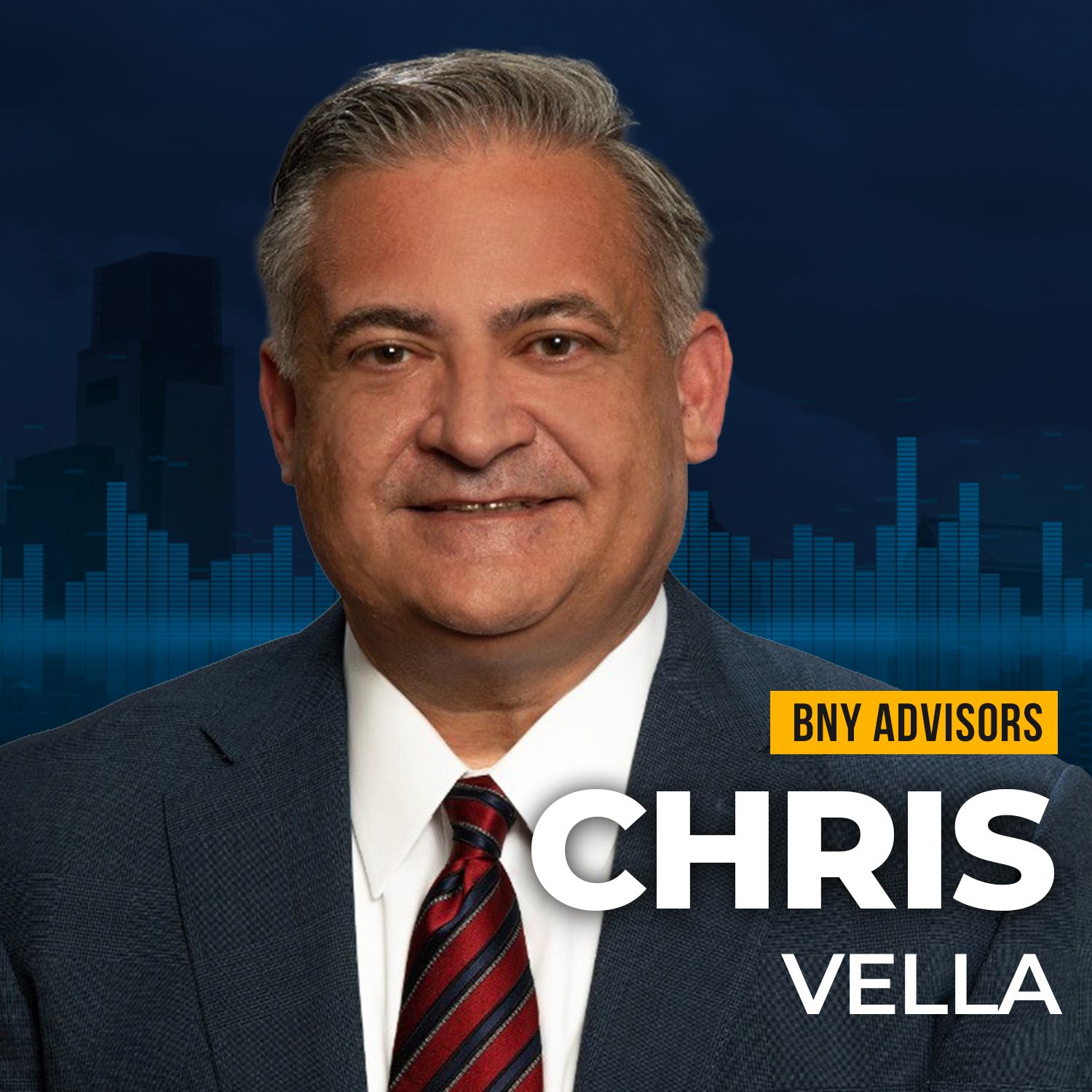
Robert Morier: Welcome to the Dakota Live! podcast. I'm your host, Robert Morier. The goal of this podcast is to help you better know the people behind investment decisions. We introduce you to chief investment officers, manager research professionals, and other industry leaders to help you sell in between the lines and better understand the investment sales ecosystem. If you're not familiar with Dakota and our Dakota Live! content, please visit our website at dakota.com. Before we get started, I need to read a brief disclosure. This content is provided for informational purposes and should not be relied upon as recommendations or advice about investing in securities. All investments involve risk and may lose money. Dakota does not guarantee the accuracy of any of the information provided by the speaker who is not affiliated with Dakota. Not a solicitation, testimonial, or endorsement by Dakota or its affiliates. Nothing herein is intended to indicate approval, support, or recommendation of the investment advisor or its supervised persons by Dakota. Today's episode is brought to you by Dakota Marketplace. Are you tired of constantly jumping between multiple databases and channels to find the right investment opportunities? Introducing Dakota Marketplace, the comprehensive institutional and intermediary database built by fundraisers for fundraisers. With Dakota Marketplace, you'll have access to all channels and asset classes in one place, saving you time and streamlining your fundraising process. Say goodbye to the frustration of searching through multiple databases and say hello to a seamless and efficient fundraising experience. Sign up now and see the difference Dakota Marketplace can make for you. Visit dakotamarketplace.com today. Welcome back to the Dakota Live! podcast. I am very happy to introduce our guest, Chris Vella. Chris is Managing Director and Chief Investment Officer for BNY Advisors. In this role, Chris Vella leads BNY Advisors, an investment team focused on delivering solutions for intermediary and institutional clients with responsibility for more than $175 billion in client assets on a global basis. The team of roughly 80 investment professionals spans global macro and asset allocation, manager research, and private market investments. Chris's career in manager research and multi-asset investing spans more than 3 decades. He began at SEI Investments, where he spent close to 6 years focused on international and emerging markets equity manager research before becoming one of the founding members of Goldman Sachs's external manager business, where he led the international and emerging markets equity team. A manager research specialist by background, Chris has spent his career evaluating, selecting, and overseeing external managers across global equities, fixed income, real assets, and alternatives. That allocator's perspective focused on asset allocation, manager selection, and portfolio construction rather than individual security picking has defined his approach throughout his career. He then spent nearly 2 decades at Northern Trust, where he served as global director of manager research and ultimately as chief investment officer of the firm's $75 multi-manager investments business, overseeing investment strategy, manager selection, and portfolio construction for institutions, foundations, endowments, and high-net-worth families. Chris joined BNY in 2023 as Chief Investment Officer for Investor Solutions and was named Managing Director and Chief Investment Officer of BNY Advisors in January 2024. His work sits at the intersection of manager research, asset allocation, and portfolio construction, designing and managing the model portfolios and custom solutions that BNY delivers to advisors, RIAs, wirehouses, family offices, and institutional clients. Chris earned a BS in finance magna cum laude with a minor in applied mathematics from Lehigh University, where he was elected to the Phi Beta Kappa Honor Society. He is a CFA charterholder and a member of the New York Society of Security Analysts. Chris Vella, thank you for being here. Welcome to the studios in Philadelphia.
Chris Vella: Thank you for having me. It's great to be here. Very excited.
Robert Morier: I'm very excited too. I feel like I said to you earlier, we did it.
Chris Vella: Exactly. It's a long time coming.
Robert Morier: It is.
Chris Vella: It's great to be here.
Robert Morier: And we've known each other for a very long time, more than 20 years. And it's really a pleasure to be sitting across from you and hearing about your new role, relatively new role at BNY.
Chris Vella: Yeah.
Robert Morier: What you've been up to in addition to what you're thinking about the markets. So congratulations on all your success. We wish you nothing but future success with this role. Thank you.
Chris Vella: No, I appreciate that.
Robert Morier: But let's start with the--- I don't wanna start with all the way with the beginning. I'm not gonna take you back to Lehigh.
Chris Vella: Oh.
Robert Morier: But we do have a couple students who are sitting in our studio audience today. And one of the questions that I ask regularly is, how did you end up in manager research? Research and due diligence. We try to track students into asset management.
Chris Vella: Yeah.
Robert Morier: But they're all pre-programmed to be investment bankers.
Chris Vella: Bankers. Bankers still, huh? To this day.
Robert Morier: It's incredible. I can't shake it.
Chris Vella: That's great. I love it. Great experience at Lehigh. It was amazing, even though you didn't want to go there. Finance, applied math, loved finance and just loved the numbers aspect of it. But I didn't know exactly what part of finance, like a lot of kids who are coming outta school, what exactly what area I wanted to focus on. So I was looking at primarily rotational programs at the time, and I looked on Wall Street and got into a few of them on Wall Street, but was enamored by the CFO at the time and the CEO and what SEI Investments was doing. It was so entrepreneurial. It felt like a younger company, a company where I can actually make a difference. And as someone young, I was naive enough to think that. And that's how I got into manager research, frankly, just being part of that culture and being part of that organization that was just really getting into, you know, what was not even termed OCIO, but OCIO today that everyone knows about. So that was a great experience. And that's really how I got into manager research. It was basically falling into SEI Investments. As I got there, I started my work, believe it or not, as like a custody implementation person because we were doing these rotations in different parts of SEI. And quickly found the investment team and the investment management unit and was part of the international and emerging markets team there and just kind of never left that space.
Robert Morier: The culture at SEI is very unique. It has been for a very long time. You know, bullpen seating, high ceilings, the cords are hanging around, just because everyone is sitting together. When you think about the culture that you started with, how has that stayed with you?
Chris Vella: Mm-hmm.
Robert Morier: Over the course of your career.
Chris Vella: And they also gave to relatively, young professionals. A lot of responsibility, which at the time I kind of scratched my head later on thinking, I can't believe they let me do that. Like I was flying all over the world at like 20-something and interviewing money managers in South Africa, Taiwan, Singapore, everywhere around, you know, all over the place. I do try to keep this idea around, you know, allowing people who are younger, newer, fresh ideas, like give them the space to speak up and give them the ability to actually contribute in a big way. And that actually creates an awesome dynamic in an investment organization. You know, I always say that one of the things that makes a great research analyst is just curiosity, you know, just lifting up every stone and understanding what's going on in an organization. And if you're not able to give people sort of that accountability and ownership, you know, you're gonna lose something with some of the, with the younger folks with fresh sets of eyes.
Robert Morier: I can testify to that approach. I have a story you might remember, back when I was on the other side of this business and not doing podcasts and a professor.
Chris Vella: Right.
Robert Morier: I had come to Northern Trust. I came with a money manager. Now, we were in the later stages of the due diligence process, and this portfolio manager was convinced that they needed to meet the CIO in order to make the decision. And I was adamant, trust me, the team that this, you know, person oversees is responsible. He's given them the room to run. But this PM just wouldn't buy it. So I told one of your colleagues, I said, I'm so sorry, but this PM really wants to meet Chris Vella. Is it okay? And you know, he rolled his eyes and begrudgingly left the conference room and went and got you. And you came in, and they were both sitting there, and you stood up, and he stood up, and you shook hands very politely. And you said to him with absolute confidence that this person who's sitting there as part of my team is the decision maker, and you don't need to meet me. I appreciate you asking for me, but trust me, you're in great hands. And that was it.
Chris Vella: Yeah.
Robert Morier: And I saw Yves shake his hand again. He turned around and left, and the meeting went on. And I appreciated that because I think that's a part of the business that a lot of portfolio managers and GPs don't necessarily understand how much responsibility is sometimes given to those junior and mid-level analysts who are responsible for manager research. In addition to the culture that you adopted, inherited from SEI, what is it about that approach that you think is so important?
Chris Vella: The folks who have a lot of gray in their hair, you know, on their head, may not be as in tune with the most recent technologies and what's going on. And I think you can, my entire 30 years, I think you can say that, like you say that there's always gonna be new technology out there. And I think that someone who is younger and more curious, it just like really wants to succeed and use all the tools at their disposal. Those are the ones who are really going to dig in and drill into understanding what's going on in the portfolio itself. How are the trades really being made? Who's making money? Where's the alpha being driven from? And I think that, again, I think that's where it's nice to have someone who has seen a lot of the, tragedies in our business and issues in our business. Because you learn a ton from that. I mean, the more scars you have, the better you are in terms of understanding strategies that'll do well in different environments and probably not buying it as quickly as someone who's younger. But the analysts who are on our team, their ability to implement using AI, their ability to implement different technologies into the portfolio that are sort of like, you know, top-notch, it's pretty impressive.
Robert Morier: Yeah.
Chris Vella: What they can do.
Robert Morier: You went from SEI to Goldman, and Goldman is relatively more rigid. I'm a Goldman alumni as well, so, yep, titles matter at Goldman. So but you were still given some pretty big responsibilities. You were actually building something within the, you know, within the ecosystem of Goldman. So very much an entrepreneur. What is you, what have you taken with you as you've moved forward in terms of that entrepreneurial experience?
Chris Vella: Yeah, so Goldman, awesome experience there. Like, you know, 5 years there and it was the opportunity to, they basically brought in people from industry, brought in people who've had, you know, several years of experience in this space. But also had a whiteboard, like a blank sheet of paper in terms of building a philosophy and a process almost from scratch on the traditional side. They already had stuff on the alt side for many years before, but on the traditional side, they really didn't have, they basically, it was mostly proprietary and that was it. And they needed an architecture, an open architecture to be competitive in the marketplace.
Robert Morier: Mm-hmm.
Chris Vella: And so that was our opportunity to say, okay, let's, you know, let's see what we can build here. And, you know, you're a Goldman alum, you don't half-ass it at Goldman. So it's--- I don't know if you edit that out or not, but, it's fine.
Robert Morier: I don't think the FCC is going to catch on.
Chris Vella: I think we're good. But so in any case, it was like very thorough, it was very, you know, detailed. And at the same time, it--- there was some latitude. And for an organization that is as rigid as Goldman, there was a lot of opportunity for us with, you know, eyes of MDs and senior MDs watching over what we're doing. This ability to kind of build something from almost from scratch. So that was a lot of fun. It was great. I will say the other part of Goldman that I kind of took away, like you go through each of these experiences throughout your career, and you look back and you see what you pick up along the way. Very performance oriented. Like it, you know, outcomes really do matter. And just you know watching. Strategies and investment strategies. And I've, I always, you know, think of it as a consultant mentality around what you're doing day in and day out, picking and selecting strategy managers versus a truly an asset management approach where the ultimately the outcome for your clients is extremely important. And I think that the, you know, sort of that lens on performance was something that we spent a lot of time at Goldman kind of perfecting, if you will.
Robert Morier: Yeah, that makes sense. Well you were with Northern Trust for a lot of quarters.
Chris Vella: Yes.
Robert Morier: You were there for a long time. When you think about your history and you think about the experiences that you picked up at Northern, what was the hardest part about leaving?
Chris Vella: The people, the friends. I mean, it was, you know, my work colleagues were some of my best friends. I mean, that was very difficult to move away from the team itself. No doubt about it. Shout out to the Northern team.
Robert Morier: I'm sure they're listening.
Chris Vella: Exactly. But that was difficult. And you know, I think that the--- you build up your own kind of within an organization, your own reputation and what you're able to provide and what you're responsible for. And that's meaningful. And to completely step away from that after 20 years of building that in senior roles, that's also pretty tough to walk away from.
Robert Morier: I'm always curious what that recruitment process looks like. So you know, you're at the CIO level. You are a 20-year veteran of one organization that's built and grown substantially over your time there. Does the call come into you? What does that call sound like? What makes you take it?
Chris Vella: Yeah.
Robert Morier: And you know, how did you think about the opportunity relative to what you just said, that you'd built up this track record with not just the, you know, the GPs, but your colleagues?
Chris Vella: Yeah, it takes a long time. It's not something that happens over a few weeks, right? This was, it was months of discussions with senior people at BNY. And it has to hit a few Checks, right? You've got to hit several boxes in order to really make a move like that. The boxes that were checked off, like the senior executive changes that you know, the significant changes, and we'll talk about at BNY that were taking place. Super exciting, like really like transformational, truly transformational. And I thought being part of an organization that's going to that's at the beginning stages of going through that. Was a great opportunity. And then there were parts, then there were small parts of the business that I touched at Northern but wasn't fully ingrained in. And model portfolio management, it's one of the most important things we're doing right now within my team. And we did that at Northern Trust, but it wasn't a clear focus. It wasn't a big expanding business for us at BNY. It's, it is, it's mission critical in my mind. And it's a just a huge opportunity again within the RIA broker-dealer space. And helping clients.
Robert Morier: What did those first 6 months look like? So when you think about that whiteboard, what---.
Chris Vella: Yeah.
Robert Morier: I mean, I remember when I first started at Goldman, I had a--- I created a yearbook of all the people because there's so many people. So I know you're having to meet all of these different people, all of these different divisions, all of these different facets of the business. So once you have a good feel of the people, what did that whiteboard look like in terms of prioritization?
Chris Vella: Entering BNY, it was a lot of those 30-minute calls. I've never had so many 30-minute calls with so many people for an extended period of time. Is 30 minutes enough? No, but it's always 30 minutes, right? It's definitely not enough. But so you're right though, you meet so many different people from so many different areas, which is fantastic. And it's a big organization. It's much bigger than Northern Trust in different businesses and leading in different parts of the markets as well, which is exciting. That whiteboard, you know, it--- I barely had enough time to figure that out, and we kind of shifted around. We took an opportunity to bring a few teams together. So I joined the Wealth Management Group, as part of Investor Solutions, and we kind of took a step back and brought 3 teams together into the Investment Management Division. Ultimately, a year later, Wealth and Investments came together under Jose Minaya. But at the time, it was taking a team out of Pershing LOB, which was the old Lockwood TAMP.
Robert Morier: Yeah.
Chris Vella: They came into our group. We took a global macroeconomic team out of London that was in actually our sales group, brought them into our team, and then expanded our group as well, brought in the private markets as part of our group. So we actually were able to kind of reorganize everything into almost what I always dreamed of having, frankly, like under one roof to be able to have, you know, strong rowers, under one roof going in one direction, like that's super powerful. So we had, from a client perspective, the OCIO team, and we also had a models portfolio management team leveraging kind of our centers of excellence. We had an asset allocation group that had did everything from capital market assumptions, strategic and tactical asset allocation. We had a manager research team on the traditional side, that covered 800 strategies plus, almost 900 today, a private markets team. So you know, private equity strategies, fund of funds that they've been--- we're on fund 14 at this point. So 2 decades of private market manager research as well within our group. And we also had a systematic team, like kind of a systematic equity, fixed income, actually a GTAA group, which is again, another great tool in the toolkit to help with asset allocation, having factor analytics on that side, and also producing products with options overlays and things that are kind of unique for private wealth clients. So you know, a really powerful investment team, you know, the 80 strong that you had mentioned, and covering just about everything you need at your disposal to help clients out. And that's how I describe the group is, an extension of the investment staff for all of our clients. And it's such a great way to describe a team that you work for, right? It's like what we exist to help our clients no matter what. Like, you know, if you want support on the asset allocation side, you can just hire that, you know, us on capital market assumptions, asset allocation. If you need support on manager research, you know, we've got that vertical all set up. Private markets, same thing. Or you can take the whole thing. You know, so we're basically able to support clients in lots of different ways.
Robert Morier: That makes a lot of sense. We're going to talk a little bit about the teams in a second. It never ceases to amaze me when I hear 2 decades of private markets exposure at a firm like BNY at a time when in the media it sounds like it was all just introduced in the last 6 to 12 months because of the democratization of privates and retail portfolios. And I know you have a lot of opinions on this, but when you think about what you inherited in terms of that 20 years of experience relative to what you knew you had to develop over time in order to meet the needs of a new client base. How did you balance that? What you inherited versus what you knew needed to be implemented?
Chris Vella: So very hot topic. Okay, I'm going to come---.
Robert Morier: I'm going to get the clock going. It's all good.
Chris Vella: No. This is work in progress. I mean, really, it's work in progress. So we--- the team is a phenomenal group, right? These guys, The team itself has been involved in mostly, well, entirely on the fund strategy side, private equity fund of funds. And they've also been responsible for the platform of direct exposure across private credit, real assets, everything else, hedge funds for our BNY Wealth Management. It's been primarily BNY Wealth that this team really supported. We are going through our own transformation at this stage to really, to your point, to build that out significantly. So We are now looking at public-private partnerships to incorporate interval strategies, interval funds in everything that you read about, whether it's private credit, private equity, multi-asset, real assets like infrastructure. I really do feel like there's a place for these right now. It's, you know, it's interesting. It's a different topic. Like lots of people have different opinions on it. They always have. But if you are looking to give more exposure to private wealth investors to a more resilient portfolio, to a better portfolio, I think it's a great opportunity for this product development cycle that we're in. And I think that there will be issues. We're living through them now in the private credit space specifically. And it's going to take a lot of education for people to understand exactly what they're buying into. But you're accessing a group of clients who never had the ability to invest in something that had a K-1. You know, they have to have a 1099. You know, our ability right now, we're very focused on, as are many others in the industry, how do we incorporate these strategies into model portfolios? To go back to models. And the only way to really do that is to have a daily NAV, to have an interval fund, to have something that's priced on a regular basis as money flows in and out. So I think that this is, you know, we're in the beginning stages of sort of, you know, some difficult times in terms of the partially on education, like making sure that people really understand what they're buying and the liquidity profile of what they're buying. But at the end of the day, I think that this is going to hit. I don't think it'll be completely mass market, but if we hit the 401 space and other areas, it will be mass market and everyone will have some exposure to it.
Robert Morier: Dakota Recommends is your source for the highest quality coffee shops, restaurants, hotels, and event spaces in every major city where business happens. Dakota Recommends is thoughtfully curated by our team who has been traveling and hosting events in the investment industry for over 25 years. Log in to Dakota Marketplace today to see how Dakota Recommends can help you make your next trip better. How much of that time right now is education?
Chris Vella: Oh, it's a lot. It is a lot. It has to be.
Robert Morier: What does that look like from, you know, from a practical perspective when you're thinking about, are you educating the advisors? Are you edu--- you know, educating the staff? Are you educating the clients? What is the, what does the delivery mechanism look like?
Chris Vella: It's, so most of our time is spent with home office and advisors. Right. So the, but we need to supply the front lines of the advisors with whatever they can provide to their own clients. Like if you don't provide that, they're gonna be, you know, things could be missold. And so it's important that we're able to pull together these educational pieces that are mostly home office so they understand what's going on within portfolios and how to structure it appropriately. But also for financial advisors directly, and then arm financial advisors to really be able to talk to their clients about what they're investing in.
Robert Morier: Does BNY Advisors, are you still using the framework, the robust strategic asset allocation framework?
Chris Vella: So we're actually, a lot of work's been done over the last 6 months to focus on more of a Black-Litterman model than kind of a robust strategic asset allocation framework.
Robert Morier: Going back to Goldman.
Chris Vella: Going back to Goldman days. Yeah.
Robert Morier: Yeah. Yeah.
Chris Vella: I get it. I remember Bob Litterman quite well.
Robert Morier: I do too. I remember that team quite well.
Chris Vella: I was quite lucky to work pretty closely with him actually. It was pretty amazing.
Robert Morier: Interesting that you're going back to Black Litterman, and I'm thinking about the menu. So there's a couple ways, you know, we hear about it here on the show, and of course that you've been exposed to in your own career. There's the prix fixe menu, and you've talked about that with model delivery, and then there's à la carte. But either way, you have to have a table. So talk to us about that first step, that setting the table. What does that asset allocation process look like? How is the direction of the meal set? You know, which way are we going? Are we going Italian? Are we going French?
Chris Vella: Sure. Working closely with the client is really most important. I'll give you the high-level process overview in terms of what we're thinking, how we're working with all of our clients. But then specifically, when you really drill down into a client and portfolio, it's goals, objectives, client needs, demands. Like, there are going to be restrictions that some clients place on you and all the rest of that fun stuff. But when you think about from a high level on the asset allocation side, you know, everything starts with the capital market assumptions. It's kind of our foundation. We do that once a year. We've been doing that for, again, almost a couple decades now. So we have a real track record on setting capital market assumptions. So across 50-plus asset classes that we cover today, multiple currencies, that lays a true foundation. Then you have a strategic asset allocation on top of that, which is more of the Black-Litterman approach. And then we have a tactical asset allocation team as well. So we'll be able to tactically shift portfolios around given the current market environment. Not every client wants tactical asset allocation built on top of what they're buying, if you will. A lot of our institutional clients are sticking with strategic asset allocation and they're perfectly comfortable with that. They don't want to move around the portfolio as actively. Most of our private wealth clients, high net worth clients, and including our model portfolios, will be taking the tactical asset allocation advice. We've put together at BNY a global investment council that is across the entire organization. So you know, we've got Vincent Reinhart, who's like an expert in Fed, in the Fed and in Fed decisions. The guy's incredible, works for our Dreyfus organization. He sits on this council. Jason Granet, who's our BNY CIO of the balance sheet, the guy's, you know, again, fixed income specialist, is off the charts brilliant. So I think you've got, we've got a number of, we've tapped into all the different organizations, experts, and it's about, 12 of us on this committee that gets together on a monthly basis. We get together quarterly in person and discussing the world, very tight agenda. You know, it's about half a day to basically with an outcome of, you know, where do we want to move the portfolio around to? And each team ultimately will move the portfolio in their own way. So our fixed income team may do something completely different, if you will, but at the end of the day, So there's a firm-wide knowledge around what are we seeing, where are the opportunities, where are the risks inherent in the portfolio? What do we think about rates that are gonna be a key driver of returns over time? So that's a really critical part of that TAA. So then you've got your asset allocation set up and you're thinking about how do you implement, you know, the, do you want Mexican, do you want Italian?
Robert Morier: Exactly.
Chris Vella: So that's---.
Robert Morier: Exactly.
Chris Vella: That's the fun part, right?
Robert Morier: Yeah, it is. And that's where, and you've been doing that for 30 years.
Chris Vella: Yes.
Robert Morier: So I know you've done all of the asset allocation work as well.
Chris Vella: Yeah.
Robert Morier: But when I think about you and your experience, you're one of the few people who've been doing manager research and due diligence---.
Chris Vella: For too long. Too long.
Robert Morier: For too long. For too long. Entirely too long.
Chris Vella: I just left a few of the senior manager research folks just before I got here, spent some time with them.
Robert Morier: What were they saying?
Chris Vella: They also have been doing it for too long. Like, there's a senior group that's been--- that's probably more skeptical, which is a good research analyst, right? But highly skeptical about what's going on in the world. We wanna make sure that we've got the right options available to portfolio managers and our clients ultimately, whether that's the financial advisor. When we think about developing a platform for an organization, or it's our wealth management advisor within BNY, when we think about their platform, we need to make sure that we have a good list of managers and options available and best in class. You know, and you really, and that's, you know, not that easy to do.
Robert Morier: How do you prioritize all those managers? You talked about it between 800 and 900 managers. That's a big menu. So we are getting back to the food. It's like a, that's a heavy-duty Chinese menu. You can basically eat anything you want. Yeah. But how do you know what's good?
Chris Vella: Out of that, there's 147 that are high conviction list strategies, you, which is still a big number, but there are designations around, you know, high conviction strategies versus, and everything's rated. So we have above average, below average ratings across the board. There are 7 categories of factors that we're looking at and like 50-some-odd, 52 subcategories that we're evaluating for everything. So it's very, I mean, that's what I always tell my team, you know, the most successful money managers in the world are the ones who are the most disciplined.
Robert Morier: Mm-hmm.
Chris Vella: The ones who do what they do day in, day out, and they don't stray from their discipline. And you want to bring that into your own investment process to ensure that you're consistent and you're disciplined, whether you're looking at a US large-cap growth manager, a microcap manager, private markets manager. So we've got the same team kind of working on all these different areas and getting together is another key, I think a key difference between potentially some other places. You know, we still have a relatively, it's 20 investment professionals, you know, relatively, you know, small team for that many managers. And they're all getting together.
Robert Morier: Mm-hmm.
Chris Vella: To talk about each of the challenges that they're seeing or, you know, opportunities and new managers are hiring. So fixed income analyst sitting right next to the equity analyst who's making a recommendation for a new strategy. You know, you're not using all 900, you know, by any stretch anywhere. But as your business grows, you're, you know, just about $200 billion now in assets. You know, we're working with clients all over the world with different needs. Unfortunately that list does expand and grow out. And so I think that's something you were always trying to balance even with the research team in terms of coverage and oversight to manage their own time.
Robert Morier: In addition to discipline. If I were to ask you to leave the room and I had your manager research team here with me, and I asked them, what other characteristics do you know that Chris likes to see before he gets introduced to that manager? What do you think they're gonna say?
Chris Vella: Consistency of performance.
Robert Morier: Yeah. Yeah.
Chris Vella: I would hope that they would bring up consistency across the board. You know, it's, and it's such an important factor.
Robert Morier: Mm-hmm.
Chris Vella: For asset managers, to be in an environment or an organization that's stable, to be able to run their portfolio in a disciplined fashion, but consistent execution. You know, it's not so much that they have to, you know, no manager's gonna outperform every single quarter, right? Or it's made off and they go to jail. You're looking for strategies that you could set your watch to. Like, that's the key. Like, you know, you really wanna be able to say, okay, in this market environment, this strategy's gonna look terrible, you know, and that's the time you should be adding more to the strategy.
Robert Morier: Yeah.
Chris Vella: Or you should make sure that you're rebalancing. Like, we are always a very strong advocate around having multiple strategies with unique disciplines that have low correlation of alpha within a similar area of the market. It could be value and growth in the large cap if you don't want to be too overly diversified, but it could be a yield strategy and a relative value strategy on the value side of the equation. And the goal where you're making money there is when one is totally out of favor and the other is doing great, and you're reallocating money from the one that's doing great into the one that's not doing so great. And then keep that balance.
Robert Morier: When I interview folks, this is gonna be the 5th year now, it usually starts with people. Well we look at people first and we try to understand who they are as people. We think about, I, we had an interview earlier today, emotional intelligence. We try to understand, cognitive diversity, all of these things. But it's really hard. You know, I mean, for me as a professor, it's almost impossible to teach. But as someone who's interviewing, you at least have the pattern recognition. But the interesting thing about this industry is that there's no uniform personality.
Chris Vella: Yeah.
Robert Morier: We get all different types, right? We get the person who never, you know, went to college. We get the person who was a surgeon and decides to go back and do finance. You get all these different types, and it's really interesting. Interesting. How do you ascertain whether the person is going to be the right partner for a BNY?
Chris Vella: My first boss in the investment world at SEI, he would--- he basically described it as, I'm looking for great investigative reporters. Like, you know, so it was almost like--- it's almost getting under the hood, getting into the mind of people at times, like getting inside their brain, which is why, as you point. Very difficult to do. I don't, I, you know, I don't think there's one type of characteristic or person that, you know, BNY needs to see in order to invest with them. I think if you go down that path, you're going to have a lot of strategies that are very similar. And that's a really dangerous road to take as well. So I think diversity around how people go about solving for this, you know, very difficult problem of gaining alpha over a benchmark, which is not an easy task. But cutting that in different ways adds a lot of value for the total portfolio.
Robert Morier: What questions in your career have yielded the most results?
Chris Vella: Yeah.
Robert Morier: When you're in those meetings, and it's not the first meeting, it's not the last meeting.
Chris Vella: Yeah.
Robert Morier: That middle is really hard, right? Middle everything is kind of tough. Middle management's tough. Middle innings are tough.
Chris Vella: Yeah.
Robert Morier: And those middle meetings, I presume, can be pretty tough. Yeah. What questions yield the most results?
Chris Vella: It's so interesting, the psychology between watching like different research analysts work these sessions, if you will, these interviews differently, is always, is also really---.
Robert Morier: Different types of reporters.
Chris Vella: Different types of reporters. Very interesting. I found a lot of times the open-end questions, like the questions that just like, you know, let them go. And I, and again, and I think that the really, the cream of the crop are the managers who really understand, like who know, like you, 4th quarter of like 2017, we just like blew up this strategy. Like what happened?
Robert Morier: Mm-hmm.
Chris Vella: And you know, a lot of folks just will flounder around some of those. And the ones who really stand out are like sharp as a tack. They just get it, they drill on it, and it's like, yeah, that left a mark and here's how we, you know, here's what happened and here's why, and here's how we might have changed something going forward. Like, that's some of those things you're looking for. So we think it's, and that's not an open-ended question, right? That's very specific. So I think you need a few of those and you need a few to just let them talk and like, let's see where they go. Let's see the direction that they're going in to really understand sort of how they're thinking about this. We've been through enough crises where like, just talk about any one of the multiple crises.
Robert Morier: Right.
Chris Vella: We'll actually, bring some interesting discussions around how people react, didn't react within their portfolios.
Robert Morier: Is the process effectively the same? So once the 147 managers have been named, as we all know, not all 147 are going to succeed. How much time do you give? That's something that we don't get--- we don't talk about a lot, you know. Yeah, this isn't a--- you're not a public pension fund, so you don't---.
Chris Vella: You're not---.
Robert Morier: You don't have a watch list per se, right? But you know, but there's the watch list mentality that starts to take effect.
Chris Vella: Oh yeah.
Robert Morier: That then changes.
Chris Vella: We do have watch lists.
Robert Morier: Oh, good. That's interesting to hear because I think there's something--- talk about behavioral psychology. There's something interesting about being put on a watch list from a GP's perspective, which is I have to tell a portfolio manager that we've been watch listed.
Chris Vella: Yeah, right.
Robert Morier: Something can change, right? More risk, less risk, more securities, less securities, wrong analyst, right analyst. It creates a lot of movement for better or worse. Not always.
Chris Vella: Not always.
Robert Morier: But sometimes.
Chris Vella: Yeah. Yeah.
Robert Morier: When the movement starts, how do you know, how do you lock into what's, you know, what's part of what we expected versus, wow, this isn't what we bought?
Chris Vella: I've always been a strong proponent of pushing the team to think about when we're going to fire the manager. Before we hire them, you know, is it a star PM? Is it a drift in a certain style? Like we should be thinking about terminating the relationship because all you tend to think about when you're hiring somebody is all the good stuff. Everything's roses. It's all fantastic. You know, and we and but we should be pushing ourselves to say, okay, let's think about what happens when you terminate. And so I think that helps create a roadmap or a bit of a roadmap, and then you get into it. Something is happening. Performance isn't there, and ninety percent of the time when performance isn't there, something else happened, you know, that you just had maybe didn't recognize, or the market's just way out of sync, right? And those are things you need to think about. And that's where--- and, we should--- I, again, proponent of placing a manager on a watch list even if there's no change to the people, the process, but performance is slipping big time because I feel like that's--- that just And so that just creates an environment and our own little ecosystem where we're drilling deeper. Managers should know they're on watch by the actions that their investors are taking. So if we're calling you every other week and asking you a lot of questions, you're on watch.
Robert Morier: Is that Chris again?
Chris Vella: I don't have to tell you you're on watch.
Robert Morier: You're on watch.
Chris Vella: So but we're trying to, and so then to answer your question, how long do you stay on watch? That's always, you know, easy to put a manager on watch. But it's hard to say, okay, you know what, they've improved XYZ. Like, and that's, again, place someone on watch, place a manager on watch. You lay out in a watch memo.
Robert Morier: Yeah.
Chris Vella: What's it gonna take to get off watch? And you're, and that's your, again, it's your roadmap, that's your guidepost. And man, and you know, managers should be able to go on and off watch, you know, without causing chaos and anything else. Just because, you know, something has changed, people might have left, new people have come in, you gain a rapport with them and you understand what they're doing, all that stuff. The final termination though, I mean, that's going to be, you know, those are tough. And you know, the, there should be, you know, you've got a strong, you've got a track record of assessment and potential failure or not meeting the standards. And you've, and there are probably others out there where there's an opportunity cost that are doing a lot better.
Robert Morier: Unfortunately, it's always the last question, I think, from an allocator's perspective. So when you think about operational due diligence, I'm going to ask it two ways. One is how small of a manager does the BNY platform look at? Are they looking at emerging managers and are they thinking about that small of a scale? And I know that may be challenging, but I'd love to hear your thoughts there. And it's in the context of the operational infrastructure.
Chris Vella: Yeah.
Robert Morier: So where are accommodations made for the smaller manager? Or do we need to ensure that we've got those boxes checked before we get through the operational side of the due diligence?
Chris Vella: Unlike the days at Northern where there was a business around emerging managers, or more of one at the time, years ago, less so at BNY. I like creating a culture where that's very acceptable. It's tough. There's a higher hurdle, but I think you're missing out on something if you really completely avoid a strategy until they hit X billion in assets, you've probably missed out on a lot of really strong alpha on the way. So we do not have a minimum in terms of, you know, you have to be more than X to get a look. We will, if it's hard, it's more difficult to invest in them in these strategies though. So just to be completely frank. So that's part of it. And I look, I think there's the ODD side, the operational compliance side, has come a long way with outsourcing for asset managers to outsource their operations and compliance in a really, in a good way in order to make it through a strong ODD process. So I don't think you need to, I don't think you really need to, give too much in certain areas. The one that you have to really keep an eye on and understand how it's structured at the firm is, someone who's wearing very--- a lot of hats. And they have to wear the right hats. They can wear more than one hat.
Robert Morier: Mm-hmm.
Chris Vella: But they have to wear the right hats. So your compliance officer can't be your portfolio manager and things like that. So it does take more manpower. And then it gets back to transparency. Like we will say, you know, you're not set up or ready yet because you, because of this. This isn't quite right. Quite, you know, meeting industry standard yet. And there, but there are so many outsourced opportunities for money managers to kind of go down the path of. We spend a lot of time on ODD within private markets. And we're just super important, obviously. There's less transparency in general around a lot of what you can find out about some of the private market managers. And but we are also, we do invest in, you know, year 1 funds.
Robert Morier: You do?
Chris Vella: Yeah, we do. And have had a lot of success doing that. So it's not everything, but it's a small percentage of funds. Of the total portfolio. And the compliance and ODD side is right there, you know, doing the evaluation of those strategies. And the team's done a great job.
Robert Morier: For years, legacy data providers have made private fund performance benchmarking complex and expensive. That's why we launched Dakota Performance and Benchmarks, the first ever benchmarking platform built by people who are using the data themselves every single day. We've made our benchmarking affordable, customizable, and very easy to use. You can log in to Dakota Marketplace today to start creating your own benchmarks and viewing our created benchmarks, or you can learn more and book a demo at our website at dakota.com. I'm going to spare you of the active versus passive debate in this conversation, but talk to me a little bit of active ETFs because they've grown so quickly. So quickly, nearly half of asset managers expect to convert mutual funds into ETF structures over the next 2 years.
Chris Vella: And we're on that list.
Robert Morier: Yeah, so we're an organization. I understand. And where do you see active ETFs being utilized?
Chris Vella: Which---.
Robert Morier: What's the house view?
Chris Vella: I have been fascinated at, a few years ago, how many hurdles were thrown up there from peers in the industry, say, I don't know, you know, we're looking at it, but we're not really comfortable with it. How fast that's changed. That perspective has changed a lot quickly. Our team has always looked at active ETFs. I mean, for years we have, and we've had exposure to active, not as many, granted, like not as many, but we've, we have not shied away from it. So it's definitely like we've built the process around understanding liquidity and asset flows and capital markets around the ETF transactions. Like all of that we have, you know, most importantly, basically the expenses that can be built into the performance around some of these. And also the evaluation of differentiation between someone that has a mutual fund, an SMA, and an ETF is a differentiation between different strategies. So we've built that process. That's like, that's a muscle we have that we've had for years. So that's been great. I'm a strong proponent You know, the active ETF is really, is meaningful in the RIA broker, in the private wealth space. And it's, and we're seeing that in the number of ETF model portfolios that are out there. You know, the pickup of ETFs just across the board, as you pointed out. I mean, it's pretty incredible. So, I think that trend will continue. I think that it's a really interesting space right now. And, I would actually, 'cause you and I are old enough, like I remember trying to push like, why are you not doing a managed account? Like why are you not, you know, why are you not thinking about model research portfolios to help from a tax-efficient perspective for some of these clients? And there are a lot of managers like, no way, not us, we're institutional. You don't hear that anymore.
Robert Morier: Yeah.
Chris Vella: And it's, you know, most people have gone in into these businesses to really tackle I mean, the growth in the private wealth space has been pretty tremendous.
Robert Morier: Well let's talk about private markets, just the last 5 minutes or so before we let you go. And you noticed something which I thought was important, that advisors, they want to allocate more to alternatives, but there is more operational complexity, there is more paperwork. So how are you trying to lower those barriers to entry for your advisors and for your clients? Is it through platforms like Alts Bridge?
Chris Vella: BNY brings to the table tremendous infrastructure, opportunities for their clients. Like, that's a big deal. So thank you for that. Your lead-in, yours is a little softball there. But I think that, if we're able to master the single signature for some of these private market investments, it will be so much easier for advisors to avoid a lot of the operational back and forth and issues and swivel chair out of this environment into another environment to buy and sell, private market investments. That's part of it. We also are, as I mentioned earlier, there's a strong push in the industry around creating unique wrappers and this product development around interval funds and avoiding K-1s, creating, you know, an environment for taxable investors of 1099s in the US and lowering account minimums that you can put into these strategies. You know, it's just the ease of, as you put it, the democratization, the ease of purchase for smaller clients is a real thing. And the more work that we've done on this, the more I actually think it strengthens a bit of the case of the 3(c)(7) and the K1 and basically the closed-end drawdown strategies because you'll, you will always have the drawdown perspective that'll have a higher return because you have to have a liquidity bucket in the other areas. So as long as you are putting portfolios together where you know what that liquidity bucket allocation really is and you're accounting for that as you build portfolios, I think it makes a lot of sense for private wealth to still have those exposures. But you'll have folks who say, you know, you're putting a drag on the portfolio of 20% in cash or some sort of liquidity element in that, in order to save for potential redemptions. And I think that ultimately there'll be this 3(c)(7) world, this drawdown world that will always exist for foundations, endowments, institutions that are looking for higher returns.
Robert Morier: So did you time your start at BNY with ChatGPT and OpenAI coming to market? AI. So when you think about your timing was interesting.
Chris Vella: The movement of AI within the organization is---.
Robert Morier: 'Cause you basically started, right?
Chris Vella: Incredible.
Robert Morier: As soon as it was basically, you know, commercialized.
Chris Vella: Close. Yeah, close to it.
Robert Morier: Yeah.
Chris Vella: Yeah, complete luck.
Robert Morier: So what was that like?
Chris Vella: Like most of my career, total luck.
Robert Morier: Yeah. Well sometimes that's part of it. It is a big part of it.
Chris Vella: Oh, right place, right time.
Robert Morier: Yeah.
Chris Vella: So it has been great. I mean, it really is powerful. And so from Robin, you know, it starts at the top and Robin is like pushing this very hard and has been from the beginning. It is such a strong initiative. All 50,000 employees will be trained on using AI. It is strongly encouraged not just to use AI at home--- at work, but also at home. Like, you know, you use it everywhere. And at work, I mean, we've got multiple projects. We got 15 projects right now on the drawing board that will be implementing AI. We are right now wrapping up and initiating an AI research bot on the team. Team. We will be--- we've got an AI, implementation in our ODD process as well to simplify that. We've got AI on report writing. I mean, so it's every division and then every group within those divisions are really being pushed to like, where can we use AI more and more effectively? Now it's a closed environment. It's a 242-year-old bank founded by Alexander Hamilton.
Robert Morier: Yeah.
Chris Vella: Like, so, and that's, that is, people say that all the time. So you don't forget how important it is that this, the longevity of the organization is like palpable. Like it's so important. And it's a conservative bank. But at the same time, the organization wouldn't be 242 years old if they, if we were not thinking about, you know, what's next and innovation. And innovation is absolutely critical, and AI is like, that's all about innovation.
Robert Morier: Are you applying that same open-mindedness to your asset management partners? So you have an asset manager who comes in and says, okay, I'm--- we'll role-play for a second. Chris, you're my manager research person at BNY. We are using it everywhere. Yeah, anywhere. It's writing our reports. We've got an AI bot, from the top down of our organization. It's being implemented. What's the reverse of that?
Chris Vella: So I don't know if there is much of a reverse, honestly. Like, if they feel--- I feel like there's I'm pushing the research team to ask more questions about AI and how is AI being implemented into asset managers' portfolios and the work that they do. I really feel like it's that important. I mean, I think so. Look, the, for our group and the expectations I would have with an asset manager, human eyes are looking at everything, right? There's, there's, there, it's very important that we're checking anything that goes outside of BNY, to ensure that there are no issues and no concerns there. And I would imagine all the managers are going to be doing very similar things at this stage. Like, there's no way around it. And I would also follow up with a lot of legal risk compliance questions too, because I know what the legal risk compliance world is within BNY. It's not easy. Like, the stuff I rattled off, you don't just do that on your desktop and you're like, oh, this is great, it's working awesome, no problem, Robin. It's like, no, not at all. You know, it goes through a ton of checks and balances to ensure that everything is safe, up to stuff. And we've got AI expertise. That's the beauty of a big organization. The amount of money we're spending on this, on AI, it's basically making sure that we've got people and resources to help us building this out.
Robert Morier: It sounds like that's, it's gotten you kind of--- it's excited your career. The end--- you're at this part, you're in this part of your career where you probably didn't think that maybe the next, you know, 10 to 15 to 20 years are going to be in this wave of technology change. So it sounds like from your answer, it's exciting, motivating.
Chris Vella: It is motivating. It's motivating. It's exciting. And I, and it's, we're also in a position where we're growing a lot, which is a blessing. And at the same time, without the, without technology, you're going to falter. Like, we cannot build at scale without some of these add-ons and enhancements and frankly AI to help support us. I mean, it just wouldn't happen. And we're not gonna be, we won't be hiring tons of people. And that's what I talk to the team about. It's like, you know, people worry, oh, my job is gonna go away. Well you know, I wouldn't view it that way. I mean, if you're not embracing the AI world, you're likely going to be set so far behind your peers in what you're doing that you're, you know, someone else will do it for you.
Robert Morier: Yeah, embrace the tools. This question probably sounds a little antiquated because of what's happened with AI the last 3 years. But when you think about the evolution of the CIO role, you've seen a lot of changes. You've been in this long enough. I know not as a CIO the whole time, but as an allocator the whole time. What has that evolution looked like? And I hate to ask you this, but where is it going? You know, is it going to less people with better tools?
Chris Vella: The environment and what's being built is getting more complicated and more complex day by day as well. So I don't feel like it's, I mean, the short answer is probably yes. I mean, 5 years from now, I would think the answer is going to be if we're probably gonna be at the same with a much larger base of clients and assets, or we'll be slightly less. I, we're not going to be like 2 or 3x the number of people. Like, those days are behind us. So the future from that perspective is going to be--- we'll be embracing some of this new technology to help scale what you have today and scale it in a way that we can customize. Like, that's going to be the next big push. You're going to see custom--- you're already seeing it, the customization of models, the customization of portfolios for individual investors, you know, and complicated strategies that are not that easy to describe to, you know, mom and pop, you know, 130/30. Like, what is that? Yeah, you know, this is--- this is probably round 2 of 130/30.
Robert Morier: It is round 2.
Chris Vella: But this is a very successful round 2.
Robert Morier: Yeah.
Chris Vella: It's a little bit different this time too. Not that it's--- I hate saying those words.
Robert Morier: Those are dangerous words.
Chris Vella: Exactly. Be careful.
Robert Morier: This is being recorded.
Chris Vella: Exactly. But the 30 on the short side and harvesting losses and building portfolios that are harvesting losses, like very purposeful short 30 to really come through with a portfolio that you're trying to unwind potentially significant capital gains in certain areas. It's really quite interesting what we're doing. And again, this is very complicated stuff. I mean, it's, for us it's not as complicated, but to describe it to the ultra-high net worth even, or the high net worth world, it does get complicated. So again, back to this, what does the world look like? The advisory side of it's going to be super important, and that part doesn't go away in my mind.
Robert Morier: All right, Mr. Vella, it's time for our lightning round. We're going to try to ask you some quick questions just to get a sense a little bit more of who you are, trying to get the depth of you.
Chris Vella: But quick, quickly.
Robert Morier: But these are not deep questions, I promise. So are you an early bird or a night owl?
Chris Vella: Early bird.
Robert Morier: Early bird. Okay. What was the very first job you had? Very first job.
Chris Vella: I worked at a phone company answering, like, you know, calling people, annoying them on like a 1-800 number thing. It was a horrible job.
Robert Morier: Where was that?
Chris Vella: High school. High school.
Robert Morier: High school.
Chris Vella: Westfield, New Jersey.
Robert Morier: Okay.
Chris Vella: Yeah.
Robert Morier: What's a book you find yourself recommending over and over?
Chris Vella: Oh boy, that's a tough one. I love like the Ben Graham stuff. I like, I give that to my son when he wanted to be a finance major.
Robert Morier: From your time covering emerging markets, international markets, is there a country that you want to visit or go back to that you haven't been?
Chris Vella: That's such a great question. I have been, I've been lucky enough to go to lots of different places. I would love to go to all of them again, but, I love China and, Shanghai. It's one of my favorite cities.
Robert Morier: What's an investing myth you wish would go away? It's something that people talk about enough, but it's something you kind of wish would die on the vine.
Chris Vella: Tell researchers there's no such thing as a dead cat bounce. Yeah, dead cat's a dead cat.
Robert Morier: That's a good one. What's the most underrated trait in a great investment manager?
Chris Vella: Curiosity.
Robert Morier: Best piece of career advice you ever received?
Chris Vella: Say yes.
Robert Morier: What's a habit that keeps you grounded when markets get volatile?
Chris Vella: Look, I think the most important things in life: faith, family, and what you do every day. You have to love it and have a passion for it. So---.
Robert Morier: In one word, how would your team describe you?
Chris Vella: Crazy.
Robert Morier: In one word, how would your family describe you? Crazy.
Chris Vella: Okay.
Robert Morier: Consistency wins. Chris, thank you so much for being here. Thank you.
Chris Vella: It's great to be here.
Robert Morier: It's great to see you.
Chris Vella: So good to see you.
Robert Morier: It's good to see you.
Chris Vella: Yeah, it's been wonderful.
Robert Morier: Thank you for making time.
Chris Vella: You bet.
Robert Morier: To visit us in Philadelphia at Dakota Studios.
Luke (Student, Drexel University): Hi, I'm Luke. I'm a rising junior here at Drexel University studying finance and international business. Thank you so much for your time today. I've had a great time listening to you guys' conversation. During your talk, you guys discussed a lot how new technologies like AI, the growth of private markets, and the CIO role continue to evolve in this market. With so much changing across the industry, I always found it interesting how great investors always seem to remain students of the market. So at this stage in your career, what are you most curious about still, and where do you intentionally like to invest your time to continue growing as an allocator?
Chris Vella: What I'm interested in the markets overall — I think it's an interesting question, because I feel like there are parts of the market that are becoming so highly correlated. One area that I'm super focused on right now is finding areas that are just uncorrelated to the entire marketplace. For a while I thought maybe commodities might play that role, and they're really not right now, which is a very interesting world that we're in. I think that crypto and other parts of the markets are going to be very interesting areas. But I think that the unique strategies that are truly uncorrelated and truly differentiated from what's going on in the equity markets are going to be the most important moving forward. And in terms of just digging into different research, it's like going full in on something like a crypto topic — just trying to get my hands on everything I can read on that. And that's actually a real one: tokenization. Five years from now, most of the questions that Robert's going to ask me will be around tokenized funds and the trend around tokenized options for clients going forward.
Robert Morier: Well thank you for joining us for this extraordinary conversation. It was really a pleasure to sit down with Chris again. I've been very lucky to know him for a long time. So having a few extra minutes with him today has been wonderful for me, and we hope for you as well. If you'd like to learn more about Chris and BNY Advisors, please visit their website at bny.com. You can find this episode and past episodes on Spotify, Apple, or your favorite podcast platform. We're also on YouTube if you prefer to watch while you listen. And for more content, please visit our website at dakota.com. Chris, once again, thank you for being here.
Chris Vella: Thank you.
Robert Morier: And to our audience, thank you for investing your time with Dakota.