Robert Morier: Welcome to the Dakota Live podcast. I'm your host, Robert Morier. The goal of this podcast is to help you better know the people behind investment decisions. We introduce you to chief investment officers, manager research professionals, industry leaders, and other investment professionals to help you sell in between the lines and better understand the investment sales ecosystem. If you're not familiar with Dakota, our content, please visit our website at dakota.com. Before we get started, I need to read a brief disclosure.
Narrator: This content is provided for informational purposes and should not be relied upon as recommendations or advice about investing in securities. All investments involve risk and may lose money. Dakota does not guarantee the accuracy of any of the information provided by the speaker, who is not affiliated with Dakota. Not a solicitation, testimonial, or endorsement by Dakota or its affiliates. Nothing herein is intended to indicate approval, support, or recommendation of the investment advisor or its supervised persons by Dakota. Today's episode is brought to you by Dakota Marketplace. Are you tired of constantly jumping between multiple databases and channels to find the right investment opportunities? Introducing Dakota Marketplace, the comprehensive institutional and intermediary database built by fundraisers for fundraisers. With Dakota Marketplace, you'll have access to all channels and asset classes in one place, saving you time, and streamlining your fundraising process. Say goodbye to the frustration of searching through multiple databases and say hello to a seamless and efficient fundraising experience. Sign up now and see the difference Dakota Marketplace can make for you. Visit dakotamarketplace.com today.
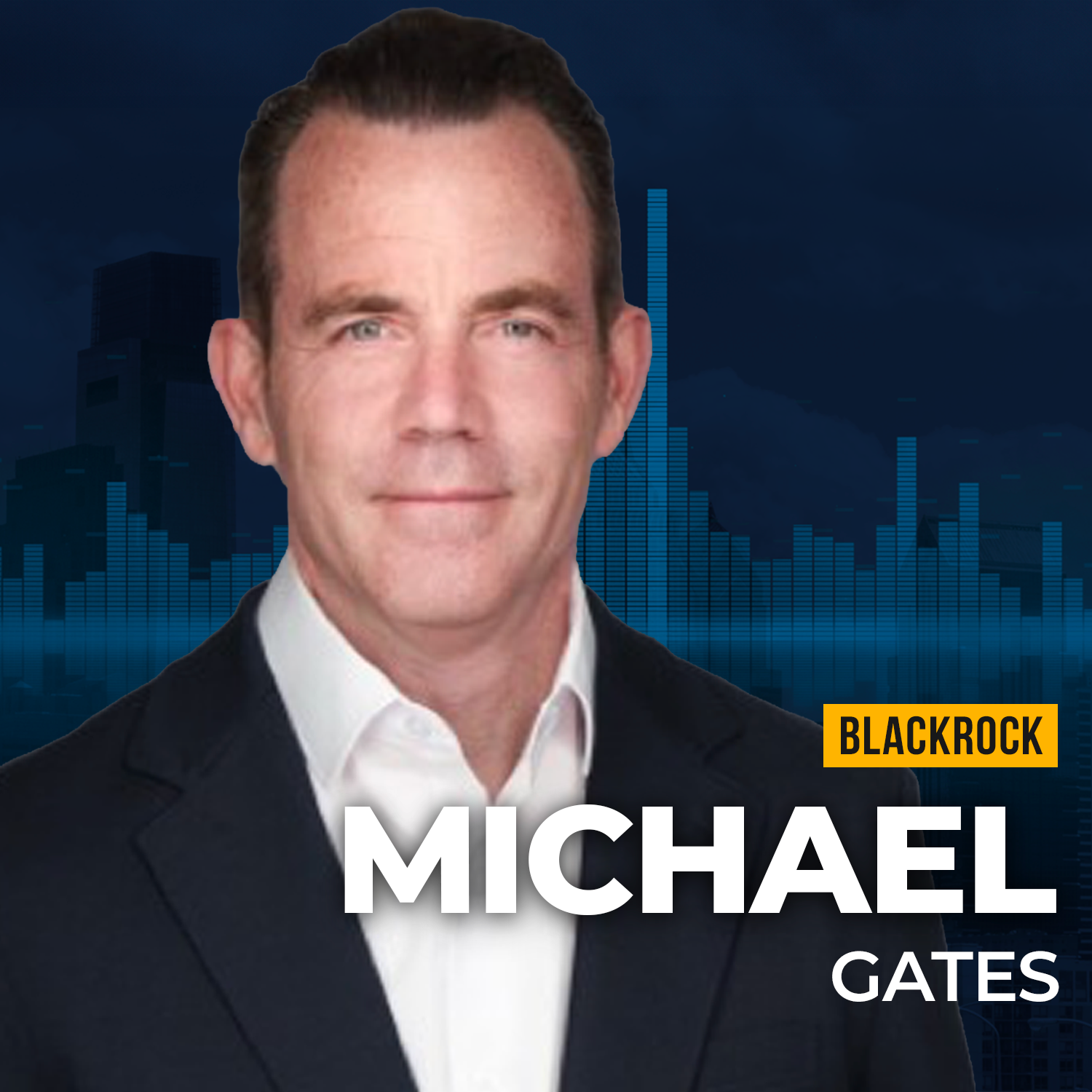
Robert Morier: Our guest today is Michael Gates, Managing Director and Head of Model Portfolio Solutions for the Americas within BlackRock's Multi-Asset Strategies and Solutions platform. Mike, welcome to the show. Thank you for joining us on the Dakota Live podcast.
Michael Gates: Thanks. I'm delighted to be here.
Robert Morier: Well, we're glad to have you here. I know it's an incredibly busy time of the year. It feels like the sprint leading up to the summer. I'm currently recording in Waco, Texas. You just got back from Chicago, hopefully comfortably settled back into the San Francisco office.
Michael Gates: Very comfortable.
Robert Morier: Good. Good. I'm glad to hear it. Well, I did want to start with the beginning only because a lot of our audience, as I mentioned before, are students and educators. This podcast has become a tool for them to better understand this industry and the people within it, more importantly in today's economy, where jobs are potentially available to them if they think about this big industry of asset management. But you, you started your career in a very non-traditional way in the sciences, studying it in California. How did that early scientific training shape the way you think about what you do today? So if you had to tie the two ends.
Michael Gates: I did study biological sciences and was lucky enough to get opportunities kind of throughout my teen years and then into my 20s for various internships. And those were alongside what I was experiencing at the university in terms of coursework. And I feel like those internships were just as important as what I learned in the classroom. So, you know, when I was studying, it was environmental toxicology, and then I got an internship with the California Environmental Protection Agency. It was exciting to be able to see how it actually worked in the real world. And again, I felt, feel very privileged that I was able to do that. I guess I drank the Kool-Aid a bit, right? So we needed to… the regulatory scientists that I worked with were kind of trading off, you know, differing levels of safety against the probable cost to do so. And so I was curious about, well, how do you choose what risk levels are appropriate? And they didn't want to answer that directly necessarily, but pointed me to the Natural Resources Economics staff. And so, you know, the models for human behavior that come out of economics are very useful for answering those kinds of questions. And those same models, which are, you know, microeconomic models at their heart and are optimizations really, are also useful in finance. And at that time, there was a raging bull market happening that I was happily speculating in. So I shifted, uh, kind of emphasis a bit and got a master's degree in economics and, um, was able to find a firm that would hire me after college that was in portfolio management. That led to the position I have now.
Robert Morier: Talk to us about those early experiences. I won't have you take you through, take us through your whole career. You've had a very successful one. But when you think about those early experiences at those first financial services firms, what are some of those lessons, some of those skills that you find that you're still carrying forward today that have been the most beneficial in terms of your day-to-day?
Michael Gates: You know, I mentioned the internships. There was always a big technological component to what I've worked on throughout my life, in my working life. I've always felt like it made sense to try and refactor yourself out of a job immediately. So every position I got into, I was trying to automate away as much as I could with coding. So I've been fairly technical my entire career and interested in financial topics. So that's really been the two things that have informed my path.
Robert Morier: We get a lot of engineers in the classroom who worry about making that leap to financial services. How do you think about that bridge if you were advising a student who is more technical, more quantitative, mechanical, trying to get into a position or an art like, you know, modeling a portfolio, selecting a manager, working with a client?
Michael Gates: I would, I would focus on the reasoning, the economic reasoning, understanding what the investments are at a, at a fairly deep level. Um, having a portfolio that you manage of your own money is a great idea. Um, what is a stock? What is a bond, right? What is the upside to a bond? If you hold a 10-year bond to maturity, what can, what's the most you can expect to get, right? I mean, these are very basic things. And then the same question for a stock, right? What are the basics? If you don't have a strong command over the basics, then yeah, you'll probably just work in the technology side of things. So I think it makes sense to have a really strong technical capability and be very grounded in the investments and in economics.
Robert Morier: Yeah, but you land on portfolio construction. So you've got security selection, which is obviously very important, uh, but portfolio construction, where did you, when did you realize that that was going to have the greatest impact, not just from a career perspective but from a, you know, from an asset management perspective?
Michael Gates: Well, I want to give something to the listeners right now, and that is, you know, for the asset management industry, if you want to understand it, there's a book by Robin Wigglesworth called Trillions that goes through the rise of index investing across the asset management industry, which is really a kind of wild idea that came out in the '60s and has taken off and created a whole industry of index-based tools and investments. And so, there's another book called A Random Walk Down Wall Street which I think is very influential and very much worth reading. It sets out a hypothesis, the efficient markets hypothesis, that it's very difficult to beat the market. That's the starting point, I think, is you have to have a kind of an intellectual foundation for your outlook. And I think the best intellectual foundation is the efficient markets hypothesis. And so we've built the model portfolio solutions business here at BlackRock centered around what are effectively market cap weighted benchmarks that are published. And we have a sort of Hippocratic oath around that, which is do no harm. So for a model, let's say an asset allocation, let's say that a financial advisor is working with BlackRock and they come to BlackRock for asset allocation guidance. We're going to provide them that guidance through what's called a model portfolio. We have model portfolios. These are actively managed multi-asset portfolios with strategic allocations and tactical tweaks. So we've organized these in an intuitive way around the equity bond split. So there's this thing called the 60/40, that's 60% equity, 40% bond target. And so that will be an offering. It's actually the most popular offering we have. The 60% equity, that equity portfolio has a explicit performance benchmark, and the 40% bond has a specific bond benchmark. And so we're going to build the allocation so that it is within a certain, um, tracking error range to that performance benchmark. So it has a very high degree of similarity but can provide better risk characteristics and stronger performance over the long term. That's the goal.
Robert Morier: I'm thinking about the client on the other side of the table. So when you're explaining this to them, how do you balance the… I don't want to say simplicity, but the userability of the model with the sophistication that you're doing day to day with your team underneath the hood?
Michael Gates: Well, I think that's one of the nice things about models is that there's not an infinite number of positions. You look at a model portfolio, typically you're looking at 15 to 20 positions total. That has the chance of being understood. Oh, this position is focused on emerging market stocks, and this position is focused on developed non-US stocks. You know, largely we're using ETFs. Those kind of exchange-traded fund exposures have intuitive, um, objectives associated with them. And so clients are able to understand their portfolio just by looking at the name, to a certain degree.
Robert Morier: A lot of advisors in today's market are outsourcing portfolio construction. Do you view that trend as primarily a scale story, or is it a governance story, or is it really a recognition that portfolio construction itself has become too complex to do casually?
Michael Gates: I think it's all of those things. We have noticed, you know, since we launched the model business, a certain competitive advantage that's accruing to the advisors who adopt what is a models-based practice. So a practice that is organized around model portfolios. And I think that there are 2 major factors behind the competitive advantage. First, there's the scale advantage. So you just, you get organized, you know, you're forcing a certain degree of organization on the process. So you mentioned governance, you know, clients are organized into target models. And at some of the best firms, there are actually tax algorithms that the advisors are employing to keep the client near to that target model while considering their tax position. So, you know, this is a kind of scale tool that advisors can adopt, which allows them then to take on more clients. So that's the axis number 1 of the competitive advantage. And then axis number 2 is the way we've built the models, those benchmarks have themselves delivered very competitive results. So just the benchmarks that the models that we've built at BlackRock have delivered relatively strong results versus asset allocation kind of broadly that we observe in the financial advisory or in the industry. And so there's a sort of performance advantage that can come as part of that.
Robert Morier: It sounds like a very, you know, always active mindset. What's your gut reaction when someone tells you to set it and forget it?
Michael Gates: Uh, we have models like that too. So you certainly can do that, certainly can do that. And that recovers the performance benchmark. In fact, we call them long horizon models. So we have these models that very rarely change. When they do change, the changes are minimal. We do find that people like to see a few more positions than that because you can build that sort of, you know, low turnover model with, you know, 10 positions or less. We find that advisors and perhaps their clients prefer to have something with a few more ingredients to it. So most of the models we have trade more than once a year and have positions, you know, somewhere between 15 to as many as, you know, 25 to 30 positions, most sitting in kind of the 15 to 20 position range.
Robert Morier: When volatility is rising, clients are getting uncomfortable, that stress is starting to bleed into the conversations you're having with your clients. How important is behavior management in your conception of portfolio management?
Michael Gates: That's the advisor alpha, right? And I think that people… I think end clients are aware of this, that having a financial advisor puts a sort of safety between themselves and their money. So the advisor is acting as a kind of gatekeeper for these investment decisions, including the fear response. And so dealing with the fear response in a constructive way can be how advisors deliver advisor alpha, right? The advisor's value-add can be that kind of coaching through all kinds of markets. And another component of the value that comes from having a good advisor potentially is the suitability that the advisor kind of… this, the suitability choice that the advisor makes as far as, okay, you know, given your financial position, cash flows, risk tolerance, what is the right mix of risky assets, say stocks, versus less risky assets, say bonds? So what is the right, uh, level of volatility or riskiness in the portfolio, your wealth portfolio? And that makes it so you don't get over your skis.
Robert Morier: So are you starting then with risk budgets or are you thinking about maybe a combination? I don't want to answer it for you, but a combination of risk budgets, client objectives, and macro views? Or is there more of a, you know, kind of a stepping stone approach to how you're constructing portfolios based on those advisor, the advisor alpha?
Michael Gates: It's very simple. It's very simple. We just try to provision advisors and clients with portfolios that are organized around the equity bond split. The models that BlackRock manages, the flagship model family is called Target Allocation. The Target Allocation family is organized around equity bond splits going all the way from 100% fixed income to 100% equity at 10% steps in between. So you can get an 80/20, which would be 80% stock, 20% bond, 60/40, wherever the advisor or the client feels is the right setting for how much risk to take. The parlance for that is how much stock do you want? The inference here is that the 100% bond portfolio is the least risky portfolio typically, and then the all equity being the most risky. And so that's how we've chosen to organize it. I think the advantage for BlackRock has been, you know, lots of advisors and advisory firms around the country organize around, you know, ideas like conservative, moderate, moderately aggressive, aggressive. But if you dig in on what, you know, say a moderate aggressive portfolio is, it's different from firm to firm, and that's not wrong or right. Is moderate aggressive 70% stock? Is it 80%? Is it 60%? You know, the choice on that is variable firm to firm, so we don't get into that. We basically are provisioning with very simple titles to the target allocations, and then my job is to build the best portfolio possible that is still, you know, a 60/40.
Robert Morier: How do you build that portfolio and then continue to think or apply best practices as it relates to model risk itself? You sit on the Model Risk Oversight Committee, so you're obviously thinking about this from not just a top-down perspective, but you're living it day to day from a bottom-up perspective. How does model risk come into this thought process and how should your clients be, or how do they understand it from your perspective as it's being communicated?
Michael Gates: So from first principles, the models are managed relative to a performance benchmark. And so the attitude and the outlook that we have is that we can hand back to the clients the very performance benchmark itself inside of a set of passive ETFs. And that's a live option, right? So that's the risk we're talking about is for a 60/40 target, how different are we going to be from the performance benchmark? Not should we be at 40/60? No, that's not the question. The decision has been made to be 60/40. Now, given that decision, what is the best makeup for the 60/40? And so we have a certain amount of risk that we budget to trying to build the best possible 60/40 given an explicit performance benchmark. Handing back the performance benchmark itself is a live option. That would be a zero tracking error portfolio or something very close to zero, say 25 to 30 basis points of tracking error. That's a live option. What we typically are doing for, say, a 60/40 portfolio is building a model portfolio that relative to that performance benchmark has about a percentage point of what's called tracking error risk. So that's the amount of active risk that exists in the model portfolio versus the performance benchmark. And so that's what we're managing.
Robert Morier: That makes sense. How about the use of active ETFs? What makes active ETFs particularly useful?
Michael Gates: At…
Robert Morier: I guess I thought about this question as a finishing tool for the core portfolio once it's been built, but maybe I'm misunderstanding the way that you're thinking about their use.
Michael Gates: I think that's right. You know, you start with the basic asset allocation and you look at how you could replicate an efficient market benchmark using index-based ETFs. So one of the advantages that does for you, if you build the core of your portfolio that way, is you're going to tend to get very low fee, right? So these index-tracking ETFs are relatively tax efficient and they're relatively low fee. So you're able to build that core part of your portfolio with those advantages already built in. And then, with regard to adding an active exposure, I think the problem with active in the U.S. has been, if you look at the data sets on this, most active managers net of fee have underperformed those sorts of passive index-based products. So net of fee, net of the relatively higher cost that active has had historically, managers have underperformed passive investments. So for us to include an active position, the bar is very, very high. And so we have selectively included certain active exposures in the models based on extensive kind of diligence process and design process for what goes in. But we rely heavily on those index components.
Robert Morier: Based on that, do you see active ETFs as primarily a portfolio construction tool, or do you think, you know, they're utilized as tax management tools, maybe an implementation tool for faster repositioning? So if you have to think about kind of the primary use case, what does that sound like from your seat?
Michael Gates: I think they're primarily a performance tool. You're getting into active. Why are you doing that? Why are you doing that instead of buying a passive instrument? Well, you're trying to get better performance for the same kind of zip code of risk, right? So for, say, large-cap US equity, you're putting in an active exposure that's trading in the large-cap US equity space, but trying to get a better performance out of it, net a fee. There's room for that in the risk budget, but it's a bet. It's a bet. It's not certain to pay off.
Robert Morier: Uh, just talking a little bit about macro themes and tactical allocation, you wrote recently about trade policy tariff uncertainty and the way that markets may overreact in worst-case scenarios. So when policy headlines tend to dominate the tape, how do you separate that signal from noise in a model portfolio context?
Michael Gates: Well, going back to the risk takings that we're putting on the portfolio, it's probably worth just reviewing what those risk takings are. So there's an active risk budget that the model portfolios are managed to versus that kind of strictly passive benchmark. And one of the things we can do is have a little bit more stock than in the benchmark portfolio. So a 60/40, we can have up to 65% equity if we have a very bullish outlook on stocks relative to cash or bonds. And so that's one of the ways we can take on risk is by emphasizing stocks at the allocation level. Now, we won't go above 65% because then is it really a 60/40 anymore? I mean, that's kind of a cheap trick to call it 60/40 and make it 80/20. We don't actually do that. We keep ourselves to plus or minus 5% on the stock versus bond position. But that's one of the risks, ways we can control risk-taking, active risk-taking. Another is on US versus non-US stocks. So this has been something that's been, that we've been managing to over the years, and we tend to use earnings estimate revisions as an important input to that decision. And then the kinds of stocks that you own inside of your major index components, which tend to be US stocks. So what kinds of stocks do you want to emphasize? And then on the bond side, there's credit risk. Should you take on credit risk? How much? Looking at the Treasury side of things, for example, what term of lending are you doing to the government? So do you want to match the benchmark term, which is I think about 6 years duration, or do you want to lend longer or shorter than that? So that kind of term lending question. So those are the 5 major food groups of risk-taking. And with respect to coming into some geopolitical news. Well, we can benchmark that. How would we benchmark that? Well, we can look back over history at all the major geopolitical headlines that we can find since 1950, and I happen to have done that. And so if you do that and you just do it with daily returns for the stock market, which you can get any number of places, you know, Ken French has a great data library, has daily stock market returns going back into the '20s. It's rather fabulous, actually. Um, well, you can find out when the Cuban Missile Crisis was. You can find out when the Six-Day War in the Middle East was during the '70s. You can find, you know, just Google, find out what the date was and then look at what the stock market did and look what the bond market did. And, you know, when you look at that, sure, there's a distribution of returns. But by and large, these rather terrifying at the time geopolitical events, they don't seem to really affect the next 12 months of return, you know. So, and we can run statistical tests on this. We can ask the question, you know, with a statistical toolkit of, well, given an event, what's the average response to the event kind of within the first week and what's the response over the subsequent 30 days, the subsequent, you know, 3 months. And the answers that come out from that are, you know, you definitely don't want to react to this stuff on average. That runs foul of human instinct because…
Robert Morier: It's funny you said that. That's what I was thinking. I'm thinking all of that makes a lot of sense, but I'm still going to run, you know?
Michael Gates: Yeah. Yeah.
Robert Morier: And now it's, you know, it's the smoke and fire analogy.
Michael Gates: You have to temper that reaction impulse with the evidence.
Robert Morier: Is that the advice you're giving to advisors? I'm thinking about the advisors that are listening in, the right way to think about macro awareness without falling into that trap that you mentioned. What is… is the advice really research and then look to, you know, the fact that the next 12 months aren't necessarily going to be a meltdown, or is there something more, I don't know, for lack of a better word, tangible, you know, that an advisor could be using in order to avoid those traps?
Michael Gates: Advisors, I think, by and large, get this right. Their job is to provide financial planning for individual investors. So that's like the heart of what a good advisor is doing, is helping create a financial plan for their clients. And so, you know, with respect to advisor alpha value-add, we just went over that. That's the coaching. Coaching is like a major part of how the value gets added to the end clients, and the end clients know this too. But we want to have some fluency in what's happening in the world. People have questions. And so the Model Portfolio Solutions business at BlackRock has made it one of the core things that we're endeavoring to do is to provide advisors with insights on what's happening in the world. And what various kind of scenarios are around what's happening. So what is the potential downside risk to the situation? How do you contextualize this in terms of the amount of risk in the portfolio today? What opportunities are still intact despite the risks that are appearing? So those sorts of ideas, insights are what we're bringing to bear for clients.
Robert Morier: Well, this would not be a podcast in 2026 if I did not ask you about AI and artificial intelligence. You recently joined BlackRock's The Bid to discuss AI technology leadership and what you called, which I thought was interesting, the efficiency gains emerging across the economy. So after spending time with these technology leaders, what stood out to you the most as you think about how real this AI investment cycle is?
Michael Gates: What's happened this year in 2026 is remarkable, which is that the 2 or 3 main what we call frontier labs, so the intelligence layer that people are used to interacting with, that firms and individuals are using, so OpenAI, Anthropic, and Google being the 3 that I'm thinking of. Um, those models have turned economically profitable this year, and the rate of revenue growth that's been reported for the first two has been incredibly strong. And what's behind that has been the killer app of AI right now, which is coding. And so there are these new coding tools that have been made available that are experiencing rapid adoption around the world and in the US and in corporate America. What those tools are providing corporates is a way to infuse efficiency into their business operations, both in terms of improving revenue-gathering programs, you know, sales and marketing, as well as on the cost side, being able to take on functions more efficiently with the help of AI. And so we're seeing a proliferation of AI into business processes across the US today. And I think in terms of, if you think in terms of baseball, right, if you're at a baseball game, you know, what inning are we in? We're listening to the national anthem. We're really just getting started. The frontier labs are turning the corner in terms of operational profitability in that kind of pregame that we're in right now.
Robert Morier: I recognize that we're, you know, it's the national anthem playing, so we're just standing up, our hats are off. Where is BlackRock in terms of the integration of AI? Are you standing with us? Or are you a little bit ahead? Have you started the game?
Michael Gates: Very hard to say. I think that all big successful firms around the US are asking that very question. And I think coming up with an objective answer is difficult to do. I will say that it has the attention of the senior leadership at the firm and we are using AI all over operations in the firm.
Robert Morier: How about your role? How do you decide when a theme like AI belongs in the core narrative of the portfolio versus when it should remain a tactical overweight?
Michael Gates: Everything's tactical. It just depends on your horizon. Every, you know, the thing that's not tactical is that performance benchmark, that efficient market portfolio. So everything is conditional on things adding up. And so the question is, does investing in AI add up right now? Does it make sense to be overweight to companies that are either provisioning corporate America with AI or using AI to improve their operations? And I think the answer is yes on both fronts right now. That's, but that's totally conditional on things like valuations, things like growth rates, things like the economic outlook. And, uh, we've chosen to have overweight positions to the AI theme in the models.
Robert Morier: Why did investing in Bitcoin add up? Bitcoin, the… via the ETF?
Michael Gates: So Bitcoin is a sort of N+1 currency, right? So if there are N currencies, you know, the number N around the world, there's one position outside the fiat currency that you can take. There's more than one actually, but one to consider is Bitcoin. Bitcoin itself, being arguably the most decentralized, uniquely positioned as the most decentralized crypto asset out there. The one that's been around the longest as well. It doesn't have a, you know, a marketing team or a governing board. It is a truly autonomous kind of instrument at this point. And it has a use case kind of globally for people who want to have a store of value that's digital and that isn't subject to any government decision-making, although certain places I think it's hard for citizens to access crypto assets. So the idea is that this digital store of wealth is going to continue to see increased adoption globally and that that's going to create a sort of scarcity in it since its supply is not increasing at a very high rate.
Robert Morier: What did that decision tell you about how you evaluate new asset classes? What did it inform you? What were the lessons learned as you were thinking about that decision? I know it's the oldest. It's older than many people think. But it's still new to so many advisors and to so many of your clients. So what was the bar that you were setting yourself against? Was it liquidity? Was it correlation? Was it behavioral? How did you think about that implementation and what did it tell you about your decision-making process?
Michael Gates: There was a question of implementation that was first order, and the development that we were leveraging was the introduction of what's called the spot Bitcoin ETF. So previous ETFs that provided exposure to Bitcoin provided exposure to what are called futures-based strategies. The new generation of Bitcoin ETFs actually have claim on actual Bitcoin that's stored in a vault. And so that was the, you know, the thing that made it possible was something that was not futures-based, but actually the spot asset-based. And then the question is, does it make sense to do this? We decided to do it only in models that already contained what are called liquid alternative assets rather than in the mainstream models, say ETF and mutual fund-based models. So we chose to introduce Bitcoin as an exposure for those model clients that had already identified themselves as being interested in portfolios that have alternative asset classes in them. And then it became a question of, does it make sense to do this now? And what is the appropriate size for the position? And then where are you going to fund it from? So we answered all those questions and introduced a small position in many of those models that have alternatives.
Robert Morier: Let's talk a little bit about the future of advisor portfolio construction. I'm thinking about the advisors who are listening to this conversation and they're familiar with the work that you do. And as they are increasingly adopting centralized model solutions, how do you see the advisor's role, I don't want to say changing, but evolving? What is this evolution going to look like from your perspective, from BlackRock's perspective?
Michael Gates: There are questions around what investments do you want to put your clients into? We've been talking a lot about mutual funds and ETFs today, but there are other investment opportunities that can be considered. One I'll name, which is the separately managed account offering. So at BlackRock, we have a separately managed account business that's called Aperio. And so what this is, is it is an opportunity for advisors to, for say that US equity core exposure, to introduce a separately managed account that will have the market exposure in the client's name, in a client account, and it's called a separately managed account. Why would you want to do that? Well, one of the advantages of doing that is that by holding all the underlying stocks, you can have a tax loss harvest algorithm running for you on the client's behalf that is generating a certain amount of taxable offsets for gains every year. And so that's one of the major programs that you get access to if you introduce an SMA is this tax-loss harvest type of program. Another type of tool that's, I think, really interesting are options overlays. So BlackRock has an offering, it's called SpiderRock Advisors, and it can allow advisors to use options for all manner of objectives. Example being, if there's a large position in the client's existing book and they want to work it out over time without generating a huge tax liability, say, on this year, you can collar that exposure with the SpiderRock Advisors overlay. Another would be using a, what's called a buffer strategy. So rather than de-risking the portfolio by selling the stock and adding to bonds, you could put an option overlay onto the allocation and make its risk more like a 60/40, say, from an 80/20. So the reason to do it that way might be for a better risk-adjusted return.
Robert Morier: Well, I'm just curious, how would you categorize the success of those programs? So as it relates to, you know, your advisors introducing these programs to your clients, it's something that we've heard, at least on this program, anecdotally from other advisors as well who are working in the space. From BlackRock's perspective, what has that take-up been like?
Michael Gates: We've seen really good growth in it, but you have to walk before you run. So getting a models-based practice is the first order of business. And once that's in place, using models that have these tools is an obvious next step.
Robert Morier: I'm thinking about the parts of your business that will become increasingly automated, more and more automated, versus the parts that will remain deeply human. What do you think are going to be the most human aspects of what continues forward? So if AI really becomes just a tool, a resource, a calculator that talks to us and we are still the person that's prompting it, what are going to be the characteristics that you think people coming into your team are going to need the most in order to be successful? Uh, let's go back to your baseball analogy over the next 3 innings.
Michael Gates: Well, in my team, you know, we're using the AI tools to advance the research agenda. So examining financial and forecasting questions that we would normally do on our own, but doing it with the assistance of an LLM, and that can help us code things. So that is happening right now. There's no doubt that it's increasing the speed of research. And for advisors, you know, the question will be, well, how will interacting with a model portfolio provider like BlackRock change with AI? And so those changes will be forthcoming, I think, over the coming years.
Robert Morier: Yeah. So what are the skills then? If you were speaking to my classroom at Drexel, and many of them are interested in working at BlackRock. Drexel is a co-op school, so they're trying to get co-ops at BlackRock. What are those skills that you think matter most now when working in multi-asset investing and portfolio construction? What should they really be focused on? And I suspect this is the same advice that might be for some advisors as well, as they're thinking about what's going to be most important skill-wise.
Michael Gates: I mentioned the sort of economic intuition that you want to have. And so if you're working on a project for a class, I would focus on your own understanding of, you know, what really makes a difference in terms of a market or an individual position doing well or poorly over the future period. So what are the drivers for the return experience, for the risk experience? And, you know, what are the fundamentals behind that? So one thing that's really interesting, for instance, in the US, is when you look at the average stock market return since 1950, you can go back to Ken French's dataset. I think that the number is around 10.5% per year, remarkably strong performance. And then if you want to understand, well, why is that, you know, what's behind that, there's another dataset, professor, I think he may be in Pennsylvania actually, um, Robert Shiller. So Shiller's got a dataset and you can find this and look at that dataset. And what you'll find is that the growth in the level of the stock market index is closely traced by the growth in earnings that's being delivered by the underlying companies. Right. And so this is really important for solving the mystery of why the stock market is doing so well the last couple years. Why is the stock market doing so well? Earnings. That's why. In fact, year to date in 2026, we see that the price to earnings level in the stock market is improving somewhat because the, on a forward basis, that is on the expected earnings, because we're seeing that those expected earnings are going up so much. And those expected earnings are going up so much because relative to expectations, firms have been outdelivering on earnings basis versus what expectations have been. So, you know, long-winded answer to your question of what to focus on, and I'm suggesting focus on the basics. Now, in terms of what tools you use to maybe use Shiller's dataset and make and uncover your own findings about how things work, absolutely use AI tools. You know, go try Codex, try Claude Code. You know, do it, use Cursor, you know, by all means, you use these cutting-edge tools, and code in Python and do the research and generate plots. I absolutely, I think that's a must that you do that.
Robert Morier: Great advice. Thank you so much, Mike. Just last couple of minutes, let's have a little bit of fun. If you weren't in finance, I'm curious, if you weren't in finance, what career do you think you would have ended up in?
Michael Gates: Well, that's a, you frame that, um, what would I have ended up in? Um, yeah, I probably would have ended up in tech.
Robert Morier: Do you think that's a byproduct of your, um, interest and passion, or is it geographic interest and passion?
Michael Gates: Yeah, I've been playing with, playing with computers since I was, you know, 9 years old.
Robert Morier: So you gave us a couple of great book recommendations. I'm just curious, is there a non-finance book that you believe has made you a better investor? I sometimes, I ask this as a better person because sometimes books have, I find books being very important and powerful. But let's stick with investor.
Michael Gates: One is The Better Angels of Our Nature by Steven Pinker. Talks about the decline in violence around the world over the last 2,000 years, call it, or longer. And what are the explanatory factors to that decline in violence and what has been coincident with that decline in violence? And what's been coincident with that has been things like the Enlightenment and free trade and free markets and the growth in prosperity globally. So an amazing kind of exposé of human history that is often surprising when you read it and it makes you grateful to be living in the world today. And then the second one that I think is especially relevant right now is Dopamine Nation by Anna Lembke. That talks about how many people are engaging in behaviors and activities that are actually harmful to their emotional well-being in terms of use of social media, in terms of use of things like nicotine and alcohol in excessive ways, and how that interacts with your neurological system. And one of the key neuromodulators is dopamine. And so when people take these kind of quick hits, it spikes your dopamine. But what it does is it lowers your tonic level of dopamine, your baseline level, and you enter into a state which is called anhedonia, hedonic being pleasure. So an inability to experience pleasure. And so, you know, doom scrolling on a regular basis, which, you know, many, many people do, pushes you down a little bit. But this mechanism writ large, I think, is responsible for a lot of unease that people are experiencing. And just reading the book helps explain what's happening, and it's worth understanding.
Robert Morier: Great recommendations. Thank you so much. It's two last questions and then we're going to let you go, Mike. Thank you so much for spending time with us and our audience. And again, it goes back to the advice. You gave some advice to students, to educators, to advisors. But what's the best piece of advice that you've ever received?
Michael Gates: To thine own self be true. And going back to that Dopamine Nation comment, like, what are you doing? What are you doing day to day? How are you spending your time? You know, are you sleeping well? Are you eating well? Are you exercising? Do you get sunshine? Do you have friends that you talk to? You know, are you treating your co-workers well? Or are you, you know, those basic questions are, if answered right, then consistent with being true to yourself.
Robert Morier: Last one, because I wasn't going to ask it, but you set me up because you gave me that baseball metaphor. So now I'm thinking about the bottom of the 9th. So we've gone through this whole game, the bottom of the 9th, the bases are loaded. You're down by 2 runs. You're coming up to bat. You, Mike Gates, coming up to bat. What's your walk-up song? What song is playing in the background that's hopefully going to allow you to get that hit, maybe put it out of the park? What's the music that you'd like to hear over the loudspeaker?
Michael Gates: I'll just go with Beethoven's Ninth. Okay.
Robert Morier: Okay, that's good. That'll get everybody involved. I like it. Thank you for making time for us. It was really a pleasure. We appreciate your time, your insights in terms of BlackRock's business, your role within the business, and that closing advice. So we wish you nothing but continued success and the best of luck with your ongoing journey.
Michael Gates: Thank you.