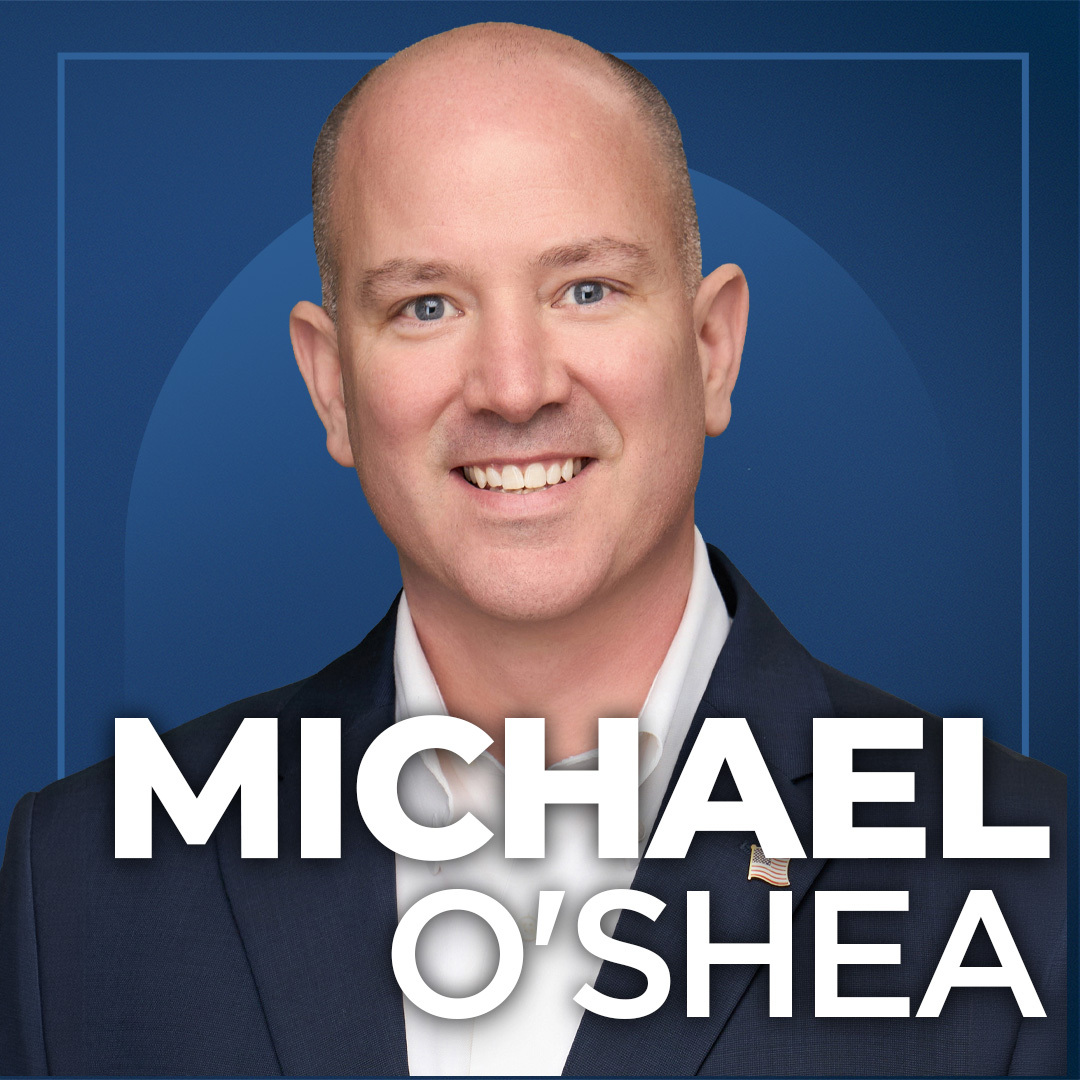
Gui Costin: What is up everybody? It's Gui Costin, founder of Dakota. Welcome to another episode of the Rainmaker Podcast. I'm so excited to be joined by Michael O'Shea from Origin Investments. Michael, welcome.
Michael O'Shea: Hey Gui, thanks for having me.
Gui Costin: Oh, so thrilled to have you. As director and head of private wealth solutions, Michael leads Origin's capital raising initiatives, oversees sales strategy, and develops strategic partnerships with registered investment advisors to expand Origin's investment platform. Previously, Michael served as head of Origin Exchange, Origin's 1031 exchange platform. Since entering the alternative investment industry in 2007, he's held various roles with real estate sponsors, assisting in the syndication of more than $10 billion of commercial real estate, including over $500 million of 1031 tax-deferred exchanges. Michael earned an MBA summa cum laude with a dual concentration in finance and real estate investment from DePaul University and received his bachelor's degree from Purdue University. He is also a CFA charterholder. Michael lives in Elmhurst with his wife, Lauren, and their 4 children, Declan, Alice, Tristan, and Kelly. He enjoys golf, Chicago sports, and spending time with his family. A Chicago guy, right?
Michael O'Shea: Yeah.
Gui Costin: Okay. So excited. As I told you, married in Chicago, first child at Northwestern Memorial.
Michael O'Shea: Yep.
Gui Costin: In 2000. So love, love Chicago, love everything about it. My wife lived there for 10 years. So, okay, take us back.
Michael O'Shea: Yeah.
Gui Costin: To, excuse the pun, the origin story. Your origin story.
Michael O'Shea: Yeah.
Gui Costin: Okay. Where you grew up, college, and then how you got to where you are today.
Michael O'Shea: Yeah, yeah, absolutely. So to kind of go back, born and raised in Chicago my whole life, and I almost got into this business on accident. It was really like, you know, what is a REIT? What is a Series 7? That seems like an interesting thing to sort of pursue about 18 years ago and really started learning more about the investment markets, calling on advisors, raising capital for sort of like these niche tax-advantaged real estate solutions. And I really started to love it. I really started to love the investment side of it. It became something that I believed in. And, you know, I kind of went back and sort of invested in myself. Went back to school, got an MBA in real estate finance, went and got the CFA charter. And one—
Gui Costin: Congrats. Not easy.
Michael O'Shea: It's not easy to do. It was something where I just sort of noticed that the firms that I had a lot of respect for, the people that I was sitting across from had the CFA charter. And so I started researching and looking into it. It's not something that you can fake. It's a very, very difficult test. It takes 2, 3 years of commitment. And it really changed the way that I sort of approached investing and finance in my discussions. And I think it just made me better at my job. It made me more knowledgeable about what I was talking about, and it helped me raise more capital. And in our business, the stats are always out there. It's like playing sports. You could see who has the best batting average or what have you. And so I've always just had success raising capital. And so I've been doing that now for about 19 years. 3 years ago, I joined Origin, which is based in Chicago, boutique real estate investment manager. I helped build out the 1031 exchange platform over there, and now I lead our private wealth distribution group that covers RIAs and family offices across the United States.
Gui Costin: Nice. Yeah, amazing. So tell me about Origin, okay, so we can kind of get centered. And then also the size of your team. I'd really like to understand that because one thing that's near and dear to my heart is that— I know you're going to tell me because I saw in your bio, but you have a 7-person team and I really love that.
Michael O'Shea: Yeah.
Gui Costin: So could you just give us a little bit of background on Origin and your team?
Michael O'Shea: Yeah. So Origin is a little bit different in that we were founded really as a family office. So what I like about our story is our 2 founders, Michael Episcope and David Shear, they were traders at the Mercantile Exchange in Chicago. David was trading derivatives, and Michael was trading in the euro-dollar futures market. And they had built significant wealth for themselves, call it by their mid-30s. And if you think about the late '90s, early 2000s, the computers are taking traders out of the pits. And they're sitting there going, what do we do with this newly built wealth? And David kind of joked tongue-in-cheek, the worst 5 words you can say is, I used to be rich. And it was like, we don't want to take on all of this risk of trading. Where can we invest our capital to preserve, protect, and grow it for the very long term for our legacy, for our family, et cetera? So they built Origin to do it better, more transparency, more alignment, lower fees, et cetera. And so you really had like non-real estate guys. I mean, they had some background in redeveloping homes and some real estate deals, that use their own capital to get into the real estate markets. And it's a little bit different on how data-driven they were coming from the trading market systems that they built and other things to sort of help them identify these investments. And now, 19 years later, we have $5 billion in assets under management. We've got over 5,000 investment partners, and we partner with 165 RIAs now and growing every single month. Yeah.
Gui Costin: Well, congratulations.
Michael O'Shea: Yeah. Thank you.
Gui Costin: So talk to me about the size of your team and let's get into the sales process. I'd love to just unpack that.
Michael O'Shea: Yeah, yeah. Well, strong, strong but mighty. We've talked about that a little bit. You know, it's— I really believe that a sales team needs to be there for full coverage. You and I agree on the same thing, that while you could do a lot of things through Zoom, there's nothing like being in a person's office, doing events with people, getting out to dinner and getting to know people on a personal level so you can understand sort of their challenges and how your products might help what they're, what they're working on. So we have a team of 5 that are geographically spread out through the US, plus me. And we have a sales enablement associate that sort of helps us stay efficient out in the markets. But that's it. And we kind of know what we do. We don't typically call on broker-dealers. We are 100% focused on the RIA and family office market.
Gui Costin: Okay, great. And how was— I mean, I love the RIAs, right? Because we've been doing that forever.
Michael O'Shea: Yeah.
Gui Costin: Talk to me about how you're structured with your sales process. Do you make the team adhere to a specific way of doing things?
Michael O'Shea: Yeah, I think, you know, one of the things that resonated with me is you're sort of like figuring out how to run a business is rather than setting goals, building systems. And that's something that I believe in 100%. You know, there's a book I was reading, maybe it was Thinking Fast and Slow, I can't remember which one, but They use the analogy of everybody going to the Olympics. What's their goal? To win a gold medal. So, does that mean if you don't win a gold medal, you're a failure?
Gui Costin: Right.
Michael O'Shea: I mean, 99% of people failed at their goal, but they used a system, which was their training method, to get to the Olympics and reached more levels of achievement than just about anybody. So, for us, we systematize the system. First, you have to know who you're calling on, what problems you can solve for them. You have to know your product inside and out and all the nuances that go with it. But then you set up not only geographically through maps and rotations and things like that, but a weekly cadence, a monthly cadence, a quarterly cadence, what's working, what's not.
Gui Costin: What's the weekly, monthly, quarterly cadence? Is it discussion or communication amongst the team?
Michael O'Shea: Yeah, so we get together quite a bit. We have 2 whole team gets together twice a week, Monday mornings and Friday afternoon. What are we setting out to do this week? What are we— how did we do it? And then how does next week sort of look? So we're always kind of staying in touch with each other, but I'm always working with them on their systems. So we have individual weekly check-ins. My job, as I see it, is to remove any roadblocks that they have for their system. So I don't have these calls where we kind of say, what's going on? What's in the pipeline? Give me enough. I could pull up Salesforce and I could find out what's going on and what's in the system. What I want to hear is like, if you don't tell me about it, I can't fix it. If the challenge is that the fees on this structure, our customers don't like it, maybe we could work on the fees. So I have to kind of know what the challenges are. My goal is to remove as many roadblocks as I can from my sales team so that they can be out in the market having as many meetings and productive meetings as they possibly can.
Gui Costin: Brilliant. So it's obviously the job of leaders, remove obstacles. You know, that you figured that out so quickly, so young. That's like so critical. And also I love the fact that, you know, somebody just said the weather report. We don't need the weather report, right?
Michael O'Shea: Right.
Gui Costin: You can look at the pipeline now. I like to go through the pipeline to have people speak to it so everyone can kind of see it. 'Cause, you know, a lot of times you look at it and it's like, that doesn't feel that good. Oh, I really like my pipeline. Yeah, yeah, yeah. But then let's get back to systems.
Michael O'Shea: Yeah.
Gui Costin: Right. Because you're, you're making me laugh because there's this— there's a famous gymnast. And I was listening to this guy, Gio Valenti. And Gio is a really famous sports psychologist who works with golfers, traders like Stevie Cohen. The guy's brilliant, brilliant psychologist, such a clean and clear thinker. So speaking of the Olympics, she goes, the question to her after she failed at the gold, she won silver. Reporter goes, you know, I'm really sorry that, you know, that you didn't, you know, that you failed to win the gold. She goes, I didn't, I didn't fail. She goes, I won the silver.
Michael O'Shea: Yeah, yeah.
Gui Costin: She was like, no, I won the silver. And then she ended up winning gold, you know, later that year in the World Cup or whatever they called it, the World Championships. So yeah, it's just always trying to turn— make things positive, right?
Michael O'Shea: Yeah.
Gui Costin: But I really want to just get a little deeper into how you think about systems and why they're so beneficial to your team.
Michael O'Shea: Well, I think if you set a goal, the actions that you take to achieve that goal could be random unless you systematize them. We want to raise $50 million fund. Okay, well, maybe we should go and start with the largest RIAs in the industry and I'll just start cold calling them. Maybe that's not your target if you're a boutique firm. Maybe you should really think about what are the firms that would invest with a fund, a fund and a firm of, of your size. And then how do you make it a daily, weekly, monthly repeatable process and then have that continual process improvement to kind of look back and go, okay, what wasn't working? We did too much of this, too little of this. And the way I think about it is, if you wake up on Monday morning and you know exactly what you're supposed to do, you're gonna have a much more efficient day. I know early in my career, I woke up on several Monday mornings and I'd say, what do I do today? Right? So you start dialing for dollars and maybe you hit, maybe you don't. But if you have more of a structured set in front of you, I think you get much more out of what you're supposed to do in that day, in that week, in that month. And it sort of compounds itself over time. Today with AI and all the technology tools we have available to us, there's really no excuses. When I started, and this isn't a joke, we didn't use Salesforce. It was— I don't even remember what it was called, but it was almost worthless, I would say. It was big printed lists that we would get. I remember the sheets of paper were like 2 feet wide and you just had hundreds of names on them, and we would just take notes and write down, you know, notes kind of like on the paper. And back then, you could sort of get away with working a little bit harder if you wanted to raise more money than other people. You make 100 phone calls instead of 50 phone calls. But now the data needs to be more efficient. It needs to be, who are the direct people in my universe that are most likely to transact with my firm? How do I get in front of them? What's the best way to do it? Where did they go to school? What do I know about them? How can I personalize this outreach? And so like we use that technology in those workflows to put all the highest priority tasks on their calendars. So when they wake up Monday morning, they know exactly what to do, and it's easy to check in on how those things are going. The weekly, monthly, quarterly kind of— you ask how that goes, that whole thing is a look back to go, okay, here's what we did this quarter, how did it go? Well, this didn't really work, or the data is telling me that these are the right type of clients. None of them are responding, but these clients are responding. Right. So you start pivoting and adding to your workflows so that it just continually gets better and you're always in the right market.
Gui Costin: So clearly starting with the end in mind and working backwards.
Michael O'Shea: Yeah.
Gui Costin: Yeah. Another thing I really love about your thinking is examining past behavior to either stop doing a certain thing and then start doing something else or do more of what's working. And that's what I think a lot of people miss.
Michael O'Shea: Yeah.
Gui Costin: Right. That we should always be doing more of what's working. But no, I really want to do this, but you're not getting results over there. Yep, we're getting results here. Yeah, that's lovely thinking.
Michael O'Shea: Yeah, and I liked your comment about looking at the pipeline on a weekly basis and having the rep or whoever input the pipeline sort of walk through it. Because there's a challenge that I've seen with pipelines where they just grow stale, where maybe you have good opportunities and maybe the pipeline is big and it's like, okay, that looks good, but when you really start chipping away at it, it's not as strong as it necessarily looked. So you can never have stale opportunities in there. It needs to be checked in weekly, if not more. It needs to be front and center, the number one thing that you're looking at, and it's sort of the lifeblood. So the rep owns it. I check it with them every single week to make sure that there's nothing stale in there, there's nothing that's misrepresented in size. That needs to be as accurate as possible. That is your lifeblood.
Gui Costin: So the thing that you just said—I can't tell you how important this is—the best salespeople that raise the most money keep the tightest pipelines.
Michael O'Shea: Yeah.
Gui Costin: Just telling you at the end of the day. And why is that? Because we have two text boxes. One says current status, one's next step on the opportunity pipeline report, and it can't be blank, right? And so if you're always having to examine What's the current status? What's the next step? And you—for me, when I was actively selling, I lived in that pipeline report. All I was trying to do is move it up, move it up. And any junk was on there really bothered me.
Michael O'Shea: Yeah.
Gui Costin: And a lot of sales reps, you can go and look at their pipeline like, oh yeah, sorry. Yeah, actually that firm merged that firm. So meaning they're not maniacal.
Michael O'Shea: Yeah.
Gui Costin: About the accuracy.
Michael O'Shea: Yeah.
Gui Costin: Right. Of it. And if you are maniacal about the accuracy and especially when no one's watching, which means you're a single man or woman, a single salesperson, at a boutique firm, you actually have to be your own overseer of your own pipeline. And part of why we do this podcast is to make sure people know that. It's like you have to have the self-discipline. That thing has to be shining bright in terms of accuracy.
Michael O'Shea: I agree. It's really interesting to hear that feedback. That's what I've always thought when I was actively selling, and I still am today. I'm in, I don't know, 6, 7 meetings a week probably. I don't do a ton of prospecting, but I'm still traveling, in meetings, in calls. But when I did have my own active pipeline that I owned, you could almost ask me without looking in the CRM and I could reel it off to you because that's everything you have. And if anything is old or stale, it also serves as good reminders. You can go, oh yeah, I forgot so-and-so was going to do that investment. It gives you a chance to kind of reach out to them. So I would always keep 2 screens open. Hey, is this still active for you? Gives you another point of outreach. They're seeing your logo again. You're reminding them that they did make a soft commitment to invest in your fund. So I love that idea of just like constantly going through it and constantly updating it. So like you said, it's bright and shiny and it's, it's always totally accurate.
Gui Costin: Yeah, we've kind of answered this question, but at least just want to get a comment from you. So this is important because this is very pointed towards the audience. What is your opinion of the use of a CRM and how important is it to your overall productivity and success?
Michael O'Shea: Yeah, there's nothing more important. You know, I look at it as like the cockpit that we're in every single day. It's different now. Now you can tie so many data sources into it. We obviously tie Dakota into it, and it gives you the information that you need. And so, like, as I said before, there's this whole issue of like, back in the day, you could have just made more phone calls than other people. But people are fighting smarter now, not necessarily harder. You still have to work hard, right?
Gui Costin: Yeah.
Michael O'Shea: You still do have to make phone calls. But if you could find out, in our instance, who is the real estate analyst, who is the private credit analyst, could save you an hour of time. And that's all in our CRM. So these people are tagged as high priority. They're in a cadence that gets either automatically followed up with on a nurture or it's a task that's set up in the sales system. If it's not in— we use Salesforce, but there's many good ones— if it's not in Salesforce, it didn't happen. My whole thing is I forget a lot of stuff. I'm just busy. Like, you forget a lot of stuff.
Gui Costin: Yeah.
Michael O'Shea: So when I prioritize my career, I try to filter out the noise as much as I can and say, what is important to us achieving our goals? Well, filter that out however it is for you. You have to figure that out and then find the top 5 priorities and put them on your calendar, put them into the CRM, make them tasks that always show up. So yeah, it's the cockpit that I get in every morning and I sit there and I've got all my controls, all my data, all my opportunities, all my dashboards, all my reports, you know, and managing up as well. I'm busy. Our founders are busier, right? And they want to know from time to time off-the-wall things. How's the pipeline for this particular fund over here? I can get it in 30 seconds.
Gui Costin: Right.
Michael O'Shea: And I can send them a pipeline report. So it just makes my life so much more simple. I feel more in control because when you are raising capital from this many firms across this many states, across this many sales reps, and there's new products launching, there's some products closing, there's so much to keep straight in your mind that CRM kind of lets you know, okay, you're on track, you're doing the right things. These are the priorities you set previously. They're all getting done. Check, check, check, right?
Gui Costin: Yeah, I did a blog post on this. If I owned an investment firm, and I happen to own it outside in Dakota, is that it would have to be mandatory that every meeting scheduled gets into Salesforce, every call note against that meeting gets into Salesforce. And why is that? Because that's really what you're paying your sales reps for. You're paying them a salary so they can send emails or make phone calls to book meetings. They do the meeting, right? And then you need that system of record of exactly what happened in that meeting.
Michael O'Shea: Yeah.
Gui Costin: And to me, that's, that's what a salary is for, for a salesperson, right? So because it ends up being— I call them gold bars. And there's certain salespeople literally somehow get in their own brain that they think not only should they not enter it, it's actually their meeting. And it's just— but it's the only way to get 10x leverage out of an individual.
Michael O'Shea: Yeah.
Gui Costin: Is to use a CRM just because there's, like you said, you forget everything because there's too much information.
Michael O'Shea: There's too much. Yeah. And I think one of the things that goes underappreciated maybe for people that haven't been in this business is you're not sitting at the desk very often.
Gui Costin: Right.
Michael O'Shea: You know, like, you know, we do have some tools where if I have a Teams call with somebody, it's going to be automatically recorded and a summary of that is going to be automatically logged in Salesforce. I would guess that's 25% of the calls that our reps do. They're out in the field. They're out in person-to-person meetings. They're on their cell phone a lot of times. And so we've implemented sort of like an auto dictation software where you can go right into it as you're getting in the elevator, as you're leaving the meeting. It's amazing how much you forget because somebody else will call when you get in the car. Your spouse will call when you get in the car. The hockey game got canceled tonight. You're thinking about the next meeting and whatever that follow-up was that they asked you specifically for. You're going to forget.
Gui Costin: Right.
Michael O'Shea: And so as you're getting in the elevator, voice dictate every single thing, almost too much. And then that automatically gets sent into Salesforce.
Gui Costin: But the AI then formats it properly and brushes it up. It's a better call note than you could ever write yourself. You don't need to have perfect grammar.
Michael O'Shea: Yep.
Gui Costin: Right. You're not going back to your hotel room typing into your laptop.
Michael O'Shea: But the other key is it does— it has tasks, right? And so, like, you know, we're— you know, real estate is different than maybe some other asset classes that you might discuss, where you can go visit assets, right?
Gui Costin: Yeah.
Michael O'Shea: Like, we could have a property in Philadelphia and say like, well, this is an up-and-coming market, we want to go tour it. And a lot of times our customers will say, I'd love to see that development that you're building. And it might be 12 months out. And we could put a task in Salesforce for 11 months and say, hey, so-and-so wanted to go see that asset. And then the task is put in Salesforce that'll remind you. And they say like, I can't believe you remembered that. And it's like, well, I didn't remember it. Salesforce did. You know what I mean? Totally. But if you didn't put that note in, 100%, you would've forgotten to do that.
Gui Costin: Yeah. That's the leverage.
Michael O'Shea: Mm-hmm.
Gui Costin: Yeah. As I said, you know, for product, you know, meeting briefs and everything, you know, presidents, kings, you know, secretaries of this, secretaries of that, all have, you know, 10 minions out running around, human beings doing that all for you. Now AI can do it for you pretty easily.
Michael O'Shea: It's pretty amazing. Yeah.
Gui Costin: All right, so final 3 questions.
Michael O'Shea: Sure.
Gui Costin: And I really love— you're such a clear thinker, like it really, you know, makes sense. So talk to me about how you would characterize your leadership style.
Michael O'Shea: Yeah, so my leadership style, I tend to, like I said before, I want my sales reps as busy as possible in meetings. I tend to agree with you that— you used it tongue-in-cheek, but like, I like complainers. It's the exact same thing. Like, if I don't know what is happening and what the problems are in the field, then there's nothing that I can do to fix it. Like, I don't know that there's an issue. So what I try to do is filter noise. We have a lot going on, whether it's different launches or events or things going on with the SEC or due diligence. I try to take all of that managing up and I try to filter as little down to them as possible. You need to know what the returns are, what's going to affect investors, and I try to give that to them. The other side that's maybe a little bit different in my role is that what we do is extremely nuanced and niche. We do tax-based investing, 1031 exchanges, opportunity zone funds. There's a little bit of understanding the tax law to it, where it takes a while to be able to go as deep as I can, for example. So I do a ton of hands-on, hand-to-hand training. We do one-on-one calls, we build spreadsheets together, we do mock presentations. I have them record things and send it to me so that I can filter it. If they have a big call, I'll typically jump on it and lead the entire call. So I look at myself as like a coach where they know if there's any issue that I have I could go directly to Mike, not necessarily going to fix it, but he'll listen and he'll work on it to remove this obstacle from me. If I have a call or something I don't understand on tax, I know I'm not going to get in trouble for not understanding this little niche business so that he'll come on and sort of be a coach and help me, that kind of thing. But what I will not protect them from is sort of like, well, I don't like putting notes in Salesforce. You know, like I've been busy, I've been traveling 3, 4 days a week and like I don't have time at the hotel at night to put this in. There's a high level that I operate at where I don't know that I never stop working. You know, like at the intermission of my kids' hockey games, I'm returning emails and stuff. So I expect them to work really hard, and I think they know that, and I think they expect it. So I think what I try to do is I set very very clear expectations, a high bar that if you want to succeed here, this is what you have to do. But if there's anything you need from me in terms of support, or to free yourself up to go do your job better, That's what I'm here for.
Gui Costin: I love that. And also, when salespeople say that they don't have time to enter call notes now, right now you're saying you don't have time to talk right now.
Michael O'Shea: It's a right.
Gui Costin: Yeah. So right, you have time to talk. And what I always say, it's like, well, dude, I mean, I guess I might have time to you know make sure payroll gets paid.
Michael O'Shea: Right.
Gui Costin: So because if you can't do the most important thing post the meeting, which is get the meeting that you've done so you can look at past activity and get the notes in. And now the notes are actually richer than ever before. I might not have the ability to— I might forget payroll.
Michael O'Shea: That's right.
Gui Costin: Right? So, yeah. So, and it's like, that's why you're hired. Like, that is the job. Now, if you don't like the job of doing call notes, then don't get into sales because our company has this standard and we don't compromise on the standard.
Michael O'Shea: Right. And I think that's a good point about being clear. I have no problem with those conversations at all. I've had it several times. And I think it's— people like clarity.
Gui Costin: Right.
Michael O'Shea: I don't like to beat around the bush. It's just my style personally. But I am just very direct with people. Some people like it, some people don't. But this is what's expected here. This is what we do.
Gui Costin: Yeah. And then you just point over the door and there's the door. I know. It's like, look, I mean, you're an amazing person, but it just might not be a good fit. Right. The fit here is people at Tablestakes are get the meetings you scheduled into the database to give yourself personal leverage, to get the notes that you've done so you can have personal leverage, and then you can apply AI to all those notes. And there's a lot of things you can get from it. And if you want to do it, that's fine, but it's not— you're not going to fit here.
Michael O'Shea: There's other options, right?
Gui Costin: There's options, right? And so, all right, so what would you tell a young person getting— what advice would you give to a young person getting into our business today on the capital raising side?
Michael O'Shea: Yeah, I do go back to the CFA a lot. I think if you want to raise capital, there's a level where you're sort of unconsciously incompetent. Have you ever heard this before?
Gui Costin: Sure, yeah.
Michael O'Shea: And then you get to consciously incompetent. So first, you're kind of like saying the wrong things and you don't even know it. Then you start saying the wrong things and you start to realize it, like, that was really dumb. I'm talking about IRR when it should have been a multiple or something. You confuse 2 things. Then you start to get consciously competent, where you're kind of sitting there going, wow, I'm actually pretty good at this. I remember going through all these stages, and then you sort of get unconsciously competent. You know, Michael Jordan at Madison Square Garden, right? The announcers say he's unconscious, right? And so like, I think to get to a level in sales, I liken it to tennis a lot. Like, you know, Roger Federer could go play with like a 10-year-old kid and hit the ball back, right? But he could also go dig it out of the corner. Like, whatever that person on the other side of the table wants to do, I could do it, right?
Gui Costin: Right.
Michael O'Shea: I've just been doing this for a very, very long time. So I think if you want to get to a point where you're unconsciously competent and you can attract capital and attract trust and attract people that want to work with you, you have to invest in yourself. The markets are moving all the time. You have to sort of understand how everything works together and be a value-add. Anybody could take what the home office said and regurgitate it. Like, you have to be able to think for yourself and have thoughts. And so maybe that's a long-winded answer. No, it's not. I'm just very passionate about it. I think you need to invest in yourself. Information is now ubiquitous. You can take Stanford MBA courses online for free, right? Learn about the time value of money. Learn a bit about the Black-Scholes model and derivatives trading. The other thing I would say is don't just stay in your lane. Everything is changing so quickly. Like, well, I don't really know how to do programming language because I'm just, you know, I raise capital. Learn how to program. Like, it's not that hard. Learn how to use Python. Learn how to use AI. Learn how to use workflows and agents and bots to make your life simpler because it's not going to stop. And I think if I could wrap that up, it's whatever job you're doing now, don't invest in yourself so that you're the best analyst or so that you're the best associate. Invest in yourself so that you would be the best CEO of that company. And because life changes fast, opportunities come up quickly, and if something comes up and you get passed over, you're going to say, shoot, I wish I would have gotten that designation. I wish I would have studied for that. So keep investing in yourself. Keep expanding your knowledge base outside of what you're doing right now because things change quick.
Gui Costin: It's awesome advice. Awesome. All right, last question. Lots going on in the world, and what is the biggest challenge you're facing right now and how are you overcoming it?
Michael O'Shea: The 10-year Treasury, you know, like there's a lot of things that just aren't necessarily making sense when you look at the market and you expect Treasuries to go down and they're going up. You expect rate cuts and they're going up. You expect cap rates to sort of move down and they're moving up. I think the capital markets need to participate. It's difficult. And real estate is a long-term illiquid investment where people are— you have to be really committed for the long term to say, this is where I want to be invested. And when you have markets that are a little bit turbulent, when you have high volatility, when you have treasuries moving against you. You have people that tend to hold off on those longer-term buckets like real estate. So I think what we need, and some of it's already happening, it's just a slow-moving asset class, is that some of the supply is being absorbed and a lot of the things on the fundamental side of real estate are being fixed. But the capital markets have been in a regression to their mean in terms of the 10-year Treasury, and where cap rates are sitting would really be helpful. But in the meantime, we're fighting through it.
Gui Costin: Love it. Well, I can't tell you how much I've enjoyed the conversation. And I hope everyone that listened really does understand the level of detailed process that you've put into place. It's very thoughtful. It's very best practices. And I'm not surprised, obviously, with all your success. So congratulations.
Michael O'Shea: Thank you, Gui. Appreciate it.
Gui Costin: Thanks for being here.
Michael O'Shea: Yeah.
Gui Costin: All right, everyone, that's a wrap. Another episode of the Rainmaker Podcast. Thanks so much for joining. And I can't wait to see you on the next episode of the Rainmaker Podcast.
All Origin Investments statistics referenced herein — including assets under management, investor count, RIA partner relationships, and any projections, targets, or track-record figures — are as of September 1, 2026, are derived from Origin's internal records, and are unaudited. These figures are subject to change and are not indicative of future results.