Robert Morier: Welcome to the Dakota Live Podcast. I'm your host, Robert Morier. The goal of this podcast is to help you better know the people behind investment decisions. We introduce you to chief investment officers, manager research professionals, investment consultants, asset managers, and other industry leaders to help you sell in between the lines and better understand the investment sales ecosystem. If you're not familiar with Dakota and our Dakota Live content, please check out our website at dakota.com. Before we get started, I need to read a brief disclosure. This content is provided for informational purposes, and should not be relied upon as recommendations or advice about investing in securities. All investments involve risk and may lose money. Dakota does not guarantee the accuracy of any of the information provided by the speaker, who is not affiliated with Dakota. Not a solicitation, testimonial, or endorsement by Dakota or its affiliates, nothing herein is intended to indicate approval, support, or recommendation of the investment advisor or its supervised persons by Dakota. Today's episode is brought to you by Dakota Marketplace. Are you tired of constantly jumping between multiple databases and channels to find the right investment opportunities. Introducing Dakota Marketplace, the comprehensive institutional and intermediary database built by fundraisers for fundraisers. With Dakota Marketplace, you'll have access to all channels and asset classes in one place, saving you time and streamlining your fundraising process. Say goodbye to the frustration of searching through multiple databases, and say hello to a seamless and efficient fundraising experience. Sign up now and see the difference Dakota Marketplace can make for you. Visit dakotamarketplace.com today.
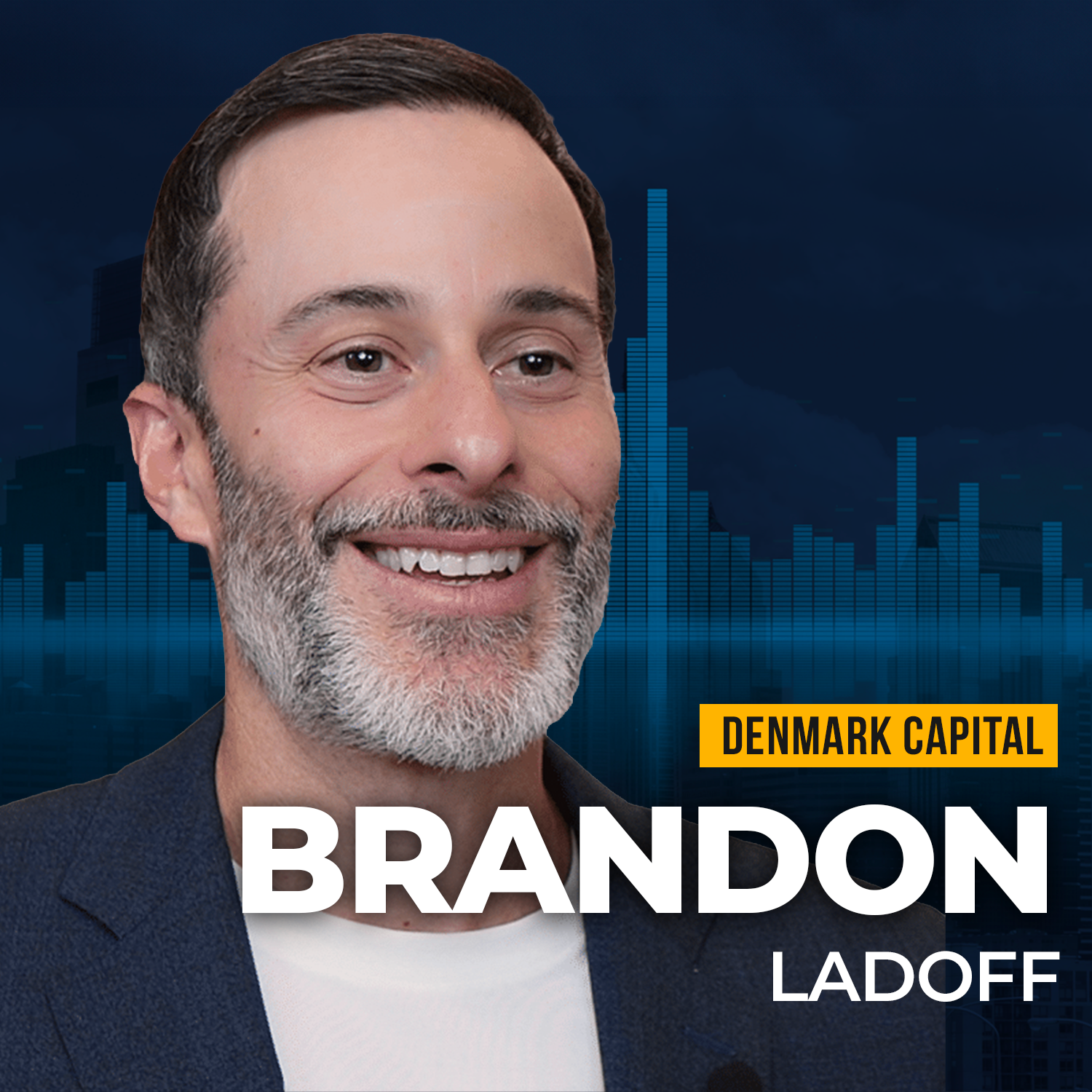
Well, this is a special day in the Dakota Live studios. We have a guest a little different than our normal guest in terms of the asset allocators who join us week after week. We have an asset manager. We like to talk to asset managers time and again to understand what it's feeling like on the other side of the table, specifically new asset managers, those boutiques, those emerging managers who are coming up into the industry, not for the first time from an experience perspective, but from a first time from a business perspective. So we are very excited and proud to introduce Brandon Ladoff, founder and Portfolio Manager with Denmark Capital. Brandon, welcome to Philadelphia. Welcome to the Dakota Studios. You made it.
Brandon Ladoff: Thank you. Great to be here. Love Philly. I actually lived here for three years. Not many people know that.
Robert Morier: No. Why were you here?
Brandon Ladoff: Well, I went to law school here in Philly. Went to Penn for law school, lived at 19th and JFK, right around the corner. Checked out my old building, went to Reading Terminal. Got rained on a little bit. Full Philly experience.
Robert Morier: Full Philly experience, especially in November, Philadelphia experience.
Brandon Ladoff: Exactly.
Robert Morier: We have started making recommendations to people who come into Philadelphia. So you were here. It's a while ago now. I don't want to date you. But if you had that one spot would go get lunch, where would it be today?
Brandon Ladoff: It was actually Reading Terminal. So that's why I went back. It's actually improved a lot too. I feel like the quality and just concentration of the restaurateurs and vendors there is great. That was the spot. You can find everything from sushi to Philly cheesesteaks, obviously.
Robert Morier: So do you go in DiNic's or are you doing something different?
Brandon Ladoff: So at this point in my life, I am carb free. And I am largely dairy free. I'm a little bit of a maniac when it comes to diet. So this time around, it was more for the sightseeing. I ate some sushi, got a smoothie. I looked with a lot of jealousy at those who were devouring delicious looking cheesesteaks.
Robert Morier: That's great.
Brandon Ladoff: But yeah, I actually wasn't a Pat's or Geno's guy back in the day. There was a place called Mama's close by that was incredible. I actually saw it closed down recently, but that was my go to spot.
Robert Morier: I like it, I like it. Well, thank you for sharing.
Brandon Ladoff: Yes, absolutely.
Robert Morier: Well, we are thrilled that you're here. It's really interesting and exciting for us to be able to talk to an asset manager, particularly a fund that… or strategy, I should say, that's launched relatively recently. We're going to talk about the details of that and your background. But before we do, I'm going to read your biography for our audience.
Brandon Ladoff: All right.
Robert Morier: Brandon Ladoff is the founder and portfolio manager of Denmark Capital, a concentrated and unconstrained global equity strategy. Before launching Denmark, Brandon spent over a decade at Polen Capital, where he helped grow the firm's assets from $4 billion to over $80 billion, while refining a philosophy rooted in time arbitrage, taking advantage of the market's short term bias by investing in elite companies with durable growth and competitive advantages. Brandon's investment framework is personal. He grew up just off the South Florida Everglades, watching his father build and lose small businesses before finding success in a toner company at the dawn of the PC era. From those lessons about timing, risk, discipline, and the difference between average and exceptional businesses, he built Denmark Capital. Today, Brandon manages a concentrated portfolio of what he calls enduring innovators, guided by a disciplined process that focuses on mispricing opportunities across global markets. Earlier in his career, he was a corporate attorney at Willkie Farr and Gallagher in New York, advising on M&A and securities transactions, and before that, briefly, he worked in accounting at PricewaterhouseCoopers. Brandon received his BS in accounting from the University of Florida and his JD from the University of Pennsylvania, Carey Law School. Brandon, I have to start with this. Was one year in accounting all it took to know that you needed to be a lawyer or was there something else going on?
Brandon Ladoff: Shots fired right out of the gate. So challenge accepted. I and my fellow accounting enthusiasts will prove to you somehow, some way, that accounting is not just important. You know it's the language of business, Rob.
Robert Morier: I do know that.
Brandon Ladoff: But it can also be interesting in a lot of different ways too. But in all seriousness, I knew I was going to go to law school eventually by the time I got to PWC. I took my law boards in college, the LSAT. And from a young age, I was fascinated about business and investing, but also this idea of how law can allow you to dive into the facts, different situations, circumstances, understand different situations and circumstances from all sides and angles, appreciate your strengths and weaknesses, anticipate the viewpoints of the other side. I think that's all very transferable to investing, by the way. And one of my favorite movies growing up was A Few Good Men. That movie had a big impact as well. The way Tom Cruise just dismantled Jack Nicholson on the stand in that movie left an impact. I feel like Tom Cruise influenced way too many of our early careers through different movies. But yeah, I was going to pursue law. I really appreciated the accounting background, but that was going to be a short [LAUGH].
Robert Morier: That's good you went with A Few Good Men instead of Cocktail. Otherwise this would be a very different type of podcast.
Brandon Ladoff: Yes, exactly.
Robert Morier: Well, I'm glad you're here and telling us about it. But it is interesting. It's kind of this triumvirate. You've got accounting, as you mentioned, and the importance is clear. Legal, which also has become increasingly important, particularly from a regulatory and compliance perspective. And then investments. So when you put those three together and create that triangle, how do you see each of those legs coming together and then benefiting your early career, moving into asset management for the first time?
Brandon Ladoff: Accounting, as I alluded to, it really is the language of business. There's a lot you need to understand about companies that go beyond the numbers and the metrics. But at the end of the day, you really need to understand what drives the company's revenues, what drives its expenses, how to understand what the company's free cash flow profile looks like. And those are all technical skills that you become well versed in if you have that expertise in accounting. So that was very important and something I wanted to do. In law, I alluded to this as well, but it's very analytical. I practiced corporate law at a large firm. I was doing a lot of transactional work. You're constantly working with clients who are buying and selling businesses, making large investments. And on the legal side, you're papering these transactions and contracts in a way where you need to think through how your clients might be exposed. What are certain areas where you might want to push harder? If you draft provisions in certain ways, what can go well? What could go wrong? How might the other side want to draft certain provisions in a different way? And then also on the legal side, at least with what I did, there was an opportunity to work with public companies and their management teams and how they put together and thought through their filings. For example, how did they think about risk factors and how they wanted to articulate those within a 10-K? Different life experiences, career experiences, it can all help create a mosaic and really add perspective and context. And overall, I found that each of my prior experiences has been additive to what I ended up doing later.
Robert Morier: That's wonderful. How did you end up finding Polen Capital? So $4 billion or so in assets when you joined. Not insignificant, but not a major player in the public equity space. So what did that origin story look like for you?
Brandon Ladoff: I'm from South Florida, born and raised in South Florida. I come from a city called Coral Springs, which I feel like not many people know. Polen Capital is located right in my backyard in Boca Raton, where I live currently. When I was practicing corporate law, the longer story is, and maybe we'll get to this later, but I come from a very small family. Only child. My parents split when I was very young. I was very close to my father, my late father, Dennis Mark Ladoff. The firm is named after him for certain reasons, Denmark Capital. And my dad was a small scale local entrepreneur. He got started with his entrepreneurial endeavors when he was very young. And as much as I love and respect my dad, in hindsight, he probably ventured off on some of those paths way too early without enough training, experience, perspective, and he found himself operating some of the most challenged businesses imaginable, like diners. We call them bagel restaurants in South Florida. These are if you're thinking about starting a business should not start one of those. Very, very difficult. He worked very hard and he was very smart in a lot of ways in terms of how he approached business building. If someone could have made it work long term, he would have been that person. But these were very challenged businesses overall, and that created a lot of financial turbulence, to put it mildly, for my family. So my dad and I, as I got older, we talked about things like pursuing degrees that no one could ever take away from you. And that advice really resonated with me. But that DNA of business building and finding this beauty and anyone being able to create something from scratch that others find value in, want to spend their hard earned time and money with, that always landed for me and is something that I found to be very special overall. So I took my dad's advice. I wanted to study things like accounting and then law. But underneath the surface, that love for business and investing was always there. So when I was practicing corporate law at a firm called Willkie Farr, great place, love the firm, was mentored by a lot of great lawyers there, especially on the private equity side. We had a very large private equity practice at Willkie Farr. That was a lot of transactional work I was doing. On the legal side was with private equity deal teams. I was seeing for the first time how through a lot of our discussions with these investors at some of these large, well-established private equity firms, how they could, in a very repeatable and consistent way, diligence these companies and for some of them get to these probabilities where reasonably there was a very high probability that these businesses would become larger over time. And a very low probability risk, for sure, but a very low probability that these businesses would go backwards over longer periods of time. And as I started to see more of that, the light bulb started going off. And I was saying, ok, this is really what I'm passionate about, the investing side. I feel it's very suitable for my skill set overall. I want to start spending nights and weekends, you work some pretty long hours at large law firms. But spend nights, weekends, especially as I'm starting to save some money, thinking about what types of companies might I want to invest in. How would I go about doing the work? And proving to myself that this might be what I want to do professionally for the rest of my career. And as I was doing more of that, I wanted to start reaching out to asset managers, firms that shared some of the characteristics that lined up with how my own investment philosophy was starting to evolve. Asset managers that really thought long term, had a deep focus on understanding what they owned, and importantly, for younger people coming in, which was me at the time, had a culture around allowing people to play through their mistakes, because I was going to be making a lot of those, especially in my early years. So I was looking in New York. I was looking in South Florida, which at the time, this was 2012, really had very little industry at the time. Feels crazy to say, because now post COVID, I feel like South Florida has just exploded. And maybe we'll be seeing some more of that based on some things that have happened around New York local politics. But there was very little industry there at the time. And I found this one firm, Polen Capital, through a basic Google search that seemed very small and unknown. I couldn't find anyone I knew that had heard of this firm. But everything they talked about in their materials, about how they approached investing in philosophy, lined up with how I thought I wanted to invest and the type of team I wanted to be a part of. So I reached out cold to someone at the firm who was nice enough to email me back and found my background intriguing. And that led to the interview process and me joining. And by the way, I was only focused on public markets based on a lot of my learnings too, which Polen Capital only focused on, at least at the time, was public markets. And the reason for that was just based on the type of work you get to do and having full access to the whole opportunity set. And even before I got into the industry, me seeing, based on what I was observing, that so much of the activity even then, and we're talking about almost 15 years ago at this point, so much of the activity was, in my mind, being driven by non-fundamental thinking with little regard for what intrinsic value for these businesses might look like. And instead, based on other factors like smoothing volatility, I thought public markets even then were becoming much more of a circus. And there was room to go against the grain through embracing simplicity in many ways. And that's what I wanted to do.
Robert Morier: You inherited that entrepreneurial spirit from your father.
Brandon Ladoff: Yes, absolutely.
Robert Morier: You did decide and you have decided to do something different, something on your own. So can you tell us a little bit about the genesis of Denmark? So what were you thinking on that day? Because I think that's what a lot of entrepreneurs say to themselves at some point in year 1 through 5. What was I thinking and what was I really looking to do? So put yourself back in that seat. When did that light bulb go off?
Brandon Ladoff: Yeah. This, in my mind, is always a multiyear process leading up to the actual decision point where you say, I'm going in. And despite being in a great situation, I'm burning all the boats and deciding to go off on my own. So for me, we talked about this, but that entrepreneurial spirit was always burning very strong inside of me. And I always felt that if I had an opportunity to start something of my own the right way, when I was ready and the skill set was there, and I felt like I had an opportunity to do something different, I would not shy away from pursuing that opportunity just because it felt hard. Pushing through things that feel hard personally and professionally has been something that I've experienced from such an early age, something that I was raised to lean into when, after careful consideration, it feels impossible to not do without resenting not doing it later on. But yeah, this started many years ago. The way it evolved and came to a head was over time. At Polen, I was lucky enough to have a ton of opportunity throughout my time at the firm. I started as a junior associate, which is the lowest level there, quickly became an analyst. I was our director of research for over 5 years, helped quarterback our research efforts around the investment team. And then the person who hired me there and who was really my mentor at the firm throughout my time at Polen, I was eventually promoted to co-manage the firm's flagship strategy with him. And as I evolved as an investor and gained a lot of experience, saw more of what resonated the most for what I look for and saw what was driving really more than all of the returns at Polen Capital, I saw that the real opportunity was backing only what I define as next Fortune 100 businesses globally and investing in them when you've identified a real mispricing event in a way that can allow you to deliver an elevated return profile. The thing, though, is that investing only in these types of businesses, not always but often, can lead to more volatility. So for various reasons, I find that most larger firms or firms that weren't once this way but have become large and might evolve in this manner, it becomes very difficult to lean only into that type of opportunity set. But that is where my skill set was. Within Polen, that's what I focused on the most. That was what I was most known for. That's where I feel the most comfortable. I think there's a lot of data supporting that. You can repeatedly identify these types of businesses with the right training and experience. And if you can do that very well over time, then it enables, it can unlock that higher level return profile. So I started to see that my investment philosophy was evolving. I wanted to focus even more on the smaller set of companies within the broader group that we focused on at my prior firm. I also was evolving my process. I mentioned that I was our director of research. I can be a process maniac, for lack of a better term. I think it's very important to document various aspects of what you do, including around all the factors that you consider under your framework that guides portfolio inclusion, portfolio construction overall and sizing. And I wanted to implement more of that around my process. And then also, very importantly, structure. I had a front row seat to how things can evolve as you go from a super small firm, which we were at Polen when I joined, to growing by over 20-fold during my time there, having tens of billions in assets within a single strategy. I believe that especially with today's market structure and public markets, it is very, very important to have a structure that allows you to be flexible and nimble and has no unnecessary restrictions. It's very important to be unconstrained across a number of dimensions. And there was no way that I could implement that without going off on my own and starting with a clean sheet of paper. So it was a lot of different components that came together over time. But the ultimate conclusion has to be, for someone like me who does this, because it is very hard in many respects, the ultimate conclusion has to be that based on these components, I can't not do this. You feel you absolutely have to do this.
Robert Morier: What did Mrs. Ladoff think about all of this?
Brandon Ladoff: I am very lucky. Mrs. Ladoff is very patient and understanding and trusting in what I do. And she's very talented in her own right. So I'm lucky to have a wife that wants me to pursue my dreams and goals when it's happening after careful consideration and who herself does very well on her own. So supportive across the board. A lot of difficult conversations over years that led up to this, absolutely. But that's another very important component. You have to have a supportive, ideally, family that can help lift you up and provide all the strength that you're going to need.
Robert Morier: Thank you for sharing that, and thank her for being here with us. I'll throw a thank you to her as well.
Brandon Ladoff: Yes, yes.
Narrator: Dakota Marketplace provides the industry with the highest quality and most up to date GP, LP, private company, public company data, as well as performance benchmarking and a number of other different data sets that the investment industry is fueled by. We're excited to announce that all of that data is available now via our customizable and bespoke APIs. You can create an API that will plug into any CRM or use some of our pre-built APIs with Salesforce, Snowflake, and a number of other CRMs that you can find on our website. To learn more about Dakota's API offerings and create a custom package that best suits your business, go to dakota.com.
Robert Morier: You mentioned a few things which theoretically make a lot of sense, I think, to both allocators and investors. Long term investment horizon, unconstrained, but the practical side of going out, raising assets for those types of strategies can be challenging. They don't always pair well, especially in the very beginning. So how have you approached these early days of fundraising for this strategy? So when you have to go out and tell that story, but there's a lot of underlying patience that's thread through this story. So what does that narrative look like from your perspective?
Brandon Ladoff: At this stage, I'm early. So I went off on my own and opened to friends and family starting July 1. At my prior firm, we launched several new strategies. So I went in with eyes wide open around how difficult it is and how patient you need to be to fundraise and do it the right way with a fully aligned investor base, which is very important to me. So this is a long journey and a process that's going to take a lot of time. My first step was opening a friends and family, and now I'm increasingly getting out there and speaking to that small group that can really embrace the volatility that I think is necessary to lean into in public markets. Most humans are not wired to deal with all of the volatility increasingly that exists, for sure, in a heavy way. And that's only getting stronger in my mind. And it's funny, because I feel the most marketable strategies today are those that try to smooth volatility and promise maybe a lower level of return, but maybe with no down years, for example. And trying to smooth and avoid that volatility is actually leading to a lot more volatility. So I think with a strategy like mine, there's inevitably going to be volatility. I try to communicate that very clearly. I've had down years. I will have down years. There aren't many who can really deal with that when it punches you in the face, as Mike Tyson likes to say. So I'm getting out there increasingly and having those discussions. Those discussions, you find out quickly if there's alignment or not. And I think that's a good thing. So I'm looking for those who have very patient capital, who understand that if you can lean into that type of volatility and you're with someone who really has that expertise and that specialty to identify world leading competitive advantage and those businesses that can address healthy end markets and then wrap real mispricing framework around that based on your lived experience and heuristics. And you have a really disciplined, systematic way of constructing portfolios and sizing positions. Then there's that opportunity in exchange for embracing that volatility to get to a higher level of return over a long period of time and with real duration. So those are the discussions that are being had. I think for most new managers, there's a million reasons to say no. And that's certainly true for me. A lot of what I do sounds unconventional to most people I discuss this with, including the fact that I'm a sole practitioner. There's a lot of things that I think are important that are commonly viewed as different. But I'm not reinventing the wheel here. At the same time, there are a lot of those, I'm finding, who look for exactly this type of thing.
Robert Morier: You had a couple of meetings in Philadelphia. We won't disclose who you met with. But when you come to a city, you have the opportunity to meet with a few institutional investors. They may be on the larger side. They may be your sweet spot investor. What were some of the questions that were asked of you today that made you think twice or I need a better answer for this? Is there anything that rung for you that you said, you know what, that's interesting. I didn't think about it that way.
Brandon Ladoff: There are some questions that you just can't have a great answer to at this stage. So some questions I commonly get are how exactly do you want to scale the firm over time? It really depends exactly how I want to do that, and the pacing of it really depends. So for example, based on my size and structure today, almost everything I do on the operational side can be outsourced in an extremely high quality way, in a way that allows me to focus almost all of my time on the investing side. As I grow and there's some more operational complexity, that won't always be the case. I will want an operational head, for example. I probably will want a chief of staff. But exactly what that looks like and when it plays out, I don't think you can have the best answers to that and know exactly how you want that to look right now. So some of those questions I say, it's just a bit too early to fully the answer to that, which might not be the best answer overall. How will the portfolio look over time? I know the answer to that, but I feel like it's not the best answer in terms of what people are looking for. Because for me, the portfolio can look very different from how it looks now and keep evolving over time. Like I said, it's very important to be unconstrained. As an investor, it's also very important to be rigid around certain things that you require around the businesses you invest in. For example, around competitive advantage, at Denmark, I talk about the three degrees of comparison. There is the base case, which is the positive degree. So strong competitive advantage. Then there's the comparative degree, which is stronger competitive advantage. And then there's the superlative degree, which is strongest competitive advantage. Many people miss this, but there aren't many companies on the planet that if you've had the right training and focus around this globally are truly in that strongest category of competitive advantage. I am unwavering on that. Most people look at companies that I turn away as a result of thinking that competitive advantage isn't strong enough. And they're like, what, are you crazy? This is a very good business. But I've just seen too many situations where even that level of advantage can put the business at risk long term. And that's where you introduce permanent loss of capital scenarios, which from a risk management perspective under our framework is unacceptable. But there are more companies than I'm going to have in the portfolio at any given time that, in fact, meet my criteria for world leading advantage in some of the other characteristics that I look for around what I call Fortune 100s or enduring innovators, as I also call them. And there are other factors like mispricing that are also required to get in. So at the same time, you have to be open to where are these ideas going to be coming from? And in different environments, it look very different. In a perfect world, I would have 20 to 25 companies that were coming through the process in a way that justified basically even weights across the board, and there was effectively no correlation across the 20 to 25 businesses. Wouldn't that be a dream, as a portfolio manager, to always be able to construct a portfolio that looked like that and that you felt those were truly your best ideas? But unfortunately, that's not the way life works in most situations, and your best ideas and the way they come through your process are not going to look like that. So I might only have five holdings that are largely concentrated within a particular industry, and that might introduce more volatility than normal when that's the output of the process. I might have 20 to 25 positions in the portfolio when the process is yielding a more balanced set of opportunities and everything in between. So I get asked all these questions about what does the portfolio look like now? How might that evolve? How has it evolved over the three year track record that I bring in? And I can't have great answers there other than here are some rough parameters. But it can look different in these various ways.
Robert Morier: But I'm assuming you can define what an enduring innovator is. So when someone's sitting across the table from you, an allocator who is trying to understand what makes you different, and you're talking about enduring innovators, I would assume what they may be thinking is we've seen companies that have innovated once, twice, maybe three times, but then they start strategically acquiring. So they build through acquisition. So how do you define an enduring innovator for those allocators who are asking the question?
Brandon Ladoff: On this, we can absolutely be a lot more prescriptive. And this is a career's worth of work to continually evolve what it means to be an enduring innovator, and very few companies actually get there. There are very set criteria that I think should exist. And by the way, just to take a step back, why is this important? Many people toss around the term innovation and talk about going after companies that can be innovators, but innovation exists as of a moment in time. History is littered with products and services that were once innovative, but at some point were disrupted. So the Segway as a product or Myspace, beepers. I don't know if you remember beepers. That was all the rage for me back in middle school. Beepers, BlackBerrys. There are so many products and services that were innovative at one point in time, but there weren't all the qualities we look for and dynamics that allowed those products and the companies behind them to endure over a multi-decade period. If a business is innovative as a moment in time, maybe for certain stakeholders, certain customers, certain employees, certain shareholders, that business can deliver value. But at the end of the day, a lot of value is going to be destroyed if that innovation does not prove to be enduring. So to actually be enduring, it really matters across the stakeholder base. But you need to have certain characteristics around product development and product impact, R&D commitment overall, the quality of the management team, ideally founder led management team that strikes this amazing balance across vision, strategy, and just operational prowess. The financial strength of the business. Financial strength is very important, because it allows you to do things like invest in talent and retain talent, and also invest in future product development and innovation. These things are all linked. You get into some other areas too that you really need to see, like the talent base, the ability to attract and retain talent, a lot of work we do there. And then if you get through all of that, and very defined metrics we look for here. So for example, with product development and innovation, we want to see at least 20% to 40% of revenue coming from new products or services that are meaningfully being improved. We want to see number one or number two market share, unless this is a highly fragmented industry, and you're looking at more of a disruptor that currently has low market share, but it's improving at a fast clip. We want to see high net promoter scores, really strong customer acquisition levels and customer retention. There are a lot of underlying metrics that you can look at underneath these things, and we need to see all of it, not just some things, some good product development but terrible management. We need to see it all to feel like we're in a good place from a risk management perspective, and then also have an opportunity to win. And then if you get through that gauntlet, if you will, to be an enduring innovator, the most important piece is do you have that world leading competitive advantage? Because if you have a product or service that the rest of the world wants to engage with, and as a result of that, as business owners, you're able to build bigger, stronger companies, the laws of competition and capitalist markets mean the competition is coming. And it could be very deep pocketed competition. And unless you have very strong competitive advantages like network effects and scale advantages, a brand advantage, there are many competitive advantages. And ideally, you want to see a combination of competitive advantages that create this system that is much more powerful than its components. You need that as the biggest piece around it all to enable a company to be an enduring innovator. And we spend, again, like I said, it's a career. It's life's work to try to turn over more rocks and find more of these companies.
Robert Morier: When it comes to technology, based on that answer, which I appreciate and it makes a lot of sense, particularly when you're thinking about those characteristics that define what a company over a long term time horizon is going to do for you as it relates to its competitive advantages and its innovation. When it comes to the companies that you're looking at today as it relates to artificial intelligence, is it supplemental or is it integral? What are you thinking about in terms of how they are utilizing and bridging artificial intelligence into their businesses? Is it a must have or is it nice that they're thinking about it?
Brandon Ladoff: I don't think it's just for technology. I think for almost all companies across all industries I can think of, they should be very on top of what's happening with generative AI and how integrating AI, at the very least, over time, could allow for both market opportunities and allow these businesses to potentially become a lot more efficient overall. So I don't think it's just a technology thing. It's a very nuanced answer. I'm not trying to punt on this question, but it really is case by case. So for example, Google or Alphabet has been a poster child for some of the direct competition that you're seeing for some businesses like Google, with other companies that are only focused on AI like OpenAI. So not too long ago, this was only three years ago at this point, but when we had a question, we would ask Google. We would get the blue links. We would search through them, see which ones were most relevant, read a little bit. Most of the time we would say, yeah, this is a relevant link. Sometimes we would say, why did you serve me this link? Now I got to dig more. Now increasingly, we can ask these frontier models our questions and get answers in a conversational way, in a way overall that feels high quality and much more convenient than the prior search experience. So Google has, in many ways, needed to reinvent itself, and that presents certain challenges and risks that you have to think through as an investor, obviously. And it could present opportunities as well. And in Google's case, I actually think they've done a really good job over the last 12 to 18 months to demonstrate that their frontier model building across a number of dimensions is at least right there with what other intelligence labs are doing, like OpenAI. But in many ways, it's surpassing. In certain areas, like maybe video generation right now or image generation, and just even latency within the model for something like Gemini versus ChatGPT. But that's direct competition where you have to really be focused on what's happening here. Enterprise software is one where this could be an industry that's evolving substantially. And on your question, it's a little bit unclear in my mind. Is this completely complementary to what's happening with legacy enterprise software businesses? Or can it be at least somewhat disruptive? In enterprise software, to use this as a good example of how this can be very nuanced, you had these legacy companies in areas like human capital management and CRM and ERP, where they became more penetrated within their end markets over time. So even before AI, their growth rates were slowing. And then AI hit and many of their customers were shifting their budgets more towards direct AI related initiatives. And I think that's created a growth headwind for some of these companies. And then you have lurking in the background the fact that most of these business models have been seat based. So they get paid more the more employees at their customers use the software. And what happens if AI is allowing these companies to be more efficient and they don't need to hire as aggressively, or even, uh-oh, they cut back increasingly on headcount, that can create a headwind too. So many of these companies, at least the ones that I consider to be the stronger businesses within an area like enterprise software, they're actively creating things like AI agents that can be complementary to the software they produce. But it's not always easy to figure out is this complementary or is it potentially disruptive? It really is an industry by industry, company by company type analysis.
Robert Morier: So you created an AI video on your LinkedIn profile. Do you recommend that all emerging asset managers create AI generated videos for their social media content?
Brandon Ladoff: I recommend that everyone dabble and throw some stuff at the wall and see what happens. In my line of work for my everyday workflows, AI tools are increasingly important and effective in my mind. I do think every asset manager, whether you have a new firm or an existing firm, I do believe you should be pouring a ton of time into understanding what these different tools look like, how to utilize them effectively, and how it might allow you to become more productive overall. With respect to the AI social media videos in particular, the jury's still out. Tomorrow will look much better than today in terms of what these tools are capable of.
Robert Morier: It looks very cool. So I do appreciate you sharing that for everyone who does follow you, and I recommend following your content on LinkedIn. It is excellent. So when you think about the landscape today, so with Denmark, one of the exciting things that you have in front of you, in addition to being someone who's constantly refining their process but really understands the type of companies that they want to look for, what are you seeing is the most compelling mispricing setups today, whether it's by region, sector, or in your case, it could be geography, country specific, or theme?
Brandon Ladoff: We have seven core mispricing setups that we focus on. And this is based on lived experience, just going through company by company over a long period of time, and asking when these businesses prove to be mispriced, why did that happen? And for some of these, it's repeatable. It happens time and time again. So one of the mispricing categories is emotional businesses, for example. There are certain companies like social media focused businesses. Think about US health care companies. There are clearly negative consequences of these businesses. And if you're not careful, the emotional reaction you can have to these types of companies can create this almost involuntary reaction of I can't own this. Especially when negative headline after negative headline is swirling, and you can allow your personal moral ethical biases to get in the way of the realities of the world. There are very defined mispricings, but I find that in most market environments, including today, the opportunities we find are pretty balanced across the different types of mispricings we look for, the types of companies we end up identifying, the regions we find them within. I wouldn't say that now is a time where we're only finding ideas within this particular industry, this type of mispricing category, this type of geography. I do think there are certain things that are very interesting. So, for example, I've long been a proponent of participating in China. There are many companies and business models in China that from an innovation perspective and a competitive strength perspective, an ability to continue innovating over time are right down the middle Denmark in terms of what we look for. And you can find valuations not always, but many times you can find valuations that look very different from what you'd expect to see from a similarly situated company that's not in China. And that is obviously based on people's geopolitical views. And there is a lot to dissect there. But I've long had a view around what the geopolitical risk looks like in China that differs from what feels like the market view based on what valuations look like there. China is something that remains interesting to me, and we do participate there, and companies that could be affected by what China ultimately chooses to do or not do in certain situations. So that's a big one. And then others are, even in markets like this, the pervasive narrative today is markets are overvalued. At least that's what I hear. And that is true in many respects. If you look at valuations across various benchmarks, they are historically high. But even in environments like that, I think it's a big mistake to assume that just because valuations more broadly might be elevated, to assume that there aren't opportunities somewhere. And what we find in this persists today is across various industries and sectors, business models, countries. If you can pick your spots, there are still opportunities to be had.
Narrator: For years, legacy data providers have made private fund performance benchmarking complex and expensive. That's why we launched Dakota Performance and Benchmarks, the first ever benchmarking platform built by people who are using the data themselves every single day. We've made our benchmarking affordable, customizable, and very, very easy to use. You can log in to Dakota Marketplace today to start creating your own benchmarks and viewing our created benchmarks, or you can learn more and book a demo at our website at dakota.com.
Robert Morier: I've heard you say that and I've heard you say this a few times since we've known each other that average hides the truth. In this market in particular, there's a lot of average swimming through among these enduring innovators. So what's a truth that you've uncovered is it could be in the last six months, it could be in the last six years, that most investors, in your opinion, are still overlooking?
Brandon Ladoff: This notion of innovation. The term is overused. And I think as a result, people bucket far too many companies into this category, because at any given time, there will be many companies who have these interesting pie in the sky scenarios. It may be not even pie in the sky in the respect that they could be growing at elevated rates right now. But at the very least, there's always this bigger set of companies where if every hope and dream comes true, the future can look very bright. And many, many who focus on, quote unquote, "innovation" I think can get a bad rap in many ways, because they're viewed as chasing those types of opportunities. I think the reality is there is a much smaller group that are truly positioned to be enduring innovators. If you can find those, the long term path of how they can grow their free cash flow per share over time, which I think is the most important metric you should be looking at as a manager, that has an opportunity, in many cases, to grow exponentially over long periods. Whereas most companies classified as innovators will end up not producing great results at all over long periods. So I think that's one, separating out the true, enduring innovators and being able to do that from that larger group that are classified as innovative companies overall. Denmark was really founded on this belief that public markets have become a circus. I was seeing this 15 years ago before I even started doing this professionally. But the world has shifted even more in this direction. So based on data that I was seeing years ago, and more recent data that I've seen, over 90% percent of all daily active trading volumes are coming from decision makers who, in one way or another, are not making those decisions based on this careful analysis of what intrinsic value looks like. It's to do things like smooth volatility. It's a lot of activity going towards things like passive strategies. And in this area of passive, I think this is another one where this discussion around average and some confusion that can get mixed up within it. On the passive side, the flows going there have never been heavier. But at the same time, valuations across the market more broadly are higher. You have rates and a higher cost of capital than what we saw several years ago. That all started changing towards the end of 2021 and beyond. In my mind, if you're going to go passive, you don't want to do that, as valuations have been rising for a while and as rates are higher, cost of capital is higher. And I think a lot of people have assumed that just because benchmark returns have been the strong double digits annually for a while now, that's what you should expect. And if you look underneath, you see a very different picture, which is when you're investing in benchmark that consists of so many companies, you inevitably have this long tail of what I would consider to be average to poor companies, that when you wrap them in to the index, it doesn't allow the index as a whole to grow its underlying earnings at a strong double digit pace. So for the benchmarks to continue to produce strong double digit returns, you have to believe there's going to be almost endless multiple expansion from here when there's already been a lot of it.
Robert Morier: If public markets are the circus, who are the acrobats and who are the clowns?
Brandon Ladoff: I have strong views on this. It's never made sense to me, Rob, that you ask private company investors how they go about doing their work and doing their job. And it's always expressed as something that's fundamental in nature. It's a private company. Of course I have to go from business to business and understand these companies and think through based on how they're positioned and the value propositions they have, how in the end markets that they operate within, how might they grow over time? And conservatively, what am I willing to put in my model and what do I have to pay and what can my returns look like based on that? Just because these companies are publicly listed, why would that equation flip on its head? And most market participants turn into these beasts who are engaging in activity that is so short term focused, simply because their stocks, share prices are marked to market every day. So I feel that at Denmark, we want to stand for being a house of true investing craft. And I feel that that has been mostly lost in public markets for a variety of reasons. I think the incentives for new firms is to try and show they can do different that has more of a short term edge. I think a lot of the larger allocators out there are structured in ways where they might have some timing risk. And if you have any timing risk whatsoever, it's very hard to not have an eye towards what can happen in the short term, because markets are really voting machines in short periods of time. You can't what's going to happen with the broader markets or even with your individual holdings within short periods of time. So increasingly, you've just had so much activity moving in that direction. And I am a strong believer that all of that is very unnatural from an investing perspective. I'm grateful for it, because I think if you have the discipline and the long term outlook and you really are structured to withstand the test of time, you're going to look very stupid over certain shorter periods of time, and you're going to introduce a lot of volatility. But you have an amazing opportunity now because most of the world is tacking in a very different direction. I feel that those who are staying true to what real investing looks like, I think those are the best position investors in public markets.
Robert Morier: Makes sense. So even if you look like a clown every now and again, the clowns have an enduring legacy at the circus. They're still around.
Brandon Ladoff: That's true.
Robert Morier: That's good. I appreciate that. That's very interesting and insightful. You've described Denmark as an investing ethos, which I've always found very interesting. If Denmark were a single holding, what would its moat be?
Brandon Ladoff: I laugh at this question because you asked earlier about questions people ask me where I feel like there's never the best answer. I should have included this one. What's your moat? What is your competitive advantage? I study competitive advantage for a living at the business level. For some reason in this industry, in asset management, people ask about moats and competitive advantages of managers and people lose their minds.
Robert Morier: In the last, I would say, let's say three to six months, I've started immediately after asking that question. So what makes an asset manager's competitive edge stand out? I've started asking as almost an immediate follow up, is that the right question? Because we're always asking about the edge, the moat, what makes you different. So maybe for you it's the same question. Is that the right question? When an allocator is sitting across from you and says, what's your moat? What's your competitive edge? If you had the ability not to answer it and say, you know what, I don't know if that's the right question. Actually, what you should be asking is. What do you think that would be?
Brandon Ladoff: I think it's a fair question, but if you're asking the question, I think you just have to understand are you someone who already has a fixed view on this within the asset management industry? And if you do, and you believe there are no competitive advantages in asset management around fundamental investing, for example, then the question you should ask is why do you have a right to win? At the very least, certain investors will prove out that they had a right to win all along. I think the competitive advantage moat question is fair, but at the very least, you can reframe it to right to win if you have this emotional reaction to moats. And what I would say is when I look at companies, the strongest competitive advantages, it's not just one moat or one advantage. It's like I said earlier when I was on this topic. It's usually a system that consists of various components that come together to create this machine that's much stronger than the components overall. And in my mind, absolutely, it's no different on the public market side as an investor who has an approach like mine. I think why so many are allergic to the term competitive advantage in our industry is because you have so many managers, and inevitably, large groups of them will sound nearly identical to each other. But in execution, and if you could be with the manager and see how he or she goes through the motions and goes through the process and actually makes decisions, that whole process and decision making is inherently unique to the manager. We all have different brains at the end of the day and different processes, and we will end up with different portfolios from one another. And some of us will prove out that right to win and most others, 95% plus, of the world will demonstrate that they did not, in fact, have a right to win. If you have an outlook to the investing world or similar investing belief system to the one I have, the competitive advantage emote starts with expertise around an area of specialty. So I do look at companies everywhere across different industries, different business models. So many classify me as a generalist and what I do as a generalist, but I very much believe that I am a specialist of a different type where my specialty is around understanding not just competitive advantage, but that world leading, strong and superlative form competitive advantage. And in my mind, having experience here, you can't what it looks like unless you spend 30,000 hours plus only focusing on this. In my prior firm, we actually did that very well. You can't grow as fast as we did as quickly as we did without doing something right. And we had that really disciplined focus around what world leading advantage looks like and how few companies have it. And I carry that forward here. That forms the foundation of the time arbitrage opportunity that we see in public markets. That is the first component of the system is having that expertise around that specialty of world leading competitive advantage. Then you need to have defined heuristics based on lived experience around mispricing events. You can have the best business in the world. If you don't understand how your views likely differ from the consensus, there's really no investment opportunity there. And that's another one that's rooted in expertise. But you can create heuristics that end up being differentiated based on your experiences versus your peers overall. And then process. There's a lot in process. And for us, a key part of our process is around portfolio construction and quantifying your qualitative use. I've found that way too many portfolio managers, and I think still this is missed our industry, are way too high level and surfacy with their decision making. They go through a lengthy research process and they form views around things like competitive advantage and growth and valuation and expected returns. And they say that justifies a position size of 5% or 7%. And this other company is also very strong, but not quite as strong as this one, and it's in the same industry. We already have a weight here, so let's keep this one on the sidelines. But they don't really stack all of these companies up against each other, within the portfolio and within the pipeline and the entire coverage list to be able to articulate, based on what I look for and how I would rate all the factors that I look for that determine portfolio inclusion and sizing. Here's how this position, here's how this company scores. Here's what our conviction rating looks like overall. And going through that process can add another level of focus and discipline. There's still subjectivity in it, plenty of it. But adding that quantitative lens, I found, adds a different level of focus and discipline to the process. And then you start to put together those types of ingredients around the expertise in an area of specialty. Having this type of mispricing framework, having a process that can look different overall. And then you wrap in the characteristics of the decision maker. This is a very personal thing, but we believe that conviction wins. And not just any conviction, but high conviction. That can mean 20% position sizes. Do you have the comfort and experience in dealing with that type of conviction? It really isn't for everybody. And like I said before, it will cause you to look stupid in certain periods. But I also feel it's very important for delivering next level returns. So you also start to get into the personal characteristics of the decision maker, the decision makers too. And those who have a right to win, in my experience, have the right combination of ingredients. And then they are absolutely ruthless in maintaining that recipe, regardless of how much success the firm might experience, which gets into things like capacity and client alignment and those types of things.
Robert Morier: Brandon, thank you so much. Interesting insights, particularly from your seat, having launched this business relatively recently, which leads me to my last question. What Tom Cruise movie plot aligns closest to launching a founder led boutique asset manager?
Brandon Ladoff: I mean, I'll go with Mission Impossible. That might be the obvious answer, but I do feel like it's very fitting. Look, launching a new firm is very, very hard. There is no way around that. It's supposed to be hard. I think that's a big part of the American dream and the dream of entrepreneurship is you do really hard things that have real risk of failure. But if you overcome them, you have just the highest level of gratitude and just feel so blessed to be able to overcome things like that. And that's very rewarding at the end of the day. So it's very hard. It feels like Mission Impossible. I think that's how it's supposed to feel overall. But I believe if you go through a process and you go through a career, you get to a place one way or another where you feel like this is something that has to be done. I can't not do this. Then you see that this is where you're meant to be. And there are many ways where, like Tom Cruise, you ultimately persevere and it's mission possible. So that's the goal. That's the goal. To prove that we go from mission impossible to mission possible.
Robert Morier: That's wonderful. Congratulations on the launch of Denmark Capital. Congratulations on your success up until this point. Thank you again for visiting our Philadelphia studios, and we look forward to the next conversation.
Brandon Ladoff: All right. Thank you, Rob. Much appreciated. Love what you do. Always a pleasure.
Robert Morier: If you'd like to learn more about Brandon and Denmark Capital, check out their website at www.denmarkcap.com, where you can find Brandon's contact information. You can find this episode and past episodes on Spotify, Apple Podcasts, or your favorite podcast platform. We're also available on YouTube if you prefer to watch while you listen. If you like what you're hearing and seeing here, please check out our website at dakota.com to learn more about our services. Brandon, thank you again for being here. And to our audience, thank you for investing your time with Dakota.