Robert Morier: Welcome to the Dakota Live Podcast. I'm your host, Robert Morier. The goal of this podcast is to help you better the people behind investment decisions. We introduce you to chief investment officers, manager research professionals, investment consultants, and other important players in the industry who will help you sell in between the lines and better understand the investment sales ecosystem. If you're not familiar with Dakota and our Dakota Live content, please check out dakota.com to learn more about our services. Before we get started, I need to read a brief disclosure. This content is provided for informational purposes and should not be relied upon as recommendations or advice about investing in securities. All investments involve risk and may lose money. Dakota does not guarantee the accuracy of any of the information provided by the speaker, who is not affiliated with Dakota. Not a solicitation, testimonial, or endorsement by Dakota or its affiliates, nothing herein is intended to indicate approval, support, or recommendation of the investment advisor or its supervised persons by Dakota.
Today's episode is brought to you by Dakota Marketplace. Are you tired of constantly jumping between multiple databases and channels to find the right investment opportunities? Introducing Dakota Marketplace, the comprehensive institutional and intermediary database built by fundraisers, for fundraisers. With Dakota Marketplace, you'll have access to all channels and asset classes in one place, saving you time and streamlining your fundraising process. Say goodbye to the frustration of searching through multiple databases and say hello to a seamless and efficient fundraising experience. Sign up now and see the difference Dakota Marketplace can make for you. Visit dakotamarketplace.com today.
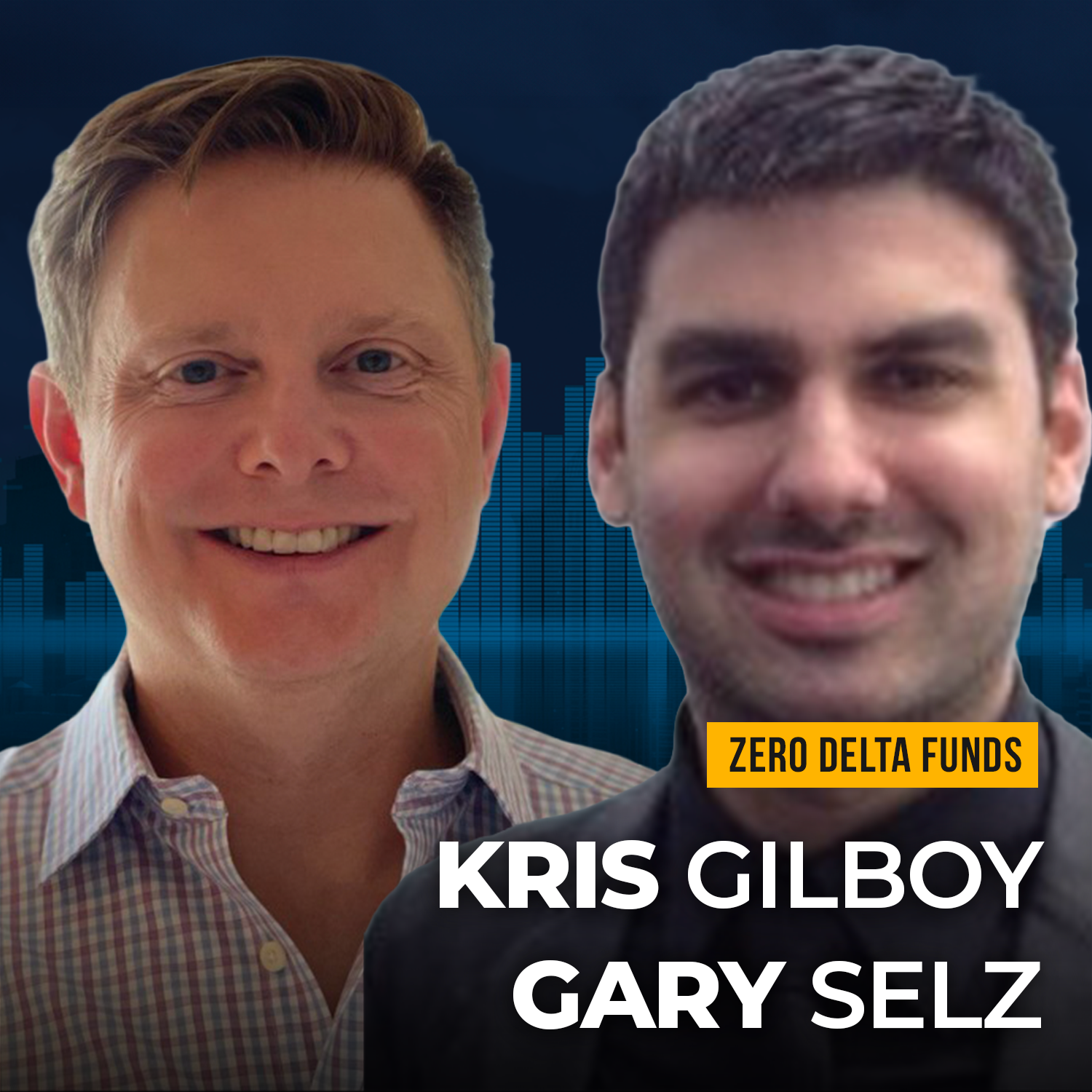
Well, this is an exciting episode. Today, we are diving into a corner of the market that is often misunderstood but increasingly vital, and that's volatility. But we aren't just talking about the VIX or hedging. We are talking about the business of volatility, how to find the traders who can extract alpha from structural inefficiencies without blowing up when the market crashes. Joining me today are the co-founders of Zero Delta Funds, a firm that has taken a unique approach to finding capacity constrained option traders. Kris Kilboy is the CEO and co-portfolio manager of Zero Delta Funds. Kris is a veteran of the Chicago proprietary trading world, having spent 14 years at PEAK6 investments, where he rose to become the Director of Trading Business Management. During his tenure, he led the non-electronic block execution desk and the core broad trading group, managing a portfolio of 20 equity volatility traders, and utilizing over 125 million of capital. A former independent market maker on the floor, Kris holds an MBA from Northwestern's Kellogg School of Management and maintains a suite of regulatory licenses, including the series 24 principal license. Gary Seltz serves as the Chief Investment Officer and co-portfolio manager. Before launching Zero Delta, Gary spent 11 years as a senior trader and portfolio manager at PEAK6 and Nolita Capital, where he specialized in single stock relative value equity volatility arbitrage. Gary is known for designing strategies with convex return profiles and has a deep background in trading LEAP options. He brings a distinct technical edge to portfolio construction, holding a BS in electrical engineering from Northwestern University. Gary, Chris, welcome to Philadelphia. Welcome to Dakota Studios. Thank you for being here on the podcast.
Gary Selz: Thank you. We appreciate it.
Kris Gilboy: Thank you for having us.
Robert Morier: Yeah, it's a lot of fun. We always love talking about volatility. There's not enough of it. We love talking about process. We talked about that a little bit before we started recording. But I'm really happy to introduce Zero Delta to our audience, specifically the types of managers that you're looking for, which are very different than what we typically hear from emerging managers who are trying to identify the next wave of talent. I want to start with a history, because you two didn't just meet at a conference. You came up in the Chicago school of prop trading at PEAK6. That's a very specific sink or swim culture. So if you could take us back to that trading floor, Gary, what did that look like for when you were coming up in that particular area of the market at that firm, getting to know your co-partner?
Gary Selz: I didn't know that I was going to be a trader. I went to college for electrical engineering, but when I was there, I took a course in financial engineering. And after an exam one day, I asked a professor, what do people need to know swap pricing for? How do you make money with this? He said, well, let me introduce you to a firm. And that's how I came to know PEAK6. Did an open house there, saw what they did, and I said, wait, so you're making bets all day that you think you have edge in. This is amazing. So from the first day that I started there, I loved that job, and I loved it all the way until the end.
Robert Morier: I'm so impressed that as a student, you asked about swap pricing. Most of my students ask me if we have class today, or is the exam going to be heavily weighted towards this? So it says a lot about you. Kris, a very similar question. You've mentioned that capital is often a commodity, but talent is a scarcity. So when you think back to those days, identifying folks like Gary that you came to know, what were you looking for in colleagues? What did you identify in colleagues that you've translated to today?
Kris Gilboy: People talk about the difficulty in finding money, but finding the people that can manage the money is, I think, definitely more difficult and more important. When it came to trying to identify people, especially for PEAK6, and we hired guys like Gary, it really was a variety of things. But most importantly, needed people that were upstanding, honest, hardworking individuals. We were pulling from people that were already smart, people that are already dedicated, people that would already be hard working. So it was really trying to find the people who had the right match as far as understanding that you're managing someone's money, that this is an important job, and making sure that we could couple that hard work and competitiveness but be comrades. It was meritocracy, and it's good that way. But without working together, the parts are not as good as the whole. So PEAK6 and Gary can attest to this, I'm sure. We talk trading all day. All we did was talk about positions. We talked about volatility; we talked about risk. And the whole idea was that we all want to be the best, but we're all going to work together to get to be the best and work to be competitive with the rest of the market.
Robert Morier: It sounds like there might be a bias in there towards Midwestern values.
Kris Gilboy: Maybe.
Robert Morier: Maybe. Gary, you've described Zero Delta's approach as Moneyball for volatility. So that meant generally ignoring the expense of superstars and getting on base and getting the players that get on base. In options trading, what's the equivalent to that?
Gary Selz: Especially in relative value vol traders, they're capacity constrained. So by nature, they're not going to be the types of traders that are going to make $1 billion in a year for a firm. They're trading small books. They're overlooked by institutional allocators, just because random pensions have $100 billion. They can't say we're going to allocate $20 million to a good vol trader. So they're just overlooked. It's kind of like baseball players in Venezuela. There's just not many people going down there to scout. And I think it's the same thing with vol traders, really good ones. They're by themselves or in a small group. They don't advertise, they don't market, they don't go to conferences. They're really focused on their craft. I think that's the equivalent and that's really what we're looking for.
Robert Morier: So why are you looking for capacity constrained managers in that particular space?
Gary Selz: Yeah, the capacity constrained managers are able to move the portfolio very easily. They're able to find opportunities that are just small opportunities. They're picking up the nickels and dimes that an institutional, larger manager would just ignore. Some names might only trade 100 options in a day on average or 1,000, and they're looking at those names. If you're a large manager, you can't look at those names. So that's really why we're in this space. We're finding managers who are focused on alpha, focused on return, not focused on gathering assets. And I think that's why it works for us.
Robert Morier: Makes sense. Kris, is there a database to find these managers?
Kris Gilboy: I wish sometimes, but obviously that's the special sauce. There really isn't. These guys are under the radar. Gary mentioned they're not usually on databases. They're not usually at conferences. They're not usually advertising at all. They're really concentrating, as Gary mentioned, on their craft. They want to generate alpha for their investors, for their family, for their friends, and they're not worried about doing all the other things, all the bureaucratic things that I think sometimes are prevalent in bigger shops.
Gary Selz: We found a manager in a small office in Paris one time. And when we met him, he said, how did you find me? I said, I don't know. We were just messaging some traders from Credit Agricole who traded there in the past because we know you have a derivatives background. We wanted to see what you were up to. And he had a strategy that was great. He fit our profile. We even pressed him on certain questions. We asked him one question, and his response was, of course, how else do you trade vol? And we knew it was a type of marriage that we would like. So we're going all over the world to find these managers. We've invested in groups in Europe before. We haven't invested in Asia yet. United States, obviously. But we're going all over the world. We'll go to Brazil. There's vol traders in Brazil. Brazil's a big market.
Robert Morier: If you wouldn't mind sharing a little bit of a masterclass for our audience who are less familiar with trading volatility and the managers that you're focusing on in particular. So just giving a quick overview of Zero Delta. What types of managers are you looking for? What is a Zero Delta manager? And what could an investor expect investing alongside with your strategy?
Gary Selz: Most of them have a professional trading background, and that's usually at one of the strong prop trading firms. Think top tier options trading firms. And then really, it's about the manager spinning out of there. Now, we don't convince managers to spin out ever. They have to want to do that on their own, and we usually find them after. And so those managers are usually capacity constrained. Usually they trade either single stock options or index options. We don't dabble very much in other asset classes, commodities, fixed income. We really focus on what we know. And then the reason that they start a fund has to align. Are you starting the fund because you want to become a large asset manager and gather a couple of billion dollars and make management fees? Or is the reason that you created the fund because you want to compound your money and family and friend money? Usually it's that. And then they want to stay small and nimble, and usually they close early. When I say early, anywhere from $50 million to $150 million, usually. That's the Zero Delta type of manager that we really look for and that we've had success with. We want to protect the capital, first and foremost. And usually, you're having modest returns most of the time. But when there's volatility, we expect to do well. That's really what we're trying to achieve. Not just avoid big losses when there's volatility. We want to make a lot of money. So we try to position our portfolio more long volatility. And our managers typically have more of a long vol bias. And I think that's what makes us a little bit different, because people could get lured, investors get lured into nice, steady return streams. And a lot of times those are more short vol biased. Nothing really wrong with that. It's just a different type of product. But we feel like over a market cycle, you will get better returns out of one that's long vol biased. You're going to have to wait, but you'll get it.
Robert Morier: Kris, what's interesting about what I'm hearing from Gary is that the types of managers, the types of individuals that you're targeting don't necessarily need you or they don't know they need you or they don't know what they don't know is probably more likely of all of those things. So what is that conversation like? If you could give us an example. You're sitting down with that manager who didn't know that you knew them. You found them somehow through your network. Are you convincing them to come on board, effectively, or is it different?
Kris Gilboy: I think it's a good question, but I think it's actually different. The managers that we're speaking with are experts in the space and generally don't have huge rolodexes of investors and pensions or big money that are knocking down the door. And when they do and they have conversations with those types of investors, it's quite difficult, because very few people actually understand what they're doing, why they're doing it, the risks involved with what they're doing, how the returns are going to play out in different types of markets. So when they understand our background, when we start talking actual shop with these individuals and these funds, it's almost like a relief. We've had plenty of managers be like, oh my gosh, it's so nice to talk to somebody that actually, quote unquote, "gets it." So these conversations are very symbiotic. It's about understanding risk. How can we help them? How can they help us as far as communicating different types of trades or communicating different types of situations in the market that might be interesting to our other traders or other managers? So it becomes really a nice relationship. And I would think that, I mean, as far as all the managers that are talking to us, they really enjoy us being there for capital so they can get a little bigger. They can grow their funds and their businesses. But also as a sounding board, whether it's from a provider, a broker, whether it's a clearing firm or even something in the back office. And I think that's a fun part of it. I mean, Gary and I love a lot of parts of the business but being able to talk shop and learn about these managers and see what they're doing and what their approaches are is fantastic.
Gary Selz: And the managers, they ping us about specific trades that they're doing, just to get opinions. We're a sounding board, because we understand what they're doing. And we've been in the business. We understand vol. And it's quite often. It's every week we're getting questions. Hey, semiconductor vol looks kind of cheap on the upside in the far-out options. What do you think? It's a back and forth.
Kris Gilboy: So vol ar is something that not most people are doing or even familiar with. It's volatility arbitrage. And what this entails is not just saying, hey, I think something's going to happen in this particular name, so I'm going to buy it. It's very price sensitive. And we're looking at… or depending on the strategy, they're scanning the entire market looking for opportunities. And they're looking for places where volatility is too cheap relative to an event, relative to timing, relative to a peer. And they're looking for places where volatility is too expensive. And what they're really trying to do is create this arbitrage situation, hence the name, where they can be long vol in one name or in one month or in one strike versus shorted in another. And what end ups happening is you get that mean reversion. It doesn't necessarily matter if you were right or wrong on both, but the mean reversion is where most of the money used to be made. So I think that's really important to understand. As volatility picks up, as prices widen, the ability to understand pricing becomes all more important. And all of a sudden, those opportunities where you could buy something, a penny cheap or a nickel cheap or a dime cheap now, or $0.25 cheap, and on the other side, maybe they're $0.25 too expensive. And all of a sudden, you can move that inventory more quickly. And that's really where this sweet sauce is about what this return looks like. When there's not a lot of opportunity, you're not really trading too much. When there's a lot of opportunity, you trade immense amounts and quickly, and it's those times that people generally make the most money. You're not making money on every trade. These guys are making money when they're on fire, maybe on 58%, 60% of the time. When things are going ok, it might be 53, 54. So they're just taking many, many bets. They're kind of like a casino card counter. When things are good, count's good, they're betting a lot, they're betting often. When it's not, then they sit back and they just watch.
Gary Selz: Yeah, they bet the minimum when the table is not hot. And when the table gets hot, they pour on the risk. And that's what we want out of the managers. We want them to be able to scale that portfolio up and down to achieve that type of return profile that we've been used to.
Robert Morier: Gary, does an electrical engineer look at an options chain differently?
Gary Selz: Not a lot of people know what electrical engineering entails, but it actually entails a lot of probability. Packets getting sent, packets getting lost, loss ratio, what's acceptable. And I think it's the same in the style of trading with options is you have to make a lot of bets. You have to trust the math.
Robert Morier: Does that protect you from narrative bias?
Gary Selz: A lot of people might focus too much on the name. What do they do? What are the fundamentals? Or I think an electrical engineer doesn't care as much of what the name is. If I'm trading NVIDIA, it might not even matter that much that it's NVIDIA. It's just the options chain and these are the numbers and this is what it says. So I think when you're trading over and over, it could help you a little bit. And I think actually quite a lot of options traders came from that engineering background.
Narrator: Dakota Recommends is your source for the highest quality coffee shops, restaurants, hotels, and event spaces in every major city where business happens. Dakota Recommends is thoughtfully curated by our team, who has been traveling and hosting events in the investment industry for over 25 years. Log in to Dakota Marketplace today to see how Dakota Recommends can help you make your next trip better.
Robert Morier: Kris, how you get those managers to understand the liquidity infrastructure? So the actual pipes of the market.
Kris Gilboy: No, I think that's really important and I think something that's overlooked. Our managers are pretty experienced, so I like to think that they really are aware of it. But what some people don't understand is that the market is very different than it used to be. When I was on the floor, there was no dual listing. Things traded in fractions. Markets were very wide. And there's 20 guys out there just making markets, and they were in charge of what things would be priced. Now it's all electronic, obviously, and there's a few market makers that are in charge of basically making markets on everything. And their models are quite similar. And when things break down, they can break down quickly and unexpectedly. And it doesn't even necessarily have to be anything macro related or even name related. It can be technologically related, anything. And markets can get very wide and very liquid very quickly. And a lot of people just assume with their models, oh, I can just get out here or have a stop loss here or whatever. It doesn't really matter. But the market dynamics and how things actually work in the background are vitally important. People are using leverage. People can blow out when things get wide. People can panic when things happen. Clearing firms can go under, and all those are tail risks that we have to, as fiduciaries and investors, have to make sure that our traders understand.
Gary Selz: We're always looking at tail risk, whether it's explicitly in your position, your portfolio, but also in the back office and in different things like the exchanges. Tail risk could be exchanges closing. I think it was Hurricane Sandy where the NYSE closed for an extended period of time. Well, options have decay. Options expire. So you have to be aware of your portfolio, what's going to happen, and understand what those risks are when you go into the position. And I always said, if you get into a position, you're wearing it. You can't assume that you're going to get out, so you better like it. So all of our managers when we're talking to them, we make sure they have the same risk philosophy as us on everything.
Robert Morier: We were talking before we started recording. We have a lot of variety in our audience. We have allocators, sales professionals, asset managers, and just people who tune in who are interested in the market. But I teach a lot around venture and private markets, so we have a lot of founders who tune in as well. And you two are co-founders with obviously a third partner. But when you think back to your time at PEAK6 and you were thinking about doing something like Zero Delta, what did you see in each other that gave you the confidence to launch this firm?
Gary Selz: One thing about Kris and myself is I think we were never afraid to put our own skin in the game. I think there's actually a lot of traders out there or managers who have the philosophy that they're playing with the house money. So if something goes wrong, it doesn't affect them. And that's why we decided to do this together, is because we were just collaborating on investing our own money together when we were independent. Also, Kris, he managed a lot of traders over time. So you see a lot. You interview a lot. You know how to pick out the good ones, separate the good ones from the bad ones. It really is an art. You could look at the numbers all you want, but it's still an art. Interviewing is an art, and you're not always right. But Kris had a lot of experience in it. And he's been in this world before. He's invested in funds; he's invested in fund of funds. So I thought he'd be a great partner. And we worked well together at PEAK6. Kris was involved in training me when I first started. I remember him yelling at me in the mock trading sessions.
Robert Morier: Back when you could yell at people?
Gary Selz: Yeah, exactly, back when you could yell at people. And we yelled at people. We definitely did. I regret some of the yelling, but it is what it is. And people always remember that. And I had a good time with Kris.
Robert Morier: The moments I was yelled at are the moments that I remember the most, so I completely understand. But Kris, how about yourself?
Kris Gilboy: It's similar. I think when Gary first started and he mentioned I helped train him; we had people doing that more full time. So I was more peripheral than that. But he also joined a group that I was in and was an assistant when we first started. And I could just tell Gary, he was smart. He was hard working. He got it. But more importantly, we got along. And we talk about it now. It's like, if you don't get along with somebody, for whatever reason, it just makes it harder. And when you're on a team, when everything is at stake and when it's stressful and you need a sounding board, if you really don't like that other person or you can't deal with them, it's hard. And Gary and I never had that problem. From the very beginning, it was very easy. We grew up in a similar area. We had similar backgrounds in a lot of ways. And I think it was just very easy to see Gary's talent and ability, and being able to work with him has been everything I would have expected back then.
Robert Morier: Let's talk a little bit about the manager underwriting process. So how do you go about selecting and underwriting these managers? Before we do that, though, I heard you say something. How do you ensure that these managers that you are selecting, and Gary, I think this is a quote from you, aren't just picking up pennies in front of a steamroller?
Gary Selz: Usually you pick up pennies in front of a steamroller most of the time when things are calm. There's not much of much edge in the market. I like to say you're getting caught with your hand in the cookie jar. And the way they avoid that is they should trade small. A lot of vol funds actually try to target a return. And when you target a return, you're going to get caught picking up pennies in front of a steamroller. You really want to be small and nimble. Because when vol is low, essentially you have to trade larger to achieve that same type of return that you're looking for. So they do it by sizing the whole portfolio. The way we ensure it, we talk to them. We make sure, hey, what's the market environment? There's a time to lean short vol. There is. Your risk could actually be more being long vol in certain environments than being short vol. But we look at their risk. We ask them what their positions are. Just the other day, we were with a fund. We said, let's take a look at the portfolio. They just pull it up right in front of us, and we see and we know. So that's one way to ensure they're not doing that. And just in the normal due diligence process, what is your risk philosophy? You could tell very easily and right away whether or not they're picking up pennies in front of a steamroller. And we've seen that many, many times. And some of those firms don't exist anymore.
Kris Gilboy: Speaking of seeing that, just going back to the floor days, things used to trade in fractions, as I mentioned earlier. But it was also funny. As you'd be sitting in the pit, somebody would come by, it was the same guy. I won't mention his name. And he would look for the furthest out of the money put, and it would be a 16th bid, and he would sell them. And he would go around the whole floor selling these 16th. And his idea was well, if this name goes down, no other name will go down. This is certainly safe. But he failed to realize that when one name goes down, often there's an issue in the marketplace entirely, and correlation goes to one and they all go down at the same time. So unfortunately for him, he did very well for a while and then did very poorly very quickly. But the funny part about the story is that after that, maybe 6 months later, he came back and he actually had a business card. And he would hand out his business card to people in the pit and the business card said, we no longer sell 16th, but we will sell 8ths. So I'm not sure he really learned his lesson.
Robert Morier: Needless to say, he's not in the portfolio today.
Kris Gilboy: He is no longer there.
Robert Morier: Understood.
Gary Selz: And just the training background that we had when we learned how to trade options, sometimes you sell vol and stock moves away from the strike. So you're left essentially with options that are almost worthless, penny, two pennies. But we would have managers that would come around and say, you don't stay short those options. You buy those back. So that's something that has been ingrained in us is that's not a vol trade anymore. It's just risk on the sheets. So you got to clean that up. So being diligent about that.
Robert Morier: Kris, I hear in the back of my head other allocators asking themselves, wanting to ask you, how do you measure the business risk of these organizations? So they're very small. They're very nimble, very transparent, which is a positive, and I understand that. But there's an operational side to this industry that's very important, and it's become increasingly important over the years. So how do you just not pick traders and also pick businesses?
Kris Gilboy: It's not a small risk. Obviously, we understand these firms are small and there is key man risk that's going to be there. We're diversified. We can invest in quite a few of these managers at once. However, having the back office buttoned up is paramount. We will not invest in anybody that is not with an independent auditor, independent tax, have an independent fund manager. They have to have all these things in the background that are independent and safe, especially around cash controls. It's a non-starter for us if they don't have these very basic protections. And these protections are good. They really work very well. We still have an issue. If someone really wants to create a scam or a fraud, it might happen. But the way we have it buttoned up, we feel very comfortable with that risk.
Gary Selz: There's risks in different clearing firms. Some clearing firms look at options a certain way and some look at it the wrong way. So we're very intentional with our fund managers when they say, hey, we're launching. We're looking at these clearing firms. We say, well, you should really only talk to these two, because those are the only two that really understand what you're doing.
Robert Morier: Another question I'm sure people are asking is why fund of funds? Particularly in hedge funds. It has a history. We interviewed Scott Schweighauser yesterday, who has a long history in managing fund of funds portfolio, much larger hedge fund portfolios. But still, there's a history. So in the context of that history, Kris, why fund of funds?
Kris Gilboy: It's not ideal in a lot of ways. We have situations where managers would prefer to do something in an SMA or in another way in order to be able to raise money more quickly. And that's where a lot of allocators are looking, as far as we understand, as far as capital efficiency and transparency. Unfortunately, our managers usually do not do separately managed accounts. And the reason is it's just so onerous for the amount of transactions they're making. Prices are different. Allocating different positions are different. And then you have situations where potentially an SMA might want slightly different risk parameters, which then throws everything out the window. The effort is just not worth it for the manager, and thus the only way for us to effectively get the managers that we think are better than guys doing SMAs that we think are really constrained alpha more than asset raising is to be in a fund of funds format.
Gary Selz: Yeah, I think you get a lot of adverse selection if you limit yourself just to managers that will do a certain structure. So we're open to all managers. But for us, the fund of funds vehicle works. And especially because most of our managers will not run SMAs at all.
Robert Morier: Well, take us through portfolio construction then, in that case. It sounds like the way you're sourcing managers is really through all different channels. Obviously, people with experience come off other desks. Maybe it's through a network. So once we've sourced or have a sense of the sourcing, what does it look like in terms of maybe move us through the underwriting a little bit more detail and then portfolio construction.
Gary Selz: We gravitate towards single stock vol managers, mainly because that's what we know the best. Also, we think it has the best risk adjusted return over time. The problem is those are very, very hard to find, those types of managers. There's very few of them that are off on their own that you can find that are good. The majority of the assets in our fund are with managers that we've known for many, many years. So when we're constructing the portfolio, after we found managers that we like, whether it's index vol or single stock vol, we really look at how does it fit in our portfolio and how does it achieve something? Just for example, if we found a tail risk manager that we really like, what's the allocation to a tail risk manager versus a single stock equity vol manager? You just have to look in the market in different environments. How are they going to do in calm periods and how are they going to do when the market is volatile? And you don't really when the market's going to be volatile. So you have to just size them appropriately for all scenarios. And that's what we try to do. So usually the tail manager or somebody trading 0 DTE might be less than a single stock vol manager. Also, because the single stock vol managers are usually very diversified across hundreds of names.
Kris Gilboy: A lot of people will look at our portfolio, and we're happy to show individual fund returns, and they'll be like, oh my God, that guy is fantastic. And this other guy is fantastic. Oh, and this guy's great too. Why don't we just invest in those three? And it's like, listen, the market was very good for that particular style, that particular trader. This is something where I think people, especially allocators, get confused or maybe overlooked, is that they look at past returns and everyone says they're not return chasing, but people get excited when they see returns. I think it's natural. But those return numbers don't talk about risk, and they don't talk about the fact that these are not just systematic trades. As the market changes, as prices change, the potential outcomes are going to change. So we really look for guys that have a strategy that's repeatable, that makes sense versus looking at returns. We're certainly searching for traders versus returns.
Robert Morier: Playing devil's advocate, one of the challenges when something is more of an art than a science is that in art, masterpieces generally happen once from an artist. So how do you ensure the repeatability, that you know there's consistency in the way that they're trading that gives you the confidence that that art can translate to something that will continue over time?
Gary Selz: Because we've known some of our managers for so many years. Kris has known one of the managers for almost 30 years. We've seen them through market cycles, many market cycles, very low vol, very high vol, long periods of nothing. So I think seeing them for so many years and even personally being invested in a lot of them for so many years, we have the confidence that it's going to be repeatable.
Now, no market is the same in the future as it was in the past, so you don't how exactly it's going to play out. But over a market cycle, it should play out. You'll get the boom and you'll get the bust and then you get the calm periods. So seeing them for so many years and just the way they adapt to the market. And they say the market has changed. The options market is very different now than it was even 7 years ago. There's a lot of different types of players in the market. And how do they adapt to those players, the retail players, the large ETF option writing programs that are out there? How do they adapt and how does that enhance their portfolio or not enhance? We would like to know. If you're able to adapt and adjust to the market, you're going to do well.
Robert Morier: Continue with that thread, if you wouldn't mind, talking about the market landscape. We're going into 2026 and you just mentioned it, this retail revolution. How does that impact the way that you look at managers? How does it impact the way that your managers are trading?
Gary Selz: There's been a large proliferation of option writing programs in ETFs. Even on single stocks, there are single stock ETFs that essentially try to achieve a yield where they overwrite. And those programs are large and they sell a lot of options. So it's actually suppressing implied volatility in certain months. And those option rating programs, they're not price sensitive. They have an AUM. They need to achieve a goal. They're not looking at the vol. They're not saying vol is too cheap. We're not going to sell options here. They're saying doesn't matter. I need to sell options. That provides opportunity for our traders, because they are price sensitive. And the same thing with retail. Maybe retail, maybe they're large sellers or larger buyers, but in general not as vol sensitive. They're trying to do structures, whatever they're trying to do. A lot of them are just not vol sensitive. So that provides a lot of opportunity for our traders. And our traders just have to take advantage of it. More participants is better, usually. As long as it's not more very good option or price sensitive players.
Robert Morier: Is it an experience game? Is it more difficult to find someone with less than 10 years that would be potentially launching their own shop versus somebody who you've known for 30?
Kris Gilboy: Well, as time goes on, people lose their touch. They aren't able to adapt. The strategy of maybe something very simple is no longer there. So we do know of traders, let's say, from my ilk are fewer and farther between. And some of them, quite frankly, are just not as good as some of the younger guys. As Gary mentioned earlier, we really do gravitate to people that have been trained in the prop trading side, where they really get to understand pricing, structure, risk most importantly. But even now, with the retail and the ability for people to really self-teach, there's a lot of good guys there too. So I think when it comes to experience, we need to have some idea, obviously, that they really know what they're doing and it's not just some of back test, and we don't invest in somebody like that. But we are more open to looking at people with less experience than you might think. Someone with five years’ experience might be enough to say, hey, we'd like to follow you more closely.
Narrator: If you've ever been frustrated trying to build custom reports in either Dakota Marketplace or Salesforce, we have introduced Dakota Joe for you. Dakota Joe is a natural language report builder native to Salesforce, built inside Dakota Marketplace. For all of Dakota Marketplace users, you can find Dakota Joe today and start running reports on accounts, investments, contacts, and a whole list of other objects. For Salesforce users, we have Dakota Joe coming soon to your internal Salesforce logins. You can learn more about both today at dakotajoe.ai.
Robert Morier: Bringing it back just quickly to private markets. Do you see a convergence happening where volatility strategies will start playing a bigger role in private markets? Or are these worlds going to remain separate?
Kris Gilboy: I think for sure that because names are staying private longer and these companies are worth so much that you see, obviously, uptick in secondary trading for people looking for liquidity, but you're also looking for situations where overwriting or protecting situations and options is certainly on people's minds, especially with the proliferation of listed options. Unfortunately, I think because of the structure of these underlines and the illiquidity of the name, it's going to be a little bit of time before we really see two-sided markets. I think you're going to see more and more over the counter, one off trades being made to try to protect a portfolio or a particular name. But as far as what we're talking about, where it's high volume, high turnover type of trade, I see that probably taking a little bit longer until the actual underlying private market gets a little bit more liquid and a little bit more transparent. With the prediction markets, I think you could see option proliferation there maybe even more quickly than in the private world.
Robert Morier: Gary, do you believe this pod shop model is going to make it harder for independent volatility strategies to have success to launch or do you think it actually is going to create more opportunities for specialists?
Gary Selz: I think they suck up a lot of talent, but maybe that's the type of talent that wasn't a fit for us in the first place. Because you have to want to start a fund for the right reasons. You could be a great trader and go to a pod shop, or you could be a great trader and go off on your own. But you're usually going off on your own to compound your own money and family and friend money. And that's actually very important to us, that characteristic. I don't think it makes it more difficult or less difficult for managers to launch independently. I think it's just a different path. 10 years ago, nobody was interested in vol traders. When I left the trading world, nobody really cared about it. But they've done so well through COVID and during different periods and it really helps the portfolio. That's why it's gotten a lot of attention lately. But I don't think the pod shops are going to hinder anybody from going off on their own.
Robert Morier: Is skin in the game the key criteria or just a key criteria?
Gary Selz: It's a big criteria. I don't know if it's the key criteria, but it is a big criteria, for us and for the underlying managers. And it's because it aligns incentives. It means you're launching a fund for the right reasons, and you believe in yourself. Managers that don't have skin in the game, if you don't have any skin in the game, that's just a red flag, and we likely won't invest.
Robert Morier: Makes sense.
Gary Selz: Just being honest. But if you have a lot of skin in the game, it doesn't always mean that we're in. It just means you have the confidence to go off on your own and to do this and you believe in yourself. So it is a big criteria. And then also rolling those profits that you make every year back into the fund. We like those Midwestern values. We really do. We don't want you going to buy the house in Malibu because you had a big year. We want you to reinvest it and keep grinding.
Robert Morier: Kris, a question for you. There's two ways to ask it. The easy way is, how do you fit in an institutional portfolio? The nicer, more subtle way to ask it is what is the role of volatility strategies in institutional portfolios going forward?
Kris Gilboy: Like a lot of things, it kind of differs. I mean, as Gary mentioned, in the proliferation of vol and pod shops, I think it's validating that the strategy belongs in people's portfolio. I don't necessarily think that that's necessarily the best way to play it, the pod shop to begin with, or a vol piece in a pod shop. But I think that when it comes to a piece of a portfolio, obviously we're experienced in this strategy. We have a very large percentage of liquidity in the strategy and feel very comfortable with it. Somebody new, somebody that doesn't understand options as well, I think they really have to be comfortable with the risk return profile, which is really, really attractive and very different than most people… other investments. So at the very least, Gary and I like to say, if you really are interested in what we're doing, it's probably a 10% type of allocation. Now, that might not be day 1, but if you're not comfortable with 10%, you're probably not really understanding what we're doing and the benefit of what our returns can do to the rest of your portfolio. But if someone's like, hey, I love what you're doing. I want it to replace my bond portfolio. I want it to replace this or that, and I think 50% is the right number. Gary and I would be like, we agree. We think that what we have over a cycle is going to do very well, and we're going to protect capital along the way.
Gary Selz: It just depends on what an institutional allocator is looking for. If they are looking for a tail hedge, we're not a certain tail hedge, because we can't say if VIX spikes to 60 tomorrow, how much are we going to make. We have an idea, but it changes over time. It's not the same as a tail fund that has a mandate. So you really have to get comfortable with the strategy and realize it's an absolute return type of strategy. It's a diversifier. But it does have that kicker where when there's a lot of volatility, usually things get mispriced. And that's when our traders trade. So I tell people, for example, VIX goes from 15 to 40 very fast. It just depends on how our traders are positioned in that period. But when VIX is up at a 40, vol's moving around. There's going to be a lot of mispricing. So you could catch a wave, 12-month, 18 month, whatever it is, wave of good trading opportunities. And that's really where our portfolio shines. So you just have to see how it fits in your portfolio. Understand what we're doing. Understand that it's different from tail risk. Understand also it's very different from just vol selling or what people think is vol risk premium, where they're really just collecting data over time, and understanding the risks and the tail risks.
Robert Morier: We were at a GP seating panel yesterday, and a number of the audience members were students. And after the event, I went up to a group of them. And it was mostly allocators. So manager research professionals who look at different asset classes. So I went up to the students and I said, so what do you think? Do you think you want to be an allocator. And each one said, I want to be a trader. So I don't know if it was something that the panelists said that led them in that direction, or it's what they're getting at home, as we said, through this retail revolution. But it does beg for some advice. So what advice would you give respectively to a young person, a student who's interested in this world, who's interested in a trading desk and wants to get that exposure?
Gary Selz: The best institutional asset managers were traders. When you look at all the big multi-manager funds, Citadel, Millennium, Balyasny, Walleye, what they all have in common was they were the founders were all traders, or they were on the trading floor. Ken Griffin started and converts Walleye. He started on the floor trading options. I think you need to put risk, have skin in the game, feel it, wake up in the middle of the night nervous. There's news in micron. Do I have a position in micron? I really think you need to feel that in order to become a very good institutional asset manager. Because if you don't do that, I feel a lot of it's just theory. The theory is fine, but I think you have to match that with a sense of risk. And I think the best way you get that is trading. Whether you do that for a couple of years or 5 years or 10 years, it will make you better, I guarantee that. So if you want to go down the road and have a long career in investment management, I always tell people, I think you need to throw some money in the game and have some risk trading.
Kris Gilboy: Yeah, and I would couple that. I think it's so easy now to get involved. You get involved early, whether it's through hood or whatever it might be, to take some… and you can take classes. You can watch podcasts. You can think about structures. You can think about pricing. But I think, as Gary mentioned, you really have to do it. If you're just watching it, you really don't understand, and you're going to make mistakes. But I think understanding that making money doesn't make you a good trader and losing money doesn't necessarily make you a poor trader either. But working on a process, working on a theory working on something that you think is repeatable and trying it, I think, is definitely the way to go. Because a lot of people don't realize that, though it sounds so great, and then you do it for a while. You're like, man, I don't like the feeling. I don't like the stress. I don't like having to make all these decisions. It might not be for them. But somebody that starts it and has the bug, they know right away. They're like, I'm doing this forever, and I'm going to figure out a way to make money.
Robert Morier: How did you manage that stress? So when you think about yourself, we grow up in a different time. We did get yelled at, and there was a lot of pressure, and you were wanting to be successful, which a lot of our students at Drexel and a lot of the students who listen to this podcast, they want that success. They want to achieve that theory with the practical. So really getting the reps in. So how did you do it?
Kris Gilboy: Having skin in the game and knowing you can lose something, it just is inherently stressful. Gary mentioned a little bit earlier understanding your process, understanding your approach, understanding why you're making trades, understanding what price action is doing. What's happening in the market. What's happening in portfolio. Where are your risks really lying? And really knowing that you understand those things well gives you a lot more comfort and peace, and you're going to be able to withstand certain ups and downs as far as P&L might be concerned. So it really is about every time you're losing money, it's like, where's my process falling down? What else can I learn to be better? And I think once you feel good about your process and your approach and the breadth of your portfolio, per se, a one-off situation or a couple of things happening that go against you, it's just part of the game. As I mentioned, when we're trading, I love it, because it's relationship based. It was mean reversion. It was math. I didn't just have to guess whether a stock was going up or down, which is infinitely more difficult in my opinion, and whether or not you can even do it. But it's really about once you get that process and get that approach, make money 55% of the time, you're going to lose 45% of the time, and you get comfortable with it.
Gary Selz: Yeah, I think the hardest thing was those low vol periods where there's not much going on and you're just kind of treading water. Those are the hardest to stay mentally in the game. When things are good, it's an all you can eat buffet and you're making money and it doesn't become as stressful, I would say. The real stress was just those low vol periods, when there's not much to trade or maybe you're bleeding out a little bit of money. I think those were the hardest periods for me trading. And you just manage it, because you know times are not great now, but they'll get better. There'll be opportunity in the market again. And there usually is. You don't how long it's going to take, but you just have to manage those and survive those and try to eke out a return and do well. Some people like it and some people don't. And some people get the itch to trade when there isn't a lot of opportunity. They get caught with their hand in the cookie jar. So you just have to be disciplined and trust your process. Keep doing it and keep moving forward.
Robert Morier: You have to be calm when it's calm.
Gary Selz: You really do. And you have to trust the process. You can't try to squeeze more juice than there is.
Kris Gilboy: You're getting a lot of advice and you're getting a lot of training, but you really don't want to be a clone. You really want to try to figure out what it is that you're good at. People chase returns and other people chase strategies. Oh my God, that guy's doing so well. I want to do that. But that guy's inherently good at it or he has a different approach, and you don't really understand. So it really is trying to find out where you're comfortable and what you're doing. And if you don't do that, then you're always going to be reaching and stretching. And I think that would be even more stressful as well.
Robert Morier: All right. This is our lightning round. I hope you enjoy it. IPA or stout.
Gary Selz: Stout.
Robert Morier: Stout. Going dark. I like it.
Kris Gilboy: IPA.
Robert Morier: IPA, ok. You're summertime drinker. Early mornings or late nights?
Gary Selz: Early mornings.
Robert Morier: Early mornings.
Kris Gilboy: Late nights.
Robert Morier: There you go. I can see why you guys are partners, how you work. Chicago winter or Chicago summer?
Gary Selz: Oh, summer. What?
Kris Gilboy: Summer for sure.
Robert Morier: Coming from the Florida guy. The migratory bird. I like it. Trading floor or a quiet office?
Kris Gilboy: Quiet office.
Gary Selz: Trading floor.
Robert Morier: Ok, this is working out well. I see the synergies already. One book you recommend the most often that's not about investing.
Gary Selz: The Mandibles.
Robert Morier: Mandibles. Excellent.
Kris Gilboy: Tuesdays with Morrie.
Robert Morier: Yeah, that's a good one. I like that one a lot, actually. What's the first thing you check when markets open?
Gary Selz: The bond market.
Kris Gilboy: VIX
Robert Morier: Ok, excellent.
Kris Gilboy: Right after it.
Robert Morier: Kris, options or futures if you had to give one up forever.
Kris Gilboy: I'm giving up futures.
Robert Morier: You give up futures.
Gary Selz: Oh, futures.
Robert Morier: Futures all day. Ok. Most misunderstood word in volatility investing.
Gary Selz: It's an acronym called VRP, Volatility Risk Premium. And it's misunderstood.
Kris Gilboy: I'll make it even simpler. Risk.
Robert Morier: Risk. Very good. I agree. One habit that separates great traders from average ones.
Gary Selz: Great traders know when to close their portfolio sooner than just average ones.
Kris Gilboy: I think creativity. I think that goes a long way that people don't understand.
Robert Morier: I agree. Kris, a question for you. A trade that you remember, not because it made money, but because it taught you a lesson.
Kris Gilboy: I would say the very first trade I made on the floor, was a trade where I bought an upside call in Coke just to do something my first day.
Robert Morier: How nervous were you?
Kris Gilboy: Very nervous. More nervous than today.
Robert Morier: That's good. So now we know it could be worse.
Kris Gilboy: Yeah, it can be worse.
Robert Morier: Good. Gary, for you, what market condition makes you most uncomfortable?
Gary Selz: There's no volume. Kind of like a 2012 type of period. You're kind of just in limbo still from the great financial crisis.
Robert Morier: Makes sense. Kris, for you, what's more dangerous, leverage or overconfidence?
Kris Gilboy: Overconfidence.
Robert Morier: How about you?
Gary Selz: Yeah, I agree with that.
Robert Morier: Overconfidence. Gary, what's one risk that rarely shows up in models but always shows up in reality?
Gary Selz: The personality of the manager. For sure.
Robert Morier: Good answer.
Kris Gilboy: We talk about it a lot. I think the tails show up a lot more often than people's models and people's brains think.
Robert Morier: Kris, what do most investors get wrong about volatility as an asset class?
Kris Gilboy: The return profile and the risk taken to get certain returns. So people are just selling vols, see something as a steady return, and don't really understand what's happening underneath the surface around risk. And I think also on the long side, I think people can get very overconfident by owning options at poor prices.
Robert Morier: Gary, when everything is noisy, markets, media, opinions, what principle do you consistently return back to?
Gary Selz: I think just following the process. If you follow the process, the numbers are what they are. You'll be fine. You could steer that ship in a storm, and I think good traders do that.
Robert Morier: At the end of the day, how do you personally define success in this business?
Kris Gilboy: How you've achieved things, the people you've met along the way, your relationships. Respect. There's a lot of different things that I value more than the monetary success.
Robert Morier: And who's the one person you're going to call as soon as you do this podcast to tell them that you did a podcast in Philadelphia?
Gary Selz: Our other partner, Pete. He's in Ohio, and he's not with us.
Robert Morier: Ok, well, to Pete, we hope you're listening in. We hope you're happy with Gary and Kris's responses. Thank you for being in the background, but not really here. If you'd like to learn more about Kris, Gary, and Zero Delta Funds, please visit their website at www.zerodeltafunds.com. You can find this episode and past episodes on Spotify, Apple Podcasts, or your favorite podcast platform. We are also available on YouTube if you prefer to watch while you listen. And for more content, please visit us at dakota.com. Gary and Kris, thank you again for being here. And to our audience, thank you for investing your time with Dakota.