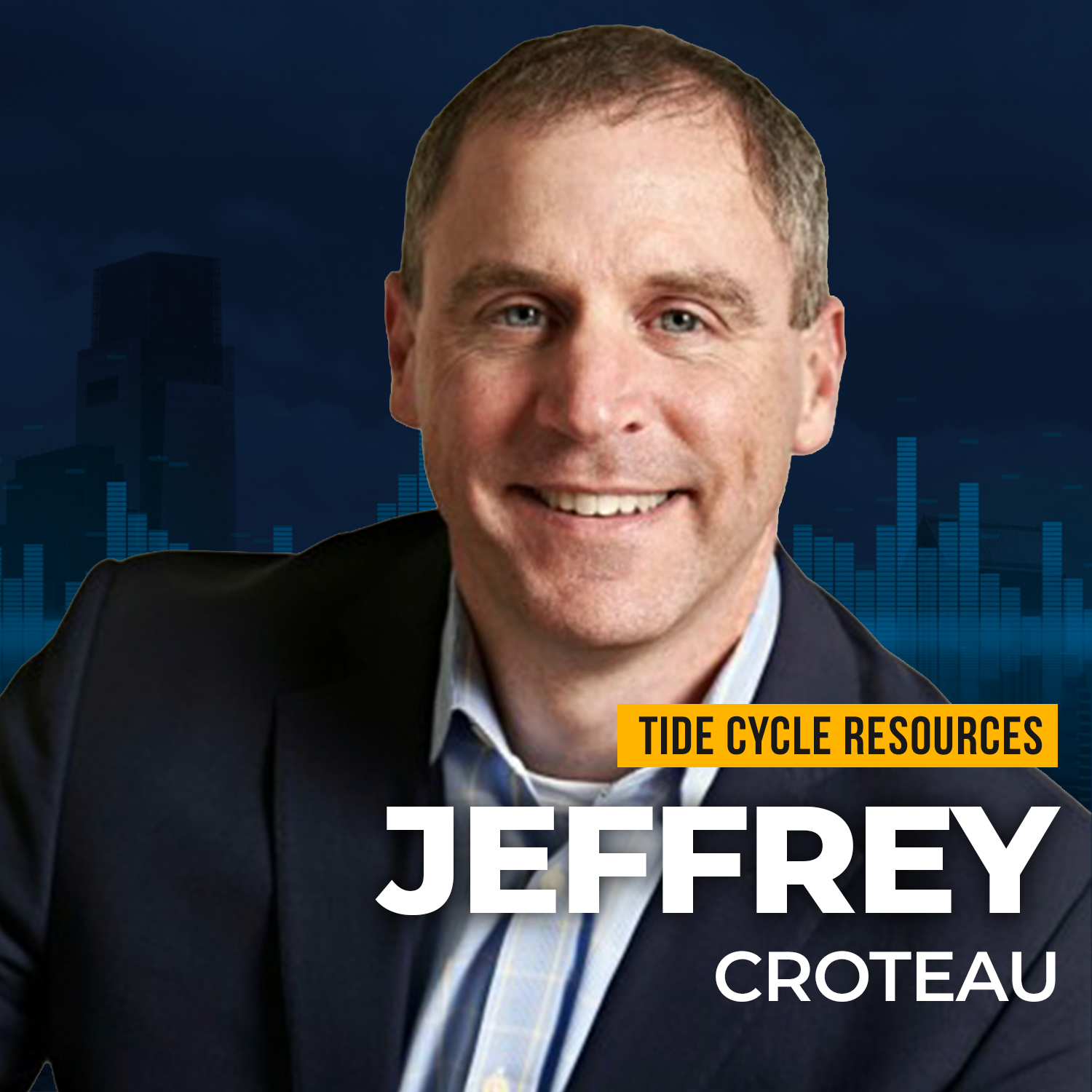
Robert Morier: Welcome to the Dakota Live podcast. I'm your host, Robert Morier. The goal of this podcast is to help you better know the people behind investment decisions. We introduce you to chief investment officers, manager research professionals, and other industry leaders to help you sell in between the lines and better understand the investment sales ecosystem. If you're not familiar with Dakota and our Dakota Live content, please visit our website at dakota.com. Before we get started, I need to read a brief disclosure. This content is provided for informational purposes and should not be relied upon as recommendations or advice about investing in securities. All investments involve risk and may lose money. Dakota does not guarantee the accuracy of any of the information provided by the speaker who is not affiliated with Dakota. Not a solicitation, testimonial, or endorsement by Dakota or its affiliates. Nothing herein is intended to indicate approval, support, recommendation of the investment advisor or its supervised persons by Dakota. Today's episode is brought to you by Dakota Marketplace. Are you tired of constantly jumping between multiple databases and channels to find the right investment opportunities? Introducing Dakota Marketplace, the comprehensive institutional and intermediary database built by fundraisers for fundraisers. With Dakota Marketplace, you'll have access to all channels and asset classes in one place, saving you time and streamlining your fundraising process. Say goodbye to the frustration of searching through multiple databases and say hello to a seamless and efficient fundraising fundraising experience. Sign up now and see the difference Dakota Marketplace can make for you. Visit dakotamarketplace.com today. Our guest today is Jeff Croteau. He is the founder and chief investment officer at Tide Cycle Resources, LLC, based in Portsmouth, New Hampshire. Jeff leads the firm's investment advisory practice, providing outsourced chief investment officer services to families and foundations navigating increasingly complex capital markets. Jeff built his career through the institutional consulting world, holding leadership roles at Mercer Investment Consulting and PrimeBuckles. In those roles, he advised a wide range of endowments, foundations, and family offices on portfolio construction, manager selection, and long-term asset allocation strategy across multiple market cycles. Jeff earned a BS in mathematics from Northeastern University in Boston and later received the CFA designation. TideCycle Resources was founded to provide families and institutions with an independent outsourced CIO model focused on strategic asset allocation, manager due diligence, cost efficiency, and generational wealth continuity. The firm currently advises on approximately $3 billion in total, with $1.9 billion directly managed and another $1.1 billion where TideCycle oversees another advisor. The firm works closely with clients to build durable investment frameworks while integrating legal, tax, and philanthropic considerations across multi-generational wealth structures. Jeff, thank you for joining us today. It is wonderful to have you here. It's a pleasure to see you again.
Jeff Croteau: Rob, it's great to see you. It's been a while, so I'm happy to be here. Thank you. And I love talking about what we're up to here, so this should be fun.
Robert Morier: So is that the New Hampshire coast behind you on the wall?
Jeff Croteau: No, unfortunately that's some stock imagery, but it looks close enough.
Robert Morier: That's good. So tell us a little bit about why Portsmouth. You've been there now for several years. It's a wonderful town, but we'd love to hear it from your perspective when you think about what home means to you.
Jeff Croteau: Yeah, home has been New Hampshire since the beginning. I grew up in another part of the state, but went to Boston for college, met a girl in college who was from Maine, And, uh, through a series of what now appear to be savvy decisions, we ended up back in the state and probably will be here for the long term.
Robert Morier: Oh, that's good. It's a great town. We're gonna ask you for some recommendations at the end of this conversation as to where we should grab some lunch or maybe some dinner when we're coming through town, uh, to potentially meet with you or, uh, some of the folks at, at Prime Buckles. Uh, but before we get started, I just wanted to hear a little bit about your background. You studied mathematics at Northeastern. Did you have a co-op at Northeastern? Was that a thing back then?
Jeff Croteau: It was, it was a big part of my experience, and I think like a lot of our listeners today, my career was not very well scripted. I did go to Northeastern planning to be an engineer, but ended up changing into math. That was my first love and ended up with a degree there, and this was during the mid to late '90s, and so my choices that I felt like I had after co-oping in the tech side and the finance side where I could be a teacher, I could be a tech guy, or I can be an actuary. And I wasn't cut out to be a teacher, and I'm glad I didn't go down the tech path, given that I probably would have spent the first 5 years of my career navigating the tech bubble bursting. So I chose to be an actuary and quickly realized that wasn't going to cut it either. Too many exams, too much on the liability side. And I was fortunate that I was working for Mercer, which was one of the firms I had co-opted with. Ravi Venkatraman, an early mentor and leader of Mercer's investment practice at the time, was running a small group that looked a little more interesting to me. And I talked my way into it because of my spreadsheet expertise. And the rest is history. 25, 30 Years later, I remained in the investment business and led me here today.
Robert Morier: One thing I found in speaking with investment consultants consultants over the last 4 years or so. Many of them started as entry-level in investment consulting. That role hasn't changed too terribly. So when you think back to those early jobs working at Mercer, what were some of the things that you were focused on specifically that now starting your own firm have carried forward all these years?
Jeff Croteau: You know, it's interesting. A lot of what we do today does resemble the business 25 or 30 years ago. There's better technology today. AI, reporting, all of that is better. But the nuts and bolts of building a portfolio, diligencing managers, writing policy documents, and interacting with human beings, a lot of that is still the same. And I feel like early in my career I had exposure to a lot of those same attributes and elements of the business, and I've carried them through till today.
Robert Morier: Well, you said you dodged the dot-com burst from a professional perspective. But you were in the thick of it as an investment consultant. And then again, during the great financial crisis, I could take you through your 25, almost 30 years now of experience, kind of chapter by chapter. But maybe if you could talk about some of the tougher times and the lessons that you learned during those two respective crises and how they translate and prepare you for today.
Jeff Croteau: Yeah, I would say that I learned two really important lessons during those periods of stress, both early in my career as well as mid-career during the financial crisis. The first is that people are responsible for investments. And that may sound simple, but, you know, we would learn, and I learned that as you go through rough times, boards, investment committees, family members of clients, while they may say that they can tolerate volatility and they're willing to think for the long term, there is some point And I would say that it's somewhere around down 20% as a total portfolio owner where human behavior starts to change and people start to say things like, maybe it's different this time, or maybe we should just take some money out just to feel safe. You listen for those clues and oftentimes, and we'll get into this later, that's the wrong decision. And so I learned very quickly how to deal with people during these stressful times. And I used to joke with family members that my job was as much counselor or therapist as it was investor during the rough times. The second thing I would say that was a big part of my learning during those periods is patience. You know, you have to be willing to be patient, to relax a little bit if possible to get through these times. And in fact, One of the, the genesis of the name Tide Cycle comes from that philosophy. I'll talk about Portsmouth a little bit later, but we're a coastal town. There's a lot of working lobster boats and tugboats and whatnot. And if you come to the shoreline at low tide, you'll often see boats sitting on the mud. It's a really depressing scene. They look like they're stranded or abandoned, and there's often a desire for people who are not aware to fix something. We need to go out and save them. We need to do something. And really what you need to do is just wait. Because if you wait long enough, the tide will come back in, the boats will float, and the picturesque scene that you were hoping for is going to be back. But you had to be patient and there was nothing to fix. And so this concept of being patient through what appear to be rough times has just proven time and time again for me to work out.
Robert Morier: Jeff, I was talking to a university endowment CIO yesterday, and she said she wished she was spending more time on asset allocation and manager research. But in reality, what she's doing more than anything is governance and education. So when you think about governance and education as it relates to your background and what you're trying to accomplish today, how do those two factors show up in your day-to-day now at TideCycle, and how have they shown up over the years in your experience?
Jeff Croteau: I would say that I've learned that they're as important. The technical side, the math, the allocations and correlations, and going through a diligence questionnaire, all of that can be trained in school. You can test people, you can take exams. The governance and the human side, I believe, comes with experience. So it's very hard to just show up on day one and have the answers to that. You have to have lived it. You have to see what works and what doesn't in terms of decision-making, chain of command, policy, and adherence to those policies. I think all of that just comes from being in the room, gradually building that experience. And unfortunately, it's one of those attributes of this business that is hard to explain to young professionals. When you just say you haven't been here long enough, you haven't done enough of this to really grasp it, because that sounds like you're just the grumpy old guy. And in fact, I think it's, it's a real issue that you just need to spend time going through these things and that makes you better.
Robert Morier: I'm just going to confirm for the listeners, you are not a grumpy old guy.
Jeff Croteau: Yeah, depends. You'll have to ask my children. Okay.
Robert Morier: Okay. We'll do a follow-up interview when we come up to Portsmouth. I have a question for you before I, we get into Tide Cycle. What was your first job? What did you do when you were in high school for work?
Jeff Croteau: I worked in the restaurant business. So my first job was doing dishes for the breakfast shift. So you learn as a, I was a 15-year-old to get up at 4:00 AM and go start scraping plates of eggs and hash browns and all of that. Worked my way up through to become a cook. And spent all of that time in a very high-intensity, uh, short-term focused job. And I loved it.
Robert Morier: That's great. Um, the reason I'm asking is because the research that I do at Drexel has a lot to do with those, those early jobs and the impact it has on your entrepreneurial mindset. So why you decide to start your own thing, but I will say having done something very similar, you don't know hard work until you try to scrape blueberry pancakes off a white plate in the morning.
Jeff Croteau: Exactly.
Robert Morier: It's really interesting. We've talked to a lot of folks over the, over the last couple of years on this study, and many of them did work in restaurants. And that entrepreneurial mindset can come from the fact that you are sometimes alone, right? Waiting tables in front of a table or back at a dishwasher, you know, just trying to get things done, get things moving through. So if you think about those earliest experiences, In the context of this long, long history you had in investment consulting, what motivated you to hang your own shingle? What motivated you to start Tide Cycle and do something at this point in your career completely new?
Jeff Croteau: It was the right time for me. And by that, I mean, I felt like I had hit the perfect balance of looking backwards and knowing that I had accumulated several decades of networking experience, a track record of investment performance, knowledge of managers, all of those things that had accumulated for me. I felt like you're never done, but I felt like I had a pretty full bucket of all of that experience. But then on the other side, I was not quite 50 and felt like if I were to do something today, I had plenty of runway. And to me, this wouldn't feel like a retirement fadeaway type job. I had plenty of time to really dedicate to this. So for me, it was less like, you know, the end of a career and more like a chance to present my final thesis to the world. And by that, I mean how a firm should be run, how you should treat people, the types of clients I want to work with and manage, all of those things basket together. And it turned out for me, this wasn't necessarily my original plan, but it turned out for me is the best way to do that, to present that thesis, if you will, was to start with a blank sheet of paper rather than try to plug in someplace else.
Robert Morier: What opportunity did you see in the outsourced CIO landscape that you felt that you could create, you know, for lack of a better description, an edge, you know, a competitive advantage rather relative to other folks who have come online the last few years, as you know better than anybody. The outsourced CIO landscape has gotten relatively crowded. There are more of them than ever before. So what was it about you and TideCycle that you felt was going to be differentiated?
Jeff Croteau: I started with the premise that I didn't want to just replicate a mini version of my prior firm. I felt like that was, that was a great chapter in my career, but it was time to take a little bit of a different tact on things. So I chose the outsourced CIO model because I felt like one of the things that's so important for clients today is to do more, to be more than just an advisor, to be more than just an asset manager. You really, and I really wanted to be embedded more deeply into my client relationships, act essentially as their CIO, but give myself the opportunity to work with a few clients rather than just one as an employee of the client. Part 2 was this fascination with the family office market. I made most of my career with the endowment and foundation space, but I did always work with a handful of families, and I felt like their relationship with the money, their relationship with the portfolio, the fact that there were— was this multi-generational aspect was fascinating to me, and I felt like this was an opportunity to focus on that for the next 10, 15, 20 years. The first dollar really matters, and you never forget that. And the first client that wanted to work with TideCycle, the anchor client if you will, was a large multi-billion dollar family office. So that helps give you some guidance too.
Robert Morier: When you're sitting down in front of a prospective client for the first time, how do you describe TideCycle? Who and what is TideCycle?
Jeff Croteau: So TideCycle, if you were to look at us in a database would be an outsourced Chief Investment Officer that currently manages money on a non-discretionary basis. So that, that's how the world would see us. I think that the, the difference for us compared to maybe some of the large national or global firms is that we have made the decision as a firm to be ultra-concentrated in the number of relationships that we have. Such that each client can really feel and trust that we're almost exclusive to them. And I think in the traditional consulting world, there's definitely an element of volume that comes into play. More clients, more assets under management, more people, and it's a cycle that continues. And our choice, our decision at TideCycle is to be very, very limited in scope in the number of relationships that we're looking for and that we're planning to work with. And therefore we can feel again like each client is, is a single entity that has a CIO provided by TideCycle.
Robert Morier: Those family office clients are interesting. I think one of the misnomers is that they are acting independently, but really they are relying on a variety of different people and a variety of different opinions— estate attorneys, tax advisors, philanthropic consultants. How important is that integrated ecosystem when managing these portfolios of multi-generational wealth?
Jeff Croteau: Rob, it's crucial. It's everything. Uh, one of the terms that I learned after launching Tide Cycle is that we are plugged in as part of what many consider a virtual family office. That's a term that, uh, you'll hear in the industry. And it's gaining a lot of traction. And the concept is, is really quite simple. You need all of the experts, you need all of the roles and responsibilities handled. But to the extent that you can find either remote or outsourced partners to fill all those roles, you can effectively become an executive team or a fully functioning family office, just without the desks and the, the bricks and mortar, if you will. But you still need to operate as a team. So the tangible example I'd offer would be in a meeting of leadership, whether that's the board or family members. Our belief is that your close partners should all be in the room at the same time. So as the CIO, I want to be there when the tax people are talking about the tax returns and tax efficiency. I want to be in the room when the philanthropic advisor is presenting grantees to the family or potential grantees to the family, because all of this can make each member of the team better. And in the opposite respect, I want those people in the room listening to me present about the investments and making investment decisions so that they can have a perspective of what the family or the client is dealing with. So it's really, really important that everyone act as a cohesive team. Rather than be siloed and isolated from one another.
Robert Morier: Jeff, who else is on this journey with you besides your family? Who else is working with you at Tide Cycle?
Jeff Croteau: I have a lot of friends in the industry. I have made the business decision to outsource a lot of responsibility. So I have some great corporate partners that I have hired so that I don't have to build a small army of people. That said, early in the tide cycle lifespan, I was talking to some very close friends and colleagues and former colleagues and had approached one of my former colleagues, Kate Dumas, to be an unofficial or informal advisor to me. And I was really, really fortunate that she happened to be at a point in her own career journey after taking a bit of a pause that she was ready for a platform and ready to start having a professional identity again. And so that was lightning in a bottle for me. So Kate Dumas joined me as the second senior investment professional at Tide Cycle. That was over a year ago, and it's been thrilling to, to have someone of her caliber working alongside me. We will share CIO duties as we go forward and add more clients to the, to the team. And then we're in the process of gradually building out additional support staff and technology solutions at Tide Cycle.
Narrator: Dakota Recommends is your source for the highest quality coffee shops, restaurants, hotels, and event spaces in every major city where business happens. Dakota Recommends is thoughtfully curated by our team who has been traveling and hosting events in the investment industry for over 25 years. Log in to Dakota Marketplace today to see how Dakota Recommends can help you make your next trip better.
Robert Morier: That's great. Congratulations on, on her hire and having her join you. Uh, when you and Kate are, are sitting down with a, a new client for the first time, what are some of the most important structural decisions that you are conveying to them to show what is going to drive those long-term outcomes, you know, for their family, for their wealth?
Jeff Croteau: We believe pretty firmly that you've gotta get the big picture right, and it's not necessarily the line item details that are going to drive success or failure. So by that, what we're talking about is long-term strategic allocation. And answering questions like how much equity risk can we tolerate? How much liquidity do we really need? What are reasonable growth or return expectations? And I think if you get all of those things right, you have a good chance at success. In fact, when I think back to my career and working with, you know, at times 40+ clients, I would often have clients ask me, when you look at your best clients, what was the driving force for them? Was it that they had the coolest managers or the best allocation to venture capital? And I would say to them, and this was sometimes surprising, that the answer to me, the best clients, the most successful clients were the ones that displayed stability. So it's a simple word, but people who know me have heard me say it dozens and dozens of times. If you've got stability in decision-making, stability in your portfolio construction, your manager decisions. If you're able to bring some stability to the process, our experience is that the results will follow.
Robert Morier: So when you're building a core portfolio with stability in mind, it's funny, I wrote down that you, I, I was wondering if you were going to say durability, because if you're building a durable or, or a stable, in this case with stability, when you are thinking about the asset allocation buildout, what are the core asset classes asset classes that you will be primarily focused on and which asset classes don't tend to fit the definition that you see as, as stable, a.k.a. Durable?
Jeff Croteau: I think virtually everything that's out there as a choice is eligible. So I would not say that we have any permanent biases against one type of asset class or another. We tend to look at the choices and we think about building blocks. So if, if we're trying to achieve some level of growth over inflation and we can have some type of balanced liquidity profile, we will start with all of the traditional classes. We'll think about cash and extending duration or extending credit risk in fixed income. We'll think about global equity allocation on the public side, and then we're happy to consider and build private portfolios. And private portfolios will run the gamut. From venture and buyout to income-generating strategies or real estate. I'd like to think that we have our eyes wide open and are willing to capture everything. Now, that doesn't mean that we allocate to everything. And I think, you know, at some point today, I'd love to talk about some of the asset classes that are popular, but that we're not following or that we're not allocating to today. And that gives me some comfort.
Robert Morier: One thing that we've been talking a lot about on this show, and we're increasingly hearing more about from, from not just pension funds, but increasingly small to midsize plans as well, whether it's a family office, an endowment, even a small or midsize public pension plan, is this whole idea around total portfolio theory. So shifting the frame from traditional asset class buckets to that allocation against the total portfolio's objectives. Do you consider that approach? Does that lens change the way that you think about kind of the starting point of constructing a portfolio, or is it an input?
Jeff Croteau: There's often this view that long-term strategic asset allocation is old-fashioned and total portfolio theory is new and it's more sophisticated. I actually find that debate quite entertaining because I think the concept of taking your total portfolio risk factor, how every asset class interacts with another one, what the current dynamics are in the market, whether it's interest rates or correlations that are changing, all of these elements of total portfolio approach if you were doing your work properly before, you should already be taking those things into consideration. So it's definitely a new wrapper and you can, you can certainly describe it differently. But I think at the end of the day, for us, the detailed study of how every asset that you own fits into the puzzle that you're putting together is so important. And it doesn't mean that everything has to hit that total portfolio return objective. And it doesn't mean that, you know, you have to have specific tail risk hedges or anything like that. But it does mean that every, every line item needs to contribute and you need to think about it in terms of its relationship to everything else. I find that in practice it allows you to simplify the portfolio, believe it or not, because you do realize that there's a lot of things that are quite overlapping. If you get the big picture right, you don't have to worry about every fine granular piece.
Robert Morier: Correlation risk is certainly something to be thoughtful of. So is cost risk. You've talked a lot about cost efficiency over the years. I was hoping you could answer it in two ways. We'll always ask it and we typically hear the answer when it comes to cost efficiencies around the individual investment managers, i.e., what are the fees and how do we lower those fees? But how do you think about cost efficiency from a total portfolio perspective? So when you're thinking about building that asset allocation model, where does that, where does that exercise begin?
Jeff Croteau: I like to think of things in terms of your total budget, and you can spend fee dollars wisely if you feel like you're spending them in places where you're going to get compensated for it. And this, I'll lean on my math background. This is numbers. This is assessing what the data tells you. And assessing the opportunity set. Virtually all of the data that you can find that's published around public equity exposure will tell you that active management is incredibly difficult. 100 Basis point fee, efficient market, most managers underperform. All of this is well documented. There are studies, there are conclusions, and when you layer on investor behavior, where you often see people sell low and buy high on a relative basis, it makes the problem worse. So our take at Tide Cycle is let's pay attention to that. So we are essentially indexed in our equity portfolios because we believe the data, it eliminates the drama, and we can spend our time budget and our fee budget in places where we have a higher likelihood of success. And the reason I offer that as an example is so many folks in our business, my peers and colleagues of the past, will say, yeah, yeah, yeah, all of that's true, but let's go find the next great international equity manager, or let's go find the next great small-cap value manager. So you're doing the work and you're looking at the conclusion and then you're ignoring it. And What we can do here now at Tide Cycle is we can follow that data. We don't have to say, well, we really need to find that small-cap value manager that's probably not going to outperform.
Robert Morier: Where would hedge funds sit on that continuum? Would they be somewhere in between kind of more of a pure active alternatives allocation and public equity? I'm thinking more about long-short, but just increasingly hedge funds who are more opportunistically short and more long biased. I'm just curious where that type of strategy would fit into that definition.
Jeff Croteau: Definitely in part of your active budget. And I think that the classic stable long-short equity manager faces an uphill battle, just like long-only managers face, because ultimately you're trying to decide one stock or another, long or short, that's going to behave differently enough from the market to make your alpha possible. So I think that that model faces a structural headwind in the same way that passive active management does. As you move into other types of strategies, whether you're pulling in non-equity securities or you're looking at income or trading strategies, I do believe that there are ways for managers to create a strategy that would pass muster, if you will, would meet the criteria of generating performance that is different from other things that you own, that is reliable enough to meet your total portfolio objectives, and has a fee and liquidity profile that makes sense. So I think that, you know, we often talk about hedge funds as a spectrum and not an asset class, and I think that's absolutely right. And the farther you get from those traditional limitations, the more likely you are to have a chance of success.
Robert Morier: Jeff, what's an asset class you are currently doing work on, whether it's just, you know, doing the research, you know, potentially preparing for a search? And the reason I ask is I'm hoping you could use that as an example of what your underwriting process is looking like effectively. Where does it start? How does it look in the middle? And then how does the decision ultimately get made?
Jeff Croteau: Sure. And one of the nice things about being a small firm is that we can control all of that decision-making process without going through a lot of bureaucracy. So the experience that Kate and I bring to the table directly impacts the, the result of those decisions. But I would say that we are still firm believers in the diversified model, the endowment-type model where we're using a lot of asset classes. And willing to explore that. I guess today the focus that we have is really on where and how you give up liquidity and what the real duration of that liquidity is going to be. So I'll give you the extreme example because it is something that we believe in, in venture capital, which is in a lot of cases going to be the longest duration private commitment you can make. We do believe the data here and the persistence of success in the venture space, the entrepreneurial spirit that dominates the world, and there will be cool things invented and businesses that will follow on with that. So venture capital for us is a, is a, still continues to be a very interesting investment. But I think that what folks need to understand, and I'm sure some of your listeners will, is that when you look at the diligence process around a private investment, and this would apply to private credit or real estate or market dislocation funds, but we'll use venture capital as an example. Managers often talk and clients often think about 7 to 10-year windows or a 12-year window. But our contention is that while most of the capital is going to be drawn in the first handful of years, and most of the capital may be back to you in that 10 to 12-year window. The reality is that it's probably going to take a lot longer. The tails on these funds are much longer than anyone expects. There's often extensions, and then beyond the extensions, there's more extensions. And so what we like to say to people is 20 years from now, you may still be chasing down K-1s and dealing with cash flows and audit requirements for these investments. So if you already have a live program, So let's say you already have a developed private program. We think it's great to continue to feed that, to continue to look for new ideas and grow it and assume that it's going to last forever and the cash flows and the returns will be worth it. However, if you're not currently exposed to privates, be very, very careful before you break the glass because you're probably making a 20-plus year decision. And that might be the right decision that 50 years from now you'll look back on and say you were glad you did. But don't go in thinking it's something that 2 or 3 years from now you can change your mind on.
Robert Morier: So when you think about an asset class like venture, let's say you do start doing the work on an early-stage VC fund, and we'll just say for the sake of the conversation, they're a generalist, so they're looking generally across sectors and industry. How are you sourcing that manager? Because one thing about early-stage venture is that you do get a lot of new managers that come online. It tends to be an area where a lot of operators will hang their own shingle, you know, thinking that they can do investments themselves. Some of them have done it very successfully. Others, you know, probably require more diligence from your side. But when you think about the sourcing, what does that look like for you and Kate as you are looking at these asset classes where you may be deploying capital? You know, but need to, but need to find, uh, new talent.
Jeff Croteau: This is an area that I would say goes back to the early days of my career and something that hasn't changed. The relationships might change and how much of one versus the other would've changed, but sourcing is always about casting the widest net possible. So for us, that means subscribing to databases so that you can have paid or publicly available information. It's leveraging your existing networks. So we have some great relationships with fund of funds or direct managers over the last 30 years. They always know people, and so you've got to go to where they are, meet with them, ask them about who they know, attend conferences, field inbound calls. So unfortunately, there's no easy answer, and almost by definition, the under-the-radar emerging managers are the hardest to find. That's, that's the whole point. And so there's a, there's an element of rolling up your sleeves. There's an element of being willing to call people and ask and talk. And then you've just got to also be willing to invest in the information that has been consolidated by some of the big players. So the eVestments and Pitchbooks of the world, you may have your own views about their value proposition or how they accumulate information, but the reality is these providers, these databases have a lot of information and it's a good place to start.
Robert Morier: There are no shortage of articles and recent news on private credit and how dramatically it's grown as a percentage of institutional portfolios, but also some of the risks it's starting to present, which you would probably see as familiar potentially given your long career over the years in institutional investing. So rather than ask you about what you think about the asset class, I think I'd be more interested in how you distinguish genuine structural opportunity from that reach-for-yield behavior that tends to precede this potential credit cycle stress that we're seeing.
Jeff Croteau: Private credit exists for a really good reason. There's a need for it in the market, and it's very reasonable that it has blossomed into the size market that it is today. Companies have lots of different ways to build their capital structure, and having private credit lenders out there is just another choice. So I think in general it's good that it exists. However, I would say that both Kate and I took from our prior experience the importance of looking at the mismatch occasionally between the underlying loans or credits or investments that are being made and the liquidity of the funds in which you're getting access to those. So whether they're closed-end or open-end, whatever the fund structure is, it's really important that it has a liquidity structure that matches the underlying investments. The first time we all learned this lesson in my career were the open-ended real estate funds. And we would often say to people, a building isn't liquid. So if someone's offering you daily or monthly liquidity in owning buildings, that's probably not going to go well at some point. And sure enough, when you get to an ugly period, that's what happened. I think there are some elements of that in private credit that exist today too. There's a comfort in the being senior in the capital stack and generating a nice level of income. But at the end of the day, some of these are complicated structures, complicated loans. And aren't really fit for the types of vehicles that they're being put in. So I would say that this is an example for us that is probably a lesson learned. And as a result, we've not been allocating to private credit, feeling pretty good about that today. Maybe there was a missed opportunity for a while, but we're also not cleaning up any messes today, which is, which is really, really nice. And I think the last point is, I think there are investors that looked at this as an enhanced fixed income part of their portfolio, if you're looking for labels. And another lesson I've learned is that bonds are bonds, fixed income is fixed income, and you own it for a reason. And things that look a little fancier probably aren't going to act like fixed income when you need it. So this is an example, I think, of, of stepping back from the complication and saying, we, we may not need this.
Narrator: Dakota Marketplace provides the industry with the highest quality and most up-to-date GP, LP, private company, public company data, as well as performance benchmarking and a number of other different datasets that the investment industry is fueled by. We're excited to announce that all of that data is available now via our customizable and bespoke APIs. You can create an API that will plug into any CRM or use some of our pre-built APIs with Salesforce, Snowflake, and a number of other CRMs that you can find on our website. To learn more about Dakota's API offerings and create a custom package that best suits your business, go to dakota.com.
Robert Morier: Do you think there's a buying opportunity somewhere in here? So when you think about some of the stress that is currently going on, uh, I guess we could call it liquidity stress, the liquidity stress that's going on with some of the larger managers, do you think there's an opportunity potentially for some smaller players to step in? And do you think that could potentially build or present an opportunity for you where you haven't maybe done as as much work based on some of the concerns that you've seen?
Jeff Croteau: There's definitely going to be opportunities because when the investments exist for the right price and for the right liquidity, someone can make money. Someone's going to lose, someone's going to win, but there will be opportunities in the shakeout here where new capital can come in and find the hidden gems. So I completely respect that. And it might be that that takes place in some of these flexible hedge funds that we talked about a few minutes ago, where in their strategy they're trying to be opportunistic and buy up bargains from someone who has put themselves in a position of stress. So there will absolutely be opportunities to clean up here. I'm not sure that TideCycle will be the place that aggressively goes after that. You know, it may be, and we would certainly be open to it, but the size of our team, the desires of our clients, the willingness to partner with other managers who maybe can find those opportunities for us, I think that's more likely the outcome.
Robert Morier: When you think about the due diligence process, you know, I'm asking this at the end of our due diligence section, which is typical operations and operational infrastructure. You get through all of the work of the investment side, And then at the end we ask about operations, but I, I've heard you over the years talk a lot about the importance of operational infrastructure. What are some of those signals that you believe distinguish institutional quality managers from those that may carry some hidden risks?
Jeff Croteau: This is where substance over flash matters. So what we are looking for are Good policies, good procedures. Does the operational support line up with the strategy complexity? Do they have enough tools, AI or otherwise, to monitor their own risk profile? Do they have people in place who are serious about operational controls and risks? So you're, you're looking at the people, you're looking at the policies and processes, but you can also look at a demonstrated track record of things like, do they generate consistent, timely statements? Is there documentation of everything? Do they have quality reporting? And one of the things you can also do is watch out for job hoppers. That's one of the things that when we're hiring and when we're evaluating managers is you might see great professionals or great org chart, But if you compare it in increments of, let's say, every 2 years, and it feels like there's a different great person in the box every 2 years, that might be a signal that not all is well. So it goes back, unfortunately, to my term stability, is if the firm has operational stability and things that align with their strategy, I think that's a, that's a positive sign. Red flags are any managers that maybe don't hit that mark.
Robert Morier: Do you think that same red flag applies to distribution professionals? So if you are looking at an asset manager who has seen an IR investor relations or a salesperson who has hopped in and out of the role, let's say, you know, a new person every 2 to 3 years for the last 6 to 8 years, is that equally a red flag or does it tend to reside mostly on the operations side.
Jeff Croteau: I think that's less of a red flag. I mean, selfishly, as an allocator, it's wonderful for us to see IR and salespeople that we get to know, that we know their— they know their products, they know us. And a decade later, you can look back and laugh about, you know, all the times you've had in terms of getting statements or doing meetings or having dinners. That's a nice convenience, but I'm not sure that in that role, if you see as much turnover, if it's a concern necessarily. I think that that role is more about the convenience of the relationship and getting the information that you need as opposed to the operational diligence, which is going to be more impactful on your client's outcome. You know, you never want to see a failed investment because an operational stumble took place, that's unlikely to happen if salespeople change.
Robert Morier: I know your clients are mostly long-term investors, Jeff. You know, you're dealing with several generations of a family, but families and, you know, clients still ask about current events and they still ask about what's going on within local politics, national politics, and probably most importantly these days, geopolitics. What are some of the tail risks that you are kind of hearing the most from clients in terms of the questions that they're asking? And maybe an aside to that is where are you focusing, you know, thinking about some of those tail risks where your clients may be structurally underweight or overweight?
Jeff Croteau: While it's difficult to generalize institutional portfolios, whether that's families or endowments or pension funds, I'm sure their solutions are all over the map. But I can say from our perspective, we see a lot of these risks. It's a big part of our weekly and daily discussions. We meet formally every Monday to go through market events and geopolitics. And I would say that it's being dominated by these big picture items today. And as we look at our portfolios, you do your best to try to say if this happens, then that. Will be the result. And you do that with as many scenarios as you can come up with. But almost by definition, the scenario that's probably going to hurt you the worst is the one that you didn't see coming. So you try to make sure that even in the scenarios that you can't come up with, you say, well, what would be the case in this portfolio? So the— this spring, certainly it's been busy. There's a lot going on in the world with oil prices and equity valuations moving around. There's an ever-present discussion around gold and silver and crypto. We are, you know, we spend a lot of time studying those markets and looking at how those assets behave compared to stocks and bonds and hedge funds. So it's, again, it's difficult to generalize. It's a hard thing. But you go back to, if I look at everything I own in my portfolios, what happens in some scenario and do I feel like I'm going to be okay? We tend to be a bit more conservative and our clients do too. So I would say there's, there's always a healthy overweight to your own local currency. So if we're dealing with US clients, there's going to be a dollar emphasis in the portfolio. We tend to have a bit more cash and low-duration bonds maybe than others because the the sacrifice in real return today is just not that bad if cash yields are slightly higher than inflation. I lived a lot of my career with 0% interest rates, and it was very difficult to argue that you could hold cash and not just be giving up opportunity. That's not really the case if you're getting a 4% yield and call it 1% real on a cash investment today.
Robert Morier: Jeff, we touched a little bit earlier in the conversation about education and and preparing the next generation of your clients for that long-term wealth preservation. When you think of the last 30 years of globalization era returns versus what this newer generation is going to be experiencing over the next— let's not go out 30 years. I have a hard time going out 30 minutes. So let's just say over the next 3 to 5 years, What does that education process look like for you, Kate, and Tidecycle?
Jeff Croteau: Yeah, I agree with you that I don't know if I place any stock in making long-term predictions. I have clients that I've known since the beginning of my career that would probably laugh and say, Jeff, you've been telling me we're going to be in a low-return environment for 3 decades and look at how great it's been. So let's put predictions aside. I don't know what the next 10, 20, or 30 years are going to look like. But if you start today with a blank sheet of paper, I think you have to go back to the fundamentals and you say, what is inflation? What are we trying to achieve? What are the building blocks? So the example I just gave, if I have a portfolio today where I'm living with 3% inflation and it's all cash and I'm at 4%, that's where you start. You say, if I do nothing, this is likely what my experience is going to be in the near term. Doesn't guarantee anything in the future, but that's where you start. And then you can say, well, what can I earn extra by extending duration or extending credit? What do I think an equity premium is going to be? And we can look at the last 10, 20, 30 years and maybe the stock market goes up or down or not up as much as you want, but there tends to be things that are stable and risk premia can be more stable than just absolute returns. So if you take some of those different risk premia and you go through the building block approach, you end up with some level of portfolio that you think might do well enough for the next 10, 20, or 30 years. And we'll either be pleasantly surprised that it, that humans did better than we thought we would, or we're going to end up not succeeding as much as we hoped and we'll adapt along the way.
Robert Morier: Really quickly, when we talk to our students in the classroom at Drexel and younger professionals who are interested in a career in institutional investing, investment consulting, outsourced CIOs, what are, what are some of the career building blocks do you think that they're, you think they will need to be focusing on as it relates to developing their skills early on to help them move forward in their careers?
Jeff Croteau: Yeah, this is where I get to play grumpy old guy again. No, I think it's very important for early career professionals to be focused on substance, and by that I mean it's their academic studies, learning as much as they can, take all of the exams, achieve the qualifications, degrees, go back to school, get an MBA, do all of those things in your 20s and 30s when you're focused on building that kind of first 5, 10, or 15 years of your career. And you can accumulate just a ton of experience and knowledge and substance in that period of time. And then sometime 10 years in, you're going to realize that you've accumulated a lot and you still have 30 years to go. And so you still have plenty of time and it's hard. And I, my two of my oldest kids are in their 20s. And it always feels like they are— they need the next great thing. And if they don't achieve it in the next month, it's too late. You know, it's already too late. So, so my advice to early career professionals is be patient. Don't worry if you haven't been promoted in 6 months. If you keep your head down, you build all of that substance, you're going to find that you have a very long runway to take that experience and substance and put it to good use.
Robert Morier: So you're hiring for that first entry-level person at Tide Cycle. If they were a dishwasher, are they getting the job?
Jeff Croteau: I would certainly look for a dishwasher. They've got a certain kind of grit.
Robert Morier: Don't hide it from the resume, right? That's great. Jeff, thank you so much. This has been incredibly insightful for us. It's always interesting to hear on a few measures. One is what it's like to be an outsourced CIO today in these markets. It's to listen to an entrepreneur, somebody who is in the middle of their career. I'll say you're in the middle of your career.
Jeff Croteau: Thank you.
Robert Morier: The golden years of your career. And you are doing something completely new, which I think is admirable. It's brave. It shows a lot of courage, all the attributes that we try to teach to our students. So thank you for sharing those steps with us. We wish you And Kate, nothing but the best of luck and success going forward. We are going to ask you if you could stay around for a few extra minutes. We've got some fun lightning round questions for you since we've loosened you up with all of these serious due diligence and asset allocation questions. We thought we could have a little bit of fun.
Jeff Croteau: Sure. I'm, I'm game.
Robert Morier: Okay. Well, coffee or tea, Jeff? How many per day during market stress?
Jeff Croteau: Coffee. 2.
Robert Morier: 2.
Jeff Croteau: Okay.
Robert Morier: You're very disciplined. I like the stability. I hear it coming through.
Jeff Croteau: There you go.
Robert Morier: The favorite book that you've ever gifted to someone else?
Jeff Croteau: Being Mortal by Atul Gawande.
Robert Morier: What's one place you return to to reset your thinking? So it's time to restart. What's a place that you visit, a place that you want to go to?
Jeff Croteau: I can always clear my head on a long bike ride.
Robert Morier: One career you'd like to do other than investing, what would it be?
Jeff Croteau: I think a civil engineer building really cool bridges would've been awesome.
Robert Morier: Yeah, getting back to those engineering roots from Northeastern University.
Jeff Croteau: Yep. Get to work outside.
Robert Morier: That's right. Being outside is also equally important, I think. So just quick responses. These are going to be short and sweet. Some business questions. Most misunderstood risk in portfolios today?
Jeff Croteau: Complexity.
Robert Morier: An allocation you think is structurally mispriced?
Jeff Croteau: Emerging market equities.
Robert Morier: What separates a good manager from an acceptable? A manager?
Jeff Croteau: Humility.
Robert Morier: Biggest red flag in a first meeting with a manager?
Jeff Croteau: They talk too much.
Robert Morier: After we do a podcast, I have to figure out a new line of work. What's a question allocators should ask but rarely do?
Jeff Croteau: What are your long-term plans? Can I trust that you are going to be at the table explaining if this worked or not 5 or 10 years from now?
Robert Morier: How do you define edge? In 2026? What's going to give either you as an outsourced CIO or an asset manager edge?
Jeff Croteau: Being willing to follow the data and not overreact.
Robert Morier: All right. What's the best investment decision you made outside of the markets?
Jeff Croteau: Getting married.
Robert Morier: Excellent answer. I'll be sure to share this with your family. Excellent. What's a hobby that surprisingly has made you better at investing?
Jeff Croteau: I have learned a lot by by pushing, by being exposed to the elements, by learning to ride in a group. You know, I don't want to carry the bike analogy too far, but boy, there are a lot of elements to it that I take back with me to my desk and I think have made me a better professional.
Robert Morier: Do you listen to music while you ride your bike or you are in or are you in your own head?
Jeff Croteau: In my own head. I am hyperaware of my surroundings, even when I'm in the woods on the mountain bike.
Robert Morier: If you were going to listen to some music, let's say you were going into a final presentation. So you and Kate, you're in the car, you're about to pull into the family offices. What song is on the radio or on your Spotify mix to get you hyped up?
Jeff Croteau: I'm a '90s guy, so it's grunge, it's Pearl Jam, it's Nirvana, it's all of that. And I still think that music has held up well.
Robert Morier: I think it has too. My kids are listening to it, so it must have done something right.
Jeff Croteau: All right.
Robert Morier: What last question for you? For you, Jeff. What's one sentence or maybe a few words you would give to your, your 22-year-old self coming out of, coming out of school? What would you tell yourself, uh, that you know now?
Jeff Croteau: Stay flexible. I think 22-year-old me had a lot of plans, and while I feel like I have been blessed and really successful, none of this was mapped out by 22-year-old me.
Robert Morier: I'm going to ask you one more question, uh, and this is getting back to to the podcast and what we talked about today. In one word, what wins over a full cycle? Patience, discipline, or courage?
Jeff Croteau: Patience.
Robert Morier: Patience it is. Jeff, before I let you go, I don't want to forget you are in Portsmouth, New Hampshire. You've been in the town for a long time. We're coming to you. Where are we going for lunch, dinner, a bike ride?
Jeff Croteau: Rob, we're a, we're a coastal town. We've got a working harbor. There are tugboats and commercial boat traffic. So I'm going to send to send you down to the waterfront to a world-class restaurant called the Black Trumpet. After you eat there, you're going to grab an ice cream at Annabelle's, which is right next door, and then you're going to take a walk with that ice cream along the water to Prescott Park, where you're going to see a live show for free. And that's the quintessential Portsmouth experience. And the best news, Rob, is that we have loaded up with new hotels in town, so all of this is within walking distance. So ditch the car, and get out on your feet.
Robert Morier: Jeff, thank you so much. Thank you for being patient with me as we went through this lightning round and asked you a few extra questions. As I said before, we really and truly do wish you nothing but continued success. If you'd like to learn more about Jeff and Tide Cycle Resources, please visit their website at www.tidecycleresources.com. You could find this episode and past episodes on on Spotify, Apple, or your favorite podcast platform. We're also on YouTube if you prefer to watch while you listen. And for more content, please visit us at dakota.com. Jeff, thank you for being here today.
Jeff Croteau: Thank you so much, Rob. I really appreciate it.
Robert Morier: We appreciate it as well. And thank you to our audience for investing your time with Dakota.