Narrator: Hello. Welcome to the Rainmaker Podcast with your host, Gui Costin. The goal of this podcast is to give listeners a unique look into sales strategies from top industry executives. We introduce you to the heads of sales and heads of distribution who will help you understand the inner workings of the successful sales organizations from philosophy to execution, this podcast is essential for sales professionals seeking wisdom from the best in the field. If you're not familiar with Dakota and their Dakota Rainmaker content, please check out dakota.com to learn more about their services.
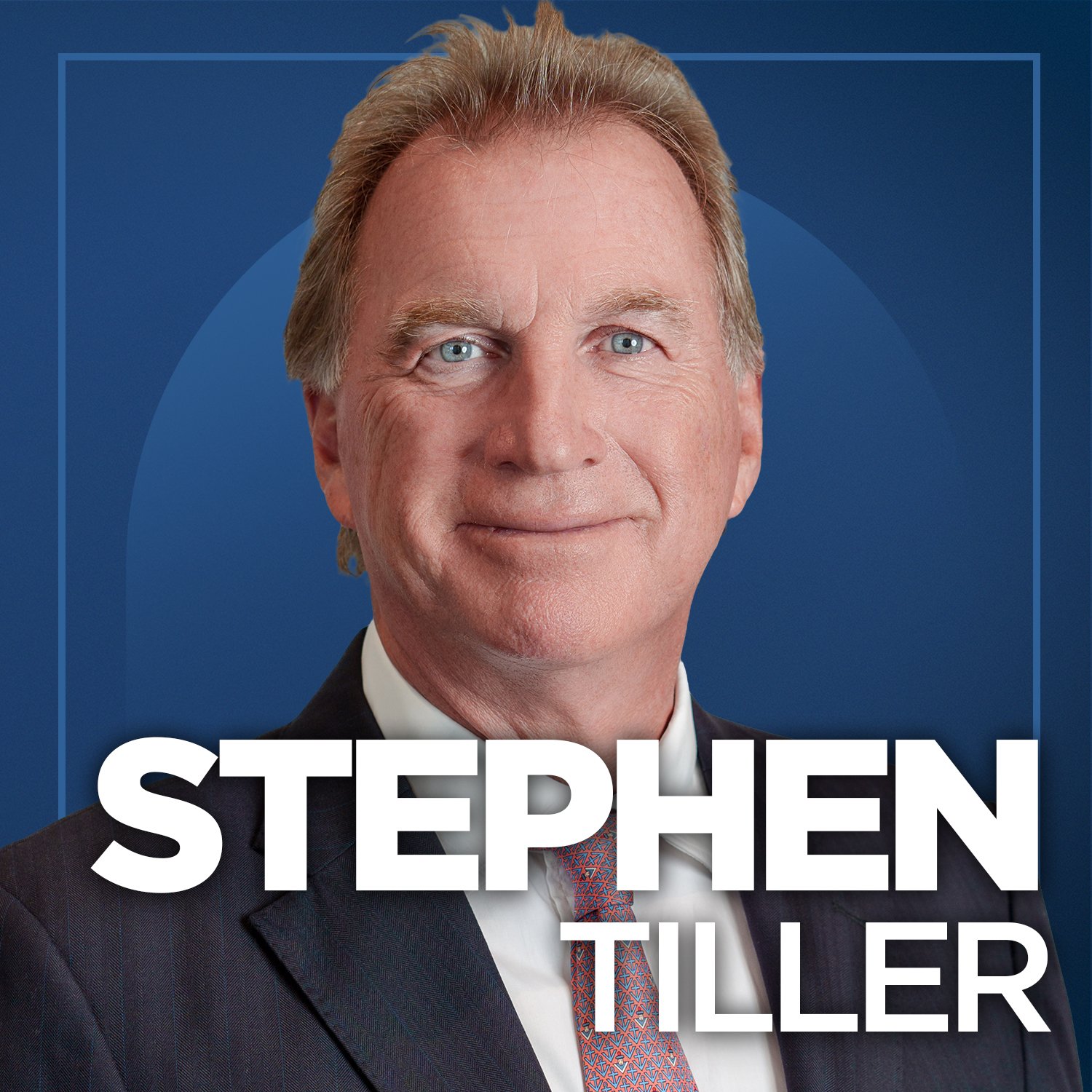
Gui Costin: This episode is brought to you by Dakota Marketplace. Are you tired of constantly jumping between multiple databases and channels to find the right investment opportunities? Introducing Dakota Marketplace, the comprehensive institutional and intermediary database built by fundraisers for fundraisers. With Dakota Marketplace, you'll have access to all channels and asset classes in one place, saving you time and streamlining your fundraising process. Say goodbye to the frustration of searching through multiple databases, websites, former ADVs, and say hello to a seamless and efficient fundraising experience. Sign up now and see the difference Dakota Marketplace can make for you. Visit dakota.com/dakota-marketplace today. What is up everybody, it's Gui Costin, founder and CEO of Dakota. Welcome to the latest episode of the Rainmaker podcast. I'm so thrilled to be joined by Stephen Tiller. Steve has over 35 years of experience in the real estate finance, investment, and development industry. Steve holds a BA and an MBA from the University of Western Ontario, where he also played varsity hockey. Steve was formerly the president and managing director of BMO Capital Markets Real Estate Group. Prior to that, he was president of Brascan Brookfield Financial Real Estate and vice chairman of Royal La Plage Real Estate. From 1999 to 2001, he served as president of Talisker Corporation, a private investment and development company operating in the US, UK, and Canada. From 1991 to 1999, he was managing director of RBC Capital Markets Real Estate. Stephen, welcome.
Stephen Tiller: Thanks for having me on your podcast and look forward to it.
Gui Costin: We're thrilled to have you. So could you just take us back to kind of the origin story? Where did you grow up? College, and then early days in your career and how you got to where you are today.
Stephen Tiller: Well, that's a long way back, but I'll give it a shot. Yeah, I'm a Canadian, Canuck by birth, I guess. Growing up in a northern Ontario mining town taught me a few lessons about when to speak and perhaps when not to speak, but the value of hard work. So, you know, it was kind of interesting. We talked obviously in your latest book as well. You talk about building teams and language and those things, but sports obviously was the outlet. So played hockey, got a great education, scholarships and whatnot led me to, I think, where I am here. But, you know, it's kind of interesting. Out of business school, my first, I guess, adventure, shall I call it that, was, was a company is now the biggest in the world. People didn't really hear of them back then was CB Richard Ellis. So our DNA— and I'll talk a bit about the firm as well, but obviously our DNA is real estate and we have many financial products around it. You know, it was interesting, the CB really. So they were just coming to Canada and they hired me and I became— I ran all their investment, commercial investment sales for years, a few years. Interesting thoughts and lessons from that. You know, one of the first thing is when you think about sales at those days, they came out of Los Angeles where obviously they're still based and you had to actually do a psych exam because a lot of it was premised on the Top Gun schools down in Miramar. So we'll talk about that a little later. But that was a real— I mean, that was, that was an eye-opener, right? And it was— we can talk about the pros and cons of that. But then one of our biggest customers was the biggest bank in Canada, RBC. So their investment bank hired me to come and work in the real estate M&A investment banking business. And all we did in the '90s, which has proven to be probably one of the key success factors, I think, of our firm today is work out bankrupt real estate and financial companies. So when you think about it, the Royal Trust, the Confederation Life, Olympia York, Allied Federated, well, just the list goes on. So the '90s was the train wreck. It wasn't a recession, it was a depression for real estate. But the lessons we learned back then were paramount in, I think, building future successes. So I did that and then our biggest client at the time was a company called Brascan. And you may not know that, but you know who they are now. And so Bruce Flatt became CEO and asked me to come and run a merchant bank for them. And that was really kind of exciting in the early days around 2000— 2002, sorry, 2003. So really some great lessons out of that we can talk about. You know, there was someone who articulated a business vision and transformed a multidimensional very fragmented company into an asset manager. And it's what a great story. He had a vision and he clearly articulated and more importantly executed. Then ran another— ran the global investment real estate banking for Bank of Montreal and Harris Bank. We wanted to build— they wanted to get back into the, into the game. So we had to build a sales team, investment banking team. What happened in the '90s is a lot of the participants who got burned so badly in the financial world, of course, exited, and then it took them a long time to come back. And that's kind of what we did. And I retired and failed at that. So I bought an interest in Sterling about 15 years ago with a very long-term client and friend and mentor of mine. Sterling's been around for about 50 years and David Kossoy is the founder. And so he convinced me to come into this. And that's, you know, for the last 13 years or so, we've, we've enjoyed building out interesting sales platforms. We have kind of extensive reach, about $7 or $8 billion assets under management. But it's— we have trust companies, banks, but our DNA is real estate. And so we have private credit lending funds. We have a fully built-out development development and construction industries. We've kind of taken a bit of a pagebook, a much more microscopic scale of someone like, like the Brookfield model and, and the Blackstone model. And so that's kind of what we've been doing. So that's— sorry about that. That's an elongated answer.
Gui Costin: You know, it's just because this is such a sales-focused podcast on, you know, what really works. Can you tell us a little bit about your sales team and how you go about raising money for your different funds?
Stephen Tiller: Yes, it's, uh, It's kind of our priority one. You know, one of the interesting things is, and again, congrats on your latest book, but looking at some of the hallmarks of it is, you know, language and respect. And that is— we're a global firm. We're in 6 different countries. The distribution pipeline and the sales is paramount and we— and kind of the assets are out there, but you have to go get them. And you, you know, you need to kind of articulate what you're doing. You need to differentiate. We're very fortunate and we've learned a lot from it in Canada where— so all the major banks and dealers own a platform called FundServ. And so we have thousands of investors. We're very much focused on the retail investor. And so to service that, you know, one of the problems with Canada is we're— so we're regulated in all 10 provinces. We have sales. We essentially— the sales teams and distribution platform is there, but it's not very efficient. Right. There's 40 million people across this vast geographic cold landscape. So our sales team is very much focused on managing the IAs in that distribution vertical. The funds are unique. It's owned by the banks and, and the major dealers, and it takes you a long time to get approved on it. And so there's that kind of hurdle. So we had to sell that. Then our Canadian sales team spend their time firstly understanding our product, but then the IAs. And the way it works is, is like an IA, a wealth manager in Vancouver for RBC or somebody, has a client who wants to come directly into our fund on a Thursday. They push a button and it's in on a Friday. So it's a very efficient mechanism. But the critical path is really understanding the IAs, understanding the equivalent of the RIAs, and having an ability to sell through that through that channel. And that's where we really direct a lot of our, uh, things. And then in the UK and others, we, we, our, our sales teams are really built around a similar philosophy in terms of managing the managers, if you will.
Gui Costin: Communication is a big deal amongst the team. How do you and the team communicate with one another just around your sales goals, your objectives, progress against your plan?
Stephen Tiller: I, I would say, uh, we're high touch. Frequency is important. So, you know, with the advantage of technology, we're in many, many different obviously jurisdictions leveraging technology. You know, we learned something in my RBC days. The current CEO of RBC, Dave Mackay, was an engineering background and he built out a parallel blockchain years ago in the RBC world and leveraging technology. So we use not just some, but many of the HubSpots, the Asanas, you know, all the various— we can get into the CRMs, but Yeah, what we're trying to do and what— not trying, try is not a word really, but what we've had success in is leveraging that, then combined with old sales, not old, but proven time-tested ones like frequency of interaction. We have in some cases at critical junctures, we have twice a week calls, you know, and Zoom calls and there's, you know, those kinds of things leveraging the CRM we have. To show you how in RBC land, they now earn almost two-thirds of the profits in the total wealth management industry in Canada. It's a massive, like the, you know, but a large part of that is, you know, I'm kind of the chief of the cross-selling police, right? Is that our people have to be talking to each other in multiple products, primarily, you know, funds and fund management products. It's constant. It has to be a priority. Frequency and high touch would be the hallmarks of— and clarity. I think clarity is obviously— yeah, and it's harder than it seems, as you know. It's the old sales side. I'm going to tell you what we're going to do. We're going to do it, and then we're going to tell you what we did. And it seems it just, you know, those, those things just keep coming and resonate with us throughout the organization.
Narrator: The world of private markets has exploded. There's more and more information available to you across private companies, private fund managers, transactions, private fund performance, evergreen funds, and more. Staying up to date and organized of all of that data becomes very difficult and more and more important. That's why we launched Dakota Private Markets, a tailored platform from Dakota Marketplace that includes GP data, private fund performance and custom benchmarking, AI-driven account summaries and qualitative detail, private companies, transactions, and much more. Dakota Private Markets is your tool to stay up to date on the world of private markets. You can learn more and get started with Dakota Private Markets today at dakota.com.
Gui Costin: That's great. And then could you tell us a little more about your tech stack and how important to you is the CRM? And if you could walk through what you've created for the organization.
Stephen Tiller: It's, you know, and we're constantly learning, right, about the And it's, I gotta tell you, I think it's at times our biggest challenge and yet it's the highest reward. It's the highest value add in many respects if you can properly leverage it with the people, right? But we're constantly have, it seems we have 2 or 3 different delivery models. I mentioned a couple of them in the whole large language model and learning. We're all in on AI. We actually have a couple of key personnel who, people or senior executives actually leading, you know, we found, It's got to be driven, you know, if people don't see buy-in from seniors, the management and owners, they're not going to pay lip service to it. So what we've done is we currently have a number of protocols. It's actually pretty rigorous change right now with this, what we're doing with AI throughout our— as I said, because of the retail channel, we have thousands and thousands of investors. Trying to harness it and manage it is a challenge. So I mentioned two of the delivery systems we have, three actually when you think of Funserv. But what we found with AI already is the ability for all of them to talk to each other or to find the best traits, you know, the best execution mechanisms through them all. So that's where we're at right now. And we're not there yet, right? You know, we're on the 5-yard line sometimes or the 3, but it's— but we're not, you know, this is a primary focus of our organization, quite frankly.
Gui Costin: Yeah, that's great. And so tell me about— I love to talk about leadership. So how would you characterize your leadership style and how you interact with the company?
Stephen Tiller: Yeah, you know, I think it starts at the top and we're blessed to have a founder and a mentor who's been at this I don't know, over 60 years and is still, you know, first one in the office. I think it starts with the buy-in at the top. And, you know, what we found is, you know, actions obviously speak louder than words and the buy-in has to be— we'll go to any meeting, but we're prepared to do the things that perhaps people think we shouldn't be doing, i.e. It doesn't matter what it is. And we have serious, you know, we're, we're very— one of the things our fund investors like is we rotated heavily into high-end hospitality and marina infrastructure. Just an example of buy-in. And when we first— a large acquisition of marina infrastructure, we thought we, you know, we're real estate guys. We thought we had a development parcel with the marina. Well, this as a leadership tool, I think it's also for our younger people is, is remember the old De Bono kind of sales thing with hat? You know, what business are we in, right? So we looked at it and we thought we had a development site with a marina. No, no, no, it's we have a marina with a development site. It sounds very subtle, benign, but we had to do that by being boots on the ground. We were there, we were physically there. So from a leadership perspective, I think it's, it's constantly communicating I still remember the T. Boone Pickens, you know, if, you know, he said, if I'm in the loop, you're fine. Even if you make a bad decision. But it's clarity, communication, tremendous respect. We have a great— our biggest asset is our team. That's probably the most— at times the overused thing. We have a lot of former athletes who played team sports, who get it. And what I find is with all of these phones and the mechanisms we have, and constant, constant touch and constant bombardment. People can't pick up the phone. So I would say a leadership product we have is, you know, pick up the phone, right? Like, like, like, use the— like, you know, too much from a leadership perspective, we find that, you know, the, the email channels are, you know, tend to become a CYA, for lack of a better word, mechanism for a lot of people. You know, well, I copy 27 people, so things must be fine. So those are the kind of leadership things that drive us crazy, as all of us. But we think that we have a great team environment. People know that they have an open door. That's again, and also constant communication.
Gui Costin: Yeah, I love that. Well, speaking of that, I always— this is one question, one of my hallmarks is what advice would you give to a young person getting into the industry today?
Stephen Tiller: It's a good question. I think, you know, one of the things in, uh, I was seeing in your— you had a book a number of years ago, which seems a long time ago, but on, on about millennials. And I have 3 of them as a father. They now dominate the workforce, right? And, and so the biggest thing I would say— find— everyone talks about finding your passion, finding your purpose. You know, sometimes you got to live, right? Like, it's, you know, but You know, finding a passion, finding what you want to do many times means finding what you don't want to do, right? So you got to keep trying. And I would just say keep asking better questions. You know, I think the ability to take a step back and, and if you look at great athletes, you know, we always talked about obviously the hockey thing with Wayne Gretzky. You know, it wasn't where the puck was. He knew where the puck was, was going. You know, the anticipation.
Gui Costin: Yeah.
Stephen Tiller: And if you look at industry game changers, you know, you know, they had an ability to look at an industry, especially sales. Everything is sales, right? It's like it begins with a no. And I don't care if you're selling software or almonds or real estate or funds or especially in the financial services is, you know, it's the ability to ask better questions and to you know, take a deep breath and take a step back and say, what industry are we in? You know, and I think that's probably been some of the best decisions we've made over the years when you took a step out of the fray.
Gui Costin: Yeah.
Stephen Tiller: So I would say to young people, just, you know, ask better questions, have a passion for what you do.
Gui Costin: That's exciting because also if you look at AI and all the LLMs, the people that can be the most creative around asking questions of, you know, Claude or ChatGPT, whatever one you use, that really is paramount, right? So it's really getting at just right. And the more creative you are around prompting, it's just unbelievable the results you can get.
Stephen Tiller: 100%. Yeah, totally. We have a total buy-in. We have a great team and we have a lot of great young people and the millennials who— one thing about it, I mean, their ability to think outside the box is fantastic. And our job, I believe, as leaders is to make sure that that box is not too small. You know, their famous thing where you can draw, you know, get to connect the one line through the nine dots and most people can't do it. But then the ones who think outside the box can do it. Right. And I think as leaders and business owners and whatnot is, you know, the key to success is having people feel, A, they're part of the team, but B, that, you know, there's, you know, you can, you can change, you can change the organization. Like there's no such thing as, you know, as a bad idea, so to speak.
Gui Costin: Yeah, I love that. All right. So final question. There's a lot going on in the world today. And what is your biggest challenge you're facing today and how are you overcoming it?
Stephen Tiller: I would say the biggest challenge is the pace of change. I would say the, the, and constant is, is constant change is, you know, the regulatory, the compliant, the geopolitical environment is how do you shift You know, it seems as some of these, you know, whether it's political or even large-scale regulatory organization, a lot of people are making decisions on the fly. So how do you make long-term decisions as a business owner? And you're going to tie up a lot of capital where the geopolitical environment might be a lot different, not 6 years from now, maybe 3 months from now. So I think it's the pace of change has accelerated. I think I'm a huge optimist in human ability to to save itself, to grow, and, you know, this leveraging AI into a positive thing. So I would say, you know, for us, the only way— and it's a little harsh, but— is the grow or die aphorism. It stands more true than ever. So I think it's constant, never-ending improvement, change, reinvesting in people in your business, because the people are your business. And so I would say those walls are— they are— it's like sometimes it's like whack-a-mole, right? You fix something, and two others pop up. But that's, that's the business.
Gui Costin: I love the grow or die, Stephen. I love that. That's a— it's such a classic line. So I can't tell you how much I've enjoyed the conversation. And congrats on what you've built at Sterling and what you guys continue to build. I love your leadership philosophies, how you treat your teammates. So thanks so much for being on the podcast.
Stephen Tiller: Thanks again for having me. Much appreciated, Gui.
Narrator: You can find this episode and others on Spotify, Apple, or your favorite podcast platform. We are also available on YouTube if you prefer to watch while you listen. If you would like to check up on past episodes, check out our website dakota.com. Finally, if you like what you're hearing and seeing, please be sure to like, follow, and share these episodes. We welcome all your feedback as well. Thank you for investing your time with Dakota.