Robert Morier: Welcome to the Dakota Live Podcast. I'm your host, Robert Morier. The goal of this podcast is to help you better the people behind investment decisions. We introduce you to chief investment officers, manager research professionals, the occasional asset manager, and other investment industry leaders to help you sell in between the lines and better understand the investment sales ecosystem. If you're not familiar with Dakota and our Dakota Live content can find more about our business at dakota.com. Before we get started, I need to read a brief disclosure. This content is provided for informational purposes and should not be relied upon as recommendations or advice about investing in securities. All investments involve risk and may lose money. Dakota does not guarantee the accuracy of any of the information provided by the speaker, who is not affiliated with Dakota, not a solicitation, testimonial, or endorsement by Dakota or its affiliates. Nothing herein is intended to indicate approval, support, or recommendation of the investment advisor or its supervised persons by Dakota.
Today's episode is brought to you by Dakota Marketplace. Are you tired of constantly jumping between multiple databases and channels to find the right investment opportunities? Introducing Dakota Marketplace, the comprehensive institutional and intermediary database built by fundraisers for fundraisers. With Dakota Marketplace, you'll have access to all channels and asset classes in one place, saving you time and streamlining your fundraising process. Say goodbye to the frustration of searching through multiple databases and say hello to a seamless and efficient fundraising experience. Sign up now and see the difference Dakota Marketplace can make for you. Visit dakotamarketplace.com today.
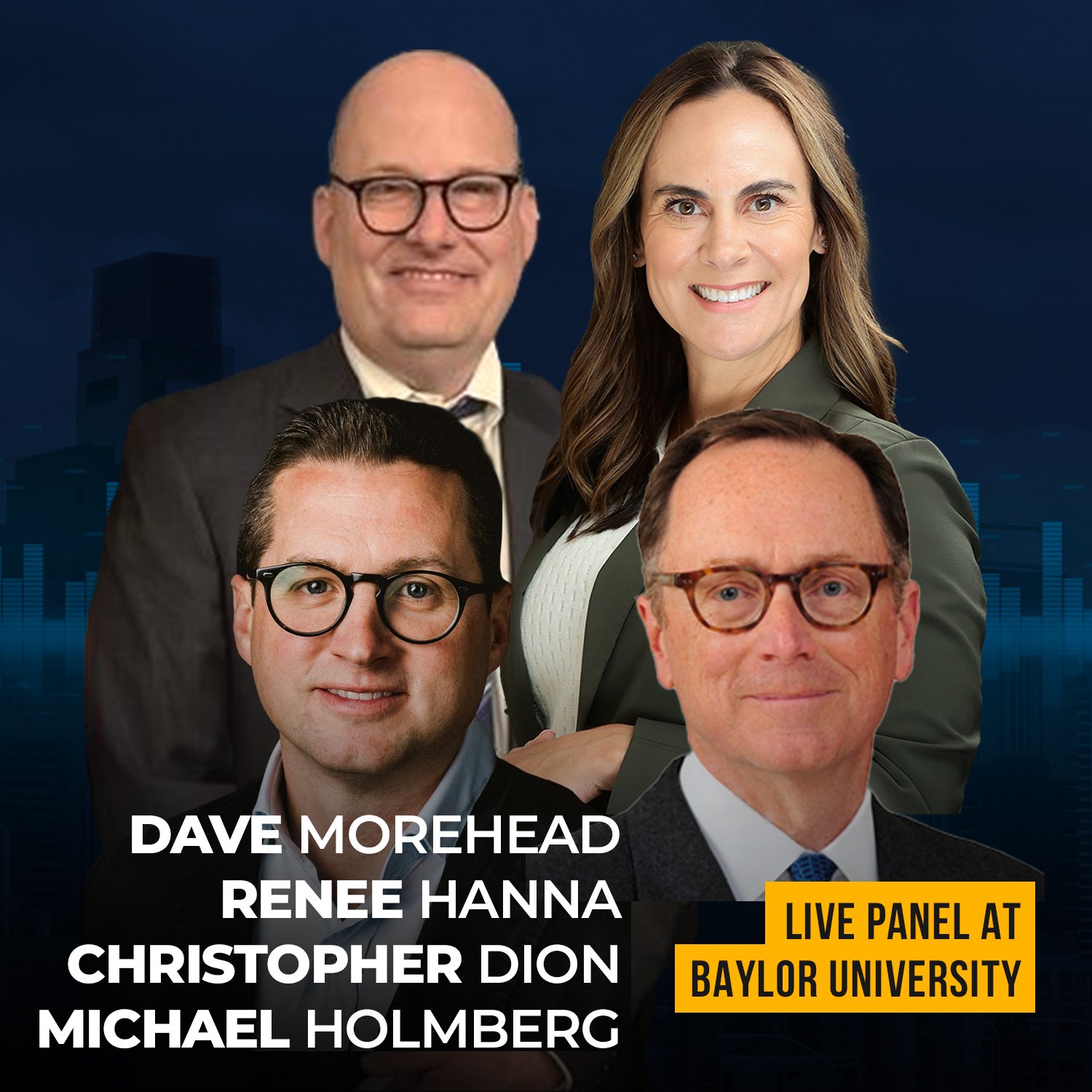
Well, good afternoon, everyone. My name is Robert Morier, I'm the host of the Dakota Live Podcast. I'm a professor at Drexel University, and I'm very proud to be recording today from Baylor University in Waco, Texas. We're thrilled to be here, we are proud to be invited to bring this podcast to you on the road. This is our fourth on-the-road series this year. We started at Loyola University of Chicago, most recently at Wake Forest University, and now, of course, we're at Baylor University in Waco, Texas. I am very proud as well to say that I have three Drexel University students here with me as well. We had a contest in Philadelphia. It was a writing contest. They had to tell about an experience that was impactful for them when they traveled on the road, something that may have happened to them that impacted their character or something along the lines of them having to really get through something that they weren't expecting. So I'm very happy that our three students are here as well listening in to this live podcast. They also experienced their first institutional road trip today, which was brutal. It started at 3:15 in the morning. We met at 4:15 in the morning on campus. We got to the airport fine. I can report to everyone that airports are operating as normal. Fantastic, I couldn't agree more. Let's see about tomorrow, but we're here now, it's important, but they really got to experience that. And it's a real institutional meeting. One meeting, it's an hour or less, we were waiting around all day to get to the meeting, and here we are making our pitch, so we're very excited for that. We have an outstanding panel joining us today to explore how long term investors build, maintain, and evolve their portfolios through collaboration, character, and strategic partnerships. Joining me today is Dave Moorhead, Chief Investment Officer at Baylor University. A familiar face, Renee Hanna, welcome back to the show, Managing Director of Investments at Baylor University. Chris Dion, Co-Chief Investment Officer at Brockenbrough. Thank you for being here, we're looking forward to hearing from you as well. And last but not least, our rookie, Michael Holmberg, welcome to the show, thank you for being here, Senior Portfolio Manager at Neuberger Berman. Thank you so much, we appreciate it. We're looking forward to the conversation. Before we get started, I thought I would actually ask you, Dave-- and all of you, the same question I asked our students. What was a meaningful travel experience that you had that you can point back to that changed the way that you thought about an experience, your job, your life, whatever it might be?
Dave Morehead: Can I tell a humorous one?
Robert Morier: Oh, whatever you want.
Dave Morehead: OK, so--
Robert Morier: We can always edit it out.
Dave Morehead: I tell this story to some of our younger analysts, typically when they show up in our office. When I was younger, I was going to visit somebody who had actually asked me if I wanted a job working for them. I happened to know this individual, but I was working in the suburbs of Chicago-- this was downtown Chicago, it was in a high-rise building. And I got to the building, and unbeknownst to me, there are things called express elevators. So I was running late, as college students or young professionals often are, and I got in the elevator that-- I walked through the hallway, there's an elevator. I had never been in an elevator that didn't have all of the buttons. And so I was supposed to go to floor 44. I hit floor 22 because that's where it went up to, figuring that there was like a transfer elevator on floor 22. It turns out, there was not. And so I decided to take the stairs. Long story short, I went up before going all the way back down, because I realized the doors were locked from the inside. Went back around and then asked about express elevators and how I got to floor 44. So, it's a humorous story now-- it wasn't very humorous for me at the time. I ended up being 20, 30 minutes late. Luckily, it was a friend, so he got a big laugh out of it. But the reason that I tell the story to our younger analysts is so that they realize that there are mistakes made in this business, and that's normal, and it's OK. So I've made mistakes, Renee's made-- like, we've all made mistakes, and it's not the end of the world. And it's part of an introduction to this business where we're only right 50% of the time, 55% of the time if we're having a fantastic go of it. So--
Chris Dion: I think you're epic if you're 60, probably.
Dave Morehead: Yeah. That's my funny story that we share with all the new people that come through.
Robert Morier: That's a good lesson. Thank you for sharing that. How about Renee, is there one you can look--
Renee Hanna: Yeah, there's several, but the one that's popping up right now is earlier in my career, I was doing a road show in San Francisco, and I was like, I'm going to squeeze in one more meeting before I hit the airport. I knew I was cutting it close. This might be a surprise, Waco does have an airport, and if you get there 45 minutes beforehand, you can check a bag, which, in itself, is a rookie mistake. So I show up to the San Francisco Airport 45 minutes before my flight to check a bag, and they tell me no. And I can't take it with me because it's too big. And at the time I had my only, and was planning my travel so I could get home to her to tell her goodnight, and I had to call my husband and explain why I missed my flight. And it was a lesson learned, and now I know, you need to be there an hour before for airports that are bigger than Waco, Texas airports.
Robert Morier: And never check that bag.
Renee Hanna: Good lesson. Yes, yeah.
Robert Morier: Chris. Thanks--
Chris Dion: So mine would be the first time I actually ever flew on an airplane. I was 16. I grew up in Northwestern Pennsylvania. Family was a lower-class class-- lower-middle-class family, so we didn't have a ton of money. We drove most places we went within a couple-hour radius, usually for soccer tournaments or other things. And my grandfather was a salesperson for an industrial company in Erie, and once a year, he would make a West Coast trip out to see a bunch of his accounts on the West Coast. And he did it for my sister. I have one sister who's about two and a half years older than me. And myself and my cousin, who's about one year younger than me, They took us both on the same trip, so I got to go with my cousin, who's kind of like a brother to me and my grandparents. And it was the first time I'd ever been on a plane, and we went to California. I remember boarding the plane in Cleveland, and it was snowing and about, I don't know, 20 degrees. And we flew into, I think, Los Angeles first, and we went north to San Francisco-- toward San Francisco. And it just-- A, the weather was a lot better. But B, it opened my eyes that the world was a lot bigger than what I'd experienced in my life, and it made me want to see and do lots of other things that I might not have grown up doing or we're not even comfortable for me, but they were out there and that you just have to go and try to grab them, and I was really thankful to my grandparents for that opportunity.
Robert Morier: That's great that you got that inspiration. Thank you for sharing that. And last, but not least.
Michael Holmberg: Probably when I was new at running money, we went to Japan to raise money, and it was really different on just so many different levels. And it was fascinating to me. I loved it. I didn't speak Japanese. We'd been there five days or whatever, so I thought I was in good shape, and we forgot a box, and my job was basically carrying things. A big bag carrier. So I said, I'll get it, I'll meet you there. I run up and grab a box and I jump in the cab, and he looks at me, and I realize, I just did this. And I started laughing, and he was laughing, and somehow, we got to where we were going. But we ended up moving there. My wife and I and our four kids moved there, spent a couple of years there a number of years later, but it just-- the whole thing about-- just what you said, the world is so large, and that curiosity. With our jobs, we get to see all sorts of great places, so it's nice.
Robert Morier: I agree. Thank you for sharing that. It's a good lesson, too, for our students, that there's a lot of world out there that the job and the industry allows you to see. So let's set the stage, Dave. We're here at Baylor University-- thank you again, and Renee, for hosting us in Waco. Oh no, we love it. We're glad to be here. It's exciting for us. We've talked about it once before, but you've been a standout performer. You personally as well, as the endowment, relative to your peers. How would you describe the philosophy guiding your investment office today? So if you had to summarize it for the listeners who are tuning in maybe getting to Baylor for the first time?
Dave Morehead: Yeah, obviously this can go a whole bunch of different directions, and it can be a voluminous response, but I think that it's interesting that you actually said today, because I do think that philosophy should change and adapt to both the environment, as well as the institution, and frankly, that's what we've done. So I started here in 2011. That was just after the financial crisis. And Baylor's performance over the prior three years during that financial crisis wasn't particularly good. And so we had some trust repair to do with the investment committee, with the board just more broadly. And so initially, the perspective was we really need to truncate this left tail. We had just gone through a period of time, that it caused problems. And it wasn't just a Baylor thing, it was a lot of the middle of the country kind of thing. But to develop that trust, our focus was really on trying to limit losses, come what may-- nobody knows, but we wanted to be prepared and able to, if possible, truncate that left tail. And then if you fast forward to where we are today, that trust is rebuilt, the university has grown a fair bit, particularly in graduate students, over that time. And now the university has aspirations that are bigger than what it had before. And so we've spent the last three to five years I think really focused on the right tail and trying to somehow bring strategies or bring an approach into the portfolio that can provide right-tail performance without giving away like the left-tail protection that we've had historically. So I do think that it changes over time, and that's just an example of-- we're the same institution, that's over the last 15 years, where we haven't actually given up on what the initial perspective or philosophy was, like even in 2020, during the pandemic. We actually did particularly well. And then in 2022, in the tech meltdown, we did particularly well, and that's because of the continuation of the focus on the left tail. But we have set things up, particularly in the last two to three years, that should benefit us going forward on the right-tail side. So maybe I'll let Renee flush out a little bit more. That's like a 40,000-foot view of how we've operated and what has driven how we set up the portfolio, but she-- you can have-- why don't you talk more about the nuts and bolts that go into achieving that?
Renee Hanna: Sure. For us, and speaking specifically to the private side of the portfolio and how we've set up that, there's three overarching truths that have to exist that we really get behind, and first and foremost is we must have a liquidity premium to invest in the asset class. And this is really just a basic thing that needs to exist in order for us to commit capital with a GP. We must get compensated for liquidity, otherwise there's tactical opportunities that Dave can execute on the marketable side of the house. The second thing, and this really comes out of lessons learned, and really, over the last three to five years, thinking about the right tail, invest with conviction. And what I mean by that is, in the past, we had historically had too many line items. We were overly diversified across both publics and privates, and it was really just a race to the middle. And so investing with conviction is a way for us to drive alpha and create greater returns for the university, and we need to get more dollars into our best GPs. And so we've taken a look at that cohort, and we're investing meaningful dollars behind them. And we're sizing positions in such a way so that the underlying portfolio company exposure now, speaking specifically to the privates, is roughly $3 million. And in turn, our looking for GPs who are willing to run a concentrated portfolio themselves, we have 10 to 15 underlying assets. And the third thing, and this is more just common sense, we're investing over five- to 10-year periods. The average term of a private equity vehicle is 10 years. So let's invest behind sectors that themselves are growing and have long-term tailwinds that we can get behind because there will be missteps. I think we're good at GP selection, but things can and will go wrong. So if we can invest behind a strategy that has macro tailwinds, then when those missteps happen, we should be able-- or at least we have a higher probability of having an acceptable private return to satisfy rule number one.
Robert Morier: That makes sense. How do you maintain that conviction when valuations feel increasingly disconnected from fundamentals?
Renee Hanna: Sure. And the answer is going to be different for Dave and I, but specifically on the privates, remain disciplined. We have a budget every year. We don't budge. So 2019, 2020, '21, there's a lot of GPs deploying capital very quickly, they're coming back to market faster, our budget doesn't change. So we have to make hard decisions, and that's part of the job. We stick to the budget. Two, we want to find GPs who themselves are disciplined. If a GP says things are too pricey and are sidelined for two years not deploying capital, we applaud that. You will never get pushback from us. Invest when the price is right and when you have opportunities. And three, we really want our GPs to have realistic valuations on the book because we think a rational value is going to make you more inclined to sell an asset when the price is right versus saying-- just the human bias of not wanting to trade when things are down. If it's appropriately marked, you're more likely to transact and give us that DPI back so we can get the compounding benefit.
Robert Morier: That's great. Thank you for sharing that, I appreciate it. When we were talking about this episode, putting it together, one of the things that we kept talking about was the importance of relationships and the importance of networking. And I think one of the really interesting things about this conversation is that we have three very different organizations, very different types of organizations, but you're all communicating regularly, and in some cases, sharing relationships, specifically Dave and Chris. So I want to bring you into this-- and Renee as well. But I'm thinking from the outsourced CIO's perspective and then an investment committee member's perspective. So you have worked together as peers and outside of your primary institution. So what do you both take away from those relationships? And how can others see that partnership between LPs? Because we get insight a lot. It's important that we talk to our fellow LPs. It's important that we tap into our network, that we understand what they're doing when we're setting our own agenda. So what does that relationship look like in practicality?
Chris Dion: I mean, I would say that the thing that we probably most gain is just perspective. I mean, I think one of the things I would argue is that the investment world, it's a complex world, and Dave and the Baylor-- and Renee and the Baylor office have been super successful at what they've done, but how we do it is a little bit different from how they do it. And our way isn't right, their way isn't right. Both work. And if there's anything that I've seen over the course of almost 20 years of being an allocator now, it's just that there's a lot of ways to make and lose money. And so everybody gets to come in and tell us what their special mousetrap is and why they think they have a right to win in those areas, but I think Dave and Renee and the Baylor office have really defined what their right to win is, and-- I mean, we can talk about that if you want to in terms of the things-- but I would say we have our own little recipe of how we think we have a right to win as well. And so some of those times, our right to win and their right to win and those things that we're doing and the things they're doing will overlap, and sometimes they won't. But the more important thing is really that we talk about those things, and that I feel willing to freely share what I'm doing with them, and they're freely willing to share back with me. I always joke that we have a relatively small investment team, and your team is roughly the same size, a little bit bigger than ours. But I have 15 or 20 other analysts that I just don't pay. I mean-- and I'm an unpaid analyst to them. I mean, the commodity that we trade is our ideas. And while 99% of the things that they and the other people we talk to probably won't amount to an investment for us, that's not really the important thing. The important thing is we're continuing to share, and eventually, and oftentimes, there'll be something that hits where we are both invested in the same thing and we don't even know it, or we're working on the same thing together, or you've invested in something and it's interesting to me. So it's really that collaboration and just understanding and the back and forth, and that's the commodity that we trade to continue to have those relationships with one another. So I think it's super valuable for the perspective and the network and the relationships of people that you think-- it's not a complete overlap in the Venn diagram, but they're definitely intersect, and it just makes a lot of sense to keep those relationships open.
Dave Morehead: From my standpoint, what we do-- and it actually doesn't matter if it's Chris or a hospital investment office or a civic foundation or any of the number of other investors who are invested with Michael, largely, the allocator role is centered around some of public good. And that's, then, why there are rules around concentration and how much you can spend down an endowment and et cetera, et cetera. But we're trying to help students go to school who wouldn't be able to go to school otherwise. But Chris and Michael have clients who are trying to do something else. Hospitals, of course, are trying to help sick children or find new forms of cancer treatment, et cetera. So from my perspective, I think that this industry is largely missional, this allocation industry. And so it's really shortsighted from my standpoint or from another CIO's standpoint, to just be like, I'm not going to share. Well, all you're doing is you're aggregating that understanding that Chris is talking about to yourself when if Chris and I talk and I take away something that he's doing and I'm like, oh my gosh, I hadn't actually thought about it that way, and maybe that alters the structure, the format of how we do things, then ostensibly, Baylor students are better off for it. But if you replicate that, then, across the industry, then collectively, there's more social good being done. So, I mean, I'm always fond of saying like, asset management is not the CIA, but it actually goes beyond that. And if you actually do share, then society is better off, so that's one of the reasons why-- I mean, we try to be an example in sharing. We're happy to talk about what we do.
Chris Dion: To be clear, Dave, though, do you still want to beat me? And I still want to beat you.
Renee Hanna: For sure.
Dave Morehead: Yes.
Renee Hanna: Yes. Most definitely.
Robert Morier: Actually, which begs the question, is sourcing a competitive edge? So if you're sourcing managers that others haven't found you--
Dave Morehead: We're going to have different perspectives on this.
Robert Morier: Go ahead.
Dave Morehead: You're going to say yes, and I'm going to say no.
Robert Morier: Well, let's let it-- go ahead and say it.
Dave Morehead: So--
Chris Dion: I would say yes. I mean, although-- again, it doesn't have to be that we have to be the only one that finds it. Inevitably, the amount of capital that we manage for endowments and foundations is about a billion and a half dollars, so we're smaller than the Baylor office, but-- so we are not going to seed-- or we're not going to be the entire fund in anything that we invest in, and oftentimes we tend to be a smaller investor, in fact. And so we actually need other people to invest in it, but that's also why the relationships are so important, because there's a lot of these things, whether it's public markets or private markets, where you actually want to know who you're invested alongside with to make sure that our philosophy and our duration and our timeline and a number of different things about the expectations going into that investment are aligned with the other LPs so that they are on the same page as you if and when things go wrong because, as Renee said, they don't always go correctly all the time. And so something that can still be a wonderful investment over time may have periods of time where it doesn't look like such a great investment, and having people that are patient and having people that have a share that philosophical composition is super important. And so I think being able to show those things to people that you know, like, and trust, and they still might not do them, but you may find a few other people-- or those people might tell someone else that it kind of gets into the seconds and thirds category of if you're using LinkedIn terminology. But it allows you to still have a group of people around the table that have a similar view of things, which I think is super helpful. So maybe not in the way that you were saying.
Dave Morehead: Yeah. And then my perspective is that-- I mean, I think there was something recently and you teach private equity, but I think there was some recent thing that came out that there was something like 19,000 private equity firms or funds and there are 15,000 McDonald's or something. There are more private equity funds than there are McDonald's in the US. So I find it pretty difficult to believe that any one manager is going to change anything for any fund. I tend to believe that what sectors you're in, how you're allocated regarding upside versus downside actually makes a huge amount of difference. But that's the point that Chris was bringing up before. Like, he's approaching it a little bit more bottoms-up and I'm approaching it a little bit more tops-down. Both can work. There's not one right way to invest.
Announcer: If you've ever been frustrated trying to build custom reports in either Dakota Marketplace or Salesforce, we have introduced Dakota Joe for you. Dakota Joe is a natural language report builder native to Salesforce built inside of Dakota Marketplace. For all of our Dakota Marketplace users, you can find Dakota Joe today and start running reports on accounts, investments, contacts, and a whole list of other objects. For Salesforce users, we have Dakota Joe coming soon to your internal Salesforce logins. You can learn more about both today at dakotajoe.ai.
Robert Morier: Do you believe that smaller managers, emerging managers have an alpha edge?
Renee Hanna: I do, and I think the data shows that. I mean, they're hungrier, right? They haven't made a ton of money yet. They want to build a brand for themselves. And so we spend a lot of work trying to source funds 1 through 3 and groups that want to stay in the lower middle market. And just at a high level, if private equity is going from $10 trillion to $20 trillion, we want to sit where there's a lot of capital above us so we have multiple paths to liquidity, and those funds tend to be access-constrained, which leads to better returns. So for all of those reasons, I would say yes, and I think going back to the sourcing angle, it is an edge when you can find these groups. But I think if we're doing our jobs, we don't have to be sharp-elbowed about who we find because hopefully we've established ourselves as a good reputation, as a good LP that you want to have in your fund, and that'll allow us to get the access that we need.
Chris Dion: We may talk about this later, but one of the other maybe unintended consequences, perhaps, but one of the things we actually realized, we a similar very similar philosophy to what Renee is doing on the private side in terms of smaller managers. But one of the things we've seen over the last four or five years is when there have been largely a lot fewer distributions from managers over the last bunch of years. That smaller area of the market has been far more liquid. It still hasn't been super liquid, to be fair, but not having to depend on an IPO market, not having to depend on FTC chairs and all kinds of other things to approve large acquisitions that may or may not happen, I mean, the average transaction that we're seeing where we can make a very adequate return might be $100 million or $200 million exit of a company that was purchased for $30 or $40 or $50 million. And that's an area where a lot of times, we had a small market buyout for a company that was bought by a large public company, and it didn't even have to go to their board because it was so small. So their board didn't even have to approve it for them to say yes to it. And so that lack of friction has allowed for it to be a bit more liquid, and so we find ourselves with our clients to be far closer to our targets in private equity. As you know, there's a lot of people that are at the higher end or the high end of their ranges on privates, and that smaller part of the market has been a really nice additive component for us getting DPI back from our GPs.
Robert Morier: I now regret that I'm capping this at an hour. We could clearly go much longer in this conversation.
Michael Holmberg: We can.
Robert Morier: We can, but we'll maintain your schedules and we'll be respectful to everybody--
Dave Morehead: It doesn't matter to us. So we have as much time as you want.
Robert Morier: I know, I appreciate that, thank you so much, that's very helpful. I do want to bring Michael into the conversation because one of the things about emerging managers is that it requires more qualitative insight, more relationship-building. You're getting to a team, a founding team. And from an asset management perspective, one of the things that I know-- I'm sure Neuberger is looking for is that strategic partnership. How do you build a strategic partnership with an LP? And what defines a successful relationship with an LP relationship like Baylor, for example?
Michael Holmberg: Well, Neuberger has a number of strategic partners who do all sorts of different things. I would say with Baylor and our relationship there, is-- I think, the-- well, there's a couple of foundations. Primarily their investors, they understand risk, they're active. It's interesting for me to hear you talk about being top-down. It's like, well, you're pretty good with the nuts and bolts of just going from the bottom. We talk about a lot of deals, and that really helps. And that is they understand investing, they understand due diligence, they understand the risks. And frankly, we can pick up things when we talk to them. You guys are seeing things on the private side and your side that we don't see. And so there's an ebb and flow with the relationship, and it's very direct, and I think it goes down to risk. They how to take-- they enjoy taking risk, so there's a clarity of thought that works real well for us.
Dave Morehead: And do your students or audience, are they familiar with this wearing risk, like what that means? Should I expound on that?
Robert Morier: I think it would be helpful, yes, thank you.
Dave Morehead: Yeah, so the way that we describe it to the younger analysts that join our team is typically, when undergrads are coming into the office, they're keyed to do something. And they walk through the door and we're like, fantastic, we want you to think. And they're kind of, well, we didn't-- I mean, truth be told, we didn't have to do a lot of that in college. It was sort of like, what's a stock? Da-da-da-da-dah. And then the test is, what is the stock?
Renee Hanna: Ask ChatGPT.
Dave Morehead: Da-da-da-dah, you know, et cetera. And so they walk through, and we're trying to develop them into basically becoming a risk-taker. And so in our vernacular, what we're talking about up here, a risk-taker is where you have put money, it is wholly on you, and basically how this industry works is if you lose that money, you're fired. That's wearing risk. And the example as to whether or not you are truly wearing risk is do you wake up in the middle of the night in a cold sweat thinking that you have forgotten something and you're not sure that when you get to the office in the morning, all that money is going to be there? That's wearing risk. And so, I mean, it's interesting. Not everyone can do that. Not everyone has the makeup to wear risk like that.
Robert Morier: Is that the same conversation that you'll have with your GP partners? So when you're talking about wearing risk, you're selecting a manager-- it could be Neuberger, it could be anyone in the portfolio, what does that conversation look like from your perspective as it relates to risk management? How much risk can they take?
Dave Morehead: Right. So--
Robert Morier: How much can they lose?
Dave Morehead: Yeah. So for the audience's sake, I spent 20 years in the for-profit investment management side before coming to this side. One of those roles was particularly in risk management for a big derivatives desk, so I have a lot of familiarity around this. But I would turn it a little bit differently, and I would say one of the things that we've done over the last two to three years is we've gone to particular managers, usually that we've had in the book previously-- Neuberger is one of those, where we said, you know what? We necessarily are getting the average risk return profile of all of the LPs in this book when you're managing money for us, and that isn't allowing us to optimize Baylor's book. At any given point in time, we either want more return, less risk, or some combination thereof. And so we go to managers and we're like-- because I've had this conversation with Michael. I'm like, I like what you do, except I want to be way more concentrated than any of your LPs want to be. Will you set that up? So I'm not interested in a pro rata version of what you're doing, I want a different version of what you're doing. You have a portfolio that has 50 positions in it, I want five. And, further, I want you to come to me and talk to me before you put something in the portfolio because I might have it somewhere else. So, if somebody comes to me, is like, oh my gosh, we got this great thing on windmills. And we're like, if I'm in Texas and I have windmill investments already, I don't need more. And so that's what I'm talking about in terms of optimizing things. So we actually go to the manager and, by and large, what we've been doing recently is like, we actually want you to take more risk. Which, depending on the manager, may be difficult for them to stomach. So in some cases, we're more comfortable taking more risk because they've always managed a commingled fund with more ups and downs, more offsets. And we're like, no, no, no, no, no, we got that covered. We own everything under the sun, it's a big portfolio. So we just need five or six ideas from you.
Robert Morier: I think that's a great example because I'm thinking to myself, if you're really trying to build a strategic partnership, you just gave Michael a call. You told him, I want more risk, less securities, I want more concentration. Michael, get the phone, you hang up, what do you do?
Michael Holmberg: Well, it's fun. That's just-- it's a fun relationship. I end up working on things that are high-conviction, high-return, and-- if you do what we do, that's what you want to be doing.
Dave Morehead: And to be clear, it's not for everyone. There are a whole bunch of LPs that he has in his fund who are like-- I mean, they might look at what we're doing and they're like, our board isn't keen with that. They're like, that's way too much risk. And they may have different portfolios and different mandates. So it doesn't always work out, but that's one of the things that-- if you want to be a little bit finer on the risk-taking side of things, that's what we've been doing over the last couple of years.
Michael Holmberg: And that's where it's important to be able to have a conversation about risk. When I say it's fun, what I mean by that is we have real conversations about what's going on in the markets right now. Neuberger has $500 billion-plus of assets and people in a whole bunch of different sectors that we're real big on talking within ourselves, within our teams, and coming up and pulling that out. And Renee and Dave are real good about talking to a lot of different people about what they're doing. And when you merge those two things together, you can have a really precise conversation about what kind of risks you're looking at and what are the outcomes. And to me, that's just fun.
Dave Morehead: Yeah, we've actually had conversations where they're seeing something on the energy side-- we, of course, are in Texas, so we have board members with energy experience, we have investment committee members with energy experience. We can pick up the phone and, within two steps, the whole biography of XYZ operator in West Texas or whatever. If he calls me talking about energy, I'm, like, pushing it right back to him and I'm like, yeah, I actually those guys, and this is what my investment committee thinks of them, good or bad, whatever, but that's color that he doesn't necessarily have. And that-- I mean, frankly, that accrues to the commingled fund as well.
Chris Dion: Well, it just accrues to the relationship. I mean, one of the things-- summarizing what you guys just said, I mean, we often try to bring to our GPs more information than we're getting from them-- or at least we try to. We don't always get more information from them, but the goal is for us to bring something interesting or something from our portfolio that we can share with them that they don't about because that's what really creates the two-way dialogue where if I call them on a random Tuesday, and the caller ID shows up my name and my phone number, I want them to be excited to pick up the phone. I don't want them to see the number and go, oh, do I have to talk to this guy?
Dave Morehead: So that's why Michael hasn't been picking up my calls. Got it.
Robert Morier: So, Chris, how do you cultivate that trust, then? How do you cultivate that trust in your partner?
Chris Dion: So Michael and I were talking just a couple of minutes before the podcast started-- not specifically about this, but it reminded me when we were talking about this question, that-- I mean, a lot of the things that go into the best relationships are things you learned in kindergarten. I mean, really. I mean, it's just be kind, be interested. Communicate properly. Be transparent. Tell people what you're going to do and then do it.
Robert Morier: Why is that so hard for people?
Chris Dion: It doesn't seem like it's overly hard, but you'd be surprised how rare that doing all those things are. You'd think it was table stakes, and the average kindergartner would look at me and go, duh. But I think as you go on through life, you learn these different things, and you learn that maybe you're not supposed to do the things that you learned in kindergarten. And you get lost a little bit along the way, but it's-- I know it sounds really, really simple, but a lot of times it's just doing what you say you're going to do, and trying to be honest and open, and that the feedback that we get is that they always where we are, good or bad. I mean, so even if we have to terminate a relationship, most of the time our GP is not surprised when that happens. We give managers, I think, probably at least as much time as they deserve, probably even a little bit more than they deserve, sometimes, anyway. But the reality is that by the time we decide to exit or not-- or we don't re-up with a private equity manager, they usually know that that's going to be the case before we get there, it's not a surprise. And what people-- people don't necessarily-- they don't love bad news, but what they dislike more is surprises. And so that's what-- we try to not be surprised, and in return, we don't want to be surprised either.
Robert Morier: Do you think it's possible to assess character in fund managers? Can it be quantified?
Dave Morehead: I don't know that it can be quantified, but I'll say this, we largely haven't been wrong. We've gotten investments wrong or we've gotten market risk wrong. We, by and large, do not get character wrong.
Renee Hanna: No, and I think there's multiple boxes you can check. We just did 30 references-plus on a new relationship. Some professionals, some personal. We talked to neighbors, we talked to old college roommates. I mean, we do a lot of work on that front, and that helps, but then there's other layers, too. It's like, are the incentives aligned thinking about the risk conversation. The irony is, we're taking more risk with these concentrated positions, but Michael can't sleep at night because this is a really concentrated position, so he's investing with conviction. And so if you can check these boxes, I think you can triangulate and help turn some of these qualitative factors into quantitative things you can--
Dave Morehead: Yeah, and I would say, that goes to OCIO as well. Because I'm on an investment committee for a college endowment that's hired Chris, Brockenbrough, and I did, personally, 17 references-- interviews-- with folks that included--
Chris Dion: Yes, he did.
Dave Morehead: Included--
Chris Dion: College roommates.
Dave Morehead: College roommates, neighbors. I know all sorts of things about the makeup of Richmond just as a city, and who runs the city, and how the firm and its members fit into that. And so, yeah, that's something-- and interestingly, I shared that with Chris. I was like, hey, I called 17 people, and I have the reference notes to prove it, and he was like, you'd be surprised how few people do references on OCIO decisions. And you're like, well, that's bonkers, because Renee's doing it, giving somebody like $20 million or $30 million, a portion of Baylor endowment, and in an OCIO position, you're giving the whole thing to somebody and people aren't doing references.
Chris Dion: The one thing I would say, too, is that, to your point, I mean, I do think the relationship aspect is a little bit easier with earlier and smaller funds. The bigger the organization is, the harder it is to triangulate that character. And as Dave mentioned, as firms grow and get bigger and times move on, things change. So first of all, I would say we re-underwrite each time we do it because the firms do change, and eventually there is transition and movement of the organization from who is leading it at the beginning to who is leading it at the end. But the other thing is just at those early stages, when it's a Fund I or a Fund II, you're really underwriting a relatively small handful of people. People, I would say, it's an easier argument because it's a smaller group that is making those decisions. Usually the person who you're most singularly underwriting, who is usually the key person in that GP, that Fund I that you said, Renee, before, they're not super wealthy yet, they're aligned with you in terms of if they want to have a fund tour, a business, Fund I has to go well. So that alignment usually works very well.
Renee Hanna: I do think what you said is so interesting because it's counterintuitive. People associate emerging managers with more risk, but you can pretty much do a lot of work on people who are 100% of the deal attribution, and in a bigger shop, you can't really do that, so it's hard to pinpoint, and it feels safer because they're more established. But the reality is--
Chris Dion: --looked inside my brain, that was exactly what I was thinking about, is, no, you get the most unadulterated work product from the people you're underwriting in those first couple of funds. And then inevitably, as you raise Fund II and Fund III and Fund IV, usually those funds are bigger, the organization gets larger, the decision-making entity gets larger, and it becomes harder to triangulate. Whereas those earlier funds, to your point, whereas most people would find them more risky, we actually look at them as being less risky because you can really triangulate that.
Dave Morehead: Although I would say that character comes from the top, and there's some parties that we work with who we see that very clearly, both good and bad. And even though some of the organizations have gotten very large, they still are very hard to deal with. They wouldn't be ideal partners in my definition. And there's others who-- especially over time, I just wrote a recommendation for somebody who wanted to get into something we've done. We've worked with them for 20 years. And as I wrote it, I wrote it with enthusiasm because I'm thinking, wow, we have done 200 deals together. This guy's done everything he said in each one of those. It's like-- So I don't know how to do prospective character, but I know, over time, you can see behavior, and behavior repeats itself. We spend a lot of time trying to figure out ahead of time what's the character. There's an old saying that's goofy, but I think it makes sense-- all the paper in the world can't protect you from a bad person. A handshake is good for the other.
Robert Morier: Thank you for that window into that, it was very insightful, I appreciate it. Turning to portfolio allocation and exposures today, we were actually had a little bit of back and forth. We were talking about the number of managers on the private side that you're underwriting every year. It's relatively limited. How do you maintain that discipline not to increase that exposure? Not to overexpose yourself in a certain area of the market? How do you dampen the enthusiasm for that manager that calls, you said, I'd really like to put them in the portfolio, but?
Dave Morehead: Yeah. I mean, I think this goes back to the core risk management bit. And I don't have any hair. So Michael has hair, but he's got some gray hair, right? I mean, this is-- I mean, basically, there's no answer other than experience, time and experience. And that's part of why we try to give our younger analysts experience and ownership and owning the risk as early as possible because it's actually the time and experience that helps you. I mean, at the end of the day, Michael and I and Chris have all lost money doing dumb stuff like what you're talking about. You're like, ah, yeah, it's going to be the next great thing, right? And you take too much risk, you have too much exposure, something comes out of left field that you didn't anticipate, and then you're down millions of dollars. Well, that only happens a few times and you learn to the discipline matters. And so, yeah, from my standpoint, that's very well-learned now, but I think the bumps and bruises and scars that you have to show for it is what gets you there. Because there's almost no way that you can convince a 22-year-old today to do less AI. You're like, whatever you think, do less. And it just-- it's not going to work. So to some degree, you have to give them some amount of money, and knowing that they're going to lose some of it. And I think Michael probably does this with the younger guys on his team that he works with. You give them some, you allow them to lose some knowing that that's going to happen, it's not going to impair the whole thing, but they're going to get better because of that.
Chris Dion: We do the same thing with managers, sometimes. If we're doing an early manager or an early private equity manager or early public manager, some of the early mistakes that we see, we call it paying tuition because inevitably, that doesn't make them bad, it's just there's some lessons that-- it's like when you tell your kids something and they still go and do that thing anyway, and they make the mistake, they oftentimes just need to make it themselves to really sear it in their memory and move on with that lesson. And so we often, yeah, see our managers make some mistakes early on in their portfolio management or their risk-taking, and they learn from those things, and they become very valuable. And we've had a number of groups that we've paid tuition at the beginning who have gone on to be wonderful, creative things to our portfolios.
Renee Hanna: Mm-hmm.
Robert Morier: Chris, how do you balance the liquidity needs of your underlying clients? Presumably you have clients coming from different areas, whether it's an independent school or a college endowment. So how do you think about liquidity management?
Chris Dion: So, I mean, it's really just a conversation and a collaborative discussion we have with each one of the investment committees of the groups that we have. We had this conversation with Dave at the school that he's with recently, in fact. And so we go through the process of getting hired, and then we do a deep dive on their investment policy statement depending on what it had before. A lot of investment policy statements of the groups that we start to work with do not have large amounts in alternatives. We tend to do a fair amount in alternative things, and so a lot of times, those investment policy statements need to be adjusted. In terms of adjusting those, and rather than just putting in the languages, we do put in targets and ranges for those things as well that set the roadmap, as it were, to move forward in terms of managers and other things we put in the portfolio. And so we have, really, discussions between us and those investment committees. As much as we try to know the entities that we're working with, they clearly them better than we do. And so the goal for us is to try to osmose and learn as much as we can about their organization, their liquidity preferences, their risk tolerances, what the condition of their balance sheet is, what their spending rate is and their spending policy, how it all works. Are there specific times of year they need larger amounts of cash flow than other times of the year? Is it different from a typical cadence of a normal endowment or foundation from a spending perspective? We try to amalgamate all of those things, and then try to come to them with our best thinking about, and then why we're proposing that as a proposed asset allocation. And then we have a discussion about it. And we iterate through, and we might make tweaks on 5% here, 5% there, or a number of other things, and you guys forgot about this, maybe we should incorporate that. And so it just becomes a live discussion that we have, and that creates the roadmap, and then we evaluate that roadmap pretty much once a year in the fourth quarter is typically is what we do around planning time, and we take a look and we say, here's the roadmap we set last year, do we need to make changes to that roadmap? And so that's generally how we work with the groups, and then we start building those portfolios. And everybody gets to live with them, and we continually-- it's an iterative discussion from there.
Narrator: For years, legacy data providers have made private fund performance benchmarking complex and expensive. That's why we launched Dakota Performance and Benchmarks, the first-ever benchmarking platform built by people who are using the data themselves every single day. We've made our benchmarking affordable, customizable, and very, very easy to use. You can log into Dakota Marketplace today to start creating your own benchmarks and viewing our created benchmarks, or you can learn more and book a demo at our website at dakota.com.
Robert Morier: For Dave and Renee, private credit. There's been no shortage of conversations on this podcast, especially around the opportunities that investors are seeing in private credit. I'd be curious to hear your thoughts as to where we are today and whether or not you think that those opportunities still exist.
Dave Morehead: Oh, we might be not the right people to talk-- we don't do private credit. And we don't do private credit for not just like we don't understand it-- I actually grew up on the credit side, so on a contrary position, I actually understand it extraordinarily well. Our view is that unlike distressed, which is what we're doing with Michael, that's basically you're buying something from a value perspective after it's already gotten bombed out, that makes a lot of sense to me. I have concerns about private credit generally based on the pitch, which the pitch, for the last seven, eight years, is the Fed posts a-- financial crisis has put restrictions on what banks can do, largely by virtue of capital credit charges, et cetera. So there's a whole host of borrowers that banks can't lend to. I happen to know a lot of lenders, bankers, and I don't think that they're dumb. And so if they could lend to those people, they would or they would not. All I know for sure is that private credit stands outside of the financial system, and the Fed's real goal in applying capital charges was to ring-fence the financial system. So the financial system in 2008, going into 2009, almost completely came apart. So basically, we were two or three days away from the government owning every bank in the country. So I was trading during that period of time, I'm very clear on what was going on then. And the goal of the Fed is to keep the financial system solvent. I mean, we've seen that through the pandemic, through 2022. Financial system, not a problem. And anytime that you grow an asset category from 0 to 3 trillion, you're going to have fraud. I'm like, we know this. So I think we're up to five, now, fraud cases like in the last two weeks? It's not going to stop there. It's going to-- Now, that doesn't mean that it's negatively going to impair these portfolio companies, like the asset managers, because, of course, they're quite large, and even if it's $500 million that's going to 0, that may not impact-- I'm just saying that there are going to be more. Like during COVID, when the government was handing out money, there was a lot of fraud in that situation as well. And so we've basically said, for our book, we don't think that we're getting paid for the risk that we're taking in private credit; and further, based on what the university needs from us now, which is more returns, we don't want to cap the upside. And so both from a policy perspective, as well as from a risk perspective, we simply haven't done anything on the private credit side. We have a lot of peers like basically everyone else has. So Renee and I go back and forth and we're like, are we the fools in the city that are like-- we're the ones wearing the dunce caps?
Chris Dion: Ironically, we're in the same boat, actually. We own no private credit. We do it for a different reason, though. I mean, Dave, a fascinating explanation and a lot of stuff that I don't know about. But the simple reason we do it is that we have a relatively defined bucket of what we'll call liquids that are-- let's call it more than seven-year types of partnerships that we-- and our clients, we believe, have a relatively limited amount of capital to spend in those areas in illiquid buckets. And frankly, when you start looking at the cash-on-cash returns, we tend to be more multiple of capital investors than we do IRR investors. We love IRR, but I'm OIC, which is still a priority cash on cash for us. And so when you look at a seven- to 10-year duration-- most private credit funds are 7 to 8 years in duration, there's some recycling involved, but the average multiple of capital relative to the other things that we're doing just doesn't stack up very well. So it really becomes a return based on the duration piece. I mean, if that's 7-year investment will get you a 1 and 1/2 terms of capital, but a lot of the stuff that we're underwriting in buyout and growth and venture, perhaps slightly more risky for sure, but will make us 3 times capital in 10 or 11 years, those extra three years earn us another full turn and a half of capital. To us, we'd rather do that longer duration to make a larger amount of cash-on-cash return than the lower return. So it's really been kind of a risk return of what we're able to do within a liquid bucket that makes us have-- that makes us-- the fact that we have not done any of it.
Michael Holmberg: There's an interesting dynamic in private credit right now. We're starting to see private credit teams selling off one-off names, and we're starting to see LPs in private credit vehicles selling their LP positions. And the amount of Paid-in-Kind, PIK, notes in a typical private credit vehicle is now 12%, and half of that is involuntary. So 6% is restructured into payment-in-kind not of an ideal nature. So there's private credit is marked to model. And so you're talking about surprises. It'll be interesting to see, I think there's going to be a bifurcation. There are a number of very good private credit managers. I like to think that Neuberger is one of them. And then there's some that have not invested in the teams, that when things-- when credit is-- credit's tough. When credit gets tough, you need to be able to work through it. So for us, we look at it as an interesting growing opportunity, which is not something someone who's investing in it wants to hear.
Renee Hanna: Yeah, I was just going to add, when you look at the overall benchmark that we benchmark ourselves to, we've seen private credit grow from 5% of the overall benchmark to 15%. And it has been a painful ride over the last three years when you don't have-- for us. When you don't have any exposure to this steady 10% to 12% return profile as markets are getting repriced post '22. But going back to your earlier question, it's just the discipline that we had. It didn't deliver the upside that we needed to solve for our core principle number one, so we didn't do it. And I think you're starting to see the cracks now, but--
Robert Morier: It remains to be seen.
Renee Hanna: Remains to be seen, right.
Robert Morier: It touches on the importance of education. So when you're working with your investment committees, you're working with your clients, you're working with your clients, what is that education process look like? So when you're having this conversation-- because presumably, they do know people who are investing in private credit.
Dave Morehead: Of course.
Robert Morier: And it's the topic du jour, and there are conferences now dedicated to nothing but the asset class. So how do you approach that education process?
Dave Morehead: Yeah, and I'll give you another example because, of course, this happens across strategies and security types, et cetera. But one for us was volatility as an asset class. And volatility, of course, for the audience, for the students, comes out of option theory. And a lot of people are familiar with-- I guess today, the zero-day option kind of-- yeah, I don't even what they are--
Chris Dion: 0 day to expiry.
Dave Morehead: Yeah. So basically, it's like a giant roulette wheel. So we don't do that kind of stuff. But in option theory, one of the primary levers of value is the volatility of the underlying security. And so one of the things that we were interested in was being able to hedge our book by owning long volatility, particularly in 2017, '18, '19, when volatility was being priced at single digits, which was the lowest ever. And unlike negative interest rates, which we were all taught interest rates can't go negative, and then it turns out, they can. In volatility world, it's just standard deviation, so it literally can't. And so we were getting to 7% vol. That's the lowest it's ever been. Basically, if it were 0, that would mean that every stock price in the market forever would never move, so that's untenable. And so there was a process that we had to go through with our investment committee to both get them comfortable with what we were potentially investing in, as well as understanding that we understood what this was. And it took some time, but our committee is very flexible and willing to try new things. It's something that we talk about, we try to fail quick, fail small. And our committee understands that, and so we actually went into the pandemic with about 80 million of long vol in a portfolio that was about 1.3 billion at the time. And we didn't know that a pandemic was going to happen, but it was up 65% when the market was down 35%. So we sold that and rolled into in public equities that were on sale. But that's just an example of-- we have another example of something Renee is working on. And it's something that took about a year to walk through, there was a lot of back and forth with the committee. I would say the great thing about our committee and the thing that we really try to impress on our younger analysts, as well as students or people who are thinking about going into the allocation space, is that the key thing is governance. If you have a committee that won't let you try anything new, that's probably not a place that you want to work. And if you do have a committee that's flexible and listens and is willing to try new things, then that experience is going to be radically different to the positive. And so I would give a lot of credit to our investment committee and their willingness to talk back and forth with us. They asked lots of good questions. And in the bit that Renee was working on, that went over four quarterly meetings. So we do come with something, they would ask questions, we'd be like, good questions, we don't actually the answers to those things, we'll come back. And that went on for about a year before they were like, well, let's try it small, and so we went that way. It worked, and so we've since scaled it. But yeah, I think it's really key to be open. And what we try to do-- what we try to do and what our committee, I think, tries to do is check egos at the door and just have a discussion about what we think is best for Baylor.
Robert Morier: Thank you for sharing. We do have a couple educators in our studio audience. I'm curious if any questions popped up as you were hearing that. And you think about educating the other side, educating students about the dynamics around risk and the dynamics around theory versus risk. I usually don't pick on the studio audience, but I feel like the students may feel good that the professors are getting put on the spot. So the question is, what are we not teaching our students at Baylor University that you would want us to be teaching? Us being The professors.
Dave Morehead: Yeah, I think that we're actually pretty involved with the Finance Department here on campus, and have been for I think 7 or 8 years. And so we actually do have these conversations back and forth between the Finance Department, the Office of Investments, and going back and forth. Not just that way, but how else the Office of Investments can assist the Finance Department, whether it's interns, we have interns in our office, and figuring out how to place people and help that we can provide on that. So I think it is important to have a two-way street there, and I think we also have done a pretty good job over the last five or six years of addressing some of those things. So Renee and I taught the classes that are taught in this room, the practicum classes, the student-run endowment portfolios here-- there's two at Baylor. And one of the things that we were running into was students who didn't understand the capital stack. So we would come in here and be like, all right, we're going to talk about the capital stack, and we get a bunch of blank stares, or the bankruptcy waterfall, we get a bunch of blank stares. And so we've actually gone back and forth with the Finance-- and I think now, correct me if I'm wrong, but I think the more advanced corporate finance course is now required as part of the major when it wasn't previously. So, I mean, that's an example of the Office of Investments working closely with the Finance Department and sharing information back and forth. And then, I'm not an educator, but the Finance Department, of their own accord, decides, we should actually, before students get to either the investments class or this practicum class, there are certain things that they should know. And so I think that the finance study here has improved over time as we've shared ideas back and forth. And not just that, but I think we've gotten better at offering internships and help getting students navigating into the workplace, et cetera. So I think that that interaction has worked well here, and I don't what, of course, happens-- we talked a little bit, that something similar happens at Drexel. But I think that that would be an important thing, basically, for all schools to think about.
Renee Hanna: One of my favorite classes that the business school has added since I was here is behavioral finance. And I think one of the things that comes up with every analyst, every intern that comes into our office is just like, wow, there's so much subjectivity, there's so much like behavioral aspects and biases that impact these investments. And I'll never forget Jindi Moore in our office, she's been with us for about a decade, she's very black and white. And she said one of the most uncomfortable things for me is just living in this gray space that exists when we think about investing. And so I think that's a really great addition just to the academic roster that students can take in the Finance Department.
Robert Morier: That's wonderful, thank you for sharing. Michael, what's one thing that we should about the distressed market today? A little education for us in terms of opportunities or--
Michael Holmberg: Well, I think that private credit is a large one. Another one is liability management exercises, LMEs. I think that that's something, if I was a student, I wouldn't understand what that is, and something you should understand. It's what bankruptcy used to be. You used to-- you would file bankruptcy and then you'd restructure. And now you're restructuring before you get to bankruptcy court. You have these-- it's lender-on-lender issues as opposed to the lender and the borrower. I'm not sure how much this class cares for it, but I can talk a lot about this. And then the other one I'd say is that-- in markets like this, we do public stuff, we do private stuff, we do real assets. I think that there's a bunch of interesting things going on in real assets where markets haven't recovered. We look at stock markets as kind of all-time highs and certain parts of the credit market are all-time tights. And so we're looking around trying to figure it out. But what I enjoy is somebody like Renee and Dave, when you want to pause, we can pause, and it allows us to observe. And I think right now, as Dave pointed out, we've seen a couple of high-profile issues hit the paper. First brands, some other names that people are real familiar with now that were unknown a month ago. I think there's a lot of reasons to be cautious in the world. There's a lot of geopolitical risk out there. There's a lot of financial risk out there. There's a lot of volatility that isn't really showing up as far as I can see right now in the numbers, so I'm a little cautious.
Robert Morier: How about the opportunities that are showing up? The easy question is, what are the risks are out there? What keeps you up at night? But what gets you excited? What are the opportunities that you're seeing today? And maybe for all of you, starting with Dave--
Dave Morehead: Yeah, sure.
Robert Morier: Renee, that would be very helpful.
Dave Morehead: It's really interesting for us because we try to take an approach of investing in what the market is giving us. So we get this question a lot from the standpoint of-- and the industry kind of moves this way, is like, what's the interest du jour? And all the allocators are going to that thing like, are you doing Europe? Like, everyone's--
Chris Dion: But it's in Japan.
Dave Morehead: Everyone-- yeah. We're not in Japan. We do have some exposure in Europe. But I would say that we try to basically anecdotally, or take an example of what we're seeing come over the transom that's interesting, that informs us as to where the problems or opportunities might be. And earlier this year, for us, it was, as Michael said, a lot of real asset categories, particularly real estate. A lot of those things that we have seen now no longer exist. But what we are seeing is we're seeing a lot in the health care space. And so that's been interesting. There's been some discussion about that in public markets. Like, tech is up and to the right, health care is a laggard, left for dead, and we're actually seeing that in deal volume. So we've done a couple of things in health care. We're looking at some more things in health care. But outside of that, we're letting cash grow. So our deal volume has tailed off over the last three months-- last three or four months, with the exception of health care.
Renee Hanna: And privates were really staying the course because these are longer-dated investments, 5, 10 years out, and we could have 3 or 4 fiscal policy changes over those time periods. So we really try to look over a lens of what could we invest in, what trends can we get behind, and try to ask basic questions like, do you think people are going to want to own more software? Yes. Do you think there'll be more AI-enabled products and AI compute that's needed over the long-term? Yes. Will people spend more money on health care? Yes. So let's invest behind that trend and stay in the lower-middle market, to my point earlier, as more capital comes in, it tends to come in above us, so that we have multiple paths to liquidity. Less interesting.
Dave Morehead: Yeah.
Michael Holmberg: Mm-hmm.
Renee Hanna: Yeah.
Dave Morehead: But Important.
Renee Hanna: Mm-hmm.
Robert Morier: Thank you.
Chris Dion: No, I mean, I think just adding to what Renee said, I mean, one of the things that we continually have invested behind-- and really, I guess it becomes more important probably more recently with the current administration, but we've always, for the last 10 or 15-- 10, 13, 14 years at this point, have invested with the idea of a little bit of re-onshoring, which has certainly accelerated, I think, in the past couple of years since COVID. And so we own a number of smaller manufacturing businesses in our private equity portfolio. But the reality is that, well, that's-- well, that's, I would say, a modest tailwind that maybe picks up a little bit. And of course, we like to invest with things like tailwinds like Dave does. We're not quite as tactical around it maybe as he and his team are, but I'd like to think, too, that there's some things in our portfolio that, regardless of that tailwind or not, are just evergreen. I mean, if we think about the idea of a lot of the lower market buyout managers that we invest in are $5 million cash flow businesses, they are small businesses. And the groups that we invest behind we think have an expertise of being able to professionalize and grow that business over the course of five to seven years. And not regardless of the environment because you still have to have some sort of conducive environment to it, but the ability to do that, we think, is actually pretty repeatable over the course of time. And so we don't necessarily have to decide whether it's popular today or not. I think less than $20 million businesses in the United States and revenues is like 4 million, and so it's a very, very large, idiosyncratic market that, if we can find people that know how to manage and grow those and professionalize those businesses, then it's just an evergreen pool that we can continue to fish in.
Michael Holmberg: I would say real estate clearly is one. We spend a lot of time on that. We think you can get high cash flow in situations that have pretty good capital upside, too. The other is energy. We're doing a lot of renewable stuff that recent regulations have gone against, and so we're seeing some opportunities there for some things that are out of favor that produce electricity. And if you look at AI, there's a lot of demand for electricity. I don't think there's going to be less demand for electricity. So you're paying premiums for the AI-related stuff; down below, some things that produce electricity that we're buying at 60% of what it costs to build, that has some legs to us. So we really like that. And the other one is that LME is a little complicated to explain, but we have a very big firm that gives us insight to a lot of stuff that makes it fun for us. So those would be the three areas I'd say we focus on.
Robert Morier: Maybe we should co-design a syllabus around it. So wonderful. Thank you for sharing that. One last question just around advice. We do have some students in the room that joined us from Philadelphia and Drexel. We have an army of students just outside of these doors here at Baylor University. So just a little bit of advice for them as they enter into this market that you are constructive on, for the most part.
Michael Holmberg: Yeah.
Dave Morehead: For me, and actually, for our team, our analysts, is keep learning. In fact, we ask questions during the interview process to elucidate whether or not this person is naturally curious. We think being naturally curious lends itself to trying to figure out this market puzzle. And so the famous thing that we always say is, if you're walking through the parking lot on the way to the office and you see a butterfly, and then you really are interested in that, then when you get into the office, I want you searching out all the things that you want to about that butterfly. I want to help and encourage that natural curiosity. And so I would say, if I think about myself, I think I'm probably twice as good at this as I was seven years ago, but if you're not learning, that's not going to be true.
Robert Morier: Good advice.
Renee Hanna: Mine would be don't be scared. I think we spent a lot of time today talking about risk, and it is part of the job to take risk. And I think earlier in my career, in particular, you're just a little bit scared to act because there's going to be risks associated-- trade-offs associated with every investment that you can make, and it's our job to understand those risks and size it accordingly.
Robert Morier: And courage is very important.
Renee Hanna: Yeah.
Robert Morier: Important character trait.
Chris Dion: So in my office, in my Zoom background, there's a sign over my-- I think it's my left shoulder. And it's-- in large print, it says, "Work hard and be nice to people." And I think those are two tenets that I think have served me very well over the course of time. Again, it's what I talked about, learning things in kindergarten, but work hard and be nice to people, it turns out that those things work pretty well together. And so I think just find something that you're really interested in, curious about, and delve yourself in. There's a Japanese word called ikigai that exists, and it's this combination of-- I think it's what you-- something that you love, something that you're good at, something the world needs, and something you can actually get paid for. And the intersection of all of those four things together is this one little part of the square that the Japanese call the ikigai, which is kind of your reason to exist. And if you can find that, and no one finds that the first time that they-- the first job that they have, let me be clear, you find a lot of things through failing at a number of different things or a number of different jobs or things you don't like to do, so it's never going to come immediately, but if you can combine those four things-- I mean, most days for me just don't feel like work. I love what I do, I love the groups that I do it for, and it's fun. And so it's a blessing.
Michael Holmberg: I'd say develop a community. Kind of weave yourself into a fabric of a community because everything they've said is totally true, as taking risks and be kind, be nice, and work hard. But this is tough. You're going to make mistakes. And if you're really doing it, no one's going to think what you're doing makes any sense. 7 years ago, we started doing buying some stuff, and my partner was, when I first said it, said, why would you do that? Haven't you heard of Amazon? They're getting crushed. And so if you're going-- you need strong friends. You need people who help you keep your whole life in balance. I think there's a lot-- we call it investment risk, operating risk, and then business risk. Business risk for firms like mine is when the partners don't get along. I think that's the number one reason firms like ours break up. And I think that all this talk about understanding alpha, prima, a lot of-- if you develop-- focus on keeping yourself centered-- Dave and I were talking about balance earlier, balance doesn't necessarily mean you don't work all the time. You can work all the time because you have to at times. This is a competitive business. But if you have a community that you can talk to and that you can ask the dumb questions to, that you-- I think it's just critical, then you can take risks. Then it's easier to be nice to people when you're able to vent and say, this person was a total jerk. Oh yeah, that person is a jerk, it's not you. And then there's sometimes when I say, that person's a total jerk, and they say, no, Michael, that person's a really nice person, you're a total jerk. It's like, OK, I should pull back.
Robert Morier: Excellent advice, thank you so much. Well, it is the holiday season. There are Christmas trees in the lobby, but before we get to Christmas, it's going to be Thanksgiving. Hopefully we can release this episode before Thanksgiving. We have one more question for each of you. What are you most thankful for in your portfolio?
Dave Morehead: I don't actually think about gratefulness in terms of things that are in the portfolio. I think we're grateful to have the team that we work with, like what Michael's saying, we have a very close, collegial team that-- we have five investors on our team. I'm in everyone-- every investor's office every day. And that's largely true of the other investors. So we have a team that works well together. And I've worked, I don't know, seven or eight places by this point. That's rare, and I'm definitely grateful for that.
Robert Morier: That's wonderful. Thank you.
Renee Hanna: I've been at the endowment for 18 years, and Dave mentioned the new asset class that we're working through together. And that's been really a joy for me just thinking about to his point about continuous learning, and just having to learn new things, and be challenged continuously over the last three years has really been something new for us, and so it's been great to have that challenge.
Robert Morier: Excellent.
Chris Dion: I'm more on Dave's frame of mind. I mean, I kind of view the portfolio construction as an output of, really, a tripod of things, and there's three legs to the stool. The first leg is our team that works at Brockenbrough and the people that we work with every single day, and the collaboration and the decisions that we make. At the end of the day, I look at our firm as a manufacturing business, we manufacture decisions, and so we have to make them as good as we possibly can, so that's the one leg. The second leg is our investment committees, our constituents, the governance that sits at all of the 12 endowments and foundations that we work at. And each one of those groups and making sure that we're communicating, we're transparent, they're understanding what we're doing, why we're doing it. A more informed investor is a better investor and board member and committee member. And then the third leg of the stool is our general partners and the relationships that we have with them and the work that they're doing on our behalf because, look, at the end of the day, we make decisions to hire managers, but we're not buying a single stock or a portfolio company or funding a venture capital business or any of those things. We have to place our trust in them and feel like that the relationships that we've built. So those are the three legs to the stool. And if one of those parts of the stool is weak, then the stool doesn't work, and so you've got to make sure that all three are strong.
Robert Morier: Thank you.
Michael Holmberg: Yeah, I'd echo that. Partners. We have some tremendous partners. I got a great team that I work with. People I've worked with for a long time. We've got-- within the firm, we have a really nice thing going on that there's great communication with our LPs. I've just got back from a week in Europe with a bunch of LPs, and it's just-- I learn more. I learn more. I'm down here, I'm hangin' with you guys, I'll learn more. It's just fun. And we have operating partners, people who we do repeat deals with who we've gotten to real well, who you guys well. It just-- I feel blessed I work with a lot of really good people, and like you, I love what I do because of the people involved. It's hard, but we have great partners, and that just-- this is it.
Robert Morier: Thank you for sharing. I was hoping for a good soundbite, like crypto or something crazy, but you guys ended up being very balanced and I appreciate that.
Dave Morehead: Well, we have a number of-- we should have this-- we should-- there we go.
Chris Dion: Here comes the real--
Dave Morehead: We should have this conversation again in maybe 9 months?
Robert Morier: Yes, I'm happy to.
Dave Morehead: We have a bunch of things that are percolating that we're excited about. I don't know that we can yet say that we're grateful for, but yes, things that we're excited about for sure, but that's for another conversation, the backstory of what got to eventually benefiting Baylor.
Renee Hanna: Well, I'm the only one who didn't say teams. I need to reel it back and be like--
Chris Dion: You guys-- you together said teams.
Dave Morehead: That's right. Yeah.
Robert Morier: Well, I think this was a good team today. Thank you so much for joining on this podcast. I'm thankful for these opportunities to speak to folks like you all. Clearly, you've known each other for a long time, so to share that relationship, these relationships with us, and our audience, and most importantly, with our students is really wonderful. So thank you for being here in this podcast forum. Thank you for having us here at Baylor University, and we wish you nothing but continued success as you move forward.
Dave Morehead: Fantastic. It was a pleasure.
Robert Morier: Thank you very much. Thank you. Well, if you want to learn more about Dakota and Dakota Live content, you can visit our website at dakota.com. Otherwise, we look forward to releasing this episode. And we always like to thank our audience for investing their time with Dakota.