Robert Morier: Welcome to the Dakota Live Podcast. I'm your host, Robert Morier. The goal of this podcast is to help you better the people behind investment decisions. We introduce you to chief Investment officers, manager research professionals, investment consultants, and other important players in the industry who will help you sell in between the lines and better understand the investment sales ecosystem. If you're not familiar with Dakota and our Dakota Live content, please check out our website at dakota.com to learn more about our services. Before we get started, I need to read a brief disclosure. This content is provided for informational purposes, and should not be relied upon as recommendations or advice about investing in securities. All investments involve risk and may lose money. Dakota does not guarantee the accuracy of any of the information provided by the speaker, who is not affiliated with Dakota. Not a solicitation, testimonial, or endorsement by Dakota or its affiliates. Nothing herein is intended to indicate approval, support, or recommendation of the investment advisor or its supervised persons by Dakota. Today's episode is brought to you by Dakota Marketplace. Are you tired of constantly jumping between multiple databases and channels to find the right investment opportunities? Introducing Dakota Marketplace, the comprehensive institutional and intermediary database built by fundraisers for fundraisers. With Dakota Marketplace, you'll have access to all channels and asset classes in one place, saving you time and streamlining your fundraising process. Say goodbye to the frustration of searching through multiple databases, and say hello to a seamless and efficient fundraising experience. Sign up now and see the difference Dakota Marketplace can make for you. Visit dakotamarketplace.com today.
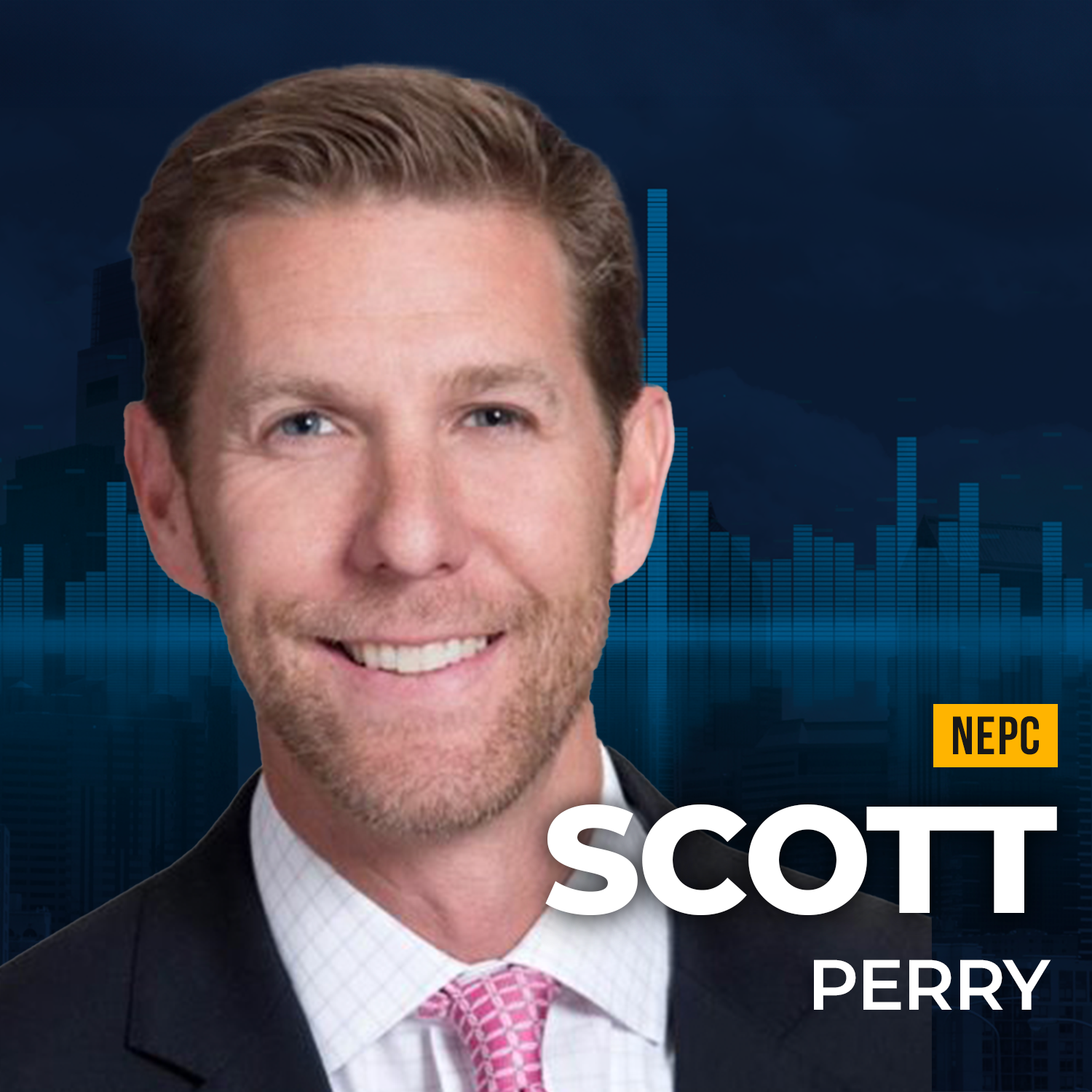
Our guest today is Scott Perry, Partner and Head of OCIO Portfolio Strategy at NEPC, one of the industry's largest full service investment consulting firms. Scott brings nearly two decades of institutional investment experience with a deep specialization in OCIO portfolio strategy, endowment style investing, and impact driven portfolio design. Joining NEPC in 2006, Scott has played a pivotal role in developing the firm's investment frameworks for its OCIO clients by designing, maintaining, and tactically adjusting portfolios for institutions across sectors. He earned his BSBA in management from Bucknell University and an MBA from Babson College. He also holds the CAAI designation and began his career in analyst roles at Putnam Investments and Ashton Partners, where he developed a foundation in both asset management and investment consulting before joining NEPC. Scott is also a recognized industry voice on OCIO Evolution and Impact Investing, having been featured in publications including the Financial Times, Pensions and Investments, and Institutional Investor. He was named one of the world's most influential investment consultants by CIO magazine. NEPC, headquartered in Boston and founded in 1986, is one of the largest independent employee owned investment consulting firms in the United States, with more than four decades of experience advising institutional investors. The firm serves endowments, foundations, pension plans, health care systems, and other mission driven organizations through both traditional consulting and OCIO solutions. Please join me in welcoming Scott Perry of NEPC. Scott, thank you so much for being here. Welcome to Philadelphia.
Scott Perry: Rob, great to reconnect with you and great to see you again.
Robert Morier: It's great to see you. We go back many, many years. We both started our careers as green, I think, as each other, not really knowing what we were doing, but doing our best to pretend like we knew what we were doing. You absolutely do know what you're doing. I'm still trying to figure it out, so we're so grateful you're here.
Scott Perry: Glad to be here.
Robert Morier: And as always, Andrew O'Shea from Dakota, thank you for being here with us.
Andrew O’Shea: Thank you. Excited to hear from Scott. And obviously, everyone knows about NEPC as one of the great consultants, but excited to hear more about the OCIO business within NEPC as well.
Robert Morier: Absolutely. Very important question to start. Does NEPC still play Friday morning basketball?
Scott Perry: That was a casualty of COVID.
Robert Morier: That's very sad to hear.
Scott Perry: And maybe age too. We unfortunately do not have it going anymore. But it was something that we did for a long, long time. You participated in it at certain points. It was just a great thing at NEPC and a great way to spend time with people outside of the office.
Robert Morier: That ultimately became the concept for the Year Up charity tournament, is that right?
Scott Perry: That's right. So I've been involved in Year Up for over 10 years now, and it's also an organization that NEPC is closely tied with. They do incredible work, and we've done mock interviews with them, mentorships, internships. And the basketball tournament kind of was born out of that, where it started just as a friend-raiser and didn't have a lot of intent other than to introduce people to the Year Up organization, and turned into a fundraiser that raises about $100,000 a year, brings a lot of people in the industry together, and introduces them to Europe.
Robert Morier: There are a lot of goats in the Boston sports scene. Who was the greatest of all time for NEPC in Friday morning basketball?
Scott Perry: Tim McCusker, our CIO, who's been a long standing player, he's got that height. He's got the skill down low. He's pretty good.
Robert Morier: How about yourself? Where do you stand in the rankings?
Scott Perry: Just trying to get a run in. Just trying to be an athlete.
Robert Morier: Good. Well, I remember you were one. Thank you for sharing that. I appreciate it. Well, you joined NEPC in 2006. You've been with the firm through several market cycles. How has your perspective on portfolio strategy evolved over that time? So when you're looking at it now, nearly 20 years in.
Scott Perry: As you said, I've been at NEPC for close to 20 years now. That's given me exposure to a number of different market events, '07, '08 most notably, 2012, 2015, COVID, 2020, 2022 reset. So we've seen lots of dislocations in markets. And oftentimes, there's learnings that come from them, and they often relate to bubbles developing. Often those bubbles tie back to flows in capital going into specific areas, and then eventually that unwinds. And so I think that's been the big learning for me over the 20 years is kind of following the flows, understanding where capital is going, and being mindful of that as we set portfolio structures for our OCIO clients.
Robert Morier: I'm always curious because investment consulting, it is not a well advertised area of the market. So it's not like there are commercials for NEPC and other firms that are out there doing the type of work that you do, both from a discretionary and an advisory perspective. How did you find the industry? So when you think about those first five years and even back at Bucknell, how did the industry come to you or how did you locate it?
Scott Perry: Frankly, I just stepped into it, had no knowledge around this cottage industry that was investment consulting. Knew about management consulting, knew about investment banking, things like that, but got started in the investment industry at Putnam Investments. And as part of that, we interacted with some of the investment consultants, did reporting for them, provided portfolio insights for those groups, and got introduced to NEPC. And it was a wonderful change for me, getting into an organization that was growing, that was relatively flat, that provided, really, a great opportunity for learning. And so it's been a wonderful home for me for 20 years.
Robert Morier: How about the culture of the firm? You miss the Cambridge offices?
Scott Perry: The Cambridge office was great and we grew with Cambridge, to the point where when we were leaving Cambridge, there was a lot of tech companies and they finally had a place where you could go eat lunch at that point. But we moved downtown on the water, and then we've just moved again right around PO Square. And so we've had these different iterations of offices over those past 20 years, and it's been great. It's brought us into different communities, connected us with different people. We're relatively new to our current office, and it's a great spot. It's nice to have fresh new digs.
Robert Morier: Well, before leading NEPC's OCIO portfolio strategy, you co-led the firm's endowment and foundation practice. How did that shape your approach to institutional portfolio construction? So when you think about that endowment model.
Scott Perry: That's right. And even before that, I cut my teeth for the first five years at NEPC working with corporate defined benefit clients. And so thinking within an LDI construct. And then, as you said, moved to spend about 10 years of my time really focused on endowment foundations and working with clients in that capacity. And I think what both of those kind of journeys helped me with was really understanding the organizations and the liability streams. Understanding those things really helped you build portfolios. So within the endowment foundation space, we refer to this approach of total enterprise management. And what that means is really asking a number of important questions to learn about the organization that we're working with, and to learn about the risk profile, the return expectations that they have, and really, just kind of codifying those in a document to really be able to go back to. And so that understanding of organizations has really helped me develop portfolios and work with clients over time.
Robert Morier: I read you describe the OCIO model as a way to democratize the endowment model. What did you mean by that?
Scott Perry: I think the endowment model means different things to different people. But I think one of the important tenets of it is that it's around access to alternative investments. So hedge funds, all things private markets. And one of the struggles for especially small and mid-sized endowments and foundations is that gaining access to these top private equity firms, really challenging, especially with the ticket sizes that they might have. And then executing on those programs is really hard because you're making multiple commitments in a year and the operational burden of that is really challenging, especially for small organizations. And so I think the OCIO model really solves for that in that it brings that access, because we can aggregate commitments for private equity and allow smaller institutions to really benefit from those aggregated commitments. And then you get the speed of execution. So we've got a dedicated operations team that has 25 people and has a lot of expertise around executing these types of private equity agreements, and in doing so really fast, because that access and that speed of execution is really important to executing on that endowment model and gaining access to private markets.
Robert Morier: What are the challenges that your clients face when you're trying to adopt this endowment model? One of the factors is obviously around liquidity. So liquidity management. So when you think about the conversations with those clients who are trying to understand what that process is going to look, access being one thing… we're going to talk about how you source managers and who gets access to what. But when it comes to liquidity management, what does that discipline look like for those clients and you and their role?
Scott Perry: Oftentimes, clients do partner with NEPC as their OCIO because they want to either build or maintain a pretty sizable private markets program. The big pieces of that for us are pacing is one, which is helping them understand what's the appropriate amount of dollars to put out, not only this year, but over the next few years into the marketplace as far as commitments. The second thing is, what do we want to build? And by that, I mean, how much buyout do we want? How much venture capital? How much growth equity? What is the return and risk profile of the portfolio that we're trying to build? And then, what are the characteristics of the managers that we want in the portfolio? And so it's working through all of those things, whether we're an advisory model or an OCIO model, to create a portfolio that everyone kind of understands what we're building and ultimately leads to really good outcomes. Because the rationale for institutions pursuing private markets is that you have that return dispersion and the potential for really good alpha generation if you can execute upon it well.
Robert Morier: The execution is the key, right? So how do you differentiate yourself in that regard? So when you think about the OCIO market, there have been a lot of changes across the board. I know Andrew's got a couple questions on that in that regard. But when you think about NEPC's place in that ecosystem, what's your competitive edge?
Scott Perry: When we think about our value proposition for NEPC, OCIO, there's three things that come to mind and we often talk about. The first is performance. We have to be able to put results on the board and deliver for clients in that regard. The second is using our scale. So our OCIO business has over $130 billion in assets, and we can use that scale to form partnerships. And those partnerships are reflective of the dollars that we have, but also the fact that we're one point of contact, hopefully a good partner for those investment managers. And we want to set up structures that are beneficial for both organizations, both NEPC and our clients, as well as the investment manager, to allow them to continue to generate alpha. And then the third thing is what I call the dirty work. And the dirty work is the operational stuff, the back office, the legal work, the increased fiduciary oversight. And those are often kind of overlooked, especially by committees. But they're a really big lift in organizations, especially when you're pursuing alternative investments. And so taking those things of the plate of organizations can be a real value add and time savings. And so those are the three things that I often talk about and emphasize that we can bring to a prospective client.
Robert Morier: What does it mean to be a good partner? So when you think about your client service model, the way that you approach relationship management, particularly when you're taking over discretionary oversight of a program, what does it mean to be a good partner?
Scott Perry: Think about it from the investment management perspective. Being a good partner for us, and vice versa, is that the expectation is that we at NEPC should have done our homework. We should come prepared with really thoughtful questions. We should best utilize the time. You shouldn't have to reset with every person that you talk to. We should document and memorialize all the conversations that we have so that you're building and not resetting on conversations. And so I think that, to me, is what a good partnership looks from our perspective. And then I think it's transparency. It's transparency and insights around what's going on at NEPC, as well as what's going on at our investment firm partners.
Robert Morier: Thank you for sharing that.
Andrew O’Shea: Just moving to your research process. When you think about due diligence and manager selection, what would you say differentiates NEPC from others?
Scott Perry: Yeah. That's the secret sauce and that's what we're always trying to get at. I think there's a number of things that we focus on, and I give Sarah Samuels a lot of credit. So Sarah came in seven years ago, installed a process that really focuses on second level thinking, delineating luck from skill. One of the things that we do is we have all of our investment researchers across asset classes really talk a lot together and do so intentionally. And so that means the public equity folks are talking to long short equity folks are talking to the private equity folks to understand what's going on in each of their respective markets and how they might be interacting with each other. And I think that gives us pretty good insights across asset classes that inform some of the themes that we're seeing. The second thing is a checklist and checklists sound kind of boring, and ours has 250 questions that we're looking to answer. But it's a great discipline around what we do and also helps us memorialize the different answers. And there's a lot of great research out there in the marketplace that says that different industries, different professions that utilize checklists often have better outcomes. And I should just give a personal anecdote is that my dad has his pilot's license. He's had it for 40 years. I've flown with him hundreds of times. He goes through a pre-flight checklist that has about 40 different things that he looks at as he gets ready to fly. I think that leads to better outcomes. I certainly feel a lot more…
Robert Morier: You're here.
Scott Perry: Yeah. I feel a lot more comfortable about it. And so I think there's a lot of power in that discipline of checklists. So that's an important part of our process. Another is quantitative tools. So I think with the proprietary quantitative tools that we've developed, they're really attribution focused. And what we're trying to do is determine that luck from skill piece. And what that means is that we're looking at and trying to dissect the investment manager that comes in and says, hey, I've got a great track record and I've outperformed by 5% above my benchmark. And, you should give me money. And I think investment managers are great at a couple of things. One, they're great at managing money typically, but they're also really good at marketing and manipulating data and playing with data to tell a good story. And it's up to us to really dig into that and understand what's driving the results. And so going back to that example of excess returns of 5% annualized, it's looking at the attribution and saying, OK, well, you've had a growth bias that entire time, and you've had a US equity bias that entire time. And those factors are really the drivers rather than something else. And that gives us, I think, better insights around the work that we're doing. And then the last thing is around alignment of interests. And so when we think about alignment of interests, we're looking at and having conversations about strategic planning. Where do these investment firms want to be in five years, such that we can understand what they want to do and how they want to grow. And growth is OK. We just don't want product proliferation and spread too thin and all of the issues that come with that. And we also want to understand compensation, alignment, and value drivers. And that means, at its most basic form, are the people that are generating the alpha the ones that are being compensated in the form of base and bonus and ownership in the firm? If ownership is really concentrated, but there's a lot of people driving the alpha, that's a disconnect for us. And so those are some of the things that we look at around that alignment of incentives that are really important.
Andrew O’Shea: I want to ask about portfolio construction specific to the OCIO business, but I also want to clarify. So you have one manager research team that services both the advisory business and the OCIO group. So for managers to be eligible for the OCIO portfolio, they would have to be approved that are also approved for the advisory business? Am I thinking about that correctly?
Scott Perry: That's right. So we're playing from the same playbook. So any investment managers that are underwritten by our research team are available to our advisory clients as well as our OCIO clients. And really, the way that we go about creating portfolios for OCIO clients leverages all of the same resources. So we're trying to bring to bear the asset allocation team and their insights. We're trying to bring to bear the portfolio construction teams and the tools that they've created. And we're utilizing the investment manager, team and the underwriting process that they've gone through. And so it's really all the same as far as the starting point. I think where there can be some differences in terms of advisory versus OCIO is around the speed of decision making, the governance. Advisory clients have different committees, they have different governance processes. They work through that at different paces. For our OCIO team, we've got a lot of good muscle memory. We have the same team members in the same seats for a long time. And that process is pretty well defined, well documented, and we're overseen by our OCIO committee. And that allows us to really move pretty quickly without sacrificing any of the steps along the way.
Andrew O’Shea: How do you balance qualitative judgment with quantitative rigor in building a portfolio or evaluating a manager? Always a balance and an art?
Scott Perry: Yeah. Classic consulting answer. It depends. I think the quantitative piece is easy. And I think what we try to do is not be too wedded or reliant on that because, for a fund, a strategy to get to that point, it's going to have good numbers typically. But what we're looking to understand and I think where we run into more of the red flags or the issues is around the qualitative. And it's some of the things I mentioned around that alignment of incentives. But it's also things like culture, and it's spending time with a broader segment of investment firms. And so oftentimes you meet with the senior folks at a firm and they're really good at telling the story, and they're very much succinct. But if you can spend time with some of the analysts, you can get the unvarnished opinion. And that can be helpful because it just confirms what you heard, and that's great. Or it can be a little bit different and it can give you some insights around, OK, I need to dig in a little bit further on some of these pieces that sound a little bit different from what I might have heard.
Robert Morier: Scott, when you're sitting down with a potential client for the first time and they are expressing either questions or concerns, what are some of those common questions that you receive from clients early on in the stage who are considering adopting a discretionary mandate or an outsourced CIO mandate from NEPC?
Scott Perry: It's often around who's going to do what and giving up control. Giving up control can be hard. We're talking about big pools of capital, and oftentimes there's one or two stakeholders that's, at the end of the day, responsible for that capital, and making sure that they're turning it over to a trusted pair of hands is really critical. So we often go through roles and responsibilities chart to show them, OK, here's an advisory model. Here's how you work today and the responsibilities that either staff or the committee might have as they execute things today. Here's how that shifts in an OCIO model. And I think the important thing in an OCIO model is that the high level strategy and decision making still sits with the organization and the investment committees or the board. And what they're offloading is some of the more micro decisions around investment manager selection, portfolio construction, sizing, things like that. And then that implementation of the portfolio, some of the things that it's harder for committees to add value on, but it still puts them in a great position, I think, to add value on the strategic.
Andrew O’Shea: If you've ever been frustrated trying to build custom reports in either Dakota Marketplace or Salesforce, we have introduced Dakota Joe for you. Dakota Joe is a natural language Report Builder native to Salesforce, built inside of Dakota Marketplace. For all of our Dakota Marketplace users, you can find Dakota Joe today and start running reports on accounts, investments, contacts, and a whole list of other objects. For Salesforce users, we have Dakota Joe coming soon to your internal Salesforce logins. You can learn more about both today at dakotajoe.ai.
Robert Morier: Particularly with OCIO, not all the time, but more often than not, those clients will have members of the investment community that are working in investments, that are working in finance. So to your point around control, there's also inputs. So how do you balance the input that you receive from the committee versus your role as the discretionary advisor over that pool of capital. Recognizing, as you just said, which I appreciate, that they haven't lost all control. That's not the way this works. But you always have various degrees of expertise within the house. So how do you manage it?
Scott Perry: You're absolutely right. So investment committees are often made up of investment professionals, and they have pockets of interest across the industry and often will focus on those in their comments and discussions at the committee setting. But what we try to do is really leverage that skill set at that strategic level. So provide those inputs in how we construct the portfolio from a strategic asset allocation perspective, as well as just highlighting the features that you want to see in the portfolio. And then let us go about finding the way to implement it and the managers to implement it with. It's harder and I think more challenging when you have those sacred cows. And by that I mean managers that they want to keep in a portfolio. And it blurs the lines around who is the OCIO or who has discretion. So keeping the committee at that strategic level, but again, giving them good input into the process allows, I think, for better outcomes rather than those micro inputs that you might get along the way.
Robert Morier: That makes sense. So when you're designing that OCIO portfolio, how do you balance the long term strategic allocation with the short term tactical decisions? Because I think what's so interesting about the OCIO model is that you got what you asked for. You wanted a little bit more discretion so you could move faster. And now you can. How do you manage that discipline of the long term strategic versus the ability now to move within the quarter or the month?
Scott Perry: There's a lot of research around strategic asset allocation. It typically drives a big part of investment outcomes, period. We don't debate that. Absolutely believe in that. The tactical piece is fun to talk about. Everyone generally wants to engage on that. It's very topical. But it is harder to add value that way, and I think we fully acknowledge that. So there's two ways that we try to add value on the tactical. The first is identifying themes. And those themes could be risk themes, return themes that exist in markets today. Those typically have a time horizon that might be more like a year or two years. And we'll be thoughtful about how we size those, because it's hard to get them in the portfolio at the right time, maybe even hard to get them out of the portfolio at the right time. And an example of one of those today for us is that we've seen incredible returns out of the S&P 500 over the last three years, over 20% annualized. And the leadership has been fairly concentrated in that. What we see now is a tech sector that represents over a third of the S&P 500. And so you've got this concentration build up. And so what we've done is shift some of our S&P 500 exposure to a more quality and value exposure within large cap. And we think that's important from a risk management perspective as well as an opportunity to generate returns if we do see a shift in markets. And so that's one of the ways that we're thinking about the tactical, and we'll limit that to one or two or three ideas going on in the portfolio. And again, we'll be mindful of the sizing and what the impact could be, because they're hard to get right. The second one is more of an active rebalancing decision. And this is where I think we really can add value as an OCIO, because in advisory model, you have quarterly committee meetings and it's really hard to make rebalancing decisions when you only meet once a quarter and only have an hour or so to do. Using April as an example, in the early part of this year, what we saw is challenging equity markets in February and March, lead up to liberation day in April, peak to trough markets… equity markets have gone down 20%. And our asset allocation team and our OCIO team regularly getting together, looking at a number of inputs, hearing a number of perspectives, looking at valuations, looking at VIX, looking at growth rates, thinking about the probability of implementation and the associated impacts, and came to a decision that we wanted to not only rebalance back to targets but rebalance above equity targets and be active about that. And so we did that in mid-April. Timing worked out pretty well in this case. And we sourced it from higher quality fixed income, which, of course, had rallied over the prior few months. And so I think, in that case, a good outcome. But I think more importantly, a pretty good process around it and the opportunity to take advantage of those dislocations, because they only present themselves once a year, once every two years. And that's a place where we can provide, I think, nice discipline.
Robert Morier: But emotion presents itself every day. So how do you extract the emotion from the committee? For lots of reasons. I have a friend who sits on a committee at another independent school, and they've been increasing their exposure to private credit. Or I have a friend who isn't moving out of investment grade fixed income. How do you manage the emotion, the behaviors of your clients as it relates to these when they come up? I recognize they don't come up as often, but when they do.
Scott Perry: Markets ebb and flow. And so there's going to be points where stakeholders are frustrated with a situation, whether it's just the backdrop of the markets or the specific performance of their portfolio. And I think there's two things that I always anchor to that I think are helpful at diffusing those types of situations. One is pointing back to that total enterprise management process that I talked about, where you ask a number of different questions of the committee, you memorialize those responses, and you can always point back to them. Here's why we did this. This is the portfolio that we're trying to create. And that can be a great discipline to have in place to remind committees as to why decisions have been made, because committee members can be short, and committee members, frankly, change. They turn over. And so you need to point back and go through that process every three to five years. The second thing is around data, and just acknowledging that something may not have worked out in line with expectations to date, but reminding everyone, here's the information that we looked at when we made this decision. This was the process that we went through. This is the role that it plays in the portfolio. Those types of fact based pieces are really helpful, I think, in reminding committee members, and again, diffusing somewhat tense situations.
Robert Morier: What does a strategic partnership look like with an asset manager? I remember when I was in the game, if I found out another asset manager was a strategic partner of NEPC's, I would say, how did that happen? I'm calling you guys once a month and I'm trying to figure out how to share thoughts and ideas and insights and be as good of a partner to you as we hope we can. What does that look like experientially?
Scott Perry: That's a phrase you hear used a lot.
Robert Morier: Yes.
Scott Perry: Maybe overused, but I think it can be real. And I think some of the things that we see from those that we view as strategic partners is when they come into meetings or set up meetings, it's less about the immediate sell of a product, a fund, a strategy, and it's more about, tell us about NEPC. Tell us about your clients. What are the areas that you're focused on? Where do you see your focus shifting over the next year? And that can be really helpful as a level setting around, where do we want to focus these conversations, given their area of expertise? So I think that's one important thing. The other thing is being a thought partner. So that can come in two forms. One would be creating product together. So developing, utilizing, and leveraging a capability that might exist to that investment firm to solve for a problem that is out there in the marketplace or with our clients or an opportunity set that we see developing. And the second piece is around intellectual capital. So providing insights and sharing insights around what's going on in markets, providing access to not only portfolio manager, but also other members of the team, so that we can see what the tools are, see what you're seeing in that investment management seat around market opportunities. So I think those are the things that we think of as characteristics for a strategic partner.
Andrew O’Shea: We'd love to, Scott, hear your perspectives on a lot of trends in the industry. There's a ton of mergers and acquisitions activity amongst independent RIAs, but also we've seen mergers of consultants as well as some wealth managers. So just curious, what are you seeing from the NEPC perspective? And maybe comment on the recent partnership with Hightower.
Scott Perry: I think about our motives for the partnership with Hightower, and it really centered around the fact that we're a pretty mature business. We're coming up on 40 years in January in a really mature industry, and there's not a ton of new institutional pools of capital being created. And so while our business is in great shape, we were looking for ways to grow. And one of the areas that we had identified for a while now was accessing the RIA market, and so we had tried different initiatives, kind of smaller scale to access that market. But then we were introduced to Hightower, and we had a long conversation over probably 18 months or so around how we might be able to partner with them and access that RIA market in a way that leveraged NEPC's capabilities without impacting our core business. And so that was a big appeal to us for developing that partnership with Hightower. And subsequently, we've seen more of those where you see the combination of the institutional firm or OCIO with the RIA firm.
Andrew O’Shea: That's great. And we certainly see a big theme of the adoption of private investments and illiquid investments among high net worth individuals. And so I think it makes a lot of sense that obviously your areas of expertise are on the institutional side, managing those types of managers and pacing and commitments, because sometimes I think it's easy to go into the next best private equity fund, but it's all about the process of integrating private investments in a thoughtful way. And so that's helpful context.
Scott Perry: Yeah. And that was a big part of the thesis for the partnership, is that we feel that we've got some pretty strong private market expertise. Hightower and the RIA marketplace broadly is interested in increasing exposure to private markets. And so bringing that research, that intellectual horsepower to the RIA teams at Hightower was a big part of the rationale. The other was model portfolios. And that was leveraging a lot of our asset allocation expertise and allowing the advisors to spend more of their time on things like planning and running their business and a little bit less time on the investment function. And so we see those as really central to the thesis and where we're really going to focus our partnership with Hightower.
Robert Morier: As you continue to see the OCIO market expand, how do you think institutions should be viewing the relationship or the opportunity with an OCIO provider? So when you think about opportunities versus risks, there are more OCIOs than ever, and they're growing, in some cases, through acquisition or through mergers, as we just described. And in other cases, you still have the very small boutique who's got a couple clients and they're doing what they do. So where do you see, as this growth continues, the opportunities and the risk for the clients underneath all of that?
Scott Perry: The risk is probably around the flow of assets. And so we've spent a lot of time today talking about trends in the marketplace. And one of the big themes has been an emphasis on private markets. Within the institutional channel as well as the wealth channel, there's likely to be a lot of fund flows into to private markets. And so one of the risks that I see out there in the marketplace is what happens to returns, what happens to alpha when that happens. And that's going to happen over a number of years. And we've kind seen this movie before. Public equity markets and fixed income markets have, in some ways, become pretty efficient. And hedge funds, if you think back to early 2000's, they were big return drivers and could manage risks really well. And then you have a lot of capital flow in, and the risk return profile on hedge funds changed. And I think that probably happens in private markets. And I think the key is figuring out which areas are most impacted and which areas are probably less impacted. So I think things like large and mega buyout, direct lending, those probably are the recipients of lots of assets, and as a result, returns probably compress. Things like venture capital, things like niche lending. They probably see less assets and are less impacted, and I think they are still more viable return seeking opportunities.
Robert Morier: When you think about something like venture capital, given that some of these clients are smaller, will you access that exposure through a fund of funds model, or will you continue to go direct?
Scott Perry: Typically, when clients come to us and partner with us as an OCIO, we're looking to create a direct program for them. That's not a hard and fast rule, but in most cases, that's what we're doing, is creating a customized program for them. We will utilize fund to funds, in certain cases where we're looking for broad diversification right off the bat. Secondaries, for example, can be a great thing to utilize as a way to get that broad exposure across vintages, across strategies, across managers. So that can often be a big part of the puzzle in getting a jumpstart on a private equity program. So more directs than fund to funds. But it can be a mix.
Robert Morier: You touched on efficiencies in public markets. Could you talk a little bit about active versus passive? So when is passive utilized? Should it be utilized?
Scott Perry: We've gone through a number of years in a row where passive has done incredibly well. And that's because of that concentration in leadership within some of the benchmarks. And that's made it really hard for some managers that have pretty good expertise and insights to add value and keep up, because they're not going to concentrate quite as much. They're not going to take the risk that might come with owning 8% or 10% of a single position. And so where we find ourselves and where we kind of gravitate is typically about 30% to 40% of our portfolios are invested passively. And no surprises as to the areas, the more efficient parts of the markets, large cap equities, international, larger cap equities, higher quality fixed income. And that's been beneficial because you get really cheap beta as a result, and you're not fighting the tide, as it seems. And it allows us to focus on the areas where we think we can add value and where there is greater level of dispersion. I do think, at some point, there's going to be a little bit of a reckoning, because with all this concentration in some of the benchmarks, the momentum that comes behind passive, I think there will be a reset. I don't exactly when, of course, but I think there will be a bit of a reset that goes on.
Robert Morier: When it happens, we'll replay this episode for our audience to make you look exactly on point in terms of your timing. Thank you for that. I greatly appreciate it. It did have me thinking a little bit about vehicles and structure. So when you're putting these portfolios together… and I know, Andrew, you think about this a lot in terms of a commingled fund versus a separate account structure. Any preferences? So if an asset manager is coming to you, what do you generally look for in structure?
Scott Perry: The more options, the better. Having that flexibility to solve for different clients is always best. So, it's oftentimes the larger clients that want SMAs. You see that more present with advisory relationships, because the OCIO relationships that we have often are in the small and midsize part of the market. So the preference there is typically a commingled fund, and one that can recognize that partnership in terms of fee arrangements and preferential economics. Mutual funds, I'd say certainly lower on the stack because of that limited flexibility in terms of what you can do in those structures, as well as the flexibility around fees, the trend that we're seeing… and this ties back to the discussion with Andrew about Hightower and the increase in focus on wealth… is that those ETF vehicles, I think, are going to be more and more important. We're seeing an increasing amount of active ETF vehicles, and those will be a really big part, I think, of the addressing the wealth channel. There's also the new ETF share class of mutual funds. And that's going to be a big deal because those are just better, more efficient tax structures than a mutual fund for the wealth channel. So if pursuing and focusing on the wealth channel is something of importance in certain investment managers, ETFs, I think, are going to be a big part of the game.
Robert Morier: When you think about when we grew up in the industry, kind of 2002 to 2007, the early days, hedge funds, were it. It was all about the hedge fund return. It was all about the hedge fund manager, the pedigree where you were coming from. Not so much today. It's tougher to probably get a meeting as a hedge fund manager than ever before. But that said, there have been some interesting pockets of opportunity popping up within that space. How are you all seeing the hedge fund, if you want to call it, asset class today? And where some of those opportunities that you're keeping an eye on?
Scott Perry: You nailed it with hedge funds. That market really has evolved, and I think, in some ways, kind of institutionalized. More transparency, more risk management. And that's meant generally lower returns and lower volatility. So in some ways, a little less exciting but still can play a valuable role in portfolios. And for our typical OCIO client, we probably have somewhere between 5% and 15% in hedge funds. The goal is to provide exposure to markets that we wouldn't otherwise have exposure to through the more common public markets. And I think where things are going today, one of the observations that I have is that I feel like multi-strategy funds are eating the hedge fund world. Teams are being swallowed up into these big multi-strats, and the multi-strats are generating some really good returns. The downside, of course, is they've got fees that are just out of this world. And that's not only the sticker price, but it's also what they're sharing back with the teams. So that remains, I think, one of the challenges around hedge funds. But I think that that is a trend that will be interesting to see play out is that continued growth of multi-strategy firms and the probably converse challenges that might face the individual shop focused on one strategy. And so still, again, play an important role, but it's an evolving world in the hedge fund space.
Andrew O’Shea: I'd be interested where you all are… the NEPC team and OCIO team are finding opportunity today across private markets. And I know that's a broad question and it can be different by client, but are there any themes where you all are spending more time than others?
Scott Perry: I'm glad you didn't ask about public markets, because my answer is going to be really boring there. In public markets, we see pretty elevated equity valuations. In credit markets, you see pretty tight spreads. So it's kind of a boring, answer right now, and eventually, that'll change. But in private markets, I still think there are things to do. And it's about finding pockets within certain areas. So buyouts, for example. For the last couple of years, we've been focused on lower middle market buyouts with the belief that gravitating towards strategies that are less dependent on leverage and those that are more operationally focused and would likely succeed in a world of elevated rates, and one that it's harder to generate those financial returns. So that's been a big area of emphasis for us as we think about constructing portfolios, especially within the buyout space. Another area is venture, and it's been more on the early stage part of venture, where valuations are still pretty reasonable versus the later stage. And that's a large part of our focus, within the construction of private equity portfolios.
Robert Morier: So you're having to hear about all those AI companies. So how have you been thinking about AI from a company perspective?
Scott Perry: We've tried to be pretty active, and it's been really interesting because we ask this question of virtually every investment manager that comes to our office, and the answers are all over the map. In some cases you can really tell that it's just not part of their ethos and it's not a focus, and in other cases, you hear some really interesting ways in which they're using it to enhance their process to bring them beyond what they might have otherwise been able to do with the bodies that they have in place. So that part is really helpful to us. The way that we've used it is in those interactions with investment managers. So anytime we have a meeting, we'll ask if we can record that meeting with a technology that we utilize called Circleback. And that allows us to record and generate notes from the meeting and summarize the meeting. And what the kind of byproduct of that is that our investment research team can actively engage more in that conversation with the manager, rather than being focused on taking notes throughout the meeting. And so it allows for that better active engagement, and then on the back side, it also allows us to be a reviewer of notes rather than a author of notes. And so there's a time savings there too that allows for greater efficiency. So that's one of the big ways that we're using it today. And they'll be plenty more, but that's going to be a big time savings for us. And I think a real value add.
Robert Morier: Looking ahead, how do you define success, then, for the OCIO clients, but beyond traditional performance metrics? What are some of those things that you think are going to be most important when a client is talking to you three years from now about some of these changes or enhancements that you're implementing?
Scott Perry: I think setting aside performance, it's, were we thoughtful about risk? That's, I think, a big thing and always an area of focus at NEPC. The second thing is probably around the features within their portfolio. So were we able to reflect things that they want to lean into, whether they be DEI or ESG or impact, and allow them to do that and provide for that in their portfolio? And maybe a third is truly taking that operational, legal, fiduciary burden off of their plate, because that's a big part of the value proposition that I mentioned is that they can offload that at a very reasonable price. And I think that brings, again, a ton of value add and allows those folks to really focus on the key value add activities for them.
Robert Morier: Nobody's looking forward to the next credit crisis, but how do you think about risk management? Just one last question for you on the OCIO front. So there's still a lot of froth. So how do you think about just mitigating both euphoria on one side where people think this is never going to end and have never experienced a credit crisis, which is not an insignificant amount of people in the industry today, versus your history, having grown up in it.
Scott Perry: We saw a couple cracks over the last month with some unexpected bankruptcies and a fair amount of exposure to those. And it highlighted, I think, different ways that you can get around some of the traditional understanding of companies and the traditional kind of analysis of companies, because there's a lot of off balance sheet arrangements that were going on there. And so we're trying to find managers that we think can be disciplined around their underwriting process, but that's been a really hard thing to evaluate in a default cycle that's been effectively nonexistent. So continue to focus on managers that are a little bit up in quality, managers that have good discipline around underwriting and not giving on covenants, and then learning from them around how they view some of these recent activities and what they're building into their process as they go forward. So it's not easy, and it ties back to some of that conversation that we have around a lot of fund flows. And typically, when you have a lot of fund flows into a market, things eventually happen to reset it in some way. And so we'll likely see that at some point. Hard to predict exactly where it will be. But if we can be disciplined in our pacing and those markets go into some of the niche lending areas, I think we'll have pretty good outcomes for clients.
Robert Morier: It's conversations like this that I regret we cap this at an hour. We greatly appreciate your time, Scott, and coming to Philadelphia to speak with us in the Dakota Studios and have this conversation. Before we let you go, I'm curious just how you stay grounded. So what are you doing outside of the office to continue to look like you're in your 30s when I look like I'm pushing into my 60s? So I'd love to hear it.
Scott Perry: I dye my hair.
Robert Morier: Good strategy.
Scott Perry: It's anything outside for me, it's golfing, it's biking, it's hiking, running, all those things. I think as we head into winter, the thing that's top of mind for me is skiing. And it's interesting. We had a woman that worked at NEPC in our human resource group, and she kind of described any hobby that you're singularly focused on as a form of meditation. And that really resonated with me, because it really is kind of a way for me to disconnect, be outside, all of those good things that come from that. So that's top of mind for me as we head into ski season.
Robert Morier: Remind me where you're from, originally. Where did you grow up?
Scott Perry: So just outside of Boston, Lexington, Massachusetts.
Robert Morier: So how did you end up at Bucknell?
Scott Perry: Part of the just kind of luck and happenstance and a little bit of baseball mixed in. Great school.
Robert Morier: They accepted you back to New England when you…
Scott Perry: Probably wouldn't be able to get in there today. But looked at a number of different schools and got to Bucknell on a nice sunny day and actually ran into a family friend from Lexington that was walking around campus, gave us a great tour, and fell in love with the place. Beautiful campus. A great baseball program. A great educational experience. And so it was a wonderful four years for me.
Robert Morier: Congratulations on all your success. I'm very proud to see it, especially having grown up in the same year. So it's nice to see somebody come to the top. So thank you so much.
Scott Perry: Rob, great to see you. Great to reconnect.
Robert Morier: Thank you. Andrew, thank you so much for being here.
Andrew O’Shea: Yep. Thanks, Scott. Good to be with you.
Robert Morier: If you'd like to learn more about Scott and NEPC, please visit their website at www.nepc.com. You can find this episode and past episodes on Spotify, Apple Podcasts, or your favorite podcast platform. We're also on YouTube if you prefer to watch while you listen. And for more content, please visit us at dakota.com. Scott, thank you again for being here. Andrew, thank you as always. And to our audience, thank you for investing your time with Dakota.