Robert Morier: Welcome to the Dakota Live Podcast. I'm your host, Robert Morier. The goal of this podcast is to help you better the people behind investment decisions. We introduce you to chief investment officers, manager research professionals, and other important players in the industry who will help you sell in between the lines and better understand the investment sales ecosystem. If you're not familiar with Dakota and our Dakota Live content, please check out our website at dakota.com to learn more about our services. Before we get started, I need to read a brief disclosure. This content is provided for informational purposes and should not be relied upon as recommendations or advice about investing in securities. All investments involve risk and may lose money. Dakota does not guarantee the accuracy of any of the information provided by the speaker, who is not affiliated with Dakota. Not a solicitation, testimonial, or endorsement by Dakota or its affiliates. Nothing herein is intended to indicate approval, support, or recommendation of the investment advisor or supervised persons by Dakota.
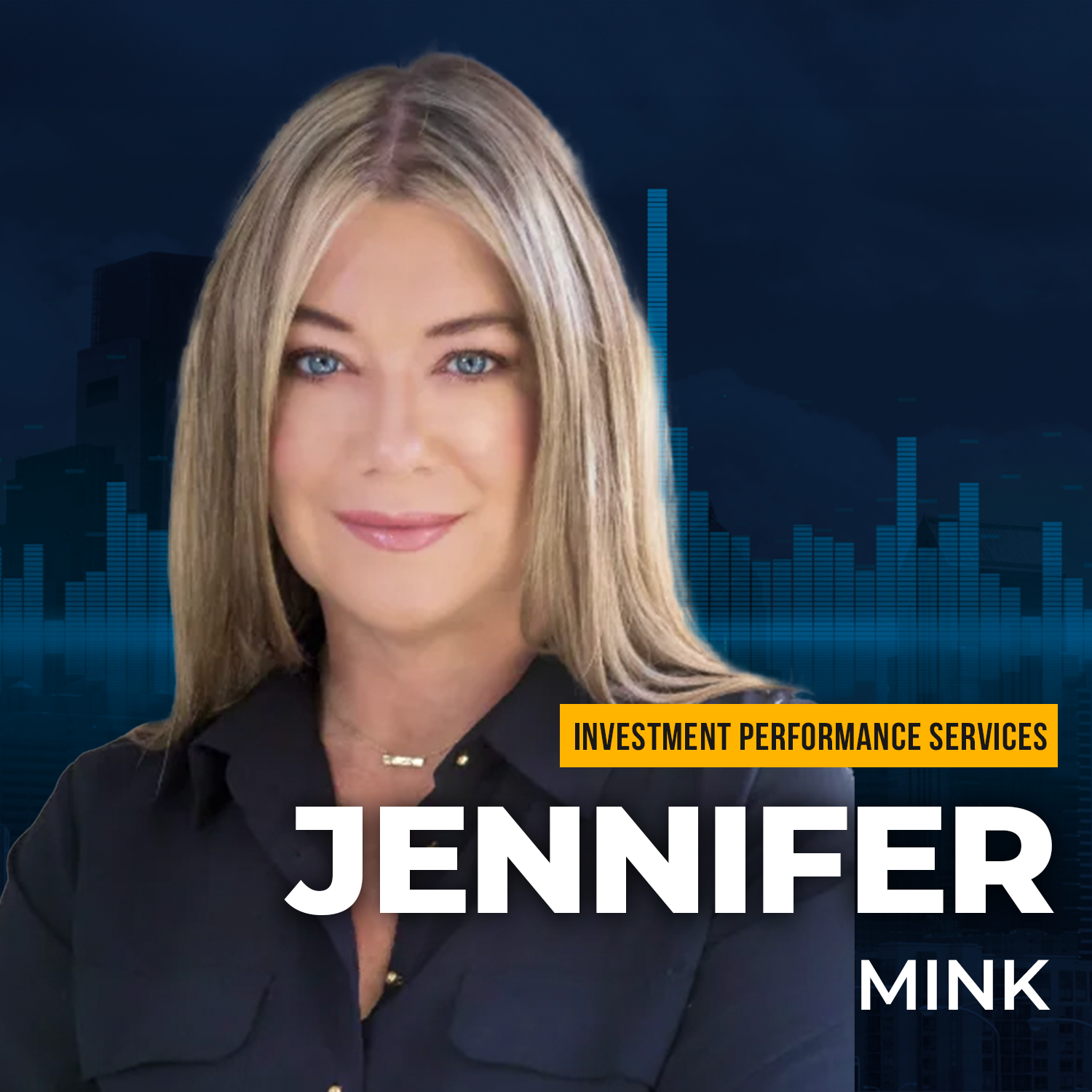
Today's episode is brought to you by Dakota Marketplace. Are you tired of constantly jumping between multiple databases and channels to find the right investment opportunities? Introducing Dakota Marketplace. The comprehensive, institutional, and intermediary database built by fundraisers for fundraisers. With Dakota Marketplace, you'll have access to all channels and asset classes in one place, saving you time and streamlining your fundraising process. Say goodbye to the frustration of searching through multiple databases and say hello to a seamless and efficient fundraising experience. Sign up now and see the difference Dakota Marketplace can make for you. Visit dakotamarketplace.com today. This week on the Dakota Life Podcast, we sit down with Jennifer Mink, President of Investment Performance Services, IPS, a Philadelphia native, and lifelong advocate for fiduciary excellence. Founded in 1986, IPS advises more than 250 client funds, representing approximately $70 billion in assets under advisement, with 98% of its clients being Taft-Hartley plans, the pension, health, and welfare funds that serve America's union members.
Jennifer leads IPS's investment consulting practice, guiding clients through policy development, asset allocation, performance monitoring, and manager due diligence. She brings more than two decades of experience helping trustees make informed, disciplined decisions while navigating market complexity and regulatory change. In our conversation, Jennifer is going to share with us her journey from the trades of Philadelphia to leading one of the nation's top Taft-Hartley consulting firms, how IPS builds trust within union communities and approaches fiduciary education, her perspective on public versus private markets, and what potential rate cuts could mean for pensions and long-term investors. How endurance, from Boston to New York marathons, parallels the discipline required in investment consulting. Jennifer's story is one of purpose and perseverance, a reminder that behind every pension promise our people and behind every decision, a fiduciary who cares deeply about getting it right. I'm very happy to welcome to our studio, Jennifer Mink, President of Investment Performance Services. Jennifer, welcome to the Philadelphia studio.
Jennifer Mink: Thank you so much for having me. I really appreciate it.
Robert Morier: Well, it's a pleasure to have you here. We also have a special guest in our audience. Your daughter is here with us.
Jennifer Mink: My daughter Ava.
Robert Morier: Who is a student at Temple University. So not too far, which we're very happy. And studying communications. So she gets to see this studio, and she gets to see her mom in action. That's awesome. So we're very excited about that.
Jennifer Mink: Thank you.
Robert Morier: Well, we have a lot of questions to ask you. Before we do, I'm going to read your biography for our audience. Jennifer Mink is the President of Investment Performance Services, IPS, where she oversees the firm's investment consulting practice and serves on both its investment and management committees. She leads client relationships and strategic initiatives across the country, advising on investment policy, asset allocation, performance evaluation, and manage your due diligence, with a particular focus on hedge fund research. A frequent author and speaker on fiduciary responsibility and trustee education, Jennifer has contributed to the investment policy guidebook for trustees and benefits magazine. Before joining IPS in 2003, she worked with Taft-Hartley Benefit Funds at Wachovia Securities and began her career at AXA advisors. A Philadelphia native, Jennifer holds a BS from North Carolina State University and an MBA from Rider University, and she's an avid marathon runner, having completed both the New York and Boston marathons. Jennifer, thank you again for being here. Congratulations on all your success. We look forward to hearing how it all came together and where it's going forward for you.
Jennifer Mink: Thank you so much.
Robert Morier: So, running marathons. Did you run this past New York City marathon?
Jennifer Mink: I did not. I did not, but I did watch it.
Robert Morier: When was the last one?
Jennifer Mink: So I've run New York City once, and that was in 2013. I had actually trained to run in 2012. That was going to be my first marathon, and that was the year that Hurricane Sandy hit. So it was pretty devastating. New York didn't know what to do. They said they were going to move forward with it. I battled my way into New York City to get my bib. I'll never forget when I went to pick it up. Journey's Don't Stop Believing was playing. And I thought, I can't believe I'm going to do this. And then a day later, they canceled it.
Robert Morier: Oh, no. I'm sorry. I remember that marathon, too. I was living in New York City at the time, and it was, yeah, tough for everybody.
Jennifer Mink: I think it was the first time they've ever canceled it.
Robert Morier: It was. I think first and only.
Jennifer Mink: Yeah, first and only. So I had a whole other year of training.
Robert Morier: Ok. Well, it shows discipline and fortitude. I'm sure your clients like to see that. So we appreciate you sharing this story. So how does a Philadelphia native end up at North Carolina State University?
Jennifer Mink: Weather. Weather, first and foremost. Growing up in the Northeast, I kind of had enough of weather. And quite frankly, I just wanted a different experience. I wanted to go somewhere new in the country, meet new people. I went all by myself. I didn't know anyone. I didn't have any friends who went there. And quite frankly, 35 years ago, the college experience was very different. Now, having gone through it with two of my daughters, you go visit, you apply. Back then, I was the first person in my family to go to college, so I didn't have a lot of training on exactly what to do. So I just thought, let me just go South, have better weather, and try to experience a new culture. My father was pretty shocked when he dropped me off in the middle of tobacco, and cornfields, and cotton fields, but it was a great experience. I really loved my time in North Carolina.
Robert Morier: So, from North Carolina, how did you find this industry? I'm always curious, because even within Drexel today, so fast forwarding to 2025, it's not easy for students to find asset management, and it's probably even less easy to find investment consulting. But you did ultimately find it. So, what were you thinking when you were down at NC State in terms of careers, and how did you end up on this road?
Jennifer Mink: The interesting thing about investment consulting is it's really not advertised anywhere. I don't even think today that its advertised. So at the time, I didn't even know that that existed. So upon graduation from NC State, I went into the actual business world. I spent a year at the Mobil Oil Corporation and realized that 9:00 to 5:00 behind a desk was really not for me, so I left, and I went to graduate school. I went and got an MBA, and I thought, I want to go into the world of finance. I've always been a hard worker, and I thought if I went into that, especially as a female, commissions are paid. It doesn't matter if you're a man or a woman. And the harder you work, the more money you're going to make. So that is the route that I took. So I started off on the retail side, cold calling. So I had done that for about four or five years. I had sat down with my father, who grew up in the building trades, and he made a comment to me that really stood out. And he said, "Jennifer, I wish I knew someone like you 20 years ago. People in labor, we don't a lot about investments. We just get up; we go to work every day. And it would have been so helpful to have someone like you in my life who had the knowledge to really guide what to do with that money over time." And I thought, ok, that's really resonating with me. That's who I really need to be talking to. So I actually started a partnership with labor unions in Philadelphia to do educational seminars about the financial markets. And we really targeted members who are in the last two years before they would retire. And those seminars became very popular. They grew in size. And that eventually led me to the pension side of the business. So doing the pension consulting. So, rather than working at the member level, actually working at the institutional pension level.
Robert Morier: So it sounds like education has been a very important thread in your career as it relates to working with your clients and then the underlying pension members.
Jennifer Mink: My father had two daughters. And he stressed education with us. He always used to say, I'm not going to live forever, and you need to be dependent on yourself. You need to be able to earn your own income and not be dependent on anyone and truly stress education for women.
Robert Morier: What did your father do for work?
Jennifer Mink: So he is now a retired electrician. So he is living on the pension that he worked 40 years to earn.
Robert Morier: That's wonderful. And you also grew up in a family of firefighters, police officers, building tradesmen, and of course, your father is an electrician. How did that upbringing shape your view on the fiduciary role of serving the people behind that pension?
Jennifer Mink: So in my household, you were always expected to give your best. My father would say to my sister and I, don't half ass it. Always give 100% in anything that you're doing. So I saw my grandfather was a police officer, I had two uncles who were firemen, and my father was in the building trades. So I saw these men get up every day, go to work in the elements. So rain or shine, whether it was 10 degrees or 110 degrees, they went out and put in a full day's work. But what was unique about what they did is that they were really part of something, and that was a union. And that is a brotherhood where people really have your back. Fiduciary duty is very similar. It forces you to have someone else's interest in mind, and you really have to have someone else's back to make sure that the benefits earned are available when they need them.
Robert Morier: Can you help us set the stage for where we are today with Taft-Hartley plans? According to State Street Global Advisors, many Taft-Hartley plans finished 2024 in far better shape than many had expected. And over the years, we've obviously seen the headlines and heard the stories of underfunded plans and this transition from defined-benefit to defined-contribution. What do you think are the drivers that are causing the success today for some of these plans, and which are sustainable, which are cyclical?
Jennifer Mink: Well, first off would be the equity markets. Last year, the S&P was up 25%. That's coming off a year where it was up 26%. Growth style investing was up over 33% last year. That has been phenomenal for investment portfolios. We do lean into dedicated equity allocations. So we shy away from global, and we have dedicated US and dedicated international allocations. Certainly when you look at the past five years of the S&P, up double digits. Probably up about 17%. We really don't think that is sustainable. When we do our capital market assumptions, our forward projections for US equities are about 7%. So we'll take the double-digit returns that we've received, but looking forward, we're not really expecting that over the next five years. Certainly, fixed income has played a part. The rate increases that were difficult to stomach in 2022 have certainly helped those higher yields in both investment grade and high yield. Certainly, reinvesting at that higher level has been very helpful. We have been increasing allocations for fixed income. Certainly, we are in beginning kind of a rate-declining environment. We're not expecting rates to go back to zero, and we're certainly not expecting them to go down as dramatically as they went up. So I think that is somewhat sustainable for the next few years. And then lastly are really it's the economy. We've been in a period of economic growth, which for our clients, which are building trades primarily, that results in increased man-hours. And increased man-hours means increased contributions into the funds. We've had a lot of money flowing into the fund, which has been very good. And if we look at the horizon in what is going on with infrastructure, investing, real estate is starting to rebound. We're expecting that to continue. If you Google what is expected to happen in any industry in terms of AI, the number one industry not impacted by AI is medicine. Number two are skilled trades. So looking forward, building trades. Right now, there's a shortage of electricians, plumbers, operating engineers, you name it. So moving forward, we're expecting that to continue. So we think that is sustainable.
Robert Morier: Interesting. So are your clients participants? Is it growing? So are you seeing your clients in terms of their pension holders starting to increase? Are more people coming into these skilled trade industries from your perspective?
Jennifer Mink: Well, I think it's kind of like investment consulting. You don't know unless you know. So most people don't know a lot about labor unions, unless you know somebody who is in a labor union. I think the trades are starting to do a better job of recruiting and going out to high schools, like many colleges do, and really offering an alternative. Like myself. I did a 9:00 to 5:00 for one year at a Fortune 100 company. That was not for me. I needed to be moving. I wanted to be traveling. I didn't want to be subject to those hours. It's the same thing with college. Not everybody is designed to have a four-year degree. Not everybody wants to go into debt. So when you look at what the trades can offer, one, you can have a skill, and two, you earn while you learn. So you enter into an apprentice training program, and as they're training you, you are getting paid and going out on the job. Then you get this wonderful benefits package, which is a defined benefit plan. Unions are one of the last industries in this country that actually offer that. So offer defined-benefit plan, offer defined-contribution plan have a wonderful health and welfare package to make sure that you can retire with dignity and have health insurance for your family.
Robert Morier: And they're coming into a pension that is likely fully funded at this point, which is different than it has been over the years past. So how should trustees then be thinking about now what? What's next? Is it liability-driven investing, is it policy changes, risk reduction, or a different type of contribution strategy?
Jennifer Mink: What's interesting is every fund is unique. So we work with 190, a little over that, unions all around the country. Different sizes. So they could be as small as $1 million to as large as $7 billion in assets. They're all different. We have multiple trades, multiple pensions under a single trade. All of those are different. Everyone has different contribution rates. Everyone has different risk tolerance. In terms of the funded status, again, it's very unique. So, for example, we have a client who's 100% fully funded, but they are very dependent on investment income to maintain that status. So it's really the demographics of a specific industry is really not allowing them to increase employer contributions or make any changes to their assumption rates, so they have to stay status quo. Other clients where we can make adjustments based on their funded status, we basically start de-risking. So we're going to pull some of the equity volatility out of the portfolio to help them maintain that funded status. But it's really about communication. We are very close to our clients. We are very involved with our clients. We talk to them constantly about their goals and objectives, any changes in their risk tolerance, funded status, any of that. So there's always an adjustment going on. It's not set it and let it go. We're constantly talking to them and making adjustments.
Robert Morier: That makes sense. How are you, the trustees that you represent, the union leaders that you represent, framing the discussion around defined-benefit versus defined-contribution today? Is there a way that it's being discussed that's providing both education as well as, I guess, for lack of a better word, pros and cons between the two?
Jennifer Mink: Well, a defined-benefit plan is really the gold standard when it comes to retirement. You are pooling risk amongst many people. You are working with skilled investment professionals. With the defined-benefit plan, you have leverage in terms of cost, and you have access to private market investments. That is very different than a defined-contribution plan or more of like a 401(k)-style plan. Many unions offer a supplement, so they will offer both. So the defined benefit is the gold standard. Defined-contribution, in our world, we have trustee-directed it as well as participant-directed. So on the trustee-directed, they operate very similar to a DB plan, where the trustees are pulling the assets and working with a professional like ours to come up with the asset allocation. In the participant-directed plan, that is very similar to a 401(k) that many individuals have at their companies. This is where you are working with mutual funds. This is where you may have some target date funds in there. Buy you, the individual, are making the investment choices, which is very different than an investment professional like IPS making the asset allocation decisions.
Robert Morier: You mentioned private markets. So how do you balance the questions that come in around access and participant education when it comes to investing in private market strategies for those DB plans?
Jennifer Mink: It's all about the education. At our firm, we would never expect a client to invest in something that they did not understand. So it doesn't matter that we understand it. I always tell my clients, if you can't sleep at night, then we're not doing our job, or this is an investment that is not for you. So we always start with education. So anything new that we're adding, particularly in private markets, we are going to start with education. So we're going to educate them fully on the asset class. We have a lot of great pieces that our research department has developed internally. We will walk them through that, we will illustrate the impact that that has on their portfolio in terms of risk and return, show what the portfolio looks like without it, what it looks like with it. I mean, the great thing about asset allocation is a lot of people have in their mind, oh, that's risky. But sometimes when you add something that may have a little bit more volatility, but it may have a lower correlation to something else in the portfolio, you actually lower the overall risk of the portfolio. So it's really trying to demonstrate that with the client. That being said, we like alternatives a lot, but they're not for everyone. They are very illiquid. So it's important for us and the trustees to understand the cash flow needs of the fund. What is the liquidity demand on the fund because the alternatives are so less liquid.
Robert Morier: Now that makes sense. I appreciate that. When you think about the expectations for alternatives, I guess one thing, maybe just to back it up one step, is when you think about your clients, I recognize that it's different for each one. But if you had to ballpark just an average allocation to private markets versus public markets, let's just think about private equity versus public equities, what is that ratio generally look like? How much of the portfolio is generally being held in private equity versus public equities?
Jennifer Mink: Well, in total, if we looked at total portfolio level for a defined-benefit plan, so for a retirement plan, we're probably looking at private market alternatives being somewhere between 20% to 40% of the total portfolio. Private equity is somewhere between 5% to 7.5%. So we try to manage that illiquid nature of it, but we want our clients to have a meaningful allocation. We also, on an annual basis, will run a private equity pacing analysis to make sure that we're always on pace, because as we're getting those distributions back, which have been a little slow in the past few years, we want to make sure we're always allocating more money to the asset class because it really does provide stability. In terms of total equity exposure, I would say for our defined-benefit plans, that's probably somewhere between 45% to maybe 50% on the high-end equities all in.
Robert Morier: Of that public equity exposure, how much of that would be outside of the United States?
Jennifer Mink: I would say anywhere from about 7 and 1/2 to maybe 15%. And that would be diversified between developed markets for large cap as well as small cap, growth and value styles.
Robert Morier: Do you find that education process of investing outside of the United States is well in the rearview? So I just remember my own education and my experiences. So I grew up in the early 2000s, late-90s, early 2000s, working with Taft-Hartley plans. And one of the components of the discussion and the education process were the benefits of looking outside of the United States, whether that be an international strategy, emerging market equities, or a global equity strategy. Is that education process still going on? Is that something that asset managers should still be aware of when they're pitching a non-US equity strategy?
Jennifer Mink: It's funny that you bring that up, because when I started in this business, that was taboo. Within the Union Marketplace, international equities was something that a lot of funds really shied away from, and that was for fear that it would impact US jobs. So as the economy became more global, and as education entered into the space, and trustees learned more about their fiduciary duty and the benefits of diversification, that has really subsided. At our firm, we do not do dedicated emerging markets. There is extreme volatility in that asset class. You're subject to a lot of political unrest and things that you cannot control, currency devaluation, wars, you name it. It can happen there. We do find value in diversification. And a lot of times what we will do is within our international equity allocations, allocate to managers who have some flexibility to move in and out of emerging markets, typically no more than 20% of the portfolio. So this allows for opportunities when they arise. But if something happens or there's no opportunity, they can pull out, and we're still diversified rather than having a dedicated position in something. And now you're trying to figure out how you're going to get your money out.
Robert Morier: Staying on this public markets track, you have extensive experience in hedge fund research, and you've contributed to the investment policy guidebook for trustees. So in your mind, what is the true role for hedge funds in a modern Taft-Hartley portfolio?
Jennifer Mink: So funny, you've been talking about hedge funds now. When I got in the business over 20 years ago, that was the equivalent of yelling shark if you were at the Jersey shore. If you talked about hedge funds, that made the hair on people's necks stand up. It was very misunderstood asset class. I think in today's portfolio, it definitely continues to serve as a return enhancer, a risk diversifier, and just increases the overall diversification of a fund. Certainly in the 2010s, returns were very muted. So we were in a zero-rate environment. Correlations were very high between asset classes. There weren't a lot of opportunities for hedge funds, so I think a lot of people abandoned the asset class. And quite frankly, it's expensive, so it was really viewed as a very expensive thing to have in your portfolio. Kind of where we stand today, I think all of that in terms of diversification and risk reduction continues to hold up. We're in a better environment now for hedge funds. Rates are higher. There's a lot of uncertainty in the market. There's more volatility that has come in. Last year, we had our fund of funds do net of 10%, somewhere up 12%, 14%. The year before that, they were up almost 10%. So it's still working, but it's nowhere near as popular as it used to be.
Robert Morier: What should hedge funds better understand about Taft-Hartleys? Having worked for a couple hedge funds over the years, there was also some resistance from the fund managers to be targeting Taft-Hartley clients, for a lot of reasons. It could be ERISA rules, it could be other qualifying factors. But what is a common misconception that you hear from the hedge fund community about Taft-Hartley plans when it comes to investing in those types of strategies?
Jennifer Mink: I think you hit it on the head. It's the ERISA fiduciary acceptance. I mean, that is a big deal in our space. That is part of a box that needs to be checked in terms of our manager due diligence process. 98% of our client base are Taft-Hartley funds, and they are covered by ERISA. So that is a wonderful piece of legislation that allows them to share their fiduciary liability with investment managers that are willing to take that on. So that is a big deal. If you think about our client base, so whether that's firemen, policemen, building tradesmen, truck drivers, people that work in grocery stores, they don't understand hedge funds. So they need to share that liability with someone who's going out and treating their members' money. So that is really the first place we start. I would get phone calls all the time. People looking to fundraise. And that would be the first question that I would ask, "Sounds good. Are you an ERISA fiduciary? Will you agree to be one in writing?" And I would typically hear, what is that? I said, "Ok, well, look that up, and then call us back if you're willing to do that."
Robert Morier: You mentioned, on average typically, 20% to 40% in private markets. Private credit has been a topic probably in every episode of this show for the last year and a half. I'm moderating a panel next week or the week after next in Texas on private credit. It seems like it's all we're talking about. It's drawn considerable focus and considerable capital. So what's your nuanced view of this case for union plans to participate in these private credit strategies? And probably most importantly is where should caution apply?
Jennifer Mink: So at IPS, we like private credit. And that is a recommendation that we have been rolling out to clients over the past two years. I've been doing a lot of public speaking at conferences about it, and we host our own client conference. And that has definitely been a topic over the past two years. In terms of money flowing into that asset class, it's been pretty substantial, which unfortunately will start muting returns. So the more money that's flowing in, that means there's more competition for deals. And that means the returns are generally probably going to be a little bit lower than they've have been. We try to steer clear of middle market. That's a very easy barrier to entry. At IPS, we tend to focus on more niche markets in the lending.
Robert Morier: I have lots of questions around your manager research process, but before we get there, a couple questions about your clients.
Jennifer Mink: Ok.
Robert Morier: So if I'm an asset manager, and I'm thinking about targeting Taft-Hartley, one of the first things that I would may scratch my head about is that I've got a national union, and I've got a local union. I've got a 26, which could be based in North Jersey, and I've got a national base down in Washington, DC. How should asset managers and our listeners be thinking about the ecosystem of Taft-Hartley unions? Meaning, if you have a local 26, are they taking direction from the national, or is the national then filtering information out? How are you working with them, and how are those decisions being made?
Jennifer Mink: So you have the local union, which might be in your city, and then you could have a regional union that is covering multiple states. And then you can have a national, which is basically covering the entire US. And then you have the international. If we start at the top now with the international, they're based in Washington, DC, and they, I would say, serve more as the parent or the leadership in terms of strategic initiative, whether that be political, whether that be for the specific industry that they oversee. And there are pension funds that are at the international level for those executives, as well as what could be international vice presidents. So now if we go down to more of the regional or national level, there may be trustees that sit on those funds that are also involved in the international. So they're kind of reporting up. And then you have the local level, where most locals have their own benefits package. They have their own pension fund, their own defined-contribution, and their own health and welfare fund. They may collectively all try to leverage benefits, or pricing, or anything like that, but for the most part, they operate their investment programs separately. So it's not necessarily what is happening at the local level, the investment managers, the asset allocation, what they are doing is going to mimic what's happening at the international level.
Robert Morier: When an asset manager then asks, how do I get on your radar? How I get on IPS's radar? What is the answer? Is it screening? Is it the databases? Is it peer referral? What's the best way to work with someone like yourself?
Jennifer Mink: I think it's all of that, but the number one thing that I would say is reach out to us. We have a website. It's very clear, the asset classes that we like and who you have to contact. You can call us on the phone. You can reach out to us by email. One of the things that I'm most proud of about our company is, and I just hear this from asset managers in the industry, is we call people back. I mean, that's our job. A lot of times our clients will refer managers to us. So they could be at a conference, they meet somebody, wherever it is. And they will ask us, hey, can you give this person a call, or can you look at this, or I heard a presentation, I sat at a conference, this sounded interesting. We'll call you. That's our job to vet. I'm always surprised when I hear that a lot of our competitors don't do that. They don't return phone calls. I'm even more surprised when I hear that firms are actually managing client assets, and they can't get a meeting with the investment consultant. So we don't take that approach. We really look for partnerships. We want to work with managers that want to work with us and care about our clients. So we need to share that view. We all have to work together.
Robert Morier: Makes perfect sense. Are there any in-house biases? Large managers versus small managers, publicly traded managers versus privately held managers. Are there any types that you tend to orient towards, or is it really just what's best for the client?
Jennifer Mink: It's what's best for the client, but there are some boxes that need to be checked, so you have to be registered with the SEC to start off with. We really are looking for that ERISA fiduciary acceptance. Certainly recognize that in some areas of private markets. Structurally, that is not possible. However, we're going to try to seek that out via side letter. So there needs to be some assurance of some of fiduciary responsibility. And then certainly no regulatory violations, current or past. So those are dealbreakers. Our goal isn't to have a huge list of managers. We want to have managers that we have conviction in. So our research process, there is some rigorous due diligence that is involved with that. But we like to have a mix of different types of managers. So we want privately held boutique companies. We want large publicly traded. We like geographic diversification. I spend a lot of time on the West Coast. A lot of my West Coast clients want to work with firms in California. That's just a preference that they have, and that's fine. We have them out there. So we always want to have a good, diversified mix of quality managers.
Robert Morier: That makes sense. Thank you. So, could you take us through that underwriting process. So that email or that call comes in, and it's a manager that tick those boxes, and it's an asset class that you're currently doing work on. What does that process look like for you and your team?
Jennifer Mink: Well, I should note that we start with the internal research that is done at IPS. So we don't outsource anything. That is 100% objective, done by analysts who are specialists in different asset classes at the firm. So they are tasked with searching through databases. We have proprietary screening that is developed by the investment committee of IPS. So the research department applies that screening to various databases to start getting ideas of managers that we like different specialties. So if they find something that they like, they're going to do more due diligence on that. Contact the manager. It might be looking at their materials, conversations, either via Zoom. They may come into our office. If that progresses, and they continue to like what they see, that is going to be escalated to an on-site due diligence visit. So this is going to be looking at much more operations, meeting with trading teams, compliance teams, really lifting up the hood, and digging in deep. Once they have the ideas that they like, that lead research analyst will then make a presentation to the entire research department justifying why they think that manager, or product, or strategy makes sense for our clients. That review also includes our director of manager research and our chief investment officer. Once there is a consensus on that investment manager, then that recommendation gets elevated to the investment committee of IPS. I'm a member of that committee. So we vet all of the managers. Once they are approved, then we have an approved list of managers. And that's what we use to make recommendations.
Robert Morier: And is there still a final? There's still a final presentation? One out of three managers may get the ticket?
Jennifer Mink: That is right. We have different service levels at IPS. So with discretionary, we are just implementing the manager. We have an expanded service where we pick the manager and just make that one recommendation to a client. And then under our traditional consulting service, that is where we pick three and bring them in.
Robert Morier: You took us behind the curtain a little bit. I'll ask you to stay there for a second. There's three managers that are going into that final presentation. Has the decision been made?
Jennifer Mink: Not necessarily. No. No. And it's anybody's game when you go in there, because sometimes the client will say, "Who should we pick?" I say, "You can flip a coin." Like we've done the due diligence. They're all good. So my job as a good consultant is to make their selection difficult. So this is where it really comes into play. Maybe I'm going to have a small boutique company, maybe I'm going to have a very large publicly traded company, and then maybe I have a wild card. Maybe it's somebody that's a little bit more quant in what they're doing. There's going to be a different variation in there.
Robert Morier: So you've got 30 minutes or less to…
Jennifer Mink: It's usually less. It's usually less.
Robert Morier: And again, we're behind the curtain. Usually that meeting is running late. And the meeting then starts.
Jennifer Mink: Could be. It could be.
Robert Morier: It could be anywhere. Not just with Taft-Hartley. It could be any final.
Jennifer Mink: Agendas are heavy.
Robert Morier: Exactly.
Jennifer Mink: People don't realize. And I've had to talk to people at my firm to explain what it's like in a meeting, because people have never been to a meeting. I found out they thought we're the only ones that talk. I'm like, no, there are multiple people. There's a very heavy agenda. Meetings can be like 2, 3, 4 or 5 hours long.
Robert Morier: Exactly. Right. Having been in some of those finals where you're right, sometimes less, right. 20 minutes. Give your pitch. So everything that you've practiced for the week leading gets thrown out the window because you've got to be even more efficient with your time. What are the best practices that you've seen when an asset manager has to give that final pitch? What do you look for that stands out relative to other pitches?
Jennifer Mink: I love this question. Because honestly, if you can't tell someone in 15 minutes why they should hire you, then you're not doing your job right. So it's typically going to be 15 minutes for the pitch. The first thing that you can do to shoot yourself in the foot or really annoy everybody is not be respectful of the time that you're given.
Robert Morier: I thought you were going to say, let the salesperson start.
Jennifer Mink: Oh, God. The PM? The PM go into a buy story… Oh, that is definitely. So it's not following direction. So if you're given 15 minutes, do it in less. Don't say you know how to work a watch, and then never check your watch, and you're going over. So the first thing is just be respectful. What works in a pitch is being gracious. Thanking people for the opportunity to be there. Having a very clear and concise message. Just hit the points. What does not work is being very complex, using acronyms that nobody has any idea what you are talking about, and I would say, most importantly, not knowing your audience. I remember it was about 20 years ago. I was in Brooklyn, New York with a UFCW. So that stands for United Food and Commercial Workers Union. So they work with grocery stores, and they also work with food warehousing. We were doing a search, and investment manager came in who was from South New Jersey, from South… We're Philly people. We can say South Jersey. From South Jersey. So he went through the whole pitch. The pitch was great. During the Q&A, one of the trustees said, "Have you been to the new Wegmans that they opened in Cherry Hill, New Jersey?" And the guy sat back. He said, "Oh, yeah. My wife loves it. That's where we do all of our grocery shopping." They said, "Have you been in there?" "Oh, I love going in there. I go in there. I bring my kids. We have lunch. We sit down." And the whole time I'm sitting there, I'm like, this is going the wrong direction. So he leaves. He's all happy. He talked about his family. He didn't get hired. It's an anti-union grocery store. At the time, there was a lot of animosity between the UCW and Wegmans. Not to try to point out any names or anything like that, but it's really not knowing who you're talking to, and that firm was not selected.
Robert Morier: I remember when we used to send materials to Taft-Hartley clients. We always sent it with the US Postal Service and not a non-union provider, just for that reason. Just know your audience.
Jennifer Mink: Yeah. UPS. UPS.
Robert Morier: Exactly.
Jennifer Mink: Teamsters.
Robert Morier: Yes. So know who you're working with. It's good advice. I appreciate that. When the decision is made… So one of those three managers is selected, whether it's the largest or the smallest. That's when relationship management begins. And at least up until three years ago when I was still in the industry, Taft-Hartley was one of really the last vestiges of traditional relationship management. They're used to be, especially at the larger firms, somebody dedicated to Taft-Hartley. That's what they knew. Because of what you had described very succinctly, which I appreciate, and I hope our audience does as well. So when you think about client service and relationship management as it relates to your clients, again, what are those best practices?
Jennifer Mink: Relationship management is everything. We feel that way with our clients. We build long-term relationships with them. What know what is important to them, and we respect that. In terms of investment managers, it's very important for them to have a dedicated person for the Taft-Hartley Marketplace because it is so specialized. They appreciate hearing from managers. We're not the type of firm that gatekeeps, so we encourage our investment managers to talk to their clients. Certainly in traditional consulting where they came in and made the pitch, we want them to build the relationship with the client as well as build the relationship with our firm.
Robert Morier: I know you probably asked this question of your asset managers, but I'll ask you the same. What is IPS's competitive edge, and is that the right question? So when you're thinking about your edge, what questions do you want to be asked, or what questions do you ask that have yielded the most results for a good decision?
Jennifer Mink: I think our competitive edge is that we're consistent. So we are consistent in our business. So next year represents our 40th anniversary. Our firm's first clients were Taft-Hartley clients. We've always had a footprint in the space. We've always been independently owned. That's very important to us. There is a considerable amount of consolidation currently going on within the consulting industry. We've made a decision to remain independent. We like controlling our own destiny. But more important, we think that our ownership structure allows us to align our interests with those of our clients. So if our clients do well, we do well. What's important to our clients is important to us. We're consistent in our process. So we have very disciplined procedures in how we go about doing our business, and we're consistent in our results. We have a very high client retention rate. That is one of the benefits of Taft-Hartley. They are a very loyal group. And if you know them, and you understand them, and you do what is right and respect them, you're going to have a client for a very long period of time. And we really do value that relationship.
Robert Morier: You've written for benefits magazine, which we mentioned in the beginning of the show, and focus on trustee education. If you could require every new trustee, and I'm going to replace this too with student, so if you could require every new trustee to master only three concepts in their first month, what would they be? What are those three things that you want them to understand and master in order to teach them what's important as they go forward?
Jennifer Mink: One, diversification matters. So every asset class has a specific role in the portfolio. So every asset has a different expected return, risk profile, and correlation. So it's very important to understand that relationship. Also, if the S&P is up 25%, your portfolio is not going to be up 25%. You're not 100% invested in the asset class, so you have to have that diversification. And I talked earlier about the importance of correlation. So adding different things to the portfolio that actually not only enhance return but reduce overall risk. So number one is diversification. I would say number two would be rebalancing. It is so important. Asset allocation is the driver of the return. So if you're going to take the time to set up a roadmap for your investment portfolio with asset allocation, you need to stay on track with that. I always joke when I speak at conferences, like raise your hand if you've ever heard the term buy low, sell high. And everybody raises their hand. Most people don't what that means. And most investors are too emotional to do what they need to do to sell their winners and feed their losers. But with rebalancing, I always talk about, it's so important for you to take your gains before the market takes your gains, because when the market's going up, it's really fun, but we at some point, it will come down, so you have to be proactive and take your gains off the table before the market takes them for you. And then I would say the last thing, which is probably the most overlooked, is how important cash flows are. So there's only two ways that a benefit fund grows. That is contributions and that is investment income. So if you have more distributions, if your outflows are greater than your inflows or your investment income, your investment returns are not going to matter so much. So if the denominator continues to go down…So even if I can build a fantastic portfolio for you, and you're getting 10% every year, if 10% on $70 million, then it's 10% on $60 million, on $40 million, eventually you're going to run out of money. So the cash flows are so important, and you have to monitor what is going out versus what is coming in.
Robert Morier: You did mention emotion. How do you extract the emotion out of a decision when you're working with your clients? Any tricks of the trade?
Jennifer Mink: I think a lot of that comes from the discipline I had training for the two marathons that I ran. So if I was scheduled to run… Let's say I had to go do a long run, and it's raining, or it's snowing outside, I still laced up and went out and put those miles in. So if you are looking at your investment portfolio, and your equities are below the target, and the market is down, you still need to be disciplined and rebalance. Now anything can happen. If I was running and maybe the conditions were getting worse, instead of running 10, maybe I decided to run 8 with rebalancing. You don't have to go all the way back to target. Maybe you make a strategic decision to go halfway back to target, or maybe you dollar cost average over a longer period of time to get back into the market. But the most important thing is, you have to take the emotion out of it and stick to your plan.
Robert Morier: As I mentioned at the beginning of the show, we're very lucky we have your daughter Ava in the studio with us today. She's the same age as most of my students at Drexel University. You don't have to look at her. Here she is right over my shoulder. But for those of you who are listening in, and you may have seen with our studio… It's not a big studio. But if you had to give her some advice about what to think about and how to approach these next few years of her life, both from a professional and a personal perspective. And I'm asking obviously because she's here, but I ask for our students, and I ask this every episode.
Jennifer Mink: Well, I think I'm going to, in the words of my father, don't half ass it. You have to be all in in what you're doing. Even for your students, know the market that you want to be in. You have to learn about that. Taft-Hartley is very different from public funds, from foundations and endowments, from corporate plans. And you really have to understand what is important. So for my daughter, what is important to you? What are your goals and objectives? What is going to make you happy? In the investment world, what is important to your clients? What do they value? And I think that the most important thing any of us can do is really listen. You have to listen. There's a reason we have two ears and one mouth.
Robert Morier: Thank you for sharing that. I greatly appreciate it. I know my students do as well. Just one last question. Mentors, those people who have been most important to you in your career. Would you mind sharing some of those people with us, and what they've left with you that have helped you follow that advice that you just gave your daughter?
Jennifer Mink: Well, it's interesting being a female in a male dominated industry. I will say, as I was coming up, there weren't many female mentors in terms of people who inspired me. Back in my retail days, I was given a very important challenge to cover for somebody at a public speaking event. I had never done that before. So I accepted that challenge. That really rose me up to a different level. I was so pleasantly surprised that during COVID, that person had somehow tracked me down. I'm not big on social media, but they somehow found me. So I finally had a chance to say, I want to tell you how much you impacted my life by pushing me outside of a boundary to do something. But I would say probably within my own firm. I mean, my company took a chance on me. I was the second employee hired in the Philadelphia office. I'm the first and only female consultant in my firm's 40-year history. They really gave me the backing that I needed to do what I needed to do. So I'm very thankful for that that they allowed me to really be me. But I'd say the third thing is my clients. My clients really do inspire me. They are real people who work hard every day. And I will tell you; they truly appreciate the work that we do. My clients thank me. I mean, there was one year, I think the pension fund for one of my Teamster accounts was up over 20%. When I reported that in the boardroom, they stood up and gave me a standing ovation. They really care. And that is truly inspiring for me to go out and continue to do the best that my firm can, that IPS can for that Marketplace.
Robert Morier: It's very interesting, and helpful, and insightful. Thank you for sharing all that. You just brought back a memory of my own. The first and only round of applause I ever received as an asset manager was from a union account, and it was an education piece on global equity.
Jennifer Mink: Wow.
Robert Morier: So why and how global equity works, and the merits of investing overseas. So thank you for sharing that. That's wonderful.
Jennifer Mink: Well, I like that you had that experience too, because I think from the outside in, a lot of people yank because they don't understand the Union Marketplace. They think it's gruff. They think they're mean. And they're not. They're the salt of the Earth people that really are the backbone of America that work hard every day and appreciate when people take the time to help them get to where they want to be, especially for their membership.
Robert Morier: I do have a couple fast questions for you if you've got time.
Jennifer Mink: All right. Yeah. Hit me.
Robert Morier: You admitted something when we first started that you were a huge Rolling Stones fan.
Jennifer Mink: Oh, I am.
Robert Morier: But what was your first concert?
Jennifer Mink: My first concert was Rick Springfield.
Robert Morier: Oh, gross. Where was it?
Jennifer Mink: I think it was in Belmar, New Jersey, at an old movie theater.
Robert Morier: Well, where was your favorite Stones concert?
Jennifer Mink: That's a tough one, because a lot of them depend on who I'm with, but most recently, they played in Philadelphia, and I wanted my daughters to have the experience of the Stones. So I went all in. We were front row right here in Philadelphia. And that was just really great to share them with them.
Robert Morier: Ok, so probably a tough question, but your favorite Stone song?
Jennifer Mink: Oh, that is difficult. That is difficult. But I'm going to go with Heartbreaker.
Robert Morier: Other than Rolling Stones, who else is on your playlist?
Jennifer Mink: Oh my gosh. On my playlist. Well, I have an organization that I helped co-found a few years ago for women in the industry. So I noted that I didn't have any female mentors. And after 25 years in this business, I decided that we were going to create them for the next generation of women coming up. I really wanted to create a space for women in the investment industry. It's called LINK. It stands for Ladies and Investments Networking Coalition. But we just wanted to have a fun name to link all the women around the country. And we actually created a playlist. So it's on Spotify. There's a LINK playlist. It's called empowered women, empower women. It's all-female artists. I actually listened to it this morning before I was coming in, since this is my first podcast. So that's a lot of fun.
Robert Morier: Thank you so much. If it's ok, we'll share that playlist with our audience.
Jennifer Mink: Sure. No, please do.
Robert Morier: I might have to run to it myself tomorrow when I get out there.
Jennifer Mink: Yeah, please do.
Robert Morier: Jennifer, thank you so much for being here. Thank you for sharing your insights, your experience, the education. It was very helpful for me. I hope for our audience as well. I wish you nothing but continued success…
Jennifer Mink: Thank you.
Robert Morier: …with IPS and beyond, and for your daughter Ava as well.
Jennifer Mink: Thank you so much.
Robert Morier: You're so welcome.
Jennifer Mink: I appreciate it.
Robert Morier: If you'd like to learn more about Jennifer and investment performance services, please visit their website at www.ips-net.com. You can find this episode and past episodes on Spotify, Apple Podcasts, or your favorite podcast platform. We're also on YouTube, if you prefer to watch while you listen. And for more content, please visit us at dakota.com. Jennifer, thank you again for being here. And to our audience, thank you for investing your time with Dakota.