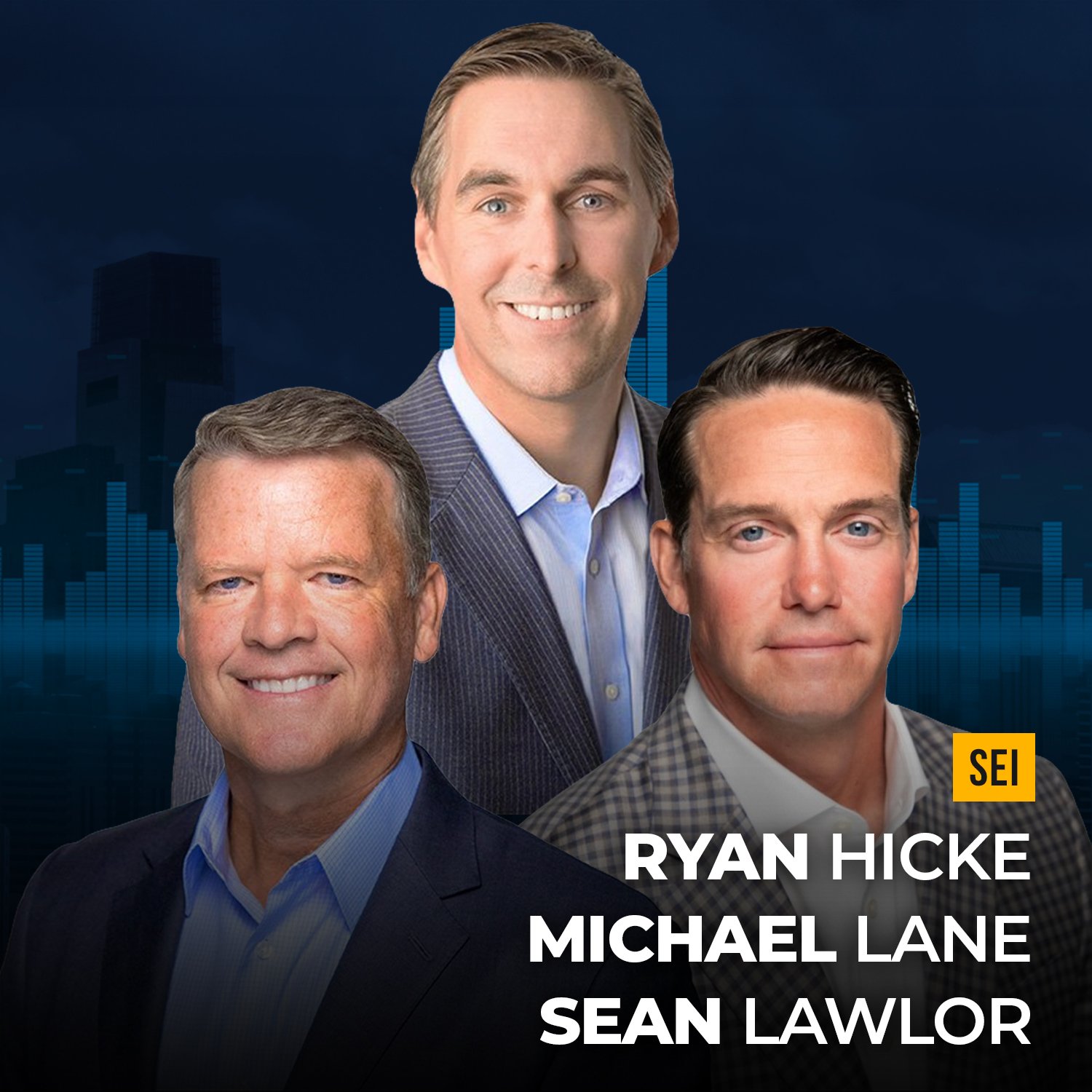
Robert Morier: Welcome to the Dakota Live Podcast. I'm your host, Robert Morier. The goal of this podcast is to help you better know the people behind investment decisions. We introduce you to Chief Executive Officers, Chief Investment Officers, and other industry leaders to help you sell in between the lines and better understand the investment sales ecosystem. If you're not familiar with Dakota and our Dakota Live content, please check out our website at dakota.com.
Before we get started, I need to read a brief disclosure. This content is provided for informational purposes and should not be relied upon as recommendations or advice about investing in securities. All investments involve risk and may lose money. Dakota does not guarantee the accuracy of any of the information provided by the speaker, who is not affiliated with Dakota. Not a solicitation, testimonial, or endorsement by Dakota or its affiliates. Nothing herein is intended to indicate approval, support, or a recommendation of the investment advisor or its supervised persons by Dakota.
Today's episode is brought to you by Dakota Marketplace. Are you tired of constantly jumping between multiple databases and channels to find the right investment opportunities? Introducing Dakota Marketplace, the comprehensive institutional and intermediary database built by fundraisers for fundraisers. With Dakota Marketplace, you'll have access to all channels and asset classes in one place, saving you time and streamlining your fundraising process. Say goodbye to the frustration of searching through multiple databases and say hello to a seamless and efficient fundraising experience. Sign up now and see the difference Dakota Marketplace can make for you. Visit dakotamarketplace.com today. Well, this is a very special episode today. We are on site at SEI's offices. If anyone's ever visited these offices before, you know this background very well. Some of you might recognize these cables that are hanging from the ceiling. And I am very happy and proud to be speaking to Ryan Hicke, CEO of SEI. Ryan, welcome to the show. Welcome back to the show.
Ryan Hicke: Yeah, round two.
Robert Morier: Round two. Last time we did a video.
Ryan Hicke: We do.
Robert Morier: Like we do these days. But here we're in the offices. What do these offices mean to you?
Ryan Hicke: So you can feel it immediately, right? Everything we try to do with the office is interlinked with the culture. So nobody has an office. I mean, the viewers can't see, but my desk is 10 feet away there. Everybody's desks are exactly the same. As you said, the power comes down from the ceiling. It's meant to be fungible. It's meant to create collaboration and teamwork. But it's also meant to reinforce the meritocracy, this concept that when you badge in here every day, everybody's an equal. We're all on the same team. And just the open space creates noise and energy, and I think a little bit of a vibrancy that a lot of us are accustomed to. I think some new employees are like, wow, it's really loud in here, but you get used to it pretty fast.
Robert Morier: Tell me about this bird.
Ryan Hicke: The bird is Al West. That's Al's desk. I think it's actually a large condor. So I don't know if somebody gave him a nickname once and called him The Condor and then somebody probably then said, oh, Al must love condors and bought them a huge wooden bird. But Al probably hates condors. But yeah, that's Al's desk, so we kept that there. And then the rest of us are all kind of spread around.
Robert Morier: How has SEI's identity evolved since you've joined? Because you've been here many years now. I think you've been on the executive committee since 2016.
Ryan Hicke: Yep.
Robert Morier: Talk about the evolution of the business and the culture.
Ryan Hicke: Yeah, so I mean, if you think about what we've been trying to achieve, especially in the last 3 and 1/2 years, we talked about this on the last time you had me on the podcast. When you are following a founder and you're following an icon, you have to be really open minded to the fact that you're not going to try to fill his shoes, but you are being asked by Al and the board to really go continue to drive change. So when we think about the evolution, we really anchor everything in three different pillars. It's what is our growth strategy and how are we going to continue to challenge that growth strategy, accelerate that growth strategy? And then we think often about talent. And it's like, what's the talent we need to cultivate inside of SEI? How do we actually bring external talent into the organization? I think later we have a couple other guests that are relatively new to SEI, and that was a conscious effort on our part, Rob, to really say we have all this amazing institutional knowledge inside our walls globally, but how do we infuse external experience to really help us change that? And then how are we growing the future town of SEI? And then the third pillar is culture. And culture for us is really that connective tissue that brings all of these things together and allows us to be very differentiated, we believe, not just, again, inside our walls, but outside our walls, and how we show up with clients and customers.
Robert Morier: As it relates to culture, what's the difference between making decisions to avoid bad outcomes?
Ryan Hicke: Just used this this morning.
Robert Morier: And making decisions to accelerate growth. I've got people on the ground everywhere, Ryan.
Ryan Hicke: Do you really?
Robert Morier: Yeah. You've got to be careful. I'm ready for these.
Ryan Hicke: That was actually somebody's favorite quote from this morning. I think when you are a really successful organization, there inevitably is a complacency with this is the playbook, because it's working. But you have to challenge that. And I think sometimes when you're really successful, you can fall into a trap of saying, ok, we're better off not doing something risky because you want to protect what's working or you start to think, I guess, that it's safer sometimes to go down the road more often traveled, for lack of a better term. And I think that's not what we've ever tried to breed at SEI, Rob. I think from the early days of SEI, the idea was if it's not broken, break it. And this concept of making decisions that could accelerate a good outcome and not getting too concerned or constrained all the time with what could go wrong. Sure, we have to scenario plan. And if it's an enormous decision or what we would refer to as a one door decision, yeah, we're going to spend a lot of time on that. But it's really bringing this mindset of an entrepreneurial spirit back to people. And we've got to be continuing to do more things to say if we did this, what if this great thing happened? Not if we did this, what if this bad thing happened? And I think it's just more of an optimistic mindset.
Robert Morier: And how do you think about it in terms of risk management? When I heard that quote this morning, I was thinking the entrepreneurial side of that mindset makes a lot of sense.
Ryan Hicke: Yeah.
Robert Morier: But balancing it with risk management.
Ryan Hicke: Yeah, and we're not very responsible about it. Yeah, we're a public company. We're a heavily regulated company. We have tons of clients and shareholders. So we're certainly… I would never say we're cavalier with that mindset. But I do think, Rob, what happens a lot of times is what people position sometimes as maybe a significant decision that all these things could go wrong, in the grand scheme of things, when you step back, they're really not that material. And it's getting people back into that kind of mindset of maybe pushing the envelope or at least articulating both sides of the equation so we're making more of a balanced decision instead of defaulting to the why wouldn't we do this. And I feel like that's really come back at SEI. And in a weird way, to me, that wasn't a new thing that I brought to the table. It's a way that a lot of us operated for years and years, and we're just trying to bring that back and instill that more in the fabric of who we are.
Robert Morier: And what does that mean for clients? So what are the opportunities based on all of that you see for clients going forward?
Ryan Hicke: So if you take three trends in the industry right now, when you think about how are we going to continue to innovate on behalf of our clients? We were just up in New York a couple of weeks ago doing an interview, and it was about tokenization. And somebody said, are we afraid of what tokenization will do to our investment manager services business? And our answer was, in fact, it's the opposite. We're trying to figure out how to harness tokenization and make sure we understand how these new technologies and these new delivery and service operating models can happen. But because our clients are actually looking to us to be the innovator, they're looking to SEI to harness all these capabilities. So if you think about tokenization, you think about AI, and you think about even user experience and just how people can interact with our platforms, our clients actually like that we are in the mix, trying different things, and experimenting in different ways, because they know we'll be able to figure out how to incorporate that into our platforms and into our services in different ways. Our clients don't want us sitting on the sidelines all the time, not trying to experiment or actually push the envelope.
Robert Morier: Is that the courtside seat to emerging technology?
Ryan Hicke: Yes.
Robert Morier: I heard you say that as well.
Ryan Hicke: That's exactly right. And that's where our ventures arm comes in. So we have an investment in a firm in the UK called Control Alt, and that effectively, Rob, is our courtside seat to tokenization. We're doing some externships where we're moving employees around. We're going to start doing some things with our own funds. But you need to be, to keep that analogy going, you need to be in the building. Because if you realize too late that these things have real applicability and you got to be there.
Robert Morier: Yeah, it makes sense. As it relates to venture, just thinking about it in terms of alternatives, what does the future of alternatives look like at SEI? I won't ask you about the democratization. I think everybody's answering that in their own way. But what does it mean for your clients? What does it mean for the business and the people working around us right now?
Ryan Hicke: Well, I think, again, everybody can have their own opinion on this. But if you fast forward and you basically say, what does the normal portfolio look like in 7 to 10 years? And I think we talked about this maybe a few years ago. The 60/40 model of yesterday is going to have an allocation to private markets. It's going to have an allocation to alternatives. What that number is to be determined. So then there's a whole ecosystem then around the product sets, the education required to make sure that the intermediaries and the end investors really understand why these things are good for their portfolios, how they behave. I know we're going to talk a little bit later about some more specifics, but you think about CITs. You think about interval funds. You think about BDCs. And then you just think about the continued growth of private credit. I just think, Rob, when you look at the number of public companies out there, the private markets are just going to be a bigger part of portfolios, both institutional and individual. And then you think about how that works for SEI. We are really at the epicenter of that. We are powering I believe we're up to 10 of the 12 publicly traded alternative investment managers. They rely on SEI to make sure that from a technology and operational perspective, we are delivering and staying at pace with their product innovation. And also, I mentioned this earlier around data and information delivery. So we just see an enormous runway for alts, both on the distribution side as well as the administration side. But I also think there's going to continue to be some challenges in time of figuring out, what's the right profile of the client where this is appropriate, what are the right products that are appropriate, and then what's the education infrastructure required to make sure that everybody understands how these products behave? Because as you and I both know, they're not exactly like a mutual fund.
Robert Morier: Yeah, makes sense. How are you going to balance the long-term investments that are necessary to do that with the short term or near term, I should say, imperatives to help deliver shareholder value?
Ryan Hicke: Yeah, it's hard. I mean, I think the toughest part of the job really is there's three fundamental stakeholders that I believe we're servicing every minute. There's our employees, there's our clients, and then there's our shareholders. And in a perfect world, every decision we make is going to mutually benefit all three of those constituents. But I think that as a public company, we have the benefit of having a supportive board that allows us to think more medium to long term, but we have to report earnings every quarter. So we try not to make knee jerk decisions on a quarterly basis. We try not to manage the company in terms of just quarterly earnings. But at the same time, we have publicly committed to the market around a total shareholder return over the next few years. We are holding ourselves accountable for those results. And I think, Rob, that if it goes back a little bit to the making decisions question you asked, one of the things that we are fortunate enough, we can take a long-term lens, but it requires also a little bit of discipline. And this part's not easy. Sometimes we need to do a better job of stopping things that aren't paying off. So we have to be a little bit more surgical in making sure that the ROI that we expect for our investments, whether that's our own R&D, whether that's ventures, whether that's through M&A, are we really looking at the right KPIs and the right metrics to make sure these things are paying off? And if they're not, it's ok. Then we stop what we're doing, and then you redivert that capital to something else. So we are able to invest in the long term. We know we have to manage short term delivery. And then there's always the employee side of that, Rob, which is super hard. We are always focused on trying to create an amazing career path, an amazing environment globally for our employees, but also making sure that are we investing correctly in the workforce? Are we driving the right leverage across the organization we need? And I know Michael's coming on later, but that's what the executive committee is constantly balancing. Challenging our strategic vision, where are we headed over 5 to 7 years? Are we doing the right things in the near term? And then are we making sure that from a results perspective, are we delivering what the market would expect?
Robert Morier: That makes sense. Thanks for sharing that. I appreciate it.
Ryan Hicke: And the other thing, not to continue, but the other thing that we're always aware of is the sensitivity around the punishment seems very excessive these days for when you miss results. And we don't give guidance. But you can even just look what's happened to some of our peers in that overall wealth management space in the last 90 to 100 days. And we are attuned to that. And we're trying to always balance that kind of short-term responsibility with the long-term fiduciary duty of growing this company.
Robert Morier: It seems like one of the expectations the industry has these days is acquiring, acquisition. The industry is getting bigger through acquisition. We're seeing RIAs growing, investment consultants growing. When you think about the Stratos acquisition as it relates to integrating a national advisory network, how do you see that reshaping the broader ecosystem of the organization?
Ryan Hicke: So for us, that was a absolute long term strategic move, because I may have said this to you before, but I believe there's three ways you can make money in our business. Administration, asset management, and advice. And we have a 57-year track record of building world class platforms that deliver administration and asset management solutions to institutions and intermediaries. And in many cases, they are really built and set up to deliver a better outcome from an advice perspective. But for us to have no strategic foothold or participation in that advice space we thought was not in the best interest of SEI long term, because you see the ability for advisors who give really high-quality advice to be able to maintain their fee levels, to continue to grow organically. If you believe the demographics, the supply and demand continuum would suggest that there's going to be a lot more people seeking advice in the next 5 to 7 years than there are advisors that can deliver that advice. So I think that will also separate the really good advisors. And then if you think about what that could do for our advisor and banking business, for us to have direct access to advisors and end clients, to really see what solutions are resonating, to really see what products are actually getting momentum, and to bring that back into our solution lifecycle management, it just made a ton of sense for us, especially when you think about what SEI wants to look like in 5 to 7 years. And in the short term, to your earlier question, it has a little bit of a defensive element, because as you know, the consolidation in this industry is significant. A lot of people are targeting SEI advisors. I mean, they're independent. They're not affiliated with SEI. But we also needed to have an answer for those advisors that were looking to maybe sell their business or retire, but didn't want to leave the client, have the client leave SEI or have that solution move to another provider. So Stratos is also an opportunity for a lot of our existing advisors who are looking to maybe exit the business where they know that business can stay at SEI and they what they've sold their client and delivered their client for many years will be maintained.
Narrator: Dakota's Google Chrome extension lets you access all of the high-quality LP, GP, account and contact information, as well as private company, public company, and more. All of that data that you've grown to and love within Dakota Marketplace right from your Google Chrome browser. This way, as you're browsing, researching, prospecting, or looking for the newest deal target, you have all of the high quality and curated data that you need to do your job right there in the same window. You can learn more today on our website at dakota.com.
Robert Morier: We spend so much time, as you know, and I know you do in your role, talking about the long term, the strategic vision, and goals. What does today look like? What did today look like for you? When you think about how your day started, what the priorities were when you opened your inbox, what was the first thing that you did other than, I know, be on a stage somewhere else this morning?
Ryan Hicke: Yeah, and I'm not usually out. I'm not usually on the speaking circuit. So this is the time of year where we're kind of finalizing 2025 results, meaning from a compensation perspective, and we're really nailing down 2026. So my calendar the next few days is just a litany of different engagements and different meetings to make sure that are the decisions we're making in the very, very short term aligned with what we want to do for 2026 and beyond? They're not all easy ones. They're not all fun ones. And then I spend a lot of time just one on one interacting with people. So I have two other meetings today with two of our leaders just to catch up on what's going on in the market, what's going on with some of our clients. And I actually had dinner with a long-term employee tonight to get their view on current culture, what that individual wants to do with her career moving forward. And I get a lot of insight in those dinners and those meetings, because I care what people have to say. And I have realized over the last few years, Rob, that it's naive of me to think that I always have a great pulse on how everybody's feeling around SEI, because people sometimes tell me the good things, and I need to also hear the bad.
Robert Morier: What do you do with the bad information?
Ryan Hicke: I pretend I didn't hear it.
Robert Morier: That's a good strategy. That's how you got to the top.
Ryan Hicke: Yeah, I'll tell you what I don't do. I don't get defensive about it, because somebody feels the way they feel for a reason. And that may not be what we intended for them to feel. But if that's how they feel, you have to respect it. So I usually don't react. I usually then reflect on it. I'll usually probe and go try to pressure test that in other areas and say, is that representative of the individual or is that maybe a little bit more viral? And if so, we need to react a little bit more quickly, and then sometimes it's just letting somebody kind of not necessarily vent. It's just let them have a little bit more of a cathartic moment where they feel that it's safe to basically unload. And by the way, people are just as open around the things that they love and things we're doing well. But it all interwoven with what you were asking earlier, that there also is, I think, a genuine respect that people understand that all the decisions we're making may not be popular, but I think at least everybody understands why we're doing it. And we need to do a much better job constantly of communicating not just the what, but the why.
Robert Morier: I appreciate that, Ryan. Thank you so much. Thanks for sitting down with me one on one. We're going to bring two of your colleagues on here in a few minutes. I wish you nothing but success going forward.
Ryan Hicke: Thanks, Rob.
Robert Morier: It's great to see you in this seat.
Ryan Hicke: You too, man.
Robert Morier: Thank you for being here.
Ryan Hicke: Yeah.
Robert Morier: Ryan, you've got two colleagues to your left. I'm very excited to introduce Michael Lane, Head of Asset Management, and Sean Lawlor, Head of Strategic Growth Initiatives here at SEI. Thank you both for joining us in the conversation. It means a lot to us. It means a lot to our audience. And Ryan, what does it mean to you to be sitting next to your colleagues talking about strategic growth initiatives?
Ryan Hicke: Oh, I mean, it's just pure, utter joy, Rob, to spend time. No, it's great, because I think it's really important for people to hear perspectives beyond me and to hear, in some cases, sometimes diverse views around what's going on in the market. But what's most important is Michael, Sean, and I, we're all in the market every day, but we're in different communities in terms of different client segments and different business and different industries. So I think it's going to be really valuable, actually, for the viewers just to hear the breadth of perspectives.
Robert Morier: Michael, I left off with Ryan when we were talking one on one about the venture arm of the business, the acquisition of Stratos. How does that influence the way that you and the asset management team think about product design, model portfolios, the next evolution of UMH?
Michael Lane: Great question. One of the founding principles for why we acquired Stratos was we wanted to get closer to the financial advisor and, in effect, get closer to the end investor. And by making that acquisition and partnering with Stratos, we will now have insights into the technology stacks that they use, the products they use, how they use them, how they trade them, that we just wouldn't have had otherwise if we didn't have that relationship that we're going to have with Stratos. What that will result in is our ability to continue to increase the technology that we make available to financial advisors in order to improve the technologies. It'll give us the ability to improve product design, because we will be able to sit down with them and figure out together what products would add value to the client, and then how operationally would those products be integrated. And when you think operationally, why is that important? Because at the end of the day, for the advisor, what is critical is any product we develop has got to be easy to use. And so when you think about the portfolio of the future, I heard Ryan speak earlier, the portfolio of the future, where things are moving. When you think about the inclusion of alternative investments, direct indexing, any kind of SMA, that is going to be an increasingly important feature is to make it easy to integrate into the portfolio for the advisor, so that that integration of Stratos and SEI together, being able to see that firsthand, is going to be critical for all product development in the future.
Robert Morier: Sean, both Michael and Ryan have talked about the introduction and the continued use of alternatives in the portfolios. When alts, as they become more accessible to advisors and retail clients, what does that mean in terms of changes with middle and back-office support for that transition? You started your career in operations, as we were talking about many years ago, as well as on a lifeguard stand many, many years ago. So tell us a little bit about what that integration looks like from an operational perspective.
Sean Lawlor: Yeah, I mean, as Ryan pointed out earlier, and he loves when we say retailization and democratization of alternative assets. That's like his favorite thing to say.
Robert Morier: I can imagine.
Sean Lawlor: As alts do go mainstream and reach the retail investors, I think the back and middle offices of these asset managers is going to need a pretty significant upgrade. If you think about the history of alternative investments as a whole, they were really geared towards large institutional investors. They were geared towards family offices. They were geared towards the ultra-high net worth. So having a stagnant data process, having quarterly NAVs, having manual processes, having low investor communication wasn't as much of an issue. The middle and back office for asset managers is going to need to undertake a technology and operational overhaul. They'll need to automate digital onboarding. They'll need to automate the subscription and redemptions process, and they'll need to facilitate AML and KYC on a daily and nightly basis so that they don't wind up with a huge stack of paperwork every time they bring on a new fund.
Ryan Hicke: And Rob, I think just adding on to Sean's, I think we got to be careful too, that it's not as if every investment manager is going student body left or student body right, and it's all retail. They still have a pretty significant institutional base to serve. They're still going to be coming up with new creative products for that client base as well. So Sean's absolutely right when he talks about the need for a technology and operations overhaul and infrastructure. It's going to need to be adapted for certain retail distribution, but they're still going to continue to grow their current and existing client base in that institutional space.
Robert Morier: It makes sense. You mentioned student body, which was my next question. All of this requires a lot of education. So you've got the parts to be able to build it and drive it, but you've got to teach somebody how to do it. So when you think about education, what does education mean for SEI as it relates to these strategic initiatives?
Ryan Hicke: So if you think about education and you say, ok, well who are the audiences that need to be educated? The investment managers themselves, and Michael and Sean can speak in much more detail on this, the investment managers themselves, who maybe have not had exposure to the retail market, need to understand how that market operates, and it's different than the institutional space. The intermediaries that are incorporating these products into their portfolios or recommending these products to clients need to understand and be confident in having the, I would say, having that collateral, having that education, having that information at their fingertips to explain how these products behave, why they're different, rebalancing cycles, fees, how they operate inside of models, and then the end investors. And I'm going to keep using that word confidence. We want the end investors confident that these are products that are appropriate for their portfolio, that make sense for their asset allocation, are aligned really with accelerating their ability to achieve the goals that they have created with their advisors and be able to actually execute against those outcomes.
Michael Lane: When we think about building a portfolio, if you're a financial advisor and you think about where it all begins, in the public markets, when we're evaluating ETFs or mutual funds and you're building a portfolio of those, it all comes down to data. There isn't a portfolio that is developed today with a financial advisor that doesn't begin with a very thorough analysis of the attribution of every individual fund that's going to be included, and then how those individual funds interact within the portfolio. One of the most important developments that will be occurring, and I think that we'll be the leader in that because of our investment management services business, is we have full access to all of the data that is critical for people to understand when it comes to private markets and how to incorporate products and how to incorporate with the data, with the exposures that you're actually being subjected to with the different products that you may choose to use in the portfolio. And being able to use that data will then be, for the first time when we incorporate those, we'll be able to align private and public markets together and understand what the impact on a portfolio will be when you use private markets. That is still in its infancy. A lot of proxies are used versus real data for those individual funds’ products, whether they're drawdowns, evergreens, intervals, whatever it might be. A lot of proxy data is still used instead of the actual information for the products. I think over time, that will change. That will disrupt the way that portfolios are built. And we won't have this 60/40, 50/30/20 discussion. It'll be 60/40. It'll just be a component. The 60 will be private and public, and the will be private and public. It won't be alternative. It won't be 50/30/20. There's some difference of the 20. At the end of the day, you likely are getting a different liquidity profile, but the exposure isn't going to be dramatically different.
Sean Lawlor: Yeah, I mean, to Michael's point, it might be better. The asset managers and advisors and RAs and broker dealers that I've seen be most successful introducing alternative investments into their profile have been those that put the greater emphasis on education. And it's like the telephone game. You're educating the advisor first, then the advisor's educating the investor. And that's where I've seen the adoption be most successful.
Robert Morier: Sean, when I think about strategic growth initiatives, there's always this fundamental question for clients' needs versus wants. What do clients need versus what they want. So when you think about, both for Sean and Michael, the pull from advisors and institutions in terms of what they need today and what are they looking for that SEI is trying to deliver, but what do they also want? What are you trying to deliver for them that they may be asking you for as it relates to various deliverables?
Sean Lawlor: Yeah, I mean, I actually think that they do need an exposure to private investments. It's a lot like insurance. I started my career in the insurance game. It's a push, not a pull. But in reality, it is a need, and it is something that advisors should be exposing their clients to and helping them to invest in.
Michael Lane: I think we're in an evolution of what the needs versus wants are. And we started with incorporating sleeves for tax management. So you would have a portfolio. You would do an S&P 500 tax managed portfolio for the core of the US growth part of the portfolio, let's say, with a tax management overlay. And the losses that you would incur from that S&P would then offset some of the gains from the rest of the portfolio. That's where we started. Then we started looking at total portfolios and could we tax manage maybe the two or three or four sleeves within the equity portion? In the future where we're going and where we believe that the market will go along with us, is not looking at a sleeve, not looking at an individual portfolio that maybe one component of a much larger portfolio of a client, but looking at the entirety of the portfolio, when you think about UMH, UMH is, I'd say, an evolution because of technology capabilities and data availability, it started with direct indexing for a sleeve, moved to tax overlay for portfolio, now it's going to the household. And that is not necessarily what a lot of advisors raising their hand saying they desperately need today. But when you look at the tax benefit of looking at the entirety of the portfolio, and if you have the capability with the data and the technology to then asset locate, the net improvement from that portfolio evolution to being a UMH portfolio could be the greatest organic growth engine for the financial advisor, more than referral sources or anything else. Because if you can generate, hypothetically, an extra 150 basis points a year of portfolio return by tax managing the entirety of the portfolio, that's organic growth. So that, to me, is where the future will be going.
Ryan Hicke: And then Rob, I'll take that up a level. Because by the way, it's a great question around how do you separate kind of what I would call, you say needs and wants, and I will say, is that client demand or market demand? Same thing. But one of the major differences of changing how we run the company is instead of running in verticals, we try to run as a horizontal. And we don't just use those words. So you asked, have the three of us been on a panel together? The answer is no. Have the three of us been in a lot of meetings together in the last 12 months?
Michael Lane: I mean, a lot.
Ryan Hicke: And this is not a knock-on SEI five or six years ago. I don't think Sean and Michael would have been in a lot of meetings together. So now when we're actually challenging, is this a client demand? Is it a market demand? Not only are we asking our clients, we're asking each other inside the organization and saying, hey, Michael's got 8,000 advisors, Sanjay has 125 banks, Sean's got investment managers. Are we seeing the same kind of demand? What are we hearing? And that gives me more confidence when we're making decisions that it is something that is really validated and that there's not just going to be take up from our client base, that this is a market need.
Robert Morier: You've used the word confidence a lot in today's conversation, which makes a lot of sense. Where does that confidence come for you personally and as an organization? And really, a question for all three of you, because it takes a lot of confidence to distinguish the need versus the want, what the client demand is versus what the market is putting out there. So where does that confidence come from?
Ryan Hicke: So I actually think people overcomplicate this. I think they try to come up with these decisions inside their own four walls, and they try to make themselves feel intelligent with their outcome. I don't mean that disrespectful of anybody else. But the confidence comes from direct engagement with the clients and the prospects in the market. And one thing that we do have is we have amazing relationships at decision making levels across of hundreds of organizations. So sometimes, Rob, Michael and I might go to New York and do three or four meetings and just ask each of those clients or prospects the same question, just to pressure test something. When all four answer it similarly, then we get in the car and go, ok, we're in the right spot. Now we got to go refine it. But I think confidence is inextricably linked with being in the market, being in front of the clients. And we use another kind of phrase out here, and I'll steal from a colleague of Sean's, the fights out there. The fight is never in here. We are one team. And that's when the culture gets really powerful, when we're saying, what do our clients really need? What does the market need? And when people are out there and bringing all of that information and knowledge back and we're distilling that to make sure, are we hearing the right things? Are we not just hearing what we want to hear? And I know we keep using this word. Then we are more confident that the decisions we're making to do something or not do something are grounded in what the market's asking.
Robert Morier: When you're in that meeting with Michael or you're in that meeting with Sean and you're asking questions of your clients, your advisors, your prospective investors, whoever it may be, in your experience, what are the questions that you have found that have yielded the most results? What is that one or two questions? And obviously there are lots of questions, but sometimes I'm surprised what actually comes from those meetings is just, as you mentioned, the repetitiveness of just kind of asking the same thing over and over. What are some of those questions?
Ryan Hicke: So I like to ask two questions to all of our clients, especially if I'm just one on one with them, and they're linked. So the question I will ask our clients is, what are you leveraging or consuming from a competitor that you believe is superior to something that SEI offers? And there's no defensiveness, there's no debate. I just want to hear; I want to learn. And then a adjunct to that question is, if there was another service or capability that we could provide to accelerate growth inside your organization, what would you like to see us do? And in a little bit of the wisdom of the crowds there, Rob, you ask that to enough people, if a lot of them start answering with the same answer, you're probably in a good spot if you start to focus on that. They're my two.
Michael Lane: My two, and it's interesting the answers you get. My first is always, what are the three biggest pain points? We all have dozens of them. But what are your three biggest pain points? I asked that of a CEO of a $500 billion RIA recently, and his answer was a real estate question, location, location, location. His was organic growth, organic growth, organic growth. Hence the last comment around UMH and the organic growth that can come from being a better tax manager of your client portfolios. That is organic growth. So that is one. And you get various answers to that. But it's telling, because you have to narrow it to three, and that's difficult for a lot of CEOs to do, because we all have a lot of pain points. The second, and it was actually an eye opener when I heard an answer when someone else asked this, and it caused me to start asking it. Who are your most strategic partners and why? And that opens the window of conversation, because they don't always everything in SEI can deliver. And so when you ask that question and they start to tell you who their most strategic partners are and why they're strategic partners, and you realize that you actually have that plus available, you have very different dialogues. And an example of that was a meeting we had six months ago, seven months ago, with a very large $150 billion firm in the advice space. And they walked into the room, understandably wondering why they were sitting across from SEI. And when we finished the meeting two hours later, we had seven projects to work on, because they didn't who we were. And so when you ask that strategic partner question, it opens a window of opportunity to hear what's really important to them, how they view the marketplace in terms of strategically aligned, and then we can fit in where SEI could be even maybe a third strategic partner.
Ryan Hicke: This is why it's so important for us to continue to make sure we're out in the market asking these questions, getting these answers. Because in any one of those scenarios, we're not always going to be the perfect answer. But in most cases, Rob, we have a capability they're not aware of, to Michael's point. My first couple of weeks on the job 3 and 1/2 years ago, I met the CEO of a large asset management client, and I asked if there was anything more SEI could be doing or wished SEI could do. And he said, I wish you guys did administration for alternative assets. And besides almost losing my mind, it really hit home about how little people really about the breadth of our capabilities, but in an awesome way, how much they would prefer to work with SEI if push came to shove. And that's something we need to nurture and protect.
Narrator: Dakota Marketplace provides the industry with the highest quality and most up to date GP, LP, private company, public company data, as well as performance benchmarking and a number of other different data sets that the investment industry is fueled by. We're excited to announce that all of that data is available now via our customizable and bespoke APIs. You can create an API that will plug into any CRM or use some of our pre-built APIs with Salesforce, Snowflake, and a number of other CRMs that you can find on our website. To learn more about Dakota's API offerings and create a custom package that best suits your business, go to dakota.com.
Robert Morier: Sean, a question. When you are speaking to asset managers or any of your clients, what are you hearing today as it relates to what they need most from an operational perspective? So the support that's there that you have that you're offering that they're looking for.
Sean Lawlor: Greater data transparency. I hear it all the time. And that goes back to something you were just saying about what are two questions that we're asking together when we're in the room together. It's how can we help you do more of what you're good at and how can we help you maintain better controls there? And data transparency is a huge issue across the asset management investment manager space. And the ways that we can really help them is to create more frequent and more detailed reporting, helping them with compliance and regulatory reporting and helping them maintain controls. As alternatives do go retail, there's going to be thousands of transactions, thousands of investors, 10x advisors working with those transactions and investors, and they're going to need a ton help normalizing all of that data and exhibiting it in a single unified data set. Most of the investment managers, certainly on the alternative side of the business, are still working off batch file. They're still working off FTP. It's still a nightly upload. And SEI is uniquely positioned to help them from a real time data delivery and cloud-based infrastructure standpoint.
Michael Lane: And I'll just note that when Sean's sharing that, he's sharing it from a serving the investment manager's perspective. One of the things that you had asked earlier was about Stratos. That data transparency is one of the primary things we're working on first, is working with them to create a data lake, and then being able to use that data lake to better make decisions of how to better serve clients. And so that data is going to be super critical. And we have the capabilities with our technology and operations administration to be a leader in that space for the advisor community.
Robert Morier: That's great. Yeah, data can be a four-letter word for a lot of compliance officers in asset management, so it makes sense that you're making it a more tolerable language for them to speak. You're welcome. You're welcome too. We started out the conversation; I was asking Ryan to look to his left. When you think about the dynamic and you're in meetings together, how do you prepare for a meeting with Ryan?
Michael Lane: That's a great question. It's very interesting. Over the course of my career, I've been in this business now for 37 years, when you work with different leaders, over time you get to their idiosyncrasies, the things that matter to them. And some, it's hardcore data. There are people I've worked with in the past where I had to stay up two days just getting to know every detail of every number, because if I didn't know my numbers, it was going to end poorly for me. So I would have those moments. And I would have other people who really just wanted to be social. There wasn't a lot of work discussion. That was a very unique kind of discussion. With Ryan, it always comes back to the client and what are we doing, what progress are we making, how are we making it easy for the client? So it isn't about knowing every single detail to the 10th decimal place that we're working on. It's about what are we doing to serve the client? What are the technology improvements we're making? What products are we developing? So I'd say that it's always been a client first preparation. I go around and I talk to my people to make sure I have all the latest on what we're doing with the clients. And that way, I know that I'm properly prepared to have my conversation with Ryan.
Robert Morier: I think it's fun to ask the same question of you as CEO. How do you prepare for meetings with Michael and Sean when they're coming into your office, potentially having yielded some of that information from those questions that are very important to them?
Ryan Hicke: Yeah, so I put a lot of trust in the leaders that we have across SEI. And maybe that's because the way that we were raised, for lack of a better term here, Rob. To Michael's point, when I would come up here 10 years ago to meet with Al West, it wasn't about numbers. It was about where are we headed? What are we seeing? What do we need to do strategically? So the way I prepare for these meetings, or the way I go into those meetings, is I genuinely want to hear from the leader around what he or she is seeing in the market. Michael's dead on. I'm very interested in what the clients are seeing, what the prospects are saying. And then hopefully one of the things I try to make sure is obvious in these meetings is, what do I need to do? What do these guys and what do these other women need from me? Are there obstacles in the way? Are there roadblocks? How are our teams feeling. So I think our meetings tend to be more informal. I mean, we'll go through certain things, but it's really about what's going on, how are you doing, how's the team doing, and what do we need to do as an organization to capitalize? And then also, I try to be very direct and open and challenging to say, hey, we talked about some of these things in the past. They don't seem to be paying off. What's the reason why? Or we talked about these things in the past. They seem to be getting a lot of momentum. Do they have the oxygen they need to really go thrive? So 99% of the time, we do those meetings right there at that table. And ideally, that person is walking away feeling heard and supported. And then I walk away, educated that I really do understand what's going on in each of these businesses.
Robert Morier: What was the sales pitch to Michael and Sean when you recruited them to join SEI?
Ryan Hicke: I think a little about what I just said. The sales pitch was you're not going to get micromanaged here. You have numbers you have to hit. We're a public company. It's not always going to be fun. But this wasn't a case where we had the exact recipe and we asked somebody to come in and bake the cake. This was a little bit of, hey, we've got ideas, we've got a whiteboard. This is a little bit of wet cement. Why don't you come in here and help us mold something great.
Robert Morier: Michael, after that process, what were the expectations like versus the reality? So the recruitment process is always a lot of fun and so were those first six months. You're both past six months now. So you know how the place operates. You know Ryan's idiosyncrasies, whatever they may be. So what has it been like for you since you've started and what's landed? What's still drying? What's still open space on the whiteboard?
Michael Lane: I think the first thing you have to do when you start at a new firm is you have to understand the culture and the people. The clients are going to be critical and that is the fast second. But the first is you have to understand who you're working with and what has been the historical perspective and approach to things. One of the first things I did was I hired a chief of staff from a senior leader that had been with the firm for nearly 29 years. So a lot of people will hire chief of staffs of very young people early in their careers as a chance to learn, and in two years, they get promoted. Understanding that the SEI culture and that we have such tenure here. We have people that have been at SEI for so long. I needed to be very careful coming in, particularly because of the firms I had worked at in the past where people would maybe have a perception of who I was going to be. So I think that was the first step that was very important is know the people and associate myself really quickly with a right-hand person that knows SEI inside out. So that helped me overcome a lot of the missteps I think people make earlier in their career, where they don't understand the culture and they make decisions and they move quickly that don't always serve them well. Antibodies come out quickly in those environments. A friend of mine, Sam used to always use that term. And so I'd say that has helped create consistency between what I was told and the experience I've had. So what Ryan promised me was everything he just said. We have poured the cement, but it hasn't hardened. If you want to reshape it, you want to re-pour it, we're open to that. And I feel like we've been given that opportunity. If you look at what we've done in just 13, 14 months since I've arrived, we have made so many improvements and so much progress in such a short period of time because of the flexibility I was afforded by Ryan and the board. And so I feel like there's been no exception to the rule that I could talk about.
Ryan Hicke: Yeah. And Rob, I'm not telling this story to embarrass Sean. It's meant to be, I think, an exhibit of what we're trying to build here. I love what Dakota does. I love how you ask business questions, but also cultural questions and try to get into how we operate. But we did a dinner this summer to celebrate the leaders in Sean's unit. And it's a great dinner every year. It's not a big booze fest. It's fun. People bring their partners and we have a good time. And the next day, I was going for a run. And I called Sean, and he answered and he said, what's up? And I said, I just want to call. Are you all right. And he said, what do you mean am I all right? I'm fine. And I said, you weren't smiling that much at dinner last night. And he started to talk about he's like, I'm really competitive. Some of the other units are really delivering. I want to make sure I'm putting the right… and I was like, relax, man. You're doing all the right things. But I think Sean had an appreciation that I noticed that and that it's ok if he's like, hey, man, I'm under a lot of stress. Or I can say, I'm not feeling it this week. I need you guys to step up. And part of this is how do we continue to truly build a team that is reliant on each other, that trusts each other, that's sending the right messages, but nobody has the market cornered on great ideas. So think sometimes it's back to your question around making decisions to avoid a bad outcome. We're not out here trying to celebrate failure, but we want people to take some chances and take some risks. What Michael and Sean have been asked to do the last 12 months is take existing businesses, and I hate the word transformation, but that's what we're asking them to do is transform these businesses. And they're not going to get it all right.
Sean Lawlor: Yeah, I mean, I don't want to speak for Ryan, but I think that was one of the reasons why he wanted to recruit me to come over here is because I had succeeded and failed at multiple different businesses, both at eMoney Advisor and then at Envestnet. I had started businesses and seen them either grow or not grow as fast as we had thought that they would. But he was very clear on go ahead and break things, be aggressive, and start new things. Bring me anything new that you think will be successful or transformational. Sorry for saying transformational. But he made that abundantly clear to me during the recruiting process and keeps bringing it up monthly to me. If there's something that we're not doing that you think we should be doing, bring it to me. I want to see you try.
Robert Morier: That's great. I want to thank you all so much for taking the time to be here with us, being here with Dakota and our listeners, opening up your offices to us, your dynamic, which I think is so interesting. I have one more question for each of you. What's your New Year's resolution? So it can be professional. You don't have to tell me if you're going to stop biting your nails or whatever. But whatever, personal or professional, this episode will be the first to launch in the New Year 2026. So when you think about what's the resolution for you or SEI?
Ryan Hicke: Ok, so I don't have mine yet. I do mine between Christmas and New Year's. So I actually use that week to reflect a little bit both personally and professionally. My 2025 resolution was to be less judgmental, and it's something I've worked really, really hard at, Rob, both as a father, as a friend, in this job, is to just give people a little more space, give people a little more grace, and just stop being so judgmental, because I think a lot of people are just battling a lot of things behind the scenes or internally. And I'm just trying to be a little more compassionate. I always will have some health-related fitness goal, I will have a professional goal, and I will always have something where I'm trying to be a better husband and father. And as my kids get older, my kids are now 21 down to 9, I'm trying to create a little bit more one on one interaction with them. And it doesn't have to be any huge, big deal. But once a year, I'd like to do something just one on one with each kid. So my 2026 resolution will have something linked to that.
Michael Lane: Ok, my kids are growing up, so they probably wouldn't like me to say that. They'd be like, no, we're good.
Ryan Hicke: My 16-year-old's probably like, I'm out.
Michael Lane: Yeah. Could we have a new resolution, Dad? That's right.
Ryan Hicke: Can't we just have dinner?
Michael Lane: New Year's resolutions are interesting. Honestly, I haven't made mine yet, like Ryan. But if I were to make one sitting here right now, one of the things that is important in your first year is to give 190% to work. You are establishing yourself with the business. You're establishing yourself with the people. You want to get momentum built in areas where there may not be enough momentum and you sacrifice yourself. You sacrifice time with your family and your own personal health. Anybody who's watching this who is early in a career, it's what you do. So I'd say, not to sound selfish, but I would like to find a little more balance in 2026. I think Ryan would agree with me. I think I probably have traveled more…
Ryan Hicke: I'd like you to find more balance.
Michael Lane: Yes, I think I have traveled more than probably anyone in SEI combined. I think I won that. But it was important to get out and see clients and to understand how they feel about us. So that would be a balance. I went from playing tennis three to four days a week to probably playing once every two to three weeks and so need to do a little more of that.
Robert Morier: Yeah. Thank you for sharing that.
Sean Lawlor: I don't know if it's a New Year's resolution, but I'd like to find a way to communicate where I'm at when I'm not around my children. My children are a little younger than Michael. So they're 13, 10, and 8. And I don't know that they really grasp what we're doing here, but I'd like to figure out a way to communicate to them the value of what we're doing here at SEI and in financial services in general, just creating better outcomes for families.
Robert Morier: I have family members in their 30s and 40s who still don't grasp what I do from a financial services perspective. It's not until sometimes something like this where you're sitting in front of a camera.
Sean Lawlor: Yeah, I loved it. It just kind of popped into my head while you were…
Robert Morier: Talking with colleagues, I think, in my experience. I love these types of interviews, because the one on one is great, and you know your business better than anybody, as you should as CEO. But there's something unique that when you get to sit with each other and bounce ideas off each other or thoughts.
Ryan Hicke: I think, Rob, what's really cool about what you guys do, and I think one of the things that is when you do these types of panels, if I was watching this, not the SEI version, if was watching you interview three leaders. And when you ask the more personal questions and the cultural questions, I will be able to discern pretty quickly whether those answers are authentic or not. Do these people really like each other? Do they respect each other? And that's something that we pride ourselves on here. I mean, Michael and I were on the phone last night at 7:30 talking about a business issue, but we never got to the business issue because we started talking about Thanksgivings and how was your Thanksgiving, how was my Thanksgiving. So we didn't get to it until about 7:50. What about you? What's your New Year's resolution?
Robert Morier: I'm not used to being asked.
Ryan Hicke: You think you always get to ask all the questions. It doesn't work that way, Rob. You're in our house now.
Robert Morier: It doesn't work that way. My New Year's resolution, it goes back to my kids as well.
Ryan Hicke: How old are they now?
Robert Morier: They're 8 and 5.
Ryan Hicke: Oh, wow.
Robert Morier: So they're young. I'm an older dad. But I tend to move really fast. So I can set this up. We did this in 90 minutes. I've got a great team that can do that. And I have a tendency not to slow down, and I'll burn right through whatever that day looks like. And I have two daughters, so they love to ask me questions, and they love to ask me how I'm feeling and how am I doing and what am I thinking. And I usually run through those answers. So I think in 2026, it's going to slow down a little bit.
Ryan Hicke: And it's a great way to finish this, because I think everybody just gave some insight into what's their personal value system, what's driving all of us. The biggest advantage to five kids and having a 21-year-old down to a 9-year-old is people could have told me the cliche 1,000 times around how fast it goes, but I watched how fast it went with my older three. So I am literally cherishing every moment with my 11-year-old and my 9-year-old. Not that I missed things with Jackson, Emma, and Connor as much. I was traveling a ton. But I am just so much more aware. And to your point around moving fast, one of my 2024 New Year's resolutions was not to multitask when I'm with my kids. So if they want to do something, I'm not on my phone. And I'll say, hey, I can do this for 30 minutes, and then I've got to go make a phone call for work. And I think they really appreciate that and respect that. And it's been great for me and a great habit. But it goes fast, man.
Robert Morier: It does go fast. As did this conversation. This is when I always wish these conversations were longer than an hour. Thank you for your time. I know you're all very busy. We're in the holiday season. Congratulations on all your success. Congratulations on being with SEI. I hope it does slow down a little bit for you in 2026. And it was great to speak with you, Sean. Sean and I had a connection in the very beginning that I'll definitely take with me. Thank you, Ryan. Thank you all.