Robert Morier: Welcome to the Dakota Live Podcast. I'm your host, Robert Morier. The goal of this podcast is to help you better the people behind investment decisions. We introduce you to chief investment officers, manager research professionals, investment consultants, and other important players in the industry who will help you sell in between the lines and better understand the investment sales ecosystem. If you're not familiar with Dakota and our Dakota Live content, please check out dakota.com to learn more about our services. Before we get started, I need to read a brief disclosure. This content is provided for informational purposes, and should not be relied upon as recommendations or advice about investing in securities. All investments involve risk and may lose money. Dakota does not guarantee the accuracy of any of the information provided by the speaker, who is not affiliated with Dakota. Not a solicitation, testimonial, or endorsement by Dakota or its affiliates, nothing herein is intended to indicate approval, support, or recommendation of the investment advisor or its supervised persons by Dakota.
Narrator: Today's episode is brought to you by Dakota Marketplace. Are you tired of constantly jumping between multiple databases and channels to find the right investment opportunities? Introducing Dakota Marketplace, the comprehensive institutional and intermediary database built by fundraisers for fundraisers. With Dakota Marketplace, you'll have access to all channels and asset classes in one place, saving you time and streamlining your fundraising process. Say goodbye to the frustration of searching through multiple databases. And say hello to a seamless and efficient fundraising experience. Sign up now and see the difference Dakota Marketplace can make for you. Visit dakotamarketplace.com today.
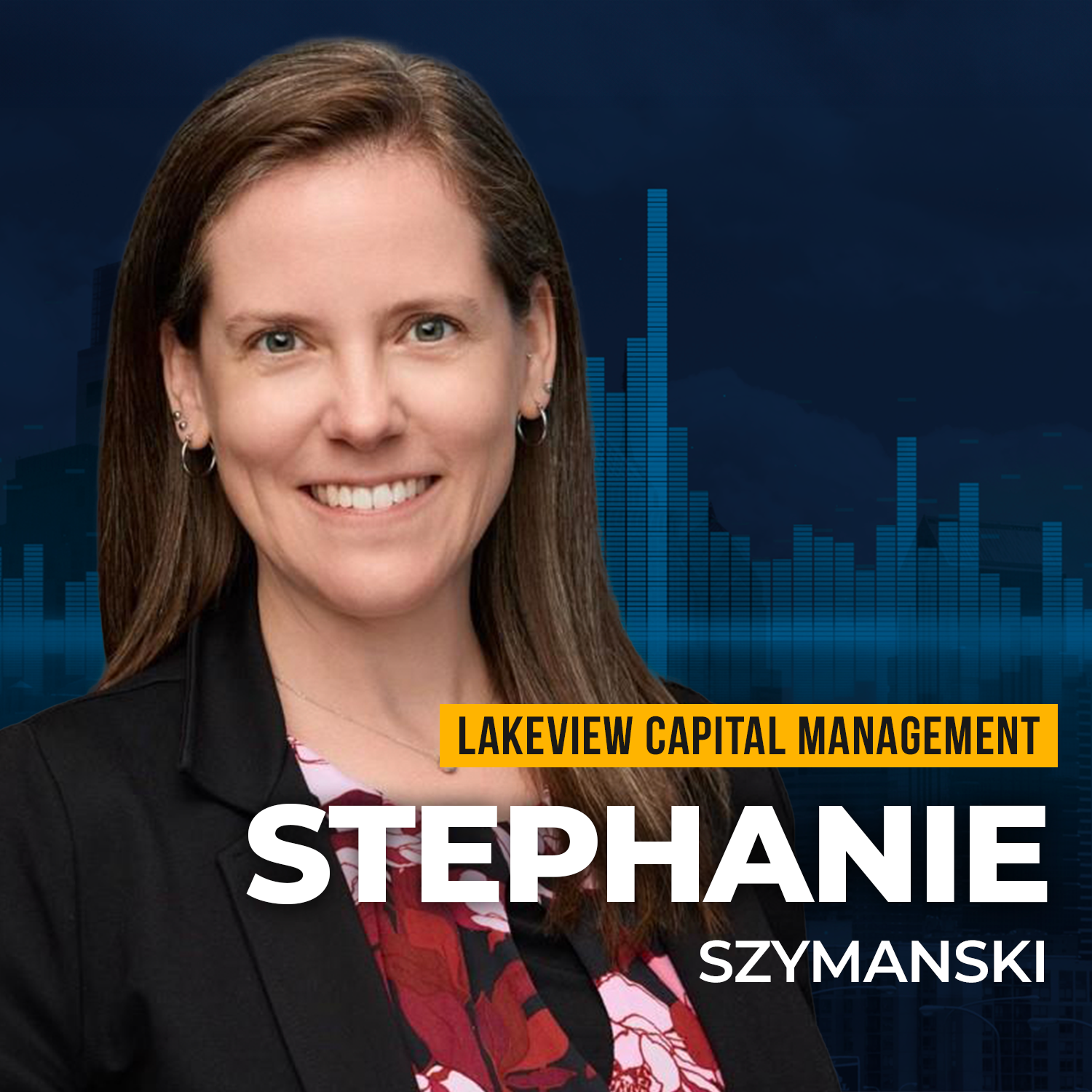
Robert Morier: Our guest today is Stephanie Szymanski, Chief Investment Officer at Lakeview Capital Management. Stephanie serves as the principal architect of the investment strategy for Lakeview, a distinguished single-family office based in Chicago. In this capacity, she holds comprehensive oversight over asset allocation, manager selection, risk management, and portfolio construction across a global multi-asset framework that bridges both public and private markets. Stephanie holds a BS in Finance from DePaul University, where she graduated summa cum laude. And she is a CFA charterholder. She brings deep roots in the Midwest institutional investment community to her role. Before joining Lakeview, Stephanie spent four years at Gore Creek, the Motorola Galvin family office, and over 11 years with Sawdust Investment Management Corporation, the family office of CDW founder Michael Krasny. Prior to her time in family offices, she held various roles in the broader financial services industry. Stephanie is also a recognized thought leader and community builder. She serves on the Midwest Events Committee for the Private Equity Women Investor Network, PEWIN. Their focus is on providing education, support and networking for senior level women in private equity investing. She is also the treasurer of the PEWIN Foundation Board. Additionally, she is a dedicated mentor with Evanston Scholars, providing first generation college students, a testament to her focus on career 2.0 and giving back to the ecosystem. At Lakeview, Stephanie is known for her forensic approach to due diligence, championing relationship alpha and triangulation to assess the character and resilience of investment managers. She is an advocate for active management, where true informational edge exists, and has recently shared insightful perspectives on the nuanced role of artificial intelligence in the investment process. We are so happy to have Stephanie back on the podcast. Stephanie, welcome to the show.
Stephanie Szymanski: Thank you for having me. Excited to be here.
Robert Morier: And we're excited to have you here. Well, this time, we're still not in person, but you are in your office. And it's just the two of us. It's the second time being on the show. The first time, you were sitting with Aoifinn Davitt and Katie Wyatt of Loyola University of Chicago. When you thought about that panel, preparing for it, and then sitting in front of those students at Loyola University of Chicago, what were you thinking in terms of the network and the relationships that you knew you had with those two women in particular?
Stephanie Szymanski: It was a no-brainer. Potentially getting to work with you, unfortunately, weren't able to make it that day, but being able to sit on a panel with Katie and Aoifinn, what a great honor to be in the same company as these two amazing women who have seen so much success in their careers, and to be able to hear what they had to say in response to all the questions being asked. I know what I'm thinking about various topics, but I always love hearing what my peers are thinking and how they're approaching things. And I take something away from every interaction.
Robert Morier: That's great. I'm glad you did it. I'm glad you're with us again. I think, especially given the fact that we have a chance to be one on one and really talk through what we covered at the higher level within the panel that we get to dig into today. And one of them is your career path. So you're chief investment officer now at Lakeview. But I know from your resume and our conversations in the past, that wasn't linear. It was a progression over time. But what drew you initially to the world of investing? So when you think about that time at DePaul University, were you thinking that I wanted to be a CIO or was it something different?
Stephanie Szymanski: I took what was called an economics class in high school, but it wasn't really about economics. It was more about stock picking and learning about the markets. And that put the idea of being a financial analyst in my headfirst. Although at the time, I couldn't have defined what financial analyst meant. And we all know it means many things to many people. So I went off to DePaul, set to major in finance. And classes then were very different than classes today. Today, students get so many opportunities to take investment related classes. When I was there in the '90s, there was one, which I did take. And I absolutely loved it. And again, it was more of a stock picking exercise. But really, I ended up doing an internship at Ibbotson Associates. And everything there was focused on asset allocation, strategy, investment, selection. Everybody was studying for the CFA. So it really put in my head, yes, as a financial analyst, I could go into investing. It's not just about accounting and corporate, that of thing. So coming out of school, I wanted a job. So I did take a job as a financial analyst at a bank. And then I bopped around for 10 years. You mentioned it. I did a number of roles in different financial services areas, but I always kept coming back to investing. So I eventually got my CFA. And I like to tell people, the CFA covers this much. But I ended up liking this much about investing. And that was institutional portfolio management. So I started looking for jobs. And I found a cryptic post that said investment management firm looking to hire investment team member. No title, no firm name, no description, and that ended up being Sawdust, my first family office.
Robert Morier: Family offices like to be discreet, that's for sure. So is that… it looks like, it sounds like that's how discretion was being incorporated at that particular office. So was it… when you think about that post, it's obviously very different today for students. They have LinkedIn. And there's so much more information that's available. But getting back to family offices, that does seem to be one area, one vestige of, I think, when we grew up in the industry that remains, which is that it's relatively opaque. It's difficult to know what's happening within the firm. Are they making direct investments in companies? Direct private company investments? Or are they taking more of an open architecture asset allocation approach? What are the assets, even to begin with? And do they have a dedicated staff? And usually, that dedicated staff member, if you go on their LinkedIn profile, has the gray fuzzed out picture as well. It seems like it's all shrouded in mystery. So how did you think about that, that mystery of family offices relative to, let's just say, your friends who were taking jobs at Aon Hewitt, or William Blair, or the big names, the big logos? How did you I don't want to say wrestle with it, but how did you think about going into it?
Stephanie Szymanski: I didn't even what a family office was at the time. To your point, very opaque. Didn't know they existed. I spent some time at Harris Associates, where we serviced high net worth individuals. I thought that's how the wealthy and ultra wealthy invested. I thought they hired… they went out and hired the individual and asset managers. I did not realize that there were people who had offices with staff charged with doing that. So it was a whole new world for me. What I loved about it was the size. I found going from Bank One and Aon, which were gigantic, to an executive benefits consulting firm, which was much, much smaller to Sawdust, which was, I mean, I was investment team employee number two. I loved the idea of a small environment, the entrepreneurial nature of being able to see every part of what was happening at the firm in the portfolio. There was no ladder to climb. I was told from the start what the job becomes for me was what I made of it, how much I wanted to learn, how much I wanted to participate in the journey of creating and investing in this portfolio. And that was exciting to me. So family office aside, just everything about it was exciting. It could have been a small investment management firm, and I would have felt just as excited by the prospect.
Robert Morier: But you stayed on the family office track. So there was clearly something more that stayed with you. In addition to that entrepreneurial spirit and that ability to be able to essentially build your own career, what is it that allowed you to continue on, and then ultimately into Lakeview?
Stephanie Szymanski: I love the idea of having clients who don't necessarily invest as their profession, who don't have that background, and being able to talk to them about how we're investing the portfolio, what we're doing, what are their goals, what do they want out of the portfolio? And helping to create that path for them is something that's really interesting to me. And so in thinking about staying in the family office space, when a role opened at another family office, for which I had a lot of respect, family offices, we all talk. We all know each other. So when this role opened, it was an opportunity for me to see how a different team worked, how a different family worked, what their processes were, and just broaden my knowledge. I would have happily stayed at Sawdust for the rest of my career. But this was a really exciting opportunity. And I got out of it exactly what I wanted to see, which I was at a first generation, single generation family office, moving to a four-generation family office with a lot more people. And I took a lot away from that. And then the opportunity at Lakeview opened. And it was a chance for me to move into the CIO role. And I've long told people I've worked with, I'm ok being a deputy. I never needed to be the chief. But the opportunity to work here with this family, with this team, and with my investment committee was really compelling. The idea that my investment committee was made up of three people who've had lifelong investment careers in a variety of backgrounds felt like it was going to be a way for me to be most fully supported in making that transition from deputy to chief. And what better way to do it than with people who have so much experience and wanted to and were able to support me in this transition?
Robert Morier: When it comes to smaller organizations like a single-family office, the chief investment officer job description can look very different than a CIO job description at a university endowment, for example. A university endowment description might be more specific, more pointed, more top down, more macro. Is that the case in your current seat? Or do you feel like a Jack of all trades, kind of picking up a little bit of everything, just given the dynamics of the size of the office?
Stephanie Szymanski: I didn't realize how different my role was from endowment and foundation CIOs until I was in this role and started talking to them. And the number of different stakeholders, the people in those ENF roles have is very different than mine. I have a family with family members versus they'll have so many different people that they need to answer to, report to. The breadth and the depth of their portfolios is just very different. And so coming here, again, its small family office, like you said. I love that I get to see all aspects of what's going on. And even though I'm not necessarily making decisions on tax, we have tax advisors for that. I'm not making decisions on estate planning. We have advisors for that. I am a part of that process. And I get to… it's important for me to understand what the plans are, what's going on. And I know more about tax than I ever thought I would from working in family offices and specifically working here, just the amount of information I've gotten to see and participate in. And talking to people with different degrees of interest in investing, and being able to direct the message I'm giving, that's really interesting for me. It is a very different role from family office to the bigger institutions. And I absolutely love it.
Robert Morier: That's great. Thank you for sharing that. It's helpful, I think, for the audience, particularly, because there is, like I said before, kind of a sense of mystery around family offices, particularly for asset managers who are more emerging. So boutiques who are coming onto the market for the first time, more often than not, they're being told by a placement agent or a cap intro person that you need to start with family offices. That's the place. They write the early checks. And they'll be the ones to potentially stake you and allow you for those follow-on investments from institutions. Do you think that's accurate?
Stephanie Szymanski: I think it's fair. I would give credit to some of my bigger institutional peers in their ability to be nimble and take those chances in a way that they don't get credit for. But I do think families are willing… are, generally speaking, willing to go in earlier, take that chance, maybe do funkier investments that aren't on that straight and narrow that an investment committee for an endowment might require. We definitely have that ability. And I would think we could move faster, depending on the structure of the family. You can move faster. You don't have to necessarily convene an investment committee to approve investments. You don't have to… if you're looking to get out of something and you need to make a quick decision, you don't necessarily need to get permission across a large number of people. So that ability to move faster is definitely helpful and to be maybe a little funkier.
Robert Morier: Yeah, that's good. Well, I think anytime we can be a little funkier, it's better for all of us, personally and professionally. So your dreams of being an attorney are well behind you?
Stephanie Szymanski: No, they're not. I will say, every now and again, I will look at the Loyola University weekend law program. And then I talked to my friend's son, who's in law school right now, and its finals week, and I think, oh, I don't want to do that.
Robert Morier: Yeah, it's always… yeah, if you're ever thinking about being a lawyer, talk to a lawyer.
Stephanie Szymanski: Exactly.
Robert Morier: I mean, I understand, there are certain… I've got secret, career ambitions as well. But I'm glad that you're still looking. I think that shows that you're still learning, which is great.
Stephanie Szymanski: Exactly.
Robert Morier: So when you think about your role today as CIO of Lakeview, what does the team look like? What's the supporting cast look like? And how have you structured the team? And then we can dig a little bit more into what you're up to.
Stephanie Szymanski: So our investment team is a team of two. And I have a rock star analyst who's been with me for about a year and a half. And I don't what I did in my first year and a half here before I hired him. I don't how I managed. So the two of us are covering the entire portfolio, doing all the monitoring, all asset classes around the world, and working through our pipeline and trying to find new and improved ideas for that portfolio. And with that said, we are supported by an amazing CFO and senior accounting manager and a fantastic office manager, executive admin. So none of what we could do… none of what we do could be done without them and the focus and the amount of work that they do. You can imagine everything they're responsible for. But we wouldn't have our performance numbers if not for them. We wouldn't know what our cash balances were, how the various trusts are allocated without all the work that they're doing, and they run payroll. So that's important too.
Robert Morier: It is. It absolutely is. If you wouldn't mind, tell us a little bit about your analyst, because I think that's something that's very interesting for the audience, particularly those who are earlier on in their careers, either they're thinking about a family office or they're just thinking about the industry in general. So could you walk us through, if you wouldn't mind, walking us through that hiring process. What were you…
Stephanie Szymanski: I love this story. I love talking about… so my analyst is Jerry. Jerry Gray, I'll give him a shout out. I think every panel I've been on in the past year, and a half has heard his name, because it was such a great hire. So I wanted somebody with one to four years of experience, general experience. It didn't have to be allocator experience. I didn't want to have to teach somebody how to behave in an office, how to answer a phone, that you need to respond to emails. I wanted somebody to have already gone through that. Jerry had just graduated college. I went exactly against what I wanted. He did what I tell young people to do all the time, which is if the job sounds interesting, apply even if you don't think you've got the qualifications, because why not? You never know what will happen. And I did it. And this is how I ended up in the family office world. And Jerry did it. He applied. He had just graduated from college. Throughout the process, he showed the most passion for investing. I mean, I met with a lot of incredible candidates, but there was just something about his passion for investing, his follow-up. If I mentioned something during an interview, he came back for the next one, having done all sorts of research on it and asking questions about it. Just that hustle interest. And he graduated in 3 and 1/2 years with a 3.97 GPA and paid for school fully himself by working nearly full time at Chipotle the entire time. So that's a hard worker with hustle. And I knew he was going to work hard. And that is exactly what I've gotten for the past 18 months.
Robert Morier: Oh, that's wonderful. Well, congratulations. It's great to hear. I think particularly, I'm with students day in and day out. And it's nice to hear the alignment. One, what it sounds like more than anything is an alignment of values, the value of hard work, the value of showing up, the value of doing your best to know as much as you possibly can before day one, and then, of course, learning along the way. And then where did he graduate school?
Stephanie Szymanski: University of Illinois, Chicago.
Robert Morier: Ok, there you go. We were talking a little bit about University of Illinois, Chicago, with a very passionate alumni base for investments.
Stephanie Szymanski: They really are. I love the schools we have in Chicago. I'm biased. I went to DePaul. I loved my experience at DePaul. Beyond that, we have so many great schools here. And I was happy to be able to hire somebody living here from a local school who just, yeah, he had that right passion and interest.
Narrator: Dakota Marketplace provides the industry with the highest quality and most up to date GP, LP, private company, public company data, as well as performance benchmarking and a number of other different data sets that the investment industry is fueled by. We're excited to announce that all of that data is available now via our customizable and bespoke APIs. You can create an API that will plug into any CRM or use some of our pre-built APIs with Salesforce, Snowflake, and a number of other CRMs that you can find on our website. To learn more about Dakota's API offerings and create a custom package that best suits your business, go to dakota.com.
Robert Morier: Among many things that you're responsible for, you're responsible for asset allocation across public and private markets. If you wouldn't mind starting with public markets, how do you think about that balance between passive and active management, particularly in areas like US equities, where it, arguably, can be more difficult for active managers to outperform?
Stephanie Szymanski: It's a question that I've grappled with, and I think everybody has grappled with, for years. The US markets have done so well on a broad basis that it can be really hard to outperform as an active manager. And it can be really hard to justify the fees of paying for an active manager. And in a world where we're a team of two here, I was a team of two to three at Sawdust, a team of four to five at Bear Creek. In the world of these small teams, we don't have the breadth, the depth, the bandwidth to cover everything as deeply, I guess I'd say, as we could. So for me, the low hanging fruit is doing something passive in US public equity. And that also helps where if we have a program that is in one of these… in an index strategy as a separately managed account, where you can harvest some losses to offset gains, that helps then from a tax perspective. And it's just a very easy strategy that can be done, very inexpensive basis. And that opens up our time to look outside the US. And that's where I won't say a lot easier, because clearly, I'm not doing it, I'm finding the fund managers to do it, but in theory, it's easier to find alpha outside of the US through active management. I think it's especially so in emerging markets, which is where we've focused our more recent search because we wanted to move from passive in EM to active. And we've now shifted towards a look for developed ex-US as an active public equity manager search. Because that's where I think, in public equities, you really can generate more alpha.
Robert Morier: So would that allocation then look like an EFA, an ACWI ex-US, and an EM allocation model? Would it be just an ACWI ex-US and potentially an emerging market satellite? When you think about the puzzle pieces, so if you could start us through that underwriting process, even before the search takes place, how are you thinking about it from an allocation perspective? And it's for ease of use, I'm using the indexes indices as a reference point.
Stephanie Szymanski: So last year, we did a study. And Jerry was a big part of this as well, to the extent that I had him present all of the results to our investment committee. But we took a look at, for our long-only public equity portfolio, whether it made sense to continue to invest broad globally, or if it made more sense to overweight our US exposure. Through the analysis, we saw that there was periods of time when ex-US outperformed, periods of time when US outperformed. And we've been in this very extended period with the US outperforming until this year. But let's go back to last summer, when we were having this conversation. We were deciding if we should just push everything into the US and forget ex-US. But the data was telling us that there was a reason to at least have some diversification outside of the US. There were periods of time where it worked. We were uncomfortable with the valuation in the US markets, and not only the valuation, but the extreme discrepancy between the valuation in the US versus ex-US. So we decided in this presentation to our committee, our recommendation was to stay allocated globally. And within that recommendation, we decided to structure ourselves to look a lot like MSCI ACWI global exposures. So we're still significantly invested in the United States, close to 65%. And then we shifted the rest of the portfolio into an ETF for EFA and an ETF for EM, which worked great this year, because this year is the perfect example of a year where ex-US has outperformed. And so we were so glad to have that broad market exposure this year. But we also feel a little bit of a race against time because, eventually, it makes sense in those broader markets to become a specialist, to go more active and not be invested in the index. So that led us to looking for an active EM manager. And it's sized to take up a big part of that sizing of our EM. But we'll still have some in the ETF to potentially keep in the ETF for liquidity or to look for another active manager that we could allocate the rest of that capital to. And then as I mentioned, our next search, we've got that exposure to EFA. And that's sized to look relative to developed ex-US in MSCI ACWI. And we will now look for managers to fill in that gap as well.
Robert Morier: That makes a lot of sense. I appreciate you taking us through that. All right, so you just wrap up the meeting with Jerry. You've concluded that, at some point, whether it's Q1 '26 or at some point throughout the year, or the calendar year, you're going to look at an active manager, in EM, you're going to look at an active manager in EFA. Now what? What happens next?
Stephanie Szymanski: Now what is exactly right.
Robert Morier: Because I have a feeling Jerry goes home and thinks, oh, I am going to have a busy… I'm going to have a busy year on the road meeting with managers. And not to answer the question for you, but maybe just to get it started, is the first process, all right, let's pull up the database? Let's fire up eVestment, let's see how we look quantitatively, and then hit our referral network, or then hit our experience in these asset classes?
Stephanie Szymanski: Yeah, I'll tell you, we did it the opposite. And this is where I'm sure we'll talk about networking more as we go through this. But I mentioned being so happy to be on that panel with Katie and Aoifinn. So I talked to my peers. And I said, who do you like? What are you looking at? Who are you invested in? You stalk people on LinkedIn. And if you get introduced to a fund, you see if you have any common links. And then you go talk to those common links about their experience with the manager. It's all that referencing before you even start the process to get ideas. And then honestly, yeah, Jerry did open eVestment and do a search. And we found some really interesting investments that, coincidentally, we were also able to triangulate with peers who have been invested or are also looking to potentially invest. So it's been an interesting process, a lot of talking to people. And we use our cap intro network as well, and some of third-party marketers. We'll let them know what we're looking for and ask if they have anything on their platform and where they might introduce us to.
Robert Morier: As you narrow that list, I'm always curious, just having worked in non-US equities, I always found that when I got into that final, and I found out who we were competing against, more often than not, we all looked like the same color blue, just slightly different shades, to the point where it was difficult, maybe, in most respects, to distinguish us from each other. So you would try to think about from the asset manager's perspective, it's a game of inches. So we're trying to figure out how to put our best foot forward. But as you're narrowing this list, is it bringing three to five managers who are demonstrably different from each other, and you're trying to find what is ultimately the best fit? Or is there a shade of blue? I guess you could be a bias or whatever it may be? But is there a shade of blue?
Stephanie Szymanski: I love it. It is so hard. I try my hardest not to… I'm a relationship person. I love investing with people who I want to talk to. And it could be about football and baseball. Or it could be about investing. But I want to like the people I'm investing with. And so it's a matter of not falling in love with investments and making sure that you're choosing that right shade of blue for your portfolio. And it is hard. We've met with so many incredible managers. And narrowing it down to one, potentially two, is tough. But ultimately, it's what makes sense for the portfolio, for the family, who seems different, who seems most able to create that alpha, and for us to do so on an after-tax basis, which is important for the family. And there are a lot of moving ideas around how best to choose a manager. And it can be really tough. I mean, separate from public equity, but we had a very long search for long short TMT. And it took us a very long time to narrow down what exactly we wanted from our TMT manager and then which one to choose. Because to your point, it's a game of, I mean, 1/8 inches, not even inches. And so I like to have conversations with people when we've decided to pass. And it's often a not now, not never conversation. And having those conversations and telling these amazing managers why we didn't choose them, sometimes it's hard to even articulate what that reason is. But there's always a little something that we can say. Here's why this one seemed better for now than you.
Robert Morier: No, and I think that's highly valuable that you do that. When I worked at Goldman Sachs earlier in my career, and I worked with this guy named Rob Patch. And he used to call those meetings postmortems. That you don't want to hear the news as to why you lost and why the search is dead. But you want to understand how it happened and what you can learn from the next search. And I think it's great that you even have those conversations with managers.
Stephanie Szymanski: I mean, sometimes, and I appreciate when they want to have that conversation. And I'm happy to always happy to do it. It's interesting with that particular search, when I said, ultimately, we narrowed down what we wanted to these characteristics, and this manager has every single one of those, there were a couple people who guessed who it was. I kept my mouth shut because don't necessarily share broadly where we're invested. But it was interesting that people knew who we chose and why. It's a small world.
Robert Morier: It is, it is. What are some of the characteristics that are no-goes? Are there certain attributes to a manager that you know just either don't fit within your own experience or maybe within the office's mission. The easiest one… and again, I'm trying not to put answers in your mouth by any stretch… but it always used to be, you'd hear this more often than not, particularly among family offices and endowments/foundations is investing in publicly traded asset managers. That always was it would take… there would have to be something unique about that manager in order for them to qualify. But that's obviously, that's probably an antiquated view these days. I've been out of the market now for a while.
Stephanie Szymanski: No, I don't think it's antiquated. Not for smaller offices, certainly. We have, because we aren't writing $50 or $100 million checks, we don't necessarily have to go with the bigger funds, the bigger platforms, the bigger firms. We don't have a rule about being no more than x percent of a firm's assets. So we can be a big part of a small fund should we choose to be for those right situations. And so in a case of what I'm looking for, I like firms that are focused on one strategy. It doesn't have to be one sector, but I like it to be one strategy and maybe a few sectors. Somebody could be… TMT, I think of as a very broad sector. But there are firms that are business services, industrials, consumer. Great, they've got a handful of sectors. They really know what they're working on. One strategy, one philosophy, everybody's working for the same goal. And that just gives me more confidence that the team is focusing all down the same path for the same success. And when you have strategy proliferation, is it because the strategies actually make sense in tandem? Or is there asset gathering going on? As strategies start to be added to a firm, that's where you start to worry about are you still getting that same time and attention on your fund, on your investment? So that's where I start. I really prefer firms that are much more focused. And then we move from there.
Robert Morier: I mean, that makes a lot of sense. I've never heard an asset manager answer that question by saying, oh, we launched that second strategy for asset gathering.
Stephanie Szymanski: Not yet not yet.
Robert Morier: Not yet. There's always a very clever response as to why that is. So I guess you can eliminate that process by just going single strategy, which makes a lot of… which makes a lot of sense. So now, you've come to the… you've come to the shortlist. You have a good sense of who you're going to go with to fill that allocation. It was funny, a couple of weeks back, I interviewed a Taft-Hartley consultant, which is a very systematic process. It's a clear step by step path towards the final presentation. Is that how you would describe the process at Lakeview? Do you have the first round, the second round, the smaller pool, and then ultimately, the final with you, Jerry, maybe a member of the staff, or the family?
Stephanie Szymanski: We don't have a strict process that says we're going to meet with 50 managers, and we're going to narrow it down to 25, or we're going to narrow it down to one. I have my process. I have my checklists. Shout out to Kate Lindbergh, who I worked for at Sawdust. A lot of that process that she taught me and that we developed at Sawdust, I still use to this day. So I have my due diligence checklist. What are the materials I want to read and review? Who are the people I want to talk to on the team? That process is very much the same across the funds we look at. But for example, investing in an emerging market small cap strategy, which is one we just made, there aren't a lot of them. And so we didn't do… we don't do an RFP, where we send out the search and try and meet with everybody under the sun. We happened to meet with somebody who has a really interesting strategy, has had success in the first few years of that strategy, and wanted to take that chance on investing. Compare that to what I said about long-short TMT, where there are so many investment firms doing what feels like the same process. And there, we did meet with what feels like 100 funds and slowly narrowed it down. But we got to our handful of favorites. And that number of favorites can vary depending on the strategy. And from there, we meet with the analysts. We read all of the quarterly letters. We do reference calls. We start slicing and dicing the data. We look at how each fund would change our overall portfolio and how it would change the characteristics of our overall portfolio, which seems to fit better. And we try to put any of the funds that make it down towards our ending process through all of that. And ultimately, it's up to me to choose where to invest. And we will write an investment recommendation, give it to our committee, and they ask questions back and forth of us. Their role is to make sure that we've thought of everything. And they ask some very incredible questions that can take a significant amount of time to answer. And ultimately, if some of those questions show that there are certain things that we hadn't considered or raise questions for Jerry and me, then it could be that we extend our process. It could be that we pass for now. It could be that we're comfortable with some of these risks that we already knew about, and we make the investment.
Robert Morier: That's great. Thank you for sharing that. I could spend all podcasts talking about emerging market small cap, which is really interesting.
Stephanie Szymanski: Fascinating.
Robert Morier: It is fascinating, I agree. I've worked with a team that did some small cap many, many moons ago. And it's such an interesting asset class for a lot of reasons. One, just because emerging markets have changed so demonstrably over the last 20 years, that there is a real succession plan now to mid-cap and, ultimately, large cap, which I think is super exciting. And then there's always strategics that might come in and acquire those companies. But you get such a good view of the macro environment through the smallest companies. So that's what I usually advise allocators who are thinking about EM small cap is that if you really want an unvarnished view of what's happening at the top… from a top-down perspective within a specific country, go into the small caps and spend some time.
Stephanie Szymanski: I know Coca-Cola makes a ton of revenue from emerging markets. I don't want Coca-Cola in my emerging markets fund. I want the small companies that are embedded that are making their money there, the employees who are working there are from emerging markets, the consumers are. To your point, it's such a different picture.
Narrator: Dakota Recommends is your source for the highest quality coffee shops, restaurants, hotels, and event spaces in every major city where business happens. Dakota Recommends is thoughtfully curated by our team, who has been traveling and hosting events in the investment industry for over 25 years. Login to Dakota Marketplace today to see how Dakota Recommends can help you make your next trip better.
Robert Morier: Coca-Cola Turkey. I mean, that's one of the case studies that they talk about often. That actually, Coca-Cola, I think it was Turkish bottlers. It was a publicly traded company. It was mid to large cap. But Coca-Cola us used to pull a lot of management talent out of that business into the United States. Well, it sounds like it was a really interesting and fascinating search too. I mean, all of it sounds like a lot of fun. Like I said, I could stay there all day. But our audience demands alternatives. We love to talk about alts. And for good reason, luckily, I'm not going to ask you about the democratization of private markets and retail portfolios. But I would love to… I would love to hear, maybe actually starting not so much with private markets, let's still stay in the public domain, but with hedge funds. What's the role of hedge funds in the portfolio? And then just really quickly, how do you evaluate a hedge fund relative to a traditional long-only strategy?
Stephanie Szymanski: The role of a hedge fund can really vary from portfolio to portfolio. The way we think about it here at Lakeview is that they can be… and this is carry over from prior work I did at other offices but return enhancer and risk reducer. We don't want to just invest in hedge funds that are protective and lower returning. We do want hedge funds that are going to generate a return and generate true alpha, but in a more protective way. And the family here made their money in hedge funds. Our patriarch founded, in 1971, what's now GCM Grosvenor. And so there's a lot of comfort with hedge funds within the family. And so a big part of the portfolio is in what I call diversifiers. They're not all strictly hedge funds, but they're in things where they offer lower correlation to equity markets, lower volatility, downside protection, but also alpha, also quicker rebound from drawdowns and also upside. So we think about hedge funds in that way, they can offer protection but also return as well.
Robert Morier: Is there room for a fund of funds in that picture?
Stephanie Szymanski: We've had fund of funds. But I like picking the funds. I like a concentrated… I know, it's the typical allocator's answer, no, that's my job. But we run a pretty concentrated portfolio, especially after a lot of the changes we made to long-only equity, where we'll maybe have five managers. So that opens up our time and our bandwidth to really focus on choosing best managers in that hedge fund and diversifying portfolio. And I mean, we've had fund of funds. We have one in the portfolio right now. But I don't that I would choose to add one. But never say never.
Robert Morier: Let's pivot to private markets, like I promised our audience before. So private credit, there's no shortage of conversations around private credit. It does seem like, though, the temperature is getting a little bit cooler, particularly among endowments and foundations in the institutional world. We've had guests on this podcast, so it's not a secret, Baylor University, which we released today, has not allocated to private credit, very specifically, and for very specific reasons, I should say. But where does private credit stand in that context?
Stephanie Szymanski: It doesn't have a role in the portfolio as it's structured today, which I can explain. And this is less of a macro market commentary and more of a family office commentary, where we're very tax aware. The family wants to invest more tax efficiently. And given the types of differentiating strategies we have in that diversifying pool of capital that can be less tax efficient, we look to make sure that we're investing tax efficiently elsewhere. And credit can be a really tough place to generate strong after-tax returns. Where we would invest in credit would be, say, in an event-driven fund or in a distressed fund where the return is meant to come from capital appreciation, not from interest payments. We don't have an income need here. And so the broader credit space isn't a fit from that perspective, given its lower after-tax returns. And I understand there are vehicles that families use to help with that, to help make the after-tax returns more attractive. There are a variety of reasons that they're just not a fit for this family. Every family is so unique. And it just won't work here. We've tried. We've looked at it. So the easier answer is let's just not invest in private credit or credit more broadly. I think some of the credit opportunities out there are fascinating. I will talk to anybody about CLOs, which feels completely random. But I would say, more broadly, from the opportunity set, it does feel much less attractive right now. It's not a place where I'd want to put money. We did have some exposure measure publicly that we redeemed from. We're just more focused on other parts of the asset class sphere.
Robert Morier: How about private equity? We talked a little bit before the recording that you're not currently deploying into private equity, but I would love to hear about what your thoughts are currently in terms of the asset class and where you are exposed. So what's growing?
Stephanie Szymanski: I mean, we have a portfolio that, when I joined, was fully invested, like you mentioned. We're at capacity. So we, along with every other private equity investor, are waiting for distributions to open up capacity. So we can start to redeploy. It's a really interesting space. I've spent a ton of time at my prior two-family offices on the private investment space. And there are so many interesting places to invest. And I think private equity has a really important part in a portfolio because of the diversification benefits. We can talk about the illiquidity premium, and Iknow there are people who disagree that it even exists anymore. And that could be. But beyond that, it's an entirely different and much broader set of companies you can invest in than across the US markets and so much more you can do to improve those companies than just investing in Microsoft or Google as a public equity investor. And so there's a lot of interesting things that can come of private investments. And I'd love to be able to be adding to some of these strategies I'm seeing. It's just this race against time. Will there be distributions before the funds are closed, so that I can make these investments? But we've got a really interesting portfolio. It's a little higher risk than what I'm used to, simply because we've got some consumer and growth equity. We've got quite a bit of biotech pharma. And so it's more on that not quite barbell… I wouldn't call growth equity barbell returns, but on the riskier end of the spectrum. I'd love to be able to add… first on the list is to add a good lower middle market buyout fund, just something more on that straight and narrow to the portfolio. But we've got… I mean, it's a really interesting portfolio. And again, the companies that these funds are invested in, things I would have never heard of otherwise. Not necessarily on the radar for a quick IPO. So we're getting access to really different strategies and management teams than we might otherwise.
Robert Morier: Are co-investments still on the menu given where you are with your private equity book?
Stephanie Szymanski: I've been turning them down, which hurts. Sometimes, those are the best investments. I like to invest alongside GPs in which I've already done all of the work on the fund and to get access to co-investments that aren't the shoring up of a company that's struggling, but rather the providing that growth capital to a company that could use more capital. I'd love to be able to. Hopefully one day, we'll be back in that position.
Robert Morier: No, that makes sense. I'm curious, despite the lack of distributions, some of your peers are making room for early-stage venture capital. Would that be consistent with what's going on at Lakeview, or are you… I hate to use the word "bundling," but are you bundling it all together at this point?
Stephanie Szymanski: I do bundle it. You called me out. I bundle anything that's illiquid into that pool.
Robert Morier: You're a funky… you're a funky bundler, I get it.
Stephanie Szymanski: I'm a bundler. It is true. I'd love to be able to… there are so many interesting firms out there finding these amazing early-stage venture deals. I always say, the venture meetings are the most exciting because you hear about all of this innovation. And it's not just the tech innovation, it's across the board. It's so fascinating. There's so many smart people out there and so many great investors finding these smart people. It's an exciting space.
Robert Morier: Yeah, no I agree. I'm curious, and I'm assuming… I'm not allowed to assume as the host, but I'm assuming that you're also bundling GP staking, GP seeding opportunities into the private book, or I should say, into the illiquid book.
Stephanie Szymanski: That would depend. We have, in our diversifying pool, where things go are based on the liquidity parameters of the overall partnership. And so that partnership where we're investing and diversifying needs to have almost full liquidity in three years. And so we have a GP seeding, to your point, fund of funds in that pool, where the firm we've hired is finding, and seeding, and staking these hedge funds. And so there's more liquidity in the underlying. There's more chance of us getting to that liquidity within three years, a little longer, if we're honest. But on the hedge fund side, we do have that. I would bundle that all together on the private side, any private GP staking. That's an area, honestly, where I struggle. And I've talked to a lot of people about this. I worry about giving up too much of the economics and not being able to appropriately incentivize the team. And again, I like the smaller firms, the one strategy firms. And so if you end up selling a big piece of your stake, how well can you incentivize everybody else and give them equity in the future and that sort of thing. So it's still a struggle for me.
Robert Morier: Yeah no, I understand. It's becoming more prominent, as I'm sure you know better than most of us in the market, there's just more of them coming online. And you know there are more coming online because they're becoming specialists. You're starting to see the fund 1, 2, 3 in hedge funds, early-stage VC, lower middle market buyout, rather than what was more of the generalist model before. So I think that… it tells me a couple of things, that there's a demand. So people are looking for it and asking for it. And then there's been a delineation, as we just discussed, between staking and seeding, the long-term illiquid lockup where equity is being given away by the GP itself versus the seeding, which is just kind of participating maybe in the revenue, or in the carry, whatever it may be. So really interesting, I appreciate you expanding on it. So thank you so much. So when you think about the portfolio today and you think about what's next, so what exercise are you in now that is going to lead you into a search in 2026?
Stephanie Szymanski: If I haven't said this already, please, anybody listening, if you have great developed ex-US long-only equity ideas, I would love to talk to you. That's a search. This is a search where I think it's going to be very much like that TMT search, where we're going to boil the ocean, to borrow a phrase from one of my IC members. We want to meet with as many people as we can, because there's probably room for two to three investments. And so we want to see what different strategies are out there, how people are approaching it. Not everybody's just choosing the 20 best. There's nuance to it. And so we want to meet as many as we can in that space. So that's an ongoing search for us. And then in that diversifying portfolio, we have some outsized positions that are ripe for trimming. And we need something to put that money to work in. And whether we decide to add to some of our existing high conviction names, or add a strategy, that remains to be seen. But in that pool, I'm really looking for something different. We're set with long short. We're set with event driven. We're set with pawn shop, and distressed, and these things. I'm looking for really differentiated strategies that, unfortunately, a lot of the time are less tax efficient. But we can maybe work around that if it's really adding something diversifying to the portfolio. An example being we spoke with a firm that buys railcars, truck chassis, helicopters. And you're buying into the real assets. And then they're being leased out. And you're making money off of the lease payment. But that income is offset by depreciation you get on the asset, which makes it more tax attractive, more tax efficient. So ideas like that that are different. We've met with long short commodities funds. And they're using derivatives, which have preferential tax treatment. So ideas like that are outside the scope of what we already have, that could be really differentiating for the portfolio.
Robert Morier: Yeah, no, that makes a lot of sense. Just expanding on real assets, in addition to, say, for example, long-short commodities, are there any other areas within real assets that you could see yourself wanting to spend more time?
Stephanie Szymanski: Can I just lump in a lot of those with that private equity portfolio? I use it so generically. I do like real estate. Broadly, it's a place that I've spent a lot of time over the past 18 years. I think there's always someplace within real estate to invest. And it's finding the smart managers who are moving in that direction where it's best to invest. Who moved away from office first in 2020 or was moving away in 2019? I think there's lots of really interesting things you can do in real estate. That's stuck over here in that private pool for us. But if there are these commodities funds, what's interesting are the funds not necessarily that are investing broadly in every commodity to just provide an inflation hedge, but rather, those who are doing something really different. Here's our specialty. We're going to focus on these five commodities, and we're going to trade in and out as we see best, more looking for ideas like that.
Robert Morier: No, that's great. It makes a lot of sense. Thank you for sharing that. And it's not too much of a bundle. It makes sense to me.
Stephanie Szymanski: I should just call it private investments, not private equity.
Robert Morier: Yeah, private investments, absolutely. We talked a little bit about Jerry in the beginning of this conversation. And selfishly, I'm about to teach a class on manager research and due diligence. So I'm about to teach a class of undergraduates with some help. Callan, who has an office in Chicago and San Francisco, is going to be in the classroom with me at Drexel. And I wanted to ask you, before this class starts, so if a young analyst wants to become better at manager meetings, they want to glean more insights from that experienced portfolio manager who's sitting across from them, what should they be paying the closest attention to during those conversations? Because these are people who are running lots of money, who have been doing it a long time, in some cases, who are very senior, and without it sounding… without a negative connotation, they know the game. So how would you advise those young manager research analysts on what they should be paying attention to?
Stephanie Szymanski: I would encourage the young analysts to pay attention to what follow-up questions are asked, when and how. I think that's a really important part. It can be very easy. And I've got my template of questions for an intro meeting versus an analyst meeting. But it's really those off the cuff questions that can get you the information you want. And I think every manager is used to the list of basic questions. And they've got their stock answer. It's when you take them off more tangentially to follow up on things that really how they're thinking about the investment world, about their team, about their strategy can really come out. So I think follow-up questions are really important. And this is something that goes back to my very first meeting when I joined Sawdust, eye contact. I want people to have the same respect for Jerry that they have for me. I want them to be making eye contact. And it's a little thing, but pay attention to eye contact, body language, who they're answering the question to versus who asked the question. Just some of those little nuances can be telling. And that's just the start of it.
Robert Morier: No, no, but that's a good tell. It's a really good tell. I think it shows a lot of things. It shows respect for everyone in the room. It shows the ability to be able to listen. So is the portfolio manager listening and paying attention to what's happening across the table from them? Because if it is a long-term partnership between you and the asset manager, it's going to be important that relationship is established in those early meetings. No, thank you for sharing that. It's great advice. What other advice would you give young professionals? We've talked a little bit about networking. But I'd love to hear your advice because they get a lot of it. That's one thing I say often to our guests, particularly those who come into the classroom. I'm going to ask you to give the students advice, but they get a lot of it. So I guess the question then, to you, would be, what's some advice you'd give to a young professional? And then more importantly, how should they apply it?
Stephanie Szymanski: Take notes, ask questions, and check your work. Those are, I'd say those are the big three. And I have a lot more where that comes from. But taking notes so that you know what questions to ask later. And it's the reps. So right from the start, Jerry was taking notes in manager meetings. He didn't necessarily know what was important to capture. So he was just capturing everything. And as time has gone on, he's compared them to my notes and seen what I thought was important. Maybe he thought some things were important that I didn't and we'll combine notes. And so you just learn from reps. And so take notes, ask the questions later. We had a standing meeting every day for his first couple months, what questions did he have during the day? And I, as a leader, I ask sometimes the questions that I'm thinking to myself, I should know this, but I'm going to ask it in the meeting anyway with the manager, so that the younger people that see this know it's ok to ask questions, even if you're feeling like, oh, this is an obvious answer, I should already this. It's ok to ask, because you find out, it's actually not obvious to a lot of people. And it helps. And it just helps them understand that they can ask questions. I want questions. I don't want people to rely on Google or AI to answer the questions. That's a great starting point. But I want them to learn from my experience. And I want to learn what questions they have, because that's going to help me perhaps better prepare as well.
Robert Morier: Who are the people that helped you better prepare? Who are some of those mentors that have helped you along the way?
Stephanie Szymanski: So I mentioned Kate Lindbergh, she's the CIO at Sawdust. She took a chance on me. I like to say, I mentioned I took a chance on Jerry, even though he didn't have the one to four year’s experience. Kate took a chance on me. I didn't have experience in alternatives. And 11 years traveling around the world having tons of fun, I texted with her this morning. We still talk nearly daily. And she helped me learn the process, learn the asset classes. It's still a lot that I use to this day. So big props to Kate. I've been thinking a lot about him lately, because he recently passed away, but Sherwin Zuckerman, who I worked for at Harris Associates, he taught me a lot about how you treat your clients and how you treat your team, and in a positive way, because he was absolutely incredible. And he would go to bat for his clients and go to bat for his team. And that's the kind of leader and provider that I want to be.
Robert Morier: Thank you for sharing that. We greatly appreciate it. We greatly appreciate your time. If you have a few extra minutes, we like to have a little bit of fun, since we're in the holiday season, we thought we would ask you a few surprise lightning questions. But before we do that, one more question for you, because it's something that just Dakota has been working on and talking a lot about, particularly with their clients through the Dakota Marketplace database, but if a manager is coming into town and they have asked you for lunch, and you say yes, where do you desperately want them to take you without telling them? Where's the place that you really hope that they land on and you get to have a bite there?
Stephanie Szymanski: I am so simple. This is terrible. Ok, I love a restaurant called Taste 222, the LT Cobb Salad, I love it. The problem is the bridge over the Chicago River from my office to Taste 222 is closed for two to three years for construction. So what I really need somebody to do is get takeout and be willing to walk around the blocks and bring it to me. I love that salad.
Robert Morier: All right, the Cobb salad from Taste 222. Noted. Thank you. With chicken. That's wonderful. Thank you for sharing that. All right, so we're going to do… we're going to do… we're going to do a lightning round, surprise question. It's fast answer. So your first answer that comes to mind. I'm not telling you that you're an overthinker, but don't overthink it. Its just short answers are encouraged. So when you're ready, we're ready.
Stephanie Szymanski: I'm ready.
Robert Morier: You're going into a meeting, laptop or notebook?
Stephanie Szymanski: Laptop.
Robert Morier: Ok, coffee or tea?
Stephanie Szymanski: Tea.
Robert Morier: Metallica or Mötley Crüe?
Stephanie Szymanski: Can I pass?
Robert Morier: Well, I thought what we could do is we're going to give that question to your boyfriend, Dave. Dave is a musician who recently left the IT industry. So we wanted to give him a shout out. I'd be curious. What do you think… what do you think Dave's answer would be?
Stephanie Szymanski: Ok, I'm going to guess Metallica. And I am going to make him watch this entire thing, so that he gets to the end, and he has to tell me if I'm right or not.
Robert Morier: Ok, I like it. And a warm shout out to Dave as well. We're looking at your picture. For those of you who are listening, we're looking at Stephanie's desk behind her, and we see her nieces, nephews and her boyfriend Dave. So thank you for sharing that. Ok, here we go. So early morning allocator call or late-night IC memo?
Stephanie Szymanski: Late night IC memo.
Robert Morier: One word you secretly hope never appears in a pitch deck again.
Stephanie Szymanski: Idiosyncratic
Robert Morier: Ok, that's great. Best trait in a great investment partner, patience or curiosity?
Stephanie Szymanski: Curiosity. Ooh…
Robert Morier: It could be both.
Stephanie Szymanski: Yeah, both.
Robert Morier: All right, both. That's fair.
Stephanie Szymanski: I like curiosity first, but I think I want both.
Robert Morier: Yeah no, I'm with you. Most underrated skill for a CIO?
Stephanie Szymanski: Patience.
Robert Morier: Ok, that's good. One or the other, public markets or private markets?
Stephanie Szymanski: Private markets.
Robert Morier: Ok, biggest red flag in a first meeting, non-investment related?
Stephanie Szymanski: No eye contact.
Robert Morier: No eye contact, yep.
Stephanie Szymanski: Which is really hard on Zoom. I feel like I'm like all over the place today. I don't where to look. So I'm being a hypocrite.
Robert Morier: We are. But we're lucky. We have established relationship prior to this meeting, so it's a little easier for us. Well, one book you recommend to young investors that is not about investing.
Stephanie Szymanski: Remarkably Bright Creatures. That's the book I've been telling everybody. But I do have this on my desk. It's about investing, so it's cheating.
Robert Morier: That's ok. So she just showed us The Psychology of Investing. So you're thinking about the behaviors.
Stephanie Szymanski: Yes, I've been carrying that around since level two of the CFA back in 2004. And I will bring it out and show to people.
Robert Morier: If they're listening. Ok, a couple more, Chicago winter or Chicago summer?
Stephanie Szymanski: Summer.
Robert Morier: All right, if you weren't in investments, what career do you think you'd be in?
Stephanie Szymanski: Oh, boy. Well, I could say attorney, but we all kn ow I chose not to do that. So executive director of a nonprofit.
Robert Morier: There you go. What's harder, saying no to a manager or changing your mind after you've said yes?
Stephanie Szymanski: Isn't that the same thing?
Robert Morier: But it's actually probably more…
Stephanie Szymanski: Changing your mind.
Robert Morier: Changing your mind is terminating.
Stephanie Szymanski: Yeah, the terminating is worse.
Robert Morier: Yeah, ok. What's one misconception people have about family offices?
Stephanie Szymanski: That we all do direct investing.
Robert Morier: Yeah, no, that's a good one. All right, little danger to end it. What's more dangerous than investing, overconfidence or paralysis?
Stephanie Szymanski: Overconfidence.
Robert Morier: I like it. Stephanie, thank you so much. So don't be overconfident. To our listeners going in, have a little humility, make eye contact order the salad from the place down the street. And have a wonderful holiday season. Stephanie, this has been so much fun. Thank you for joining me on the podcast. Thank you for sharing your insights, your experience, the office's insights and experience, and where you're looking. It's very generous of you to do so. We wish you nothing but continued success.
Stephanie Szymanski: Thank you so much. It's been fun.
Robert Morier: You can find this episode and past episodes on Spotify, Apple Podcasts, or your favorite podcast platform. We're also on YouTube if you prefer to watch while you listen. And for more content, please check out our website at dakota.com. Stephanie, thank you again for being here. And to our audience, thank you for investing your time with Dakota.