Robert Morier: Welcome to the Dakota Live! Podcast. I'm your host, Robert Morier. The goal of this podcast is to help you better know the people behind investment decisions. We introduce you to chief investment officers, manager research professionals, investment consultants, and other industry leaders to help you sell in between the lines and better understand the investment sales ecosystem. If you're not familiar with Dakota and our Dakota Live content, please check out our website at dakota.com. Before we get started, I need to read a brief disclosure. This content is provided for informational purposes, and should not be relied upon as recommendations or advice about investing in securities. All investments involve risk and may lose money. Dakota does not guarantee the accuracy of any of the information provided by the speaker, who is not affiliated with Dakota. Not a solicitation, testimonial, or endorsement by Dakota or its affiliates. Nothing herein is intended to indicate approval, support, or recommendation of the investment advisor or its supervised persons by Dakota.
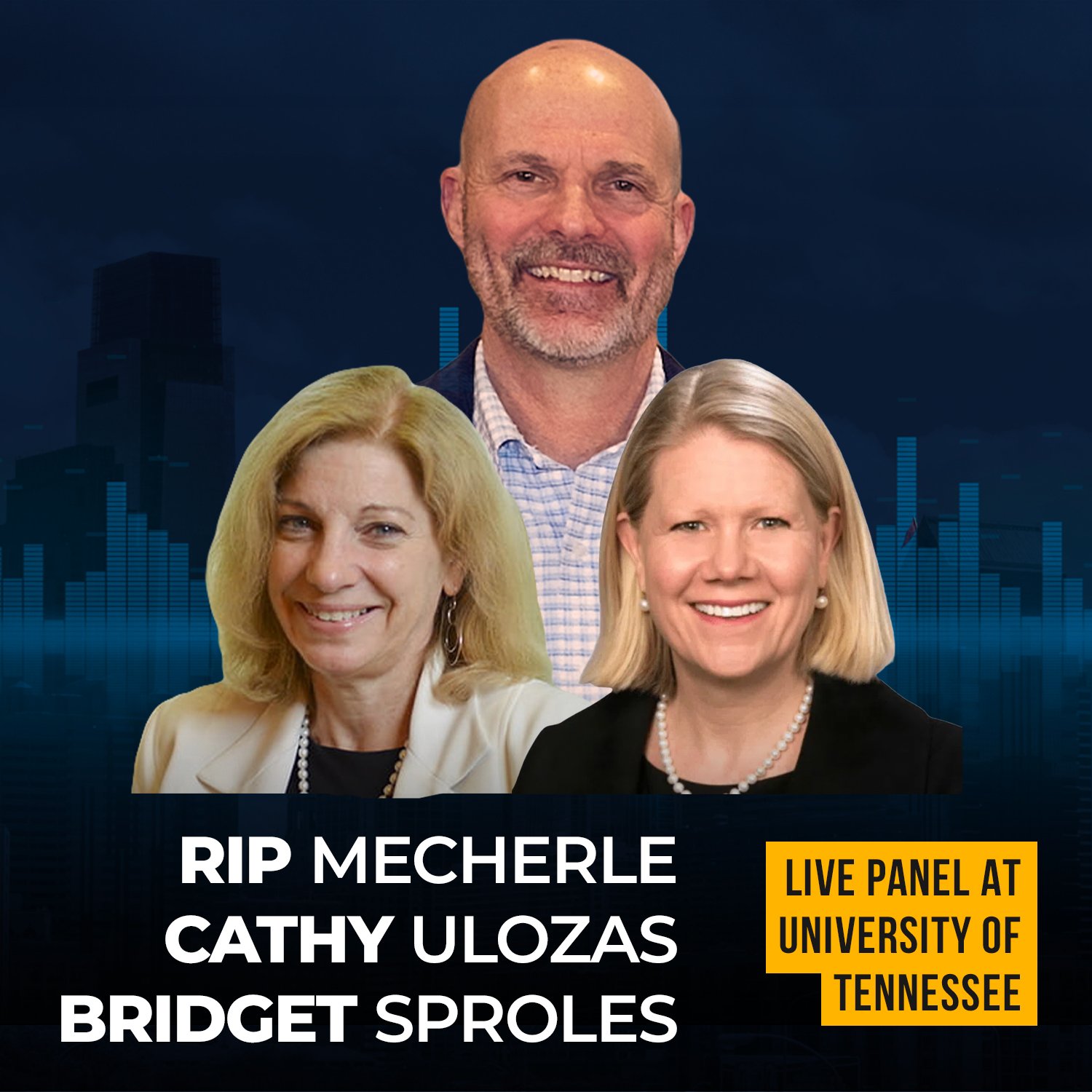
Today's episode is brought to you by Dakota Marketplace. Are you tired of constantly jumping between multiple databases and channels to find the right investment opportunities? Introducing Dakota Marketplace, the comprehensive institutional and intermediary database built by fundraisers for fundraisers. With Dakota Marketplace, you'll have access to all channels and asset classes in one place, saving you time and streamlining your fundraising process. Say goodbye to the frustration of searching through multiple databases, and say hello to a seamless and efficient fundraising experience. Sign up now and see the difference Dakota Marketplace can make for you. Visit dakotamarketplace.com today. Well, good afternoon, everyone. I am very excited to be recording this special episode of The Dakota Live! Podcast on the road. We've taken the show on the road a few times now to university campuses, and this feels like a very special one. We are in Knoxville, Tennessee, at the University of Tennessee's campus, in the business school, in the business center, with a few representatives from the business school, from the endowment office. But most importantly, with students. We brought up 17 students from Drexel University to join us here in Knoxville as part of a writing contest. Yes, to our audience. University students still write. They are still required to write. And they did so in a way that they were able to express why going on the road was important to them. And these were the winners of this contest. And we are joined by other students at the University of Tennessee as well, as well as this wonderful panel. So being on the road is very important. It's very important in business. It's very important in investments. We tend to learn the most about who we are and what we do when we are on the road. So being here with our live studio audience and with our audience who's listening in, we're very proud to be bringing you this special episode. So joining me today are four panelists. I'm going to start to my immediate left. And the first is Rip Mecherle. Rip is the Chief Investment Officer for the University of Tennessee system. Rip oversees $1.8 billion in the portfolio, and has been the architect of the university's investment resilience since 2011. To his left is… oh, sorry. To his left is Bridget Sproles, Partner and Co-Head of the health care practice at Cambridge Associates. They have worked with endowments and foundations for over 50 years. The investment firm advises over 40 health care systems, helping balance the double bottom line of investment returns and operational liquidity. She also spends a lot of time with university endowments and other foundations as well. To her left is Drexel University's Chief Investment Officer, Cathy Ulozas. Cathy, who is a veteran of the show, has a very unique background in insurance, treasury, and liability driven investing, often taking contrarian positions. We're going to talk about some of those contrarian positions to protect the endowment. And last but not least, Ryan Farley, to our far left, is an Associate Professor of Practice with the Finance Department within the Haslam College of Business here at the University of Tennessee. Ryan serves as the Director of the Torch Fund program, an experiential learning program encompassing University of Tennessee's four student managed investment portfolios. Very much worth noting, prior to pursuing a graduate study, Farley… Farley? Ryan spent over a decade in institutional trading. Thank you all for being here. To our audience, who's listening in, thank you for being here as well. So we're going to get started with this conversation with you, Rip. As I mentioned before, the students had to do a contest. They had to write about an experience on the road, something that happened to them, for good or bad. What's an experience on the road that impacted you?
Rip Mecherle: Experience on the road, work or personal?
Robert Morier: Whatever you wish.
Rip Mecherle: Let's see here. There are probably some that I can't share, but I guess probably one of the more formative would have been a trip to Europe that I took in my teenage years, never having been outside the US. We got to hit a whole host of countries, ranging from Italy and Venice all the way up to Germany. And it was an amazing experience that really gave me an appreciation for not just the US and at times being homesick for that, but also just how varied and different and wonderful it is to go outside the borders. I wasn't thinking about finance back then. I was thinking more geopolitics from a career standpoint, but it was really eye opening. And it's something actually that kind of still informs the way we approach things today from an investing standpoint. So that would probably be the most formative and most impactful I can think of.
Robert Morier: That's great. Thank you. Bridget, how about yourself? A meaningful road experience for you, maybe on the business side.
Bridget Sproles: Early in the years we were just talking about my first job was as an equity analyst in emerging markets. And so this was in '94, 1994. I was able to go see some companies. And so it's one thing to be sitting in the US doing research and looking at balance sheets and income statements, but when you get there and you see that they're doing sometimes some breakthrough technology, they're really innovating and real companies that were profitable, I guess it gave me a new perspective that there was probably a home country bias that we were bringing into the investment philosophy, and that there were really great companies that you had to pick through to find, but there were really great companies all over the world.
Robert Morier: That's wonderful. Cathy?
Cathy Ulozas: Well, I have a lot of specific things that happened on the road, but I will say that when we've gone and done due diligence, it's been very eye opening to talk, not just with the investor relations person or the portfolio managers, but with back office. And if they're lucky enough, if you're lucky enough to be in the room without the investor relations person there, you get a lot of really good information about what some of the problems have been. People tend to be honest. And we've also found talking to more junior analysts without a senior person in the room, also it can be very eye opening. One, you can start to see how a company treats people, and that is really important, I think, as you're making investment decisions going forward, how well they're treating staff, and their type of culture. So I wouldn't say that I had one specific event that occurred, but having that ability to meet with people and not just those who are marketing to you, I think, is extremely important.
Robert Morier: That's wonderful. Thank you for sharing that. Last but not least, Ryan. Do they let you out? Are you allowed to travel outside of campus?
Ryan Farley: Once in a while I make it off campus, other than going home. I would probably have to point back to when I was in industry. I had joined the international sales and trading desk where our customers were US bysides, and they were trying to trade in Europe and Asia and Asia-Pacific regions. The first trip I made to our Hong Kong desk really opened my eyes in two ways. One was that I really, when I started, didn't appreciate how different markets work in different countries and how the protocols and how people interact are different. But probably one of the biggest takeaways was I had worked with these people for a few months, and it wasn't until we sat down and ate together and talked through what is a challenge in your day to day life, what's working. Those relationships became so much more productive.
Robert Morier: That's wonderful. Thank you for sharing that. And you touched on something very important. So I was talking to the panelists before we got started on what the theme of this conversation rotation was or is, and it's building relationships. More often than not, the students who listen to our podcast, the students who we talk to every day, the advice that you'll receive is build your network. Build your relationships. Build them now. Start soon, because you never know over time how that will translate. So I wanted to encourage our panelists to remind the audience, both the students and those listening in, the importance of relationships and the importance of the relationships on this panel. So maybe, Rip, you could talk a little bit about, before we get started with the investment office, how you work with Cambridge Associates and how you and Bridget work together. And then I'm going to put it on you, because you're our host, how you know Cathy, and of course, Ryan as well.
Rip Mecherle: Yeah. So great start there. So we've been working together since late 2018 or 2019. I got to UT, as I think you mentioned, in 2011. The relationship that we have with Cambridge… and I say we because we're a team of three internally at UT, and I'll elaborate on that more in a second… is pretty tight. I don't how it compares to your other clients, but for us, it's an integral part of how we operate. So we have a bit of an unusual setup at UT where, as I said, a team of three, hopefully going to get back to four because we're trying to hire an operations person. But that team of four-to-be covers all the investment work that we do on our side, at the manager level and then portfolio level, all the accounting at every single position level, and then at the aggregate portfolio level on multiple platforms, all performance reporting, which we tie out with them, financial reporting at year end. If I didn't mention operations, financial operations, and then even tax. And we file tax returns in roughly 30 states, which most people don't know. So as I enumerate all those things that we have to do, it's kind of gargantuan to think that a $1.8 billion endowment is being handled by, right now, three people. So my hat and gratitude go out to my teammates not here today. But Cambridge is a huge part of our process. So when you all came and presented to us… and this was, as I said, several years ago. You came with a unique model. And the short of it is our team, which is, as I said, small. There are two investment people, of whom of which I'm one. We plug in with basically four director level people at Cambridge on this team. So they are advisory. They don't make the final decisions. But our being able to interact with Bridget, who has plenty of years of experience, the person who focuses on purely on private investments or hedge funds, respectively… there are two different people there… is a big part of how we're able to cover a lot of ground, not only in terms of breadth but depth. And so they also have a very robust online platform. I'm not trying to do a sales pitch for Cambridge, but we need all that. We need as much that can be pushed or delivered to us, because we just are stretched thin. And so that relationship for us is integral to the investment process, probably a lot of other firms. I think, Cathy, you'll probably talk about this, but you have more investment staff, and I think less of a burden on the operational or accounting and tax and so on. So we're just a bit unusual in that regard. Cathy, I met… she was, I think, the first person I met… I was telling you all this before… when I got into the industry. So I'd been in the credit markets for a number of years, and I was at a conference trying to get my feet wet and learn the ropes a bit. And she is somebody who'd worked in the bond and credit markets for many years, as had I. And so I'm sitting there listening to somebody talk about fixed income. And for those of you in the audience, students and everyone else, fixed income runs the gamut across many trillions of dollars of different assets across the world, around the world. And the conversation was totally centered on basically treasuries, kind of an anchor to the wind for a multi-asset portfolio. So I kind of moseyed up to Cathy in the back, and I said, they're talking about fixed income, but it seems like they're just talking about treasuries. And she said, yeah, there's all the… so we ended up striking up a conversation about how narrow that focus was. But in our industry, kind of hitting on the theme of relationships, whether it's a direct partner, like Bridget and Cambridge with the university or colleagues, it's critical because there's so much intelligence to be gathered, insights to be gathered, and even ideas, really, to be gleaned from relationships that you just can't do without them. So we haven't kept in touch enough, Cathy and I, but we will more and more so. And then Ryan, I've known through… I think maybe it was Der, so the person that I hired. Or maybe we met before that. But Ryan and I met a while back. You have been integral in helping send students our way for internships, and that's been particularly fruitful for us, and I think hopefully for you all as well. I know when I first got to UT… and hopefully I'm not going too long here, but it seemed to be very heavily and solidly focused on accounting and supply chain management, but not as much in finance and investing in capital markets, which is at evidence here. And that's really grown, and we've benefited from that tremendously. So we've had a few different interns now end up getting placed in credit roles over at AllianceBernstein in Nashville, one at Cambridge, who's now at St. Jude. We now have another one in Illinois working in the treasury area. So we've had a lot of success placing people from our office around. So the relationships here are integral, and I wouldn't be able to do what I'm doing without all of them.
Robert Morier: That's excellent. Thank you so much. I'm still having anxiety from 30 separate tax returns. I have to do mine, which is one, and I'm stressed about that. So you have to do 30. So it is quite operational. Maybe you could use that as the backdrop in terms of the structure of the University of Tennessee's Investment Office as a public entity. You touched on the differences between Drexel as a private institution and UT as public. But could you give the audience, both in the room and listening in, an overview of the office's structure and what those goals look like?
Rip Mecherle: Yeah. So in terms of the structure, as I mentioned, it's a pretty limited number of people, and we are a bit of an oddity in that it is kind of all hands on deck across all areas. So I think typically an investment function that you'd see in a university is more focused on the investment research. And that's an integral part of what we do, but we've got to cover all these different areas. So we're at $1.8 billion. The asset allocation, if I take this in a direction… not if you're liking, you just steer me in a different direction. But the $1.8 billion is spread across all the asset classes that you all would expect to see. So public and private markets, equity, debt, various hedge strategies, what we refer to in our industry as real assets, which typically are hard assets that generate cash flows like real estate, perhaps power assets, something like that. And so we cover a lot there. There's a pretty stark contrast between what's required on the public side in terms of public investments, even if they're hedge funds, where it's typically you send a wire out to a manager, the manager invests your money, and you really don't need to touch it again, apart from rebalancing. The private side, which is where a lot of those tax returns come in, and the operational intensity and the accounting complexities come in on the private side. So private equity, venture capital, private real estate, private credit. So all of those that are basically true private partnerships. And then capital is not a one and done where we send it out and it's deployed. The managers work with us over a period of years to call capital. And then over time, hopefully they're sending it back to us at a multiple of the level we gave to them. But there's a lot of accounting in between. There are a lot of cash flows in between. And so for us as an institution that can't just hire as we please… not that any can, but I think public entities struggle with that a bit more. That operational intensity is something we have to be very mindful of because it's going to put a burden on the infrastructure in terms of the people and then the resources. So we just recently met, I think it was late last year… October, maybe. We changed the asset allocation target to increase private equity by about 200 basis points, from 25% of the portfolio to 27%. But in doing so, we talked a good bit about, ok, what does that imply with regard to the additional reporting, the additional accounting, and so on? So it is that space for us, I think almost entirely, that results in 30 tax returns across the US, because it's all related to the Unrelated Business Income that these things can generate. So there's a lot that goes into this part of a multi-asset portfolio that I think tends to get glossed over in committees or in institutions that want exposure to certain assets because they can generate high returns or because a lot of other people have them. You have to think about what goes on behind the scenes, and that's pretty elaborate.
Robert Morier: That makes sense. Cathy, what goes on behind the scenes at Drexel University's endowment?
Cathy Ulozas: Well, first of all, I want to say that I'm jealous of Rip having to do 30 tax returns, because that means he has a very profitable portfolio. And we just started to have to do that at Drexel because our private equity, our private debt programs have been much newer. And so only now have we started to see that. So I feel your pain, but not really, with that. So relative to our office at Drexel, there are four of us professionals in the office, and we always have a co-op. Usually it's a graduate co-op, but we also have taken undergraduate co-ops over the years. The graduate co-ops come to us towards the end of their time at Drexel, and we give them a job, and we tend to keep them on after so that they can keep a continual employment going until they get their real job. Occasionally we have kept one it on. And we have Stephen Chase, who works for us now, was a graduate co-op. And I shouldn't have said his name, because you're looking for someone and I don't want you to steal him.
Rip Mecherle: We won't.
Robert Morier: That's now being… it's been recorded, so he will not take Stephen Chase.
Cathy Ulozas: Very similar to UT, we act in the same way. We are all hands on deck and we tend to collaborate. We don't have necessarily specializations along the way here, though. Certainly our performance analyst does so much of our work. We do utilize an outside consultant to help once a year on our asset allocation, just because we do have… they have a larger database than we do. But we've brought most of our systems in-house. We are actually looking at some other systems with our accounting areas to also make ourselves more efficient in terms of taxes as well as the utilization of each endowment that we have. So we're constantly working with other areas of the university, particularly in the finance department. We obviously work well out with the business school as well, particularly with the Dragon Fund students. Our Dragon Fund students… we have one here in the room today. Our Dragon Fund is our student-run fund. It is now $5.4 million that they manage. The students manage it. I don't have any say. The professor doesn't have any say, the dean, the president. No one has any say about what goes into that mid-cap portfolio. It is the best performing manager in the endowment. So for all professional managers who may be listening, please hire our students because they are very, very good at what they do.
Robert Morier: That's wonderful. Thank you for sharing all that, Bridget, as it relates to the relationship with the University of Tennessee, what do you believe makes an effective LP advisor relationship as you are looking to contribute ideas, best ideas from Cambridge, into a system that's very different, potentially, from some of your other clients?
Bridget Sproles: Well, I would say in every relationship, as I've been doing this 25 years and seen a lot of different ways that decisions are made, governance drives performance. Governance has to be gotten right. And that isn't just… I think everybody wants to be competitive and have a great return profile. But unless you've got all of the fiduciaries understanding what role they're playing, and everybody is very methodical and making sure that the consistency of style doesn't change or try to chase the most recent asset class that's doing well. A good governance structure usually has consistent CIO, a consistent team around the committee. The investment share is more consistent. And then the advisor, so that there is a longevity of style and approach that's being undertaken. And we do think of it as a partnership. So we want to make sure we've got right any changes that's happening at the operational level. If anything, at the University of Tennessee is significantly changing around potential cash flows in and out. Does that change the structure that we think makes sense? And so it really is keeping our fingers on the portfolio and what's happening at the university level, but importantly, that the bigger picture of governance is well structured. And University of Tennessee has a terrific system. I think we all really understand the role we're playing, and we've had eight years of pretty consistent style that we're all kind of working in the same direction.
Robert Morier: Rip, transparency is a big part of that system. You benchmark the endowment against a 60/40 index. But how does that benchmark or that transparent benchmarking influence your asset allocation decisions within the portfolio?
Rip Mecherle: I think we may have talked about this briefly. It's an informal benchmark, the 60/40. And you could probably argue we're due for a bit of an upgrade because our asset allocation has shifted a bit to be a bit more aggressive than when we originally put that in place. But we're not really doing that for pure benchmarking purposes. And so you'll see it posted in any kind of a public posting that we provide, so the Board of Trustees and so on. It really serves a two-fold purpose. One, it helps, I think, to keep in an appropriate way and train a bit of stringency with regard to the Cambridge side and us when it comes to deploying capital. The portfolio has to be diversified to basically preserve capital and give good risk adjusted returns over a full market cycle, and then during punitive periods, like COVID or the inflation spike. And that 60/40 is there in a very simple form and very pure form to help us look and say, ok, are we putting this portfolio together in a manner that gives us a proper risk return profile versus this market mix of stocks and bonds? So it's, as I said, a very pure and very simple benchmark that keeps us honest in that regard and helps us to remember, hey, if there's a question mark about a manager or a strategy, we're perfectly content to utilize these two options, stocks and bonds, until we see a better opportunity. So it's there to train that and keep that discipline in place. It's also there, at the opposite side of the coin, the flip side of the coin, to remind us, we have to be a return seeking team, a return seeking… the effort needs to be a return seeking effort where we're trying to outperform inflation plus spend. That doesn't seem like much, but 5 and 1/2 plus, let's just call it 3, is a high bogey. You can look at long term global equity market returns, and I think they come somewhere around 8%, if we're lucky, depending on where you stop the clock. So inflation plus spend is a high hurdle. And a 60/40 has a shot at beating it. And if we are struggling to beat 60/40, then we probably need to reassess how we put the portfolio together. So going back to your question about the investment committee and even working with Cambridge and internally, it is a very simple whip, if you will, in some ways, to keep us moving along the right path with regard to risk mitigation and then return seeking assets and trying to put that together in an efficient way.
Robert Morier: Interesting. Thank you for sharing that, Cathy, Philadelphia, specifically Drexel University in Philadelphia is very much known as an anchor institution. And when it comes to governance and transparency, we've used the endowment for slightly different investments, more than just picking managers.
Cathy Ulozas: Yes.
Robert Morier: One example is saving St. Christopher's hospital, for example. So when you think about transparency and governance as it relates to your portfolio, when you're going outside of the bands of the typical investment that endowments are making, how do you manage that job?
Cathy Ulozas: In the endowment, we have done two transactions for dorms, and we do have formal agreements with the university to be repaid on those. So we do have to go through an entire governance process with that, going through our committee, laying out how we came to the rate that we're charging the university for that money, which we actually use our expected portfolio rate of return. That seems like the fair trade to have in that. And we do report to our investment committee. It has to be approved by the board. We have to use board designated funds for that, which means that not necessarily on the donor side, but that we benefit, but all of our funds are commingled. But this has to be a board approved transaction. With St. Chris, which turns 150 years old on Thursday, it is a hospital that serves the underserved Children's community in Northeast Philadelphia and Philadelphia. Phenomenal institution. A lot of our medical school students train there. We own it now 50/50 with Tower Health. To facilitate that transaction, when the hospital system that owned St. Chris was failing, we helped finance the purchase of it through the use of endowment funds. It took a lot to structure that. The CFO and I at the time were on the phone constantly trying to figure out the right governance structure to be able to do that. We were paid back in full through a bond issuance that Drexel subsequently did. And that was a very… it wasn't a very long time that we had that what we called loan investment outstanding for the hospital. It was very significant to be able to keep that asset. Astoundingly… and this is one of my very happy things that has happened… a grateful family whose young granddaughter had been in the hospital and recovered wonderfully gave a million dollar gift for an endowment. So we now have a small endowment that we now manage for St. Chris. And then we also had a bequeath of another $200,000. So we have a $1.2 million endowment, which has grown on a percentage basis, much higher than the Drexel endowment in the last six months. But we are now managing that money for St. Chris. And that's been a great gift, and we hope that it will continue to grow.
Robert Morier: Thank you for sharing that. Bridget, when an institution undergoes a major structural change… so maybe there's a liquidity need or liquidity gets tightened. There are balance sheets pressure. How do you re-underwrite the investment portfolio to preserve the resilience of that body of assets?
Bridget Sproles: Yeah. It's a great question. I mean, I think of two things. One is probably all of us re-underwrite all the time, our portfolios. I think you have to be every day thinking, does this portfolio work for the institution? And double checking that there's nothing that's going to surprise in the portfolio at the manager level, at the asset class level. And then secondly, I think when we are thinking about a surprise external situation that might happen, I'm reminded of a client that came to me after right in the midst of the financial crisis. They had chosen to unwind their endowment type portfolio and go to cash. And it was almost to the day at the low point of the financial crisis. And then they wanted to now re-underwrite and get a new asset allocation, get back into the markets. And there, clearly they had gotten wrong the mix of what they could endure on volatility basis. They just were kind of buying what they thought was a typical endowment portfolio and they had external stresses that might come into place. So to your question of surprise on liquidity. In that situation, it was really difficult to get back in and to get the right mix of asset allocation, because the markets kept ticking up. If you remember after the financial crisis, trough. It always felt like there was going to be another sell off and it didn't come. And that environment, we always think you got to get the risk right at the start. So doing your homework and making sure the fiduciaries around the table, particularly if you're undertaking illiquidity, you stress test the portfolio. I probably, for every relationship, at least once a year, do a stress test to remind everybody, look, when you're looking for return, you're going to get risk. There's going to be some downside too. And it's kind of preparing for the worst case scenario that hopefully doesn't happen so that you can go back if we do hit a bump and say, look, we talked this through and this is what we're going to do. Over time, we've kind of anchored on, let's hold in fixed income about two years of spending to make sure we've got a ballast in an environment that the markets have a hiccup and sell off. So there's a lot of different components, how to make sure you've got the risk right, but especially making sure that, in any environment, everybody around the table has an understanding of a game plan of what to do in a stressed environment.
Narrator: Dakota Recommends is your source for the highest quality coffee shops, restaurants, hotels, and event spaces in every major city where business happens. Dakota Recommends is thoughtfully curated by our team, who has been traveling and hosting events in the investment industry for over 25 years. Log in to Dakota Marketplace today to see how Dakota Recommends can help you make your next trip better.
Robert Morier: Now we get to talk about manager research and due diligence, which is the fun part because I teach a course on manager research and due diligence at Drexel. So we've brought another consultant into the classroom to help our students better understand, when you select a manager into the endowment, what does that process look like, what types of questions are you asking. Maybe before I start asking those questions to you all, how many managers… maybe, Cathy, starting with you. Give or take, how many managers do you have in the endowment? So these are active managers, managing assets in both public markets and private markets.
Cathy Ulozas: 55.
Robert Morier: 55. So you exactly. How about yourself, Rip?
Rip Mecherle: Probably when you factor in older private deals that are still on the books, 70, mid-70's, because those private deals tend to linger.
Robert Morier: Mid-70's. 70 relationships. It's a big team. Cambridge, how many in total? What do you think?
Bridget Sproles: Well, I would go portfolio by portfolio. It is a function of how big the private portfolio is. If you have zero privates, you might be at 25, 30 managers. But you double that as soon as you go into the privates because you're dollar cost averaging and taking different vintage year exposure. So I would say on average, probably 65, 75.
Robert Morier: So anywhere between 55 and 75 respective independent relationships that they have to get to know over many years. But before that happens, there's a courtship. There's an underwriting process. You have to get to know these managers. You have to get to know the people. You've got to get to know their process. So what does that underwriting process start with, from your perspective, Rip?
Because I know you have a few opinions on this, and you've got a little bit of experience where sometimes those managers don't work out. And I think I saw you say they're zombie managers. They can float in a portfolio. You can't get rid of them. They're the Walking Dead.
Rip Mecherle: Yeah. Usually that's the private side or some sort of a side pocket, maybe, in a public. Yeah. So the process, beginning to end… and this is where, with us, Cambridge is an integral part. With two people doing investment work across all the categories I've mentioned probably more than once now, maybe out of trauma, it's one of the most important processes when it comes to the investment. I think I would, maybe in contrast to some of my peers, say that it's equally important but not more important than making sure you get your composite construction right in terms of public equity or hedge fund or the total portfolio optimization. I didn't really appreciate how important those components and processes were until I ended up in this seat. But it looks different depending on the asset type and whether or not you're dealing… and then the vehicle type, public or private. And what's called an evergreen vehicle now, which is becoming more popular in the private space is something that you actually can leave. So your analysis doesn't change with regard to the manager's integrity, competence, skill set, resources, experience. All of those things have to be thoroughly looked at from multiple angles. But you do have the option of eventually parting company in a reasonable time frame. I think for private investments that are true, you're in it until they pay you back. And sometimes that's a long time, a decade and a half or more. There's a lot of work around what that opportunity set, the manager's competence, and the manager's staying power looks like. So I mean, we try to focus in the private equity space, for instance, on smaller managers that are in their first, let's just say two to four funds in terms of their life cycle. The reality is that we will probably be in those funds for a decade and a half till we get the last dollar back. So you have to be confident that that business model is going to work, in addition to the people who are really driving it, staying there. There's a whole world bifurcate investment due diligence, operational due diligence. We don't try to do any of the latter, really, apart from looking at what you all have done and trying to understand any issues that we need to get our hands around. So those are two very specialized areas. And if we didn't have Cambridge, we would be outsourcing operational due diligence completely. So you think about that, for those in the audience, the students, that's where you really dig into the financial operations, the accounting, the infrastructure, sure. All that's there behind the investment play that's going on in front of you that will generate the returns to make sure you're not at risk of losing capital for some other reason than the market and movements and the asset values that you would expect.
Robert Morier: The manager research due diligence process, as I mentioned before, is essentially an underwriting process. But it starts with an interview. It starts with you asking questions. So over your years of experience, what questions do you feel have yielded the most results of those early conversations with managers that you're starting to get to know for the first time?
Rip Mecherle: There will be a common theme in some areas, trying to understand the ethos or the mentality of the firm. And that, I think, the drive there is to understand who the people are and what kind of people they are, and whether they really would define the word integrity in the same way you would. And I think that's important. That can come in different forms, but it has to be there. So I think questions about how the firm operates, how they actually got into the business, why they love the business, how they would describe the firm, not from a quantitative standpoint or even thematic standpoint, but in terms of the people and the relationships that are there. So I think that's one important area. I think the other side of it is asking them questions about a lot of the research process and how they see it and how they manage it behind the scenes, because ultimately, their ability to target great opportunities or to be adept at navigating the markets that they're focused on… it could be a small cap value manager, it could be a technology focused growth equity manager, or it could be a credit manager. How do you zero in on the opportunities, actually source them, get them on your balance sheet? And then how do you say no? And that filter is really important. And then for some, it's, how do you sell, when do you sell, and what drives that. Which is really important for those that can get in and out of, let's say, stocks or bonds. In other cases, getting out is harder. Private equity, you're in it and hopefully make money. And then if not, you're trying to figure out some of a workout. So it really is trying to understand the DNA on both sides. But that integrity component has to be there.
Robert Morier: That makes sense. Thank you for sharing that. Cathy, are you a contrarian?
Cathy Ulozas: Not really. I think what we do in terms of when we are looking at managers, we will ask a lot of questions and we will want to know how they assess risk and if they are fully appreciating the risks that could come into play in whatever type of market they're in. People tend to fall in love with their own ideas and don't see where the risks could be and discount them often. And so I think that we don't always… we're not always negative to the ideas. We don't present ourselves that way. But we ask a lot of questions relative to what could come… what the risks could be to the types of industries they might be investing in, or the method that they're using to finance and receive returns from. I'm often astounded at how little people truly think about the risk side of the equation. They think we're going to invest our money and just make a lot of money. So that's one way that we look at it. On a more macro basis, I do think that then sometimes we've been a bit more… I wouldn't say necessarily contrarian, but we were looking at things, I think, a little bit before others were, particularly in real assets. And we were thinking about inflation and how to capture inflation, not necessarily hedge it. We want to capture the inflation within our portfolio to the point that we see things at Drexel being affected by inflation. And therefore, there has been a greater call on the money that comes out of the endowment for spend to help cover those costs that we see in higher ed that are there. So we've been trying to capture inflation, so we were a little bit earlier, I think than most, into things like real assets.
Robert Morier: Would you mind digging into that a little bit? Because I think, one, it's interesting to hear that you were a little ahead of the curve. But the question then is, well, what indicators were you looking at to help you guide to that decision? Because they may be some of the same indicators that other offices are looking at, but they didn't make the call. So it's a little bit of the marriage. What did you see? And then how did you get the confidence to do it?
Cathy Ulozas: We never believed that inflation was transitory. We didn't see that there would be a deflationary scenario that was coming that we were seeing that these costs were going to rise and stay and become more permanent over time. So I think it really was that simple. We just didn't believe that things were going to come back down to another level.
Robert Morier: Bridget, how do you reconcile when you have a client with a house view like that? A little differentiated, a little early, a little risky, maybe potentially. Could impact liquidity, potentially. How do you then translate that conversation from your seat. So you're sitting across from them as the advisor. I think about some of your health clients, particularly when things are terrible. And you know liquidity will be needed at some point, but how do you ensure that liquidity is happening while still staying in tune with what you know that organization requires?
Bridget Sproles: Yeah. I think there might be a situation where a health care system, of course, with the nice bull market we've been having wants to lean into risk and growth and it's the looking in the rear view mirror, wanting that kind of a structure. So I go back to remind… I show what the dollars would look like in a typical bear market and see if that's comfortable. We also do a lot of discussions with their CFO and treasurer to understand their kind of strategic five year plan, the outflows and inflows. The assets that health care systems have are integral, much more so than even a university to the operations. And so what's happening operationally has a compounding effect on the dollars that they're asking us to help with. I have an example that my first health care client was 23 years ago, and they wanted a well-structured, diversified endowment type portfolio. And indeed, that worked for three years, and then this was an institution based in New Orleans. And Katrina hit 20 years ago. When Katrina hit, this was a big hurricane that really was devastating to the city of New Orleans. Half the portfolio had to be liquidated so that they can fund operations and keep the staff made whole with their compensation and all that happens at a hospital. And in that environment, I think it became very clear that we had to reshape what the endowment support model was for them, if that was the right mix. They chose, and all my health care clients today, I remind them of that kind of risk. And we often pull aside a liquidity pool so that we know that there's some potential for sizable dollars needed for operations. And the liquidity pool is that funding source. So then we can have a very long term portfolio that can weather the storms that the markets might give us. And that's been effective. I think the clients have been happy to know that there's a portion of their dollars, they can sleep at night, and then there's a portion that's growing, that's compounding at significant rates. And for long term, these health care systems, the better their balance sheet is, the stronger they are able to really drive their own ship as they're looking into the dynamics changing in the health care space. And they want to be able to own their destiny and not be at risk of a merger or takeover of some kind.
Robert Morier: I'm thinking about the financial crisis. I remember being in Nashville, Tennessee, with a system called HCA. For those in the audience who don't know, Sarah Loving was their treasurer, and I was sitting across from her in the middle of the crisis, and I was giving her an update on international equities. She could care less about what was happening in international equities other than the liquidity, because the money markets were frozen, and they had to make payroll and they had to make a lot of other payments. So I think very similarly, it's important to understand what it's like when things can get really bad and how bad it can get. So it was a great points across the board. Thank you for sharing all of those. We also have a former health care investor in the audience with us, from the Boston system, from Partners HealthCare. And I'm sure you remember some of those war stories as well from his time. So thank you for sharing this. I appreciate it. One more just quick follow up question. Aside from the health care clients that you're working with, the endowments and foundations. So when you think about managing the selection process as it relates to picking that manager, picking one of those 65 managers, what do you find are some of the most important attributes of the people? So when you think about… I don't want to say it's the cheap way, but one way to say it, which has become increasingly important in universities, is character. How do you assess a person's character when they're sitting across the table from you, and you are going to give them the money of a foundation whose mission it is to treat sick children or educate students in the state of Tennessee? How do you figure out who that person is?
Bridget Sproles: Well, it takes kissing a lot of frogs to figure it out. A lot of meetings…
Robert Morier: Sounds like dating.
Bridget Sproles: Dating, that's right. Right. I mean, the more you talk to managers, the more you… I think you were talking about trying to meet as many managers as possible, especially when you're young and growing in the industry. The more you get to a sense very early, A, on integrity… and so we have lots of people that do nothing but manager research. And so I am able to lean on them and ask a lot of questions because they know the specific asset class that they're looking at. And I also think it depends on which asset class we're talking about. So if it's US equity, yes, we want obviously the integrity and the character, but we also want a differentiated strategy, something that's really unique because it's so hard to outperform in US equities. But then when you're going into mid-cap buyouts in the private space, there, you are going in and making a commitment that's a 20 year relationship. And that takes a lot more getting to know and making sure that the institution that they've put in place is going to last and that the people that are making the decisions with your fiduciary assets are going to be making good decisions. And so there is… I think it takes a lot of time, a lot of reps, a lot of discussions. And we also make sure to go in and do a business risk management to understand not just the people making decisions, but the back office. What are their contingency plans in power failures or different situations that might happen? There's a lot of different components when you're being asked to put a client's portfolio and dollars into a strategy. We want to make sure, holistically, we're buttoned up and there's a really high caliber of the people and the processes in place.
Robert Morier: Yeah. That's a great point because you can go through this due diligence process, you can go through the underwriting, the interview. You've picked the right partner, but now they have to fit.
They've got to fit into the asset allocation model. So they've got to get along with your family. So not only do you have to make sure that they're a good partner, but they've got to get along and fit within a broader portfolio. What does that asset allocation decision look like for you? When you're constructing the portfolio and you're thinking about privates and that liquidity premium or illiquidity premium, how do you think about the construction process?
Rip Mecherle: On the private side, public side?
Robert Morier: A little bit of both.
Rip Mecherle: Again, it depends on which segment of the portfolio you're talking about. So for us with a very public facing endowment… and I'll just touch on public equity first. It's something we spent a lot of time talking about when we started working with Cambridge. We don't want a great deal of tracking error. And the reason for that is that we're constantly posting returns that are estimates. And so the public sees… usually the public will see 1, 3, 5, 10, and since inception. But as we all know, what does everybody focus on? The one year. And for an endowment and really hopefully for any investor, a one year return apart from an impairment is not something to focus too heavily on. Sorry for having to clear my throat here. So tracking error for us and the biggest part of the portfolio that can lead to a lot of extraneous conversation, education, and engagement doesn't make a lot of sense. And that's just part of managing the institution's profile relative to the stakeholders' interests and engagement. So for us, that looks one thing with public equity. Fixed income, to be candid, small part of the portfolio, fairly straightforward. Easy to put that to bed relatively quickly and keep it at its approximate percentage for the spend. Private investments are a bit of… they're a different animal. Very qualitative assessment required at the front end in terms of the individual funds. And then we've spent a lot of time having to look at what's available to us. And the vast majority of investment options are available to us as a public institution, but I would say that the venture tech side is the blue chip names there are off limits. And I actually don't whether Cathy has much exposure there, but I think that's a space that's smaller endowments, newer endowments. The private space have to bypass because they're not going to be there. So you want to look at, when it comes to the private side… let's just say private equity. What does your industry concentration look like? That's harder to manage. I think on the private side, you have to look at who's available. Not everybody is in the market all the time. And then you also, in really hot environments, have to look at whether or not you're being forced to commit at a pace or a level that you're comfortable with. So it's a completely different process in assembling that portfolio, because you don't have as much control. And that's something that you have to be looking well down the road at the forward calendar, as we refer to it. Who's going to be in the market? When will they be in the market? How big will the fund be? And you may find that they've changed enough from the last fund that you don't want to participate, and then you're back to square one. So it is a much more fluid process, and you have to be pretty flexible in trying to put that part of the portfolio together. And I'd say the same thing applies to a degree with credit, private credit, and then private real assets. But private equity especially, I think, is probably the most… that's probably the most true there.
Robert Morier: That makes sense. On this show, at least in the last six months, private credit has become a binary topic. You're either for it or you're against it. Those who are against it are increasingly vocal about how against it they are. And they've seen it the whole time. They've seen the story before, and they remember 2008, and they remember before that. What do you think about private credit? Where does it stand or where does it sit, or should it reside in a portfolio?
Bridget Sproles: My first instinct is you always have to be cautious when an asset class is gaining a lot of assets that they haven't historically had that starts to change the historic return profile that you're looking at, because now there's a significant more dollars that has to be put to work. And in private credit especially, you have to wonder if the underwriting standards have changed because there's more competition for the dollar. So the caliber of what's the structuring that's taking place may degrade over time. So I am cautious. At the same time, it's not one size. When you talk about private credit, there's not just one asset class like US equity markets. We can see the number of shares that are traded. Private credit has a lot of stripes, has a lot of different variations of what that means. I've always avoided the very large private credit platforms. I started looking at private credit about a decade ago, and just the entire space was very attractive, and we did start making some commitments then. But over the last five years, as the dollars have grown so much, we're really looking for more niche, really unusual strategies, what might be defined as private credit, but they're very esoteric. Or we're taking smaller bites so that the dollars that are going in commitments are going to be a smaller allocation than we would have done four or five years ago.
Robert Morier: Cathy, I'm going to ask you about private credit, because I can.
Cathy Ulozas: Because you can?
Robert Morier: Because I can. Because we're colleagues and I'm the host.
Cathy Ulozas: We're not a fan, I think in this particular environment right now. I think what you really have to do in this environment is look at how these private credit funds have developed, where they're deploying, where their money is coming from. And if I had a whiteboard here, I would stand up and talk about how the major banks give to the non-bank financial institutions, and this loop of money that is going around with fees being taken off of it and assets of values being inflated to support this. So I'm not a fan in general of this right now. I do think that there's been good players in the market previously, but right now, I think this is a very frothy time with a lot of newbies in the market and just a velocity that makes no sense.
Robert Morier: It seems like there's a lot of talk as well about European private credit now. So more managers domestically are looking at Europe, more European managers are starting to come here. Do you think that there's any opportunity outside of the United States that may be differentiated, maybe Cathy, from your view on the in-house?
Cathy Ulozas: Possibly that would be the case. For us, doing international, we are relatively small in terms $1.2 billion in the endowment. So we are very careful on where, internationally, that we're going. And again, this becomes also depends where and what types of currencies we're looking at and if it's hard or soft, those types of things.
Robert Morier: Makes sense. Thank you for sharing that. How about you? Going to Europe anytime soon? Any European travel coming up?
Ryan Farley: Yeah. To carry on with the original question, I guess, to what was most important in terms of my travel in my formative years. No, I don't think we'll be looking necessarily at European credit anytime soon. We actually have a number of differentiated strategies. I totally agree on the private credit side in general. A lot of that has been the sponsor backed, or for the students in the room, that's the private equity backed lending. I don't think we have any exposure to it, actually, in the portfolio, if I'm not mistaken. We've done some asset based. We've done some specialized lending, just with my credit background. And Cathy's got one, and you have one that's kind of vicariously through the sell side. We're all comfortable looking in the more non-traditional areas of credit, and I think that those are the preferable areas to look at right now. I looked this morning at loan and bond yields and spreads, and I get an update from JP Morgan on Europe and the US. And it's just fascinating to see that what you would expect from a yield standpoint, if you look at cap structure, just doesn't exist right now. Loans, which used to be considered senior and offered a lower yield on average than bonds are flipped. They're yielding more, typically. And then Europe, as of this morning… again, these are generic spreads and yield levels… were well inside, probably on a currency adjusted basis, what the US is showing for the loan side. I think it's a very muddled market. I think there are probably better opportunities in Europe, but that's a broad statement with lots of different countries, multiple legal regimes, and so on, and probably very different domestic economic forces shaping how the credit markets behave. So you'd have to have somebody who was well versed in looking at that space. And to Cathy's point, we've got a decent mix of credit right now, and I don't think that for us we'd pick up any additional return that would be worth the additional lift. And then the currency component, I think we can probably find what we need domestically since we're a US dollar based investor.
Narrator: For years, legacy data providers have made private fund performance benchmarking complex and expensive. That's why we launched Dakota Performance and Benchmarks, the first ever benchmarking platform built by people who are using the data themselves every single day. We've made our benchmarking affordable, customizable, and very, very easy to use. You can log in to Dakota Marketplace today to start creating your own benchmarks and viewing our created benchmarks. Or you can learn more and book a demo at our website at dakota.com.
Robert Morier: Maybe starting with Cathy and then working our way down. And Ryan, we are not done with you. We're going to be asking you about the Torch Fund in a few minutes. But before we do, I think we're all interested in terms of this year, the year ahead. 2026. We're in January. We'll probably release this episode in a few weeks, so we'll still have a very full year ahead. But what are you working on this year? So what asset classes look interesting? Where are you spending more time? And maybe it's not investing. Maybe it's also potentially reducing.
Cathy Ulozas: For us, we continue to deploy on our long term asset allocation policy. That was built on a risk basis. And it was pretty simple. When you go to your investment committee and you say, ok, are you ok with a $50 million loss, $100 million dollar loss, a $200 million loss? Where's your pain point? And when we look at it in the long term, from the responses that you get, you can then get that number and translate it into risk, which then means you can build your return portfolio around that if you start that way. If you try to build a return portfolio first, you may miss out on the risk. So for us, we understand the difficulties that higher ed is in right now, what Drexel may be facing in the future here. There's less students available now to enter into higher ed, et cetera. It's very costly to go to a private school right now. Of course, Drexel does all that it can to help offset those costs. So as we look to see where we fit into the larger organization, we are actually managing to our risk profile as best we can, but we continue to deploy on our asset allocation. We have maintained more liquidity than I would like. Last year, it cost us 100 basis points in return to do that. But that's ok because we are able to translate that into more sustainability for the university.
Robert Morier: What's Cambridge up to this year?
Bridget Sproles: Well, I think Cathy hit the nail on the head. It really does start at each relationship's operational reality. Where are the stress points that they… probably that's the treasurer office, the CFO office, making sure you understand what's happening and the potential for more dollars than you expected needed from this portfolio. If you're in a steady state situation, there's clearly embedded risk when equity valuations are as expensive as they are. And so I think we're not saying that there's going to be a downturn, but it could be a bumpy year where there's opportunities if you're not fully at your risk profile to add and make sure you've got some dry powder. And there's a day like today, the sell off is going on. And we structurally think there's opportunities that there'll probably be a multi-year dollar weakness, and so leaning into non-dollar assets. I wouldn't do it anything fixed income related. I think you get too much currency volatility there. So it would be more just on the equity portfolio. And then enhancing, we think actually diversifiers different types of hedge fund strategies, making sure you're fully built out in that space. I think they can capture some of the volatility that's probably going to happen in the next couple years. So not major tilts of any but just at the margins looking for those themes.
Robert Morier: Last but not least.
Rip Mecherle: Yeah. Well, similar to what Bridget and Cathy said, I think we have a target of 27% in private equity, which is probably modest, I think, compared to the endowments that are 3 billion and up. They're usually closer to 30. We're at 20%, so we have a lot of work to do to continue to ramp that. So from just a day to day standpoint, that'll be a primary area of focus for us. Who's coming to the market, do we like the space, do we like the team, do we like the strategy, and so on. I agree with Bridget. In looking at hedge funds or hedge strategies, I think that if we end up in a world that becomes more geopolitically challenging and I'll use the word fluid again, and it certainly seems to be today, I think there may be some different opportunities that exist there to take advantage of markets that aren't moving in sync as they were for a number of years. So that's something we're looking at with Cambridge. And then I think the private credit, not just direct lend, but probably a lot of the other spaces will be interesting to watch because when volatility hits, you will tend to see the markets there, the spread… and by spread for those in the room, I mean the amount you can earn above the risk free rate or the Treasury curve, will probably widen and/or grow, so the yields will be more attractive. I don't think we're there yet, but I think there could be some interesting opportunities as well. So private equity, though, will be job number one, because I think it's going to be a more and more challenging space as we continue to see assets chase the managers that are operating there. And then depending on just how retail the big players go, I think personally that in 5 to 10 years, the private equity space could look very different in terms of just how attractive it is. So I'm not predicting it, but I definitely think it's possible and bears watching. So that's something we have to keep in mind now, because the relationships we get into now over the next year we'll have for 10 years. So if the market looks very different in 10 years, we'll feel it with the decisions we make today.
Robert Morier: Yeah. Thank you so much. I appreciate that. Ryan, what do you think about all this? I'm just kidding. I've got a question for you.
Ryan Farley: I think I'm really thankful that I don't have to do 30 tax returns next year.
Robert Morier: Thank you for bringing that full circle.
Ryan Farley: Our returns are non-taxable.
Robert Morier: That's right. But you do direct the Torch Fund. We talked a little bit about the Dragon Fund. Could you tell us a little bit about the Torch Fund here at the University of Tennessee? And then something I was thinking about as I was drafting this script is, how do you teach a student to think like an investor? It's one thing to do the coursework. You've got the assignment. You've got to go home. You got to get it done by midnight. But it's another thing to say, we want you to be an investor, and we want you to potentially be able to work for one of these three individuals sitting on the panel. How do you get that out of them?
Ryan Farley: That's a great question. I think the opportunity and experiential learning is, we fire up the stove and throw the students into the fire. And then we give feedback and talk about what worked and what didn't work. And then we throw them back in again. It really becomes an iterative process. I think the stuff that's outside of analytical skills or outside of building knowledge… this is, I think, a pretty effective way of doing that. In terms of how to think like an investor, I think curiosity is hard to teach, but I think that you can offer some breadcrumbs on how to get somebody there. But particularly, so you had asked about how it's structured. We have four portfolios, three of which are balanced with fixed income, ETFs, mutual funds, single stocks. And one of those portfolios is just single stocks. But when you're investing in, let's say, memory chips, I don't think that it's enough to hear people talking about the supply deficit in memory chips. I think you need to understand how are these things made, what's the competitive environment, why is the competitive environment the way that it is, or is there some kind of barriers to entry that make some part along the chain more attractive. So a lot of that just comes down to asking lots of questions. And over time, I think the students start to have an easier time figuring out what are the questions they need to be asking. The other part of that would be creativity around of what's the information you're consuming, what are the ideas that you're able to generate. And I think probably one of the most important roles around creativity in investments, especially at this early stage, is, when you have an idea, how do you validate it? Where do you find the data that confirms or refutes that idea, or how do you come up with a proxy that is close enough and will behave like that? And I also think critical thinking is also really hard to teach and works with this experiential iterative method where it's like, sometimes I read research reports from students and you would think that the CEO might have written them themselves because they're just telling the reader about how wonderful everything is. And the sun always rises and the weather's always warm. Ok, but how do they make money? Is this the customer or is this the product? I think eventually they start to ask these questions more naturally. But I think it starts with being opportunistic in terms of putting yourself out there where you're meeting people that have a little more experience, or you're meeting people that have a different viewpoint or different ideas, so that you can know what you don't know and think a little bit more about, how do I approach these opportunities? As opposed to just simply learning information and transmitting this information. But like, what is the upside, and am I getting compensated for the risk that I'm taking?
Robert Morier: That makes a lot of sense. One thing we teach at Drexel in our due diligence classes is we encourage our students to start with a no. Start with a no, and make them earn your yes. So you're going into it a little cynically, maybe a little counterintuitive to the opinion of the company before you get going, and then you help them back into a potential yes or a buy rating. So thank you for sharing all that. We appreciate it. I was going to end this podcast on a question about leadership, but I feel like every podcast ends on a question about leadership. So I was thinking on this 10 hour drive that we had down to Knoxville, Tennessee, which took 12 hours when it was all said and done. I was sitting next to the same student the entire time, so we were kind of having some fun thinking about what we should ask you all. And I said, well, what are some famous alumni that have gone to the University of Tennessee? There's no shortage of athletes. But there's one very famous writer who I love quite a bit. His name is Cormac McCarthy, and he wrote The Road as well as a number of other books. If anybody's ever seen No Country for Old Men, if you've watched it or read it. But he has this wonderful quote that we found on this 12 hour drive, that you forget what you want to remember and you remember what you want to forget. So when you think about what you remember that you wish you could forget, something that happened in your career, maybe that you really learned from, and, oh man, it comes up every now and again. You wish you could forget it, but it's actually helping you. And that's something I think, if you can answer it in the frame for the student's perspective… I think more often than not what they're going to learn is that what you really want to forget is actually the lesson.
Rip Mecherle: So what I want to forget?
Robert Morier: Yeah
Rip Mecherle: Ok. Interesting. Interesting twist there.
Cathy Ulozas: How much time do we have?
Robert Morier: Yeah.
Rip Mecherle: Well, for me…
Robert Morier: We can edit it down.
Rip Mecherle: Yeah. No, I mean, it's the easy experience to center on is the credit crisis. So I was working in the credit markets and I'd worked in small shops. So there are pluses and minuses as you all look to the future, working for a small shop versus a large organization that's probably going to have you more focused on one subset of the universe you're looking at. So we ended up spinning out… make a long story short. And when the credit crisis hit, because we were working in the credit markets, we ended up going under even though the bonds were cash flowing but the values plummeted. So we watched the assets under management decline, not because of credit impairments, but because of what the market was basically putting for a price or a value. And we couldn't sell. And there was a lot to consider there with regard to the compliance limitations and so on, because these were what are called 40 Act funds or mutual funds, and they were very strictly limited as to how they can behave. All that to say, the business went down. I ended up going 18 months with no income and a year looking for a job. And I think that what's hugely valuable, what does help me look at managers today… and I think I look at things differently understanding, hey, this isn't just about the market and the strategy. It's the business. Is the business going to remain robust, intact, excellent at what we're hiring them to do for us? But I mentioned this to some of the students, actually, your students before we started. You can get an MBA, you can get a CFA, you can get a CPA. You can get whatever letters from whatever institution, no matter how pedigreed. You have to be good at what you're doing, and you have to realize that you may have to be doing something completely different. Things can go wrong. It's not the end of the world. And you need to make sure you maintain a good understanding of the professional profile and skill set that you're constantly cultivating so that you have options. And I think that that approach, not from the standpoint of career, because career is inherently very self-focused, but vocation and being able to earn and provide for yourself and move forward… not from necessarily a position of crisis, although sometimes that, but just one that can allow you to have the confidence to go through a difficult time. In some ways, I'm very thankful for that period of time. I learned a lot personally, our family, professionally. And in the end, things did work out. But when you're burning a fuse for 18 months with no income, it's very stressful, and I wish I had taken a different approach to managing my own career, been more diligent in some things on the front end. It wouldn't have necessarily made a difference. But looking back, if I were going to sit down and talk with somebody, I'd say never overestimate the capacity for the unexpected to put you on a different path. You've got to be flexible and adjust and know yourself enough to be able to do it well.
Robert Morier: Thank you for sharing that. How about yourself, Bridget?
Bridget Sproles: I wouldn't have thought of this, except you asked the question about non-dollar private credit, and it brought back a memory. So I had a brief stint of working in a startup company that was a spin out from the World Bank, which, in the late '90s, they thought there was a brilliant opportunity to buy Thai baht money market funds that had yields of around 8% to 10%. And so we were trying to sell that and structure that for US based clients. And I don't know. Probably people around the room don't know, but there was an Asian financial crisis that got started because the Thai baht that was tightly aligned to the US dollar disconnected and the baht fell significantly. So I have an allergic reaction to putting non-dollar fixed income assets in a fixed income bucket, because I'm thinking the fixed income, I want to be able to sleep at night, that position. And so that experience… on the other hand, I have to watch that. I don't have blinders, because there are periods where there's some really attractive non-dollar fixed income instruments. But I have such a reaction because I went through that experience where the company ended up folding because nobody wanted to buy Thai baht money market during the Asian financial crisis. But it was a good experience and reminder that you often don't know what you don't know.
Robert Morier: Absolutely. Cathy?
Cathy Ulozas: The thing that I think bothers me was from way back in my past when I was working for a pension fund and I was in New York. And I was at JP Morgan, and I had to do a trade for the portfolio. And I'm on the floor there, and I'm thinking, this is like the greatest thing ever, and aren't I smart and isn't this wonderful. And I sold the US Treasury 6's of '05. I didn't own them. I owned the 5's of '06 instead. And so I do the trade. And then I realize that I've made the mistake. But treasuries trade instantaneously, pretty much, and I had to reverse that trade. It was the worst thing ever. I had bond traders on the floor laughing at me, basically. And I felt really, really horrible. I made $95.67 on the trade. I'll never forget that. But it has affected me forever, for having an attitude I shouldn't have had and remembering that I should check and I should look, and I should double check before you transact, and to be sure, and not to maybe have quite the little attitude I had at the time.
Robert Morier: Thank you for sharing that painful moment in your history. We appreciate it. Last but not least, how about yourself, Ryan?
Ryan Farley: My mind immediately goes to, well, sort of similar situation to Rip, as well as a trading error from early in my career. I don't which one would be better. Well, I could beat your P&L, I guess, in terms of trading errors. And this might be a good lesson for the students that I haven't been able to forget. I would love to forget that I was in the middle of it, but it certainly was useful. I was probably six months into my career at the first brokerage firm that I ever worked at. I had never had any interest in finance but studied computer science and found myself a graduate right into dotcom crash. Looked for work for… must have been almost 12 full months, delivering food and working odd jobs and this and that. And a friend of mine said, you're one of the few folks that I hang out with that I could recommend for a job. I'm going back to college and I'd like to introduce you to my boss. And I'm like, oh, well, what do you do? And he said, you're desperate for a job. What difference does it make? And so I met with the boss and it was super eye opening to me to see a trading room and be on Wall Street every day. And one of the first… I think I was a couple months in and one of the first trades that I had done for them… I was a support staff, but they would take these floppy disks, about 3:04, 3:45. And you'd get the liquidation list and you'd load it into a DAS trading system and hit the go button, and then they'd hammer out all the orders, and there was a process and a procedure. So on one day, it was probably about 3:55, and I was just a couple months into my career and the sales person was breathing down my neck. And all I could think about was, I'm going to be the hero. I'm going to find a way to get this in in time. So I didn't push back, but it was past the cutoff that we had all agreed upon. I put the disk in and there was two files, not one, which was another red flag. And I said, let me open it up. These look like trades. And hammered them in, sent it to the desk, and then pulled up the other file and said, oh, these are also trades. And raced out to the trading floor, and they had gotten the whole list done by 4 o'clock. And I was more junior, so immediately I felt like all the fingers in the eyes were looking at me. After that, my boss and I sat down and said, how can we make sure that this never happens? I've never had a stomach ache last an entire three day weekend. But we got back, we unwound the trade, we put in the right trade. I think that the learning lesson that, for the most part, I did in the act is you need to be detail oriented in any business with high stakes and complexity. In any business, it's so relationship focused. But mistakes are going to happen. And are you raising the red flag and trying to figure out how to fix it, and trying to figure out how it'll never happen again? Or are you going to duck and cover and try and cover stuff up? And that never works. I made that mistake. I was mortified and worried. And when folks were speaking to my boss about it, he said, I would bet my life that he will never make that mistake again. There may be other mistakes. But I think that was super useful because there were plenty more times where someone was breathing down my neck to get in front of what was going on, and I pumped the brakes and said, are we following procedure? Are we doing the right thing? Are we making sure everything is ticking tide?
Robert Morier: Thank you for sharing that. Well, the first part of that quote is what you hope you don't forget. And I truly hope I don't forget this experience. I hope I don't forget you saying yes to hosting us, this strange podcast host who calls you up and tells you it's going to be a great thing. If we come to your campus and we bring students. We're bringing Bridget. Thank you so much for being here, for representing Cambridge Associates. We greatly appreciate it. This is Cambridge's third time on the show, so we're grateful for their participation in helping educate our audience. To my friend Cathy Ulozas and my colleague, thank you for being here a second time. I always appreciate you being here. Thank you for driving across. Thank you for introducing your people to us as well. And to Ryan, thank you for teaching us. It's really a wonderful experience to hear from you what you're doing in the classroom, particularly with the Torch Fund. But I don't want to forget what the students went through. They were on that bus with me for 12 hours, sleeping and stopping at the Waffle House and checking into a strange house and getting to know each other. A lot of the students on that bus didn't know each other before. They certainly do now. It's a very international group as well… students from India, Pakistan. I just learned this morning, Mauritius. Have you ever met anyone from Mauritius? Neither have. But I did this morning, one of our students, which was really wonderful to hear as well. And of course, we've had guests in the audience, other investors. We appreciate you being here. Thank you for coming to Knoxville. To all of you, thank you for coming. I just want to quickly close that these episodes that we've been doing on the road really are about the students. They're about all of you. It's tough for us to sometimes sit here and translate all of these years of experience, all of these scars and war stories. You're going to have to go through them yourselves. But when you do, I hope you do remember them, because that's what's ultimately going to help you as you move forward in your career. And again, you never know where relationships will come from. So with that being said, I want to thank our audience for tuning in to this special episode of the Dakota Live! Podcast on the road, on location at the University of Tennessee in Knoxville, Tennessee. If you have any interest in our programming, our podcasts, please tune in to our website at dakota.com. Thank you to our students. Thank you to our panelists. And to our audience… and I'll look at that camera all the way over there… thank you for investing your time with Dakota. And that's a wrap, everybody. Good job.