Moderator 1: Welcome to the Rainmaker Podcast with your host, Gui Costin. The goal of this podcast is to give listeners a unique look into sales strategies from top industry executives. We introduce you to the heads of sales and heads of distribution, who will help you understand the inner workings of the successful sales organizations, from philosophy to execution. This podcast is essential for sales professionals seeking wisdom from the best in the field. If you're not familiar with Dakota and their Dakota Rainmaker content, please check out dakota.com to learn more about their services.
Moderator 2: Asset Management One USA Inc is a New York based investment advisor and part of Asset Management One Company Limited Group, a global asset management company headquartered in Japan. Asset Management One USA Inc is jointly owned by Mizuho, MALLC, and Dai-Ichi Holdings. Asset Management Group consists of AMO USA as well as Asset Management One Company Limited, and its subsidiaries including Asset Management One Alternative Investments, Asset Management One International Limited, and Asset Management One Hong Kong Limited. The views expressed in this recording are the personal views of the participants as of the date indicated, and do not necessarily reflect the views of Asset Management One USA Inc itself. This recording has been prepared solely for informational purposes only and should not be considered investment advice or a recommendation of any specific security strategy or investment product. Nothing in this interview is intended to be and you should not consider anything in this interview to be investment, accounting, tax, or legal advice.
Gui Costin: This episode is brought to you by Dakota Marketplace. Are you tired of constantly jumping between multiple databases and channels to find the right investment opportunities? Introducing Dakota Marketplace, the comprehensive institutional and intermediary database built by fundraisers for fundraisers. With Dakota Marketplace, you'll have access to all channels and asset classes in one place, saving you time and streamlining your fundraising process. Say goodbye to the frustration of searching through multiple databases, websites, form ADVs, and say hello to a seamless and efficient fundraising experience. Sign up now and see the difference Dakota Marketplace can make for you. Visit dakota.com/dakota-marketplace today.
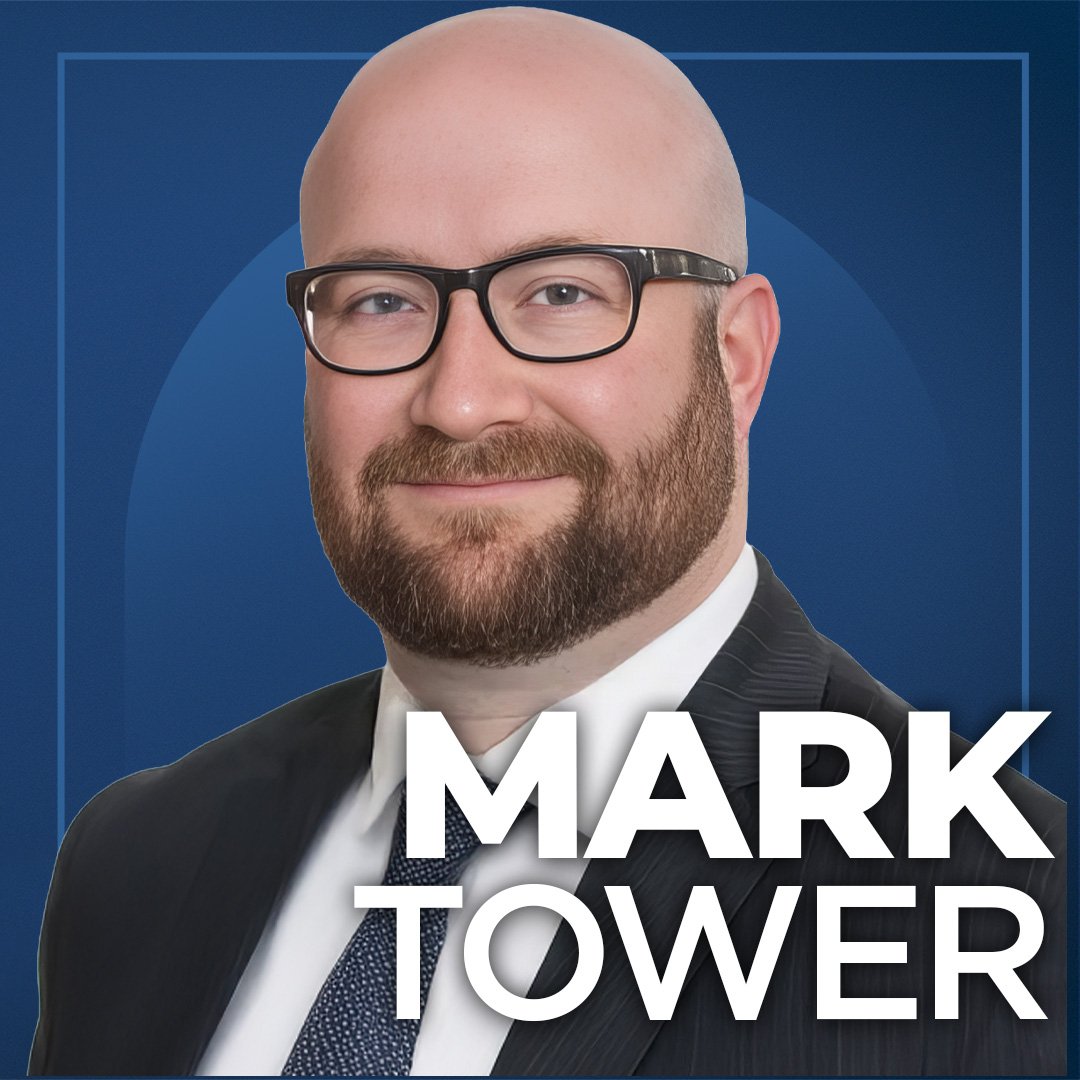
What is up, everybody? It's Gui Costin. Welcome to the latest episode of The Rainmaker Podcast. I'm so excited to be joined by Mark Tower from Asset Management One. Mark, welcome.
Mark Tower: Thank you, Gui. Appreciate it.
Gui Costin: So thrilled to have you here. So Mr. Tower is a Senior Institutional Sales and Marketing Professional with 25 years of experience in the alternative investment industry. Mr. Tower joined Asset Management One USA Inc AMO USA in September of 2023 to lead the business development and investor relations functions. Prior to joining AMO USA, Mr. Tower was a Director of North American Business Development at Lyxor Asset Management, where he was focused on developing and maintaining client relationships across all verticals in the United States and Canada from December 2015 until September 2023. Since 2004, Mr. Tower has also built and grown institutional sales for UBP Asset Management, Rock Maple Funds, and Muirfield Capital Management. Mr. Tower began his career at Orbitex group of funds and REFCO Alternative Investments in sales and marketing roles. Mr. Tower has a Bachelor of Arts from Boston College. Let's get into it. I'd love the origin story, where you grew up, family, the whole thing, and then how you made your way through to where you are today at Asset Management One.
Mark Tower: Sure. Mine's long, because I'm last of eight children. So I grew up in North Jersey with my twin brother, but my family…
Gui Costin: Wait a second. So you're the last of eight. So seven and eight were twins?
Mark Tower: Seven and eight are twins. My brother was a fullback, so he came in seventh, and I came in right afterwards. And yeah, we were the last of eight children. I grew up in Northern New Jersey, in a town called Upper Saddle River in Bergen County. But my family moved right before… we were born from the Boston area. So my parents and the first six kids were all born and raised up in the Boston area, and then they came over to Jersey right before we came.
Gui Costin: Ok, so not everybody is from a family of eight. It's not as normal today as it might have been years ago. Tell me, what did you learn growing up as one of eight children in a big family that you apply to business today?
Mark Tower: That was really helpful for me, because there's a big age gap. And in this day and age, it's also unique, same parents. So there's 21 years between my oldest sister and my twin and I. And then the first six kids were within a 10-year period, and then they took 11 years off.
Gui Costin: Oh my goodness.
Mark Tower: So yeah, it was, I think, a big culture shock for a lot of people that my parents were having twin boys at that part of their life. But for me, my twin and I kind of grew up by ourselves. But because of that, we almost had eight parents, because my older siblings were… some of them were in college, others were in high school, only one was in middle school. So we really just kind of got to benefit from their life experiences. And even when I was coming out of college, I was interning with people that were already in the industry because of my older siblings. And it actually helped me, I think, be able to talk to other adults, not like a 19, 20-year-old kid, but almost like a peer because I treated them like my siblings.
Gui Costin: That's great. All right, so tell me, so came back to Bergen County. And then talk to me about where you went to college and how you got into the business.
Mark Tower: My twin brother and I both went to Boston College. He went and walked onto the football team and played there for four years. I worked at a bar called Marianne's and bartended and bounced. But I also had internships in radio, so I worked at a lot of different radio stations in Boston. And something wasn't hitting there. I didn't see myself being an on-air talent. And then you want to talk about sales being cutthroat. Radio sales is brutal.
Gui Costin: Really?
Mark Tower: And I got to experience some of that, and it wasn't for me. So I kind of went back to the drawing board and I went to one of the career days at Boston College, and there were some asset managers that were there. One was based in Jersey. And I went to the interview. I bombed the interview, because I didn't do any prep. But it kind of lit a fire under me and said, well, I can do sales in finance. That was something that never even occurred to me, because I'm not from the markets. I'm not naturally a finance guy or an economics guy. But now I saw a path for myself. So after that, I went and got an internship with a mutual fund company based in Boston, the sales desk was in Boston, called Orbitex. And that started my career. So I was interning for them my whole senior year, and then they hired me upon graduation.
Gui Costin: That's amazing. And so you truly have investment sales in your blood, considering you started as an intern, as a senior. So walk me through your career and how you got to where you are today.
Mark Tower: At Orbitex, they hired me. I was a wholesaler. So that is deep in my DNA. I think of institutional sales in a wholesaler’s lens. So we were there for two years. Unfortunately, we had a lot of tech and biotech exposure. So in 2000, 2001, that's when DotCom bubble burst. So us and a lot of our peers went away pretty quickly. Luckily, I guess I made a pretty good impression on some leadership, because they went down to New York and started a alternative investments group within REFCO. So they brought me down to be the junior marketing analyst there.
Gui Costin: Wow.
Mark Tower: So that's where I transitioned from retail and wholesaling to the institutional side and alternatives. And I've been there ever since.
Gui Costin: That's great. So you mentioned you look at institutional business development, institutional sales from the lens of a wholesaler. What do you mean by that?
Mark Tower: Well, I mean we used to make $100 a day. That was your metric. And it was a numbers game. And you really can't do that anymore, because a lot of us don't even have phones. Your phone number for your office brings to your computer. And it's not always the best practices to call someone on their personal cell, but you still have to use that practice in mind. So I still think of it as 200 business days a year, so I want at least 200 meetings a year. I want it to flesh out that way. And sometimes you don't get there, and post-COVID, you certainly can because of virtual meetings.
Gui Costin: And are you using email now? Is that the primary way to get meetings?
Mark Tower: Yeah, mostly email. Still make phone calls for the people that you know, and you can go direct or text. But for the most part, it's email. And then just making sure that you're seeing people on a regular basis. Build a milk route like a wholesaler. So you want to be in whatever your target region is, whether it's the Northeast, whether it's the South, whether it's Canada, whatever. Make sure you're there quarterly, if not more. And then this way when you're calling on these people, they don't mind saying no to a meeting, because then they know that you'll get them the next time. And you're building that kind of trust with them and respectful of their time. So making sure you're always visible in a region will make sure that you get all the meetings that you need. You might not get them each time, but you'll get them.
Gui Costin: Well, let's unpack that, because I'm hearing consistency. Because a lot of allocators, it's a test to see if you're actually going to say no to the first team or the second or third email. Then they take the meeting. Are you going to keep coming back? And so that's what you're getting at, just the importance of being consistent in your outreach.
Mark Tower: Exactly. So at one of my stops, I covered Canada. And I've covered Canada my whole career, but my last firm, I covered it very extensively, and my clients knew I was in Toronto once a month. And they knew I was in Montreal every other month. So they made sure that they'd reach out to me just to see if I was in town or I would reach out to them every month and saying, can you meet in January? If you can't meet in January, when are you around in February? I'll make sure that's the time we catch up and get together.
Gui Costin: That's great. So before we get going too fast, Asset Management One, can you tell us about the firm?
Mark Tower: Sure. We're a firm that probably most people in this side of the world have never heard of. We are owned by Mizuho Bank and Dai-Ichi Life. So two big Japanese institutions. They came together just about 10 years ago in 2016 and formed a super Japanese asset management firm. A large amount of those mandates and those products are made for the Japanese investing universe. So whether it be institutional or long only or retail.
Gui Costin: And can you walk me through the structure of your team? How many sales team members do you have? How is it structured?
Mark Tower: Sure. We're actually a pretty small team. It's myself and two others, so I have a team of three. We do have global offices in London and Tokyo and Hong Kong. So I'll do monthly calls with all the heads of those offices, and then we'll have a global call once a month as well. But we are pretty lean. But I believe as far as sales goes, everybody's in sales. So yes, on a BD team, only three, but there's almost 40 people in our office. There's 40 people in sales.
Gui Costin: Yeah, no, I love that. So talk to me about what you were just getting at, because I love communication and talking about communication. Both, I call it down to your team and then up to the executive committee. So start with your cadence of communication with your team and what you cover and the importance for you of that communication.
Mark Tower: So we're in the office about three days a week. Our team tends to be in a little bit more when we're not traveling. We do see each other on a regular basis. We have a weekly call. It's usually on Wednesdays, but depending on travel schedules, you move it around a little bit. But we also have a Teams chat that's ongoing all day long that we are just making sure that we're peppering each other with questions and resets and where our priorities, where are our blocking points. And then I take that to the…
Gui Costin: Ok, hold on a sec, because I don't want to skip over that, because it's a really big deal. So you created, so Teams or Slack, the mechanism by which you share information, things you're seeing, what's working, what's not working, feedback on products. Is that what you're getting at? There's that one place and just a long stream of sharing what's going on in the market. And I don't mean the stock market; I mean the sales market.
Mark Tower: Yeah, that's exactly it. Yeah. So our team is constantly just making sure that we're on top of each other. If there's any issues with any clients, if there's any issues with any products, if there's pipeline blockages. This way, we can address it and take it to the appropriate teams or management to unblock that issue.
Gui Costin: I know it sounds very intuitive that you'd want a venue, you'd want a forum, Teams and Slack or that forum, to share information. But can you just… can you go a little bit deeper on why you see that being so efficient and so useful for communication?
Mark Tower: Well, in a perfect world, we'd all be sitting next to each other in the office every single day, and you solve a lot of those issues in person. But these days, especially in sales, you're on the road. So it's always in my pocket. I always get a ding. I can check it real time, except for when I'm in a meeting, and be able to respond quickly so that I'm not slowing up the process for our team and make a decision if needed.
Gui Costin: And Teams, I'm assuming, is set up just like Slack.
Mark Tower: Exactly.
Gui Costin: Where it can be one long thread based upon the channel?
Mark Tower: Exactly. And then we also have a separate one for the investment, different divisions that we're involved in too, if they have questions for us or vice versa.
Gui Costin: So basically, you're utilizing technology to enhance communication and just how valuable… because again, I know that sounds very intuitive. You're like, why wouldn't everybody do it? But not everybody does do it. But the utility, and I just want to make this point, the utility of using a tool like that and just sharing everything and then breaking it up by channels if it's different. It might have different topics in different channels. Just how vitally important that is for overall growth of your team.
Mark Tower: Yeah. I mean, we have a virtual desktop. So our whole infrastructure is virtual. We plug in at the office, and we plug in at home, but I don't carry a laptop with me. We just go right into AWS when we're in the offices. And so technology is paramount for us. And that goes right down to team chats to using AI to writing up our notes.
Gui Costin: When you say you don't have a laptop, what do you mean by that?
Mark Tower: I mean, I have a laptop at home, but when I get into the office, that doesn't come with me. That stays at home. When I'm in the office, we just log into our virtual desktop.
Gui Costin: Oh, nice.
Mark Tower: And I can sit anywhere with whatever your password is. We're hoteling in our office, but we all have our preferred desks. I can move anywhere. I can get up and go to a conference room. Same password, now my desktop there. So it just keeps us 100% virtual.
Gui Costin: Oh, that is great. How do you now transitioning to how do you report up to the executive committee at Asset Management One?
Mark Tower: On Mondays, I try not to travel on Mondays, because that's when my one on one is with the CEO. But then we also have management committees for every business line, ones for our quant team, ones for our equity team, ones for our fixed income. I participate in those. Those are usually once a week. And then if we have… the broader management committee meets every two weeks.
Gui Costin: So let's get back to your one on one with your CEO. What do you cover in that meeting weekly with your CEO?
Mark Tower: Usually it starts off with pipeline and travel, and that's where we spend most of our time, either where I came from or where we're going next. And then sometimes it'll come into what have we heard about from the other offices? So if we have a US prospect that's going on site to Tokyo, this is where I'll update them on saying, hey, we have XYZ pension or bank going on site to Tokyo to meet with some of the executives over there or the PM teams there. So we'll share some insight there to make sure that we can maximize those meetings as well.
Gui Costin: When did you start that meeting with your CEO and who called for that weekly meeting?
Mark Tower: It started when I started at the firm. So September of '23. The Japanese firms have an interesting culture. They have a rotational program. So our CEO rotates every three years. So one will come in from Tokyo, then go back, and then other senior members will also do similar rotational programs that come over. So it's more so important for us to keep those lines of communication open, because we're reporting to the US CEO, but then they're also then reporting back to Tokyo every night.
Gui Costin: Well, I guess what I was just getting at is just that that is so critical, that level of communication and keeping everyone in the loop and having that consistency and really never missing a week of that level of communication.
Mark Tower: Yeah. And I have a standing appointment with our head of compliance as well, our head of the quant team as well, head of operations. So I make sure that all the other business heads, either formally or informally, are on my calendar either every week or every two weeks, just so that we can address issues quickly and be more efficient.
Gui Costin: And just be in communication. I love that. So talk to me about transitioning a little bit here, because this dovetails right into the use of the CRM and the importance for you in your role of using a CRM and what leverage it can give a salesperson.
Mark Tower: I'm really excited now to have a real quality CRM that I can work with. And full disclosure, we use Salesforce with the Dakota plugin, and it works phenomenal. But it wasn't always that way with me in my career. I think early in my career, I used Salesforce, and it was great. And even though I was only using it maybe 30% of the capabilities, it kept me incredibly efficient at that time. Then for a big chunk of my career, I had to either use Act, which is a dinosaur.
Gui Costin: Oh my gosh.
Mark Tower: And then for the last decade, I was at asset management firms that were part of bank platforms, and they build their own CRMs, and those usually aren't great. And it's not to pick at the banks, but they're not built for asset management. They're built for other business lines of the bank. So anything you put in, you can't really get out. So I couldn't say, hey, show me all my contacts in Chicago. It wouldn't know what that meant. So now that I'm back to a quality CRM that also plugs into my databases, it makes my time so much more efficient, because I can log my notes, do my call reports. I can do them on the road; I can do them efficiently. And my memory is not what it used to be. So I need to get a little refresher as I'm making some of these outbound calls or emails or starting a next sales campaign to remember where we were so I know where we're going.
Gui Costin: Right. And unpack just a little bit more, because if you think about who's potentially listening, we always think of the audience is a single person at a firm that are left to their own devices and they need best practices. And sometimes at a single shop, the $1,800 for a CRM or Salesforce isn't what they want to do, and they don't act like a big firm. I would say you should always, even if you're small, you're a one-person salesperson, act like you're a big distribution business and have infrastructure set up that way. So could you just speak to just the importance, the overall importance of the utilization of a CRM, logging the meetings that you've scheduled, logging your notes, being able to see past activity, just the leverage that it gives a salesperson, how it can literally 10x the power of a salesperson.
Mark Tower: Yeah, I mean, you really need to what your pipeline is, and you have to who you've called on and what you've done. So when I'm inputting all this stuff into the CRM, I need it mostly for me. I mean, I know management wants it for their own purposes too, for tracking and budgeting and stuff, but I need it for me to be effective as a salesperson. So I'm making sure that I log all my meetings. I circulate that note around to the team as well. Sometimes I'm redundant where I still maintain some Excel sheets with top priorities. But I probably don't have to do that. I can download that from the CRM, and it'll be cleaner and more accurate. But I'm a bit kind of old school, new school in that. So I do a little bit of redundancy, but probably not the most efficient. I have to get up with the times, because really, Salesforce can do it all. And look, there's other CRMs that we tested out, and many of them also can do it all and do it really efficiently. But it's really important to open up that dashboard, know who you called recently, what your opportunities are, what's expiring soon. Make sure that everything's up to date. If you see that you have a pipeline opportunity that's expiring soon, get on it. Make sure, are we winning this? If we're not winning this, then we're probably not representing ourselves that great to whosever viewing this pipeline. So let's make an edit. Let's change the probability. You might not even be helping yourself out. You might be way further along in an opportunity. You just forgot to update it. You can't be that. You to be on top of it so that you know where you are. And this way, you can budget for travel, for 2026. We're already doing that now. Some of us are in Q2 of 2026 and where we're going. This is what keeps you on track.
Gui Costin: I love that. So it's central casting for what you just went through about all the triggers that then get the sales actions. So it's all those triggers that you're saying that you can't all have in your brain. You have to go in and look, dates, expiration, opportunities, amounts, stage, and it all just keeps creating those triggers to then trigger sales actions.
Mark Tower: When I think about all the different windows I have open on a daily basis, usually I have my Outlook on my left-hand side. I'll have Dakota Salesforce on the right. I'll have LinkedIn open. And then I have all my different spreadsheets. And I'm just toggling all day long, making sure that everything's current, everything's refreshed, I'm not missing something as I'm trying to set up that next road show.
Gui Costin: I love it, I love it. All right, transitioning to leadership. So how would you characterize your leadership style?
Mark Tower: I'm definitely not a micromanager. I have the benefit of having two great team members that work for me. And I don't speak Japanese, so I have to have a lot of trust in them. And they do a tremendous amount of work after hours because of the market. So I might check out at 5:00 or 6:00, sometimes 4:00 or 3:00, but they'll be working till 10 o'clock at night, and then they're up early at 6:00 or 7:00 in the morning. So having that trust with the team members and the communication is vital. Also letting them manage their day and their time. Sometimes you have to help them. Say, you don't have to work 20 hours a day. You don't have to be here at 8:00 in the morning if you're on calls with Tokyo till 10 o'clock at night. But just regular communication but not micromanaging. And then also being their advocate, making sure that you step in and help them out if you see things are getting too heavy or if some other teams are asking too much of them, of their resources, because a lot of people are people pleasers and they want to say yes. I'm one of those. So sometimes you need that advocate to protect you from outside influences.
Gui Costin: So having grown up just throughout the years, encountering different leadership styles, I always think leadership and culture comes down to the words that come out of the leader's mouth, what that leader permissions she or he to say, and how they treat people. Could you comment on that just in terms of the words that you use? You got to be an advocate. That shows that you're already coming from a place of kindness. Because I really think that the here and now and the future of leadership is all around this kindness, the words you use, how you treat people.
Mark Tower: Yeah. I mean, look, you have to care about them. You have to legitimately care about them. It can't be just window dressing, and this is my job, this is your job. You might have been able to get away with that in '90s and '80s, but that doesn't work anymore. And it shouldn't work, because that's not efficient. And people are going to work hard for when you fight for them. I'm a player coach. So if I show a high amount of activity, people are naturally going to do the same thing. They don't have to follow exactly what I do, because my schedule is a little bit different from everybody else's. But make sure you roll up your sleeves. You do the RFP with them. You read the RFP first. You just don't hand it to somebody and say, hey, this is due on the 18th. You got to finish it. You do the read through, you do the first cut, you organize the meetings. If there's a prep on new marketing materials, you work with them on it and help guide them. But let them take some autonomy but be their support in the background and always be there for them.
Gui Costin: I love that. You're obviously very thoughtful. So this kind of dovetails into the next question on what advice would you give a young person getting into our industry today, meaning investment sales.
Mark Tower: This is still a people business, so you have to get out there and see people. A salesperson that sits in an office all day long is kind of useless. You really have to go out there. Push those in-person meetings. Do the breakfast, the coffees, the dinners, the drinks. I've had meetings where I just met somebody and just walked around for a few blocks for 20 minutes just to get out of the office. But any way you can make that personal connection and get a meeting is vital. And now more than ever, I mentioned earlier, people don't have phones. And now with the remote working environment, people aren't in the offices as much. So you have to figure out creative ways to get in front of them. You have to go to more conferences. I think conferences are more important than ever. And then when you're at the conferences, you have to be efficient with your time. Yeah, it's great to go play golf at a conference with four people, but you can't do that every day at every single conference. You got to also make sure that you're at the breakfast for the people that aren't the night owls, and you make sure that doing the coffee breaks for the people that aren't going out on the golf course. You have to be available to everybody. And then another key that I've developed through my entire sales career, and that even goes outside of finance, is that people generally don't like to be sold to. You don't like it when you go into a department store and someone follows you around. I know that firsthand, because I worked at Nordstrom's. I sold women's shoes and men's sportswear at Nordstrom's when I was in college, and people don't want to be sold to. But you got to be a resource for them. You have to be authentic and a resource and help them out. Every time you have a conversation with somebody, it can't be about a pitch. It's got to be something more personal, building that connection, maybe trying to help them out. They know what you do. They figured out what you do. They know what you have. We'll get there if we do. But if you're authentic, that's going to go a lot further. And that's also going to help out with, reciprocation between them, reaching out to other allocators or other business industry insiders, other salespeople. You got to expand your network. Your network isn't just you and your sales force and the other people in your organization, because we're all sales. It's also your sales network, all your peers out there that might have different strategies, do different things. Sometimes you compete with each other, but most times you usually don't. So use them all as resources and share information and try to help everybody succeed. There's plenty of money out there for all of us.
Gui Costin: That's amazing. So you're really talking about building that network of minded sales professionals, sharing ideas, sharing information, helping other people.
Mark Tower: Exactly.
Gui Costin: Yeah, I love that. Ok, final question. Biggest challenge that you're faced with today and how you're overcoming it.
Mark Tower: I think it still goes back to the in-person meeting, getting the in-person meeting and the connection. Because email, there's so many of them now, especially after COVID. People get hundreds and hundreds, sometimes thousands of emails a day. And how do you break through? I always try to respond to every email I get, but now it's almost impossible, because you're getting so much from bots and AI that they don't even know what you do. So I haven't been as good at responding to those ones, which are obviously just kind of spamming me. But you have to figure out a way to get in front of people. So travel. Get on the plane. Get on the train. Go see people. Be present in person and then follow up. Because if you don't follow up, then you just wasted a trip. You wasted a budget. You got to make sure that you keep that connection, even if there's nothing to do right now. You're building for the future. This is a long game.
Gui Costin: Yeah, so again, this is a true masterclass. You've been emphasizing this entire conversation we've had is all about getting in front of and being authentic, building relationships face to face, whether it's walking around the block, having coffee, dinner, golf, conference. You referenced just how important that is. And so as we close, is there anything that you'd want to tell the audience just why that's so important and why? Because obviously that's where you're focusing all your energy is getting face to face, making sure you're getting the asks out there, and it's clearly your top priority.
Mark Tower: Yeah, this is still a relationship business. And this is… our products, I mean, they're not bought, they're sold. But at the same time, nobody likes to be sold to. So how do you blend those two worlds together? And that's just make it natural and be authentic. And don't say no to helping people out and don't say no to informative meeting. If someone reaches out to me on LinkedIn and they came from my alma mater, I'm always saying yes. Or if they're coming from a reference or a mutual contact, I'm always saying yes. And you find the time, because you never know. You never know what that little 20-minute conversation with somebody is going to do for their career. I certainly remember the ones that happened to me early in my career, and I carry those with me, and you have to pay it forward. So it matters.
Gui Costin: Mark, incredible insights. I mean, I truly love it, because there's a lot of chatter about AI and will it replace our jobs, and you've clearly made the case that it's not. It's still a relationship game, getting face to face. We always say seeing the white of their eyes, because you can't text when you're typically face to face, Zoom. There's a lot of that going on for everybody. So thanks so much for being here.
Mark Tower: My pleasure. Thank you, Gui.
Gui Costin: This was a blast. All right, everyone, that is another wrap of the Rainmaker Podcast. Thanks so much for joining, and we can't wait to see you in the next edition of the Rainmaker Podcast.
Moderator 1: You can find this episode and others on Spotify, Apple, or your favorite podcast platform. We are also available on YouTube if you prefer to watch while you listen. If you would like to check up on past episodes, check out our website, dakota.com. Finally, if you like what you're hearing and seeing, please be sure to like, follow, and share these episodes. We welcome all your feedback as well. Thank you for investing your time with Dakota.