Narrator: Welcome to the Rainmaker Podcast, with your host Gui Costin. The goal of this podcast is to give listeners a unique look into sales strategies from top industry executives. We introduce you to the heads of sales and heads of distribution, who will help you understand the inner workings of the successful sales organizations, from philosophy to execution. This podcast is essential for sales professionals seeking wisdom from the best in the field. If you're not familiar with Dakota and their Dakota Rainmaker content, please check out dakota.com to learn more about their services.
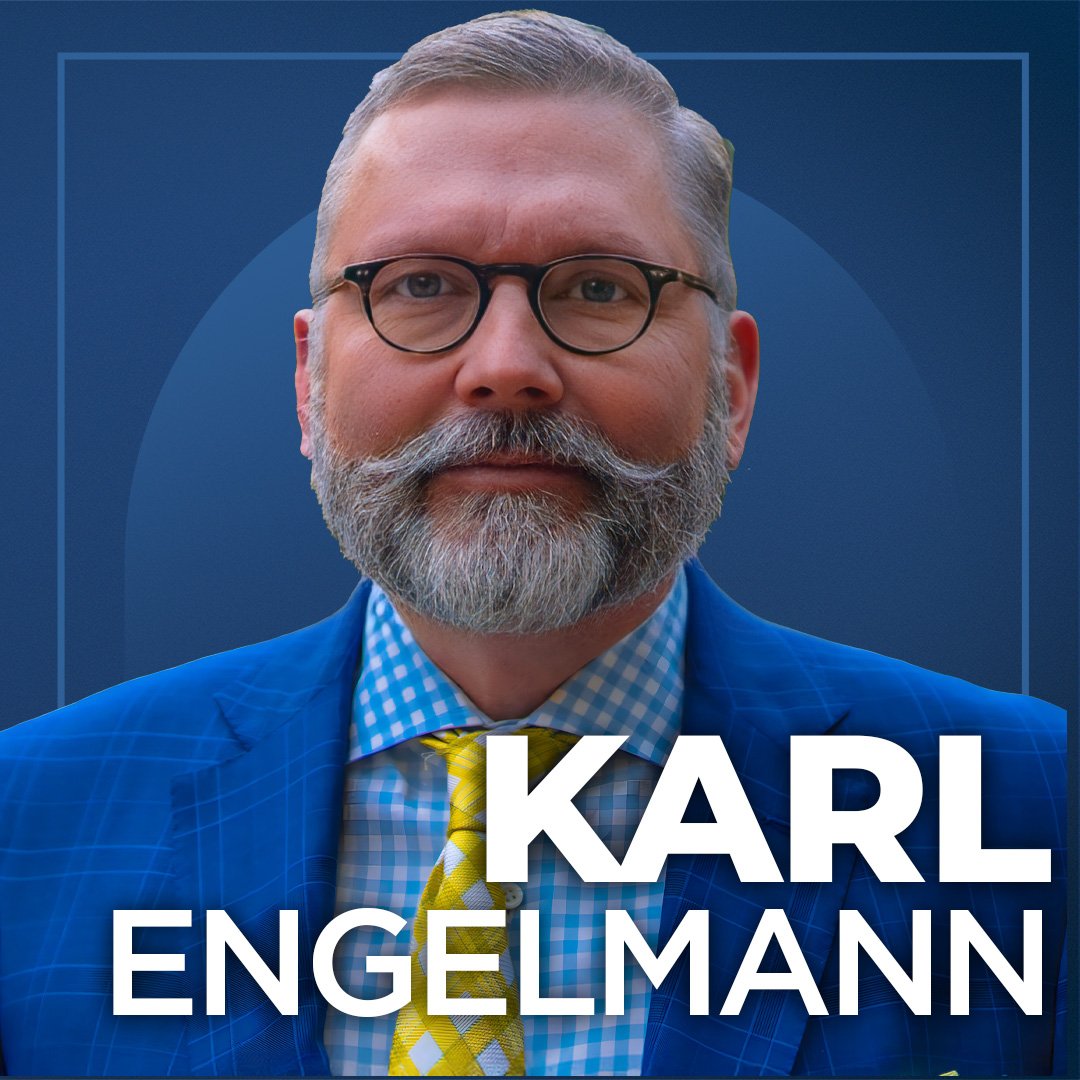
Gui Costin: This episode is brought to you by Dakota Marketplace. Are you tired of constantly jumping between multiple databases and channels to find the right investment opportunities? Introducing Dakota Marketplace, the comprehensive institutional and intermediate database built by fundraisers for fundraisers. With Dakota Marketplace, you'll have access to all channels and asset classes in one place, saving you time and streamlining your fundraising process. Say goodbye to the frustration of searching through multiple databases, websites, form ADVs, and say hello to a seamless and efficient fundraising experience. Sign up now and see the difference Dakota Marketplace can make for you. Visit dakota.com/dakota-markeplace today. What is up, everybody? It's Gui Costin, founder and CEO of Dakota. Welcome to our latest episode of the Rainmaker Podcast. I'm so pleased to be joined by Karl Engelmann. Karl, welcome.
Karl R.S. Engelmann: Thank you.
Gui Costin: Now, the co-founder of Sarmaya Partners.
Karl R.S. Engelmann: Yes, sir.
Gui Costin: Thrilled to have you on the podcast.
Karl R.S. Engelmann: Yeah, thank you very much.
Gui Costin: Karl Engelmann is the co-founder and chief operating officer at Sarmaya Partners. Karl has over 32 years of experience in financial services, with deep expertise in sales, marketing, and client service across institutional, RIA, family wealth, and bank trust channels. At Sarmaya Partners, Karl leads business development and client engagement, building a high-touch experience for investors and partners. Before co-founding the firm, Karl held senior roles at Angel Oak Capital, Cambiar Investors, and AIM/INVESCO, where he helped scale assets and drive growth across multiple distribution platforms. Karl's leadership style is rooted in accountability, communication, and clarity, themes we'll explore today as we dive into his approach to sales planning, CRM strategy, team structure, and what it takes to lead a successful distribution team. Karl is based in Denver, Colorado, with his wonderful family. All right, Do you want to get into a little background, where you grew up, college, and then how you got to where you are today.
Karl R.S. Engelmann: No, that's great. First off, thanks for having me. I really do appreciate it. Yeah, so a little background about me. I grew up in Texas, so I'm a true Texan, heart and heart. And I went to school down at a school called Southwest Texas State University. It's now called Texas State. I was a journalism major, so when I first started in my career, I wanted to be the next Tom Brokaw. At that point in time, I went down the pathway and really realized that that wasn't going to be very fruitful, when you start off making $15,000 a year. So I had to take a switch and move into a more marketing sales and really utilize my talents of being able to talk in front of people and understanding the concept. Because that's really what we do in marketing, is we're storytellers. And that's what you want to try to accomplish in life, is to be that storyteller, get that type of understanding of what you're doing. And it really has been fruitful for me in my career.
Gui Costin: Walk us through how you got up to where you are today, starting the new business. And they've had a great first year. But what led up to this?
Karl R.S. Engelmann: I think what it was for me is I really wanted to run something and manage something that's my own. I've been very successful throughout my career working for other former firms. And I took that information and be able to encapsulate that to be very successful over the last 35 years. So when Wasif and I, my business partner, came together, he was formerly at USAA, running $45 billion in all of the aspects there. We started that partnership over 16 years. He transitioned. We came together in 2023, started our process to be and look at it. He had already been running this portfolio for over five years. And we came together. And he's like, what are you doing? And I told him. I was like, I just want to be able to run my own firm, but I don't have a portfolio. I know how to actually raise assets, but I just don't have to. And he goes, I have a portfolio. So we started talking about that. And we really energized in the very beginning of 2024. We started as an LP structure, and then we really fastly realized that LP structures are just very, very hard when you're looking at that. And we needed a vehicle that it would be for the masses. And the ETFs have, obviously, been something that's been very fruitful for firms. So we came up with an ETF. And we launched in January 28 of this year. And it's been very, very good.
Gui Costin: That's great. So a lot of people are very interested in the active ETFs. Could you go a little bit deeper and describe exactly the structure that you guys put together?
Karl R.S. Engelmann: Sure. So it's a very concentrated portfolio, Gui. What it is, it's a commodity super cycle in what we think. We think themes play out. So you can go back even before the '70s. '70s was gold and oil. And you can see the theme that plays out. But then you can see what happens after that theme plays out, and it comes down. You can go back to the '70s. You can go back to the '80s, where it's Japan. You can go back into the '80s, '90s, every kind of a theme. We've been in this really big super cycle after the financial crisis in 2008, and it's been really predominantly large-cap growth. And it's particularly in tech. And that's what we've seen. But everybody knows that these themes don't grow to the moon. And that's what you've got to look at. And so we have been very fortunate to be able to find these. We think the next theme is going to be this commodity super cycle and return to tangibles. So you can take a look at our portfolio. And it really brings up to light that anything that comes out of the ground… gold, gold miners; silver, silver miners… the gamut of it, even copper, copper has been… it's going to be a semi-precious type of metal. And we're really fortunate to be able to have this portfolio as a sleeve.
Gui Costin: Yeah, that's great. Walk us through your team and how you guys have gone to market. And this will be very interesting for a lot of people because you're a startup. A lot of people who listen to this podcast also are part of startups, small emerging managers trying to grow. So give us the team and your go-to-market strategy.
Karl R.S. Engelmann: Sure. So we started with a team of two, so Wasif and I. We've been very fortunate to partner with Dakota. That's been very, very fruitful for us and helpful. And I'll get more into that, Working. With that and the CRM. But our team has now grown to a team of six. So we have three people on the sales and marketing, so a good former friend of mine who worked at Lazard. Tom Connors and I are working on as more of the externals. Then we have an internal we just hired. We hired a CCO. Because I was actually COO, CMO, and CCO, which you know, when you first start off, you're wearing 500 different hats. And then, obviously, Wasif is on the portfolio management side. And we hired another research person. So we're up to a team of six now at this point in time, which is great. And so I'm leading the marketing efforts within the firm and acting as COO as well. And I think those two coincide very, very well together. We've got a very tight knit team. One thing that I've witnessed over my career, Gui, is that what we're trying to accomplish is I don't want to be a team of 50 people. I just don't think that you need it. I think that, especially in sales, you can see, if you grow too much within the sales, it's a detriment to the overall organization. I would think that sales for us would be a team of five. We're running one strategy. It's 37 stocks, very easy to navigate and have a good storytelling before that.
Gui Costin: So what advice would you give? And if you look at this year, 0 to 15 million in a very short period of time, what are the steps that you guys have taken, from a sales perspective, to generate this momentum and the continued momentum?
Karl R.S. Engelmann: So, obviously, we use Dakota. And it's been very, very good for us. So there's a velocity within the RIA market that you just can't… there's mergers and acquisitions that happen almost on a daily basis. If you can't keep up with that tsunami, you're going to get the wave, and it's going to crash over you. And you won't be able to get out of it. So what we've been fortunate enough to do is partner with you guys. And it's been very helpful from our sales organization to keep up not only with that, but the movement that you've seen, and be able to go into town, and be able to find the opportunities that you're really looking for. Because you can search and go all the way down. If you're searching just for people that use commodities, you can do that. So that's what has been very helpful for our firm in trying to, obviously, generate sales. So we're working with family wealth office. We're working with RIAs. And we're actually working with some mid-tier brokerage at this point in time. We're too small for the bigs.
Gui Costin: Of course, of course. But that's great. So you're focused RIAs, family offices, and some of the smaller broker dealers?
Karl R.S. Engelmann: Yes, sir.
Gui Costin: And that's been the initial thrust. So talk to me about… because what I think a lot of people are listening for is communication style and how you communicate amongst the team. So I know it's a small team, but communication is still super important.
Karl R.S. Engelmann: It is.
Gui Costin: How do you guys go about that?
Karl R.S. Engelmann: Yeah, so with a smaller team, we actually have two days that we meet, focused on. But we meet almost daily. So when I'm meeting with the sales team, what I try to do is get the bit out of their mouth and let them run. We're hiring very seasoned professionals. These guys have 30-plus years in their career. And where a lot of other people are firing those people at this point in time, we're actually hiring those people. I want people with strong rolodexes. I want people with very good relationships. That's what I want. It's very hard in a small organization that you can see to hire younger people and then have to teach those people how to go do that. So what we're doing is hiring the seasoned people, where other people are saying, sorry, doesn't work for us anymore. So we're very, very fortunate to be able to do that. And my sales is, look, you have the relationship. We need to talk about that. We need to stay on track. And we use the CRM system as one, as our library, so to say. But we're also talking about, what opportunities are out there? How do we actually work together? Where are we going to focus? So currently, right now if you look at where we're focusing, Gui, we're focusing with those firms that are $50 to $250 million. Because there are certain rules.
Gui Costin: Yeah. What do you think the advantages are of working with that group?
Karl R.S. Engelmann: They're not highly researched. They don't have a lot of research behind them. And they need this kind of information. I think they're more understanding, where in a bigger organization, they're going to say, look, you're 15 million. We're running 500 million to a billion. We really can't energize with you at this point in time. So they have more of a research side. Give it time. We will be there. The smaller organizations have no research. So you're walking in and giving them a very unique idea. And I think that that's what people want in our industry, is they don't want a me too type of strategy again. I mean, if I was going in and saying large-cap value ETF, you would be like, wow, Karl, good luck. Good luck. We wish you well, but it's going to be tough. Whereas, when I look at it, I want to bring something that's unique to the marketplace that really is 180 from the me-toos that are out there. And that's what we try to accomplish for these organizations.
Gui Costin: Have you found that that end of the market has been very receptive because of…
Karl R.S. Engelmann: Oh, yes, it's been very receptive. In fact, when I brought Tom on, he had these relationships with these bigger organizations, and he was highly focused. And we were talking about this. Time out. Let's look at these smaller organizations that we can really make a splash for. Because there are certain rules and regulations that can't be 10%. Even though we're an ETF, it's very liquid. You can't be 10% of the overall assets. That's just the way it works in this world.
Gui Costin: Well, that's great. That's great. You mentioned the CRM. Because a lot of people listening to the podcast, some are all in on CRM. Others are a little suspect, which we use. What benefit do you get? Of course, as you know, I always say it's the 10X leverage point for salesperson. Can you talk about the importance to you of a CRM?
Karl R.S. Engelmann: Look, that's your lifeblood. You need to be able to have a good CRM, and you need to have good data that's going into that. It's garbage in, garbage out if you don't do it the right way when you first start. You could have 50,000 contacts in there, And. They're not worth their weight any there. So you have to be able to really work within that CRM system as a benchmark, a cornerstone, for your firm to be able to write those notes. Because if something happens, God forbid something happens with regards to anybody that's on the team. You need to be able to go back and pick up where they left off. And so I think the CRM system is very, very key for us. But the data that's going in there has to be good. It has to be clean.
Gui Costin: Even if our listeners are salespeople.
Karl R.S. Engelmann: Sure.
Gui Costin: Let's put your owner hat on, your founder hat. And just then, how important, if you're paying salespeople, and they're not getting those meetings that they've scheduled into the database… excuse the pun, because we're talking commodities, I call them the gold bars…
Karl R.S. Engelmann: Sure.
Gui Costin: …just how critical that is. So if they do leave, then you as the owner have that information and just how important it is. I mean, there's huge benefit to a salesperson from a CRM, being able to get that information in, rapid retrieval, so you can take sales actions very quickly on your past activity. That's one of the cornerstones of how I think a CRM functions so well for a salesperson. But as an owner, making sure all of that information that they're out, you're paying them to go out and do meetings and then collecting that information back, how important that is to you.
Karl R.S. Engelmann: Yeah, like I said, it is something that not only I look at, but my business partner looks at as well. Because, again, you're only as good as whatever information you put in there. So I'm very, very highly focused, especially in the growth mode that we're in, to make sure that we have very good notes, very good information after every single meeting. And I look at that. As a business owner, I look at that. And if I don't have that information, why? Because if you don't have that good information after a sales meeting… and Gui, you know this. You've grown your business to where you are today by having a very good CRM, a robust CRM system, and being able to get that information, extrapolate that information out. So it is hugely key my business partner to be able to look at that from a portfolio management side, but more importantly from myself. If I don't have good information, and they're not putting good information, we'll have a talk. But again, we have experienced people. We're not talking about guys that just want to just dump data in.
Gui Costin: Yeah, well, that's great. That's great. All right, transitioning to leadership… and it's one of my favorite topics, just how you treat people, if you will. How would you characterize your leadership style?
Karl R.S. Engelmann: I've been in this business for over 32 years now, so I'm here to foster and help, but not micromanage. I'm not a micromanager. I'm not going to sit there and look at this data that's in the CRM system on a daily basis and really come down hard on those guys that are working for me and that are actually helping us grow. I think that, like I said before, is take the bit out of the mouth and let them run, but at the same time, have some parameters around that. You can't just let them… you've got to understand where you are. So my leadership, the way I look at it is… and I've been with other organizations where it's been hugely micromanaged. How many phone calls have you done in the day? Have you done this? Where are we going next? doing all those types of things. I'm not that way. Look, I want to go where the opportunities are. I want to see results. I want to be able to get that information, have those results, and watch them go through the result from the start to the finish. Because for me, it's about the chase. Love to win, don't get me wrong. But it's about the chase with regards to me. And I think it is for our sales organization as well.
Gui Costin: That's great. So leadership in a larger company is one thing. Leadership in a startup is something else. So tell me about what it's been like just starting your own business. And what advice could you give to other founders who are just starting, to give them confidence, excitement, that if you do certain things, everything's going to work out? Because clearly, it's working out for you guys right now.
Karl R.S. Engelmann: Yeah, the biggest thing that I would tell you is I've always been a relationship person. I think that that transcends over time. If you have a good start, you have a good foundation of relationships… and I have over 32 years… that will lead to transactions. I can tell you from a leadership perspective, if you lead in with transactions, you're looking for just this quick fix, getting this money in, it's going to leave as quick as it came in. And you want to have that deep-rooted information. So, I mean, I've worked with people that have taught me and mentored me, like Norm Nabham. He's a Graystone guy down in Houston at Morgan Stanley; Matt Richeda, at Rockefeller. And I've also worked with a lot of other people, Rick Mayfield, who you've had on the show before, at Truist. I have 30 years with those guys. I actually go way back even before that with Norm. And those people have really helped me see that relationships are there. And guess what? You're going to win regardless. I'll even give you an example. So Norm brought me into a final’s presentation. We were going up against another manager. We had like performance, on a 1, 3, 5, 10, since inception. It came down to the relationship at the very end. And if you don't have that relationship, you'll lose. It just happens that way. Because we had about the same type of performance on the 1, 3, 5, 10 assumption. So it was very good for us to have those relationships. And I continue that. I'm very, very focused there.
Gui Costin: So let's unpack a little bit further the importance of cold outreach, so cold outreach. But what you're getting at is that you can't get in those relationships or meet someone just hoping somebody introduces you to someone. So you have to target your market.
Karl R.S. Engelmann: You do.
Gui Costin: And then, hey, I want to be in business with this type of firm or these types of people. Because unlike many businesses, if you meet someone today that's an allocator, there's a really good chance you might have a 20- or 30-year relationship with them. But you can't do it if you're not doing the grinding, if you will, of the cold outreach.
Karl R.S. Engelmann: Yeah. The cold outreach is what you want. And I'll give you an example of that. So we were running 3 million. And it was back in earlier this year, probably April time frame. We have a great relationship with Rockefeller. And we're starting this relationship at this point in time, great firm. A lot of big teams are moving over to that organization. They're really transcending up. We're running 3 million. We have a relationship with one of the advisors. Guess what? He got us in front of research. If we don't have a relationship, we're not getting in front with 3 and 3.5 million in front of research. It just doesn't happen. They're just going to be like, Karl, come on, seriously. This doesn't work. So we've started that road to going down that. We've started the road with Truist Bank. We've started the road with Janet Montgomery at this point in time. These are all relationships.
Gui Costin: Right. But there's something bigger going on here that I just want to make sure everyone's aware of…
Karl R.S. Engelmann: Sure.
Gui Costin: …is that you don't have any of this noise in your head of like, well, we need to have a three-year track record and have 100 million under management, all of that noise which we've ignored our whole careers. And it's just like, look, if you have a great strategy, get out and tell your story.
Karl R.S. Engelmann: Correct.
Gui Costin: Now, you don't want to lever everything against the big firms, because you're spreading that into the family office and the RIAs, who can make quick decisions on a relative basis, right?
Karl R.S. Engelmann: Yes.
Gui Costin: But just the importance of… I just want the takeaway to be everyone knows it's like, look, you're a shining example, Karl, of someone who's getting after it, no noise in your head. I want to start these relationships now. It might take a year or two or three, but I've got to get in front of them now.
Karl R.S. Engelmann: Yeah, and that's key. You're exactly right, getting in front of them now and building that relationship, Karl with Sarmaya, and building that relationship. So when the time and the opportunity come, you're there. And look, I worked with Wasif. It's one of the greatest examples. I was trying to get into USAA for seven years. So that's seven years that I was working and plotting and having these meetings and going through. It turned out to be a $1.5 billion sub advised product. So you amortize that seven years. That's good numbers. So that's what you're trying to do. Because in the sales organization, I look at it as a third, a third, a third. You start off, and some are going to energize with you from 0 to 6 months. Then it's going to be 6 to 12. And then it's going to be 12 to 24. So you've got to put these buckets out there. And the smaller organizations are going to be that 0 to 6 because they need something like this. Or it might be even sooner. But then you're leading up to the bigger organizations that's going to take that 12 to 24 months. But constantly filling that funnel is what we're looking for.
Gui Costin: Yeah, so that's textbook right there…
Karl R.S. Engelmann: Oh, 100%.
Gui Costin: …to me how you should be going about this. We call it turn your brain off. You can't overthink this stuff, but you have to do what you're just saying. And you're chopping up the market. So, I mean, that little segment right there that you just said, the 0 to 6, 6 to 12, 12 to 24, is utter genius. So knowing all of your experience, what advice would you give to a young salesperson, a young fundraiser, getting into the business today?
Karl R.S. Engelmann: Yeah, that's, again, I fall back to that, don't be transactional. Even in a startup, I'm not out here saying that you have to go in and bring this money in right away. It's going to take time, especially if you have a deep-seated relationship. You've come from a firm. We've hired you. They're going to remember you from Tom at Lazard. And you're going to have to get in and get entrenched to make it Tom or Karl with Sarmaya. And that's going to take a little bit of time, and I want to give them that time to really build and entrust what we're doing. And I'm not going to penalize anybody in sales for doing that. That's not fun for anybody. You've got to build those relationships. You have them. You're getting the inroads in. You're having those meetings. But take some time. Don't be transactional is what I'm saying. I don't like the transaction. Because you know it as well as I do. A transaction, as soon as it hits like that, and it's really quick, you're going, wait a minute, what am I… and it goes out as quick as possible. I mean, it's an ETF. You can trade in milliseconds like that. So I'm not interested in type of having those kind of transactions. Its more relationship driven.
Gui Costin: So that means it's an educational sale. But talk to us about the transactional part. And what I'm getting at is setting expectations of how the strategy should perform and the importance. Because if you talk to a young salesperson right now, setting expectations of performance is one of the most important things.
Karl R.S. Engelmann: Yes. And it is. Look, we don't hide that. We know that where we are in the beginning of this cycle and the beginning of this theme that's playing out… and it's going to play out over the next 5, 7, 10 years in a commodity super cycle where we're in right now. And you have to be able to be a good storyteller behind that. And you have to say, hey, this is when it's not going to work. In the beginning, it's not going to work. And this is where it's transcending to. Even though we're on a movement up, you need to be able to tell that story. Because if the advisor and/or the organization… you can't just sell the positive. You've also got to tell them when it doesn't work, especially if they're putting you in a model. They need to know when this is going to work and when it's not. And you have to have that strong story to tell them, this is how it's going to transcend. It's not going to be linear. Nobody's ever linear. There's going to be some chop, and this is when it's going to be a negative. This is when it's going to be a positive for your organization.
Gui Costin: Love it. Love it. Final question, you're in a startup. You're having insane momentum. But if you could pick one thing, what's your biggest challenge today? And how are you overcoming it?
Karl R.S. Engelmann: Assets.
Gui Costin: Let's go. That's what the show is all about.
Karl R.S. Engelmann: It is. Exactly. It's about…
Gui Costin: AUM, baby.
Karl R.S. Engelmann: Yeah, it is AUM. And the way I liken it is we're at 15 million right now. We've really moved forward. In the last month, we've tripled our assets. Because I think more and more people are looking at this commodity super cycle that we're in, and they're saying, yes, the picks and shovels of this is going to be very beneficial. Gold has, obviously, been on a tear. And everybody goes, well, you've owned gold, so no wonder your portfolio is up. I'm not going to apologize for that. We owned it for five years. But if you look in a relative basis, platinum is actually outperforming gold at this point in time. So nobody really realizes this. So you look at our portfolio and transcending that. The assets are really what's key for us, Gui, is growing that. Because you have to get the assets. So the next chunk is 20 million. But once you get to 20 million, that really frees up what you're trying to accomplish. You go to 20. You can get to 30. And it really ramps up fairly quickly. You get to 100 million, you're kind of free.
Gui Costin: So since everyone's listening… I don't know how many people are going to be watching right now. But as I'm just watching you, so many people would be more frozen at, oh, we're only 3 million, and come up with every excuse, or feel sorry for themselves, or be negative. You're the opposite-
Karl R.S. Engelmann: Oh, yeah.
Gui Costin: …insane positivity, momentum, consistent application of the sales process. And that's what it is day in and day out, consistency.
Karl R.S. Engelmann: Right.
Gui Costin: And that's how you overcome the fears.
Karl R.S. Engelmann: Yeah, I mean, look, you can't be fearful. There's two things that you can't have. There's two things. One, fear, because people will read right through that. You have to be positive. I have to be in the happy business. I'm not going to come in and go, oh, poor me, I'm only running $3.5 million. And you just have to drive forward. Things will play out if you just stay positive and work towards that organization and take care of that organization. We have two constituents. Our clients are first and our firm. That's who we drive for every single day at Sarmaya. And that's what we want to do. So if you're laying back and going, gosh, this just doesn't work; gosh, this is hard; gosh, this is it; then everybody's going to do that. Or if you're driving too hard, and I don't do this, but I call it affectionately commissioned breath, if you're so, oh my gosh, we've got to get this; oh my gosh, we've got to get that; well, then people are going to recognize that, too, going, oh, maybe we should step back from this. So those are two things that I, from a leadership role and the way we do things we don't like to do.
Gui Costin: Love it. So this definitely needs to be required listening for anybody starting a firm. Because I think you're doing it textbook, the right attitude, the right approach, the consistent selling, no thinking. Turn your brain off. So, well, Karl, I can't tell you how thrilled I have been to have you on the show.
Karl R.S. Engelmann: No, thank you, Gui. And thanks to Dakota as well. You guys have been absolutely fantastic for our firm. And we wish our partnership continues and looking for the growth that we have.
Gui Costin: No, I love it. So congrats on the startup. It's amazing.
Karl R.S. Engelmann: Thanks, Gui. I appreciate it.
Gui Costin: You got it. All right, everyone, that is a wrap of another episode of the Rainmaker Podcast. We're thrilled you joined us, and we can't wait to see you in the next episode of the Rainmaker podcast.
Narrator: You can find this episode and others on Spotify, Apple, or your favorite podcast platform. We are also available on YouTube if you prefer to watch while you listen. If you would like to check up on past episodes, check out our website dakota.com. Finally, if you like what you're hearing and seeing, please be sure to like, follow, and share these episodes. We welcome all your feedback as well. Thank you for investing your time with Dakota.