Narrator: Welcome to the Rainmaker Podcast with your host, Gui Costin. The goal of this podcast is to give listeners a unique look into sales strategies from top industry executives. We introduce you to the heads of sales and heads of distribution, who will help you understand the inner workings of the successful sales organizations, from philosophy to execution. This podcast is essential for sales professionals seeking wisdom from the best in the field. If you're not familiar with Dakota and their Dakota Rainmaker content, please check out Dakota.com to learn more about their services.
This episode is brought to you by Dakota Marketplace. Are you tired of constantly jumping between multiple databases and channels to find the right investment opportunities? Introducing Dakota Marketplace, the comprehensive institutional and intermediate database built by fundraisers for fundraisers. With Dakota Marketplace, you'll have access to all channels and asset classes in one place, saving you time and streamlining your fundraising process. Say goodbye to the frustration of searching through multiple databases, websites, form ADVs, and say hello to a seamless and efficient fundraising experience. Sign up now and see the difference Dakota Marketplace can make for you. Visit Dakota.com/Dakota-Marketplace today.
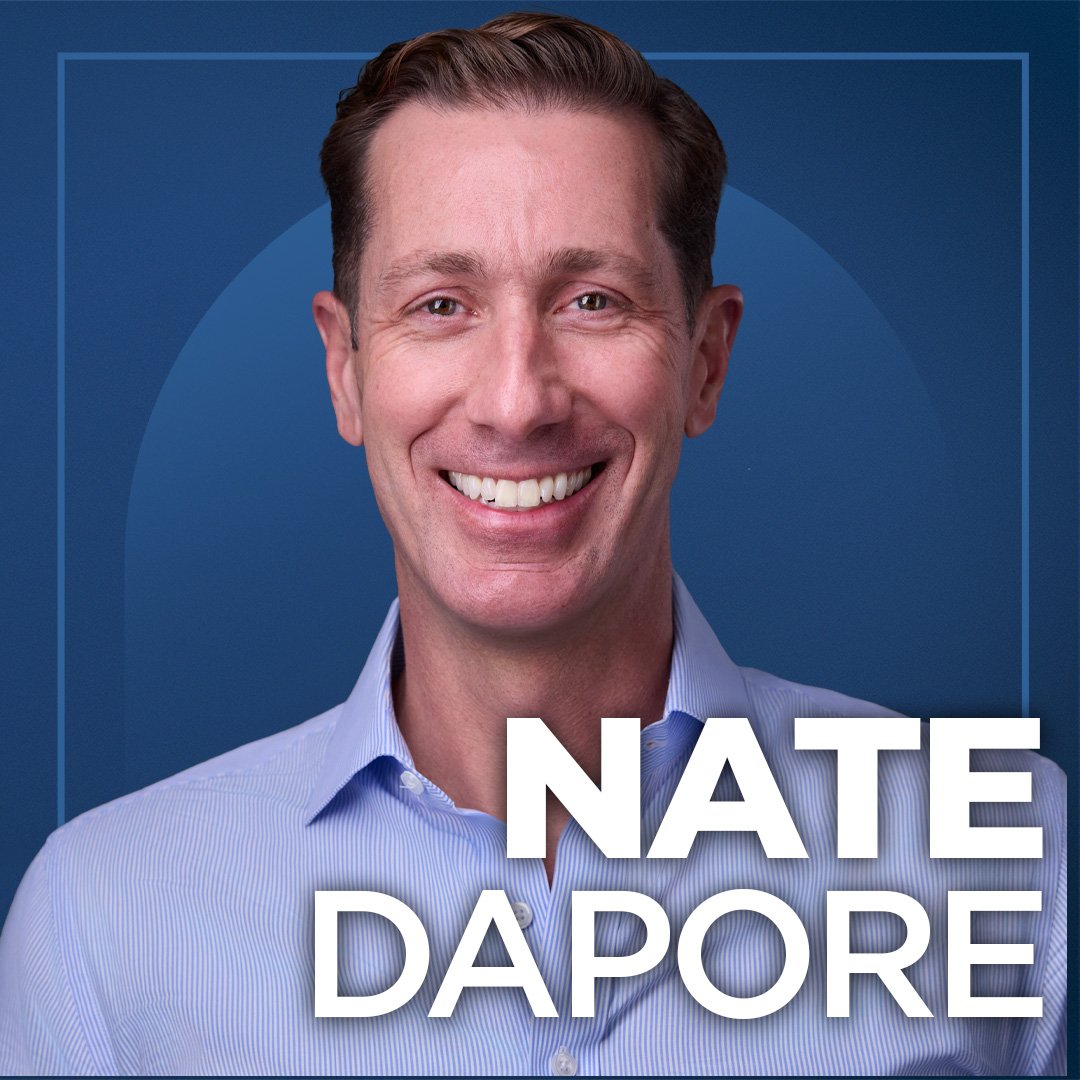
Gui Costin: What is up, everybody? It's Gui Costin, founder and CEO of Dakota. Welcome to the latest episode of the Rainmaker Podcast. I am so excited to be joined by Nate DaPore, founder of Roo Capital. Nate, welcome.
Nate DaPore: Thanks, Gui, for having me. I'm glad to be here today.
Gui Costin: This is awesome. So Nate DaPore founded Roo Capital in 2022 to provide an alternative to traditional venture capital by pairing strategic capital with executive talent solutions and operational growth support. He leads Roo Capital's investment activities and sits on the boards of Scamnetic, GoTu, Steer, and Florence. Prior to founding Roo Capital, Nate was a managing partner at Acertitude, where he launched and scaled one of the firm's largest practices, giving early-stage and middle-market health and technology companies on behalf of leading venture and private equity sponsors. Earlier, he founded and served as CEO of PeopleMatter, a venture-backed SaaS company serving global brands, including McDonald's, Subway, BP, and Marriott. He also served as vice president of sales at Benefitfocus, NASDAQ… BNFT, where he was part of the founding management team that scaled the company from startup to its IPO as the largest benefits enrollment software provider in the US. Nate is an active member of the Young Presidents' Organization, YPO, previously serving as chapter chair of YPO Explorer 305 in Miami, and he is a Liberty Fellow in the Aspen Global Leadership Network at the Aspen Institute. He was also selected as a Young Leader for the American Swiss Foundation, representing the US and its cross-border leadership program. Nate is a licensed commercial pilot with over 8,000 flight hours and 7 FAA certifications, including single and multi-engine land and sea planes, helicopters, and Embraer jets. Just by way of background, we met in Berlin, SuperReturn.
Nate DaPore: SuperReturn.
Gui Costin: You came to Dakota Cocktails.
Nate DaPore: Great party.
Gui Costin: Next thing you know, I'm an investor in Ru. You just subscribed to Dakota Marketplace. I listened to your mini AGM, as I'm calling it, which is so world class, which we'll unpack. So I was so excited that you'd come down and shoot.
Nate DaPore: Absolutely. I wouldn't miss this opportunity.
Gui Costin: And I can't wait to get into it. So let's start off. Let's level set. Can you give some background on yourself? And especially because you're a venture capitalist today, you were an operator before, give us the origin story.
Nate DaPore: Yeah. It's been a fun journey. So I'll start all the way back in Charleston, South Carolina, where I was born and raised. And I had to pay my way through college. I went to Hampden-Sydney College. I couldn't afford to go there on a regular job or didn't want to take a bunch of student debt out, so I went to the local car dealership, and I convinced them to let me sell cars for the summer. And the new car sales manager said, we don't hire college students for selling cars for the summer. I said, let me ask you something, how many cars does the average sales guy sell in a month? He said 12. And I said, let me work this lot for two weeks. If I sell 6 or more, I stay. If I sell less than 6, I leave. And he said, deal. I sold 9 cars in the first two weeks. I was car salesman of the month.
Gui Costin: Why am I not surprised?
Nate DaPore: I was car salesman of the month the next month, and I would go back to college every year with $20,000 to $30,000 working in the summer. This was 25 years ago, and that was my first entrepreneurial journey. All of that was formative for me to realize that my passion was in building relationships with people and getting teams to perform and building companies. And so right out of college, I started with two other guys a company called Benefitfocus. And we started a health care software company that was focused on… this was back in 2000, and we were selling to large insurance carriers. I used to come here all the time, to Independence Blue Cross, right around the corner. They were a client of ours, and we automated for those that may remember, back in the old days, the paper forms that you'd have, where you'd have white, pink, yellow, and you'd fill them out. And then one copy would go to HR, one would go to the benefit broker, and one would go to the insurance carrier. We put all that online. And long story short, $0 to $200 million of recurring revenue in seven years. We took it public for $2 billion. It was a publicly traded company for 10 years on the NASDAQ, the NFT. We went private. I was there the first eight years. I was head of sales. I had about a 200-person sales team by the time I left. And I started out as the original bag-carrying sales guy, all the way to head of sales. And it was just an incredible journey for us, building that business. So that was my first operator experience. And then, from there, I took some time off. Flying has been a big passion of mine. I've been a pilot since I was 13 years old. I used to have to bum rides and hang out at the local airport in Charleston, on John's Island, washing planes to get hours to fly airplanes, and really pursued my flying career pretty aggressively in my 20s and went to Alaska and was a helicopter pilot for a year, between my first two companies. I took a year off and did that, and that was a wonderful experience. And then I came back, and I started another software company called PeopleMatter, and we raised $63 million of venture capital from five VCs, from Sand Hill Road all the way up to New York. And that was a talent management software company for hourly workers. So we did applicant tracking, onboarding, performance management. We sold that business in 2016 to a large strategic. So those were my first two software operating experiences there.
Gui Costin: Wow. And so what was the biggest difference between the first company and the second company?
Nate DaPore: That's a great question. Well, you're part of the management team on the first company, because I wasn't the CEO. And on the second company, I was the CEO. So learning to be a CEO is a very different job than being an executive on a management team. And learning how to be a leader of a large organization, as the CEO, was a big change for me. I got involved with YPO very early on. A friend of mine had recommended that. That was really formative for me.
Gui Costin: I've never raised venture capital money. Did you spend all the $63 million, or how did that work?
Nate DaPore: Yeah, we did. There were a lot of real painful lessons from that which became the thesis for where we are today of Root Capital. I'm going to probably offend a fair amount of the audience right now, when I say this. Most VCs are like seagulls. They fly in for the board meeting, they shit all over the place, and they fly off to the next board meeting, and they don't really add a lot of value. They talk about the value they add. They talk about all the people they know and who they can connect you with. But if you fundamentally think about their job, their job is really in three areas. They have to raise money, they have to find deals, and they have to try to drive outcomes. And so the driving outcomes is actually, in my mind, again, from my experience, is the least important to them. It's an AUM game for them. It's constantly trying to raise the next fund, get more AUM. And a lot of times, the founders are neglected and overlooked what actually matters to actually help the company build value. And that's where I really got inspired from that experience, to say there's got to be a better way to do venture than what I had experienced as a founder.
Gui Costin: I want to unpack that, but I just want to take a pause because one thing I was so impressed by was… I was calling it your mini AGM, which we're very big believers in having our firms sit at this studio right here and film their quarterly webinars on video so investors can see them, they can talk about the companies they own and why they own them, and they're interacting. Thus, people are seeing video. You, a couple of weeks ago, did a spectacular job on a quarterly update for us.
Nate DaPore: Yep.
Gui Costin: Right? Because I'm an investor. We listen in. You brought up four of your CEOs. You gave a little, brief overview. Talk about that and just your attitude towards that relative to how other investors report progress against their investments.
Nate DaPore: So it goes back to… we fundamentally want to be different than just a normal VC, a me, too VC out there. And we start with our model, which is capital, talent, and growth, and how we actually help the companies. I should have mentioned that after the second company, I was recruited to go work at an executive search firm in New York. And so that's where I really perfected the ability to recruit, retain, and develop talent and really place that talent. And why that's important is it leads into what we call a quarterly update that we do with our LPs. We want to not only showcase the founders, we want to actually have specific stories of how we've helped them and how we've impacted them. So most GPs that are out there today, they do a quarterly report. It's standard in their LPA. They give a quarterly report to their LPs. And I will tell you, 9 times out of 10, that quarterly report goes in a file. It's scanned and briefly read, and it's pretty much a very static, one-dimensional document. And I said, how can we bring the stories of what we're doing and the magic that these companies are creating in their respective industries to the LPs, other than just an annual AGM? Which we have. We have an annual AGM every year in Miami. We're based in Miami. And we have an office in New York, and we do our AGM every March in Miami. But I said, let's have a way, about every six months from that AGM, that we could talk to our LPs, and we still do quarterly reports but actually bring these stories to life. And so we do a 2-hour webinar. We use Zoom. They've got a great webinar suite. It's very low cost, very easy to operate. And we will do 20 to 30 minutes on the firm and the fund and update. I talk to the audience and give them a quick, basically, synopsis of how things have happened since the last one we did. And then I usually bring one company. The first company I always bring up is a company that the audience knows, so it's a prior investment that they're aware of. So in this last one, it was GoTu. GoTu is a company we invested in four years ago that just had a liquidity event. And so I brought our two founders in. Thank you. And at this time, you would have thought I was Santa Claus with the LPs handing out distribution checks. And we brought them on. The audience knew them. And I had them talk about their recent event and how they picked the new sponsor and all of the process they went through and the value creation that's happened there, and the audience loved it. And the audience is able to chat live with me on through the Zoom platform, and they can actually submit questions, and I read the questions out. So I'll do one company first that is an existing portfolio company and then three companies. These are all 20 to 30 minutes. They're very quick. The whole segment is two hours. You're going to lose them after about two hours. And we record it. So you'll have some people that come for an hour and then they drop off. And there's a whole cadence we do beforehand to actually market the LP webinar. And then, also, in the post-LP webinar, we send them a survey afterwards. We send two recordings. This is really important. You want to send them the full recording, and then you want to send them a 7- to 8-minute synopsis, because a lot of them are not going to watch 2 hours. But if you can give them 7 to 8 highlights of the webinar, they love that. And the other three are new companies since the last webinar. We bring three CEOs in that we invested in since the last webinar, just introduce them to the audience. And again, the LPs get to ask questions about it. And then we end the interviews, and I usually reserve about 5 to 10 minutes at the end for any general question… the founders are gone… that the LPs can ask, just from what they've seen or heard. And it's really, really productive. We get a lot of really good feedback.
Gui Costin: That's great. Well, considering that Netflix and all the streaming… everyone loves watching streaming and loves watching, watching, watching… how few people do it that way. And I think you just kept it very simple.
Nate DaPore: We do. It's not that hard to do. It's real powerful.
Gui Costin: And I just think it has such a great impact on the investors. When they look at that, they're like, man, Roo and Nate really care. That's my takeaway.
Nate DaPore: Yeah, I would agree. I think we had 120 registered, which you always get about 50%. And we bring in, by the way, prospective LPs and existing LPs for our next fund. So if you're a prospective LP, it's a really great way to showcase to a prospective LP what your firm is about. And a lot of LPs are like, wow, this is different. I've never had this experience, where I can actually see the companies and actually interact with them in between my AGM. And so we had prospective and existing because we're in the middle of fundraising for fund two.
Narrator: Dakota Recommends is your source for the highest quality coffee shops, restaurants, hotels, and event spaces in every major city where business happens. Dakota Recommends is thoughtfully curated by our team, who has been traveling and hosting events in the investment industry for over 25 years. Log in to Dakota Marketplace today to see how Dakota Recommends can help you make your next trip better.
Gui Costin: So talk to me about your investment philosophy and strategy and how you've been able to quickly get DPI into fund 1. But I really want to understand your approach, based on, what did you learn as an operator, and how does that impact your ability to source? Because venture investing is very, very difficult.
Nate DaPore: It's very difficult.
Gui Costin: So what have you done to actually have the success that you've had so far?
Nate DaPore: So the first thing is the model. It's not just an allocator spray-and-pray model. It's a thoughtful, fun construct as well as a work-on-the-portfolio model. So I mentioned it earlier, the model is capital, talent, growth. And if you think about those three words, every VC has capital, but what they lack is talent and growth. Now they think they have talent and growth, and their version of talent growth is very different than ours. Their version of talent is that they may have a few search firms on call that they call for a search they need to do, or they may have, in the bigger firms, a talent coordinator or talent partner, which is really, in my mind, an air traffic controller that just manages search firms. We actually have 24 people in house that are a full-fledged recruiting and executive search firm. They do all of our portfolio companies, as well as 30 other private equity and venture firms. It's called Roo Search. They're phenomenal. I brought five guys from that search firm that I mentioned was the third company I worked on, over from Acertitude, was the name of the search firm.
Gui Costin: So you took a cost center and made a profit center.
Nate DaPore: Exactly. That's exactly right. That business today does $15 million of revenue, lots of great business. And it's a separate business. We give carry economics in our fund to the partners of Roo Search. There's really good alignment. And then Roo Search provides us not only talent, but they also provide us a real edge of how we source. So there's 23,000 people in the database at Roo Search. We've curated it down to 200 A-listers. These are CEOs, CFOs, chief revenue officers that have been in a search for some search along the way with one of those 30 clients. And we've identified them as somebody that's super connected in the areas that we invest. We invest in cybersecurity, health care, and vertical SaaS, and they're oftentimes an angel investor. We talk to all of our A-listers every quarter, a phone call, zoom coffee meeting, and then we actually incentivize them to send us deal flow. Most GPs will have a venture partner network or will have scouts out there, and they have some type of compensation. What I always say is, they let them invest in their fund fee free. I call that table stakes. We actually set aside carry dollars that we will incentivize them to send us deals. So if you send us a pre-seed, it's a certain level. You send us a seed, it's a little bit more, and if you send us an A deal, it's even more. And you get carry dollars at work, in the fund. So there's a real incentive program for them to send proprietary deal flow. And that's where we get our best companies. We also have this captive GLG expert network of 23,000 executives we can go to for diligence. So we go and look at an opportunity. We can go into our database and find somebody that knows a lot about automotive software, and we could talk to that individual. So Rick Wagoner was the former chairman and CEO of General Motors. He was in our database because he was in a board search for a large private equity firm. He knew our firm. We went to him and we looked at the Steer deal, and he was super helpful for us in underwriting that deal. So that's the first advantage, the talent. The growth team is led by a gentleman named Joe Dorsey, who came out of Vista Equity. Vista Equity is one of the best growth equity firms in software in the United States, and I would argue, globally. And Joe was trained on the Vista Equity playbook, and he put a lot of those playbook concepts in place for our growth team. Our growth team today is a team of three that goes in and does go-to-market help, product-market fit, comp plans, pricing. You'd be surprised how many companies get pricing really wrong. They don't understand the elasticity of demand. And then they also will go in and help them with their CRM. Do you use Salesforce? Do you do HubSpot? And they're certified administrators, so they can actually help configure them. So those two branches, the talent and the growth, are paired with the capital. And that's how we get the outcomes we've had. So on GoTu, when you mentioned the DPI, we placed 19 people in go to over the last four years of our investment. We did countless hours of work on growth, and they just had a $45 million round led by Longridge Equity Partners and JPMorgan out of New York. And we took $13 million of the $45 million and distribute it back to the LPs in that round, and we still own a meaningful portion of the company there.
Gui Costin: That's amazing. And so going forward, what do you look for and what entry points do you invest? I'm really curious about it because Muse was just… what a phenomenal business.
Nate DaPore: Yeah, it's a great business, led by Travis Fuller, who used to work at Accel-KKR and found this huge white space. And we found Travis through an A-lister, and we backed him. So the underwriting starts with what we call the 6 Ps. The 6 Ps are a scorecard that we developed internally. It's people. It's passion. It's pain. It's possibility. It's priorities and it's product. And so those are the 6 dimensions that we look at as a screening mechanism for deciding to invest in these companies. We invest at preceding seed, and we'll also do A-rounds. We write checks as small as $250,000 to as big as $25 million. And we obviously rely a lot on co-invest. We've got a great syndicate of LPs, both international and domestic, institutional, and non-institutional, and that's allowed us to create a lot of flexibility around those three mandates, cybersecurity, health care, and vertical SaaS. But the 6 P's… the People is the strength of the team. How good is the team? That's the number one thing we look at, which is who are the people that are going to be running the business, the founders? The second is the Pain. What's the pain they're solving? Is it a nice-to-have or a must-have? Is it something that's really a big pain point for a lot of companies out there, for the customers? What we mean by the Passion is that a lot of founders have passion. Passion, for us, is what is the relatable experience of the team to the problem they're solving? Did they work in the industry? Do they have a lot of connectivity to the pain point out there? Possibilities. How big can the company be? It's got to have a big market, that we believe you can build a really, really big company. Priorities what are, you going to do with our money? Meaning if we give you a $1 million seed check, do we believe you have thoughtful milestones laid out that are going to create value? Are they really thought through? And then the final one is Product. We don't ignore the product, but a lot of times, when you're doing inception investing at pre-seed, you oftentimes don't have a fully baked product, but what we want to see is, do they have a good vision for the product to solve back to the pain and the possibility there?
Gui Costin: That's fascinating. And so walk me through how many investments will be in a portfolio, like fund 1, fund 2. And that will be diversified across pre-seed, seed, and A? Is that your diversification?
Nate DaPore: Well, first of all, we just finished fund 1. I rode around on a Greyhound bus for two years, fundraising for fund 1. That's what I tell people.
Gui Costin: And how big did it get to?
Nate DaPore: And so the target was $35 million. We ended at $52 million. Our final close was $52 million.
Gui Costin: So as a venture investor, first-time venture investor, what was your preparation and angle when you'd sit in front of potential investors?
Nate DaPore: I used an old technique in the beginning. I went and chased a couple of people that I knew would never write me a check, because they would be my dry runs that I could go to. There would be institutional investors that I could go to, and I could test out the pitch, and I could refine the pitch. That's the first thing. So the first 15 to 20 are like… there is no way that these people are ever going to write us a check. But you know what they are going to do? They're going to ask really tough questions, and they're going to help me get prepared for the ones that are my target audience that I know are going to be great candidates for fund 1. So that was the first thing that I did.
Gui Costin: Genius, by the way. I totally love that.
Nate DaPore: It really is. And a lot of people don't think about that. They just want to go right to friendlies that they think can immediately be a great prospect. And I would say you've got to be really good with that friendly that you think is going to be a good prospect. But go through the process of going to some of the big institutional guys, some of the big consultants out there, and getting them to push on you.
Gui Costin: All right, I don't want to lose this track, but it does make me think of product and launching your product. Do you believe that founders should do the same thing with their product, in addition to you raising capital?
Nate DaPore: Absolutely. I had to figure out our edge and my pitch. That was the other piece. What are the compelling pitch points that are going to get this LP interested in Roo and say, this is different? This is unique. I haven't seen something like this. First, it was the model, the talent, and the growth paired together with capital. That was very, very different for them. The second was that they believed that we could drive outcomes because of the work that we did in the companies there, and that was another big piece of our model, which was we didn't just allocate, show up for a board meeting, and occasionally help the founder. We actually mapped out what the founders… a journey that they wanted to go on. It was their journey, not our journey, but the journey they wanted to go on. And how are we going to hit those different outcomes there? So back to your question. You got to have that edge, and you got to have something that's unique and special, that's different, because you got to remember these allocators, they get 100 pitches a month, meetings over a month. And it's the same fun construct, the same network that you're going to pull from. You got to come out very quickly in the pitch. I always say in the first 1 3 three minutes, they got to say, wow, this has got my attention. This is very different.
Gui Costin: So you know what we call that at Dakota?
Nate DaPore: What do you call that?
Gui Costin: Smash them in the nose as hard as you can.
Nate DaPore: I learned that in the search business. When you're doing an executive search and you're calling on an executive that is an A player, that is at a great company… and we used to call it the 7-by-7-by-7 campaign, 7 emails, 7 phone calls, 7 text messages in seven days, 21 touches. And finally, the guy's like, what the heck is this? And they finally call you. Who the hell are you and why do you keep calling? You have 30 seconds to go into the pitch and talk about the opportunity for that individual, for the search that you're trying to pitch them on. This is interesting. Tell me more. And it's the same thing in fundraising. You've got to hit them in that first 2 to 3 minutes with something that's very, very unique.
Gui Costin: That's amazing, because I call it centering the conversation. So what should I be listening for?
Nate DaPore: Exactly.
Gui Costin: Right. So now, let's come back to fundraising for 15 to 20. Good institutions are going to really rake you over the coals, not invest, but it starts to sharpen the saw. Because I also believe getting the founder on the road, facing live pitching…
Nate DaPore: Absolutely. FIB, FIB, Feet In Buildings. That's what I call it. You got to get these feet in the buildings. I wasn't kidding when I said the Greyhound bus.
Gui Costin: But I think just the key takeaway is the more reps… this is why I always thought about our software business. The reason it grew like it has… now, it didn't grow in 7 years, 0 to $200 million, but 0 to $22 million. We did so many demos and got so much feedback from the customer that we were able to adapt and change the product for what the customer wanted, just because we were getting so much feedback.
Nate DaPore: Iterating.
Gui Costin: Yeah, but it was only because we were doing so many demos. If we weren't doing what you're doing and going and doing the hundreds and hundreds of meetings… so that's what I just want to emphasize, is that what made you successful is the Greyhound bus and getting in front of that live pitching, because then it changed how you pitched.
Nate DaPore: Yeah, exactly. The pitch got better and better. By the end, if you were to look at the deck from the beginning, our pitch deck, two years at the beginning of the pitch to the final pitch deck that we used towards the end, very different. We iterated on that pitch deck probably 100 times, 100 different versions. The other thing is, Zane Fracek is one of our star team members, and Zane would attend a lot of the pitches with me, and he would iterate the deck. We would write down every question that we would be asked. Zane would record or would write the questions down from the LPs, so we had a bank of questions that we knew were the standard questions that would come through. So we'd have our answers for those questions. And again, we got better and better at having a database of, ok, we're going to get asked about fund construct. We're going to get asked about the team. We're going to get asked about a deal that didn't go right. And it's usually, honestly, a standard 15 to 20 questions, I would say, or 80% of the questions that the LPs will ask. And just having really good, succinct answers and backed up with really good slides that they could understand, and we could show when they would go to a particular question… let's show you this right here. We'll talk through that real quick with you.
Gui Costin: Great. And so it's just those reps. And then, by the end, not only did your pitch get refined, but you knew all the questions they were asking.
Nate DaPore: We did.
Gui Costin: You were documenting those. And then I always say, the most successful fundraisers are those who tell the due diligence to the buyer what they want to hear. And that's essentially what you just did through those 15 to 20 slides, over time, as it grew.
Nate DaPore: And one other piece of information I would give to the audience, the fundraising folks out there, is don't be afraid of silence. And what I mean by that is, when you're pitching, you just feel like you got to just throw up all of… I got 30 minutes. I've got to get everything out as quick as I can. I just got to dump it on this LP. And one of the other things I've learned in my career is there is a lot of power in silence and natural breaks in the pitch, to allow them to understand, process, and ask a question there. And I think a lot of times, when I've sat through pitches, because I have an LP in a lot of funds personally, and I would see a GP to me. And they would just go on and on and on and on and on, and they just feel like they got to run for the first 5 or 10 minutes to hook me. And I learned that there is this real power in silence, in allowing the LP an opportunity to really ask a thoughtful question there.
Gui Costin: So when I listen to how you evolve the pitch deck, to me, your de-risking the conversation. So you learned, over time, how to say things and answer questions in a certain way. And you knew, over time, based on the questions you were getting, the answers or the information you should be providing. Because in a lot of ways, the perfect pitch could be done in 5 to 7 minutes, but not one question is asked because you literally answered every question.
Nate DaPore: Exactly. Exactly.
Gui Costin: But that's by 700 that you approach, and so it comes back to then getting face to face. Right?
Nate DaPore: Absolutely, 100%. Face to face is always the preferred way. Don't be afraid to get on an airplane.
Gui Costin: And more reps, the better.
Nate DaPore: More reps, the better. Be willing to change the pitch there and also be willing to adapt to the audience in the sense of, sometimes you may only have 15 or 20 minutes. You might not have 45 minutes or 30 minutes or an hour, and you got how to hit the key high points in that shortened period of time. I could do our pitch in 5 minutes or 50 minutes. I know how to adjust it to the time constraints there.
Gui Costin: So two final questions as I'm thinking about how you approach the business. You're obviously a relationship-driven guy. You're very hands on, as an investor, of the things that matter most, which is very, very clear. What do you look for when you're meeting a founder? What are some things that really stick out to you? Because I'm going from being a fundraiser to an operator now. But to you, as an investor, are certain things that really stick out for you of a certain type of person you want to back?
Nate DaPore: It's interesting. We look for founders that are receptive to the model, that really want to embrace a partner to help them out and are not just looking for a check. And you would say, well, how do you do that? How do you pressure test that when you don't have a long period of time to get to know them? I listen very closely to how they describe their business and how the journey they've gone on so far in their career. It tells me a lot about, is the person vulnerable? Is the person authentic? Is the person going to be willing to listen and receive feedback? And there's just a few key questions that I like to ask with founders. This is an interesting thing that I do. I always ask that my husband, Tim, and I have dinner with the founder and their spouse, and that is a really key moment for me to see how the founder treats their spouse, how they treat my spouse, how the interaction is over dinner. And really, my husband gets some great dirt from the other spouse about the founder. So that's usually my secret weapon right there. He'll get in the Uber and close the door. He says, don't do that deal. He's terrible to his team. And she told me that there.
Gui Costin: Well the two, Muse, and then the dental business…
Nate DaPore: Yeah, GoTu.
Gui Costin: Yeah. Those two didn't feel necessarily like venture deals. I know they are, but it just made so much sense.
Nate DaPore: It did. It did. it goes back to those six Ps.
Gui Costin: Yeah, those businesses just made sense, solving a real problem.
Nate DaPore: They are.
Gui Costin: They have deep vertical expertise. And is it through your A-listers that you're able to source these types of opportunities?
Nate DaPore: Yeah.
Gui Costin: It's like some pie-in-the-sky thing. I mean, those are real demonstrable businesses, solving a problem that's going to be a great benefit, the pain for the end market.
Nate DaPore: We get asked this. What's a question you'll get asked by LPs? What's your right to win? Why do you win the best deals? What's your differentiation as a GP, that you get into the best deals? And our right to win is based on four things. So why did we win the opportunity to work with Ed and Cary, who are great founders, who started GoTu and have gotten it to a great outcome, or Travis, who is beginning his journey as a founder with Muse? It's just an incredible opportunity and company. We really, really focus on helping those founders unleash their potential and really being able to embrace this model that they really have there, and that's been our success throughout the process there.
Gui Costin: That's amazing. Last question.
Nate DaPore: Sure.
Gui Costin: So the biggest challenge you're faced with today and how you're overcoming it.
Nate DaPore: The biggest challenge we're faced with today is adding really good quality people to our team… I want A+ players, not just A players… and finding people that really want to embrace this journey that we're on. We want to build a really big franchise. We're not here to just bake cookies, Gui. We're going to build a big organization because we believe that we can really help these founders rapidly grow their businesses there.
Gui Costin: Great. Well, Nate, I can't tell you how much I appreciate you taking the time. This has been an incredible conversation. I think we covered a lot of ground.
Nate DaPore: We did.
Gui Costin: What's really apparent is the clarity of your thinking over time. But I do believe, when you talk about 700 pitches, that that in and of itself seems like it really defined how you think about the business, because it forced you to do all the thinking…
Nate DaPore: We did.
Gui Costin: …which created clarity, at least the way that I interpret it.
Nate DaPore: I love Dakota. It's been a great tool for us, and I really enjoyed being here today with you guys.
Gui Costin: Awesome, Nate. You're the best.
Nate DaPore: Thanks.
Gui Costin: Ok, cool. You got it. Thanks for being here.
Nate DaPore: Absolutely.
Gui Costin: All right, everybody, that is a wrap of another episode of the Rainmaker Podcast. Thanks so much for joining and can't wait to see you on the next episode of the Rainmaker Podcast.
Narrator: You can find this episode and others on Spotify, Apple, or your favorite podcast platform. We are also available on YouTube if you prefer to watch while you listen. If you would like to check up on past episodes, check out our website, Dakota.com. Finally, if you like what you're hearing and seeing, please be sure to like, follow, and share these episodes. We welcome all your feedback as well. Thank you for investing your time with Dakota.