Narrator: Welcome to the Rainmaker Podcast with your host, Gui Costin. The goal of this podcast is to give listeners a unique look into sales strategies from top industry executives. We introduce you to the heads of sales and heads of distribution who will help you understand the inner workings of the successful sales organizations from philosophy to execution. This podcast is essential for sales professionals seeking wisdom from the best in the field. If you're not familiar with Dakota and their Dakota Rainmaker content, please check out dakota.com to learn more about their services.
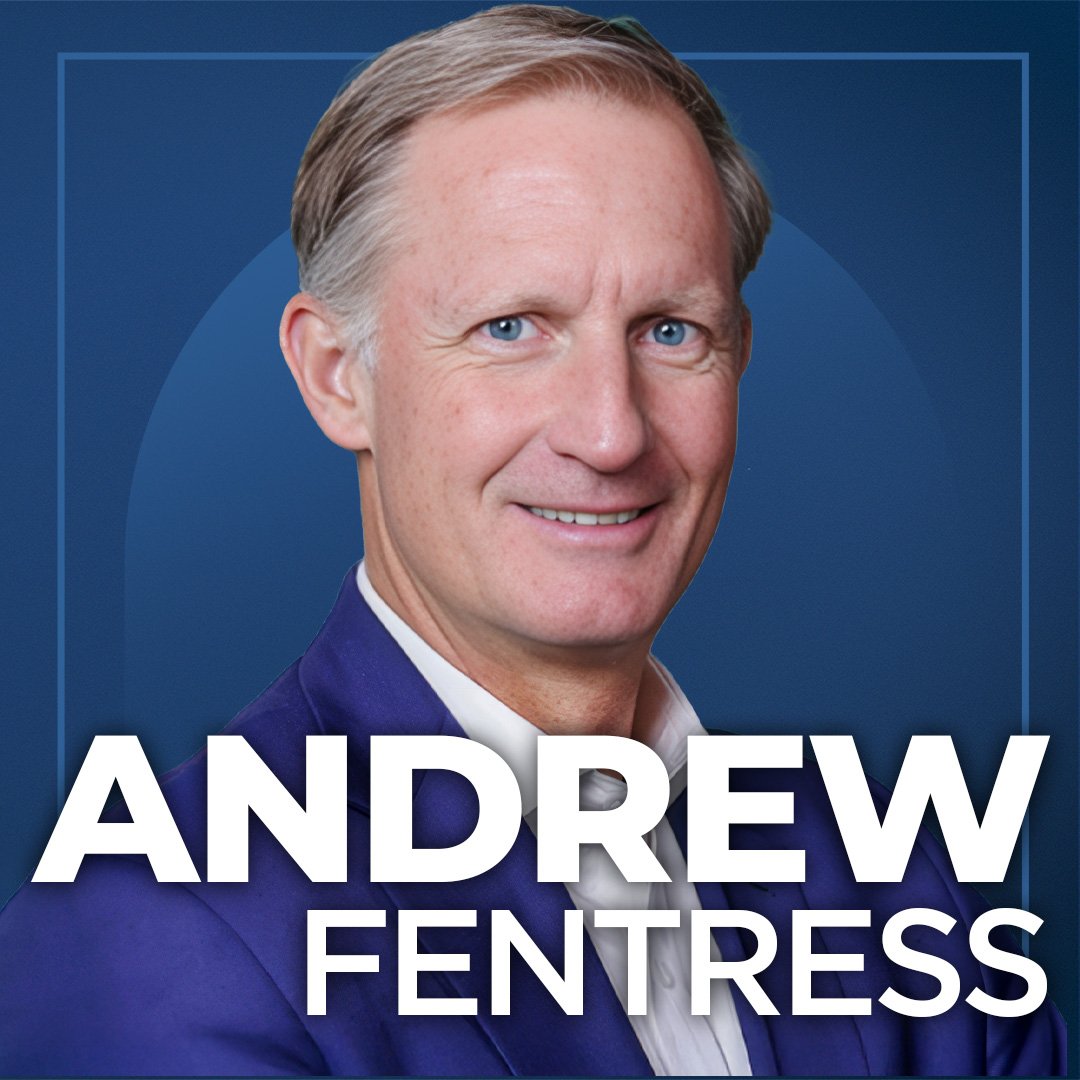
Gui Costin: This episode is brought to you by Dakota Marketplace. Are you tired of constantly jumping between multiple databases and channels to find the right investment opportunities? Introducing Dakota Marketplace, the comprehensive institutional and intermediate database built by fundraisers for fundraisers. With Dakota Marketplace, you have access to all channels and asset classes in one place, saving you time and streamlining your fundraising process. Say goodbye to the frustration of searching through multiple databases, websites, form ADVs, and say hello to a seamless and efficient fundraising experience. Sign up now and see the difference Dakota Marketplace can make for you. Visit dakota.com/dakota-marketplace today. What is up, everybody. It's Gui Costin founder, CEO of Dakota. Welcome to the latest episode of The Rainmaker podcast. I'm so excited to be joined by my friend Andrew Fentress of ACRES Capital. Andrew, welcome.
Andrew Fentress: Thank you, Gui. Great to be here.
Gui Costin: Love having you. All right, my man. Andrew Fentress co-founded ACRES in 2012 and leads the capital markets team. He serves on the management and investment committees of the firm and as chairman of the board for ACRES Commercial Realty Corp, an NYSE listed mortgage REIT. Before ACRES, Andrew was a founding and managing partner at Medley, a private investment firm focused on direct lending. Andrew began his career at Morgan Stanley in 1995 and the Institutional Equity division in New York. Andrew earned an MBA from the Kenan-Flagler School of Business at UNC and a Bachelor of Arts from Boston College, where he was a member of the varsity sailing team for four years. Andrew lives in Long Island with his wife Wendy, and three children, Charlotte, Jack and Ella. So you've had a great run, founding ACRES in 2012. But can you take us back a little bit. Where did you grow up, college, and then how you got to ACRES, and then how it started, to give us the origin story.
Andrew Fentress: Ok, I'm going to get there. I first just want to say it is great to be back in the studio. I've loved watching Dakota and how you guys have progressed. It's a wonderful organization. We're clients. We love the product. We use it every day. As we're thinking about renewing our subscription for next year, tell me one thing that you love inside of the Dakota Marketplace software system that maybe I don't know about or don't get to use every day. And then maybe one thing that's coming at us in 2026 that's going to be amazing.
Gui Costin: So we just launched on Monday, the biggest pain point for anybody using Salesforce or Dakota Marketplace, and that's creating reports. So we just released the first natural language report builder. So you can just type in, hey, run me a report, a family office is in Boston above $1 billion with the name of the CEO and their contact info. That's been the number one thing when you're thinking AI, LLMs, agents, training everything. It took about a year. It's really, really good right now, but it's only been out for a day or two. And now training all of our customers on how to properly actually do the proper prompts to get the responses they want, will be the next frontier, being able to give that level of coaching. But that was been that was a tremendous, tremendous lift to get that done. But it's what everybody's really, really wanted. One thing that we also have come out with in 2026, would be a huge part of this for people, that a lot of people want the data in their platform via an API. So now we've always been an API first business, but now we have an API documentation portal for heads of data. So it doesn't matter if I want all LP data in the US, I want LP data non-US, I want… whatever it might be. We also have a lot of other information around benchmarking and performance. So private real estate performance, we probably have 3,000 to 4,000 funds where we have private real estate, private credit performance. And then you can do benchmarking, comparisons et cetera based upon vintage years or open-ended, what have you. So we've moved from the LP side to the GP side. And then there's the basic functionality. There's workflow tools, just to make it stickier and easier to use.
Andrew Fentress: I'm going to renew.
Gui Costin: Well, thank you, and thanks for the support.
Andrew Fentress: It's great. It's a wonderful product, and it's great to be here. So yeah, before I get into my background, it's day 10 of a road trip, and I look forward to getting into it all with you here today. I'm a little tired, but I'm energized. It's great to be on the road. It's great to be with clients. It's great to be with prospects. It's great to be in markets. In the real estate business, it's great to just drive around and learn and learn by just watching and walking and viewing. So I'm energized. And I'm headed home for Thanksgiving after this, and as long as I don't run into Del Griffith Junior on the sidewalk.
Gui Costin: You got to tell him that that's a reference to…
Andrew Fentress: Planes, Trains and Automobiles. John Candy.
Gui Costin: Yeah, when he had the salmon in his chest and that whole thing.
Andrew Fentress: No, no. Steve Martin trying to get home and he couldn't get home because he ran into Del Griffith, couldn't get home for Thanksgiving.
Gui Costin: I love it.
Andrew Fentress: Anyway. So yeah, I grew up in Washington, DC. My mother and father raised our family partially in DC and then outside in Potomac, Maryland. My dad was a businessman, started as a lawyer, and then started a sports agency. It was a really exciting environment to grow up in, learned a lot from guys who were building a business, but also guys that were pro athletes and being around competition all the time. It was just a wonderful, great environment. I'm the oldest of four kids. My siblings are all competitive people as well. So it was a great environment to grow up in. And my folks are still grinding and going hard. I saw them a couple days ago.
Gui Costin: That's great.
Andrew Fentress: And as you know I've got a couple of great brother in-laws.
Gui Costin: Yes.
Andrew Fentress: So we're very fortunate and very blessed. I went away to Boston College, spent four years up there, raced in the sailing team for four years. Got a great experience competing a few times for national championships. But just the grind of playing, competing at a high level is always fun. I loved it, energized by it. Great to just be out on the road, meeting people and being in a high competitive environment, was just a real privilege for me. Went to work after school for a guy that I'd worked for during school who was an entrepreneur, built businesses, learned as much as I could about sales. I came right out of college into a sales job, selling fitness equipment under the name NordicTrack. He owned NordicTrack.
Gui Costin: Yeah, right on.
Andrew Fentress: …right there out of college. Worked for that company for a little bit. Wanted to get into business world. I had to go back and get an MBA. So I went to Chapel Hill. That was a lifelong dream of mine, to go to Chapel Hill. I had family from North Carolina. And my dad who was in the sports agents world, had a very close relationship with Coach Smith. And so he had spent a lot of time down there and we had just an affinity for the school. So it was an honor to be able to go to Chapel Hill and get an MBA there. I learned all about, the skills that are needed to be in business. I didn't have those necessarily coming out of college. I just had a liberal arts education focus on political science and took some accounting classes later on. But really needed to go back and get the skills that were necessary for me to be effective and to communicate and speak the language essentially. I began working at Morgan Stanley right after that. Actually, I interned before I went to Chapel Hill. I had a summer internship. It was a fun story. I called my brother. We were chatting about something and I said to him, I'm poking around Wall Street trying to learn a little bit more about this industry. I didn't know anything. Kid from DC, had no experience. And he said, well, should speak to my roommate's father. And this guy, Shel Johnson, ran equity derivatives at Morgan Stanley. And I went and had a conversation. He was super generous, opened up his office to me, sat down with him. He introduced me to some guys around the trading floor, and I was just energized. I'd never been in an environment like that. I'd never seen anything like that before. I went down to the lobby. I think I picked up the payphone in the lobby, and I called up to his office and said, this was amazing. If there's anything I could ever do to find a way to be a part of this, I'd love to do it somehow, some way. He found me the next day and said, you're not going to believe this. We hired four kids for the NBA Summer program. One of them literally just canceled. Do you want the spot? And this was in May. The program was starting in two weeks. So that was how I backdoored my way into a career in Wall Street, and really started Morgan Stanley that summer, came back the summer between first and second year of grad school, and then went back full time. Learned a ton in the trading business. It's a check every single day on your ability to communicate, to transact, to risk, manage to navigate a big organization. And loved every inch of it, every minute of it. But because my grandfather, my dad had all started their own business, I thought somehow, some way I'm going to find my way into that world one day. And after a stretch of time, decided to leave and begin a career on the asset management side, starting private credit in 2004, when that was really it was a conversation, really. No one knew what it was. Helped build a firm with two partners, went through the GFC, learned a lot about risk management, how credit can… you think it can be one thing, but you can have real impairments. And that…
Gui Costin: So what were the lessons learned from that experience before you started ACRES that you apply to ACRES today?
Andrew Fentress: Yeah, so it hearkens back to risk management and understanding what you own and what the potential outcomes might be. In credit, you're only as good as your losses. And when I saw that you could have zeros or real significant impairments that happened in corporate credit land through the '08-09 timeframe, I decided that I wanted to be in an asset class. It was much more durable, much more stable, much more consistent in its returns. And so we pivoted to commercial real estate, or I did in my head. We were going to do it under the brand that I was at. Then we decided to split. And I started ACRES, our largest client at the time, supported me. I joined with my current two partners, and we built the firm from there. That's on the back of basically making sure that you don't lose money, or if you do, it's in a very controlled way where defaults don't always lead to losses. And if they do lead to losses, they are very controlled in their outcomes.
Gui Costin: So investment business, fundraising is always paramount. There's all different shapes and sizes, shades of gray, of how people do it. As you know, I always talk about our audience here is targeted to that one person who works for a boutique, doesn't necessarily have the senior leadership in terms of understanding what they should be doing. So the person is left up to their own devices. So now that we're getting into ACRES, when you start to think about big takeaways of through line between 2012 to 2025, especially as it relates to fundraising, so what comes to mind and what advice would you have for those types of people in how you build ACRES?
Andrew Fentress: We built ACRES on a simple principle of returns. So we really wanted to focus on the outcomes and a process that would lead to those outcomes. So our process was all around origination, underwriting, asset management, and just making sure that we had our hands on 10 and to the whole way through. And if we were going to do that consistently and effectively, we were going to get to the outcomes. And now after 12 years, we've actually got the data that proves it. And the way I demonstrate or show that data is when I sit in a meeting, I can show loan by loan, every dollar that we put out and every dollar we got back and what the specific outcome is. And I put it on a scatterplot, and it's like a pattern on a shotgun. It's very tight. It looked like it all landed roughly in the same part of the target page. And that's really what we've got now. When you're starting out it's hard. You have to explain that that's what's going to happen. You're going to start a process. You're going to do this thing. You believe in the asset class. You believe in your team. You believe in your process. And you're going to get to that place you're going to have a bunch of data. That takes time. So now we're at this point where we've got the data, and we're just going back to people and saying, this is what we've been telling you, we've been doing, and now we've got the data. And here's the market landscape, and we think we're set up for another decade of this or better. And you get better by being more closer to your clients. So you're doing more with your better clients. You're improving the quality of your clients each and every day. You're improving your process. You're improving your team. And you're just improving the tight nature of that pattern of outcomes. And so that's what we emphasize each and every day at the firm.
Gui Costin: And then what is the day in the life look like now from a capital formation standpoint? Because you're at $4 billion, you didn't get there by accident, a lot of intention. So what are the things that you've been doing that have worked so well?
Andrew Fentress: Well, I don't what worked so well. I feel like every day, it's hard. It's a highly competitive business. And I tell people who are considering getting into it that you better be ready for a long, drawn-out fight. We always talk about hiring athletes. The guy who scored five goals in a lacrosse game every season, he better be ready to run a marathon because it's not so always action packed. You're not always getting wins. But the process for us on the capital formation side is to be out in the market all the time, learning from people. What are they doing? Why are they allocating capital to certain parts of the market? What does their portfolio look like? We can have a thesis that… because we're an income strategy, that a tax-exempt strategy, like a foundation or an endowment or a pension should be investing every day and all day with me. Why wouldn't you? I can give you 10.5% net returns through a cycle. We've just been tested. We've made money. We've never had a down quarter. But then I go in, I get on the road and I talk to them, and I listen to them. And what they're facing is an environment that their hands are tied. They've been under pressure from… if you're an endowment seat, you're sitting in a Ivy League endowment, well guess what? The White House was just beating you over the head with all these horrible messages. You don't know if you're going to get taxed. You've got a lot of capital allocated to strategies that are not giving you capital back the way they were modeled. And so even though they loved to invest and allocate with me, they're just not in a place where they can do it. So I have to go out and listen and learn and get in tune with what they're facing and then be ready for when that narrative changes. And how can I be a resource to them in the middle? During the time when they're not actually allocating and there's no prospect that they're going to allocate to me, how can I help them be smart inside of their organization? How can I share something about what I'm doing that's going to make them look smart, that's going to say, hey, when we get some capital back from some of these other strategies that aren't giving what we thought we were going to let's have a conversation in this strategy and learn a little more about ACRES is doing? So that's what we're doing in prospecting is just listening and learning all the time.
Gui Costin: But you're also… obviously a big proponent if you're coming off 10 days on the road, relationship building, getting face to face versus Zoom, maybe just talk about that, as fundamental, as I might say or basic, I think it's worth discussing because a lot of people… hey, Zoom, face to face. Can you comment on that.
Andrew Fentress: So I'm a big believer in face to face. I always feel that when I'm in a room with somebody, I'm going to learn something new. I'm going to have a conversation with somebody. They're going to hopefully learn something from me that they certainly would never get over an email, probably wouldn't get over a phone call, and 50/50 if they get it over Zoom. And it may be just that maybe the time that you spend 10 minutes before or after a meeting, it may be the time in the meeting. But I just know that when you're with somebody, you're going to learn something that you didn't expect to learn if you're curious and you're interested in what the other person's doing.
Pat Tighe: If you've ever been frustrated trying to build custom reports in either Dakota Marketplace or Salesforce, we have introduced Dakota Joe for you. Dakota Joe is a natural language report builder native to Salesforce, built inside of Dakota Marketplace. For all of our Dakota Marketplace users, you can find Dakota Joe today and start running reports on accounts, investments, contacts, and a whole list of other objects. For Salesforce users, we have Dakota Joe coming soon to your internal Salesforce logins. You can learn more about both today at dakotajoe.ai.
Gui Costin: We mentioned earlier in our pre-call discussion just about having a conversation versus a monologue. Maybe talk a little bit about that, because as much as we want to believe everyone thinks like you and thinks like face to face and thinks conversation and thinks relationships, that not always is the case. But you see success. You see people actually make stuff happen. It's kind of quite the opposite.
Andrew Fentress: Yeah. Nobody likes to be pitched on anything. And so getting into a conversation means that I'm talking, you're talking. I'm hopefully listening to what you're saying and you're hopefully listening to what I'm saying. And then there's a follow up. It's how can I help you? How can I make you look smarter, make you look better? How can I be a follow up? Because these sales processes are long. Our industry… I mean, I don't know what your average… from the time that we have a first point of contact to the time where we might actually write a ticket with somebody, could be years. And so I can't walk into somebody's office and pitch them and expect to get a result right away. I've got to engage in a conversation, and that means more than just what we're doing right now. It means over quarters, perhaps years.
Gui Costin: Yeah, I think every interaction is a de-risking or a risking. That's increasing risk or decreasing risk for the words that you use, because so much of it is the words that come out of your mouth and how they feel about the consistency. And you're always telling people what they want to hear. And I always say that it feels cheesy when you say it in that way. It's like you're brown-nosing, but you're actually not. You actually understand what the prospect is actually listening for and you're feeding them exactly what they want to know about your strategy so they can start to de-risk it. And then talk a little bit about how you interact in a conversation about positioning your strategy in a way that can be retold because we're generally never, ever calling on the end buyer. We're always calling on someone who's selling to someone, who's selling to someone investment committee, et cetera.
Andrew Fentress: That's right. I try to make it as simple as possible so that I imagine that person exactly in the environment that you just described, which is they're in an internal meeting. They've probably listened to 30 pitches or manager interactions over the course of a week. And on Monday morning, they're sitting down and they're trying to describe the one or two strategies that they heard that might be interesting enough, where they'd pick up the phone and call me and say, why don't you send me your deck, or why don't you give me access to your data room? That's really the next thing. And that's what you're working for, is the next thing in the process. And so I try to just make it as simple as possible. In our business, we create mortgages and we manage mortgages. Most people have a mortgage or know what a mortgage is. And so if I can give them the simple understanding of originating, underwriting, and managing first mortgages backed by high quality commercial real estate in the United States, they can say that in a conversation. And then they can say it's durable, they've never lost money, and they've got a great market opportunity.
Gui Costin: And one thing that as I'm listening to this, this takes practice and thoughtfulness. Now you might say I've been doing it for 13 years at ACRES, so I get it over time. You can figure that out. But when you're speaking to somebody who might be a little bit early on, the level of time it takes to sit down and really hone that pitch and really make sure that its battle tested, if you will. So you are communicating something that makes sense and that they can repeat and is simple. I think our whole business has taken a complex concept and investment strategy and simplifying it.
Andrew Fentress: That is genius. The concept of taking something that's highly complex and making it simple is genius. That is Steve Jobs. He took a computer that used to fill up this room and put it in your pocket so that a four-year-old could use it. So taking something that's highly complex and distilling it down to something that's simple and easy to understand, that is ultimately what we should be all striving to do.
Gui Costin: And let's take this one level further, because I think as you start to give some evidence behind how important this is, I think the human brain really wants to make things more complex. And also, if you're a little nervous going to a meeting, or maybe you're a little bit less experienced than other people and you're in a meeting with an allocator… I've heard people say weird stuff in meetings. They rush through the whole thing. And so if you haven't thought ahead of time and really prepared and planned what you're going to go through… I watched Andy Dominico in our office, and I look at his yellow pad of paper before he goes into a meeting. It's fully written out for one meeting. He gives that level of thought in terms of the preparation for the meeting.
Andrew Fentress: Yeah, there's an enormous amount of value in preparation. You always want to know exactly what you can come home to if the conversation veers off course. But also walking into the meeting with an open mind and have a conversation, because you might be surprised that the conversation is going to go somewhere had no expectation of where it was going to go. But if it veers off course to a bad place because you get nervous, or because they've asked you a pointed question that you weren't prepared for or there's some distraction that happened in the meeting that you weren't expecting, you got to have your north star, what you're going to come back to, that are the things that the points that you prepared for and that'll get you back on course without basically blowing up the meeting and looking foolish. But I always walk into the meeting with an open mind to learning about something that maybe completely different than what I expected.
Gui Costin: So let's take it back a number of years. And what I want to get at is basically start thinking of what advice would you give to a young salesperson getting into the business. And I want to lead you a little bit, because I think in terms of knowing the knowables, I know it sounds obvious, but we've been doing this a very, very long time and we can get through almost any meeting because of our subject matter expertise. But a new person getting into the business, and where you might not have the experience, but there are certain things you can know without having to have any experience. So what advice would you give to that young investment salesperson who wants to get in the business? What advice would you give them?
Andrew Fentress: You have to be curious. You have to always learn. And you have to always just consume as much information as possible. And curiosity is a hard thing to teach. It's innate. You either are curious or you're not curious. I think if you're in this business, you're generally pretty curious. You have to learn or want to learn, why is that guy making money and why he's not raising money? Or why is that guy not making that much money, but he seems to be raising a ton of money? Because that happens every day in our world. And it's nonsensical in many cases… brand building, interaction with people.
Gui Costin: When I hear brand building, only one word comes to my mind. It's consistency. Like you just said earlier, you're not going to win an allocation in the first meeting. But are you going to show up for the second and the third and the fourth and have that consistency? Can you talk a little bit about that, because that really, to me, builds your personal brand and ACRES brand, because how many people… I've heard so many allocators say, Gui begs for a meeting, gets the meeting, does the meeting, never heard from again. So that consistency of keeping showing up.
Andrew Fentress: Well, brand building to me is as much about the brand and the flag that you're waving. Dakota, that's a brand. You guys are great. What you're doing. You're delivering your message every day and people know the Dakota brand. But the individual who's carrying that flag for you is also building a brand. He's building his personal or her personal brand. And that has to be built on just like what you said. You show up every day. You follow up. You have integrity. Integrity means that if I told you I was going to be here at 9:30, that I'm here at 9:30. It doesn't mean that I'm showing up late or early. It just means that I'm doing what I said I was going to do. So building that personal brand and following up. And young people, be knowledgeable, be thoughtful, learn, but build your own brand because the firm you're at today may not always be the firm you're going to stay at. So people need to know that you're a brand.
Gui Costin: One of the cool things about our business, which is not germane to every business, is that if you go out and meet with someone… like if you have a meeting this afternoon. And let's just say it's a first time meeting your introduction; however you did, you meet that person. There's a good chance you're going to know that person for the next 10 to 20 years. Isn't that so wild about the business? So you meet people that are business because they stay in that role generally… an allocator stays in an allocator role for a career.
Andrew Fentress: Yeah, and what I say to all the young people who work for me is, the person that you meet today, maybe at your level, and you should interact with the people at your level. Don't feel like you have to go reach for the PM. Find the person that's at your level and build a relationship with that person because in five years they might be the PM. So don't try to punch above your weight and try to have to go make all these seniors. Just go have a coffee with the person who's doing your job at the firm and learn what they do and help them.
Gui Costin: That's insane advice.
Andrew Fentress: Then when… because if I'm then considering bringing somebody into the firm, I'm going to say to them, tell me about your relationships. Who do you? What have you done to build your network of people? And I'm not asking for them to have relationships at the CIO level. They may be 30 years old. They've been in the business five years. I don't expect that. I just expect them to have been out in the market developing relationships with their level and their counterparts.
Gui Costin: Yeah, I've watched Tim Dolan in our team and Andrew O'Shea do that. They have all these friends that are exactly their contemporaries. They're same age. And then as they grow in their careers, they just rode right with them.
Andrew Fentress: Yeah, those are going to be the people that are leading those firms.
Gui Costin: And getting out. And Tim always believes in the white of the eyes. I mean, he's not afraid to travel and neither is Andrew, Ryan, and those guys get out and get after and getting face to face, building those relationships. So that's where we talk about AI, because this is so topical. AI is going to take my job. I did a blog post about six weeks ago or a LinkedIn post just saying, hey, I'm sure everyone is thinking, is AI going to take a fundraisers job? And as I think of as being a fiduciary. And I think of hey, I'm going to allocate $20 million to you. And the SEC says, oh, did you go to their office? No. I mean, it's always going to be a face-to-face game. It's always going to be relationship game because you're talking about money and trust and fiduciary responsibility. It's actually a law. And so it could be one of the greatest plays on AI. The counter move to AI is fundraising will always have to be a face-to-face game. It's a trust game. You just want to make a comment on that because it's circling around so much. Is AI going to take my job? There's no way it's taking their job in the trust game.
Andrew Fentress: So I'll say two things about that. One, I think with respect to the allocator seat and whether or not you're the CIO inside of an endowment or a foundation or you're part of a pension board, your biggest risk is not losing money. It's reputational. You cannot allocate to a manager who goes out and does something illegal or untoward or embarrassing to your brand, your organization. That's a career limiting maneuver is what we used to say. And so getting to the manager. Who are they? Where do they live? Where do they go to school? What is their family dynamic like? Where do they go out? What do they do at night? You don't want to invest with somebody who's showing up on the cover of the New York Post the next week. So that interaction is critical. And if you're just doing it over AI, you're never going to get to really understand that. So I think it's a risk mitigator for the allocator to get to the manager and vice versa. With respect to the actual use of the technology that's coming down the pike, I don't think it's a job limiter at all. I think it's quite the opposite. I think it's a productivity tool that's going to make all of us better at what we do, whether or not it's in the capital formation part of our business, or just in the throughput, meaning the number of transactions and the quality of our interaction with those transactions. I think it's just going to enable my team to do more with the same set of resources.
Gui Costin: When I think of AI, if I'm having all the conversations I've had. I've been doing these luncheons. We'll I'll go to New York or go to Boston or Chicago and host a lunch for 10 people. Sit at a long table and it'll be a Jeffersonian thing, which I learned, which is you basically just open it up. One theme, can't talk to each other, has to be a group discussion. And you talk for about an hour, and you can't argue. And authenticity keeps coming up time and time again as it relates to AI, receiving these crazy emails, when people can read through it. Allocators making comments like, if I ever get an AI email, you're done. You're done to me.
Andrew Fentress: Of course.
Gui Costin: And so I even get it too, even internally sometimes a guy will say, I'm thinking about this idea. I'm like, dude asked chat and send it to me like chat. Come on. Authenticity. So I think about the investment business, even though we still see some fraud in terms of what we've been seeing in the private credit world, that still which is crazy to me, but so authenticity is actually being more highlighted and spotlighted because of AI. Can you talk about that?
Andrew Fentress: There's no replacement for knowing who you're dealing with. I just keep coming back to that. And I think it's a people business. It's a reputational business. You can't do that through AI. You have to be connected to someone personally, I think, to make an investment with them. There's no way around that. And I just think that the AI conversation is getting overblown around people fearing for job loss and all that of stuff. Humanity has progressed at every turn with the introduction of some new technology. People get better at what they do with the use of technology. They don't get displaced entirely, or if they get displaced, it's only for a period of time and they find something else to do, and they'll go forward from there.
Gui Costin: To me being in the database business, AI, I always liken it to your passport. Everyone knows where their passport is for the most part, 99.9% of people that's in this bag, in this pocket and the whole thing. If you go to chat and you ask a difficult question, it could be about a family office information where you get so much information, the question is it's a double-edged sword. That's great. I got all this info, but if I do that five or 10 times, what am I going to do with all that information. It has to be organized somewhere. It has to be put somewhere right there. So all of that is there's always going to be this, I call it the orchestration component, the value in orchestration, because there's just so much information that it produces and it's high quality. But have you ever tried to take all that information, put it into a Google Doc, and you got to track that. Next thing 10 minutes later somebody calls you and then you forget the prompt that you did and the whole thing. But somebody is able to play that orchestration role, and that's actually what we do. And that's why I think it's hard to AI out data collection. I mean, you can use it as a collection. But then the organization of data and information to me accentuates the need for organization versus…
Andrew Fentress: 100%. I think I asked you a couple weeks ago about the whole agent conversation. So a mutual friend of ours who's in the digital media business was sharing his thoughts about how the age of the agent is coming for all of us. And whether or not it's, hey, help me find a reservation for a restaurant for my family on Saturday night to, hey, I want to know which managers are in commercial real estate debt and I want to find all of them that have a track record greater than five years, that have over $1 billion in assets and the other criteria. And then you want to set your agent free to go gather that information and come back to you. Well, if you're a board of a consultant or if you're a CIO, you might ask your analyst to do that. And historically, that would be, all right. I'll see you next Thursday with that report. Well, now that reports coming in minutes back to your desk without having to burden that analyst with that time. So that's an efficiency gain. Same thing in our business because we're processing a loan through our system. The time spent on generating a term sheet, then converting the term sheet to a loan document, and then sharing the loan document with the counterparties to have it commented on, and then having it integrate into an investment committee memo, and then an asset slide that goes into a reporting system. That's a manual process from beginning to end today. That process will be fully automated in the next coming years, and that will just free up the time of my team to do higher level work so that we can go from processing 50 transactions a year to 100 transactions a year using the same set of resources.
Gui Costin: We released something about a month ago called Dakota Recommends, which is our hotel, restaurant coffee shop, event space recommendation.
Andrew Fentress: I love it. Yeah.
Gui Costin: So and then it has to have the why Dakota likes it, which means the Dakota person has to have actually been in the space.
Andrew Fentress: Have the coffee,
Gui Costin: Have the coffee, experience the noise or whatever. Yeah, yeah. Yeah, right. The restaurant, the whole thing, and then the specific space. One of the most popular things… but the only reason I bring this up is because what people were getting frustrated by is they'd be googling this, what have you, but there's no real verification. It was also general. But it comes back to wow, people actually specific… if I know Dakota has been in there and I trust these guys, ok, then I'm going to go with it. We were even saying like the University towns, I only need one hotel and one restaurant. Just tell me the hotel and the restaurant and I'm good. So yeah. Yeah, all right. And that's just going to show how you can combat AI, just the personal touch of it all, just like you just said in your manual investment process, which I love too because it's handcrafted. And you're going to catch any mistakes or anything like that along the way because you've put the process in place. Closing out, last question. I ask everybody this. You've built this amazing business over the past 13 years. Name just one challenge that you're faced with biggest challenge right now and how you're overcoming it.
Andrew Fentress: Its capital formation. I mean, there's just no two ways around it. It is the single hardest thing that we do or that I have to do. It's a highly competitive environment, raising capital through the private channel today. I don't have to tell you. Every large asset manager is out there doing it. They've employed armies of people to do it. They're punching way above my weight in terms of the budget that they have and the resources that they have to gain mindshare and wallet share with the clients that I'm trying to have a conversation with. But we're winning our fair share of clients.
Gui Costin: Because you're getting out there?
Andrew Fentress: I think so. I think that matters.
Gui Costin: You have spectacular strategy. Let's not discount that you have spectacular strategy. You guys have handcrafted for a long period of time. But the takeaway is what I'm hearing from you is you're out there pressing the flesh, getting to build relationships.
Andrew Fentress: And that's how I'm trying to distinguish what I do, is because I don't think that at the larger organizations all the time that the PMs or the people who are engaged in running and doing the things that happen at the firm every day are sitting in those meetings. And so I'm trying to distinguish our story by doing that. And is it working? Yeah.
Gui Costin: But it's the genius approach because really what you're… everybody wants to meet the wizard. And sometimes the Wizards don't want to go do the dirty work of the capital formation. And the funny part about it is that's what's required. That's what's required, is for the leader to get out in front of the clients, because the client then likes to say, oh, my gosh, I said, the co-founder of ACRES in our office, Andrew Fentress. And this is what Andrew was saying about rotor. I mean, you're giving them that fodder because you were there to be able to say to their clients and make them look good in front of their clients that they're meeting with the leaders of the funds that they're invested in.
Andrew Fentress: For sure. And maybe that's just part of my personality over the years. That's what C students have to do, G.
Gui Costin: Don't I know, don't I know. All right, Andrew, you're the best brother. What a blast. Thanks for being on and thanks for the insight.
Andrew Fentress: It's great to be here. Thanks a lot for hosting it.
Gui Costin: All right, everyone, that is a wrap of another episode of The Rainmaker Podcast. Thanks so much for joining, and we can't wait to see you in the next episode of The Rainmaker Podcast.
Narrator: You can find this episode and others on Spotify, Apple, or your favorite podcast platform. We are also available on YouTube if you prefer to watch while you listen. If you would like to check up on past episodes, check out our website dakota.com. Finally, if you like what you're hearing and seeing, please be sure to follow, and share these episodes. We welcome all your feedback as well. Thank you for investing your time with Dakota.